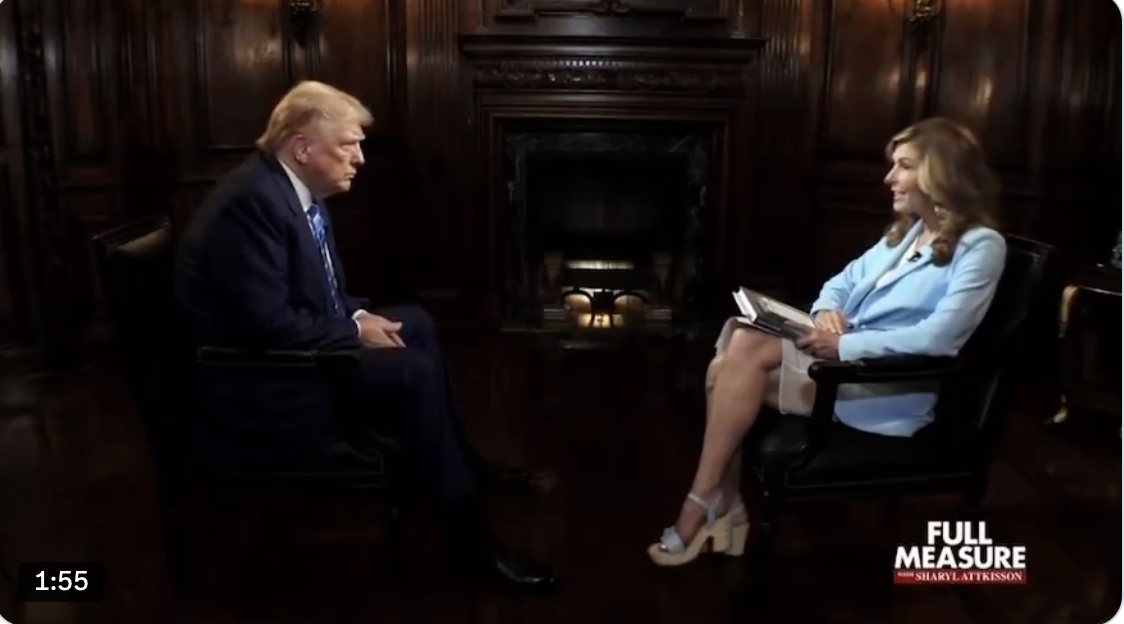
President Trump acknowledges that Republicans hate the COVID vaccine, and that he is open to admitting the shots were damaging, but is waiting for long term studies to be released in 2025.
“I think they’re doing studies on the vaccines that we’re gonna find out. And it’ll come out one way or the other. But I really had a mandate to get vaccines done. And I got ’em done very quickly in record time. The Democrats love it. You know, the Democrats love it and the Republicans don’t. It’s very interesting.”
In this stellar interview with Full Measure host Sharyl Attkisson, who bravely pointed out that not only do the shots NOT “prevent infection, illness, or transmission” but have “very potentially serious side effects,” President Trump said he thought he did a great job handling the pandemic.
“The vaccines. They love it. I have a friend of mine who said to me, ‘why don’t you talk about the vaccine, what you did with the vaxx.’ He’s a Democrat, but I’m sure he voted for me. He said, ‘what you did was the most incredible thing that any president has ever done. You’ve saved hundreds of millions of lives all over the world.’ And this was just recently very smart guy. He said, ‘I don’t understand why you don’t talk about it.’ And I don’t talk about it.
But if you go to Pfizer, if you go to some of these companies, they have charts and they have all sorts of statistics. And I say, ‘why don’t you release those statistics? Let people know.’ But I don’t talk about it. I can say this, the Democrats would love to claim it. The Republicans don’t want to claim it. But it’ll be determined, I’d say over the next 12 months. I say this in terms of overall, I think I did an amazing job with Covid. I never got the credit for it. Remember that more people died under Biden-Harris than died under Trump. And they had a much easier time because when it came in here, nobody knew what it was. It came from the Wuhan labs, which I always said. But nobody really knew what it was, where it came from. Nothing. They knew nothing.”
Sharyl is an example of the few, ethical, smart, and dedicated journalists left on the national stage, who put the truth over access and fame.
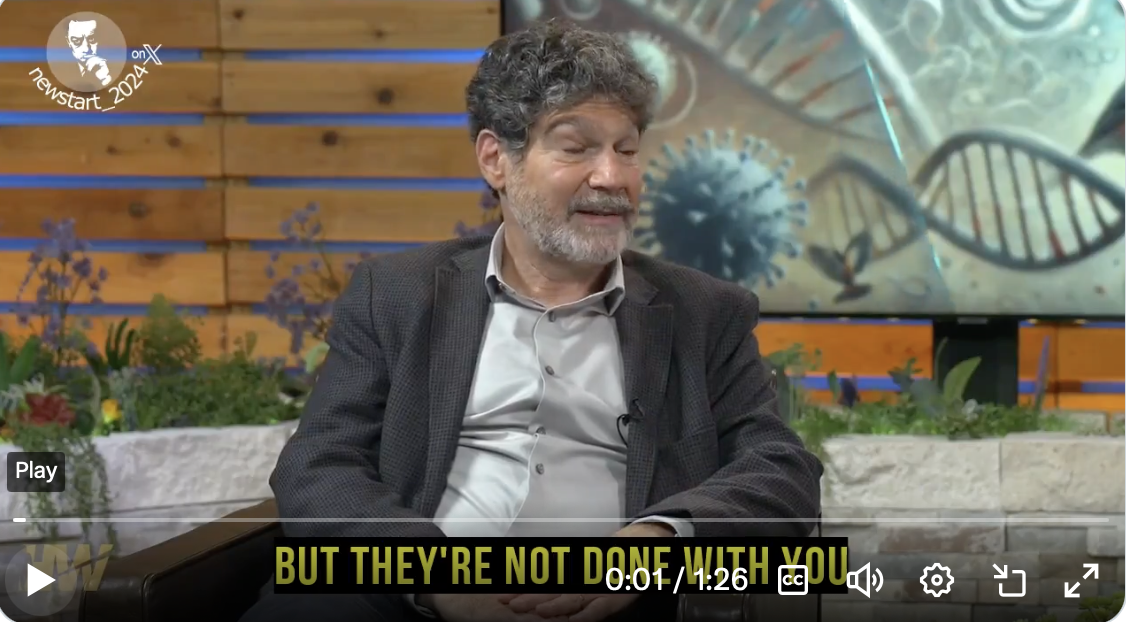
“They’re not done with you. They are currently revising these (all vaccines) injections to put them on the mRNA platform. If what I’m saying is true, then that is going to result in large numbers of people dying from heart pathologies that are going to be covered up because they can be.
So if they’re not done with you, then it is a matter of urgency that you look into this, not for social reasons, but for physiological reasons. You do not want to be damaged in this way. And you need to be able to say no. And the fact that they are not only gearing up to have these injections and to strong arm you into taking them, but they are gearing up to shut down discussion of the hazards.
They are gearing up to tie your compliance to your finances. They’re setting up a dystopian landscape where you’re going to have no choice but to accept something that puts you at risk of heart damage, you, your children, your grandchildren. So the instinct not to look at it is, let me give you some advice, future you would like you to pay attention now because it only gets worse.”
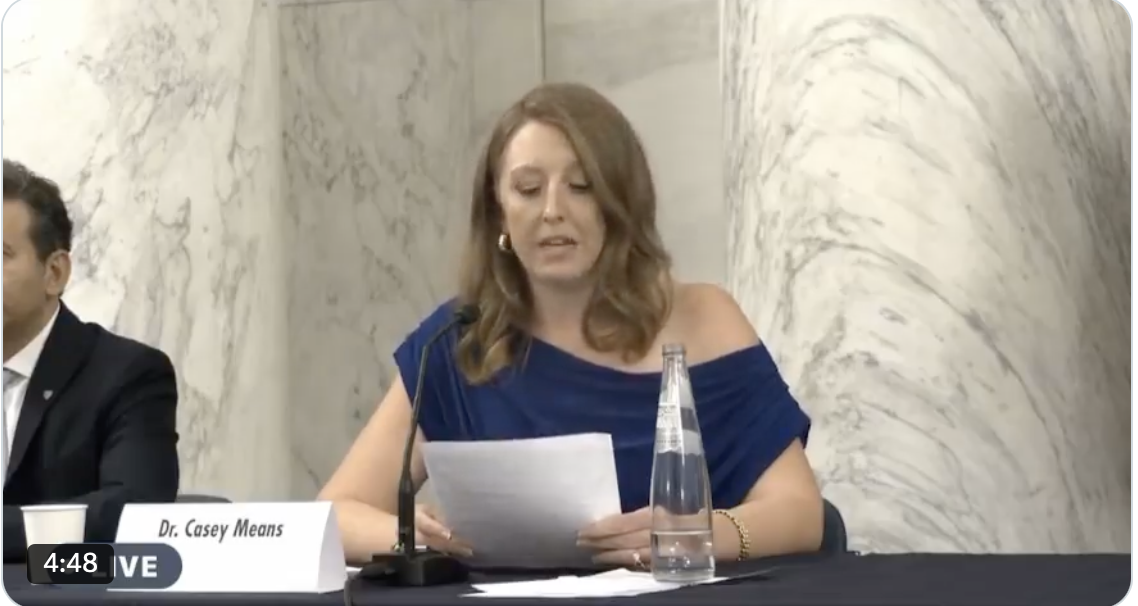
“I learned virtually nothing at Stanford Medical School about the tens of thousands of scientific papers that elucidate the root causes of why American health is plummeting.”
“I did not learn that for each additional serving of ultra-processed food we eat, early mortality increases by 18%. This now makes up 67% of the foods our kids are eating. I took zero nutrition courses in medical school. I didn’t learn that 82% of independently-funded studies show harm from processed food, while 93% of industry-sponsored studies reflect no harm.
I didn’t learn that 95% of the people who created the recent USDA food guidelines for America had significant conflicts of interest with the food industry.
I did not learn that one billion pounds of synthetic pesticides are being sprayed on our foods every single year. 99% of the farmland in the United States is sprayed with synthetic pesticides, many from China and Germany, and these invisible, tasteless chemicals are strongly linked to autism, ADHD, sex hormone disruption, thyroid disease, sperm dysfunction, Alzheimer’s, dementia, birth defects, cancer, obesity, liver dysfunction, female infertility and more.
I did not learn that the eight billion tons of plastic that have been produced just in the last 100 years … are being broken down into microplastics that are now filling our food, our water, and we are now even inhaling them in our air, and that very recent research … tells us that now about 0.5% of our brains by weight are plastic.
I didn’t learn that there are more than 80,000 toxins that have entered our food, water, air, and homes by industry, many of which are banned in Europe, and they are known to alter our gene expression, alter our microbiome composition and the lining of our gut, and disrupt our hormones.
I didn’t learn that heavy metals like aluminum and lead are present in our food, our baby formula, personal care products, our soil, and many of the mandated medications like vaccines, and that these metals are neurotoxic and inflammatory.
I didn’t learn that the average American walks a paltry 3,500 steps per day even though we know, based on science and top journals, that simply walking 7,000 steps a day slashes by 40-60% our risk of Alzheimer’s, dementia, type 2 diabetes, cancer, and obesity.
I certainly did not learn that medical error and medications are the third-leading cause of death in the US. I didn’t learn that just five nights of sleep deprivation can induce full-blown pre-diabetes. I learned nothing about sleep, and we’re getting about 20% less sleep on average than we were 100 years ago.
I didn’t learn that American children are getting less time outdoors now than a maximum security prisoner, and on average, adults spend 93% of their time indoors, even though we know from the science that separation from sunlight destroys our circadian biology, and circadian biology dictated our cellular biology.
I didn’t learn that professional organizations that we get out practice guidelines from, like the American Diabetes Association and the American Academy of Pediatrics, have taken tens of millions of dollars from Coke, Cadbury, processed food companies and vaccine manufacturers like Moderna.
I didn’t learn that if you address these root causes that all lead to metabolic dysfunction and help patients change their food and lifestyle patterns … we could reverse the chronic disease crisis in America, save millions of lives and trillions of dollars in healthcare costs per year.
This is a spiritual crisis. We are choosing death over life, we are choosing darkness over light. We need a return to courage. We need a return to common sense and intuition. We need a return to awe for the sheer miraculousness of our lives. We need all hands on deck.”
Source: Sen. Ron Johnson’s Roundtable on “American Health and Nutrition: A Second Opinion” View: on X
“What they’re doing with the World Health Organization is one of the most breathtaking global power grabs we have seen in all of recorded human history. They are at this point transparently seeking the power to turn the WHO into not just like a global ministry of health or a global department of health and human services complete with an FDA, a CDC, HHS, all the different various divisions.
But when you look at how they define healthcare, when you look at how they define health emergencies, whether we’re looking at the one health where the health of humans is intimately intertwined with the climate and the grass and the animals and the ocean and all the rest of it, or when you, right, precisely, is one health, it is this integrated holistic view of health as something that encompasses every area of everything, right? And then the other side of this, which is that everything essentially is a public health emergency, as they’ve said publicly.
I was in Egypt and on the Arabian Peninsula at the last two climate summits where the head of the World Health Organization the CCP Operative dr. Tedros Ghebreyesus braces former politburo member of a mass murdering ethno-marxist terrorist organization called the Tigray People’s Liberation Front when he openly said that Climate change is a public health emergency. They’ve also said that racism is a public health emergency and gun violence is a public health emergency.
So If all of those things are public health emergencies, and they have told us that they are, every area of your life would then fall under the purview of this entity if it was able to usurp this power that it is seeking. They did take one big leap forward, no pun intended, with the adoption of some of the amendments to the international health regulations.
And Tedros has actually made perfectly clear that they intend to slam through this international pandemic treaty, accord, agreement. They’ve got different names. I think for technical legal reasons. They know they’re not going to get it through the US Senate, but it is a treaty. And they promise they’re going to do that either by the end of this year or at the very latest May of 2025. So they have not given up. They will not give up unless and until humanity says no.”
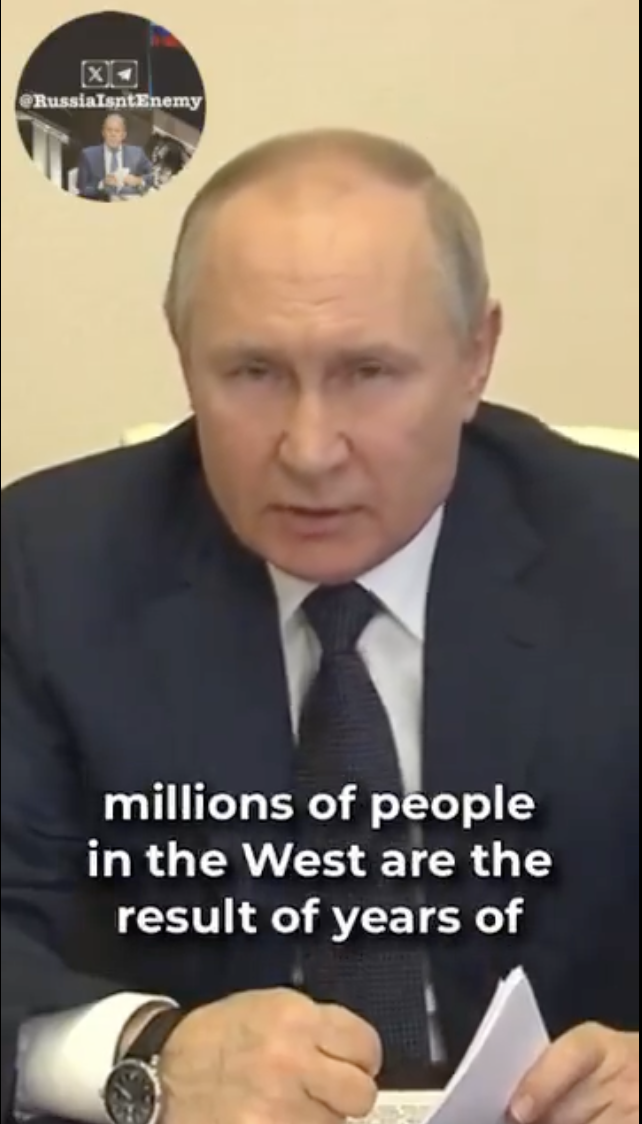
“I want to be heard by ordinary Western citizens: you are now being persistently persuaded that all of the difficulties you faced are the result of some hostile actions of Russia, that you should pay for the fight against the mythical Russian threat out of your own wallet. It is a lie. The truth is that current problems of Western citizens are the result of years of mistakes and ambitions of ruling elites. These elites are not thinking about you, how to improve your live, they are obsessed with their selfish interests and super-profits” – President Putin.
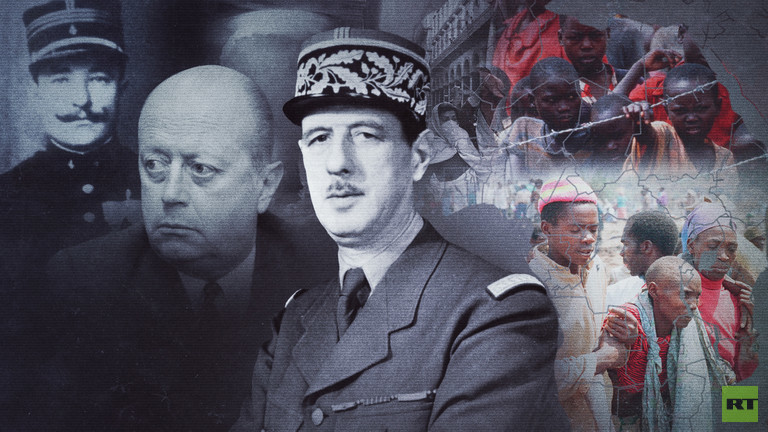
The history of relations between Paris and its former colonies on the continent explains the recent spate of anti-French coups
By Abbas Juma
As the whole world has turned its attention to the conflict between Israel and Palestine and the events in Ukraine have faded into the background, nearly everyone has forgotten about another region that is permanently unstable and immersed in conflicts and crises – Africa.
Over the past several years, there have been a series of coups in Africa – precisely, eight coups in three years. The last one occurred in Gabon. At the time, the media discussed Africa’s anger at colonialist France and the pro-French governments that toppled like dominoes. For Paris, that was a real disaster, since African countries had only formally escaped from under its ‘wing’ and were still subordinated to France politically and economically. Moreover, Africa is rich in minerals, oil, gas, gold, and other resources. For example, Niger supplies about 15% of France’s uranium needs.
We will find out why Africans have such a hostile attitude towards France and how this confrontation may end.
Occupied Niger
French colonialism in Niger began with the infamous and brutal military campaign to expand control over West Africa in 1899 (the so-called Central African-Chad Mission). The local population fiercely resisted the invaders, headed by captains Paul Voulet and Charles-Paul-Louis Chanoine (also known as Julien Chanoine). However, the forces of the two sides were unequal.
After leaving Dakar, the Voulet-Chanoine Mission was supposed to explore Chad and Niger and unite the French territories. Voulet had previously demonstrated sadistic tendencies in Burkina Faso, and his associate Chanoine was not any better. Moreover, Chanoine was the son of the powerful general and Minister of War Jules Chanoine, a fact that untied the mission’s hands.
The atrocities committed by the French in Niger could have never come to light, if one of the junior officers, Lieutenant Louis Péteau, had not described them in a letter to his fiancée. In the 15-page letter, he wrote how porters who were too weak from dysentery were beheaded and replaced by enslaved locals. Voulet ordered the severed heads to be placed on stakes in order to scare the inhabitants of the surrounding villages. The letter contains many details of war crimes committed by French soldiers. It was eventually made public and provoked a major scandal.
This did not stop the mission, however, and in 1922, after a severe drought and famine, the French established control over the territory.
France was primarily interested in Niger’s natural resources. Despite the fact that the country’s economy largely depended on agriculture and animal husbandry, the world’s largest uranium deposits were later discovered there. France seized hold of these resources.
In 1960, Niger was formally liberated. However, even after the 1960s, all the officers of Niger’s army were Frenchmen with French-Nigerian dual-citizenship. As of 1960, there were only tenAfrican officers in the Armed Forces of Niger, all of low rank.
Paris would continue to exploit Niger’s rich resources for many years. Most recently, Niamey criticized the agreement with France and demanded a fairer share of the profits from the extraction of uranium ore.
Africa soaked in blood
A few years ago, the adviser to Algerian President Abdelmadjid Cheikhi said that after the massacre staged by the French in Algeria, the bones of the Algerians were taken out of the country and used to make soap and for sugar filtration. Cheikhi stressed that his country had become “a real field of experiments for the brutal practices that France later applied in other colonies.” He added that today Paris attempts to hide the crimes by destroying historical archives.
Some tragedies, however, could not be hidden, since they were witnessed by tens and even hundreds of thousands of people, many of whom are still alive. Here are just a few chilling episodes from France’s colonial past.
Burning everything in its path
The French, who are so proud of their elegant cultural heritage and Enlightenment values, were actually capable of savage atrocities against those who were not part of their culture, particularly colonized peoples. The cruelty of the French knew no bounds. They were involved in murder, rape, the plundering of African wealth, and the use of slave labor in the Central African Republic, Chad, and the Republic of the Congo. All these events happened in recent history and were recorded in archives, but no one has been held accountable so far.
There has been no justice in the case of the Thiaroye massacre, when on the outskirts of Dakar French forces shot West African veterans who had once defended France in cold blood. Likewise, no one was held responsible for the Rwandan genocide, nor for France’s nuclear experiments in Algeria. In February 1960, France tested its first atomic bomb, exposing over 24,000 people to radiation. It is difficult to imagine the real losses caused by the resulting pollution since today we do not know the locations of all the test sites and areas of disposal of nuclear waste. But it’s safe to say that the French don’t care about this.
An uprising soaked in blood
The people of Madagascar also have many painful memories. The French army subjected them to severe repressions simply because they wished to be independent– and this despite the fact that at the time, France itself had just been liberated from Nazi occupation. Tens of thousands of Malagasy people were tortured and killed during the Franco-Malagasy Wars and in their aftermath. There were even cases when people were thrown out of airplanes.
In 1946, the Democratic Movement for Malagasy Rejuvenation (abbreviated MDRM in French) was founded in Madagascar. It wanted to put an end to the inhumane treatment of people and advocated political equality, prosperity, and independence. But less than a year after the party was formed, France intervened. On May 5, 1947, a massacre happened in Moramanga – a city that had become the epicenter of the Madagascar uprising against colonial rule. At midnight, French officers gave the order to attack three passenger train cars with MDRM members inside. The train cars were fired upon using a machine gun. Most of the people inside were killed, and those who survived were executed without a trial shortly afterward. This event became a symbol of French repression in Madagascar.
The forgotten genocide
The fate of the Bamileke people of Cameroon is sometimes compared to the fate of the Jewish people during the Holocaust. It is not known exactly how many were killed – the numbers vary from 100,000 to 500,000 people. Some even say there were a million victims. In any case, this was a real genocide staged by the French under the leadership of the anti-communists Charles de Gaulle and Jacques Foccart, in their fight against the Union of Populations of Cameroon (UPC) – a liberation movement founded in April 1948.
We find an eyewitness account of those horrible events online. Jeannette was just a little girl when her country became flooded with blood and tears:
“In the evening, the military convoys come back filled with heads that are dumped and exposed at the crossroads that will become the crossroads of the maquisards, until my departure from Cameroon, in 1976, and even perhaps until today. It is in the heart of Bafoussam, about thirty meters from the house of my parents that all this is exposed. This is also where the executions take place. After a certain pause, because of the famine and in the absence of any help, the populations returned to the kingdoms without homes and without cultures. Others went to camps created by the occupier, without water, without access to the wood, and terrorized by the military.”
“Some, especially the occupier himself, have dared to advance the figure of 400,000 dead. Over what period? Are dead people in the Mungo area counted? Many died there. Others were tattooed and sent back to the West, where massacres and crowding in the camps were raging.
“After the war, the region was almost empty…”
Hell on Earth
Doubtlessly one of the most terrible genocides in world history was the Rwandan genocide, which claimed the lives of over 800,000 Tutsis in 100 days (other sources claim there were over a million victims).
France also carries the burden of this crime on its conscience. Numerous human rights organizations and historians (basing their assumption on documents) claim that France armed the Hutu government. Moreover, these events happened in light of Operation Turquoise, launched by France on June 23, 1994 in order to supposedly stop the mass killings of people. Instead, France secretly helped the participants of the genocide to flee.
Renowned French historian Vincent Duclert, who was commissioned by President Macron to prepare a report on the Rwandan genocide, concluded that Paris was responsible for what happened, at least in terms of ignoring the racist nature and brutality of the Hutu regime.
“Françafrique”: The illusion of freedom
The UN proclaimed 1960 the “Year of Africa”: 17 African nations gained independence that year – but only on paper.
France didn’t take leave of Africa without making sure that it could continue to exploit the resources of its former colonies, and continue to dominate them – even if from now on, that would happen behind the scenes.
In his memoirs, Charles de Gaulle wrote that France brought civilization to Africa, helped it build nation states and educated the elites, teaching them to act based on principles of human rights and freedoms (and, of course, French interests). At the same time, the founder of the Fifth Republic wrote that Paris was supposed to become a “specially privileged partner” for Africans. In other words, the colonizers wanted to take leave of Africa but preserve their influence over it. This is probably what de Gaulle meant by “privileged partnership.”
This is how the “Françafrique” [“French Africa”] concept was born – a system of special ties between Paris and its former colonies, developed by Jacques Foccart. Informal ‘guardianship’ of Africa through the Françafrique system guaranteed France political, economic, and military control over the region and, as a result, uninterrupted access to its natural resources – whether it was oil from Gabon, uranium from Niger, or cocoa from the Ivory Coast.
Making use of the economic whip and corruption, Foccart appointed his own people to high-ranking positions – these were the ‘elite’ raised by the French, which de Gaulle mentioned in his memoirs. If something went wrong, the French resorted to contract killing, terror, blackmail, intrigue, and bribery. When that did not help, France used its special services to eliminate high-profile politicians and even organize military rebellions. This is what the legendary French mercenary Bob Denard spoke about.
“One way or another, there was always some kind of interaction with the special services. Sometimes, Monsieur Foccart acted as a link. To involve the army in this or that operation, a lot of preliminary preparation was required. But my squad was light and mobile and could carry out the same mission using small forces,” Denard said.
Finally, in those cases when the efforts of mercenaries and the intrigues of special services failed, France conducted direct military interventions, meddling in the affairs of the “free” African nations. To this end, Paris had and still has military bases in Senegal, Djibouti, Gabon, and on the Ivory Coast. Until 2008, eight African countries had active agreements with France which allowed the latter to legally invade their territory and “restore order.”
Modern colonialism
On July 31, 2022, the government of Mali demanded that French President Emmanuel Macron abandon the principles of neocolonialism – above all, with regard to economic control over the continent.
Experts around the world have long discussed the CFA franc, which was introduced in December 1945. At the time, the abbreviation CFA stood for “French African colonies” (Colonies Françaises d’Afrique). By the 1960s, it meant “African Financial Community” (Communauté Financière Africaine). Today, the CFA franc is pegged to the euro, but until recently it was dependent on the exchange rate of the French franc. Moreover, the member countries of the zone where the CFA franc is in use are required to keep half of their monetary and gold reserves in the Treasury of France.
The CFA franc makes it possible for Paris to buy up Africa’s natural resources at extremely low prices. And considering the Françafrique system, local elites often derive benefits from the economic intervention of France.
Paris is almost impossible to push away, since it is a major investor in the region. In 2020, for example, French foreign direct investments (FDI) in Cote d’Ivoire topped $500 million. It is just one example – other such countries include Tunisia, Morocco, etc. The French industrial sector in West Africa is also quite influential. For example, TotalEnergies accounts for 17 percent of the African oil market and is the leading distributor of petroleum products in Africa.
For Paris, the African continent has become a giant market for selling overpriced goods – despite the fact that France itself was indignant when the US took advantage of the political situation and sold it gas at exorbitant prices. In contrast, goods from the former French colonies are sold cheaply.
This system is called neocolonialism, and this is exactly what Africa is rebelling against.
In conclusion
France continued to devour Africa in the decades after de Gaulle. Each of the eight subsequent presidents contributed to the disintegration of the African continent. Of course, African leaders, who saw France as a natural guarantor of their personal security, were also responsible for the situation. Africa gifted its patrons, bowed before them, and coordinated every step with the Élysée Palace. But this didn’t help. The fate of Libyan leader Muammar Gaddafi is a good example – and this is the man who financed the election campaign of Nicolas Sarkozy.
The political processes happening in Niger today are not a color revolution or a nonconformist riot backed by an external force. These processes are a result of wounds and sorrows accumulated over many decades. There is a chance that Niger may help other African countries move towards real liberation, particularly now that France has encountered major competitors in Africa in the face of China and Russia. But in fact, these developments have only accelerated inevitable changes.
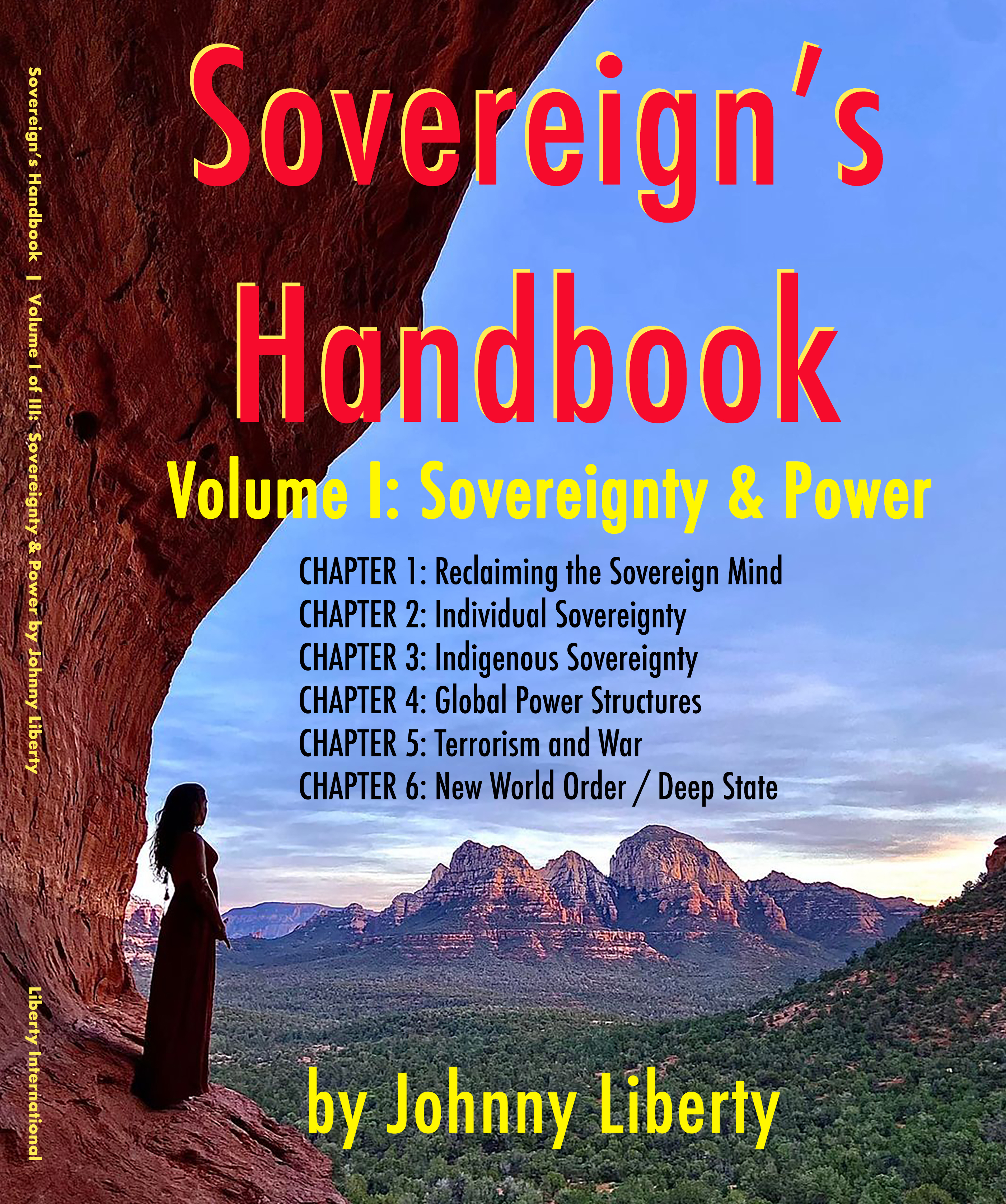
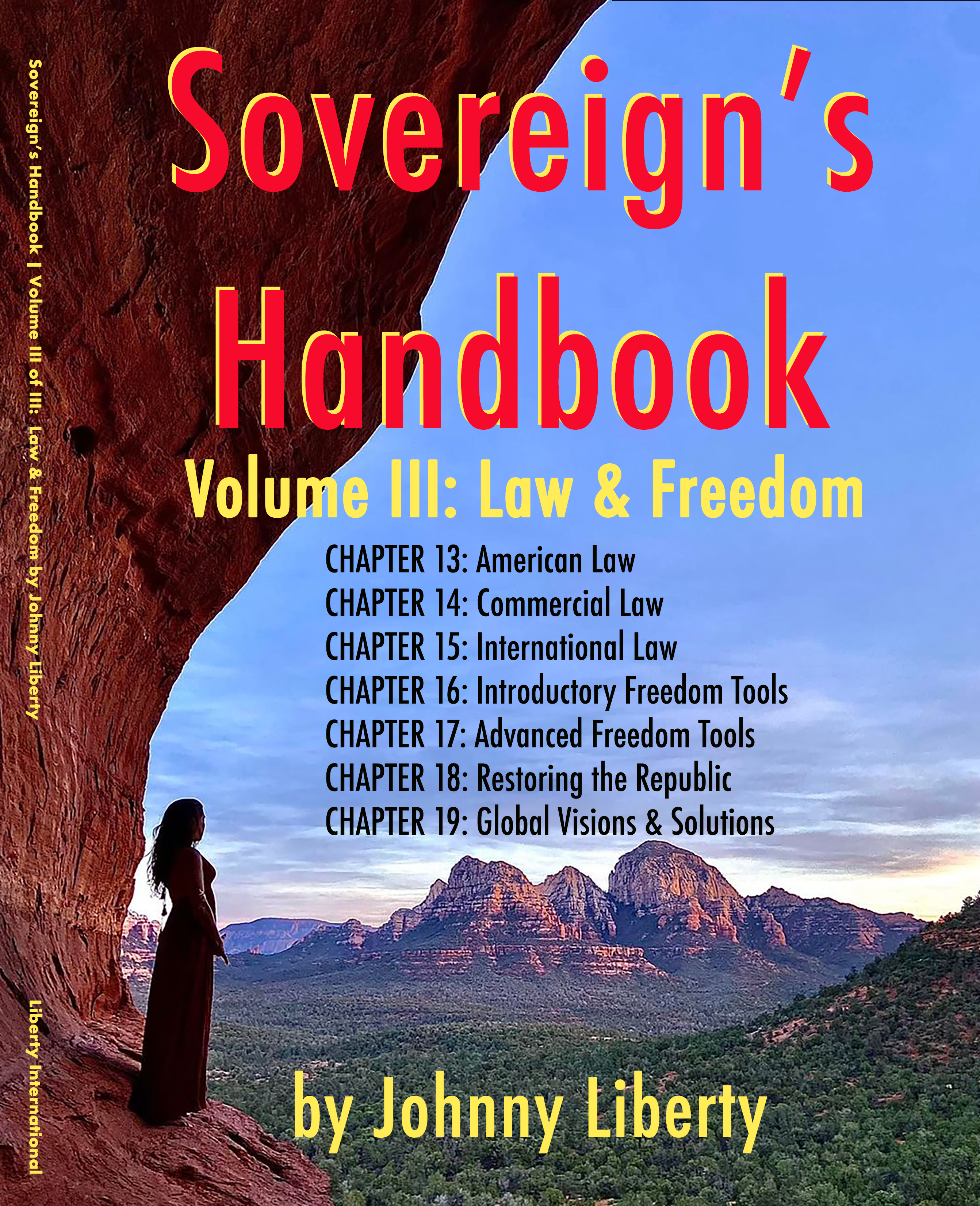
Sovereign’s Handbook by Johnny Liberty (30th Anniversary Edition) (3-Volume Printed, Bound Book or PDF)
A three-volume, 750+ page tome with an extensive update of the renowned underground classic ~ the Global Sovereign’s Handbook. Still after all these years, this is the most comprehensive book on sovereignty, economics, law, power structures and history ever written. Served as the primary research behind the best-selling Global One Audio Course. Available Now!
Dawning of the Corona Age: Navigating the Pandemic by Johnny Freedom (3rd Edition) (Printed, Bound Book or PDF)
This comprehensive book, goes far beyond the immediate impact of the “pandemic”, but, along with the reader, imagines how our human world may be altered, both positively and negatively, long into an uncertain future. Available Now!
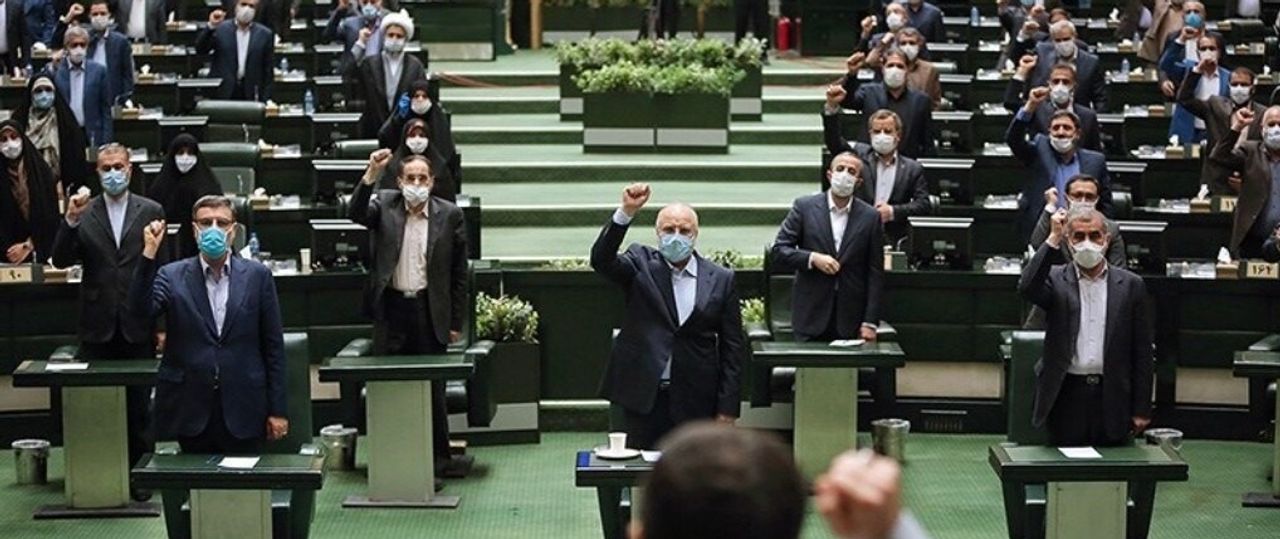
A group of 227 parliament members in Iran has called on the Judiciary to issue death sentences for people arrested during the ongoing antigovernment protests.
The parliament, elected in a non-competitive election in February 2020, is packed with hardliners and Revolutionary Guard officers.
In a statement that was read out in the parliament on Sunday, the lawmakers called the protesters ‘mohareb’ — which literally means warrior in Arabic, but in Islamic law or sharia it means ‘enemy of God’ that carries the death penalty. They also compared the protesters to members of ISIS, who “attack people’s lives and property…”
The Iranian regime has so far charged several people with ‘moharebeh,’ “corruption on earth,” “assembly and collusion against national security” and “confrontation with the Islamic Republic” for participating in the protests.
Describing the current wave of popular protests as “riots,” the MPs claimed that “the US and other enemies” are inciting violence, organizing rallies, and providing financial support and weaponry to commandeer the protests. They also said “thugs and mobs” have killed tens of people and disrupted the security of the country.
Echoing the Islamic Republic’s propaganda line, the lawmakers said that “the enemies have been defeated in Iraq, Syria, Palestine, Lebanon and Yemen” therefore they organized the “riots” as a reaction to “victories of the Islamic Republic.”
Without mentioning any individuals or groups, the hardline lawmakers also asked the judiciary to take legal actions against “the politicians who incited the rioters.”
Earlier in the parliament session, Speaker Mohammad Bagher Ghalibaf (Qalibaf) said that main elements of Mossad, CIA and their allied groups are behind the unrest in the country.
Late in October, hardliner MP Mohammad Esmail Kowsari, also a high ranking IRGC officer, implicitly threatened that the government will respond differentlyto the ongoing protests from now on.
While protests continue across Iran, the Islamic Republic’s Judiciary has also announced that it has indicted over 1,000 people who were arrested during the demonstrations.
Authorities have been claiming that “separatists” and “instigators” are behind the efforts to overthrow the government and break Iran into areas controlled by ethnic groups, a claim routinely denied by Iranians on streets and social media.
President Ebrahim Raisi on October 25 accused “enemies of the Islamic Republic” of fomenting the protests, echoing what Khamenei said a day earlier. Parliament Speaker Mohammad-Bagher Ghalibaf in turn vowed that parliament would take action to change the ways of the morality police in a bid to calm the protesters.
“Death sentences against people for exercising their right to freedom of expression, after the killings of peaceful protesters, abductions and gunning down children, and other atrocities, indicate a government that is out of control and willing to quash protests at any cost,” said a statement by Center for Human Rights in Iran.
The Norway-based human rights organization also expressed concern regarding the fate of the detained protesters saying, “dozens of them have been charged with the security-related charges of ‘moharebeh’ and ‘corruption on earth’ which carry the death penalty.”
The Islamic Republic’s history and current evidence indicate that they intend to use the death penalty as a tool of political repression to intimidate their opposition.
Earlier in November, 40 Iranian lawyers issued a statement saying most people no longer want the Islamic Republicand called on their peers to speak up and defend the people.
Iran has been gripped by protests since the death in custody of Mahsa Amini, a 22-year-old Iranian of Kurdish origin who had been arrested on September 13 for allegedly breaching the Islamic dress code and died three days later from severe head trauma. Protests spread fueled by public outrage over a crackdown that led to the deaths of other young men, women, and children. Now in their seventh week, the protests show no sign of ending.
Sovereign’s Handbook by Johnny Liberty (30th Anniversary Edition) (3-Volume Printed, Bound Book or PDF)
A three-volume, 750+ page tome with an extensive update of the renowned underground classic ~ the Global Sovereign’s Handbook. Still after all these years, this is the most comprehensive book on sovereignty, economics, law, power structures and history ever written. Served as the primary research behind the best-selling Global One Audio Course. Available Now!
Dawning of the Corona Age: Navigating the Pandemic by Johnny Freedom (3rd Edition) (Printed, Bound Book or PDF)
This comprehensive book, goes far beyond the immediate impact of the “pandemic”, but, along with the reader, imagines how our human world may be altered, both positively and negatively, long into an uncertain future. Available Now!
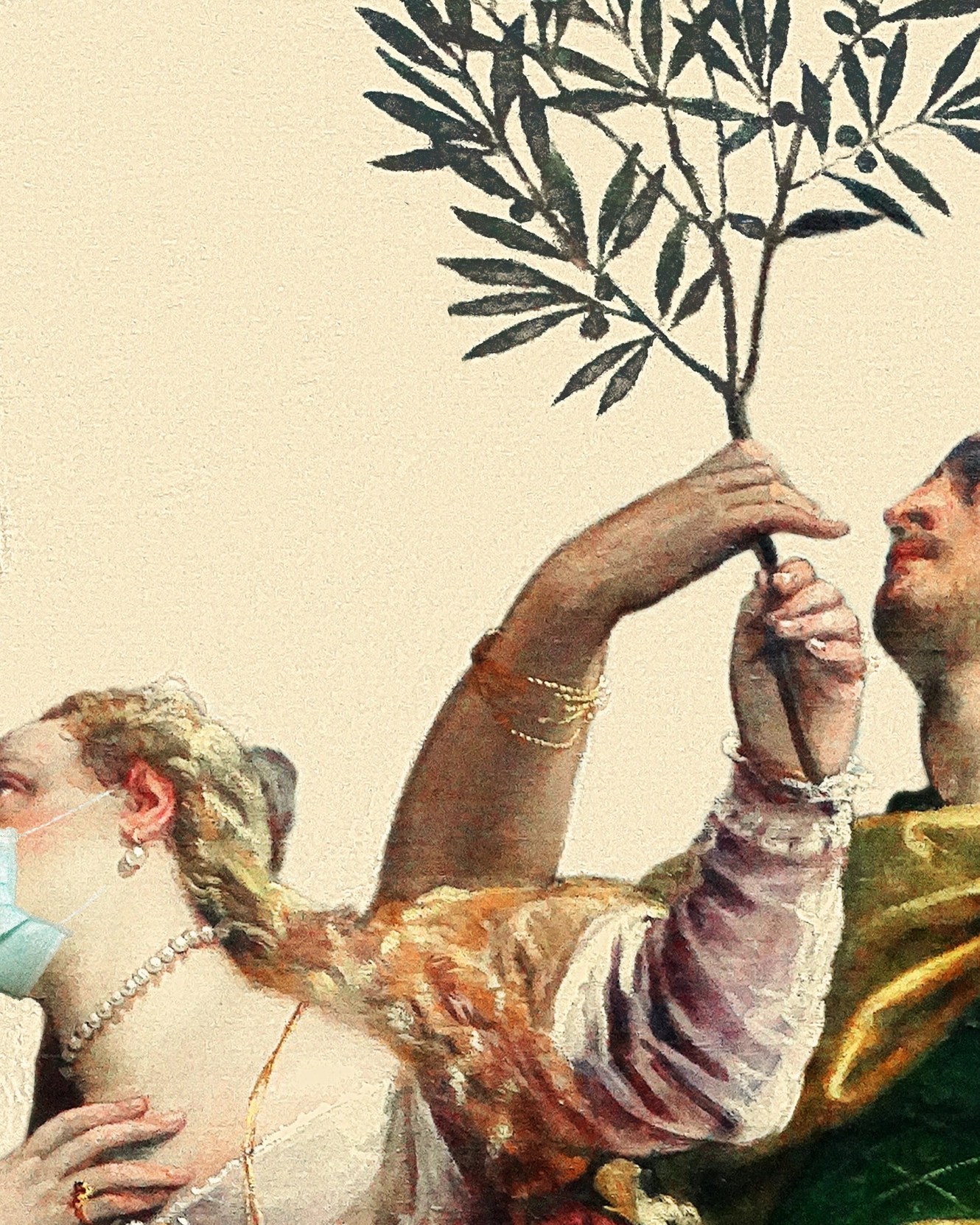
Let’s focus on the future, and fix the problems we still need to solve.
In April 2020, with nothing else to do, my family took an enormous number of hikes. We all wore cloth masks that I had made myself. We had a family hand signal, which the person in the front would use if someone was approaching on the trail and we needed to put on our masks. Once, when another child got too close to my then-4-year-old son on a bridge, he yelled at her “SOCIAL DISTANCING!”
These precautions were totally misguided. In April 2020, no one got the coronavirus from passing someone else hiking. Outdoor transmission was vanishingly rare. Our cloth masks made out of old bandanas wouldn’t have done anything, anyway. But the thing is: We didn’t know.
I have been reflecting on this lack of knowledge thanks to a class I’m co-teaching at Brown University on COVID. We’ve spent several lectures reliving the first year of the pandemic, discussing the many important choices we had to make under conditions of tremendous uncertainty.
Some of these choices turned out better than others. To take an example close to my own work, there is an emerging (if not universal) consensus that schools in the U.S. were closed for too long: The health risks of in-school spread were relatively low, whereas the costs to students’ well-being and educational progress were high. The latest figures on learning loss are alarming. But in spring and summer 2020, we had only glimmers of information. Reasonable people—people who cared about children and teachers—advocated on both sides of the reopening debate.
Another example: When the vaccines came out, we lacked definitive data on the relative efficacies of the Johnson & Johnson shot versus the mRNA options from Pfizer and Moderna. The mRNA vaccines have won out. But at the time, many people in public health were either neutral or expressed a J&J preference. This misstep wasn’t nefarious. It was the result of uncertainty.
Obviously some people intended to mislead and made wildly irresponsible claims. Remember when the public-health community had to spend a lot of time and resources urging Americans not to inject themselves with bleach? That was bad. Misinformation was, and remains, a huge problem. But most errors were made by people who were working in earnest for the good of society.
Given the amount of uncertainty, almost every position was taken on every topic. And on every topic, someone was eventually proved right, and someone else was proved wrong. In some instances, the right people were right for the wrong reasons. In other instances, they had a prescient understanding of the available information.
The people who got it right, for whatever reason, may want to gloat. Those who got it wrong, for whatever reason, may feel defensive and retrench into a position that doesn’t accord with the facts. All of this gloating and defensiveness continues to gobble up a lot of social energy and to drive the culture wars, especially on the internet. These discussions are heated, unpleasant and, ultimately, unproductive. In the face of so much uncertainty, getting something right had a hefty element of luck. And, similarly, getting something wrong wasn’t a moral failing. Treating pandemic choices as a scorecard on which some people racked up more points than others is preventing us from moving forward.
We have to put these fights aside and declare a pandemic amnesty. We can leave out the willful purveyors of actual misinformation while forgiving the hard calls that people had no choice but to make with imperfect knowledge. Los Angeles County closed its beaches in summer 2020. Ex post facto, this makes no more sense than my family’s masked hiking trips. But we need to learn from our mistakes and then let them go. We need to forgive the attacks, too. Because I thought schools should reopen and argued that kids as a group were not at high risk, I was called a “teacher killer” and a “génocidaire.” It wasn’t pleasant, but feelings were high. And I certainly don’t need to dissect and rehash that time for the rest of my days.
Moving on is crucial now, because the pandemic created many problems that we still need to solve.
Student test scores have shown historic declines, more so in math than in reading, and more so for students who were disadvantaged at the start. We need to collect data, experiment, and invest. Is high-dosage tutoring more or less cost-effective than extended school years? Why have some states recovered faster than others? We should focus on questions like these, because answering them is how we will help our children recover.
Many people have neglected their health care over the past several years. Notably, routine vaccination rates for children (for measles, pertussis, etc.) are way down. Rather than debating the role that messaging about COVID vaccines had in this decline, we need to put all our energy into bringing these rates back up. Pediatricians and public-health officials will need to work together on community outreach, and politicians will need to consider school mandates.
The standard saying is that those who forget history are doomed to repeat it. But dwelling on the mistakes of history can lead to a repetitive doom loop as well. Let’s acknowledge that we made complicated choices in the face of deep uncertainty, and then try to work together to build back and move forward.
Sovereign’s Handbook by Johnny Liberty (30th Anniversary Edition) (3-Volume Printed, Bound Book or PDF)
A three-volume, 750+ page tome with an extensive update of the renowned underground classic ~ the Global Sovereign’s Handbook. Still after all these years, this is the most comprehensive book on sovereignty, economics, law, power structures and history ever written. Served as the primary research behind the best-selling Global One Audio Course. Available Now!
Dawning of the Corona Age: Navigating the Pandemic by Johnny Freedom (3rd Edition) (Printed, Bound Book or PDF)
This comprehensive book, goes far beyond the immediate impact of the “pandemic”, but, along with the reader, imagines how our human world may be altered, both positively and negatively, long into an uncertain future. Available Now!
If you have ever heard talk or been to a seminar about “sovereignty”, then very likely those conversations were influenced by the foundational research of the author and educator.
His research and educational journey reaching millions of people worldwide began in 1992 and culminated in 2022 with the 3-Volume book release – his final word on the subject.
At the turn of the millennium his books and audio courses facilitated in part – a sovereignty and tax-honesty movement that involved millions of Americans.
This 3 Volume series comprises the life’s work of Johnny Liberty filled with comprehensive insights into the last few hundred years of history, law, economics, money, citizenship and governance.
These books show how it is supposed to be done in a constitutional Republic.
How did We the People get to where we are today?
What can we do to reclaim our inherent sovereignty and natural rights?
Many of the answers may be found within these revolutionary pages. Available as a paperback, E-Book (PDF) or an Amazon Kindle format. Thank you for supporting the author.
Sincerely,
With Freedom For All, ~ Johnny Liberty
Sovereign’s Handbook by Johnny Liberty (30th Anniversary Edition)
A three-volume, 750 page tome with an extensive update of the renowned underground classic ~ the Global Sovereign’s Handbook.
Still after all these years, it is the most comprehensive book on sovereignty, economics, law, power structures and history ever written.
Served as the primary research behind the best-selling Global One Audio Course.
The 3 Volume Sovereign’s Handbook by Johnny Liberty is textbook material for everyone including educators/teachers, homeschoolers, historians, activists, leaders/politicians, attorneys/judges/law schools, police officers, and state Citizens/Nationals.
Sovereign’s Handbook by Johnny Liberty (30th Anniversary Edition) (3-Volume Printed, Bound Book or PDF)
A three-volume, 750+ page tome with an extensive update of the renowned underground classic ~ the Global Sovereign’s Handbook. Still after all these years, this is the most comprehensive book on sovereignty, economics, law, power structures and history ever written. Served as the primary research behind the best-selling Global One Audio Course. Available Now!
Dawning of the Corona Age: Navigating the Pandemic by Johnny Freedom (3rd Edition) (Printed, Bound Book or PDF)
This comprehensive book, goes far beyond the immediate impact of the “pandemic”, but, along with the reader, imagines how our human world may be altered, both positively and negatively, long into an uncertain future. Available Now!


 Liberty International News