Editor’s Note: The National Library of Medicine (NLM), on the campus of the National Institutes of Health in Bethesda, Maryland, has been a center of information innovation since its founding in 1836. The world’s largest biomedical library, NLM maintains and makes available a vast print collection and produces electronic information resources on a wide range of topics that are searched billions of times each year by millions of people around the globe. It also supports and conducts research, development, and training in biomedical informatics and health information technology. In addition, the Library coordinates a 6,500-member National Network of Libraries of Medicine that promotes and provides access to health information in communities across the United States.
Background: An ongoing outbreak of coronavirus disease 2019 (COVID-19) has spread around the world. It is debatable whether asymptomatic COVID-19 virus carriers are contagious. We report here a case of the asymptomatic patient and present clinical characteristics of 455 contacts, which aims to study the infectivity of asymptomatic carriers.
Material and methods: 455 contacts who were exposed to the asymptomatic COVID-19 virus carrier became the subjects of our research. They were divided into three groups: 35 patients, 196 family members and 224 hospital staffs. We extracted their epidemiological information, clinical records, auxiliary examination results and therapeutic schedules.
Results: The median contact time for patients was four days and that for family members was five days. Cardiovascular disease accounted for 25% among original diseases of patients. Apart from hospital staffs, both patients and family members were isolated medically. During the quarantine, seven patients plus one family member appeared new respiratory symptoms, where fever was the most common one. The blood counts in most contacts were within a normal range. All CT images showed no sign of COVID-19 infection. No severe acute respiratory syndrome coronavirus 2 (SARS-CoV-2) infections was detected in 455 contacts by nucleic acid test.
Conclusion: In summary, all the 455 contacts were excluded from SARS-CoV-2 infection and we conclude that the infectivity of some asymptomatic SARS-CoV-2 carriers might be weak.
Declaration of competing interest The authors declare that they have no known competing financial interests or personal relationships that could have appeared to influence the work reported in this paper.
Cascella M, Rajnik M, Cuomo A, Dulebohn SC, Di Napoli R.2020 Apr 6. In: StatPearls [Internet]. Treasure Island (FL): StatPearls Publishing; 2020 Jan–.PMID: 32150360Free Books & Documents.Review.
Lescure F.X., Bouadma L., Nguyen D. Clinical and virological data of the first cases of COVID-19 in Europe: a case series. Lancet Infect. Dis. 2020 doi: 10.1016/S1473-3099(20)30200-0. Published Online March 27 2020. Available at: – DOI
Adalja A.A., Toner E., Inglesby T.V. JAMA; 2020. Priorities for the US Health Community Responding to COVID-19. Published Online March 03 2020. Available at: – DOI
McCloskey B., Zumla A., Ippolito G. Mass gathering events and reducing further global spread of COVID-19: a political and public health dilemma. Lancet. 2020;395:1096–1099. doi: 10.1016/S0140-6736(20)30681-4. Available at: – DOI – PMC – PubMed
Lu R., Zhao X., Li J. Genomic characterisation and epidemiology of 2019 novel coronavirus: implications for virus origins and receptor binding. Lancet. 2020;395:565–574. doi: 10.1016/S0140-6736(20)30251-8. Available at: – DOI – PMC – PubMed
This is the sixty-four-thousand-dollar question. The premise that coronavirus is highly contagious and can cause disease provides the justification for putting entire nations on lockdown, destroying the global economy and throwing hundreds of thousands out of work. But is it contagious? Does it even cause disease?
As early as 1799, researchers puzzled over the cause of influenza, which appeared suddenly, often in diverse places at the same time, and could not be explained by any theory of contagion. In 1836, Heinrich Schweich, author of a book on influenza, noted that all physiological processes produce electricity and offered the theory that an electrical disturbance of the atmosphere may prevent the body from discharging it. He repeated the then-common belief that the accumulation of electricity in the body causes the symptoms of influenza and that outbreaks were due to atmospheric “influences”—hence the name influenza.
Now that we know about the electrical nature of the sun, we can make some interesting observations. The years 1645-1715 was a period that astronomers call the Maunder minimum, when the sun was very quiet; astronomers observed no sunspots during the time span and the northern lights were nonexistent; then in 1715, sunspots reappeared, as did the northern lights. Sunspot activity then increased, reaching a high in 1727, and in 1728, influenza appeared in waves on every continent. Sunspot activities became more violent until they peaked in1738 when physicians reported flu in both man and animals, including dogs, horses and birds, especially sparrows. By some estimates, two million people perished during the ten-year pandemic.
These and other facts about the relationship of influenza to disturbances in electricity come from a remarkable book, The Invisible Rainbow, by Arthur Firstenberg. Firstenberg chronicles the history of electricity in the U.S. and throughout the world, and the outbreaks of illness that accompanied each step towards greater electrification. The first stage involved the installation of telegraph lines—by 1875, these formed a spider web over the whole earth totaling seven hundred thousand miles, with enough copper wire to encircle the globe almost thirty times.
With it came a new disease called neurasthenia. Outside of the U.S., scientists recognized electricity as one of its causes. Like those suffering today from “chronic fatigue,” patients felt weak and exhausted, unable to concentrate. They had headaches, dizziness, tinnitus, floaters in the eyes, racing pulse, pains in the heart region and palpitations; they were depressed and had anxiety attacks. Dr. George Miller Beard noted that the disease spread along the routes of railroads and telegraph lines; it often resembled the common cold or influenza and commonly seized people in the prime of life.
1889 marks the beginning of the modern electrical era and also of a deadly flu pandemic, which followed the advent of electricity throughout the globe. Says Firstenberg, “Influenza struck explosively and unpredictably, over and over in waves until early 1894. It was as if something fundamental had changed in the atmosphere. . .”
Physicians puzzled over influenza’s capricious spread. For example, William Beveridge, author of a 1975 textbook on influenza, noted “The English warship Arachne was cruising off the coast of Cuba ‘without any contact with land. No less than 114 men out of a crew of 149 fell ill with influenza and only later was it learnt that there had been outbreaks in Cuba at the same time.”
During the first world war, governments on both sides of the conflict installed antennas which eventually blanketed the earth with strong radio signals–and during the later part of 1918, disaster struck. The Spanish flu afflicted a third of the world’s population and killed around fifty million people, more than the Black Death of the fourteenth century. Those living on military bases, where the antennas were routinely installed, were the most vulnerable. A common symptom was bleeding—from the nostrils, the gums, ears, skin, stomach, intestines, uterus, kidneys and brain. Many died of hemorrhage in the lungs, the victims literally drowning in their own blood. Tests revealed a decreased ability for the blood to coagulate.
Health officials in those days were very interested in the question of whether the Spanish flu was contagious. Doctors from the U.S. Public Health Service tried to infect one hundred healthy volunteers between the ages of eighteen and twenty- five by collecting mucous secretions from the noses, throats and upper respiratory tracts of those who were sick. They transferred these secretions to the noses, mouths and lungs of the volunteers, but not one of them got sick; blood of sick donors was injected into the blood of the volunteers, but they remained stubbornly healthy; finally they instructed those afflicted to breathe and cough over the volunteers, but none became sick. Researchers even tried to infect healthy horses with the mucous secretions of horses with the flu, but the results were the same. The Spanish flu was not contagious.
The year 1957 marked the installation of radar worldwide. The “Asian” influenza pandemic began in February 1957 and lasted for a year. A decade later the U.S. launched twenty-eight satellites into the Van Allen belts as part of the Initial Defense Communication Satellite Program (IDCSP), ushering in the “Hong Kong” flu pandemic, which began in July 1968.
As Firstenberg observes, “In each case—in 1889, 1918, 1957 and 1968—the electrical envelope of the earth. . . was suddenly and profoundly disturbed,” and along with it the electrical circuits in the human body. Western medicine pays scant attention to the electrical nature of living things—plants, animals and humans—but mountains of evidence indicate that faint currents govern everything that happens in the body to keep us alive and healthy. From the coagulation of the blood, to energy production in the mitochondria, even to small amounts of copper in the bones, which create currents for the maintenance of bone structure—all can be influenced by the presence of electricity in the atmosphere, especially “dirty” electricity, characterized by many overlapping frequencies and jagged changes in frequency and voltage. Today we know that each cell in the body has its own electrical grid, maintained by the highly structured water inside the cell membrane. Cancer occurs when this structure breaks down, and cancer has increased with each new development in the electrification of the earth.
Chinese medicine has long recognized the electrical nature of the human body and has developed a system to defuse the “accumulation of electricity” that leads to disease. It’s called acupuncture. Many things that we do instinctively also help release any unhealthy buildup of current—the mother who strokes her infant’s head or who scratches her children’s backs to put them to sleep, the caresses of lovers, walking barefoot, massage, even handshakes and hugs—all now discouraged by the frowny faces of health authorities as we face the specter of bed police bursting in at midnight to make sure that Dad is sleeping on the sofa.
Fast forward to the Internet and cell phone era. According to Firstenberg, the onset of cell phone service in 1996 resulted in greater levels of mortality in major cities like Los Angeles, New York, San Diego and Boston. Over the years wireless signals at multiple frequencies have filled the atmosphere to a greater and greater extent, along with mysterious outbreaks like SARS and MERS. Today we face the installation of fifth generation wireless (5G), broadcast in the gigahertz range, often at 60 gigahertz, a frequency that is highly absorbed by oxygen, causing the O2 molecule to split apart, making it useless for respiration
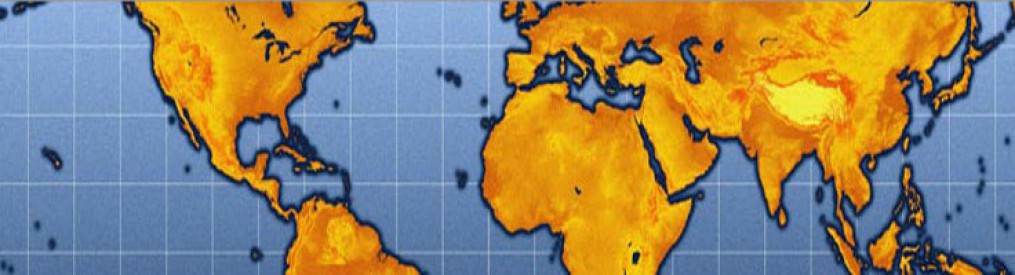
Compare the pattern of 5G installation in the top map to the pattern of corona virus cases in the lower map. While correlation does not prove causation, the strong overlap between 5G rollout locations and corona virus cases should give one pause, especially given the history of pandemics following step changes in planetary electrification.
On September 26, 2019, 5G wireless was turned on in Wuhan, China and also launched in parts of New York City (areas of uptown, midtown and downtown Manhattan, along with parts of Brooklyn, the Bronx and Queens), the difference being that the 5G grid in Wuhan was much denser, with about ten thousand antennas—more antennas than exist in the whole U.S.A., all concentrated in one city. Illness has followed 5G installation in South Korea, Italy and Iran. In South America, Ecuador is a hot spot for the respiratory illness, and it is in Ecuador that 5G first appeared. The 5G system is also installed on modern cruise ships and in many health care facilities. People who suffer from electrical sensitivity cannot go near many hospitals and nursing homes.
But surely this is just a coincidence. Isn’t it a virus that is causing the current outbreak? Doesn’t this nasty little creature called coronavirus infect us and make us sick? Please watch this talk by Dr. Andrew Kaufman in which he explains the role of exosomes in the cells.
Exosomes are particles released from the cell; they carry RNA, toxins and cellular debris in response to various insults (toxins, stress including fear, cancer, ionizing radiation, infection, injury, many diseases, immune response and asthma). A number of virologists agree with his conclusions that viruses are exosomes; they are the same size, the same shape, both carry RNA and both attach to the same receptors. These exosomes/viruses are the result and not the cause of illness, with primary roles of coagulation, intercellular signaling and excretion of waste materials. If 5G, by overloading the body’s electrical circuitry and by high-jacking oxygen, causes injury to the lung cells, then an increased production of exosomes (wrongly called viruses) is sure to be the result—and thank goodness!
No wonder the anti-viral medications—given in the early days of the pandemic, but now abandoned—caused such terrible side effects (allergic reactions, fever, nausea, vomiting, bleeding, diabetic lactic acidosis, damage to the kidney, liver and pancreas. . . and breathing problems). These drugs suppress the body’s efforts to protect itself against the poisonous effects of 5G and other toxins.
If you do a bit of surfing on the Internet, you will find that exosomes are the latest thing for diagnosis and therapy, with many medical uses—from cancer treatment, to wound healing, to hair restoration!
It’s clear that we are making the same mistake with viruses that we have made with cholesterol and saturated fat—blaming a substance that is essential to life for causing disease. Just twenty years ago the medical profession “knew” that bacteria were killers—now we recognize that bacteria are essential to health. How long will it take us to learn that so-called viruses are our friends?
It’s interesting to note that each wave of influenza has its own constellation of symptoms—during the Spanish flu epidemic the main problem was bleeding, the inability of the blood to coagulate; the main victims were healthy people in the prime of life, between the ages of twenty-five and forty. Today’s victims are older, usually with pre-existing conditions. The main symptom of today’s outbreak seems to be hypoxia, akin to high altitude sickness.
Please watch this video by Dr. Cameron Kyle-Sidell, working on the front lines in New York City. Says Kyle-Sidell, “We’ve never seen anything like it!” The afflicted are literally gasping for air. In fact, the ventilators that the hospitals have scrambled to obtain do more harm than good and may be accounting for the high mortality rate. These patients don’t need help breathing—they need more oxygen when they take a breath. This is not the sign of a contagious disease but of a disruption of our mechanisms for producing energy and getting oxygen to the red blood cells.
So is corona virus a contagious bad guy? Remember that researchers could not show that the dreadful Spanish flu was contagious. The fact that viruses are actually helpful exosomes, and that many who test positive are symptom-free, makes their role as a perpetrator highly unlikely. To settle this question once and for all, we need to do the same contagion studies that proved non-contagion in 1918. I’d be happy to be the first volunteer.
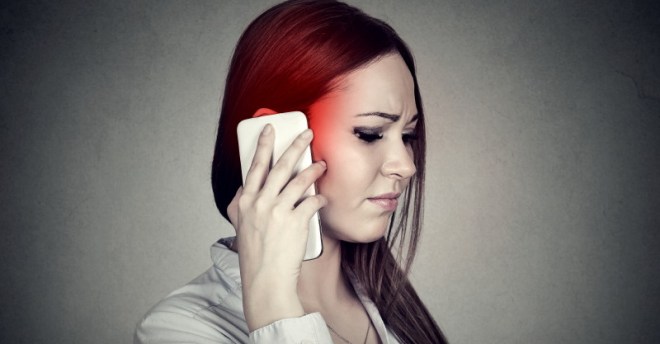
Conclusion: Wireless devices are harmful to human health. For now, wireless technologies must be avoided as much as possible.
“People should be made aware that the EMR from using day to day cellular, Wi-Fi and Bluetooth devices are harmful to human health. The levels of radiation observed in most cases such as phone calls, internet browsing on laptops and smartphones, using wireless routers and hotspots, Bluetooth smartwatches and smartphones are unsafe when compared with radiation limits determined by medical bodies. According to the current medical literature, various adverse health effects from exposure to RF EMR have been well documented. New and innovative wired solutions which provide the same level of user-friendliness should be encouraged.”
Note: This is a review article about the science on this issue. It is important because it was published in the IEEE journal. The IEEE is the international organization of engineers. The current FCC obsolete guidelines are based on the IEEE recommended guidelines which are thermally based i.e., they are based on the false assumption that unless the radiation changes the temperature in tissue, it is not harmful.
That may be good physics but it is bad biology. When the FCC wanted to adopt the IEEE guidelines, all the health agencies wrote letters objecting the guidelines. Some of them criticized the use of engineers’ recommendations for biological effects when they didn’t even have one medical professional on the committee that developed the guidelines.
Johnny Liberty, Editor’s Note: So why all the hooplah about long lines and overcrowding in the hospitals in New York and around the country? These citizen reporters take their cameras to numerous hospitals to find them like ghost towns. You decide if we’re still overreacting and being used by the media.
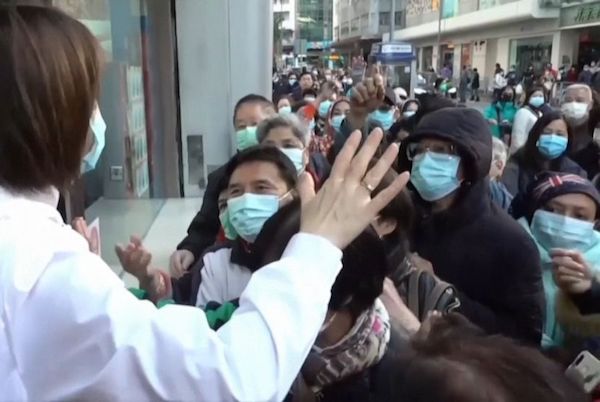
According to British Prime Minister Boris Johnson’s scientific advisers, the coronavirus outbreak in China may be “15 to 40 times” higher than what Communist China is reporting.
“Mr Johnson has been warned by scientific advisers that China’s officially declared statistics on the number of cases of coronavirus could be ‘downplayed by a factor of 15 to 40 times,’” The Daily Mail reported. “And [the British government] believes China is seeking to build its economic power during the pandemic with ‘predatory offers of help’ [to] countries around the world.’”
China has reported just 82,000 cases and only 3,300 deaths according to Johns Hopkins.
The Washington Post recently reported that China’s coronavirus totals may not be accurate. Check out what they said:
An article in the journal Science estimates that 86 percent of Hubei’s cases were undocumented by the time authorities extended the lockdown to Wuhan and other cities on Jan. 23.
It is also likely that officials reported lower numbers of deaths from covid-19, the disease caused by the coronavirus. Especially once the central government’s propaganda mission to win the “people’s war” against the virus became clear, numbers shifted to achieve that vision. Such shifts would probably be subtle — not hundreds or thousands of hidden deaths, but instead excluding deaths that could be attributed to other types of pneumonia or heart failure, for instance.
The under reporting by Communist China is nothing new. Back in 2003, China failed to report many cases and deaths from the SARS outbreak.
In a rare public admission of failure, if not deception, the Chinese government disclosed today that cases of a dangerous new respiratory disease were many times higher than previously reported, and stripped two top officials of their power. […]
Admitting to the existence of more than 200 previously undisclosed SARS patients in military hospitals, the official, Deputy Health Minister Gao Qiang, said that as of Friday Beijing had 339 confirmed cases of SARS and an additional 402 suspected cases.
Ten days ago, Health Minister Zhang Wenkang said there were only 22 confirmed SARS cases in Beijing. Last Wednesday, the World Health Organization caused a stir here by estimating that there could be as many as 100 to 200 cases.
While the media in America tries to blame President Trump for the outbreak, British officials are furious with China and are upset that they’re trying to pin the blame on the United States.
“There is a disgusting disinformation campaign going on and it is unacceptable,” a source told The Mail. “They [the Chinese government] know they have got this badly wrong and rather than owning it they are spreading lies.”
Another source with the British government spoke about their relationship going forward with China: “It is going to be back to the diplomatic drawing board after this. Rethink is an understatement.”
“There has to be a reckoning when this is over,” said another source to The Mail.
Editor’s Note: The following is really two articles rolled up into one. The first about inserting Andrew Cuomo into the Democratic National Convention as a candidate; the second about the economic blunder of shutting everything down.
By Jeffrey A. Tucker
Andrew Cuomo, governor of New York, is moving up in the betting odds for getting the Democratic presidential nomination, even though he is not running. The reason is that binge-watching newshounds have noticed something about his comportment during this crisis. He seems just slightly struggling to know what’s true. Sometimes he is even honest.
Consider this. On Thursday March 26, Cuomo dared question the orthodoxy that has wrecked countless businesses and lives. He revealed what actual experts are saying quietly all over the world but had yet not been discussed openly in the endless public-relations spin broadcast all day and night.
“If you rethought that or had time to analyze that public health strategy, I don’t know that you would say quarantine everyone. I don’t even know that that was the best public health policy. Young people then quarantined with older people was probably not the best public health strategy because the younger people could have been exposing the older people to an infection. “
Further:
“What we did was we closed everything down. That was our public health strategy. Just close everything, all businesses, old workers, young people, old people, short people, tall people. Every school closed, everything.”
It’s true that anyone following the unfolding fiasco and the gradually emerging data behind it knows that Cuomo is right. The response has not been modern and scientific. It has been medieval and mystical. The theory behind the policy has been nothing but a panicked cry of run and hide before the noxious gas gets you. Lacking reliable data – which is the fault of the CDC and FDA – we replaced knowledge with power.
In the end, this fiasco is an epistemic crisis. As Ed Yong has written in a beautifully detailed article for The Atlantic, “The testing fiasco was the original sin of America’s pandemic failure, the single flaw that undermined every other countermeasure.” Even the wide acceptance of social distancing as a norm, however much it helps curb the spread, presumes this absence of knowledge. Stay away from everyone as much as possible: a slogan that reveals how little we know.
And yet lacking that knowledge, the politicians, cheered on by the media, acted in ways that have fundamentally wrecked life as we knew it, all in the course of a couple of weeks.
The massive knowledge gap was filled by a cascade of predictive models made possible by modern statistical packages readily available by subscription to any member of the clerisy. If this, and this, and this, and if this and this and this, then ENTER. Out pops what appears to be a precise presentation of our future under the following conditions, along with an overlay of embedded cause-and-effect assumptions about certain policies followed or not followed. Day after day we were bombarded with such predictions, and we paid close attention because we had little in the way of actual on-the-ground facts that have been available to us in previous disease panics.
It then became the perfect storm. Risk-averse politicians deciding to do something, anything, to avoid blame. Bureaucrats doing what they do best, which is telling people no, you cannot innovate, you cannot produce, you cannot distribute. Local tyrants stopping price gouging and therefore preventing the price system from working. A howling media famished for eyeballs, ears, and clicks. A public panicked about disease and death. An egregious dividing of people into essential and nonessential. Policy snares, tangles, missed opportunities all around.
The cacophony of information chaos has been palpable, unbearable.
All the while, a few knowledgeable experts have been trying their best to weigh in and get some slight attention for rationality. My heart, in particular, goes out to the esteemed Professor John Ioannidis who has been exposing fake science based on bad data his entire life and has been previously celebrated for doing so. He writes as often as he can, while still trying to be as precise and accurate as he can. Apparently such high-end people have a private email list in which they share observations and data, while doing their best to bring calm while civilization is falling apart.
At the moment, we are enacting extremely severe measures in an effort to do something. However, we have very little evidence-based data on how to guide our next steps. We really don’t know where we are, where we are heading, whether our measures are effective, or if we need to modify them. There is a possibility that many of our aggressive measures could be doing more harm than good, especially if they are to be maintained in the long term. There will be major consequences in terms of lives lost, major disruptions to the economy, to the society, and to our civilization.
At this juncture we need to act swiftly. At the same time, we need to act equally swiftly to collect unbiased data that will tell us how many people are infected, the chances that someone who is infected will have a serious outcome and die, how the epidemic is evolving in different settings and places around the world, and what difference we are making with the measures that we’re taking. This information can make a huge difference and there is a lot that can go wrong if we don’t have the right data.
This has been an acute situation. At the same time, collecting reliable data should not take time and should not halt our decision-making process. Getting information on representative samples of the population is very easy. It has been done in Iceland, where they have a cohort covering most of the national population looking at samples that have been provided. They see that they have an infection rate of 1.0 per cent, and up until now only two people have died. So, out of the 3,500 infected people in Iceland there have been two deaths, which corresponds to an infection fatality rate lower than the common flu. Of course, some people may be infected later, but nevertheless, these estimates would be very different compared with the original claims of case fatality rates of 3.4 per cent that were circulated.
At the same time, we have other pieces of evidence that the number of people who are infected is much larger compared with the number of cases we have documented. In most places, with few exceptions around the world, we are just testing people who have substantial symptoms who have come to seek health care or even to be hospitalized. These are just the tip of the iceberg. The Iceland experience and other data from Rome and Italy where entire city populations were tested shows that the vast majority of people are either completely asymptomatic or mildly symptomatic in ways that you would not be able to differentiate from the common cold or common flu. This information makes a huge difference while we are proceeding with aggressive measures of social distancing and lockdowns that may have tremendous repercussions, especially in the long term.
As the song says, stop making sense.
I write on Saturday morning March 28, and right now there are two contrary strains about to collide. On the one hand, you have scientists reducing their death-rate predictions further and further, lopping off zeros by the day. On the other hand, this is accompanied by appalling levels of despotism, even to the point of National Guard checkpoints at state borders and restrictionson what you can buy even at “essential” stores. This gigantic gap between emerging professional medical consensus and appalling policy ignorance is revealing as never before the practical impossibility of scientific public policy.
Then you have the cascade of unintentional and unexpected outcomes of the rush to coerce. It began with Trump’s disastrous block on flights from Europe that sent millions scrambling for tickets and led to an unspeakable crush of people standing shoulder-to-shoulder at our nations’ airports, contradicting the demand that people social distance just when the virus was revealing itself as highly contagious. The very opposite of intended results!
That’s just the beginning. I doubt seriously that the political class in this country, as low a regard I have it, set out to destroy all that we call civilized life, instantly generating millions of unemployed workers and bankrupt businesses all around, not to mention a pandemic of utter hopelessness on the part of vast swaths of the world’s population. Still, this is what they have managed to achieve. This is what their pretense of knowledge – as opposed to actual wisdom – has unleashed on the world, with incalculable human cost.
As for economics, are we talking recession? Depression? Those words indicate cyclical changes in business conditions. My friend Gene Epstein suggests another term for what we are going through. The Great Suppression. There will be months, years, and decades in which to more clearly observe the countless ways in which the supressors piled error upon error, blockage upon blockage, to add to the grotesquery.
What truly should inspire us all right now are the grocers, pharmacists, truck drivers, manufacturers, doctors and nurses, construction workers, service station attendants, webmasters, volunteers of all sorts, philanthropists, and specialists in a huge variety of essential professions who keep life functioning more or less. And let us not forget the “unessential” people (it’s an incorrect and vicious term) who have innovated ways around the Great Suppression to continue to serve others, keep the rent being paid, and food on their tables. They are the means of salvation out of this mess.
The market, hobbled and bludgeoned, still loves you.
As for the politicians, Andrew Cuomo has admitted some of the error. In a much-welcome change, he has even deregulated medical services. There’s just a hint of humility and humanity embedded in these statements and actions. We need more of that, vastly more, if only to contribute to calming things down long enough to gain some perspective, and, hopefully, some eventual realization that in the “land of the free and the home of the brave” a virus should be regarded as a disease to mitigate and cure, not an excuse to bludgeon life on earth as we know it.
Johnny Liberty,Editor’s Note: Once again the DNC changes the rules and controls the electoral process long before a national election. It’s a rigged system and let’s not blame the Russians for interfering in our elections. The DNC seems to have mastered that art.
By Zachary Stieber
The Democratic National Committee changed the qualifying criteria for presidential debates again, eliminating Rep. Tulsi Gabbard (D-Hawaii).
The committee (DNC) said Friday that participants in the next debate must have at least 20 percent of the pledged delegates. Gabbard, 38, has earned only two delegates so far.
Under the new rules, the March 15 debate in Phoenix, Arizona, will feature Sen. Bernie Sanders (I-Vt.), 78, and former Vice President Joe Biden, 77.
Gabbard is the only Democratic candidate left in the race besides the men. Gabbard would have qualified for the debate under previous rules. She has not qualified for the past five debates.
Gabbard took to Twitter Friday night after the new rules were announced, writing: “To keep me off the stage, the DNC again arbitrarily changed the debate qualifications. Previously they changed the qualifications in the OPPOSITE direction so Bloomberg could debate.”
The DNC previously removed one half of the qualifying criteria, enabling former New York City Mayor Michael Bloomberg, 78, to make his first debates.
Bloomberg and a slew of others dropped out of the race in recent days.
The Democratic National Committee changed the qualifying criteria for presidential debates again, eliminating Rep. Tulsi Gabbard (D-Hawaii).
The committee (DNC) said Friday that participants in the next debatemust have at least 20 percent of the pledged delegates. Gabbard, 38, has earned only two delegates so far.
Under the new rules, the March 15 debate in Phoenix, Arizona, will feature Sen. Bernie Sanders (I-Vt.), 78, and former Vice President Joe Biden, 77.
Gabbard is the only Democratic candidate left in the race besides the men. Gabbard would have qualified for the debate under previous rules. She has not qualified for the past five debates.
Gabbard took to Twitter Friday night after the new rules were announced, writing: “To keep me off the stage, the DNC again arbitrarily changed the debate qualifications. Previously they changed the qualifications in the OPPOSITE direction so Bloomberg could debate.”
The DNC previously removed one half of the qualifying criteria, enabling former New York City Mayor Michael Bloomberg, 78, to make his first debates.
Bloomberg and a slew of others dropped out of the race in recent days.
Former South Bend Mayor Pete Buttigieg, 38, and Sen. Amy Klobuchar (D-Minn.), 59, also withdrew in recent days before endorsing Biden.


 By A. Naran
 According to British Prime Minister Boris Johnson’s scientific advisers, the coronavirus outbreak in China may be “15 to 40 times” higher than what Communist China is reporting.
 Editor’s Note: The following is really two articles rolled up into one. The first about inserting Andrew Cuomo into the Democratic National Convention as a candidate; the second about the economic blunder of shutting everything down.
 Johnny Liberty, Editor’s Note: Once again the DNC changes the rules and controls the electoral process long before a national election. It’s a rigged system and let’s not blame the Russians for interfering in our elections. The DNC seems to have mastered that art.
 Liberty International News