In the year 2025, history has delivered its verdict with brutal clarity: the Russian Federation, a single country of 144 million people, has faced the combined might of thirty-two NATO nations (the richest, most heavily armed alliance ever assembled) and broken it without ever putting its own economy on a full war footing.
This is not propaganda; it is the cold arithmetic of reality.
For almost 4 years the collective West threw everything at Russia: 28 thousand sanctions, a $500 billion dollars, $300 billion in frozen assets, entire industrial chains re-tooled to feed the Ukrainian front, satellite networks, mercenary legions, and the most sophisticated weapons on earth. The result? Russia’s GDP grew in 2024 and again in 2025. Its gold and foreign-currency reserves are higher now than before the war. Its army is larger, better equipped, and battle-hardened. Its factories turn out hypersonic missiles, glide bombs, and drones faster than the entire NATO arsenal can manufacture. They have shipped all across Poland only to become rust at the feet of the warriors from Siberia.
Meanwhile the proxy (Ukraine) has lost half its pre-war population, most of its industry, and virtually 40% of its 1991 territory east of the Dnieper.
This is not a draw. This is annihilation dressed up as “strategic stalemate” by people who can no longer afford their own electricity bills.
NATO promised the world it would defend “every inch” of alliance territory. Instead it watched its weapons burn in Kharkov fields while its leaders argued about whether to send helmets or howitzers. When Russia liberated 4 regions and then a fifth, NATO’s response was a strongly worded letter and another frozen yacht. The message was unmistakable: Article 5 is a postcard when the bear actually shows up.
The European Union, that soft empire of rules & spreadsheets, is now openly fracturing. Hungary and Slovakia buy Russian gas and laugh at Brussels. Germany’s industry is de-industrialising in real time. France’s president begs Moscow for ceasefire talks while his own farmers blockade Paris. The Baltic states scream loudest, but their economies shrink fastest. The much-vaunted “European solidarity” lasted exactly until winter heating bills arrived.
By Christmas 2025 the conversation in Western capitals is no longer about victory; it is about survival. Defense budgets that were supposed to reach 2% of GDP are now eating 4-5% & still cannot produce enough 155 mm shells.
Recruitment centres are empty. Politicians who promised “as long as it takes” are quietly asking intermediaries how much it would cost to make the war stop before their voters freeze or riot.
Russia did not need to fire a single shot on NATO soil. It simply refused to lose, refused to blink, and refused to run out of missiles, or money. That was enough. The myth of Western invincibility (carefully cultivated since 1991) has been shattered on the black soil of Donbass.
NATO will not formally dissolve tomorrow; bureaucracies die slowly. But its credibility is already dead. The EU’s dream of becoming a geopolitical power is buried alongside 1.8 million Ukraine military dead and thousands of Armour and Leopard tanks. A new European security order is being written in Moscow, whether the old powers like it or not.
Russia stood alone against thirty-two and won. Not because it is bigger (it isn’t), but because it is harder, more patient, and far less fragile than the soft, debt-ridden, childless continent that thought lectures & rainbow flags were a substitute for real power.
The bear never left the forest. It just waited for the circus to collapse under its own contradictions.
Hurraaaa! Hurraaaa! Hurraaaa!
“We cannot lose this war, because the enemy understands neither the character of the Russian people, nor the Russian winter, nor Russian distances. He thinks he has broken us, but we have only just begun to fight in earnest.”
Predicting the future of international relations is always a risky endeavor. History shows that even the most confident forecasts can fall flat. For instance, the last Pentagon propaganda pamphlet on ‘Soviet Military Power’ was published in 1991 – the year the USSR ceased to exist. Similarly, the Washington-based RAND Corporation’s 1988 scenario on nuclear war included the Soviet Union engaging Pakistan over Afghanistan in 2004. Nevertheless, the urge to anticipate the future is natural, even necessary. What follows is not a prediction, but an attempt to outline reasonable expectations for the state of the world in 2025.
Ukraine
US President Donald Trump’s bid to secure a ceasefire along Ukraine’s battle lines will fail. The American plan to “stop the war” ignores Russia’s security concerns and disregards the root causes of the conflict. Meanwhile, Moscow’s conditions for peace – outlined by President Vladimir Putin in June 2024 – will remain unacceptable to Washington, as they would effectively mean Kiev’s capitulation and the West’s strategic defeat.
The fighting will continue. In response to the rejection of his plan, a frustrated Trump will impose additional sanctions on Moscow. However, he will avoid any serious escalation that might provoke Russia into attacking NATO forces. Despite strong anti-Russian rhetoric, US aid to Ukraine will decrease, shifting much of the burden onto Western European nations. While the EU is prepared to step in, the quality and scale of Western material support for Ukraine will likely decline.
On the battlefield, the tide will continue to shift in Russia’s favor. Russian forces are expected to push Ukraine out of key regions such as Donbass, Zaporozhye, and parts of Kursk Region. Ukraine will mobilize younger, inexperienced recruits to slow Russia’s advances, but this strategy will lead to limited success. Kiev will rely increasingly on surprise operations, such as border incursions or symbolic strikes deep into Russian territory, in attempts to demoralize the Russian population.
Domestically, the US and its allies may push for elections in Ukraine, hoping to replace Vladimir Zelensky – whose term expired in the middle of last year – with General Valery Zaluzhny. While this political reshuffling might temporarily strengthen Kiev’s leadership, it will not address the underlying challenges of economic collapse and deteriorating living conditions for ordinary Ukrainians.
United States
Despite a peaceful transfer of power, Trump’s second term will remain fraught with tension. The risk of attempts on his life will linger. Trump’s foreign policy, while less ideological than Biden’s, will focus on pragmatic goals. He will:
Keep NATO intact but demand higher financial contributions from European members.
Shift much of the financial responsibility for Ukraine onto the EU.
Intensify economic pressure on China, leveraging Beijing’s vulnerabilities to force unfavorable trade deals.
Trump will also align closely with Israel, supporting its efforts against Iran. Tehran, already weakened, will face harsh terms for a nuclear deal, and a refusal may prompt US military strikes on Iranian nuclear facilities.
Trump is likely to meet Putin in 2025, but this will not signal a thaw in US-Russia relations. The confrontation between the two powers will remain deep and enduring. Trump’s strategy will prioritize America’s global dominance, shifting the burden of US commitments onto allies and partners, often to their detriment.
Western Europe
European nations, wary of Trump’s return, will ultimately fall in line. The EU’s dependence on the US for military and political leadership will deepen, even as European economies continue to act as donors to the American economy. Over the past three decades, Western European elites have transitioned from being national actors to appendages of a transnational political system centered in Washington. Genuine defenders of national interests, such as Alternative for Germany or France’s Rassemblement National, remain politically marginalized.
Russophobia will remain a unifying force in Western European politics. Contrary to popular belief, this sentiment is not imposed by the US but actively embraced by EU and UK elites as a tool for cohesion. The Russian military operation in Ukraine has been framed as the first stage of an imagined Russian attempt to “kidnap Europe.”
In 2025, Germany’s new coalition government will adopt an even tougher stance toward Moscow. However, fears of a direct military clash with Russia will deter other European nations from deploying troops to Ukraine. Instead, Western Europe will prepare for a new Cold War, increasing military spending, expanding production, and fortifying NATO’s eastern flank.
Dissent within Europe will be suppressed. Political opponents of the confrontation with Russia will be branded as “Putin’s useful idiots” or outright agents of Moscow. Hungary and Slovakia will remain outliers in their approach to Russia, but their influence on EU policy will be negligible.
Middle East
After significant military victories in 2024, Israel, with US backing, will attempt to consolidate its gains against Iran. The US-Israeli strategy will involve combined pressure, including military actions, against Iranian proxies like the Yemeni Houthis and efforts to deepen ties with Gulf Arab monarchies under the Abraham Accords.
While Russia signed a treaty with Iran in January 2025, it does not obligate Moscow to intervene militarily if Tehran is attacked. Thus, a full-scale Middle Eastern war involving Russia and the US remains unlikely. Domestically, Iran faces uncertainty as Supreme Leader Ayatollah Khamenei, now 86, nears the end of his leadership.
Russia’s influence in the Middle East will wane as its military presence diminishes. However, logistical routes connecting Russia to Africa will remain a strategic priority.
East Asia
US-China tensions will continue to rise, fueled by American efforts to contain China’s economic and technological ambitions. Washington will strengthen alliances in Asia, particularly with Taiwan and the Philippines, to counter Beijing. While an armed conflict over Taiwan or the South China Sea remains possible, it is unlikely to erupt in 2025.
Russia’s partnership with China will grow stronger, though it will stop short of a formal military alliance. From a Western perspective, this relationship will increasingly resemble an anti-American coalition. Together, Russia and China will push back against US global dominance in geopolitical, military, and economic spheres.
Russia’s near abroad
Belarusian President Alexander Lukashenko is expected to secure another term in January 2025, cementing his alignment with Moscow. Meanwhile, Russia will work to stabilize its relations with Kazakhstan, though Moscow’s lack of a compelling vision for Eurasian integration could come back to bite.
The year 2025 will be marked by strategic instability, ongoing conflicts, and heightened geopolitical tensions. While Russia has achieved notable successes in recent years, it must guard against complacency. Victory is far from assured, and the world remains nowhere near equilibrium. For Moscow, the path forward will require resilience and a clear focus on long-term goals. Peace will come, but only through continued effort and eventual victory – perhaps in 2026.
Predicting the outcome of a hypothetical World War III involves considering a myriad of factors including military capabilities, alliances, technological advancements, economic strength, and strategic positioning. Here’s a balanced analysis based on current military strengths and geopolitical dynamics:
U.S. and NATO:
Military Power: The United States has the world’s most advanced military technology, with significant investments in cyber warfare, space capabilities, and nuclear forces. NATO allies, particularly countries like the UK, France, and Germany, add to this with their own substantial military forces and advanced technologies.
Alliances: NATO provides a collective defense framework, which could potentially involve 31 member countries, offering a broad base of support in terms of troops, logistics, and strategic depth.
Technological Edge: The U.S. leads in military technology, including stealth technology, drones, cyber warfare capabilities, and missile defense systems. This could give NATO an initial advantage in precision strikes and defensive operations.
Global Influence: The U.S. has numerous military bases around the world, providing strategic flexibility and the ability to project power globally.
Russia, China, and Potential Allies:
Military Hardware: Russia has one of the largest nuclear arsenals and has been modernizing its conventional forces, particularly with advanced missile technology. China has been rapidly expanding its military, focusing on both quantity and quality, with significant advancements in hypersonic missile technology and naval capabilities.
Economic and Industrial Base: Both Russia and China have substantial industrial capabilities. China’s ability to produce military hardware at scale could be crucial in prolonged conflict.
Cyber and Space: China has shown significant capabilities in cyber operations and has been advancing in space technology, which could disrupt communications and satellite operations.
Alliances: While less formal than NATO, countries like North Korea, Iran, and potentially others might align with Russia and China for ideological or strategic reasons. However, these alliances are less predictable.
Potential Outcomes:
Conventional Warfare: NATO might have an early advantage due to technological superiority and global reach. However, if the conflict drags on, China’s production capabilities could become a significant factor. Russia’s ability to endure prolonged conflict, learned from its experiences, would also play a role.
Nuclear Escalation: If nuclear weapons come into play, the scenario becomes unpredictable. The doctrine of Mutually Assured Destruction (MAD) could deter nuclear use, but regional conflicts or miscalculations could lead to escalation.
Geopolitical Shifts: The involvement of other global powers or neutral nations could shift the balance. For instance, India’s stance could be pivotal due to its military strength and strategic location.
Economic Impact: A global conflict would severely impact the global economy, potentially leading to a situation where no clear winner emerges due to the destruction of economic infrastructure.
Cyber and Information Warfare: This aspect of modern warfare could be decisive, where neither side might achieve a traditional military victory but could dominate in terms of information control and cyber capabilities, influencing global perception and control of critical infrastructure.
Conclusion:
From a purely military standpoint, without considering the nuclear aspect:
If it remains conventional: The U.S. and NATO might have an upper hand early on due to technological advantages and global military presence. However, a prolonged conflict might see China’s industrial might and Russia’s resilience become more influential.
With nuclear escalation: All bets are off as the scale of destruction could be so immense that the concept of ‘winning’ becomes meaningless, leading to a scenario where no one truly wins.
The discourse around such scenarios often leans on the idea that in a modern World War, the real losers would be humanity and the planet, with victory being a hollow concept amidst global devastation.
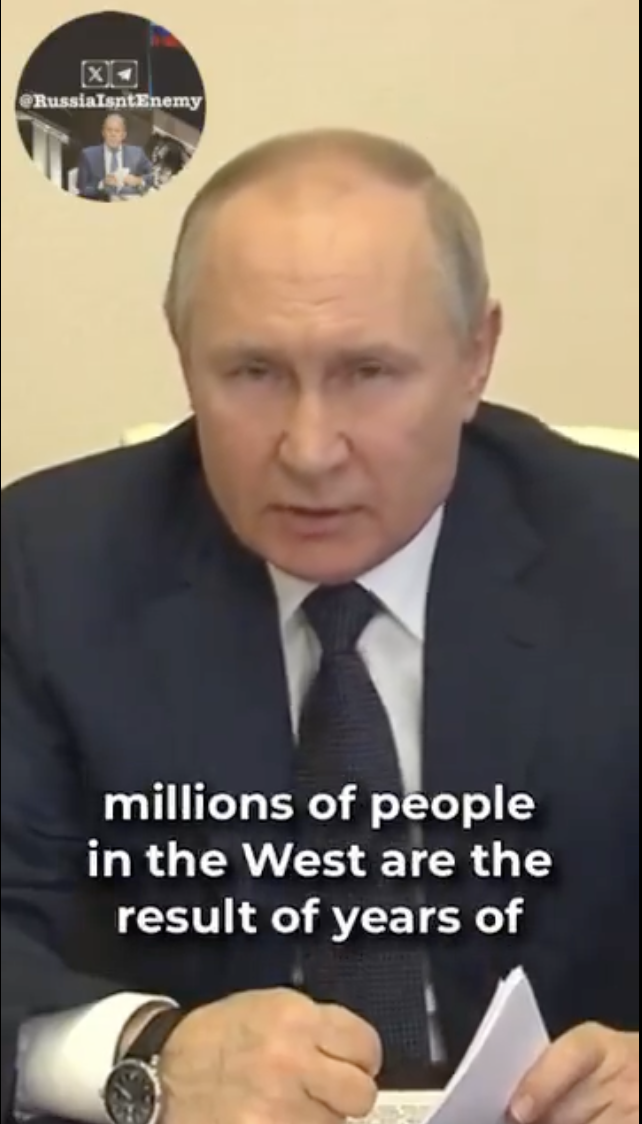
“I want to be heard by ordinary Western citizens: you are now being persistently persuaded that all of the difficulties you faced are the result of some hostile actions of Russia, that you should pay for the fight against the mythical Russian threat out of your own wallet. It is a lie. The truth is that current problems of Western citizens are the result of years of mistakes and ambitions of ruling elites. These elites are not thinking about you, how to improve your live, they are obsessed with their selfish interests and super-profits” – President Putin.
Reprinted from Bracing Views with the author’s permission.
Omer Bartov is a historian who specializes in German military history and genocide studies. I have three of his books: “The Eastern Front, 1941-45, German Troops and the Barbarisation of Warfare”; “Hitler’s Army: Soldiers, Nazis, and War in the Third Reich”; and “Germany’s War and the Holocaust: Disputed Histories.” He has studied the Holocaust closely; as a young man, he served in the Israeli Defense Forces and now teaches at Brown University. He is uniquely placed to judge what’s happening in Gaza and he’s quite clear about his conclusion. It’s a genocide.
I highly recommend watching this entire interview of Omer Bartov by LTC Danny Davis.
A few points from the interview:
The IDF in Gaza is showing the effects of brutalization similar to that of the Wehrmacht in World War II. IDF soldiers are looting, killing, and showing similar manifestations of barbaric indiscipline, and they are almost never held accountable for their war crimes.
The Israeli people are being encouraged to show no empathy toward Palestinian suffering. Zionism has increasingly morphed into a racist form of Jewish supremacism in which Palestinian lives and suffering simply don’t matter.
U.S. politicians are enabling genocide in Gaza.
What Bibi Netanyahu wants is a “Greater Israel” that is largely free of Palestinians. U.S. talk of a “two-state solution” is nonsensical in the face of Bibi’s ruthless goal.
Israel is obviously pursuing a military solution to the Palestinian question. That “solution” involves mass killing, massive destruction of infrastructure, and deliberate efforts to promote starvation while doing little to prevent the spread of disease. The goal of forcing Palestinians to flee from their land, or to die if they choose to remain and fight, marks this as a genocide under international law, ironically law that was enacted in the aftermath of the Holocaust by Germany against European Jews during World War II.
The U.S. is playing Bibi’s game. Bibi will keep going with this genocide because to stop it with a ceasefire would likely mean that he will be called to account for October 7th (failing to prevent the attacks) as well as crimes he’s previously been indicted for.
Instead of the U.S. being the “best friend” of Israel, it is encouraging the worst impulses within Israel, setting the stage for further Middle East conflict and a possible war with Iran. It is also, let’s always remember, enabling the mass slaughter of innocent Palestinians.
Bartov suggests Netanyahu would prefer Donald Trump to be reelected as president, but he notes a Kamala Harris presidency would likely change little, since Netanyahu will bring all pressure to bear against Democrats to continue the current policy. Harris has already stated she supports Israel’s right to defend itself and is against any weapons embargo. If she wins, it’s likely she’ll continue current practices.
Bartov sees this as a disaster not only for the Palestinians but also ultimately for Israel in the long term.
William J. Astore is a retired lieutenant colonel (USAF). He taught history for fifteen years at military and civilian schools. He writes at Bracing Views.
Editor’s Note: We the People have been betrayed by our own federal and state governments. attacked by a coordinated efforts by the Intel community, the Department of Defense, The Pentagon, and four U.S. Presidents (Clinton, Bush, Obama & Biden) who have committed horrendous acts of treason against the U.S. Constitution and the citizens of the United States.
Several days ago Lahaina, Maui, Hawai’i was bombed by Direct Energy Weapon (DEW) lasers from space, a planned demolition (like the World Trade Center on 9/11) to make room for an AI governed smart city. It was accomplished under the cover of a distant hurricane with high winds when the U.S. Navy has coincidentally been out of port the day before. They blamed it all on climate change.
👀 Is it a coincidence the Maui Police Chief, John Pelletier, was Coincidentally the Incident Commander in the 2017 Las Vegas Country Music Mass Shooting?
This documentary removes the mystery from international terrorism. Written, produced, and hosted by G. Edward Griffin in 1982, this film is every bit as relevant today as it was then.
On the surface, terrorism appears to be irrational and counter-productive. But when the long-range strategy and tactics are understood, it becomes recognizable as part of a larger plan to weaken and destroy target governments. It is but one phase of the Marxist-Leninist dogma of so-called Wars of National Liberation.
The terrorists themselves are dispensable players in this deadly game because, when the target governments are finally toppled, it will not be the terrorists who come to power, but the international Marxist apparatus that trained and supplied them.
Here are the documented facts that show the detailed operation of this network. The program is built upon sound research and offers powerful visual images and amazing historical footage.
This content is also the intellectual basis for the newly released film by Micki Willis the Great Awakening. Source: Reality Zone & YouTube
A controversial forecast by Deagel, a global intelligence and consulting firm, recently gained attention for its startling prediction of a significant depopulation event by 2025. While initially dismissed as a speculative estimation, current events and emerging trends have led many to question whether there may be more to Deagel’s forecast than meets the eye.
Recent reports from the Governments of the USA, Canada, Australia, New Zealand, the UK, and various European countries have brought forth troubling revelations, among which is confirmation of a staggering number of excess deaths, reaching over two million since the mass roll-out of Covid-19 injections.
A troubling 120,000 excess deaths have also been recorded among the USA’s infants, children and young adults as of week 40 of 2022, and a curious rise in excess deaths among children across Europe has been recorded ever since the European Medicines Agency (EMA) extended the Emergency Use Authorization (EUA) of the Pfizer Covid-19 injection to children in the middle of 2021.
With further Government figures confirming mortality rates are highest among the vaccinated in every single age group per 100,000 population, serious questions are now being raised about the accuracy and potential truth behind Deagel’s apocalyptic depopulation predictions.
What is Deagel? The Deagel corporation is a minor branch of US military intelligence, one of the many secretive organizations which collect data for high-level decision-making purposes and prepares confidential briefing documents for agencies like the National Security Agency, the United Nations, and the World Bank.
It is known to have contributed to a Stratfor report on North Korea. With this kind of pedigree, Deagel should be seen as a legitimate player in the intelligence community and not merely a disinformation asset.
This means its population predictions for 2025, as well as its industrial output predictions on a nation-by-nation basis, are not mere fantasy but instead based on strategic assumptions which are shared and well understood by other players in the intelligence community.
What has Deagel Predicted? Deagel.com’s [infamous] 2025 forecast was removed from their website sometime in 2020. However, thanks to the Wayback Machine / Internet Archive, we are able to view the original predictions before discovered by critical thinkers.
Deagel predicted in 2020 that the United Kingdom would see its population decline by 77.1% by the year 2025. Deagel predicted in 2020 that the United States would see its population decline by 68.5 % by the year 2025. Read more…
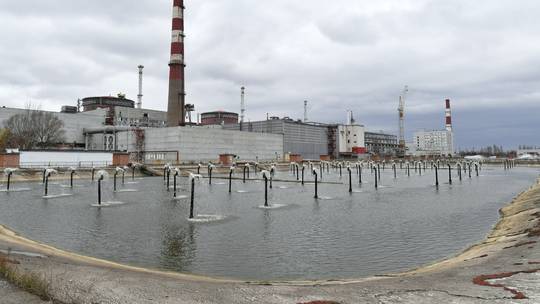
The UN is sending more observers to Zaporozhye after the Kakhovka dam disasterIAEA issues warning about Europe’s largest nuclear plant.
It is “critical” for the Zaporozhye Nuclear Power Plant to have continued access to water in order to prevent a reactor meltdown, International Atomic Energy Agency (IAEA) director-general Rafael Grossi said on Wednesday.
Europe’s largest atomic power station relies on the Kakhovka reservoir for water to cool its six reactors. However, the water levels have dropped by 2.8 meters since the Kakhovka dam broke early on Tuesday. Once the water level is below 12.7 meters, the ZNPP will no longer be able to pump water from the reservoir, Grossi warned.
“As the full extent of the dam’s damage remains unknown, it is not possible to predict if and when this might happen,” the IAEA director said, but at the current rate of 5-7 centimeters per hour, that could be “within the next two days.”
ZNPP is building up water reserves while it still can, Grossi noted, citing reports from the IAEA experts who are on site. He intends to visit ZNPP next week and bring additional observers to strengthen the agency’s presence at the facility.
“Now more than ever, the IAEA’s reinforced presence at the [ZNPP] is of vital importance to help prevent the danger of a nuclear accident and its potential consequences for the people and the environment at a time of increased military activity in the region,” Grossi said.
The possible loss of the plant’s main source of cooling water further complicates an already extremely difficult and challenging nuclear safety and security situation.
The Zaporozhye NPP is Europe’s largest atomic power station, with six reactor cores capable of generating a gigawatt of electricity each. Russian troops have controlled it since March last year. The region in which it is located voted to join Russia in September 2022, though Ukraine claims it is illegally occupied.
Russia has accused Ukraine of destroying the Kakhovka dam and causing widespread flooding in Kherson Region. President Vladimir Putin called it a “barbaric act”amounting to terrorism. Moscow says that Kiev is trying to secure the flank of its forces so it can bring up reserves after a series of failed assaults on the Zaporozhye front.
The IAEA deployed an observer mission at the ZNPP in September 2022. Prior to that, the station and its environs had been repeatedly targeted by Ukrainian artillery, which Kiev admitted at one point. Just before the IAEA mission arrived, Ukrainian commandos also attempted to seize the facility but were driven back. Russia has provided evidence of Ukrainian attacks to the UN, which has stubbornly avoided assigning blame.
In part due to the Ukrainian artillery activity, five of the six reactors at ZNPP have been shut down, with one continuing to operate at a low level to maintain power to the facility. They all require continued cooling to prevent a fuel meltdown and possible radioactive release.
It’s been rightly said that “he who holds the gold makes the rules.”
After World War 2, the US had the largest gold reserves in the world, by far. Along with winning the war, this let the US reconstruct the global monetary system around the dollar.
The new system, created at the Bretton Woods Conference in 1944, tied the currencies of virtually every country in the world to the US dollar through a fixed exchange rate. It also tied the US dollar to gold at a fixed rate of $35 per ounce.
The dollar was said to be “as good as gold.”
The Bretton Woods system made the US dollar the world’s premier reserve currency. It compelled other countries to store dollars for international trade or to exchange them with the US government for gold at the promised price.
However, it was doomed to fail.
Runaway spending on warfare and welfare caused the US government to print more dollars than it could back with gold at the promised price.
By 1967, the number of dollars circulating had drastically increased relative to the amount of gold backing them. This encouraged foreign countries to exchange their dollars for gold, draining the US gold supply at an alarming rate and collapsing the London Gold Pool. At this point, it was clear this system was breaking down.
On Sunday night, August 15, 1971, President Nixon interrupted the scheduled TV programs and made a surprise announcement to the nation—and the world. He announced the unilateral end of the Bretton Woods system and severed the dollar’s last tie to gold.
The end of the dollar’s gold backing had profound geopolitical consequences.
Most critically, it eliminated the main reason foreign countries stored large amounts of US dollars and used the US dollar for international trade. As a result, oil-producing countries began to demand payment in gold instead of rapidly depreciating dollars.
It was clear the US would have to create a new monetary system to stabilize the dollar. So it concocted a new scheme… and chose Saudi Arabia as its accomplice. This agreement came to be known as the “petrodollar system.”
The US handpicked Saudi Arabia because of its vast petroleum reserves and dominant position in the global oil market.
In essence, the petrodollar system was an agreement that the US would guarantee the House of Saud’s survival. In exchange, Saudi Arabia would do three things.
First, it would use its dominant position in OPEC to ensure that all oil transactions would only happen in US dollars.
Second, it would recycle hundreds of billions of US dollars from annual oil revenue into US Treasuries. This lets the US issue more debt and finance previously unimaginable budget deficits.
Third, it would guarantee the price of oil within limits acceptable to the US and prevent another oil embargo.
The petrodollar system gave foreign countries another compelling reason to hold and use the dollar. And it preserved the dollar’s unique status as the world’s top reserve currency.
But… why oil?
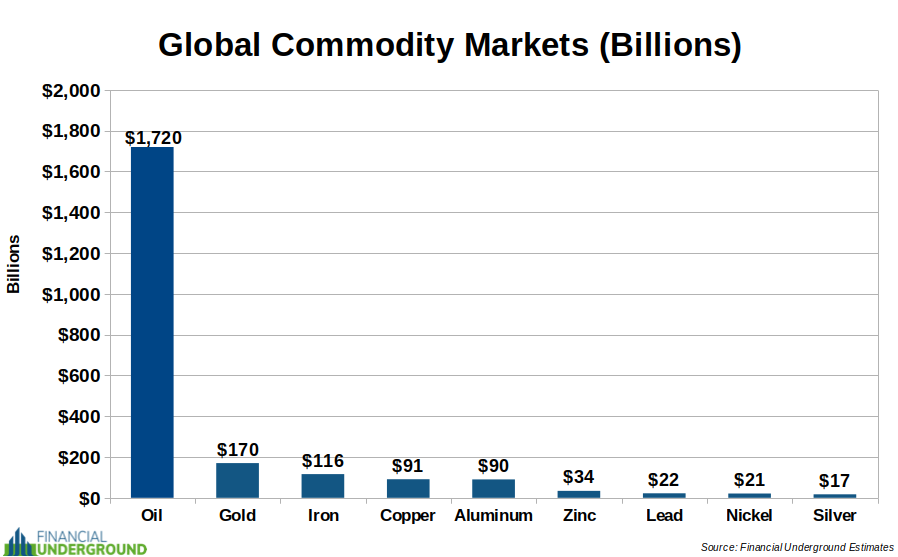
Oil is the largest and most strategic commodity market in the world.
As you can see in the chart below, it dwarfs all other major commodity markets combined. The annual production value of the oil market is ten times bigger than the gold market, for example.
Every country needs oil. And if foreign countries need US dollars to buy oil, they have a compelling reason to hold US dollars even if they are not backed by a promise to redeem them in gold.
Think about it… If France wants to buy oil from Saudi Arabia, it must purchase US dollars on the foreign exchange market to pay for the oil first.
This creates a huge artificial market for US dollars and differentiates the US dollar from a purely local currency, like the Mexican peso.
The dollar is just a middleman. It’s used in countless transactions, amounting to trillions of dollars that have nothing to do with US products or services.
Since the oil market is enormous, it acts as a benchmark for international trade. If foreign countries are already using dollars for oil, it’s easier to use the dollar for other international trade.
In addition to nearly all oil sales, the US dollar is used for about 80% of all international transactions.
Ultimately, the petrodollar boosts the US dollar’s purchasing power by enticing foreigners to soak up dollars.
The petrodollar system has helped create a deeper, more liquid market for the dollar and US Treasuries. It has also helped the US keep interest rates lower than they would otherwise be, allowing the US government to finance enormous deficits it otherwise would be unable to.
Multi-trillion deficits would otherwise be impossible without destroying the currency through money printing.
It’s hard to overstate how much the petrodollar system benefits the US. It’s the bedrock of the US financial system and has underpinned the dollar’s role as the world’s reserve currency since the 1970s.
That’s why the US government protects it so fiercely. It needs the system to survive.
World leaders who have challenged the petrodollar have ended up dead.
Take Saddam Hussein and Muammar Gaddafi, for example. Each led a large oil-producing country—Iraq and Libya, respectively. And both tried to sell their oil for something other than US dollars before US military interventions led to their deaths.
Of course, there were other reasons the US toppled Saddam and Gaddafi. But protecting the petrodollar was a serious consideration, at the very least.
When countries like Iraq and Libya challenge the petrodollar system, it’s one thing. The US military can dispatch them with ease.
However, it’s a whole other dynamic when China (and Russia) undermine the petrodollar system… which is happening in a big way right now.
China and Russia are the only countries with sophisticated enough nuclear arsenals to go toe-to-toe with the US up to the top of the military escalation ladder.
In other words, the US military can’t attack Russia and China with impunity because they can match each move up to all-out nuclear war—the very top of the military escalation ladder.
For this reason, the US is deterred from entering a direct military conflict with China and Russia—even though they are about to strike a fatal blow to the petrodollar system.
US Sanctions Accelerate Demise of Petrodollar
In the wake of Russia’s invasion of Ukraine, the US government launched its most aggressive sanctions campaign ever.
Exceeding even Iran and North Korea, Russia is now the most sanctioned nation in the world.
“This is financial nuclear war and the largest sanctions event in history,” said a former US Treasury Department official.
He said, “Russia went from being part of the global economy to the single largest target of global sanctions and a financial pariah in less than two weeks.”
As part of this, the US government seized the US dollar reserves of the Russian central bank—the accumulated savings of the nation. (Washington did the same to Afghanistan’s dollar reserves after the Taliban took Kabul.)
It was a stunning illustration of the dollar’s political risk. The US government can seize another sovereign country’s dollar reserves at the flip of a switch.
The Wall Street Journal, in an article titled “If Russian Currency Reserves Aren’t Really Money, the World Is in for a Shock,” noted:
“Sanctions have shown that currency reserves accumulated by central banks can be taken away. With China taking note, this may reshape geopolitics, economic management and even the international role of the U.S. dollar.”
The head of the Russian Parliament recently called the US dollar a “candy wrapper” but not the candy itself. In other words, the dollar has the outward appearance of money but is not real money.
It’s important to remember some simple facts.
#1: Russia is the world’s largest energy producer.
#2: China is the world’s largest energy importer.
#3: Russia is China’s largest oil supplier.
And now that the US has banned Russia from the dollar system, there is an urgent need for a credible system capable of handling hundreds of billions worth of oil sales outside the US dollar and financial system.
The Shanghai International Energy Exchange (INE) is that system. The maturation of China’s alternative to the petrodollar is a big reason why the massive amount of energy trade between Russia and China occurs in yuan, not US dollars.
Further, Washington has threatened to sanction China similarly for years.
These threats against China may be a bluff, but if the US government carried them out—as it recently did against Russia—it would be like dropping a financial nuclear bomb on Beijing. Without access to dollars, China would have previously struggled to import oil and engage in international trade. As a result, its economy would come to a grinding halt, an intolerable threat to the stability of the Chinese government.
China would rather not depend on an adversary like this. It’s one of the main reasons it created an alternative to the petrodollar system. The INE allows oil producers to sell their products for yuan (and gold indirectly) while bypassing the US dollar, sanctions, and financial system.
Other countries on Washington’s sanctions list are enthusiastically signing up.
According to Credit Suisse, Russia, Iran, and Venezuela own 40% of the proven oil reserves of OPEC+ members. These countries are under strict US sanctions, which makes accepting US dollars and transacting globally challenging. So it’s no surprise that these sanctioned oil producers are happy to accept yuan as payment and support the petroyuan system.
But it’s not just sanctioned oil producers that benefit from the petroyuan…
Think about it. Any oil-producing country has two choices:
Option #1 – The Petrodollar
The dismal financial situation of the US guarantees the dollar will lose significant purchasing power.
Plus, there’s enormous political risk. Oil producers are exposed to the whims of the US government, which can confiscate their money whenever it wants, as it recently did to Russia.
Option #2 – Shanghai International Energy Exchange
Here, an oil producer can participate in the world’s largest market and try to capture more market share.
It can also easily convert and repatriate its proceeds into physical gold, an international form of money with no political or counterparty risk.
From the perspective of an oil producer, the choice is a no-brainer.
Even though most people have not realized it yet, we are at the end of the petrodollar system and on the cusp of a new monetary era.
There’s an excellent chance more financial turmoil is coming soon.

 Liberty International News