State Dept. ramps up probe into Clinton email server: report | The Hill

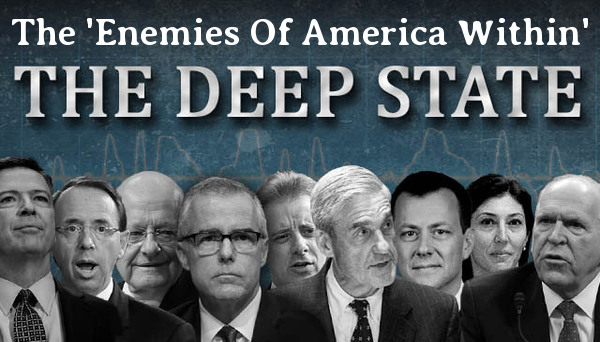
Editor’s Note: Getting to the source of the Democrats relentless hatred of President Trump begins with Hillary Clinton’s “reckless” use of a private server during her term as Secretary of State. What did she needed to hide and protect during the Obama Administration? When she lost the 2016 election fair and square with half the nation voting for Trump and the Electoral College casting its ballots as required by the U.S. Constitution, the Democrats began their relentless assault upon a duly elected President. 

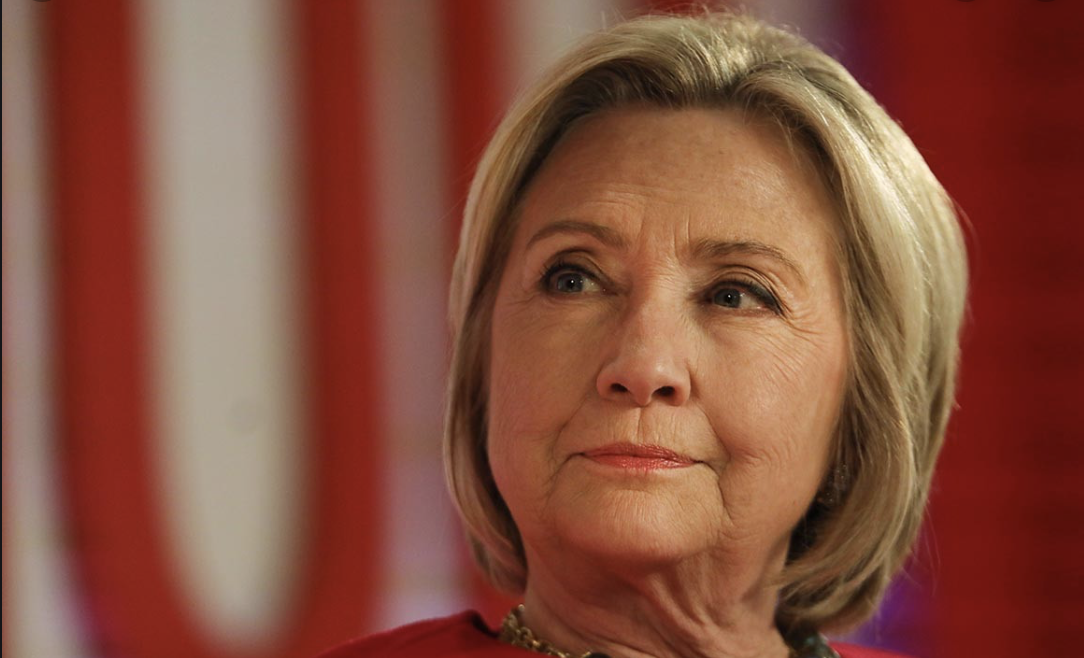
The State Department reportedly intensified a probe into former Secretary of State Hillary Clinton’s private email server, contacting dozens of former aides involved in email exchanges that passed through her server.

The Washington Post reported Saturday that as many as 130 former Clinton aides have been contacted by State Department investigators in recent weeks, with many being informed that they have been found “culpable” for transmitting information that should have been classified at a higher level than it was originally sent.

Former Obama administration officials described the probe to the Post as an extraordinary investigation fueled by political animosity.

But current officials speaking on the condition of anonymity told the newspaper that the probe was structured to avoid the appearance of political bias.

The probe, which reportedly reached the stage where former officials began being contacted shortly after Trump’s inauguration, was described by one senior agency official to the Post as having nothing to do with President Trump’s vows to investigate Clinton if elected during the 2016 election.

“This has nothing to do with who is in the White House,” the official said. “This is about the time it took to go through millions of emails, which is about 3½ years.”

“The process is set up in a manner to completely avoid any appearance of political bias,” another official told the Post.

Former officials involved in the probe described it as a political vendetta, with one telling the Post it was an “abuse of power” by the Trump administration.

“It is such an obscene abuse of power and time involving so many people for so many years,” they said. “This has just sucked up people’s lives for years and years.”

The State Department did not immediately return a request for comment from The Hill on the investigation. Trump frequently attacked Clinton during the 2016 campaign for her use of a private email server while at the State Department, with his fans frequently chanting, “Lock her up!” at rallies over her perceived criminal wrongdoing.

A review of Clinton’s email server conducted by the FBI in 2016 found that Clinton had not committed any crimes with her operation of a private server but described her email practices as “reckless.”

Source: The Hill

‘Impeachment’ is nothing less than a full-scale Communist coup attempt by treasonous Democrats who long ago sold out America and the American people for Globalism | Natural News

Editor’s Note: This article is a bit extreme in its wording, but I include it here to document the tenor of the partisan debate about who did what. Is this a conspiracy of the Deep State & Globalists to undermine a duly elected President of the United States and remove him from office? You decide.

In an excellent new story over at CD Media titled “If You Were The Dem Organized Crime Family And About To Be Prosecuted For An Illegal Coup, What Would You Do?” that Whatfinger News had linked to on Wednesdayauthor L. Todd Wood, a graduate of the U.S. Air Force Academy who flew special operations helicopters supporting SEAL Team 6 and Delta Force, argues that criminal Democrats and their enablers within the mainstream media know what is coming and, desperate beyond words, their doomed-to-fail impeachment attempt of President Trump might be the only way to get them out of the huge mess that they are in.

(Article by Stefan Stanford republished from AllNewsPipeline.com)

With Susan Duclos reporting in this story on ANP on Wednesday that ‘the beginning of the end talk being babbled about by Democrats again in their drive to take down President Trump echoes that which they’ve been babbling on now about for nearly 3 years since President Trump took office, even House Democrat Jeff Van Drew knows that “at the end of the day, all we’re going to have is a failed impeachment“.

Yet as Tom Luongo so perfectly points out in this new story republished at Zero Hedge titled “The Coup Has Begun – The Empire Strikes Back Everywherethere are no coincidences in politics. Everything happens on a particular schedule. So when I see a day as crazy as today I have to ask the question, “Why this, why now?”

And as we see in his story, what’s happening politically is by no means just regional here in America – it’s happening all around the world, helping to prove the ‘global nature‘ of ‘globalism‘ and the fact that the globalists are ‘digging in‘ at a time when President Trump just ‘blistered‘ socialism and globalism at the United Nations. From Luongo’s story.:

Look at the headlines and you’ll see what I’m talking about. All of these things happened since I woke up at 7:30am Monday morning in Florida:

  • The British Supreme Court just arrogated unprecedented power to itself by inserting itself into any dispute between the Government and Parliament. This upends more than 300 years of constitutional process.
  • The Democrats have announced they will pursue impeachment charges against President Trump because an unverified, hearsay whistleblower made a complaint about a phone call between Trump and Ukrainian President Volodymyr Zelenski. Impeachment odds soared overnight as someone was tipped off about the Democrats’ plan.
  • Bitcoin’s hashrate mysteriously flash-crashed more than 40% presaging a massive $1500 drop in price.
  • Donald Trump delivered a blistering critique of socialism at the United Nations General Assembly. Too bad he’s nearly as bad as the ones he’s fighting on the far left.
  • Europe’s Trio of Faded Glory — The UK, France and Germany — joined in the chorus of unverified condemnation of Iran in the attack on the Saudi oil field on the 14th.
  • The Federal Reserve continues to bail out banks to the tune of $65 to $75 billion per day through overnight repo operations that no one can give us an explanation as to why they’re needed.
  • This feels to me like a multi-level coup against those that dare stand athwart the global power structure. Both British and American leadership institutions are under sincere attack with these moves.

As we’ll explore in the rest of this ANP story, with everything else that we’ve been watching unfolding in America over the past decade+, one could easily argue that what we’ve been witnessing over the past several years since President Trump was voted into office has been a full-scale Communist coup attempt with Democrats and globalists never, ever believing that Hillary Clinton would lose in 2016 and their beliefs they’d be ‘protected’ from their crimes of treason and completely selling out America and the American people forever.

As Doomer Doug‘ reported in this recent story titled “If Treason Prosper, Then None Dare Call It Treason, the final gasps of the attempted ‘coup d’etat‘ to remove President Trump are now underway with Doug warning in his story that the end results of this could be complete chaos and anarchy in America, potentially leading to Civil War with Democrats insanely still believing they can do no wrong while attempting to overthrow the results of the US election for more than 2 years running now with the ‘coup attempt‘ led by people such as Communist-voting John Brennan.

Read more at: AllNewsPipeline.com

Source: Natural News

5G drones to blanket the nation, beaming down cancer-causing radiation from the skies… and there’s nowhere they can’t find you | Natural News

Editor’s Note: 5G technology is being rapidly deployed in the next few years without any concern for the short or long-term health effects upon human beings (and other living creatures as well). It’s being touted as a “technological boon” (certainly for the companies who’ll profit from it), but for the rest of us? The jury is out, because no trial about “benefits vs. dangers” has been set.

Whether we like it or not, 5G (fifth generation) wireless internet technology is slowly but surely being rolled out across the globe. Promising faster speeds, better connectivity and virtually instant data transfers, 5G is being hailed as a technological boon.

Service providers promise that 5G will enable downloads at 100 times greater speeds than 4G technology. This would translate to the ability to download a full HD movie in less than 10 seconds. 5G also promises more stable connections and greater capacity, enabling networks to handle multiple high-demand applications simultaneously.

However, while the media continues to sing its praises, very little has been said about its potential dangers – of which there are many. Studies have found that 5G technology will emit radiation at levels never before experienced by human beings, which could have devastating – and irreversible – effects.

Despite the potentially serious dangers, however, Waking Times reported recently that a collaboration of tech giants and defense contractors will soon be launching huge, football-sized drones into the stratosphere above Hawaii, from where they will beam massive amounts of 5G radiation down to the Earth below. (Related: Experts WARN — 5G technology will blanket the Earth with ultra-high microwave frequencies.)

“Airborne overhead 5G communication”

According to the Use Determination Application compiled for the Research Corporation of the University of Hawaii, the purpose of the HAWK30 program “is to develop new airborne overhead 5G communication, which would provide strong wireless service over a large area, including deep valleys, remote lands, and over the ocean.”

The Federal Aviation Administration (FAA) has granted the project a COA2 certificate of authorization, which will allow the drones to operate in a 150 square mile radius for up to two years. The area which will be covered by the drones includes the Molokini crater, a popular tourist spot that boasts 300,000 visitors annually, as well as beautiful tropical waters that are home to tropical fish and a special humpback whale national marine sanctuary.

Experts warn, however, that these drones pose significant risks. Waking Times reported:

Radiation harm is a concern as one HAWK30 drone broadcasts the equivalent of 1800 cell towers, albeit at a much lower power level, however, power is irrelevant to health effects except for tissue heating. Thousands of peer reviewed research studies document the non-thermal effects of wireless radiation on humans and other living things. In some experiments the lowest power levels caused the most leakage in the blood-brain barrier. An inverse relationship between power and health effects has even been shown. Wireless technology is not made safe by reducing the power.

The HAPS drones which will be used in the project will fly at 70 miles per hour and have a 260-foot wingspan and 10 propellers each. Each drone will boast cell site coverage of 124 miles in diameter, creating a blanket of radiation over the entire area.

There are other issues in addition to radiation concerns. Waking Times warns:

In addition to irradiating all life forms within range, this type of massive flying wing has a bad safety record. Two high altitude drones have been built by AeroVironment and they both fell from the sky and crashed. In fact, the drone is so experimental that almost no regulations exist to govern it. Project officials appear ready to take full advantage of this, having boasted about schooling the FAA and writing their own rules.

But a 1.5 ton HAWK30 falling from the stratosphere could have devastating effects. Only 2300 Newtons of force crush a human skull wearing a helmet. Falling from a height of 70,000 feet, a 1.5 ton object would impact with 266,756,000 Newtons of force!

Eventually the project leaders plan to turn the island of L?na’I into a manufacturing plant and launch pad for thousands of drones which will be sent across the globe, blanketing the planet in cancer-causing radiation. Learn more about the dangers of 5G technology at Radiation.news.

Source: Natural News

Health Insurance Costs Surpass $20,000 Per Year, Hitting a Record (for Employees) | Bloomberg

Editor’s Note: Sixty-seven years old and I’ve never had health insurance, haven’t seen a medical doctor since 1983, stay away from pharmaceutical and recreational drugs of all kinds, get plenty of exercise, eat healthy, mostly vegan and raw food. Although such a lifestyle may seem radical or unrealistic for many people, it’s a better option than paying through the nose for a morsel of health security. Hippocrates once said, “If you’re not your own doctor, you’re a fool.”

The cost of family health coverage in the U.S. now tops $20,000, an annual survey of employers found, a record high that has pushed an increasing number of American workers into plans that cover less or cost more, or force them out of the insurance market entirely.

“It’s as much as buying a basic economy car,” said Drew Altman, chief executive officer of the Kaiser Family Foundation, “but buying it every year.” The nonprofit health research group conducts the yearly survey of coverage that people get through work, the main source of insurance in the U.S. for people under age 65.

While employers pay most of the costs of coverage, according to the survey, workers’ average contribution is now $6,000 for a family plan. That’s just their share of upfront premiums, and doesn’t include co-payments, deductibles and other forms of cost-sharing once they need care.

The seemingly inexorable rise of costs has led to deep frustration with U.S. health care, prompting questions about whether a system where coverage is tied to a job can survive. As premiums and deductibles have increased in the last two decades, the percentage of workers covered has slipped as employers dropped coverage and some workers chose not to enroll. Fewer Americans under 65 had employer coverage in 2017 than in 1999, according to a separate Kaiser Family Foundation analysis of federal data. That’s despite the fact that the U.S. economy employed 17 million more people in 2017 than in 1999.

“What we’ve been seeing is a slow, slow kind of drip-drip erosion in employer coverage,” Altman said.

Employees’ costs for health care are rising more quickly than wages or overall economy-wide prices, and the working poor have been particularly hard-hit. In firms where more than 35% of employees earn less than $25,000 a year, workers would have to contribute more than $7,000 for a family health plan. It’s an expense that Altman calls “just flat-out not affordable.” Only one-third of employees at such firms are on their employer’s health plans, compared with 63% at higher-wage firms, according to the Kaiser Family Foundation’s data.

The survey is based on responses from more than 2,000 randomly selected employers with at least three workers, including private firms and non-federal public employers.

Deductibles are rising even faster than premiums, meaning that patients are on the hook for more of their medical costs upfront. For a single person, the average deductible in 2019 was $1,396, up from $533 in 2009. A typical household with employer health coverage spends about $800 a year in out-of-pocket costs, not counting premiums, according to research from the Commonwealth Fund. At the high end of the range, those costs can top $5,000 a year.

While raising deductibles can moderate premiums, it also increases costs for people with an illness or who get hurt. “Cost-sharing is a tax on the sick,” said Mark Fendrick, director of the Center for Value-Based Insurance Design at the University of Michigan.

Under the Affordable Care Act, insurance plans must cover certain preventive services such as immunizations and annual wellness visits without patient cost-sharing. But patients still have to pay out-of-pocket for other essential care, such as medication for chronic conditions like diabetes or high blood pressure, until they meet their deductibles.

Many Americans aren’t prepared for the risks that deductibles transfer to patients. Almost 40% of adults can’t pay an unexpected $400 expense without borrowing or selling an asset, according to a Federal Reserve surveyfrom May.

That’s a problem, Fendrick said. “My patient should not have to have a bake sale to afford her insulin,” he said.

Source: Bloomberg

Trump goes to the United Nations to argue against everything it stands for — again | Vox

Editor’s Note: This article is a bit sarcastic, as we now expect from many jaded journalists these days, but it does convey the importance of national sovereignty. All nations should put themselves first, look after their own best interests and the welfare of their people instead of imagining that one day a global socialist state will provide for them. This is an important tide shift towards a United Nations of sovereign countries, independent and free. May it become so!

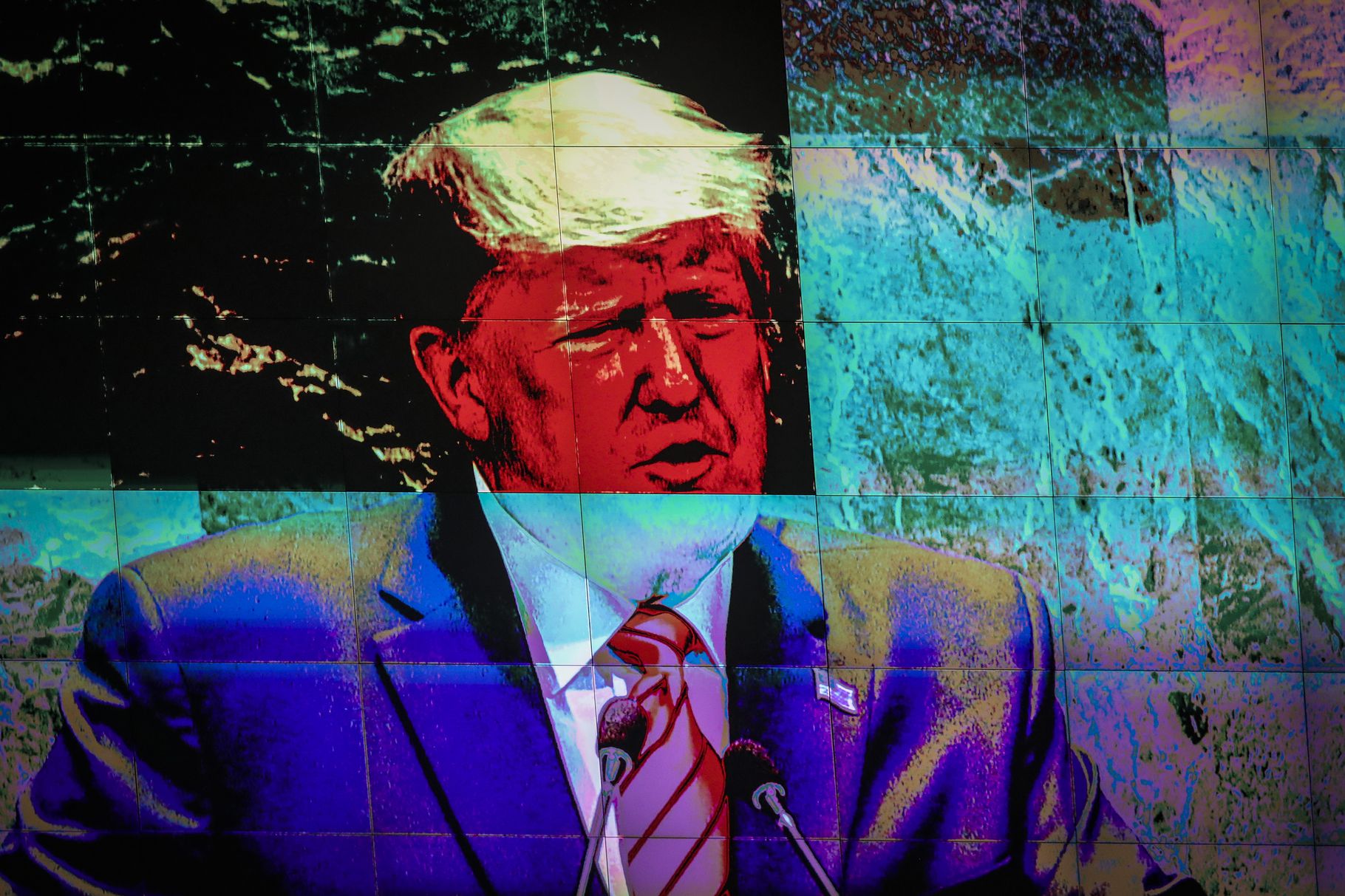
UNITED NATIONS, New York — In his third annual speech to the United Nations General Assembly, President Donald Trump delivered a clear message in favor of nationalism and national sovereignty and against globalism.

But three years into Trump’s presidency, that kind of rhetoric is no longer as shocking as it once was. Most of the world has heard it from him before.

Trump, in an oddly subdued speech in New York on Tuesday, reprised his case that all nations should exert their sovereignty, protect their borders, and reject any mutual and international cooperation that doesn’t put their country’s own interests first. For Trump, it’s “America First;” for everyone else it’s “[Insert Country Here] First.”

“If you want democracy, hold on to your sovereignty,” Trump said. “And if you want peace, love your nation.”

Trump touted the “great” new trade deals he’s working on and lambasted China’s trade practices. He criticized the Iranian regime for its “bloodlust.” He tried to elevate his stalled diplomacy with North Korea. He condemned the socialist regime of Nicolás Maduro in Venezuela. He denounced illegal immigration and even made time to complain about perceived censorship of conservative viewpoints by social media companies and to attack social justice advocates.

It was classic Trump — only without the enthusiasm he usually displays when discussing these pet topics. If anything, Trump seemed bored by his own speech.

There were two rare but notable exceptions: Trump’s stern notice to China that the US is closely watching how it handles the unrest in Hong Kong, and his call to end the criminalization of homosexuality around the world.

The rest, though, was standard Trump fare, and few of the world leaders gathered to hear him speak seemed surprised or rattled by his words. He couldn’t even manage to garner any of last year’s surprised laughs.

Trump’s schtick isn’t shocking anymore. But it shows just how much of an outlier the US is.

“The future does not belong to globalists; it belongs to patriots,” Trump said at the start of his speech.

It seemed like a throwaway line but it was actually a clear articulation of what Trump and leaders of his ilk have been arguing for the past few years: Populist nationalism is the future and multinational cooperation and mutual trust is the past — even if that’s the very vision the United Nations is trying to promote and protect.

And that message has permeated. Brazilian President Jair Bolsonaro, who spoke shortly before Trump, cited the US president’s defense of the sanctity of national sovereignty to push back against worldwide criticism of Bolsonaro’s handling of the Amazon fires. “They even called into question that which we hold as a most sacred value, our sovereignty,” Bolsonaro said at one point.

Trump was sandwiched between a slew of authoritarians and wanna-be authoritarians (Bolsonaro before and Egypt’s Abdel Fattah el-Sisi and then Turkey’s Recep Tayyip Erdoğan afterward), and while the US president paid lip service to democracy, his defense of it didn’t fit with his nationalistic rhetoric.

Trump and some of these other speeches stood in stark contrast to that of UN Secretary-General António Guterres, who addressed the crowd before the world leaders began to take the stage and warned of the “disquiet” currently plaguing the world.

He was mostly referring to the world’s problems — armed conflicts, increasing inequality, the threat of climate change. But Guterres’s argument is that nations need to band together to address these challenges and to promote the rights of all citizens, no matter their homeland. Guterres believes the forum to do so is the United Nations.

Trump’s argument is, as it always has been, that every country needs to look after itself.

Source: Vox

How Anti-Vaccine Sentiment Took Hold in the United States | The New York Times

Editor’s Note: The New York Times (and likely their biggest Big Pharma advertisers) are heralding a strongly-held opinion that choice regarding vaccines should not be an option for parents who may have good reason to believe their children are at risk. The almost completely unregulated vaccine industry is in denial regarding the potentially dangerous side effects, chronic illnesses that can result and in too many cases they’d rather not count – death. Not once in this well-written, one-sided article did the views, opinions or reasoning of the anti-vaccine crowd get acknowledged. This is but one of numerous op-ed articles the New York Times has recently published. 

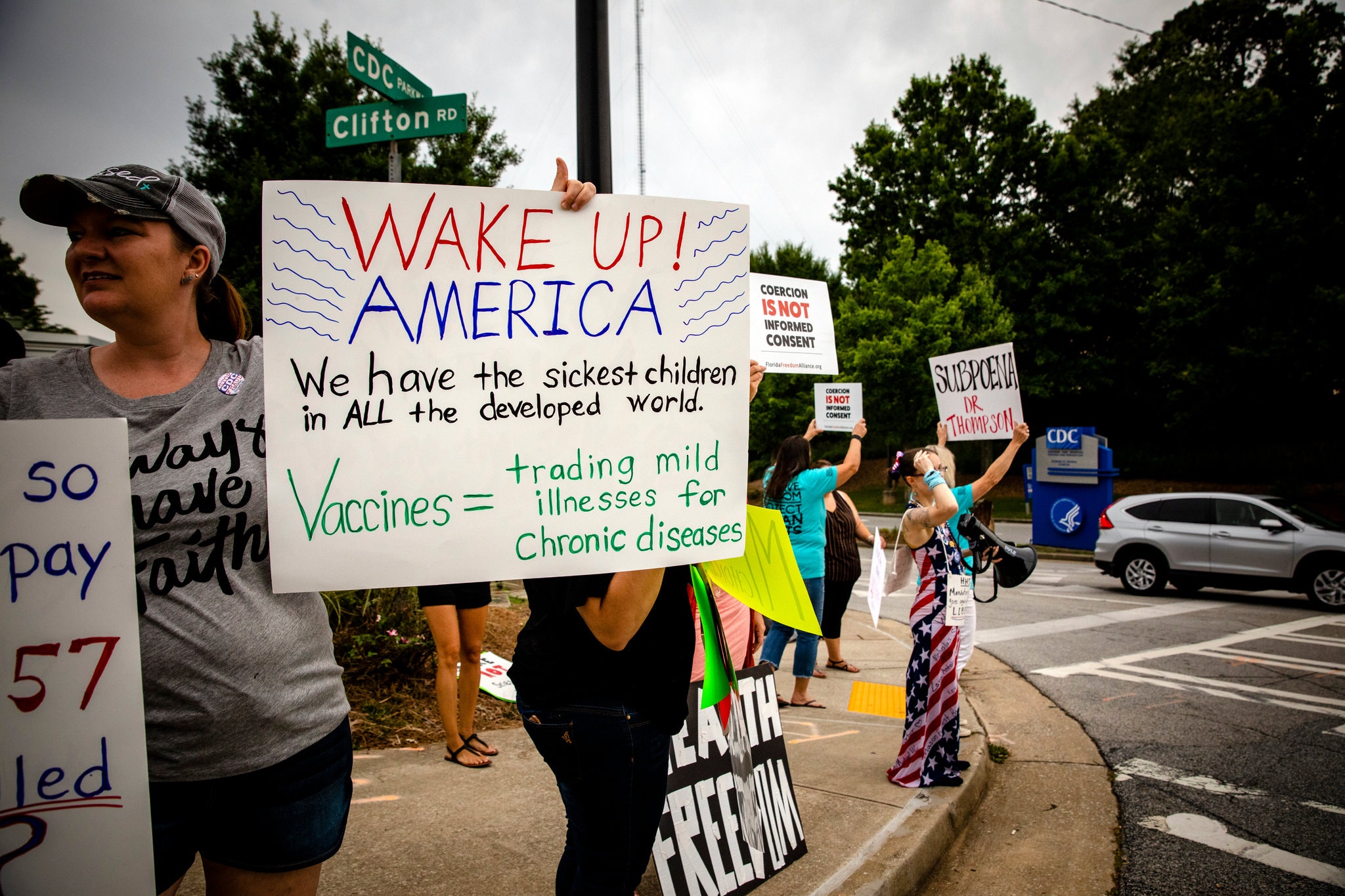
As families face back-to-school medical requirements this month, the country feels the impact of a vaccine resistance movement decades in the making. The question is often whispered, the questioners sheepish. But increasingly, parents at the Central Park playground where Dr. Elizabeth A. Comen takes her young children have been asking her: “Do you vaccinate your kids?”

Dr. Comen, an oncologist who has treated patients for cancers related to the human papillomavirus that a vaccine can now prevent, replies emphatically: Absolutely.

She never imagined she would be getting such queries. Yet these playground exchanges are reflective of the national conversation at the end of the second decade of the 21st century — a time of stunning scientific and medical advances but also a time when the United States may, next month, lose its World Health Organization designation as a country that has eliminated measles, because of outbreaks this year. The W.H.O. has listed vaccine hesitancy as one of the top threats to global health.

As millions of families face back-to-school medical requirements and forms this month, the contentiousness surrounding vaccines is heating up again, with possibly even more fervor.

Though the situation may seem improbable to some, anti-vaccine sentiment has been building for decades, a byproduct of an internet humming with rumor and misinformation; the backlash against Big Pharma; an infatuation with celebrities that gives special credence to the anti-immunization statements from actors like Jenny McCarthy, Jim Carrey and Alicia Silverstone, the rapper Kevin Gates and Robert F. Kennedy Jr. And now, the Trump administration’s anti-science rhetoric.

“Science has become just another voice in the room,” said Dr. Paul A. Offit, an infectious disease expert at Children’s Hospital of Philadelphia. “It has lost its platform. Now, you simply declare your own truth.”

The constituents who make up the so-called vaccine resistant come from disparate groups, and include anti-government libertarians, apostles of the all-natural and parents who believe that doctors should not dictate medical decisions about children. Labeling resisters with one dismissive stereotype would be wrongheaded.

“To just say that these parents are ignorant or selfish is an easy trope,” said Jennifer Reich, a sociologist at the University of Colorado Denver, who studies vaccine-resistant families.

[Why did we start listening to celebrities about vaccines? Read more.]

It remains true that the overwhelming majority of American parents have their children vaccinated. Parent-driven groups like Voices for Vaccines, formed to counter anti-vaccination sentiment, have proliferated. Five states have eliminated exemptions for religious and philosophical reasons, permitting only medical opt-outs.

But there are ominous trends. For highly contagious diseases like measles, the vaccine rate to achieve herd immunity — the term that describes the optimum rate for protecting an entire population — is typically thought to be 95 percent. The Centers for Disease Control and Prevention found that the vaccination rate for the measles, mumps and rubella (M.M.R.) injection in kindergartners in the 2017-2018 school year had slipped nationally to 94.3 percent, the third year in a row it dropped.

Seven states reported rates for the M.M.R. vaccine that were far lower for kindergartners, including Kansas at 89.1 percent; New Hampshire, 92.4 percent; the District of Columbia, 81.3 percent. (The highest is West Virginia at 98.4 percent.)

Almost all states have at least one anti-vaccine group. At least four have registered political action committees, supporting candidates who favor less restrictive vaccine exemption policies.

Public health experts say that patients and many doctors may not appreciate the severity of diseases that immunizations have thwarted, like polio, which can affect the spinal cord and brain — because they probably have not seen cases.

“Vaccines are a victim of their own success,” said Dr. Offit, a co-inventor of a vaccine for rotavirus, which can cause severe diarrhea in young children. “We have largely eliminated the memory of many diseases.”

The growth of vaccine doubt in America coincides with several competing forces and attitudes.

Since the early 2000s, as the number of required childhood vaccines was increasing, a generation of parents was becoming hypervigilant about their children and, through social media, patting each other on the backs for doing so. In their view, parents who permitted vaccination were gullible toadies of status quo medicine.

In 2011, Dana Fuqua, of Aurora, Colo., pregnant with her first child, felt that irresistible pull of groupthink parenting.

She had just moved to the area, so she reached out to mothers’ groups on Facebook. Colorado, with a kindergarten vaccination compliance rate of 88.7 percent, has a rambunctious vaccine-resistant movement. Ms. Fuqua’s new friends urged her to have a drug-free birth, use cloth diapers and never to let a drop of formula pass her baby’s lips. Vaccines, it followed, were anathema.

The women intimidated her. They had advanced degrees; she had only a bachelor of science and a nursing background.

“I didn’t argue with them,” Ms. Fuqua said. “I was so desperate for their support that I compromised by delaying the vaccine schedule, so I wouldn’t get kicked out of the group.”

But when her second child was born prematurely, susceptible to illness, the group’s approval was not as important as her baby’s safety. Her position, she said, shifted from, “‘I can’t hang out with you if you had a vaccine because you could be shedding a virus’” — a common, false belief among the vaccine resistant — to, “ ‘If you haven’t had a vaccine, I will not associate with you.’”

She had both children fully vaccinated.

There have been anti-vaccination movements at least since 1796, when Edward Jenner invented the smallpox vaccine. But many experts say that the current one can be traced to 1982, when NBC aired a documentary, “DPT: Vaccine Roulette,” that took up a controversy percolating in England: a purported tie between the vaccine for pertussis — a potentially fatal disease that can cause lung problems — and seizures in young children.

Doctors sharply criticized the show as dangerously inaccurate. But fear spread. Anti-vaccination groups formed. Many companies stopped making vaccines, which were considered loss-leaders and not worth the corporate headache.

Then, in 1998, Andrew Wakefield, a British gastroenterologist, published a Lancet study (since discredited and withdrawn), associating the M.M.R. vaccine with autism.

Faced with risking autism or measles, some parents thought the answer was obvious. Most had never seen measles, mumps or rubella because vaccines had nearly eliminated them. But they believed they knew autism.

And most people are notoriously poor at assessing risk, say experts in medical decision-making.

Many stumble on omission bias: “We would rather not do something and have something bad happen, than do something and have something bad happen,” explained Alison M. Buttenheim, an associate professor of nursing and health policy at the University of Pennsylvania School of Nursing.

People are flummoxed by numerical risk. “We pay more attention to numerators, such as ‘16 adverse events,’ than we do to denominators, such as ‘per million vaccine doses,’ ” Dr. Buttenheim said.

A concept called “ambiguity aversion” is also involved, she added. “Parents would like to be told that vaccines are 100 percent safe,” she said. “But that’s not a standard we hold any medical treatment to.”

Relatively few people are absolutists about refusing all vaccines. “But if you’re uncertain about a decision, you’ll find those who confirm your bias and cement what you think,” said Rupali J. Limaye, a social scientist who studies vaccine behaviors at the Johns Hopkins Bloomberg School of Public Health.

Nowhere is that reinforcement more clamorous than on social media, Dr. Limaye added. “You may only see your pediatrician a few times a year but you can spend all day on the internet,” she said.

People tend to believe an individual’s anecdotal narrative over abstract numbers. By 2007, when Ms. McCarthy, the actress, insisted that vaccines caused her son’s autism, thousands found her to be more persuasive than data showing otherwise. A nascent movement took hold.

At the same time that these powerful attacks on vaccine confidence were underway, a constellation of trends was emerging.

The definition of a good parent was becoming fraught with the responsibility for overseeing every aspect of a child’s life.

“As we adopted a culture of individualistic parenting, public health became a hard sell,” Dr. Reich said.

The primary reason for healthy people to get the flu shot is to protect those with compromised immune systems, like infants and older adults, from getting sick. But altruism isn’t a great motivator for parents, Dr. Buttenheim said. “They are much more concerned about protecting their own child at all costs,” she said.

Contrast that attitude with the collective good will of the 1950s, say medical sociologists, when American parents who had seen President Franklin Delano Roosevelt’s wheelchair as a debilitating symbol of polio patriotically sought to vaccinate their children to help eradicate the disease worldwide.

By 2014, studies showed that parental confidence in authorities like the C.D.C. and in pediatricians was dropping, especially around vaccines. Mistrust of Big Pharma was even more pronounced.

By then, Donald Trump was offering support on Twitter for the discredited link between autism and vaccination. As president-elect, he met with leaders of the anti-vaccination movement, although as measles cases surged, he endorsed vaccination.

As parenting became rife with orthodoxy, the Marcus Welby model of the paternalistic doctor retreated. Patients asserted autonomy, brandishing internet printouts at doctors. Shared decision-making became the model of doctor-patient engagement.

Pediatricians offered to stagger vaccine schedules. Some were even flexible about vaccinations altogether.

In 2011, shortly after Emma Wagner had given birth in Savannah, Ga., a pediatrician on the ward examined the baby. “He asked me if I was interested in the hepatitis B vaccine,” she said of an inoculation typically done at birth.

She was apprehensive.

He replied, “‘That’s fine, because your 2-day-old daughter isn’t a prostitute and isn’t using I.V. drugs, so hep B isn’t at the top of my worries.’”

Ms. Wagner said she “swallowed the anti-vax Kool-Aid. I was motivated by fear. I thought, ‘Until I know for certain that these are safe, I won’t do it.’ The pediatrician said, ‘I will support your decision and in a few years we’ll talk about exemptions for school.’”

She has since become a staunch supporter of immunization.

Libertarianism also courses through vaccine hesitation, with parents who assert that government should not be able to tell them what to put in their bodies — a position often marketed as “the right to choose.”

“Having the government order them to do something reinforces conspiracy theories,” said Daniel Salmon, director of the Institute for Vaccine Safety at Johns Hopkins. “And people perceive their risk to be higher when it’s not voluntary.”

In reality, he said, one’s risk of harm is greater while driving to an airport than it is being on the airplane itself. But driving is voluntary and gives the illusion of control. People fear flying because they cannot control the plane. By extension, many childhood vaccines are not voluntary, which rattles those who prefer to believe they can control their health.

With so many different but deeply held convictions, public health experts struggle to design vaccine-positive campaigns.

In 2017, researchers applied the six values of “the moral foundations theory” to vaccine attitudes, surveying 1,007 American parents.

The results were intriguing. Those most resistant to vaccines scored highest in two values: purity (“my body is a temple”) and liberty (“I want to make my child’s health care decisions”).

A third, said Saad B. Omer, director of Yale’s Global Health Institute and an author of the study, was also telling: deference to authority — a score indicating whether one was likely to adhere to the advice of experts like a pediatrician or the C.D.C.

Dr. Salmon’s team at Johns Hopkins is working on an app to capture parents’ vaccine attitudes and to tailor information to persuade them to vaccinate their children.

Pediatricians are front-line persuaders, he said, and they should be compensated for the time it takes to educate parents.

Most experts note that physicians themselves, never mind parents, have no idea about the federal vaccine monitoring systems, which have been in place for more than 20 years.

“We ask parents in the first two years of their child’s life to protect them against 14 diseases, that most people don’t see, using fluids they don’t understand,” Dr. Offit said. “It’s time for us to stand back and explain ourselves better.”

Source: The New York Times

Edward Snowden On Trump, Privacy, And Threats To Democracy | The 11th Hour | MSNBC & YouTube

Source: YouTube

Marianne Williamson: ‘The system is even more corrupt than I knew’ | Fox News

Editor’s Note: We love Marianne for her fresh and insightful views originating from as an outsider to mainstream politics. In her appearance in the Democratic candidates debate she pointed out quite astutely that true health care cannot be achieved with the current system in place (whether it’s Obamacare or Medicare for All). The health care system is completely broken and must be rebuilt from the bottom up beginning with prevention and wellness. Thanks for contributing to this most important conversation and acknowledging the important of intelligent debate and civil discourse.

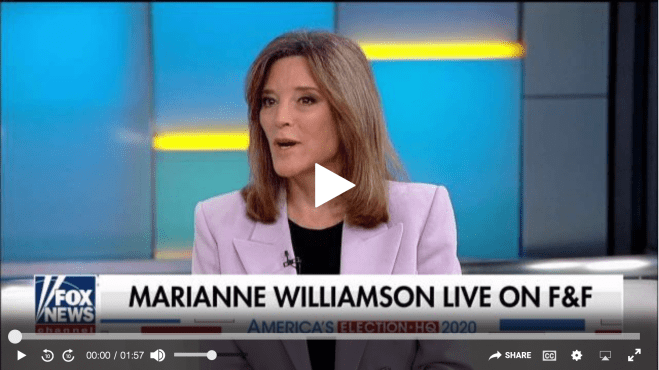
Marianne Williamson, a 2020 presidential hopeful and author, said she’s discovered the political system to be “even more corrupt” than she imagined, during a Tuesday interview with “Fox & Friends.”

“I was known in a world where people loved you and bought things from you. Now I’m in a world where a lot of people hate you,” she said. “I would say that I feel that I’ve learned the system is even more corrupt than I knew and people are even more wonderful than I hoped.”

Williamson also said there is a tendency in politics today to stifle opposing opinions, which weakens democracy and limits genuine debate.

“I have seen on the left as on the right, there are too many people who do not recognize how important honorable debate is in a democracy,” she said.

“You can disagree with somebody’s opinion but that doesn’t mean you should be shutting them down or lying about them or misrepresenting their views. That’s not a left-right issue. There’s a rough-and-tumble in politics.”

Co-host Lisa Boothe asked Williamson if she felt abandoned by the Democratic Party because she didn’t qualify for the upcoming debate, and she said that even if she did, she wouldn’t air her private grievances.

“No, I don’t feel abandoned,” she replied. “I’m a passionate Democrat… My mother always said if you have a problem with your family don’t talk about it outside the family. I’m not going to come on Fox and bad-mouth. The DNC has its rules and, listen, I signed up for this. And I’m playing by those rules”

Source: Fox News

Justice Neil Gorsuch on his concern for America’s future: ‘Republics have a checkered history’ | Fox News

Editor’s Note: Sadly, we have one of the most ignorant and poorly educated citizenries ever, thus Gorsuch’s affirmation of the importance of an informed and educated public (and a transparent government as well) must be heard and understood. Seems not even our elected representatives know how to govern effectively these days.

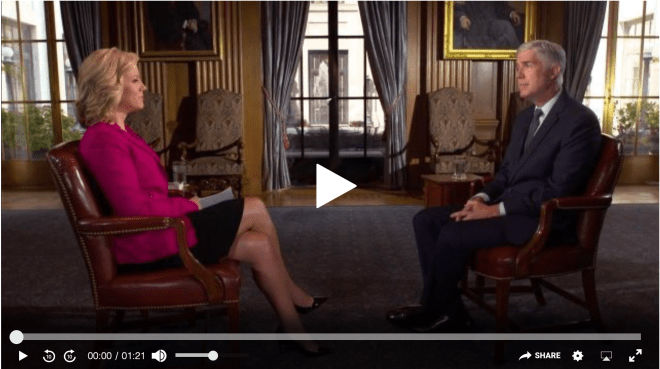
In an exclusive Fox Nation interviewSupreme Court Justice Neil Gorsuch revealed his deep concerns for the future of America, which drove him to write his new book, “A Republic, if you can keep it.”

The book’s title is inspired by a famous phrase attributed to Founding Father Benjamin Franklin.  As Franklin left the Constitutional Convention of 1787, after the drafting of the U.S. Constitution, he was reportedly asked what form of government had been created.  Franklin answered, “A Republic, if you can keep it”, suggesting that the country’s fate lay in the hands of its citizenry.

JUSTICE GORSUCH REVEALS THE TWO RULES HE TELLS HIS LAW CLERKS

Justice Gorsuch told Fox News anchor Shannon Bream in his first televised interview as a Supreme Court Justice that an uninformed public is a danger to the country. “Republics have a checkered history in our history books, and we need to make sure that the people know how to run their own government.”

Gorsuch said, “I am concerned on the civics front when I read that about a third of Americans can’t name the three branches of government.  60% apparently would fail the American naturalization examination — that worries me.”

Justice Gorsuch also believes that an understanding of America’s past is central to the nation’s future success, and he credits the musical “Hamilton” for educating America’s youngest generations.

Gorsuch explained, “You’ve seen a secretary of Treasury and a vice president of the United States have a duel.  That’s part of our history.  It’s always been a ruckus republic.  We used to have Senators cane one another on the floor. I’m glad we don’t have that anymore, at least, but it is a ruckus republic. That is what makes us strong. We can appreciate and embrace different ideas and open ourselves to one another and remember that that person with whom we disagree is coming at it from the same angle, the same hope of making a more perfect union.”

SUPREME COURT JUSTICE REVEALS HOW HIS NOMINATION TRIP BEGAN

“I think democracy is a really hard business and that’s because its strength comes from disagreements and the ability to air — comfortably and confidently — your point of view.  Share it with others and have it heard and pick the best at the end of the day.  That’s the idea of democracy.  But for it to work, we have to listen as well as speak.  We have to tolerate as well as expect tolerance for our point of view,” added Gorsuch.

Source: Fox News