Panel to NSA: Change your ways — or else | Cowboybyte

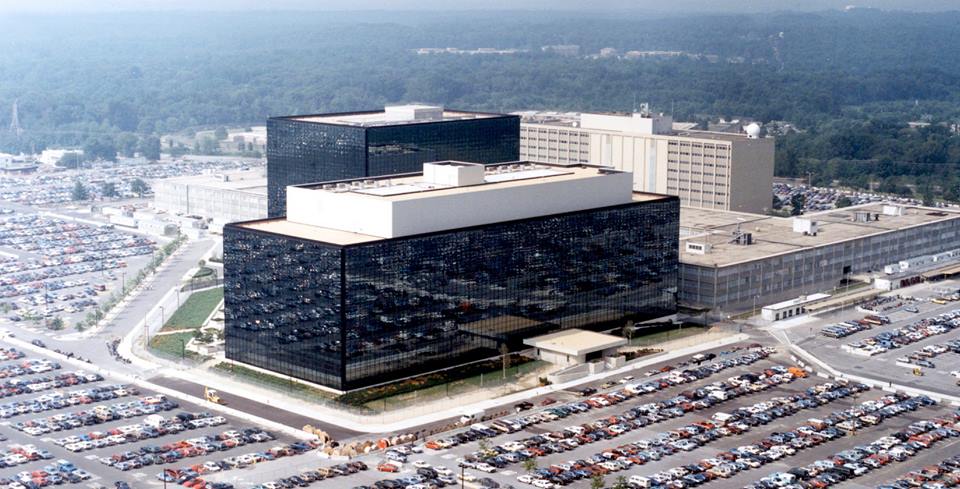
NSALawmakers bluntly warned the administration it will lose its sweeping surveillance powers if major changes aren’t made at the National Security Agency (NSA).

Members of the House Judiciary Committee said Section 215 of the Patriot Act, which is set to expire next summer, will be dissolved unless the administration proposes broad changes to the NSA’s collection of phone records.

Rep. James Sensenbrenner Jr. (R-Wis.), who wrote the Patriot Act and its two reauthorizations, told Deputy Attorney General James Cole that the administration was on the hook to find a workable alternative.

Source: Cowboybyte

Elites Call for “Extraordinary Crisis” to Preserve New World Order That Is Being Threatened by Non-State Actors Like Edward Snowden | Conscious Life Network

By Paul Joseph Watson

Author of ‘shock and awe’ doctrine says elite threatened by non-state actors like Edward Snowden

Writing for the Atlantic Council, a prominent think tank based in Washington DC, Harlan K. Ullman warns that an “extraordinary crisis” is needed to preserve the “new world order,” which is under threat of being derailed by non-state actors like Edward Snowden.

The Atlantic Council is considered to be a highly influential organization with close ties to major policy makers across the world. It’s headed up by Gen. Brent Scowcroft, former United States National Security Advisor under U.S. Presidents Gerald Ford and George H. W. Bush. Snowcroft has also advised President Barack Obama.

Harlan K. Ullman was the principal author of the “shock and awe” doctrine and is now Chairman of the Killowen Group which advises government leaders.

In an article entitled War on Terror Is not the Only Threat, Ullman asserts that, “tectonic changes are reshaping the international geostrategic system,” arguing that it’s not military superpowers like China but “non-state actors” like Edward Snowden, Bradley Manning and anonymous hackers who pose the biggest threat to the “365 year-old Westphalian system” because they are encouraging individuals to become self-empowered, eviscerating state control.

“Very few have taken note and fewer have acted on this realization,” notes Ullman, lamenting that “information revolution and instantaneous global communications” are thwarting the “new world order” announced by U.S. President George H.W. Bush more than two decades ago.

“Without an extraordinary crisis, little is likely to be done to reverse or limit the damage imposed by failed or failing governance,” writes Ullman, implying that only another 9/11-style cataclysm will enable the state to re-assert its dominance while “containing, reducing and eliminating the dangers posed by newly empowered non-state actors.”

Ullman concludes that the elimination of non-state actors and empowered individuals “must be done” in order to preserve the new world order. A summary of their material suggests that the Atlantic Council’s definition of a “new world order” is a global technocracy run by a fusion of big government and big business under which individuality is replaced by transhumanist singularity.

Source: Conscious Life News

Alaska & Washington Salmon Tested For Radiation | Simply Info

SalmonA Seattle fish company had some of their fish privately tested in late 2013. With all the US government agencies refusing to test anything and growing consumer anxiety due to the lack of information, Loki Fish company paid for private testing.

This is some of the only North American seafood testing done. While the current findings of these limited samples is somewhat good news, more testing is needed to have a better understanding of the situation across a large geographic area of ocean. These are a “snapshot” of a much larger picture. More testing should be done by more parties and done over time to understand the potential progression of radionuclides in the environment. Artificial isotopes like cesium 137, 134 or strontium 90 should not be ingested, even in small amounts ideally. Even small amounts have the potential to add to health damage that can cause cancer and other health problems over time.

What Loki Fish found in their testing was out of seven samples, five were below the level of detection and two had low levels of cesium. One sample had cesium 134, a marker that confirms at least that contamination came from Fukushima Daiichi due to the short half life. The two with detectable levels were:

  • Alaskan Keta at 1.4Bq/kg for Cesium 137
  • Alaskan Pink at 1.2Bq/kg for Cesium 134

The other five samples that were below the detection level were:

  • Coho – Southeast Alaska
  • Sockeye  – Southeast Alaska
  • King – Southeast Alaska
  • Pink  – Puget Sound
  • Keta  – Puget Sound

Copies of the actual test results can be found here:
https://www.dropbox.com/sh/it071klk0uyss5i/pBryvo1Yz3

Source: Fukuleaks

King Dayne Aipoalani’s Story May Convince You That Hawaii Belongs To The Hawaiians | Business Insider

By Robert Johnson

The circumstances by which Hawaii was annexed by the U.S. are so sketchy that Congress felt obliged to issue an apology in 1993.

It all started 100 years earlier when a group of mostly American businessmen led a paramilitary coup to overthrow Queen Liliʻuokalani. They were passively supported by U.S. Marines who were deployed “to protect American lives and property.”

The coup resulted in a new Hawaiian government under the presidency of Sanford Dole, whose cousin would soon start the Hawaiian Pineapple Company, which became Dole Foods.

Although then-U.S. president Grover Cleveland criticized the events in Hawaii, which he had not authorized, his successor, William McKinley, had no problem annexing Hawaii in 1898.

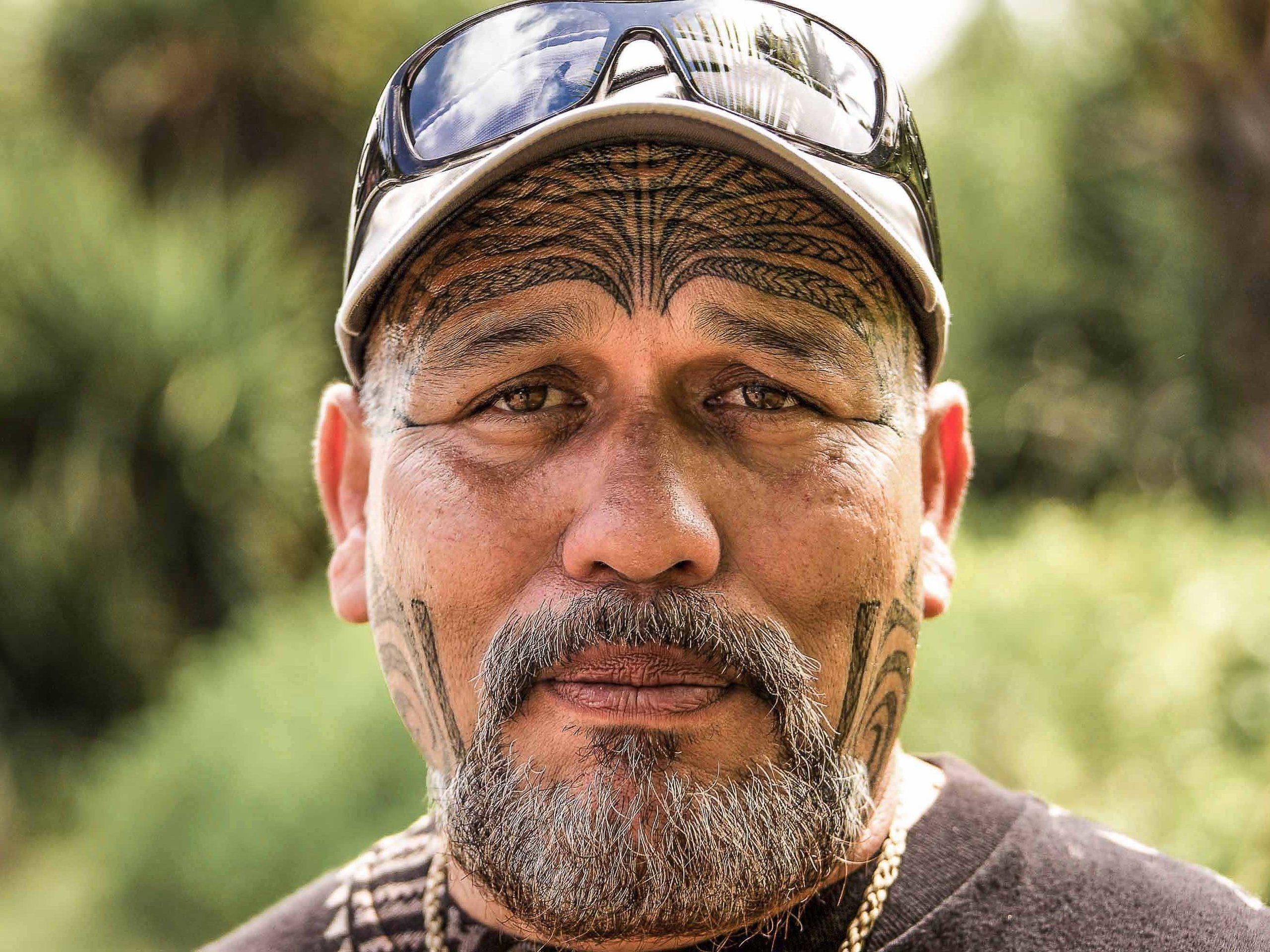
With a history like this, it is not surprising that a Hawaiian sovereignty movement remains committed to reclaiming rights and land for native Hawaiians. While several contenders claim rights to the crown, Dayne Aipoalani of The Polynesian Kingdom of Atooi has taken the movement to regain his peoples’ rights and land in Hawaii to a whole new level.

Business Insider spent more than a week in Hawaii with Aipoalani , also known as Ali`i Nui Aleka Aipoalani. He guided us through his kingdom on two islands, explained what his plans were, and how he plans to fight Washington.

  • King Kamehameha III divided Hawaii among the monarchy’s lesser kings, chiefs, and commoners in the mid-19th century to make sure his people would always have a home in case of invasion.
  • King Kamehameha’s worst fears were confirmed decades later when a coup led by foreign businessmen and supported by the U.S. overthrew his descendant, Queen Liliuokalani, in January 1893.
  • Sanford Dole, who’d pushed for the overthrow, was put in charge of a provisional government, and Liliuokalani was imprisoned. In 1898, Hawaii was annexed by the U.S.
  • Like most Hawaiians, Dayne Gonsalves believes his homelands were taken illegally. He wants to restore Crown Lands to the monarchy under one king: himself.
  • Dayne says he is the great-great-great-grandson of King Kamehameha I and as the new Ali’i Nui, or King, of The Polynesian Kingdom of Atooi, he’s devoting his life to reclaiming the land and resources of his people.
  • To fund travel and diplomacy among islands throughout the South Pacific, Dayne relies on donations from supporters including more than 40,000 Atooi Kingdom citizens worldwide.
  • That money also helps buy U.N.-recognized drivers license and, soon, passport software and supplies. Atooi Federal Marshal Samson Kama says: “Local law enforcement is targeting us with traffic stops and arrests for false credentials. This goes against the U.N. mandate that allows us Native Rights through international law.”
  • The Atooi Kingdom also unveiled its new currency at the U.N. in May.
  • In addition, Atooi has law enforcement badges.
  • More than 100 Federal Marshals.
  • Official license plates.
  • A radio station to broadcast its message.
  • A former U.S. Navy pilot who serves as foreign ambassador.
  • And its own royal flag, which is prevalent throughout the Islands.
  • The Kingdom encompasses an array of Pacific islands, but its capital might be considered Kauai. This is where Dayne grew up and is raising his family in the largely native community of Waimea.
  • Waimea is “Ground Zero” in the fight against the largest agribusinesses in the world, which test and develop herbicides and pesticides in the area.
  • More than anything, The Atooi Kingdom wants indigenous and sustainable farms for its people.
  • Along with producing its own food, Dayne wants to clean up damage already done to the environment.
  • And provide a traditional healing clinic to all islanders, including the hundreds of homeless who live here in Oahu’s massive homeless camp.
  • The King would also place buffer zones around native schools (like this one) within 500 feet of experimental pesticide fields and genetically modified crops, where undisclosed chemicals are sprayed.
  • Waimea schools have twice been evacuated following pesticide applications at adjoining fields. Many believe the sickness among staff and students during these times are from the chemicals, though follow-up studies point a finger at the local stinkweed plant.
  • Many of the world’s largest agricultural giants moved to Kauai in the 1990s. Since then, locals have been demanding to know what chemicals are sprayed on their land, but they are still fighting through the courts for answers.
  • It’s a constant battle and it doesn’t stop there. When Business Insider was in Kauai, Dayne brought us to a sacred spot that had been bulldozed by local transportation crews.
  • Plowing under sacred sites is just one instance of ongoing land conflicts here on Hawaii between natives and local government.
  • Even at Iolani Palace, the last family home of the Hawaiian Royal Family, Dayne’s mission isn’t received with much warmth.
  • The native guide took issue with the Kingdom’s new currency. Since there are many Hawaiian Sovereignty groups claiming rights to the throne, conflict among native Hawaiians is common.
  • Even here, where the Queen was placed under house arrest, Dayne is told he can’t be video interviewed. He shows the guard his badge.
  • But the palace employee remained unimpressed.
  • It’s an ongoing and emotional struggle.
  • Dayne knows he has a long fight ahead of him. Native Hawaiians have the third-highest cancer rate in the country, extremely high rates of diabetes and incidents of infectious diseases — but there is hope.
  • Though the Atooi Nation is a recognized sovereign nation at the U.N., it is not listed as a Non-Self-Governing Territory, which is the U.N. category for countries that should be decolonized. That list includes, among others, American Samoa, Guam, and the U.S. Virgin Islands.
  • After a 30-year fight, French Polynesia recently made the U.N.’s Non-Self-Governing Territory list. Atooi wants to obtain the same status.
  • In the meantime native Hawaiians will carve out an existence wherever they can.
  • As bad as it is for most islanders, it’s even worse for some.

Source: Business Insider


Cut a Deal for the Whistleblower: NYT Goes to Bat for Snowden | Common Dreams

snowden_newTaking a break from being a sometimes mouthpiece for the National Security Agency or acting in a too deferential manner towards government claims, the New York Times Editorial Board on Tuesday took a strikingly clear position on the case of former intelligence contractor Edward Snowden by declaring his leaks of internal NSA documents the act of a “whistle-blower” and called on the United States to offer him “a plea bargain or some form of clemency that would allow him to return home” without the threat of decades or life in prison.

“Considering the enormous value of the information he has revealed, and the abuses he has exposed, Mr. Snowden deserves better than a life of permanent exile, fear and flight,” the editorial states. “He may have committed a crime to do so, but he has done his country a great service.”

Though progressive supporters have considered Snowden a whistleblower from the outset—an argument his defenders see bolstered by each successive revelation—the weight of the New York Times Editorial Board makes the development significant in terms of wider public opinion and in the halls of more elite power where the paper holds sway.

To defend its call for clemency or a plea agreement, the Times argues that “Mr. Snowden was clearly justified in believing that the only way to blow the whistle on this kind of intelligence-gathering was to expose it to the public” and cataloged “just a few” of the violations by the NSA his revelations brought to light and some of the legal challenges they’ve already provoked:

■ The N.S.A. broke federal privacy laws, or exceeded its authority, thousands of times per year, according to the agency’s own internal auditor.

■ The agency broke into the communications links of major data centers around the world, allowing it to spy on hundreds of millions of user accounts and infuriating the Internet companies that own the centers. Many of those companies are now scrambling to install systems that the N.S.A. cannot yet penetrate.

■ The N.S.A. systematically undermined the basic encryption systems of the Internet, making it impossible to know if sensitive banking or medical data is truly private, damaging businesses that depended on this trust.

■ His leaks revealed that James Clapper Jr., the director of national intelligence, lied to Congress when testifying in March that the N.S.A. was not collecting data on millions of Americans. (There has been no discussion of punishment for that lie.)

■ The Foreign Intelligence Surveillance Court rebuked the N.S.A. for repeatedly providing misleading information about its surveillance practices, according to a ruling made public because of the Snowden documents. One of the practices violated the Constitution, according to the chief judge of the court.

■ A federal district judge ruled earlier this month that the phone-records-collection program probably violates the Fourth Amendment of the Constitution. He called the program “almost Orwellian” and said there was no evidence that it stopped any imminent act of terror.

Additionally, the Times editorial recognizes those critics who charge Snowden with woefully damaging U.S. interests by revealing some of these tactics, but points out that none of these critics—either inside of outside of government—have “presented the slightest proof that his disclosures really hurt the nation’s security.”

Glenn Greenwald, one of the journalists who has worked most closely with Snowden and publicly defended the whistleblower’s actions since his name entered the public domain, called the Times editorial “remarkable.”

The Nation’s Greg Mitchell, who has followed the Snowden case closely, including the way its been handled by U.S. media, began his review of the Times editorial by admitting: “Well, I didn’t see this coming.”

Source: Common Dreams

World’s first legal recreational marijuana sales begin in Colorado Read more: World’s first legal recreational marijuana sales begin in Colorado | The Denver Post

First Legal Marijuana Sales in ColoradoIn a historic swirl of commerce and cannabis, the world’s first stores licensed to sell marijuana legally to anyone 21 or older opened in Colorado on Wednesday.

From Telluride to Denver, thousands of people cheerfully stood in lines for hours to buy legal marijuana after presenting nothing more than identification.

Marijuana activists hailed the day as a watershed in their effort to overturn anti-cannabis laws. Store owners — several of whom said the turnout exceeded even their own ambitious expectations — feared running out of supply.

Police reported no problems with the crowds, and government officials marveled at the calm.

Overall, the day went as marijuana activists had hoped it would: In the most extraordinary way possible, it was ordinary.

“I’ve been waiting 34 years for this moment,” enthused Chrissy Robinson, who arrived at one store, Evergreen Apothecary in Denver, at 2 a.m. to be among the first in line. “I’ve been smoking since I was 14. No more sneaking around.”

At least 37 stores across the state were fully licensed and opened to sell marijuana to anyone 21 or over for any purpose, according to official lists and Denver Post research. Sales could commence at 8 a.m., and activists — who campaigned for the marijuana-legalization measure whose passage in November 2012 made the sales possible — arranged a ceremonial “first purchase” at the Denver store 3D Cannabis Center.

The store used to be called “Denver’s Discreet Dispensary,” so the name change speaks to the rapid evolution of Colorado’s marijuana industry, which began in earnest only about four years ago. 3D Cannabis Center owner Toni Fox watched the clock carefully as the hour approached and dozens of reporters and photographers crowded into one of her store’s tiny purchasing areas.

“It’s 8 a.m.,” she said. “I’m going to do it.”

The first customer was 32-year-old Sean Azzariti, an Iraq war veteran who campaigned for marijuana legalization and said he uses cannabis to alleviate symptoms of post-traumatic stress disorder. Under a canopy of cameras, Azzariti bought an eighth of an ounce of the marijuana strain Bubba Kush and a package of marijuana-infused candy truffles.

“We did it!” a beaming Azzariti said at the end of the purchase.

The cost was $59.74, including $10.46 in tax. At the bottom of the receipt was the message “Thank you for your purchase!”

“I’m confident these businesses will perform and be a good example of how states can regulate marijuana,” activist Mason Tvert said just prior to the store’s first purchase. “Today, there will be people around the country buying marijuana. But only in Colorado will they be buying it in stores like this one.”

Source: Denver Post


State Marijuana Laws Map | Governing

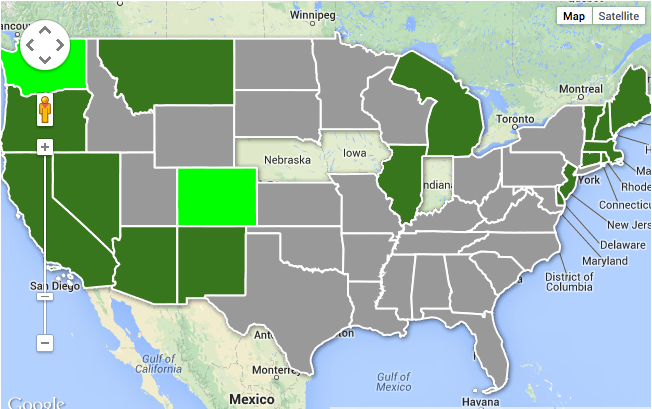
Twenty states and the District of Columbia now have laws legalizing marijuana in some form.

So far, only Colorado and Washington state have legalized marijuana for recreational use, while other states permit medical marijuana.

A limited medical marijuana law most recently went into effect Oct. 1 in Maryland, allowing authorized academic medical centers and research centers to distribute it. However, patients are not expected to be able to sign up for the program until 2015.

Illinois legalized medical marijuana with a law establishing a pilot program set to be implemented in January.

The map below show states permitting marijuana use for medical and recreational purposes.

Information below is current as of December 2013 and includes ballot measures approved in the 2012 elections that have yet to take effect:

MarihuanaMap

Source: Governing

NSA reportedly planted spyware on electronics equipment | CNET

By Dan Farber

NSAA new report from Der Spiegel, based on internal National Security Agency documents, reveals more details about how the spy agency gains access to computers and other electronic devices to plant backdoors and other spyware.

The Office of Tailored Access Operations, or TAO, is described as a “squad of digital plumbers” that deals with hard targets — systems that are not easy to infiltrate. TAO has reportedly been responsible for accessing the protected networks of heads of state worldwide, works with the CIA and FBI to undertake “sensitive missions,” and has penetrated the security of undersea fiber-optic cables. TAO also intercepts deliveries of electronic equipment to plant spyware to gain remote access to the systems once they are delivered and installed.

Der Spiegel: Inside TAO -Documents Reveal Top NSA Hacking Unit

Der Spiegel: Shopping for Spy Gear – Catalog Advertises NSA Toolbox

According to the report, the NSA has planted backdoors to access computers, hard drives, routers, and other devices from companies such as Cisco, Dell, Western Digital, Seagate, Maxtor, Samsung, and Huawei. The report describes a 50-page product catalog of tools and techniques that an NSA division called ANT, which stands for Advanced or Access Network Technology, uses to gain access to devices.

This follows a report that the security firm RSA intentionally allowed the NSA to create a backdoor into its encryption tokens.

“For nearly every lock, ANT seems to have a key in its toolbox. And no matter what walls companies erect, the NSA’s specialists seem already to have gotten past them,” the report said. The ANT department prefers targeting the BIOS, code on a chip on the motherboard that runs when the machine starts up. The spyware infiltration is largely invisible to other security programs and can persist if a machine is wiped and a new operating system is installed.

With the exception of Dell, the companies cited in the report and contacted by Der Spiegel claimed they had no knowledge of any NSA backdoors into their equipment.

In a blog post Sunday, a Cisco spokesperson wrote:

At this time, we do not know of any new product vulnerabilities, and will continue to pursue all avenues to determine if we need to address any new issues. If we learn of a security weakness in any of our products, we will immediately address it. As we have stated prior, and communicated to Der Spiegel, we do not work with any government to weaken our products for exploitation, nor to implement any so-called security ‘back doors’ in our products.

The NSA declined to comment on the report but said the TAO was key for national defense.

“Tailored Access Operations (TAO) is a unique national asset that is on the front lines of enabling NSA to defend the nation and its allies,” the agency said in a statement. “We won’t discuss specific allegations regarding TAO’s mission, but its work is centered on computer network exploitation in support of foreign intelligence collection.”

The end does not appear to be in sight for the revelations from the documents obtained by Edward Snowden, according to Glenn Greenwald, the journalist who first collaborated with Snowden to publish the material. In a speech delivered by video to the Chaos Communication Congress (CCC) in Hamburg on Friday, he said, “There are a lot more stories to come, a lot more documents that will be covered. It’s important that we understand what it is we’re publishing, so what we say about them is accurate.”

Source: CNET

First Step Towards Nullification: Michigan Governor Signs Anti-NDAA Bill into Law | 10th Amendment Center

StateofMichiganWith a few pen strokes, Michigan Gov. Rick Snyder took the first step in getting the Great Lakes State out of the indefinite detention business.

On Thursday, Snyder signed bill prohibiting any state agency in Michigan from cooperating with the U.S. military if it attempts to indefinitely detain a U.S. citizen without due process.

SB094 bars any state agency, employee, agency of a political subdivision of the state and members of the Michigan National Guard from aiding “an agency of the armed forces of the United States in any investigation, prosecution, or detention of any person pursuant to section 1021 of the national defense authorization act for fiscal year 2012, if such aid would place that state agency, political subdivision, employee, or member of the Michigan national guard in violation of the United States constitution, the state constitution of 1963, or any law of this state.”

The bill unanimously passed the Senate 37-0 last March and gained House approval 109-0 earlier this month.

Sen. Rick Jones (R – 24th) sponsored the bill. Rep. Tom McMillin (R – 45th), a vocal supporter for blocking state cooperation of indefinite detention, was instrumental in getting the bill through the House.

“Pushing back against the feds is important. Michigan now joins Virginia, California and Alaska. Congrats to all who helped over the last two years to make this happen – like Dennis Marburger, Justin Amash, Shane G Trejo, David A. Dudenhoefer, Bill Sage, Mike Maharrey and Tony DeMott. Thanks also to Lt. Gov. Brian Calley for helping me get it through the legislature and working with the governor’s office to ensure he and his legal staff understood the issue and was comfortable signing it,” McMillin said in a Facebook post.

Jones said the new law fits well into Michigan’s tradition of protecting basic due process.

“Historically, Michigan first asserted 10th Amendment rights in 1855 when we passed a law to block the Fugitive Slave Act. I thought of this great history as I pushed the bill to nullify the NDAA,” he said. “No US citizen should have to fear being thrown into jail or prison without charges. I got support from both sides of the political spectrum. With the governor’s signature Michigan states no local police, state police, sheriff or Michigan National Guard will assist the feds with holding a US citizen.”

By refusing to cooperate with provisions written into the NDAA, Michigan will make it much more difficult for the feds to indefinitely detain somebody in that state. The federal government almost always depends on state and local cooperation. This bill would strip that away. As Judge Andrew Napolitano said recently, such widespread noncompliance can make a federal law “nearly impossible to enforce” (video here).

Tenth Amendment Center national communications director Mike Maharrey called the bill a great first step, but noted more work remains in Michigan to fully nullify indefinite detention.

“This is a great step forward in protecting the basic due process rights of people in Michigan and gives activists there something to build on,” he said. “Moving forward, I would love to see the Michigan legislature expand the policy in two ways. First, I would like to see it include protection for all people, not just U.S. citizens. After all, every person has a right to basic due process, no matter who they are or where they are from. Second, I would like to see a bill expanding the ban on cooperation to any future federal law or regulation that purports to allow indefinite detention. No federal act can justify kidnapping. None.”

SB094 will serve as the first step and activists in the state will need to continue pressing the issue. By including a caveat – if such aid would place that state agency, political subdivision, employee, or member of the Michigan national guard in violation of the United States constitution, the state constitution of 1963, or any law of this state”  – the bill is not an express prohibition.  Rather, since no official determination has been made on such constitutionality as of yet, it leaves the decision of constitutionality to discretion. But, the new law does provide legal backing for those sheriffs, law enforcement officers, and other agencies and employees, who refuse to assist the federal government in such activities based on their own constitutional determination.  As Sheriff Richard Mack has taught around the country for years now, this is what should be done all the time already.  (visit the Constitutional Sheriffs and Peace Officers Association for more information)

The new law will create a climate for each local community in the state – counties, cities, towns, etc – to step up and get involved. To give the bill teeth, activists will need to take action at a local level – to press their local governments to pass legally-binding ordinances to give the new state law additional force. The local legislation would do the following:

a) Express full support for the new state policy to “refuse to provide material support for or to participate in any way with the implementation within this state of any federal law that purports to authorize indefinite detention of a person within Michigan.”

b) Create an express prohibition on the use of any local government assets – funds, employees, and the like – to provide material support for or participate in any way with federal indefinite detention.

Once the state is blanketed with localities which have passed such measures, the practical effect would be even stronger than if SB94 had ordered them to do the same.  Reaching this point would mean that support for the effort would be well into the mainstream around the state, and that resolve to ensure the resistance continues to victory is likely much stronger.

ACTION AND TRACKING:

To track the status of similar legislation in states around the country, visit this link

Click on your state and follow the recommended action steps to support.

Source: 10th Amendment Center
Organic Farmers vs. Monsanto: Final Appeal to U.S. Supreme Court to Protect Crops from GMO Contamination | EcoWatch

organicfarmerLast week, the Public Patent Foundation filed a brief with the U.S. Supreme Court in the landmark case, Organic Seed Growers and Trade Association (OSGATA) et al v. Monsanto, in the hopes that the highest court in the land would hear and reinstate the case of 73 American organic and conventional family farmers, seed businesses and public advocacy groups that seek protection for America’s farmers from Monsanto’s frivolous patent infringement lawsuits, and their promiscuous genetically engineered pollen while also seeking to invalidate the patents on 23 of Monsanto’s genetically modified organisms (GMO) crops.

Jim Gerritsen, an organic seed farmer on Wood Prairie Farm in Maine and president of lead plaintiff Organic Seed Growers and Trade Association, has spent the past 37 years of his life protecting and maintaining the integrity of his seed stock to provide clean, wholesome food to his customers.

Earlier this month, Monsanto filed an opposition brief with the Supreme Court in a last ditch effort to deny a group of American family farmers and seed growers justice in their efforts to protect their farms and the integrity of their crops.

“In opposing our request that the Supreme Court take, and then reinstate, our case, Monsanto makes the same lame and untrue assertions that it made before,” said Daniel Ravicher, executive director of the Public Patent Foundation (PUBPAT) and lead counsel to the plaintiffs in OSGATA et al v. Monsanto. ”In our reply brief filed with the Supreme Court we point out precisely why Monsanto is wrong and that the case should be allowed to proceed,” claimed Ravicher.

On June 10, a three-judge panel at the Court of Appeals for the Federal Circuit in Washington, D.C., issued a bizarre ruling that plaintiffs are not entitled to bring a lawsuit to protect themselves from Monsanto’s transgenic seed patents “because Monsanto has made binding assurances that it will not take legal action against growers whose crops might inadvertently contain traces of Monsanto biotech genes” as stated anonymously on the company’s website.

Farmers find this ruling inconclusive and  insufficient to protect their future economic interests since the Court of Appeals readily admitted that contamination from Monsanto’s genetically engineered crops is “inevitable.”

This Appellate Court ruling importantly validated that farmers do have a legitimate fear of contamination, something that the court and Monsanto’s own attorney, former Solicitor General Seth Waxman, admitted in court during oral arguments.

Despite dismissing the farmers’ and seed growers’ case, the Court of Appeals ruling found the likelihood of contamination significant enough to order by estoppel that Monsanto make good on its promise not to sue farmers that are “inadvertently contaminated with up to one percent of seeds carrying Monsanto’s patented traits.”

“As a seed grower, who has spent the past 37 years of my life protecting and maintaining the integrity of my seed stock to provide clean, wholesome food to my customers, I find it unconscionable that Monsanto can contaminate mine or my neighbors’ crops and not only get away with it, but potentially sue us for patent infringement,” said Jim Gerritsen, an organic seed farmer on Wood Prairie Farm in Maine and president of lead Plaintiff OSGATA. ”The appeals court ruling fails to protect my family and our farm and has only complicated matters,”said Gerritsen.

Because of the insidious nature of GMO contamination and the fact that pollen naturally blows or migrates to neighboring fields, contamination of farmers’ fields above one percent is both predictable and unavoidable.

Already, reports of contamination across North America exceeding one percent have led an increasing number of farmers to incur considerable costs in testing their crops and seed supply for transgenic contamination or actually forgo planting of certain crops in order to maintain seed purity.

Significant contamination events happened in the U.S. this year alone, with an unapproved experimental variety of Monsanto’s GMO wheat discovered in a farmer’s field inOregon this past May. According to the U.S. Department of Agriculture (USDA), the illegal GMO wheat had been field-tested between 1998 through 2005, but never approved by the USDA. Its discovery sent shockwaves through international markets and caused Japan and South Korea to halt shipments of U.S. wheat for more than a month.

A similar event occurred in September when a Washington state farmer reported that his hay was rejected for export because it tested positive for contamination from Monsanto’s genetically engineered alfalfa.

“For farmers, recent events in Washington and Oregon make clear that the damages of contamination are far-reaching in their impacts on farmers’ economic survival, can be permanent and irreversible in their harm to our food supply and only can be properly redressed by a favorable ruling from the Supreme Court,” said Dave Murphy, founder and executive director of Food Democracy Now!, a grassroots advocacy group based in Iowa and a plaintiff in the case.

“It’s time to end Monsanto’s campaign of fear against America’s farmers and stand up for farmers’ right to grow our food without legal threats and intimidation. America must no longer allow Monsanto to contaminate our food supply and destroy the livelihoods of farmers. Farmers deserve protection from these abuses,” said Murphy.

Farmers expect to hear whether or not the U.S Supreme Court will hear their case next year and eagerly await their day in court.

Source: EcoWatch