Amazon Deforestation Increases 28 Percent in One Year | EcoWatch

DeforestationBy Daniela Montalto

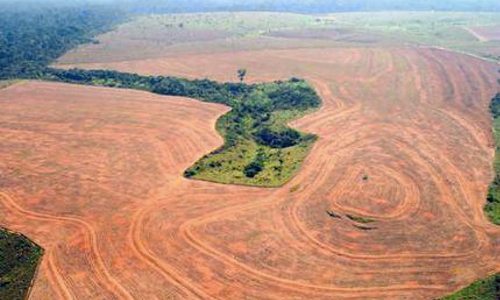
Last week, the Brazilian government released annual figures for deforestation in the Amazon and the news is not good. A total of 5,843 square kilometres are estimated lost between August 2012 and July 2013, an increase in deforestation of 28 percent compared to the previous year.

This sharp increase in deforestation in the Amazon is no surprise—all deforestation estimates released over the last year have shown we were headed in this direction. Last year, the government passed a new Forest Code, dramatically changing the environmental law that governs forest use in Brazil, including the Amazon.

A strong agribusiness influence in the Brazilian Congress lead to a massive weakening of the Forest Code—a law that once helped protect the Amazon. Those who believed the empty promises that the new Forest Code would bring governance to the Amazon, that amnesty granted to environmental criminals would not have consequences and that farmers in the Amazon would be moved by the spirit of Brazilian citizenship and legal compliance, can now see the reality of the impact of the new law in the forest. The ‘growth-at-all-costs’ model, based on the expansion of the agricultural frontier and the establishment of large infrastructure projects in the Amazon provides a sharp contrast to the image the government wants to sell.

Brazil can no longer hide behind the celebrated decrease in deforestation made in past years or the thinly veiled promises around the Forest Code. Brazil can hardly continue to claim leadership in sustainability and new models of development as all eyes turn to Brazil as hosts of the upcoming World Cup.

Corporate Responsibility

In 2009, the three largest slaughterhouses in Brazil signed the Cattle Agreement and pledged not to buy cattle from farms that were involved in new deforestation, slave labor or invasions into Indigenous land and protected areas in the Amazon. In 2006, the soy and cattle sector made commitments to move away from deforestation. The Soy Moratorium was signed by soy traders to stop the trade of soy coming from newly deforested land.

The Soy Moratorium is still in place today but it is set to expire in January 2014. If the industry fails to renew the moratorium without the proper safeguards and next steps in place, this could mean more bad news for the Amazon. We could see another dramatic increase in forest destruction as Soy expansion runs rampant through the forest.

Source: EcoWatch

US Gov’t: Alaska island “appears to show impacts from Fukushima” — “Significant cesium isotope signature” detected — Scientists anticipate more marine life to be impacted as ocean plume arrives | ENENEWS

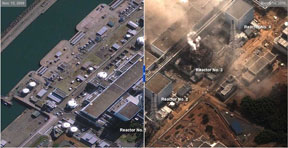
FukushimaDaiichi-BeforeAfter-288Amchitka Island, Alaska, Biological Monitoring Report 2011 Sampling Results
September 2013: To determine what [Fukushima Dai-ichi’s] direct release of radioactive materials into the atmosphere might have contributed to the background radiation on Amchitka and Adak Islands, semiquantitative gamma spectrometry measurements were made […] The results imply that Dolly Varden [a type of fish], rockweed, and to a lesser extent, Irish lord [a type of fish] appear to contain a significant cesium isotope signature from Fukushima Dai-ichi. The estimated 134Cs/137Cs activity ratios in pooled fauna samples at the time sampled ranged from <30 to about 60 percent. Observations of Fukushima-derived fallout impacting on this region are supported by findings of elevated levels of 134Cs (and 137Cs) in lichen and soil collected from both the Adak and Amchitka regions. […]

Lichen sample from mid-2011 expressed in picocuries/kilogram — Lichen on  the island had less than 70 pCi/kg of Cs-137 in 1997.

Department of Energy:
Biological Monitoring at Amchitka Appears to Show Impacts from Fukushima Dai-ichi Incident […] The U.S. Department of Energy Office Legacy Management (LM) has a long-term stewardship mission to protect human health and the environment from the legacy of underground nuclear testing conducted at Amchitka Island, Alaska, from 1965 to 1971. […] Atmospheric monitoring in the United States showed elevated cesium activities shortly after the [Fukushima] nuclear incident. LM scientists anticipated that atmospheric transport of cesium would potentially increase the cesium activities in the 2011 biological samples collected near Amchitka. Because cesium-134 has a relatively short half-life of 2 years and indicates leakage from a nuclear reactor, it is a clear indicator of a recent nuclear accident […] Because the Amchitka 2011 sampling event occurred soon after the Fukushima nuclear accident, the biota impacted by atmospheric precipitation showed the greatest impact (e.g., species that live in freshwater or shallow ocean waters) when compared to marine biota living in deeper water. This is because ocean currents are a slower transport process than wind currents. LM scientists anticipate that the marine biota will show the impacts of Fukushima during the next sampling event, currently scheduled to occur in 2016. […]

Source: ENENEWS

Small-Scale Farmers and Organic Produce Could Disappear Under Proposed FDA Rules | EcoWatch

SmallFarmersBy

Small-scale farmers, such as those who sell at the local farmers market or through a community-supported agriculture (CSA) say the supply of organic, local produce will be greatly reduced and many small farms will go out of business if the Food Safety Modernization Act (FSMA) goes into effect as currently written.

FSMA was signed into law in 2011 to preserve the safety of the U.S. food supply and was the largest overhaul in federal food safety regulation since 1938. FSMA introduced new regulations for produce farms and facilities that processed food for human consumption.

The rules are meant to prevent food-borne illnesses, which have affected one in six Americans a year over the last decade, by preventing or quickly identifying food-borne pathogens before they contaminate the food supply.

But many small-scale food producers express concern that the food safety rules are designed with larger, more complex and tightly-coupled food systems in mind without regard to how they would impact smaller producers. The rules may drive some farms out of business because those with less than $500,000 in sales that sell mostly to commercial customers would have to pay 4 percent to 6 percent of their gross revenue for inspections to comply with the new regulations.

The National Sustainable Agricultural Coalition (NSAC) says farmers and consumers are worried that the rules will:

  • put many farms out of business
  • reduce the supply of fresh, local produce in schools and hospitals
  • push farmers to tear out wildlife habitat
  • increase the use of chemicals rather than natural fertilizers

The proposed rules come at a time when demand for fresh, organic produce is on the rise. The number of farmers markets in America has quadrupled to 8,144 in the last 20 years, due in part to supermarkets, restaurants, schools, hospitals and other wholesale buyers increasingly using food procured from local farmers. This is fresh produce generally grown without pesticides, herbicides or GMO seeds.

“I’m really worried that if this law is not interpreted in terms of the challenges a small farmer faces, but only in terms of a 1,000 acre field of lettuce, that it could be the end of small, local, sustainable farming,” said U.S. Rep. Chellie Pingree (D-Maine), who is a farmer. “I cannot imagine the outrage on behalf of the consumers if local food systems are regulated out of existence.”

The Food and Drug Administration is asking for comments from the public. The comment period closes at 11:59 p.m. Friday. NSAC has come up with a FSMA rules primer and suggested templates the public—whether you are a farmer or a consumer—can use to prepare and send your comments to the FDA.

For many consumers, farmers markets and CSAs are places to buy produce that is unavailable anywhere else. Those buyers also appreciate the chance to support local businesses.

Here, courtesy of Care2, is sampling of farmer market foods that could disappear if the new rules go into effect:

  1. Heirloom tomatoes. The new rules could cost farmers more than half their profits and will keep beginners from starting to farm.
 As a result of the high costs of compliance for the Produce and the Preventive Controls Rules, FDA anticipates some farmers will go out of business and fewer people will start to farm.
  2. Locally grown peppers. Although the rules set modified requirements for small and very small businesses, the FDA has not settled on a definition for very small business. This means that thousands of farms could be regulated like big industrial food manufacturers, and small operations could be regulated with compliance costs too high for them to stay in business.
  3. Fresh strawberries. It will be hard for mid-size farms to diversify their operations because all food grown on the farm counts toward the $500,000 income eligibility test, including covered crops like strawberries. So a small pick-your-own strawberry operation on a 800-acre corn and soybean farm, bringing in $25,000, could be subject to the same expensive, burdensome requirements as California’s mega-scale packaged berry industry.
  4. Pickles and salsa. The rules fail to protect a host of low-risk processing activities done by smaller farms and processors, including the making of pickles and salsa. Farmers adding value to their crops through this processing would be subject to the same regulations as high-risk processing activities by large corporations.
  5. Spring apples. The rules will make it extremely difficult for farmers to use compost and manures as fertilizer. These natural systems are extremely important for organic and sustainable farmers and the new rules would stop most farmers from using them.

Source: EcoWatch

More and more everyday people suddenly into ‘prepping’ for disaster | NaturalNews

Preparedness-Garden-Leafy-GreensBy J. D. Heyes

It’s not just “fringe” types and end-of-the-world religious prognosticators; more and more “everyday people” are sensing that something is wrong with their country and the world, and are taking steps to prepare for turbulent times.

Yes, technically they are “preppers” in today’s lexicon, but they are far from the kind of people that that term engenders. In fact, some of these “newbies” might even be your neighbors.

As reported by Fortune/CNN:

More and more Americans are spending money to get ready for an uncertain future — gathering food, water, tools and skills to help them weather anything from a hurricane to a pandemic.

Contrary to images of deluded or gun-obsessed “lone wolves,” many preppers are average consumers reacting to concrete worries, and their way of thinking is spreading, fueling an emerging lifestyle trend. That lifestyle is generating demand for a broad spectrum of products offering survival — or even comfort — when large-scale systems go down.

‘It’s not just country people anymore’

You can see the diversification of the prepper at many of the latest expos and conferences aimed at peddling goods to this emerging and ever-changing consumer demographic.

“To get a closer look,” wrote David Z. Morris for Fortune, “I visited Life Changes, Be Ready!, or LCBR, a new expo that held its second event on the weekend of November 2nd and 3rd, in Lakeland, Fla. [emphasis added]. LCBR gave an immediate sense of one big way that the preparedness crowd isn’t marginal at all — economically. The show floor was packed with a dizzying array of small businesses and products that defied stereotypical ‘prepper’ classification — not just ammunition and crossbows and camping gear, but also seed banks, beehives, financial planning, and acupressure.”

Indeed, said many of the expo’s vendors and entrepreneurs on the showroom floor, business has been rising.

One of these entrepreneurs, John Egger of Self Reliance Strategies, has been making and selling prepackaged seed banks for about four years. His market is expanding, he says.

“It’s definitely picking up. It’s not just country people anymore. We really cater to a suburban market … We call it suburban homesteading,” he told Morris.

Much of the new gear isn’t directed at low-rent folks or cave-dwellers. Items vary in price from $5,600 for a portable solar charging station to $649 for “Stomp Supreme” field medic kits offered by a firm called Doom and Bloom, LLC.

“This is the one recommended for people expecting civil unrest,” Morris quoted company officials as saying.

More reporting from Morris:

The diversity and type of products on offer was also remarkable. Egger’s seeds, for example, were prominently labelled “Organic” and “Non-GMO” — and so were all the other seeds on sale at the show. Those are distinctions you might not think were important to the same crowd in the market for a crossbow, but according to Egger, “you don’t have to explain to people anymore” why eating organic matters.

Prepping: Not a ‘fringe’ activity anymore

In addition to new high-tech, high-end products, there were also some quirky items. Earthworm farms and beehives were for sale as well, and at least two companies were selling essential oils.

In a back corner of the showroom, Mike Mah – aka No Stress Mike – was offering $30 pain reduction sessions, employing a “Hoy Chi” energy healing technique. His flyers predominately stated that he attended every Tea Park event he possibly could. He manipulated spines of dozens of show patrons who were willing (even as he kept a handgun tucked into his beltline).

There are many things that are driving new crowds to prep shows: the unevenness of a skyrocketing stock market, even as job growth and wages stagnate; uncertainty about the nation’s spiraling debt; angst over policies enacted by President Obama; the costs and requirements of Obamacare; and political partisanship.

But there is one common denominator among all: Prepping isn’t a “fringe” activity anymore, and failure to be prepared is the worst sin of all.

Source: Natural News & Fortune Magazine

WikiLeaks publishes secret draft chapter of Trans-Pacific Partnership | The Guardian

May DayWikiLeaks has released the draft text of a chapter of the Trans-Pacific Partnership (TPP) agreement, a multilateral free-trade treaty currently being negotiated in secret by 12 Pacific Rim nations.

The full agreement covers a number of areas, but the chapter published by WikiLeaks focuses on intellectual property rights, an area of law which has effects in areas as diverse as pharmaceuticals and civil liberties.

Negotiations for the TPP have included representatives from the United States, Canada, Australia, New Zealand, Japan, Mexico, Malaysia, Chile, Singapore, Peru, Vietnam, and Brunei, but have been conducted behind closed doors. Even members of the US Congress were only allowed to view selected portions of the documents under supervision.

“We’re really worried about a process which is so difficult for those who take an interest in these agreements to deal with. We rely on leaks like these to know what people are talking about,” says Peter Bradwell, policy director of the London-based Open Rights Group.

“Lots of people in civil society have stressed that being more transparent, and talking about the text on the table, is crucial to give treaties like this any legitimacy. We shouldn’t have to rely on leaks to start a debate about what’s in then.”

The 30,000 word intellectual property chapter contains proposals to increase the term of patents, including medical patents, beyond 20 years, and lower global standards for patentability. It also pushes for aggressive measures to prevent hackers breaking copyright protection, although that comes with some exceptions: protection can be broken in the course of “lawfully authorised activities carried out by government employees, agents, or contractors for the purpose of law enforcement, intelligence, essential security, or similar governmental purposes”.

WikiLeaks claims that the text shows America attempting to enforce its highly restrictive vision of intellectual property on the world – and on itself. “The US administration is aggressively pushing the TPP through the US legislative process on the sly,” says Julian Assange, the founder and editor-in-chief of WikiLeaks, who is living in the Ecuadorean embassy in London following an extradition dispute with Sweden, where he faces allegations of rape.

“If instituted,” Assange continues, “the TPP’s intellectual property regime would trample over individual rights and free expression, as well as ride roughshod over the intellectual and creative commons. If you read, write, publish, think, listen, dance, sing or invent; if you farm or consume food; if you’re ill now or might one day be ill, the TPP has you in its crosshairs.”

Just Foreign Policy, a group dedicated to reforming US foreign policy, managed to crowdfund a $70,000 (£43,700) bounty for Wikileaks if the organisation managed to leak the TPP text. “Our pledge, as individuals, is to donate this money to WikiLeaks should it leak the document we seek.” The conditions the group set have not yet been met, however, because it required the full text, not individual chapters.

Related to the TPP is a second secret trade agreement, the Transatlantic Trade and Investment Partnership (TTIP), which ties together regulatory practices in the US and EU. George Monbiot, writing in this paper, referred to the treaty as a “monstrous assault on democracy”. Ken Clarke, the minister without portfolio, replied that it “would see our economy grow by an extra £10bn per annum”.

Campaign group Fight for the Future has already collected over 100,000 signatures in an online petition against what it calls the “extreme Internet censorship plan: contained in the TPP.

Evan Greer, campaign manager for Fight for the Future, said: “The documents revealed by WikiLeaks make it clear why the US government has worked so hard to keep the TPP negotiatons secret. While claiming to champion an open Internet, the Obama administration is quietly pushing for extreme, SOPA-like copyright policies that benefit Hollywood and giant pharmaceutical companies at the expense of our most basic rights to freedom of expression online.”

Source: Wikileaks & The Guardian
Fracking the American Dream: Drilling Decreases Property Value | EcoWatch

NAShaleBedsDrilling conflicts are almost always described in the context of their impacts on air, water and health. But increasingly, as the drilling boom sweeps the country, another part of the drilling story is starting to bubble up in drilling hotspots like Colorado, Pennsylvania, New York, Wyoming and Texas.

Increasingly, oil and gas development is butting up against, and often trampling, the bedrock American principles of property rights and the value of one’s home. The map below shows all the shale gas in play in North America.

Industry estimates peg the number new wells that will be drilled across the U.S. over the next decade at more than 200,000. In this rush to tap once unreachable deposits, oil and gas development is pushing the boundaries of drilling. Innovations like fracking and horizontal drilling mean nothing is out of reach. Once the province of wide open spaces, drilling rigs now regularly inch up and even into communities that never anticipated having to address problems like round-the-clock noise, storage tanks, drums of toxic chemicals, noxious fumes, and pipelines near homes, schools, playgrounds and parks.

This clash of large-scale industrial activity and communities has surfaced a deep rift in the American landscape, where the legal doctrine of split estates allows one party to own mineral rights and someone else to hold the rights to soil and surface. With the oil and gas industry showing little self-restraint in where drilling happens, and almost no regulatory or legal precedents to protect them from having industrial activity in their back yards, communities are fighting back. Increased truck traffic, chemicals, lights, noise, heavy equipment, noxious air emissions and water contamination are liabilities for landowners, to the point that communities in Colorado, New York and other states have taken matters into their own hands.

Feeling unprotected by weak state and oil and gas regulations—most of which were developed never contemplating drilling in urban and suburban landscapes—towns, cities and counties are instituting moratoria and bans on drilling within their borders. There are fracking-related ballot measures in at least four Colorado communities this year.

But it’s not just “not-in-my-back-yard”-ism driving this reactive opposition. The financial risks posed by drilling are real and substantial enough, for example, that banks and insurers are adopting guidelines that forbid mortgage loans or insurance coverage on properties affected by drilling. It’s a battle between oil and gas and the nest egg of countless Americans.

The following examples begin to piece together the ways in which the threats posed by drilling and the deep pockets of the oil and gas industry quite literally hit home. Taken together, they are a call for decision-makers to start quantifying data and asking tough questions about drilling vs. the American Dream. Read more…

Source: EcoWatch

Pesticide Companies Sue EU Commission for Protecting Pollinators | EcoWatch

CourtsandMoneyOn Nov. 6 BASF, a German agrochemical company, took legal action in the General Court of the European Union (EU) to challenge the EU Commission’s decision to restrict seed treatment uses of the insecticide fipronil. BASF joins chemical companies Bayer and Syngenta in challenging the EU’s decision to restrict the use of certain pesticides that are harmful to pollinators.

The EU Commission’s decision to restrict the use of fipronil in July came after the Commission’s landmark decision announcing a two-year continent-wide ban on the neonicotinoid pesticides clothianidinimidacloprid and thiamethoxam. The pesticides have been linked to the decline in bee populations. Twenty-three European Union Member States supported the fipronil restriction, two Member States voted against and three Member States abstained during the standing committee vote. BASF argued that its legal action against the EU is based on a disproportionate application of the precautionary principle. However, overwhelming scientific evidence supports the position that fipronil is highly toxic to bees.

Fipronil, a phenyl pyrazole broad-spectrum insecticide, was first introduced in the U.S. in 1996 for commercial turf and indoor pest control and is highly toxic to bees. A recent investigation reveals that fipronil is responsible for the death of  thousands of bees in Minnesota. Fipronil also has been shown to reduce behavioral function and learning performances in honey bees. A 2011 French study reported that newly emerged honey bees exposed to low doses of fipronil and thiacloprid succumbed more readily to the parasite Nosema ceranae compared to healthy bees, supporting the hypothesis that the synergistic combination of parasitic infection and high pesticide exposures in beehives may contribute to colony decline.

Fipronil is also harmful to humans and has been linked to hormone disruption, thyroid cancer, neurotoxicity and reproductive effects in mammals. Recently, a federal grand jury in Macon, GA, alleged that a pest company wrongly applied fipronil in multiple nursing homes in Georgia.

beeBy challenging the EU commission’s decision to ban pesticides that are suspected to be harmful to bee health, BASF joins Bayer and Sygenta, which are also challenging the new restrictions. This past August, Syngenta filed a legal challenge to the European Union’s suspension of one of its insecticides, thiamethoxan. In a press release, Syngenta claims that the European Commission made its decision on the basis of a flawed process.

Bayer Crop Science filed a similar legal challenge with the Court of Justice of the European Union in mid-August. Bayer claims that its pesticides, imidacloprid and clothianidin, have been on the market for many years and have been extensively tested and approved. According to EU guidelines, approved products can only be banned if there is new evidence of their negative effects, Bayer Crop Science said. These actions taken by the agrochemical industry that challenge the ban on neonicotinoids ignore the increasing body of new science that documents neonicotinoid toxicity to bees and other pollinators.

As Europe has moved toward creating stronger regulations designed to protect declining bee health, the U.S. has remained woefully behind. Recently, the U.S. Environmental Protection Agency (EPA) acknowledged that current pesticide labels do not adequately protect honey bees and announced new label language to prohibit the use of neonicotinoid pesticides when bees are present. The new labels will also include a “bee advisory box” and icon with information on routes of exposure and spray drift precautions. However, beekeepers and environmental groups question the efficacy and enforceability of the new label changes in curtailing systemic pesticides that result in long-term residues in the environment, contaminating nectar and pollen, and poisoning wild bees that the EPA seems to ignore in its decision-making process.

Due to the absence of strong regulatory safeguards for pollinators in the U.S., it is important for the public to become engaged in pollinator protection. Beyond Pesticides’ BEE Protective campaign supports a shift away from the use of these toxic chemicals by encouraging organic methods and sustainable land management practices in your home, campus, or community and in food production.

Source: EcoWatch

New “Freedom Act” Would Curtail the Patriot Act | Truthout

By Kelly Rucke

Two congressmen who were involved in the passage of the Patriot Act have introduced a bill that would rein in secret surveillance of Americans.

NewFreedomActAmid continuing revelations that the U.S. government not only conducted invasive surveillance on its own citizens but on world leaders — including U.S. allies — Senate Judiciary Committee Chairman Patrick Leahy (D-Vt.) and Rep. Jim Sensenbrenner (R-Wisc.) introduced a piece of legislation that would “restore Americans’ privacy rights by ending the government’s dragnet collection of phone records and requiring greater oversight, transparency, and accountability with respect to domestic surveillance authorities.”

Known as the USA FREEDOM Act, the legislation would “end the dragnet collection of Americans’ phone records under Section 215 of the USA PATRIOT Act — which allows the FBI to order any person or entity to hand over any tangible item to protect against international terrorism or clandestine intelligence activities — and ensures that other authorities cannot be used to justify similar dragnet collection.”

The bill, which has 16 co-sponsors from both sides of the aisle, would also implement safeguards to ensure that the U.S. government does not conduct warrantless surveillance.

A Special Advocate position would also be created to ensure that Americans’ privacy rights and civil liberties were protected, and detailed public reports about the type and frequency of Foreign Intelligence Surveillance Act (FISA) orders would also be required.

In a joint press release on Oct. 29, Leahy said he co-authored the legislation because “the government surveillance programs conducted under the Foreign Surveillance Intelligence Act are far broader than the American people previously understood. It is time for serious and meaningful reforms so we can restore confidence in our intelligence community.”

“Modest transparency and oversight provisions are not enough. We need real reform, which is why I join today with Congressman Sensenbrenner, as well as a bipartisan group of 15 Senators, to introduce the USA FREEDOM Act.”

Sensenbrenner added that although the U.S. Patriot Act was implemented after 9/11 to “keep Americans safe by ensuring information is shared among those responsible for defending our country and by enhancing the tools the intelligence community needs to identify and track terrorists … the balance between security and privacy was lost.”

He said it’s time for the judiciary committee members to come together again as they did with the Patriot Act, but this time pass a piece of legislation that protects American liberties.

“Washington must regain Americans’ trust in their government. The USA FREEDOM Act is an essential first step,” Sensenbrenner said.

Transparent surveillance practices

Introduction of the Freedom Act legislation comes after Rep. Justin Amash (R-Mich.) proposed a budget amendment bill this past July that would have defunded a portion of the NSA’s budget — specifically the portion of the agency’s budget that was used to surveil Americans’ phone records.

Amash’s bill failed to pass by 12 votes; the congressman has now come out in support of the Freedom Act.

Advocacy groups such as the American Civil Liberties Union, the National Rifle Association and privacy-rights group Stop Watching Us have all pledged their support for the legislation.

What is unique with this legislation is that Leahy and Sensenbrenner were both the primary authors of the Patriot Act, the specific piece of legislation that the Freedom Act seeks to alter.

In a joint opinion piece for Politico, Leahy and Sensenbrenner wrote that while there have been debates about the benefits of the Patriot Act since it was passed 12 years ago, collecting “millions of Americans’ phone records every day — whether they have any connection at all to terrorism — goes far beyond what Congress envisioned or intended to authorize.”

“Since the revelation that the National Security Agency is collecting the details of Americans’ phone calls on an unprecedented scale, it has come out that the government searches the content of huge troves of emails, collects in bulk the address books from email accounts and social networking sites, at least temporarily collected geolocation data from our cellphones, committed thousands of privacy violations and made substantial misrepresentations to courts and Congress.

“Not only do many of these programs raise serious legal questions, they have come at a high cost to Americans’ privacy rights, business interests and standing in the international community. It is time for a new approach.”

Though the legislation’s authors say the government’s surveillance techniques will cease to exist with the passage of the Freedom Act, the intelligence community will still be allowed to gather information on Americans.

But instead of the surveillance program’s activities being kept secret, the bill would create new oversight, auditing and public reporting requirements.

“No longer will the government be able to employ a carte-blanche approach to records collection or enact secret laws by covertly reinterpreting congressional intent,” the opinion piece says. “And to further promote privacy interests, our legislation establishes a special advocate to provide a counterweight to the surveillance interests in the FISA Court’s closed-door proceedings.”

Though Leahy and Sensenbrenner acknowledge the problems with the U.S. government’s surveillance practices, the two said that they believe Congress has to have some surveillance practices in order to keep the country safe:

“Congress did not enact FISA and the PATRIOT Act to give the government boundless surveillance powers that could sweep in the data of countless innocent Americans. If all of our phone records are relevant to counterterrorism investigations, what else could be?

“The intelligence community has failed to justify its expansive use of these laws. It is simply not accurate to say that the bulk collection of phone records has prevented dozens of terrorist plots. The most senior NSA officials have acknowledged as much in congressional testimony. We also know that the FISA court has admonished the government for making a series of substantial misrepresentations to the court regarding these programs. As a result, the intelligence community now faces a trust deficit with the American public that compromises its ability to do its job. It is not enough to just make minor tweaks around the edges. It is time for real, substantive reform.”

Source: Truthout

Monsanto Bans GM Corn in Latest Win Against Monsanto & Big Ag | Occupy.com

By Joseph Mayton

Effective immediately, a ban on genetically-modified corn in Mexico has gone into action only days after thousands took to the streets in cities worldwide to protest against Monsanto and the GMO industry.

Companies such as Monsanto and DuPont Pioneer will no longer be allowed to plant or sell their genetically modified corn within the country’s borders, a Mexican judge ruled last week.

The decision, which came nearly two years after the Mexican government put Monsanto’s GE corn on hold, citing the need for more tests, makes Mexico a leading player in the global battle against genetically modified organisms.

According to Environmental Food and Justice, Judge Jaime Eduardo Verdugo J. of the Twelfth Federal District Court for Civil Matters of Mexico City ruled that the genetically engineered corn posed ”the risk of imminent harm to the environment.”

He also ordered Mexico’s Secretary of Agriculture and the Secretary of Environment and Natural Resources (SEMARNAT), which is equivalent to the U.S. EPA, to immediately “suspend all activities involving the planting of transgenic corn in the country and end the granting of permission for experimental and pilot commercial plantings.”

The ruling means Monsanto and other biotech companies must halt all activity in the country while collective action lawsuits initiated by citizens, farmers, scientists and other concerned parties work their way through the judicial system.

According to a local press release, the group Acción Colectiva, or Collective Action — which is led by Father Miguel Concha of the Human Rights Center Fray Francisco de Vittoria — aims to achieve an absolute federal declaration of the suspension of transgenic maize in all its forms, including experimental and pilot commercial plantings in the country considered “the birthplace of corn in the world.”

Rene Sanchez Galindo, the legal council for Acción Colectiva in the lawsuit, said the ruling by Judge Eduardo Verdugo “constitutes a milestone in the long struggle of citizen demands for a GMO-free country.”

Galindo added that the ruling “has serious enforcement provisions and includes the possibility of criminal charges for the authorities responsible for allowing the introduction of transgenic corn in Mexico.”

Rallies occurred in over 500 cities worldwide against GMOs in mid-October, and in San Francisco, Mexican activists came out in force to show their disgust for the way companies like Monsanto have dominated the market and pushed aside local farmers in favor of “big business.”

“I think what is happening is the beginning of a new way of thinking where people are able to show their concern for change,” said Oscar Hernandez, a Mexican former migrant worker who is now waiting for his green card. Hernandez had participated in the mass demonstration against Monsanto near the Golden Gate Bridge.

“This is a war that we have to win, and Mexico is showing that it can be a leader despite the misconceptions about the country,” he told Occupy.com. “This is true activism and I am proud to be a part of it.”

An official from Mexico’s Secretary of Agriculture, who was not authorized to give his name, told Occupy.com that the global movement against GMOs which has erupted in the past year was a major catalyst driving the ruling to ban GMO corn in the country.

“We believe in listening to the people and they are speaking loud and clear that they do not want GMOs on their plate, so this is a decision that will be supported by the people,” said the official.

Source:  Occupy.com

Small Farmer Charges Monsanto for Contamination of Crops | Thrive Movement

Percy-SchmeiserAfter a long battle with GMO giant Monsanto, a 77 year old Saskatchewan farmer, Percy Schmeiser and his wife, Louise, have declared a “moral victory” for small farmers.[1]  In 1997, Schmeiser was sued by Monsanto for $400,000 in damages because Monsanto’s Genetically Modified canola seeds were found growing on their farm. Monsanto claimed the Schmeiser’s intentionally planted the seeds without paying technology fees while the Schmeiser’s insisted that the seeds blew onto their property from other farms or passing trucks. The case drew significant attention and the Schmeiser’s ultimately lost but were not required to pay damages.

When the Schmeiser’s found more Round-Up Ready seeds on their land in 2005 the drama continued, only this time Monsanto was on the defense. The Schmeiser’s were demanding payment from Monsanto for the costs associated with removal of the genetically modified seeds. Monsanto agreed to settle under one condition: the Schmeiser’s had to remain silent about the provisions of the settlement.

Ultimately the Schmeiser’s refused to settle for the small sum of $660 in order to maintain the right to discuss the case. Percy Schmeiser continues to raise awareness around the danger of GMO’s and has inspired thousands of other farmers to stand up for their rights.

Source: Common Dreams & THRIVE