Emails Show FBI-Media Collusion against Trump, CA Begins 1.5 Million Inactive Voter Cleanup | Judicial Watch

Source: Judicial Watch/YouTube

Why Americans Don’t Cheat on Their Taxes | The Atlantic

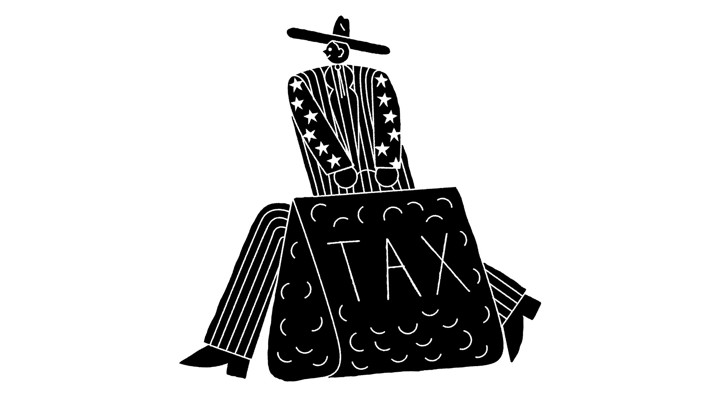
If such a thing as American exceptionalism remains, maybe it can be found in this: Despite deep IRS budget cuts, an average audit rate that has plunged in recent years to just 0.6 percent, and a president who has bragged that dodging federal taxes is “smart,” most Americans still pay their income taxes every year. Even more remarkable, most of us feel obliged to pay. To quote the findings of a 2017 IRS survey: “The majority of Americans (88%) say it is not at all acceptable to cheat on taxes; this ethical attitude is not changing over time.”

True, tax crooks might not confess their real feelings in an IRS survey. But other data confirm that the U.S. is among the world’s leaders when it comes to what economists call the voluntary compliance rate (VCR). In recent decades, America’s VCR has consistently hovered between 81 and 84 percent. Most countries don’t calculate their VCR regularly, but when they do, they lag behind the U.S. One paper that gathered what comparative data were available reported that Germany, the top European Union economy, had a VCR of 68 percent.

Other countries score worse, among them Italy (62 percent), the site of a sprawling tax scandal in which about 1,000 citizens were charged last year with bilking the government out of 2.3 billion euros in tax revenue. The public didn’t seem terribly bothered; ex–Prime Minister Silvio Berlusconi, who was convicted of tax fraud in 2013, may have tapped a common sentiment when he said back then that “evasion of high taxes is a God-given right.”

Then there’s Greece, where economists have struggled to even calculate a VCR. According to the International Monetary Fund, more than half of Greek households pay zero income tax. Indeed, tax evasion is practically a national sport. Take the swimming-pool trick. After the 2008 recession, the government placed a luxury tax on private pools. When only 324 residents in the ritzy suburbs of Athens admitted to having one, tax collectors knew they were being swindled—but didn’t know how badly until Google Earth photos revealed the real pool count: 16,974. It’s now common to conceal chlorinated assets with floating tiles, army nets, and pool interiors painted to mimic grass.

What separates Americans from Greeks or Italians? It’s not income-tax withholding, which the U.S. pioneered but Europe has since copied. Higher tax rates may be one factor. Illegal shadow economies, in which goods are sold off the books for cash, are another. (Greece’s black market is the biggest in the eurozone, accounting for 21.5 percent of its GDP.)

Economists say a third factor, one with profound political implications, is tax morale. This is a catchall term for various forces that motivate people to pay taxes, including social norms, democratic values, civic pride, transparent government spending, and trust in leadership and fellow citizens. People are more inclined to fudge (yes, economists use that word) their tax forms if they think others aren’t paying their fair share.

None of this would seem to bode especially well for tax morale in the U.S., where faith in government has been dropping for decades. So why are Americans still paying? One possibility is that declining trust has been offset by reforms that made cheating harder. Since 1987, to take one example, tax filers have been required to list Social Security numbers for dependents, a change that generated almost $3 billion in revenue, as the number of dependents nationwide shrank by millions. (Suspiciously, some of the disappeared had names like Fluffy.)

A more worrisome possibility is that tax morale has lagged behind declining trust, and will yet fall. High-profile tax-avoidance schemes—like those detailed in the so-called Panama Papers, or by The New York Times’s reporting on the Trump family’s tax dodges—could help erode morale. “Our sense of right and wrong is dramatically influenced by other people,” says Dan Ariely, a professor of psychology and behavioral economics at Duke. “If people think that the government is corrupt and not doing the right thing,” he told me, they may be more inclined to say, “Oh, I don’t want to pay money to a government that is misbehaving.”

Source: The Atlantic

Unsealed documents shed new light on efforts to verify Trump-Russia dossier | CNN

Documents unsealed this week lend credence to a theory about Russian election meddling that was first put forward in the Trump-Russia dossier, however they do not corroborate the more explosive claims that the Trump campaign colluded with the Kremlin in the 2016 campaign.

A report from a retired agent who worked for the FBI’s cyber division, submitted as expert testimony in a civil lawsuit, presented new evidence about how Russian intelligence might have exploited a private web hosting company when it fooled top Democratic targets into giving up their passwords. The fruits of those hacks formed the basis of the WikiLeaks email dumps that roiled the race.

The controversial dossier had accused Russian hackers of using those companies, Webzilla and its parent company XBT, as part of their scheme to meddle in the presidential election. The memos, written by a retired British spy, Christopher Steele, also claimed that Russian entrepreneur Aleksej Gubarev assisted the cyberattacks “under duress” from Russian intelligence.

Gubarev vehemently denied those allegations and sued BuzzFeed for defamation after it published the dossier. That prompted BuzzFeed to commission the expert witness report from FTI Consulting’s Anthony Ferrante, who is also a CNN contributor. A federal judge dismissed the lawsuit in December, and ordered that dozens of documents be released to the public this week. The judge ruled on First Amendment grounds and did not assess the hacking-related allegations.

Details of the report

The FTI report concluded that one of the hyperlinks the Russians designed to trick Hillary Clinton’s campaign chairman John Podesta into giving up his email password was created on an internet protocol address owned by Root S.A., an XBT subsidiary.
In his deposition, retired FBI cyber official Ferrante admitted the evidence didn’t conclusively show XBT was aware of the Russian campaign against Democrats.

“I will further state that other than the fact that XBT employees did little to nothing to detect, stop and prevent the significant malicious activity, I have no evidence of them actually sitting behind a keyboard,” he said.

Gubarev’s team argued that an internet hosting company couldn’t be held responsible for the activities of people who use its services.
A rebuttal on Gubarev’s behalf, filed by a former CIA cybersecurity expert, Eric Cole, stressed that he and his staff were frequently unaware of the specific activity conducted on its servers.

“XBT/Webzilla is not responsible for every bit of data that a bad actor passes over its infrastructure any more than a post office is responsible for the actions of the Unabomber,” Cole wrote.

“Special Counsel Robert Mueller indicted the 12 Russians responsible for the hacking. Those are the folks responsible, not us,” Evan Fray-Witzer, an attorney for Gubarev, told CNN. The 11-count indictment against those hackers, which was filed in July 2018, did not mention Webzilla or XBT.

BuzzFeed News characterized the report as vindication of its decision to publish the Trump-Russia dossier. “We knew already that publishing the dossier was in the public interest,” spokesperson Matt Mittenthal told CNN. “Now, because BuzzFeed News published the dossier, we’re learning more about the facts of foreign influence in the 2016 presidential election.”

Gubarev sued BuzzFeed in 2017 and sought damages for defamation. As part of the legal process, some of the key players in the dossier saga were deposed, including Steele.

The court unsealed one page of that deposition, which happened last year in London. Steele testified that he tried to verify the allegations against Gubarev by doing, among other things, an “open source search,” which would likely include scouring news clippings and public records.

Steele has years of experience as a British spy in Moscow and has been a trusted source for the FBI. Allies of Democratic nominee Clinton funded Steele’s investigation in 2016. But he was so concerned by his findings that he shared his memo with senior US and UK officials.

In her decision to throw out the case, the judge confirmed that BuzzFeed got the dossier from an associate of Republican Sen. John McCain in December 2016, weeks after the election.

The memos were circulating in Washington, and CNN soon broke the story that senior US intelligence officials had briefed President-elect Trump and President Barack Obama about some of the unverified allegations. Hours later, BuzzFeed published the complete dossier online.
The most salacious allegations in the dossier remain unverified to this day. But the claims that form the bulk of the memos have held up over time, or at least proved to be partially true.

This notably includes Steele’s claim that Russian President Vladimir Putin oversaw an effort to interfere in the 2016 election. It also includes allegations of secret contacts between Trump’s team and the Russians during the campaign. Steele gathered this stunning information months before the Russian meddling campaign was publicly confirmed by US intelligence agencies and in court filings from special counsel Robert Mueller.

Kevin Collier, a cybersecurity reporter for CNN, previously worked for BuzzFeed News.

Source: CNN & BuzzFeed News

How Much Will Medicare for All Cost? | Committee for a Responsible Federal Budget

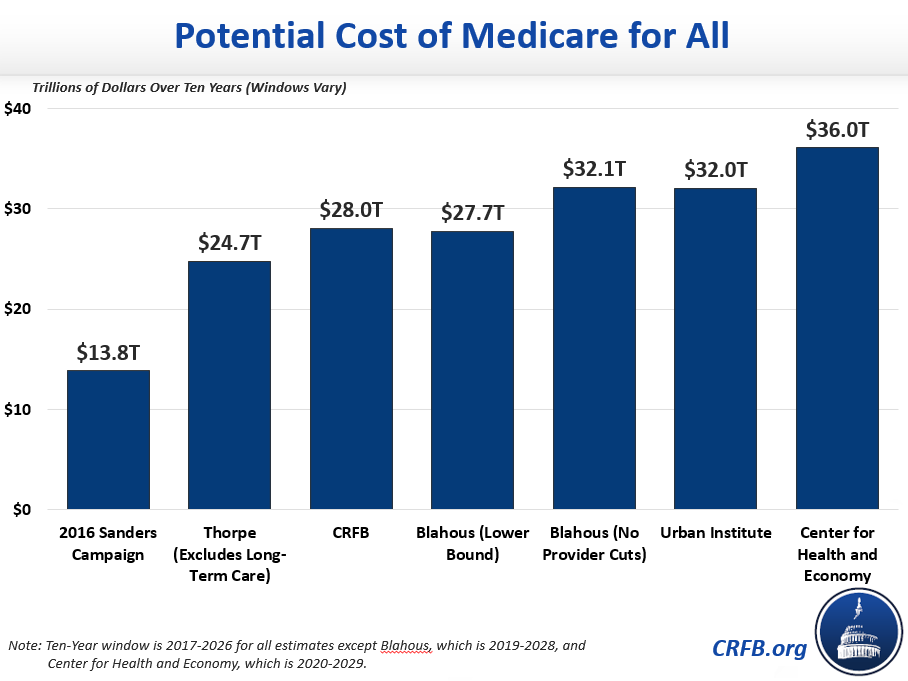
Representative Pramila Jayapal (D-WA), a co-chair of the Medicare for All Caucus, released a bill today that would adopt a single-payer system, where the federal government replaces private health insurance companies as the sole provider of most health care financing. While we are not aware of any estimates of this particular proposal, similar proposals have been estimated to cost the federal government roughly $28-32 trillion over a decade.

Representative Jayapal’s Medicare for All Act would replace nearly all current insurance with a government-run single-payer plan and extend that plan to those who currently lack health coverage. The plan itself would be far more generous than either Medicare or most private coverage, as it would include no deductibles or copayments, would not restrict beneficiaries to networks of care, and would offer a broad suite of benefits including dental care, vision care, transportation for disabled and low-income patients, certain dietary and nutritional care, long-term care, and other long-term services and support. The proposal also establishes a global health budget, moves away from fee-for-service and toward lump-sum payments for many providers, includes a number of measures to hold down drug prices, and makes a variety of other changes to the health care system.

The proposal is broadly similar to Senator Sanders’s proposed single-payer plan introduced during the 2016 Presidential campaign. While the campaign itself estimated that plan would cost the federal government about $14 trillion over a decade, most other estimates that we are aware of are at least twice that high.

At the time, for example, the Committee for a Responsible Federal Budget estimated roughly that the plan would cost $28 trillion through 2026 (we estimated the Sanders plan in particular would also raise $11 trillion of revenue, leading to $17 trillion of net costs). All other estimates come to similar conclusions.

For example, economist Kenneth Thorpe estimated that single-payer health care would cost the federal government $24.7 trillion through 2026, excluding the costs associated with long-term care benefits (likely about $3 trillion). The Urban Institute estimated a $32 trillion cost over the same period, including those long-term care benefits. The Center for Health and Economy (H&E) produced an estimate that the American Action Forum calculates would cost the federal government $36 trillion through 2029.

In addition, former Social Security and Medicare Trustee and current Mercatus Center fellow Chuck Blahous estimated that Medicare for All as proposed in Senator Sanders’s 2017 legislation would cost the federal government $27.7 trillion through 2028 assuming steep provider cuts and $32.1 trillion assuming no provider cuts (these estimates, like most others, assume immediate implementation).

Importantly, these totals represent the increased cost to the federal government, not the change of total national health expenditures. National health expenditures would likely change by no more than a few trillion dollars over decade. The direction of that change is unclear and would depending on the whether the increased cost of expanding coverage (by making health insurance more generous and offering it to more people) is larger or smaller than the amount saved from lower provider payments, drug payments, and administrative spending.

The totals also do not represent debt impact, which would depend not only on the cost to the federal government but also on any funds the government might choose to raise through premiums, taxes, or both. For example, Senator Sanders’s campaign plan included roughly $11 trillion of tax increases, which could fund more than one-third of Medicare for All.

While any new revenue would in part be replacing current premiums, identifying pay-fors still remains a challenge. Enacting this type of Medicare for All would mean increasing federal spending by about 60 percent (excluding interest), and financing a $30 trillion program would require the equivalent of tripling payroll taxes or more than doubling all other taxes.

Supporters of Medicare for All should work to identify new revenue, premiums, and/or spending cuts to finance new federal costs or else scale back their proposal if they are unable to identify sufficient funding.

Source: Committee for a Responsible Federal Budget


FBI releases part of Russia dossier summary used to brief Trump, Obama | Politico

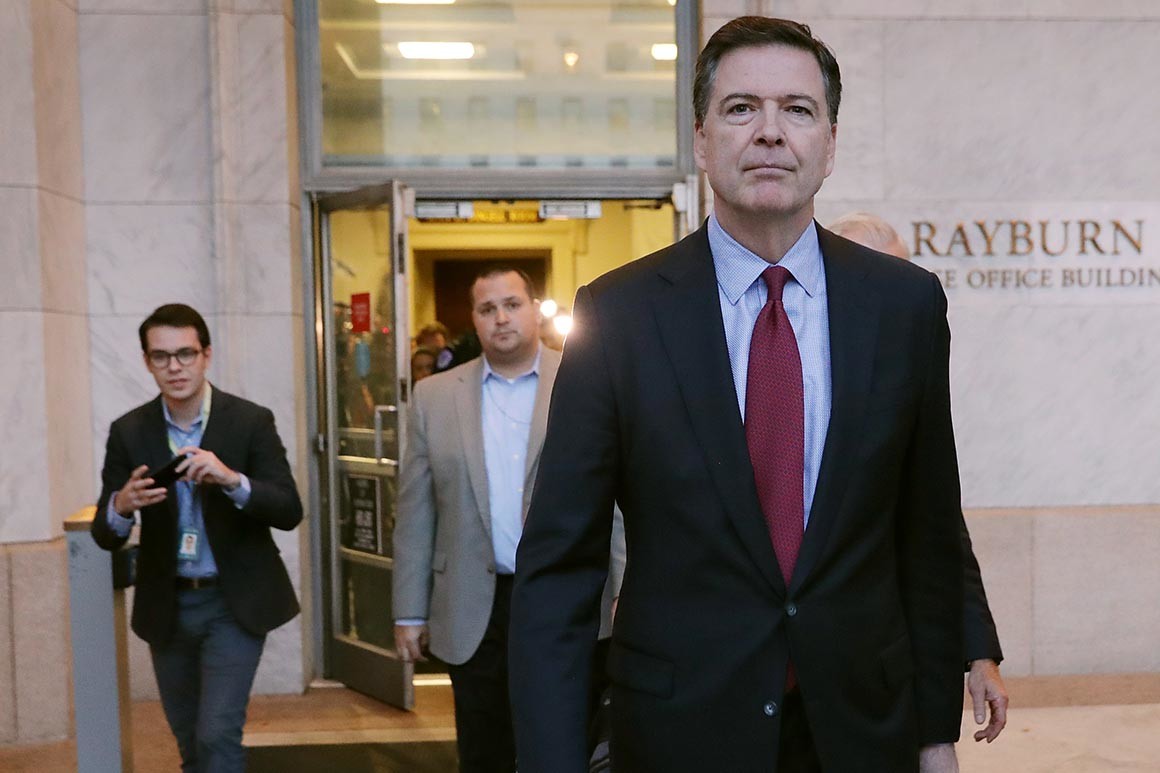
The FBI released for the first time Friday night a two-page summary former FBI Director James Comey used to brief President-elect Donald Trump nearly two years ago on a so-called dossier about Trump’s ties to Russia.

The version made public Friday could reignite previous criticism from Republicans and Trump allies that the FBI was too vague in its description of the fact that the dossier was funded by the campaign of Trump’s nemesis in the 2016 presidential election, Democratic nominee Hillary Rodham Clinton, as well as the Democratic National Committee.

Comey, who was fired by Trump in May 2017, acknowledged during a book tour earlier this year that he did not inform Trump who paid for the research.

The brief passage the FBI left unredacted in the newly released memo gives some background on the former British intelligence officer who compiled the dossier, Christopher Steele, although Steele’s name does not actually appear in the newly released version. The released portion of the synopsis is vague about who financed the project, referring to it as sponsored by “private clients.”

“An FBI source … volunteered highly politically sensitive information … on Russian influence efforts aimed at the US presidential election,” the memo labeled as “Annex A” says. “The source is an executive of a private business intelligence firm and a former employee of a friendly intelligence service who has been compensated for previous reporting over the past three years. The source maintains and collects information from a layered network of identified and unidentified subsources, some of which has been corroborated in the past. The source collected this information on behalf of private clients and was not compensated for it by the FBI.”

“The source’s reporting appears to have been acquired by multiple Western press organizations starting in October,” the document from January 2017 declares.

Comey has said he did not show or give Trump the memo, but used it as a reference when briefing him on the dossier, which U.S. intelligence officials feared Russia might try to use as blackmail against Trump. The synopsis was also used to brief President Barack Obama, officials have said.

Republicans had previously complained that the FBI failed to inform a federal court about the dossier’s provenance — that Steele’s work was commissioned by Fusion GPS, a research firm that had been hired by the Clinton campaign’s law firm, Perkins Coie, to dig up information about Trump’s business relationships overseas. Based in part on the dossier’s information, the court granted an FBI application to surveil a former Trump campaign associate in October 2016.

Aspects of the FBI’s surveillance application have since been released and revealed that the FBI did inform the court that Steele had political animus toward Trump and that it was funded by a politically motivated backer.

The document was released Friday in response to a Freedom of Information Act lawsuit brought by a POLITICO reporter and the James Madison Project, a pro-transparency group.

In January, U.S. District Court Judge Amit Mehta ruled that that the FBI was legally justified in refusing to confirm or deny the existence of any records related to the dossier, despite several tweets from President Donald Trump that described the document as “fake” or “discredited.”

However, shortly after that ruling, Trump declassified a House Intelligence Committee memo that included various claims about the FBI’s handling of the dossier. In August, Mehta said the official release of that material vitiated the FBI’s ability to claim that it had offered no public confirmation of its role in vetting or verifying the dossier, a collection of accurate, inaccurate, unverified and sometimes salacious claims about ties between Russia and various figures in Trump’s circle.

“It remains no longer logical nor plausible for the FBI to maintain that it cannot confirm nor deny the existence of documents” related to attempts to verify information in the dossier, Mehta wrote.

The FBI withheld the remainder of the two-page synopsis on a variety of grounds, including that the material remains classified either Secret or Top Secret. The law enforcement agency also indicated the information is exempt from release because it pertains to ongoing investigations or court proceedings, originated with a confidential source or describes confidential investigative techniques or procedures.

The FBI said Friday it lacked any records indicating final conclusions about any information in the dossier, said Brad Moss, one of the attorneys pressing for release of the records.

“After two years of legal games, the FBI today finally confirmed two pieces of speculation about the scandalous allegations regarding which Director Comey briefed President Trump in January 2017: all of those allegations remain part of the ongoing Russian ‘collusion’ investigation, and the FBI has not rendered final determinations about the accuracy of any of them,” Moss said. “Far from being debunked, the issues that raised concerns for the Intelligence Community in 2017 remain unresolved to this day.”

Moss said he plans to challenge the FBI’s withholdings in the case and to ask Mehta to order more of the information released.

Source: Politico

FBI’s 37 secret pages of memos about Russia, Clintons and Uranium One | The Hill

By John Soloman

Eight years after its informant uncovered criminal wrongdoing inside Russia’s nuclear industry, the FBI has identified 37 pages of documents that might reveal what agents told the Obama administration, then-Secretary of State Hillary Clinton and others about the controversial Uranium One deal.

There’s just one problem: The FBI claims it must keep the memos secret from the public.

Their excuses for the veil of nondisclosure range from protecting national security and law enforcement techniques to guarding the privacy of individual Americans and the ability of agencies to communicate with each other.

Sound familiar?

It’s a lot like the initial reasons the bureau was reluctant to turn over documents in the Russia collusion investigation, such as former FBI agent Peter Strzok’s “stop Trump” texts or the revelation that Clinton and the Democrats funded the Steele dossier.

The FBI’s declaration and list of withheld documents — entitled simply “Uranium One Transaction” — were posted recently inside its Freedom of Information Act (FOIA) online vault.

The bureau actually released a handful of documents, but it wasn’t a big stretch of either freedom or information. It actually just released already public letters from members of Congress demanding answers in the Uranium One case.

I was the reporter who first disclosed last fall that a globetrotting American businessman, William Douglas Campbell, managed to burrow his way inside Russian President Vladimir Putin’s nuclear giant, Rosatom, in 2009 posing as a consultant while working as an FBI informant.

Campbell gathered extensive evidence for his FBI counterintelligence handlers by early 2010 that Rosatom’s main executive in the United States, Vadim Mikerin, orchestrated a racketeering plot involving kickbacks, bribes and extortion that corrupted the main uranium trucking company in the United States. That is a serious national security compromise by any measure.

The evidence was compiled as Secretary Clinton courted Russia for better relations, as her husband former President Clinton collected a $500,000 speech payday in Moscow, and as the Obama administration approved the sale of a U.S. mining company, Uranium One, to Rosatom.

The sale — made famous years later by author Peter Schweizer and an epic New York Times exposé in 2015 — turned over a large swath of America’s untapped uranium deposits to Russia.

Mikerin was charged and convicted, along with some American officials, but not until many years later. Ironically, the case was brought by none other than current Deputy Attorney General Rod Rosenstein — a magnet for controversy, it turns out.

But the years-long delay in prosecution mean that no one in the public, or in Congress, was aware that the FBI knew through Campbell about the Russian bribery plot as early as 2009 — well before the Obama-led Committee on Foreign Investment in the United States (CFIUS) approved Uranium One in fall 2010.

Since the emergence of Campbell’s undercover work, there has been one unanswered question of national importance.

Did the FBI notify then-President Obama, Hillary Clinton and other leaders on the CFIUS board about Rosatom’s dark deeds before the Uranium One sale was approved, or did the bureau drop the ball and fail to alert policymakers?

Neither outcome is particularly comforting. Either the United States, eyes wide open, approved giving uranium assets to a corrupt Russia, or the FBI failed to give the evidence of criminality to the policymakers before such a momentous decision.

Campbell tells me his FBI handlers assured him they had briefed Obama and then-FBI Director Robert Mueller, now the Russia special prosecutor, on Rosatom’s criminal activities as part of the president’s daily briefing and that agents suggested to him that “politics” was the reason the sale was allowed to go through.

After I broke the Campbell story, a predictable pattern occurred. President Trump and the Republicans took note. On the flip side, Democrats attacked the credibility of the informer — despite evidence the FBI had given him a hefty $50,000 award of thanks after the case was finished.

And the Jeff Sessions-Rod Rosenstein Justice Department, likely feeling the heat of President Trump’s watchful eye, announced that a prosecutor from Utah was named to look into the matter.

Campbell was interviewed by the FBI, but that was 10 months ago. Since then, nothing has been made public to address the overriding public interest issue.

Perhaps the FBI’s unexpected “release” — and I use that word loosely, since they gave up no public information of importance — in the FOIA vault was a warning flare designed to remind America there might be evidence worth looking at.

One former U.S. official, who had access to the evidence shared with CFIUS during the Uranium One deal, said this to me: “There is definitely material that would be illuminating to the issues that have been raised. Somebody should fight to make it public.”

That somebody could be President Trump, who could add these 37 pages of now-secret documents to his declassification order he is considering in the Russia case.

Or, those Republicans leading the charge on exposing failures in the Russia probe could use their bully pulpits to pressure for the release.

From what we now know, either the CFIUS process was corrupted or broken, or the FBI dropped the ball.

Either outcome is a matter of national interest.

Source: The Hill

Author: John Solomon is an award-winning investigative journalist whose work over the years has exposed U.S. and FBI intelligence failures before the Sept. 11 attacks, federal scientists’ misuse of foster children and veterans in drug experiments, and numerous cases of political corruption. He is The Hill’s executive vice president for video.

Big tech’s censorship of conservative users is alive and well | The Hill

By Christie-Lee McNally

study released by the Pew Research Center in late June has once again brought to the surface a key issue of the Obama-era Title II net neutrality regulations: America’s concern about big tech’s approach to privacy, censorship and political bias and how Obama ignored it.

The study found that “seven-in-ten Americans think it likely that social media companies intentionally censor political views they find objectionable.”

The majority of us Americans agree that it is necessary for online platforms to regulate hate speech or intervene when users are engaging in harassing or threatening behavior. However, big tech companies like Facebook, Google and Twitter have taken this practice too far and have created their own definitions of hate speech, censoring political viewpoints that differ from the left-leaning ideologies of the companies’ leadership.

The Pew study found that 72 percent of the American public thinks it “likely that social media platforms actively censor political views that those companies find objectionable.” Well, unfortunately for consumers, it isn’t “likely” happening — it is happening.

In January, Project Veritas exposed Twitter for “shadow banning” conservative profiles, meaning the users were blocked from the platform without even being notified. Further, a shadow-banned user’s followers won’t even know they’ve been blocked, as they will still appear to exist, but won’t show up in search results or anywhere else on Twitter. “Although Twitter presents itself as politically neutral, its culture behind closed doors is one of blatant censorship, systematic bias, and political targeting,” said Project Veritas President James O’Keefe.

In June, Google listed “Nazism” as the ideology of the California Republican party, blaming “vandalism” at Wikipedia for the search results. Immediately after apologizing for the California issue, Google again found itself in hot water when a top search result for North Carolina Republican state senator yielded a photo labeling her a bigot.

The list goes on and on. Another list that seems endless is the stream of attacks on Federal Communications Commission (FCC)  Chairman Ajit Pai and his family that continue to be published on Twitter to this day.

The deep pockets in Silicon Valley have focused their efforts to paint Pai in a negative light, claiming he killed the internet and so-called net neutrality. Unfortunately, those false claims stuck and users have taken to social media to support big tech’s sentiment toward Pai, even taking it to horrifying levels in posts that threaten his life and those of his family, yet still remain publicly posted on the platform.

Just last month, one user asked “Kim Jong Un, Russian spies, or any rich person whatsoever to kill Ajit Pai and take him to Hell.” Other users suggested Pai be hanged, forced to gurgle hot bleach, and develop cancer, among other things that are better left unsaid.

It is rich for Silicon Valley firms to assert that the aforementioned examples are not hate speech that should be removed from the internet, but Michigan state Senate candidate Aric Nesbitt’s campaign video that references his pro-life beliefs or Diamond and Silk’s pro-Trump vlogs are “unsafe to the community.”

This is not a hypothetical issue and it is not the least bit surprising that the majority of Republicans think major technology companies as a whole support the views of liberals over conservatives.

What’s more, these companies are growing increasingly negligent when it comes to privacy. For years, big tech has watched our every move online, selling our information to advertisers and political campaigns and have been held accountable to no one. To ensure that they are able to continue to operate unchecked, Silicon Valley is now lobbying Congress under the guise of so-called net neutrality to support a Congressional Review Act (CRA), which would effectively exempt Facebook and Google from any obligation to protect consumers online.

While net neutrality might be an abstract and complicated issue, privacy is not lost on the American people. A meager 24 percent of the public thinks tech companies “do enough to protect the personal data of users.”

It is clear that technology goliaths can no longer remain self-regulated entities. But unfortunately for consumers, the Senate, pushed by the deep pockets of Silicon Valley lobbyists, jammed through the harmful, politically-motivated CRA and sent it to the House.

Now, members of the House of Representatives must oppose this net neutrality CRA and, instead, work with the Senate to pass real consumer internet protection legislation.

It is high past time for Congress to hear the concerns of their constituents and step up to protect us against the dangers that could come from allowing these companies to continue blocking and censoring content.

Source: The Hill

Scientists warn of toxic chemical cocktail sprayed on food | GM Watch


As the number of chemicals applied to vegetables sold in supermarkets goes up 17-fold, experts say pesticides must be phased out of food production. Report by Claire Robinson

The number of chemicals applied to vegetables sold in supermarkets has increased by up to 17-fold over 40 years, according to data presented at a conference organized by the Epidemiology and Public Health Section of the Royal Society of Medicine in London on 20 November, which I attended on behalf of GMWatch.

Just as disturbing as the data on our escalating exposure to toxic pesticide mixtures was the evidence presented at the conference that the regulatory system for pesticides is failing.

Scientists explained that while the system tests the single active ingredients in pesticides, it fails to test the many accompanying chemicals (adjuvants) used in pesticide formulations to enhance the effectiveness of the active ingredients. It also fails to test the combined effects of the formulations of chemicals used in commercial pesticides, let alone the cocktail effect of being exposed to multiple pesticides, as most farmers, rural residents and consumers are.

Indeed, as one scientist pointed out, there are simply too many potential combinations of chemicals to test and regulate. Nor, we heard, does the regulatory system test low, realistic doses of these chemicals that may give rise to endocrine (hormone) disruption, which can in turn lead to serious illnesses that are increasing in the population.

Because of these facts, there is simply no way of ensuring the safe use of pesticides in agriculture.

Chemical cocktails increasing

Figures released for the first time at the conference showed that the number of toxic chemicals applied to onions, leeks, wheat and potatoes has been steadily increasing since the 1960s.

This is despite industry data showing that the volume of pesticides applied to supermarket vegetables has halved since the 1990s.

The number of pesticides applied to onions and leeks has risen 17-fold from 1.8 in 1966 to 32.6 in 2015, the data showed.

In 1974, fewer than two chemicals were applied to the average wheat crop, but this rose more than 10-fold to 20.7 in 2014. Potatoes are now sprayed with five times more chemicals than in 1975, with the number rising from 5.3 to 30.8 in 2014.

The figures were compiled by the data firm Fera Science and were only made public after the Soil Association, which certifies organic food in the UK, paid for them to be released. While Fera did not measure actual residues present in the produce, the fact that so many pesticides were applied to the growing crops suggests that at least some residues would be found if they were looked for.

Anne_Marie_Vinggaard

The conference followed the publication of an article in the journal Science by Prof Ian Boyd, chief scientific advisor to the UK government’s department of agriculture (DEFRA). Prof Boyd wrote that the assumption by regulators around the world that it is safe to use pesticides at industrial scales across landscapes is false.

Scientist Prof Anne Marie Vinggaard of the National Food Institute in Denmark warned that chemicals that have no effect in isolation can have a pronounced toxic effect when found in mixtures. In real life we are exposed not to one chemical at a time but to mixtures. In addition, commercial pesticide formulations, many of which are endocrine disruptors, are themselves mixtures of active ingredients and adjuvants. “We are exposed to a lot of chemicals acting together,” said Prof Vinggaard. “We must take account of this cocktail effect.”

But pesticide regulations fail to do so.
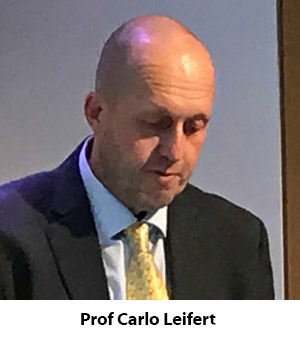
Carlo Leifert

Pesticides linked to low sperm quality

Prof Carlo Leifert, director of the Centre for Organics Research at Southern Cross University in Australia, cited research showing higher sperm counts and density in men working for the Danish organic farming association and a separate US study showing that high levels of dietary pesticide exposure were linked to low sperm quality in men.

Prof Leifert’s presentation came soon after the publication of a study implicating pesticide-treated foods in fertility problems in women. In the study, published in JAMA Internal Medicine, Harvard researchers followed 325 women at an infertility clinic and found that women who regularly ate pesticide-treated fruits and vegetables had lower success rates getting pregnant with IVF, while women who ate organic food had reduced risk of pregnancy loss and increased fertility.

Eat organic to minimize exposure

Dr Michael Antoniou

Dr Michael Antoniou, head of the Gene Expression and Therapy Group at King’s College London, told the Royal Society of Medicine conference that the adjuvants in commercial pesticide formulations can be toxic in their own right and in some cases more toxic than the declared active ingredients. Yet only the active ingredients are tested and assessed for long-term health effects in the regulatory process.

Dr Antoniou also said that research on hormone-disrupting chemicals, including pesticides, shows that very low realistic doses can be more toxic than higher doses. As pesticides are not tested for low dose effects for regulatory purposes, these effects can be missed by regulatory agencies, leading to a situation in which the public can be exposed to hormone-disrupting levels of these chemicals. This is a matter of concern because hormone disruption is implicated in a large number of diseases that are becoming increasingly widespread, such as hormone-related cancers, obesity, and diabetes.

Dr Antoniou said that regulators around the world have been slow to keep up with the scientific knowledge of harm from low doses of endocrine disrupting chemicals. These effects are not controversial in the scientific community and yet the EU has still not decided how to define endocrine disruptive chemicals, let alone how to regulate them.

Dr Antoniou described his research showing that long term exposure to very low doses of Roundup herbicide far below regulatory permitted levels caused non-alcoholic fatty liver disease (NAFLD) in rats. NAFLD has now reached epidemic proportions in the US and Europe, with around 25% of the population suffering from it.

Dr Antoniou told the audience, which included doctors who treat chemically damaged people, “As a precaution, you should minimise your exposure to pesticides. The only way to guarantee that is by eating organically.”

Industry perspectives

Sarah Mukherjee

Occasions like this are often interesting from the point of view of finding out the industry line on the scientific and public relations challenges it is facing, and this event was no exception. One such line was offered by Sarah Mukherjee, CEO of the Crop Protection Association (CPA). Mukherjee is a former BBC journalist who began her presentation by stating that she had no scientific background. Her presentation consisted of emotive stories of her deprived childhood, with the implication that organic food is a luxury that only the affluent can afford and that pesticides were needed to ensure an affordable food supply for all. She did not address any of the scientific points presented by the earlier speakers. In fact, she was not present for those sessions and only arrived later in the day.

The tone and content of her presentation did not sit well with the detailed information on the proven effects of low-dose pesticides provided by the scientist speakers in the morning sessions. It was remarkable for its failure to offer any evidence at all to back up Mukherjee’s premise that we are better off with pesticides.

Glyphosate and cancer

Mukherjee’s closest brush with science was an attempt to exonerate glyphosate herbicides from suspicion of carcinogenicity by quoting the latest updated findings from the Agricultural Health Study (AHS) in the US. These found no link between glyphosate and non-Hodgkin’s lymphoma, a type of cancer. Mukherjee used these findings as a stick to beat IARC, the World Health Organization cancer agency that upset the pesticide industry by concluding that glyphosate was a probable carcinogen.

But what Mukherjee failed to mention was that the study update did find a link between glyphosate and another type of cancer, acute myeloid leukemia (AML) – a link that the researchers said should be followed up with further research. She also did not mention a fact pointed out by the scientist Dr Jennifer Sass – that while the link did not reach statistical significance at the 95% confidence level (a 95% certainty that the findings are not by chance but point to a real effect of glyphosate), at the 90% confidence level it would have been significant. As Sass commented, “With a deadly form of cancer like AML, pesticide applicators, farmers, and other highly exposed people may want to take protective measures, even if studies are only 90% confident in the link to AML cancer.”

Mukherjee also failed to mention that IARC took the AHS’s “no effect” finding from glyphosate into consideration in its assessment of glyphosate, since previous findings from the AHS that were already published at the time of IARC’s review had also found no effect. Other epidemiological studies did find a link between glyphosate and non-Hodgkin’s lymphoma. This contradictory evidence is why IARC said there was only “limited” proof of a glyphosate link with cancer from epidemiological studies. However, it classified glyphosate as a probable carcinogen on the basis of “sufficient” evidence in controlled laboratory studies on animals. These types of study, unlike epidemiological studies, demonstrate a causal link and are therefore a far stronger form of evidence.

I was not the only audience member to conclude that Mukherjee was seriously out of her depth among a speaker line-up of heavyweight scientists, addressing an audience of scientists, medics, and experts from relevant fields. One scientist told me he was shocked that the CPA chose to send Mukherjee as its representative to such an event: “Couldn’t they find a scientist who was willing to take this on?”

Is organic food elitist?

Mukherjee’s “organic food is elitist” meme did not play well with me. I speak as someone who at one point in my life lived in a partnership in which neither of us had any income or savings and we had to survive off very meagre state benefits. Yet we ate organic 100% of the time. We did it by cooking fresh food from scratch each day (it didn’t take much time), buying via farm box delivery schemes rather than from supermarkets, eating mostly vegetarian, and – obviously – not spending money on luxuries.

On our occasional forays to the supermarket to buy loo rolls and cleaning fluids, we were gobsmacked at the large amounts of money being spent on the weekly shop by families with trolleys full of processed food. Even without getting into discussions about the “externalized” costs of eating pesticide-contaminated food, such as getting sick, we simply could not afford that type of food. So who exactly were the elite in this situation? Certainly not us. This is just one example among many of Mukherjee’s irrational and frankly insulting approach to the vital topic of food security.

Dr Chris Hartfield

Speakers in support of pesticide safety

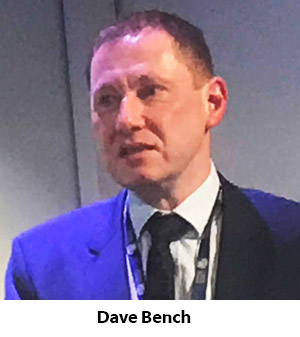
The other people speaking in support of the safety and benefits of pesticides were Dr Chris Hartfield of the National Farmers Union (NFU) and Dave Bench of the UK government’s Health and Safety Executive.

Mr Bench described the regulatory system for pesticides, which he portrayed as robust and as balancing the risks of pesticides against the benefits to society.

Dr Hartfield showed a long list of Integrated Pest Management (IPM) techniques, in which pesticides are only sprayed as a last resort as and when absolutely necessary. He said that 16,820 farmers in the UK are using these techniques on 4.4 million hectares of land.
Dave BenchHowever, members of the audience were skeptical of this claim. Guy Watson, an organic farmer from Riverford Farm in Devon, said that his conventional farmer neighbour laid out his spraying schedule well in advance of the growing season and that all the pesticides were sprayed in accord with the schedule, whether they were needed or not. He suspected that farmers’ practice of IPM was confined to a paper exercise that was not borne out by the reality in the fields.

Mr Watson’s skepticism about UK farmers’ use of IPM was amply supported by the data presented at the conference showing the increasing numbers of pesticides sprayed on our food.

Some members of the audience who suffered repeated exposures to pesticide spraying because they lived near treated fields agreed that a cavalier attitude to the use of pesticides seemed to be the norm among conventional farmers.

Georgina Downs of the UK Pesticides Campaign, which represents rural residents affected by pesticides sprayed in their localities, commented after the conference: “There was the usual gross misinformation stated by the CPA and the NFU – most importantly their insistence that there is a rigorous regulatory system in place for pesticides. There simply is not, and this lie cannot continue to be peddled.

“The conventional chemical farming system has been an untested, unregulated, and unlawful experiment with human health and the environment that has caused untold damage.”

Is farming without pesticides possible?

Agro-industry lobbyists would have us believe that farmers cannot manage without pesticides. What is more, they claim that even organic farmers regularly spray a vast array of pesticides permitted under organic standards. But this picture is far from the reality. Most organic farmers do not spray because they take other measures to protect their crops, such as rotating crops to prevent attacks from over-wintering pests, using barrier methods against pests, cultivating hedges and plants to attract insects and animals that eat pests, and planting cover crops to suppress weeds.
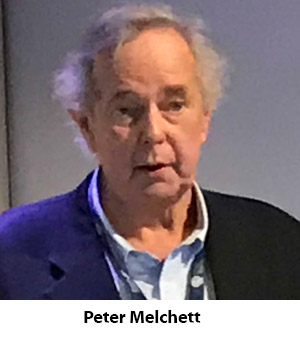
Peter Melchett

This was confirmed by the final speaker at the conference, Peter Melchett, who has been an organic farmer for 19 years and a conventional farmer before that. He said that since converting to organic he has only had to spray a single field once. The one lapse was due to his mistake in planting two related crops in the same field two years running. A pest over-wintered in the field, only to emerge the following year to devour the new crop. Mr Melchett said he never repeated his mistake – and has never had to spray again.

Take-home message

The take-home message from the non-industry speakers at the conference was that the regulatory system for pesticides has failed and cannot be reformed in a way that renders these chemicals safe. As we’ve seen, the system does not test the adjuvants, or the commercial pesticide formulations, or the chemical cocktails to which we are exposed. Neither does it test low, realistic doses that may give rise to endocrine disruption. Therefore pesticides must be eradicated from food production and farming must be entirely converted to proven-successful organic and agroecological practices.

Source: GM Watch

Reporters, Don’t Let Trump Make You Cry | POLITICO

By Jack Schafer

Journalists play better offense than defense. Give them the ball, and they’ll sleuth out the hidden crumbs of information, filling the scoreboard with touchdowns. Assign them to a dangerous story, and they’ll exhibit the bravery associated with U.S. Marines. Ask them to work late, and they’ll labor all night and file copy at dawn, rat-eyed from exhaustion yet happy and ready for the next story.

But criticize them and ask them to justify what they do and how they do it? They go all go all whiny and preachy, wrap themselves in the First Amendment and proclaim that they’re essential to democracy. I won’t dispute that journalists are crucial to a free society, but just because something is true doesn’t make it persuasive. The chords that aggrieved journalists strike make them sound as entitled as tenured professors. This behavior was on display last Friday after President Donald Trump disparaged the press at CPAC and on Twitter. Later that day, Trump’s press secretary, Sean Spicer, amplified the CPAC insult by excluding CNN, Politico, the New York Times, the Los Angeles Times and others from an off-camera briefing.

Almost immediately, the press protests went off like a battalion of popguns. “Free media access to a transparent government is obviously of crucial national interest,” said New York Times Executive Editor Dean Baquet. “This is an undemocratic path that the administration is traveling,” chimed Washington Post Executive Editor Marty Baron. Others in the press scrum called for retaliation. MSNBC’s Mika Brzezinski demanded that the press boycott the White House Correspondents’ Association dinner “until the White House’s abhorrent behavior towards members of the press stops.” Her Morning Joe co-host, Joe Scarborough, likewise insisted, “All news organizations must refuse to attend briefings where major outlets are excluded because of critical coverage.”

On and on it went. Former New York Times labor reporter Steven Greenhouse tweeted that White House reporters should “show some solidarity (and spine) & boycott briefings if Trump Admin excludes certain media.” Writer Simon Schama tweeted for a boycott of “the tinpot dictator’s briefings.” Public radio host Maria Hinojosa (Latino USA) reprised Jay Rosen’s recent idea that the press protest the administration’s behavior by sending interns to White House briefings instead of credentialed reporters. The Washington Post adopted a dreadfully overwrought masthead slogan, “Democracy Dies in Darkness,” for its online edition and the New York Times produced a sanctimonious “truth is hard” commercial, which aired during the Oscars. By Sunday morning, Brian Stelter’s guests on Reliable Sources had adopted the wounded theme, which was almost enough to cause me to start rooting against the home team and throw in with Trump.

I understand the press corps’ fury, but does the reaction make sense? As excluded New York Times reporter Glenn Thrush tweeted, there was a deliberate method to Spicer’s madness. It allowed the press secretary to avoid on-camera goofs; it got the press to “whine”; it sowed internal strife among reporters; and it prevented Trump—not Spicer’s biggest fan—from watching his performance. As a piece of lion-taming, the Spicer move was a great success. The lions may still be roaring, but he’s cracking the whip.

There’s nothing Trump and Spicer would love more than a press walkout from gaggles, press briefings, press conferences and assemblies like the White House Correspondents’ Association dinner. Boycotts would change the subject from Trump and Spicer’s original insults to the bruised egos of the boycotters—and really, how much sympathy should we expect the masses to have for the gang that brings them reams of bad news every morning? Besides, a boycott would be doomed. To be effective, a boycott must enlist almost everybody. Good luck with that. As candidates for adopting a one-for-all ethos, journalists must rank last. The only organizational principle most of them understand is competition.

For the sake of argument, imagine journalists pulling off a principled boycott after Spicer repeats his Friday stunt. Actually, you don’t have to imagine it—we’re halfway there. The Associated Press and Time boycotted the Friday briefing when they learned of the limitations he had placed on participation. Bloomberg, the Christian Science Monitor, the Wall Street Journal and other outlets have already vowed to shun future closed briefings. But as “principled” reporters peel off to paint protest placards, won’t Spicer merely tilt the briefings toward Trump-friendly media like Breitbart and One America News Network? Remember, Breitbart and OANN’s reporters attended Spicer’s controversial briefing, and they’ll never boycott. Spicer and Trump have already demonstrated a preference for calling on friendly media and will happily shovel interesting news to the pro-Trump outlets who attend. This will create an incentive for news organizations to hold their noses and ditch the boycott. Cozying up to power—writing “beat sweeteners” to gain access and publishing an administration’s planted leaks—has made more than one career in Washington. A boycott will only make the pro-Trump media stronger.

What would I have the press do? Words of protest and pushback, of which we’ve seen plenty, can’t hurt. But the best response, and one that wouldn’t require much in the way of press corps solidarity, would be to make Spicer answer the exiled questions. If, say, Spicer deletes Thrush from another briefing, Thrush can distribute his questions to the invited reporters. When Spicer calls on one, the reporter can say, “Glenn Thrush of the New York Times, who couldn’t be here today, has this question …” And then read it. A couple of rounds of “Thrush questions” and questions from other exiled reporters would not constitute an “I am Spartacus” moment, but it would convey that Spicer can evade news organizations but not their questions. If he can’t stop the reporters’ questions, what’s the point of exiling them?

Reporters have become pawns in Trump’s political strategy. In recent weeks, he’s trotted them out for sacrifice whenever the seeping wound of Russia news gets too moist for him, something NBC News’ Chuck Todd explained Sunday. Instead of taking it personally, I want journalists to take it professionally and continue to report like hell. A great story is always the best revenge.

Source: POLITICO