How Anti-Vaccine Sentiment Took Hold in the United States | The New York Times

Editor’s Note: The New York Times (and likely their biggest Big Pharma advertisers) are heralding a strongly-held opinion that choice regarding vaccines should not be an option for parents who may have good reason to believe their children are at risk. The almost completely unregulated vaccine industry is in denial regarding the potentially dangerous side effects, chronic illnesses that can result and in too many cases they’d rather not count – death. Not once in this well-written, one-sided article did the views, opinions or reasoning of the anti-vaccine crowd get acknowledged. This is but one of numerous op-ed articles the New York Times has recently published. 

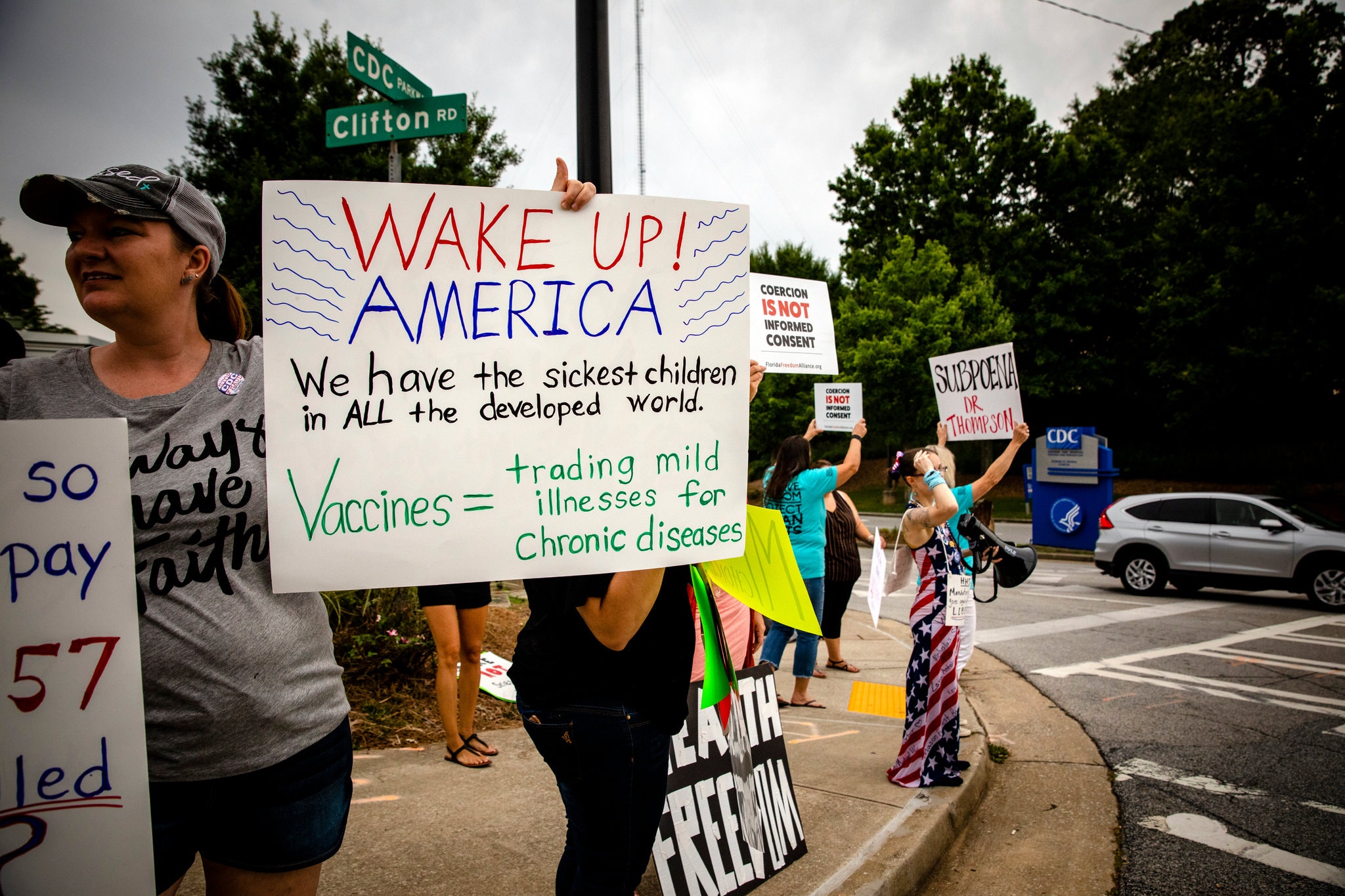
As families face back-to-school medical requirements this month, the country feels the impact of a vaccine resistance movement decades in the making. The question is often whispered, the questioners sheepish. But increasingly, parents at the Central Park playground where Dr. Elizabeth A. Comen takes her young children have been asking her: “Do you vaccinate your kids?”

Dr. Comen, an oncologist who has treated patients for cancers related to the human papillomavirus that a vaccine can now prevent, replies emphatically: Absolutely.

She never imagined she would be getting such queries. Yet these playground exchanges are reflective of the national conversation at the end of the second decade of the 21st century — a time of stunning scientific and medical advances but also a time when the United States may, next month, lose its World Health Organization designation as a country that has eliminated measles, because of outbreaks this year. The W.H.O. has listed vaccine hesitancy as one of the top threats to global health.

As millions of families face back-to-school medical requirements and forms this month, the contentiousness surrounding vaccines is heating up again, with possibly even more fervor.

Though the situation may seem improbable to some, anti-vaccine sentiment has been building for decades, a byproduct of an internet humming with rumor and misinformation; the backlash against Big Pharma; an infatuation with celebrities that gives special credence to the anti-immunization statements from actors like Jenny McCarthy, Jim Carrey and Alicia Silverstone, the rapper Kevin Gates and Robert F. Kennedy Jr. And now, the Trump administration’s anti-science rhetoric.

“Science has become just another voice in the room,” said Dr. Paul A. Offit, an infectious disease expert at Children’s Hospital of Philadelphia. “It has lost its platform. Now, you simply declare your own truth.”

The constituents who make up the so-called vaccine resistant come from disparate groups, and include anti-government libertarians, apostles of the all-natural and parents who believe that doctors should not dictate medical decisions about children. Labeling resisters with one dismissive stereotype would be wrongheaded.

“To just say that these parents are ignorant or selfish is an easy trope,” said Jennifer Reich, a sociologist at the University of Colorado Denver, who studies vaccine-resistant families.

[Why did we start listening to celebrities about vaccines? Read more.]

It remains true that the overwhelming majority of American parents have their children vaccinated. Parent-driven groups like Voices for Vaccines, formed to counter anti-vaccination sentiment, have proliferated. Five states have eliminated exemptions for religious and philosophical reasons, permitting only medical opt-outs.

But there are ominous trends. For highly contagious diseases like measles, the vaccine rate to achieve herd immunity — the term that describes the optimum rate for protecting an entire population — is typically thought to be 95 percent. The Centers for Disease Control and Prevention found that the vaccination rate for the measles, mumps and rubella (M.M.R.) injection in kindergartners in the 2017-2018 school year had slipped nationally to 94.3 percent, the third year in a row it dropped.

Seven states reported rates for the M.M.R. vaccine that were far lower for kindergartners, including Kansas at 89.1 percent; New Hampshire, 92.4 percent; the District of Columbia, 81.3 percent. (The highest is West Virginia at 98.4 percent.)

Almost all states have at least one anti-vaccine group. At least four have registered political action committees, supporting candidates who favor less restrictive vaccine exemption policies.

Public health experts say that patients and many doctors may not appreciate the severity of diseases that immunizations have thwarted, like polio, which can affect the spinal cord and brain — because they probably have not seen cases.

“Vaccines are a victim of their own success,” said Dr. Offit, a co-inventor of a vaccine for rotavirus, which can cause severe diarrhea in young children. “We have largely eliminated the memory of many diseases.”

The growth of vaccine doubt in America coincides with several competing forces and attitudes.

Since the early 2000s, as the number of required childhood vaccines was increasing, a generation of parents was becoming hypervigilant about their children and, through social media, patting each other on the backs for doing so. In their view, parents who permitted vaccination were gullible toadies of status quo medicine.

In 2011, Dana Fuqua, of Aurora, Colo., pregnant with her first child, felt that irresistible pull of groupthink parenting.

She had just moved to the area, so she reached out to mothers’ groups on Facebook. Colorado, with a kindergarten vaccination compliance rate of 88.7 percent, has a rambunctious vaccine-resistant movement. Ms. Fuqua’s new friends urged her to have a drug-free birth, use cloth diapers and never to let a drop of formula pass her baby’s lips. Vaccines, it followed, were anathema.

The women intimidated her. They had advanced degrees; she had only a bachelor of science and a nursing background.

“I didn’t argue with them,” Ms. Fuqua said. “I was so desperate for their support that I compromised by delaying the vaccine schedule, so I wouldn’t get kicked out of the group.”

But when her second child was born prematurely, susceptible to illness, the group’s approval was not as important as her baby’s safety. Her position, she said, shifted from, “‘I can’t hang out with you if you had a vaccine because you could be shedding a virus’” — a common, false belief among the vaccine resistant — to, “ ‘If you haven’t had a vaccine, I will not associate with you.’”

She had both children fully vaccinated.

There have been anti-vaccination movements at least since 1796, when Edward Jenner invented the smallpox vaccine. But many experts say that the current one can be traced to 1982, when NBC aired a documentary, “DPT: Vaccine Roulette,” that took up a controversy percolating in England: a purported tie between the vaccine for pertussis — a potentially fatal disease that can cause lung problems — and seizures in young children.

Doctors sharply criticized the show as dangerously inaccurate. But fear spread. Anti-vaccination groups formed. Many companies stopped making vaccines, which were considered loss-leaders and not worth the corporate headache.

Then, in 1998, Andrew Wakefield, a British gastroenterologist, published a Lancet study (since discredited and withdrawn), associating the M.M.R. vaccine with autism.

Faced with risking autism or measles, some parents thought the answer was obvious. Most had never seen measles, mumps or rubella because vaccines had nearly eliminated them. But they believed they knew autism.

And most people are notoriously poor at assessing risk, say experts in medical decision-making.

Many stumble on omission bias: “We would rather not do something and have something bad happen, than do something and have something bad happen,” explained Alison M. Buttenheim, an associate professor of nursing and health policy at the University of Pennsylvania School of Nursing.

People are flummoxed by numerical risk. “We pay more attention to numerators, such as ‘16 adverse events,’ than we do to denominators, such as ‘per million vaccine doses,’ ” Dr. Buttenheim said.

A concept called “ambiguity aversion” is also involved, she added. “Parents would like to be told that vaccines are 100 percent safe,” she said. “But that’s not a standard we hold any medical treatment to.”

Relatively few people are absolutists about refusing all vaccines. “But if you’re uncertain about a decision, you’ll find those who confirm your bias and cement what you think,” said Rupali J. Limaye, a social scientist who studies vaccine behaviors at the Johns Hopkins Bloomberg School of Public Health.

Nowhere is that reinforcement more clamorous than on social media, Dr. Limaye added. “You may only see your pediatrician a few times a year but you can spend all day on the internet,” she said.

People tend to believe an individual’s anecdotal narrative over abstract numbers. By 2007, when Ms. McCarthy, the actress, insisted that vaccines caused her son’s autism, thousands found her to be more persuasive than data showing otherwise. A nascent movement took hold.

At the same time that these powerful attacks on vaccine confidence were underway, a constellation of trends was emerging.

The definition of a good parent was becoming fraught with the responsibility for overseeing every aspect of a child’s life.

“As we adopted a culture of individualistic parenting, public health became a hard sell,” Dr. Reich said.

The primary reason for healthy people to get the flu shot is to protect those with compromised immune systems, like infants and older adults, from getting sick. But altruism isn’t a great motivator for parents, Dr. Buttenheim said. “They are much more concerned about protecting their own child at all costs,” she said.

Contrast that attitude with the collective good will of the 1950s, say medical sociologists, when American parents who had seen President Franklin Delano Roosevelt’s wheelchair as a debilitating symbol of polio patriotically sought to vaccinate their children to help eradicate the disease worldwide.

By 2014, studies showed that parental confidence in authorities like the C.D.C. and in pediatricians was dropping, especially around vaccines. Mistrust of Big Pharma was even more pronounced.

By then, Donald Trump was offering support on Twitter for the discredited link between autism and vaccination. As president-elect, he met with leaders of the anti-vaccination movement, although as measles cases surged, he endorsed vaccination.

As parenting became rife with orthodoxy, the Marcus Welby model of the paternalistic doctor retreated. Patients asserted autonomy, brandishing internet printouts at doctors. Shared decision-making became the model of doctor-patient engagement.

Pediatricians offered to stagger vaccine schedules. Some were even flexible about vaccinations altogether.

In 2011, shortly after Emma Wagner had given birth in Savannah, Ga., a pediatrician on the ward examined the baby. “He asked me if I was interested in the hepatitis B vaccine,” she said of an inoculation typically done at birth.

She was apprehensive.

He replied, “‘That’s fine, because your 2-day-old daughter isn’t a prostitute and isn’t using I.V. drugs, so hep B isn’t at the top of my worries.’”

Ms. Wagner said she “swallowed the anti-vax Kool-Aid. I was motivated by fear. I thought, ‘Until I know for certain that these are safe, I won’t do it.’ The pediatrician said, ‘I will support your decision and in a few years we’ll talk about exemptions for school.’”

She has since become a staunch supporter of immunization.

Libertarianism also courses through vaccine hesitation, with parents who assert that government should not be able to tell them what to put in their bodies — a position often marketed as “the right to choose.”

“Having the government order them to do something reinforces conspiracy theories,” said Daniel Salmon, director of the Institute for Vaccine Safety at Johns Hopkins. “And people perceive their risk to be higher when it’s not voluntary.”

In reality, he said, one’s risk of harm is greater while driving to an airport than it is being on the airplane itself. But driving is voluntary and gives the illusion of control. People fear flying because they cannot control the plane. By extension, many childhood vaccines are not voluntary, which rattles those who prefer to believe they can control their health.

With so many different but deeply held convictions, public health experts struggle to design vaccine-positive campaigns.

In 2017, researchers applied the six values of “the moral foundations theory” to vaccine attitudes, surveying 1,007 American parents.

The results were intriguing. Those most resistant to vaccines scored highest in two values: purity (“my body is a temple”) and liberty (“I want to make my child’s health care decisions”).

A third, said Saad B. Omer, director of Yale’s Global Health Institute and an author of the study, was also telling: deference to authority — a score indicating whether one was likely to adhere to the advice of experts like a pediatrician or the C.D.C.

Dr. Salmon’s team at Johns Hopkins is working on an app to capture parents’ vaccine attitudes and to tailor information to persuade them to vaccinate their children.

Pediatricians are front-line persuaders, he said, and they should be compensated for the time it takes to educate parents.

Most experts note that physicians themselves, never mind parents, have no idea about the federal vaccine monitoring systems, which have been in place for more than 20 years.

“We ask parents in the first two years of their child’s life to protect them against 14 diseases, that most people don’t see, using fluids they don’t understand,” Dr. Offit said. “It’s time for us to stand back and explain ourselves better.”

Source: The New York Times
Justice Neil Gorsuch on his concern for America’s future: ‘Republics have a checkered history’ | Fox News

Editor’s Note: Sadly, we have one of the most ignorant and poorly educated citizenries ever, thus Gorsuch’s affirmation of the importance of an informed and educated public (and a transparent government as well) must be heard and understood. Seems not even our elected representatives know how to govern effectively these days.

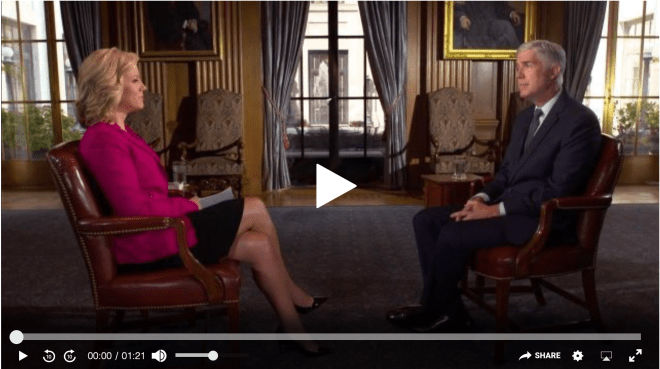
In an exclusive Fox Nation interviewSupreme Court Justice Neil Gorsuch revealed his deep concerns for the future of America, which drove him to write his new book, “A Republic, if you can keep it.”

The book’s title is inspired by a famous phrase attributed to Founding Father Benjamin Franklin.  As Franklin left the Constitutional Convention of 1787, after the drafting of the U.S. Constitution, he was reportedly asked what form of government had been created.  Franklin answered, “A Republic, if you can keep it”, suggesting that the country’s fate lay in the hands of its citizenry.

JUSTICE GORSUCH REVEALS THE TWO RULES HE TELLS HIS LAW CLERKS

Justice Gorsuch told Fox News anchor Shannon Bream in his first televised interview as a Supreme Court Justice that an uninformed public is a danger to the country. “Republics have a checkered history in our history books, and we need to make sure that the people know how to run their own government.”

Gorsuch said, “I am concerned on the civics front when I read that about a third of Americans can’t name the three branches of government.  60% apparently would fail the American naturalization examination — that worries me.”

Justice Gorsuch also believes that an understanding of America’s past is central to the nation’s future success, and he credits the musical “Hamilton” for educating America’s youngest generations.

Gorsuch explained, “You’ve seen a secretary of Treasury and a vice president of the United States have a duel.  That’s part of our history.  It’s always been a ruckus republic.  We used to have Senators cane one another on the floor. I’m glad we don’t have that anymore, at least, but it is a ruckus republic. That is what makes us strong. We can appreciate and embrace different ideas and open ourselves to one another and remember that that person with whom we disagree is coming at it from the same angle, the same hope of making a more perfect union.”

SUPREME COURT JUSTICE REVEALS HOW HIS NOMINATION TRIP BEGAN

“I think democracy is a really hard business and that’s because its strength comes from disagreements and the ability to air — comfortably and confidently — your point of view.  Share it with others and have it heard and pick the best at the end of the day.  That’s the idea of democracy.  But for it to work, we have to listen as well as speak.  We have to tolerate as well as expect tolerance for our point of view,” added Gorsuch.

Source: Fox News

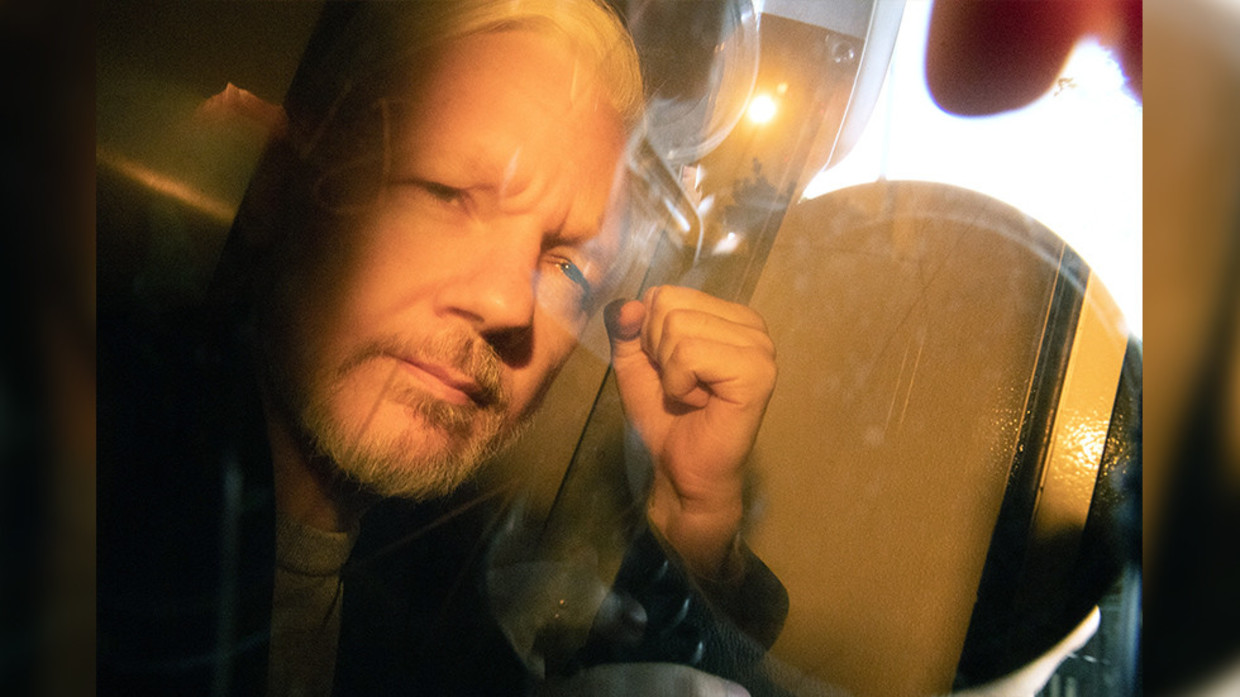
Assange psychologically tortured to ‘breaking point’ by ‘democratic states,’ UN rapporteur tells RT | RT.com

Jailed WikiLeaks co-founder Julian Assange shows clear signs of degrading and inhumane treatment which only adds to his deteriorating health, UN Special Rapporteur on Torture Nils Melzer told RT.

Assange has “all the symptoms typical for a person who has been exposed to prolonged psychological torture,” Melzer told RT’s Afshin Rattansi. This adds to the toll of his deteriorating physical state caused by a lack of adequate medical care for several years, he said.

Melzer said he was judging from two decades of experience in working with POWs and political prisoners, and only after applying “scientific” UN methods to assess Assange’s condition. But the journalist’s case still “shocked” him.

An individual has been isolated and singled out by several democratic states, and persecuted systematically… to the point of breaking him.

Earlier this month, a UK court sentenced the WikiLeaks co-founder to nearly a year in jail for skipping bail in 2012. The courts are now deciding whether to extradite Assange to the US where he is wanted for 17 charges under the Espionage Act. He can end up serving up to 175 years in prison if proven guilty.

Also in May, Sweden reopened an investigation into the allegations of rape by Assange, which he denies. The probe was originally dropped in 2017.

WikiLeaks warned that the journalist’s health had “significantly deteriorated” during the seven years he spent living in the Ecuadorian Embassy in London, and continued to worsen after he was evicted in April and placed in a British prison. According to WikiLeaks, he was recently moved to the prison’s “hospital wing.”


‘No future for dissidents’ on social media: Paul Joseph Watson reflects on Facebook ban

Popular internet pundit Paul Joseph Watson is mulling legal action after being banned from Facebook for spreading “hate,” telling RT that it’s clear social media platforms are cracking down on dissident political speech.

Facebook kicked Watson off its platform on May 2 – along with conservative commentator Laura Loomer, Infowars founder Alex Jones, and black nationalist leader Louis Farrakhan. The group was accused of spreading “hateful” content, although no warnings or concrete reasons were provided for their seemingly arbitrary bans.

Watson, who runs a YouTube channel that boasts more than 1.5 million subscribers, has become a well-known but polarizing commentator on culture and politics. A long-time Infowars contributor, Watson now has his own outlet, Summit News.

Although he’s been labeled as an “alt-right” conspiracy theorist, Watson insists that he’s been smeared – and de-platformed – simply because he holds contrarian views.

“There is clearly no future for dissident personalities on any major social media network. We will have to go back to mailing lists and websites as our primary, and perhaps only platforms for delivering content,” he said.

He told RT that he’s hired the “best media lawyers in London” who “have taken on numerous media giants in the past and won” and will advise him about what legal recourse he has against Facebook.

The first step towards suing Facebook over his ban, according to Watson, is to initiate a written request, called a Subject Access Request, which requires the company to release all information relevant to the individual’s case under Section 7 of the Data Protection Act.

The information would be needed to verify if an individual violated community standards or if the company merely made a politically-motivated decision. Watson also intends to put Facebook on notice about the harm they have caused to his reputation by putting him under the category of “dangerous individuals,” which is one of Facebook’s stated reasons for banning people under the company’s community standards.

The list Facebook has made for what counts as “dangerous individuals” includes: Terrorist activity, organized hate, mass or serial murder, human trafficking, and organized violence or criminal activity. Facebook would have to verifiably prove that the banned person engaged in any of these activities, or the decision could count as defamation of character.

The hate watchdog organization Southern Poverty Law Centre (SLPC) has publicly admitted it was behind the censorship. In its statement, the SPLC writes how the banning of these individuals shows that social media companies are responding to their “pressure,” but adds that they nonetheless haven’t done enough, claiming they “have more work to do against hateful content.”

“The SPLC is not a fact-checker, it’s a hyper-partisan political attack dog which solely exists to demonize its ideological adversaries. There is no way to hold them accountable, they are accountable only to their own agenda and bias,” Watson said.

Twitter has reportedly dropped the SPLC as a reliable source for detecting hate content online and to police its platform, but other social media giants like Facebook, Google, and Amazon have continued to use the watchdog to decide what content should be kept on their sites.

Facebook has also recently come under fire from its co-founder Chris Hughes, who wrote an exclusive op-ed in The New York Times on Thursday calling for Facebook’s monopoly to be broken up, as its CEO Mark Zuckerberg has “unilateral control over free speech,” adding that his power is “unprecedented and un-American.”

“Personally, if and when I am banned on everything, I will probably just move into the background until the environment is once again fertile and if big enough alternative platforms exist which actually support free speech,” Watson added.

Facebook isn’t the only social media platform to face accusations of shutting down political speech it doesn’t like: In April, the company banned two conservative British candidates running for European Parliament, Tommy Robinson and Carl Benjamin, less than a month before the election.

The site banned Alex Jones and all Infowars accounts in September 2018.

Source: RT.com

An Evening with Tucker Carlson: America’s Elites Are on a Ship of Fools. YouTube & Independent.org

Source: YouTube & Independent.org

How 5G will change (destroy) the world | World Economic Forum

large_m297nKs9NwkwFNcZIsHG-pB8DPtURngI4QodH4rR8Rc

Editor’s Note: The unforeseen consequences of unleashing an electronic network worldwide with nowhere to hide, with a bombardment of such powerful frequencies as to disrupt every living system with proven oxygen shattering and immune suppressing technology is beginning to unfold. This article is an industry puff piece for the global leaders of industry promoting 5G as the next panacea for all our problems. My friends, this is a crisis of consciousness and will forever map the trajectory of human evolution. Only robots will survive this 5G rollout. Read it and weep!

By Don Rosenberg

It is not an easy time to be an internationalist, to seek global solutions to global problems amid what feels like one of history’s periodic inclinations toward divisiveness.

Yet, ironically, we’re on the verge of a new age of interconnectedness, when the daily lives of people across the planet will be more closely intertwined than ever. Advances in technology will usher in the age of fifth generation, or 5G, telecommunications. And, if past is prologue, this technological evolution will lead to dramatic societal changes.

The first generation of mobile communications, with brick-sized phones, brought just a handful of users expensive and often unreliable analogue voice calling. The second generation introduced digital voice service that was less likely to be dropped, available to many more people and ultimately cheaper to use. 3G ushered in the mobile internet, mobile computing, and the proliferation of apps. 4G (often called LTE) made possible all we have come to expect of mobile broadband: streaming video and audio; instantaneous ride hailing; the explosion of social media.

We take all this connectivity for granted, but the engineering inside the device in your bag or pocket today would have seemed impossible less than 20 years ago.

So, where will 5G take us?

Think about a world in which not just people but all things are connected: cars to the roads they are on; doctors to the personal medical devices of their patients; augmented reality available to help people shop and learn and explore wherever they are. This requires a massive increase in the level of connectivity.

5G is the technological answer, making possible billions of new connections, and making those connections secure and instantaneous. 5G will impact every industry – autos, healthcare, manufacturing and distribution, emergency services, just to name a few. And 5G is purposely designed so that these industries can take advantage of cellular connectivity in ways that wouldn’t have been possible before, and to scale upwards as use of 5G expands.

But generational change in mobile communications doesn’t just appear overnight. It requires significant effort in research and development and the resources necessary to support that effort. Work on 4G took nearly a decade and the challenges were not easy. Consider one of tens of thousands of problems that needed to be solved as described by an engineer at Qualcomm, where much of this technology was invented:

“When the signal leaves the base station, it can undergo a loss of up to 130 decibels before it reaches your mobile phone. To put that loss into perspective, if you consider the transmitted signal power to be roughly the size of the Earth, then the received signal power would be equivalent to the size of a tiny bacteria.”

That is a tremendous loss of power, and it requires some pretty impressive engineering to compensate for the effect of the loss on the words, pictures, and other data we send and receive across the airwaves in a transparent, seamless and instantaneous way.

But we weren’t alone. The international engineering co-operation that goes into development of a telecom standard illustrates how much can be achieved when disparate national, commercial and scientific parties work together for the common good.

Like 3G and 4G, 5G is the responsibility of the standards-setting organisation 3GPP, where the handful of companies that invent technologies come together with many, many more companies who will develop products that implement those technologies.

Think about this process for a moment: engineers from rival inventing companies, rival product makers, rival wireless network operators, all from different countries and continents, discussing, testing, striving to perfect tens of thousands of different technical solutions that ultimately make up a standard like 5G.

They judge each technical solution using a merit-based, consensus-building approach. This process has been at the foundation of a technological revolution that spawned myriad new industries, millions of new jobs and well over a $1 trillion in economic growth.

It’s the fusion of commercial self-interest with the recognition that some problems are best solved by working together. And it’s not a bad model of human behaviour if we are to meet the World Economic Forum’s goal this year to address the problems of “a fractured world”.

The benefits and advantages of 5G technology are expected to be available sometime in 2019. We believe 5G will change the world even more profoundly than 3G and 4G; that it will be as revolutionary as electricity or the automobile, benefitting entire economies and entire societies.

Developing nations have rivalled or surpassed their industrialised counterparts in benefiting from the deployment of mobile technology, and there’s every reason to think 5G will have an even bigger levelling effect than its predecessors.

Economists estimate the global economic impact of 5G in new goods and services will reach $12 trillion by 2035 as 5G moves mobile technology from connecting people to people and information, towards connecting people to everything.


Many of the benefits probably aren’t yet apparent to us. Wireless network operators initially resisted proposals to give their customers mobile access to the internet, questioning why they would want it. At the dawn of 4G’s adoption no one could have predicted the new business models that grew on the back of mobile broadband, like Uber, Spotify and Facebook.

Now, according to the European Patent Office, the number of patent applications related to “smart connected objects” has surged 54% over the last three years, suggesting new, related and as-yet unknown inventions will arrive even before 5G becomes available.

This is news that should encourage us amid glum commentaries on the state of the world. There is promise yet in what we’re capable of achieving.

Source: World Economic Forum

The Government Is Covering Up Vaccine Deaths | NewsPunch

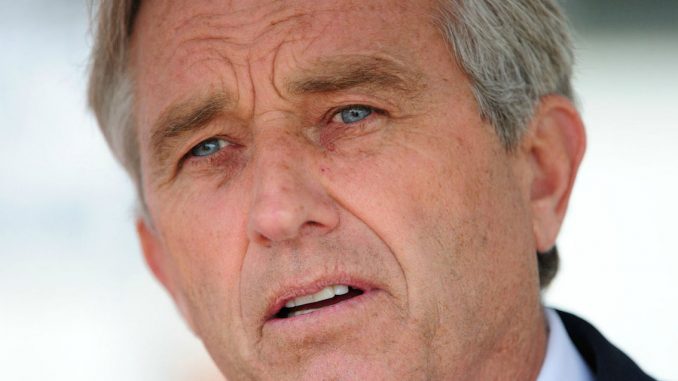
Editor’s Note: Robert F. Kennedy Jr. is continuing his personal crusade against Big Pharma and Big Government collusion, authoring a hard-hitting article explaining that the government are withholding information from the public about vaccines – and covering up vaccine deaths – in order to protect pharmaceutical companies.

Vaccine scientists and the public health community cautiously and occasionally will admit that vaccines can cause adverse reactions just like “any other medication or biological product.” Although experts are less willing to openly disclose the fact that adverse reactions can and do include death, one has only to look at reports to the U.S. Vaccine Adverse Event Reporting System (VAERS) to see that mortality is a possible outcome.

From 1990 through 2010, for example, VAERS received 1,881 reports of infant deaths following vaccination, representing 4.8% of the adverse events reported for infants over the 20-year period.

Moreover, analysts acknowledge that VAERS, as a passive surveillance system, is subject to substantial underreporting. A federal government report from 2010 affirms that VAERS captures only about 1% of vaccine adverse reports.

On the international frontier, the public health community—with the World Health Organization (WHO) in the vanguard—previously used a six-category framework to investigate and categorize serious adverse events following immunization (AEFI), including death.

Guided by this tool, public health teams examined temporal criteria and possible alternative explanations to determine whether the relationship of an AEFI to vaccine administration was “very likely/certain,” “probable,” “possible,” “unlikely,” “unrelated,” or “unclassifiable.”

In 2013, the WHO’s Global Advisory Committee on Vaccine Safety discarded the prior tool, ostensibly because users “sometimes [found it] difficult to differentiate between ‘probable,’ ‘possible,’ and ‘unlikely’ categories.” The WHO enlisted vaccine experts to develop a “simpler” algorithm that would be more readily “applicable” to vaccines. The resulting four-category system now invites public health teams to classify an AEFI as either “consistent,” “inconsistent,” or “indeterminate” with a vaccine-related causal association or as “unclassifiable.”

Despite the patina of logic suggested by the use of an algorithm, “the final outcome of the case investigation depends on the personal judgment of the assessor” [emphasis added], especially (according to the tool’s proponents) when the process “yields answers that are both consistent and inconsistent with a causal association to immunization.”

In a 2017 letter in the Indian Journal of Medical Ethics, Drs. Jacob Puliyel (an India-based pediatrician and member of India’s National Technical Advisory Group on Immunization) and Anant Phadke (an executive member of the All India Drug Action Network) raise important questions about the revised tool.

They describe an Orwellian Catch-22 situation wherein it is nearly impossible to categorize post-vaccine deaths as vaccine-related. This is because the revised algorithm does not allow users to classify an AEFI as “consistent with causal association with vaccine” unless there is evidence showing that the vaccine caused a statistically significant increase in deaths during Phase III clinical trials.

By definition, however, any vaccine not found to “retain safety” in Phase III trials cannot proceed to Phase IV (licensure and post-marketing surveillance). The result of the algorithm’s convoluted requirements is that any deaths that occur post-licensure become “coincidental” or “unclassifiable.”

Drs. Puliyel and Phadke describe what happened in India when the country’s National AEFI committee assessed 132 serious AEFI cases reported between 2012 and 2016, including 54 infant deaths that followed administration of a pentavalent all-in-one vaccine intended to protect recipients against diphtheria, tetanus, pertussis, hepatitis B, and Haemophilus influenzae type b infections. For babies who survived hospitalization, the committee classified three-fifths (47/78) of the AEFI as causally related to vaccines (with 47% of the incidents viewed as “product-related” and 13% as “error-related”), but they rated nearly all (52/54) of the deaths as either coincidental (54%) or unclassifiable (43%) despite mounting evidence that pentavalent and hexavalent vaccines are increasing the risk of sudden unexpected death in infants.

…doctors who “naïvely” accept biased reports on vaccine safety “are losing the trust of the public and in the process…endangering public health.”
The absurdity and negligence inherent in the ultimately subjective WHO checklist have not escaped the attention of others in India and beyond. In a series of comments published in the journal Vaccine in response to the 2013 publication of the revised tool, commenters issued the following scathing remarks:

  • “Even if a healthy child dies within minutes following vaccination and there is no alternate explanation for the AEFI, even then the powers that be could easily declare that death as coincidental and not due to the vaccine, thanks to the new AEFI. This is dangerous ‘science’.”
  • “Amongst the 20 items of their checklist, no less than 15 (75%) are devoted to refute a vaccine-induced causality [emphasis in original]…. After all and as the authors confess with an astonishing ingenuousness, the main point is to ‘maintain public confidence in immunization programs.’”
  • “People understand that there are no true coincidences—only events that have been made to appear to be coincidental by either a genuine lack of understand[ing] of the overall facts leading to the ‘coincidence’ reported or by the deliberate suppression of the facts, including when…AEFIs that result in death are made to ‘disappear.’”
  • “It seems that huge business in [the] vaccine industry is affecting [the] science of vaccines and we are developing various ways to promote the business at the cost of human lives. …Going for a less sensitive tool for safety concerns is not only illogical but risky for the children of the world.”

Unfortunately, many vaccine proponents appear to be more concerned with forestalling “misconceptions” and “erroneous conclusions about cause and effect” than they are about preventing and identifying adverse events following vaccination. The result, as Dr. Puliyel argues, is that doctors who “naïvely” accept biased reports on vaccine safety “are losing the trust of the public and in the process…endangering public health.”

Source: NewsPunch

Snowden (Film Review) | The Guardian

Review By Wendy Ide

For a director who customarily tackles subjects with the approach of a gorilla playing American football, Oliver Stone’s take on whistleblower Edward Snowden seems curiously muted. Audiences who are already familiar with Citizenfour, Laura Poitras’s exemplary documentary on the same subject, will be struck by the fact that, in dramatising Snowden’s story, Stone seems to have leached out much of the drama. The aim was clearly to create an All the President’s Men for the age of cyber-surveillance. But somehow the sense of peril is downplayed, diluted by too much inert exposition and pacing that could be tighter.

Playing Edward Snowden, Joseph Gordon-Levitt is one of the film’s main assets. His character’s ferocious intelligence is signposted with cheap details – he is forever fiddling with a Rubik’s cube and has a nerd’s enthusiasm for arcane enciphering equipment. But Snowden’s intellect is most effectively conveyed in Gordon-Levitt’s eyes – watchful, sober and clouded by doubt, they are a window into his impossible ethical quandary.

Melissa Leo is somewhat underused as Poitras. And playing Guardian reporter Glenn Greenwald, Zachary Quinto is tonally jarring. It feels as though Stone realised that some of the scenes were flagging, so got Quinto to shout angrily at random moments, to keep the audience on their toes.

There are some fun elements, many involving Rhys Ifans’s ruthlessly unprincipled CIA trainer Corbin O’Brian (the fact the character shares a surname with the villain of Orwell’s Nineteen Eighty-Four is no accident). I particularly enjoyed a scene in which O’Brian’s massive glowering face is beamed into a conference room to berate Snowden. His carnivorous snarl fills the immense screen; he looks like a malevolent version of the Wizard of Oz. There’s a playful visual flair to this moment that is sadly lacking elsewhere in the film.

Source: The Guardian

5 Minute Speech that Got Judge Napolitano Fired from Fox News | YouTube

Asking questions as Judge Andrew Napolitano did in a recent broadcast on his now cancelled daily show may very well be the reason behind his recent dismissal from Fox. Though specific details are hard to come by because the Judge has yet to give any interviews on the matter, it’s believed that his refusal to bow to commonly manufactured media narratives is among one of several key reasons he is no longer with the network.

The following 5-Minute Speech that Got Napolitano Fired from Fox News is one that should not only be forwarded and shared with every single man, woman and child in this country, but taught and expounded upon in every social studies, civics and government class from first grade through college.

Source: YouTube