Trump goes to the United Nations to argue against everything it stands for — again | Vox

Editor’s Note: This article is a bit sarcastic, as we now expect from many jaded journalists these days, but it does convey the importance of national sovereignty. All nations should put themselves first, look after their own best interests and the welfare of their people instead of imagining that one day a global socialist state will provide for them. This is an important tide shift towards a United Nations of sovereign countries, independent and free. May it become so!

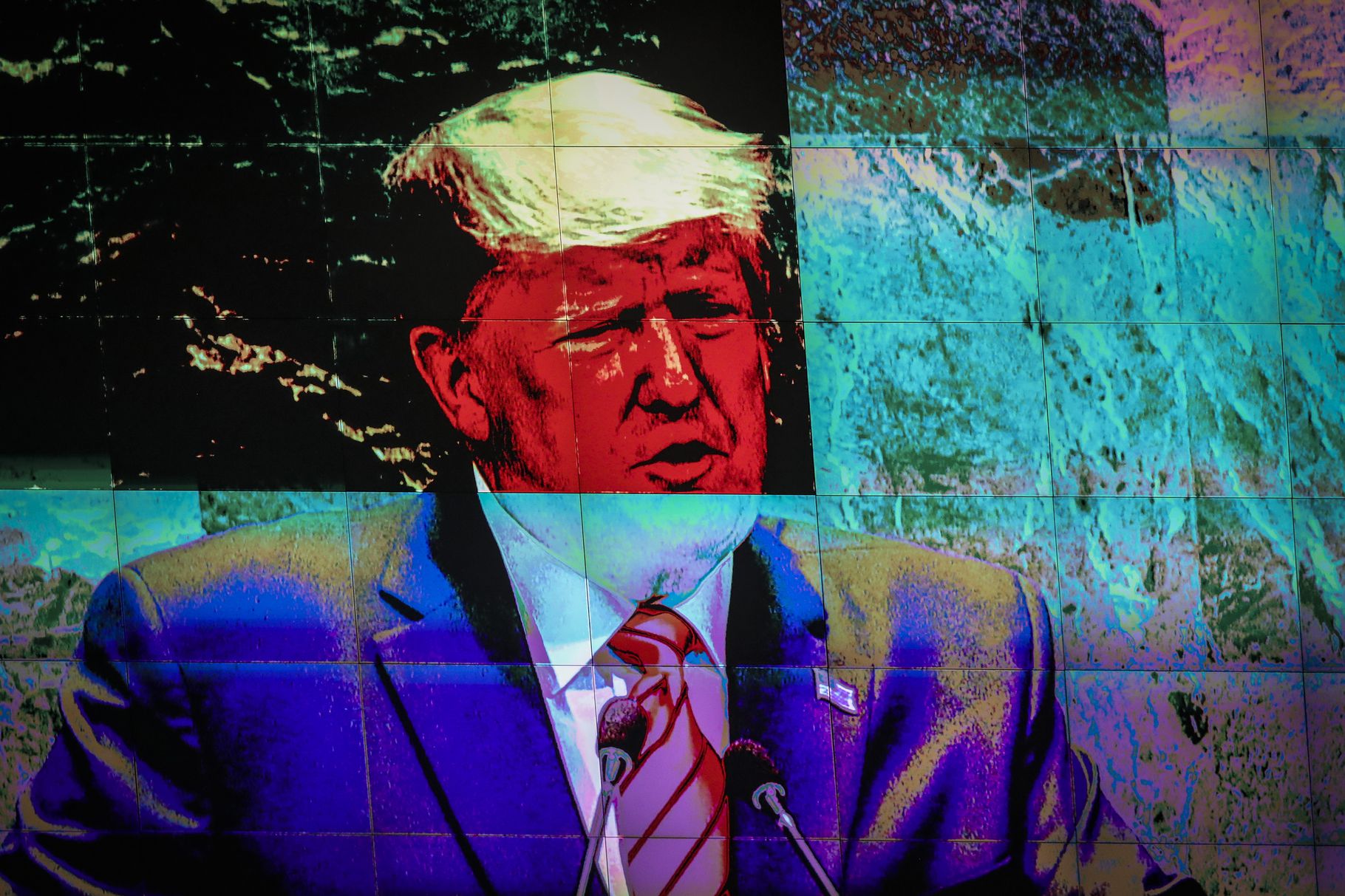
UNITED NATIONS, New York — In his third annual speech to the United Nations General Assembly, President Donald Trump delivered a clear message in favor of nationalism and national sovereignty and against globalism.

But three years into Trump’s presidency, that kind of rhetoric is no longer as shocking as it once was. Most of the world has heard it from him before.

Trump, in an oddly subdued speech in New York on Tuesday, reprised his case that all nations should exert their sovereignty, protect their borders, and reject any mutual and international cooperation that doesn’t put their country’s own interests first. For Trump, it’s “America First;” for everyone else it’s “[Insert Country Here] First.”

“If you want democracy, hold on to your sovereignty,” Trump said. “And if you want peace, love your nation.”

Trump touted the “great” new trade deals he’s working on and lambasted China’s trade practices. He criticized the Iranian regime for its “bloodlust.” He tried to elevate his stalled diplomacy with North Korea. He condemned the socialist regime of Nicolás Maduro in Venezuela. He denounced illegal immigration and even made time to complain about perceived censorship of conservative viewpoints by social media companies and to attack social justice advocates.

It was classic Trump — only without the enthusiasm he usually displays when discussing these pet topics. If anything, Trump seemed bored by his own speech.

There were two rare but notable exceptions: Trump’s stern notice to China that the US is closely watching how it handles the unrest in Hong Kong, and his call to end the criminalization of homosexuality around the world.

The rest, though, was standard Trump fare, and few of the world leaders gathered to hear him speak seemed surprised or rattled by his words. He couldn’t even manage to garner any of last year’s surprised laughs.

Trump’s schtick isn’t shocking anymore. But it shows just how much of an outlier the US is.

“The future does not belong to globalists; it belongs to patriots,” Trump said at the start of his speech.

It seemed like a throwaway line but it was actually a clear articulation of what Trump and leaders of his ilk have been arguing for the past few years: Populist nationalism is the future and multinational cooperation and mutual trust is the past — even if that’s the very vision the United Nations is trying to promote and protect.

And that message has permeated. Brazilian President Jair Bolsonaro, who spoke shortly before Trump, cited the US president’s defense of the sanctity of national sovereignty to push back against worldwide criticism of Bolsonaro’s handling of the Amazon fires. “They even called into question that which we hold as a most sacred value, our sovereignty,” Bolsonaro said at one point.

Trump was sandwiched between a slew of authoritarians and wanna-be authoritarians (Bolsonaro before and Egypt’s Abdel Fattah el-Sisi and then Turkey’s Recep Tayyip Erdoğan afterward), and while the US president paid lip service to democracy, his defense of it didn’t fit with his nationalistic rhetoric.

Trump and some of these other speeches stood in stark contrast to that of UN Secretary-General António Guterres, who addressed the crowd before the world leaders began to take the stage and warned of the “disquiet” currently plaguing the world.

He was mostly referring to the world’s problems — armed conflicts, increasing inequality, the threat of climate change. But Guterres’s argument is that nations need to band together to address these challenges and to promote the rights of all citizens, no matter their homeland. Guterres believes the forum to do so is the United Nations.

Trump’s argument is, as it always has been, that every country needs to look after itself.

Source: Vox

Thom Tillis calls for Senate to investigate Fed independence | Politico

Editor’s Note: As a sovereignty educator for over twenty years I taught millions of people about the Federal Reserve, how it was created, the nature of money, banking, etc., and how this forever altered our constitutional Republic. That anybody in the Senate, except Former Congressmen Ron Paul and President Trump, is talking about Federal Reserve independence is good news for the Republic.

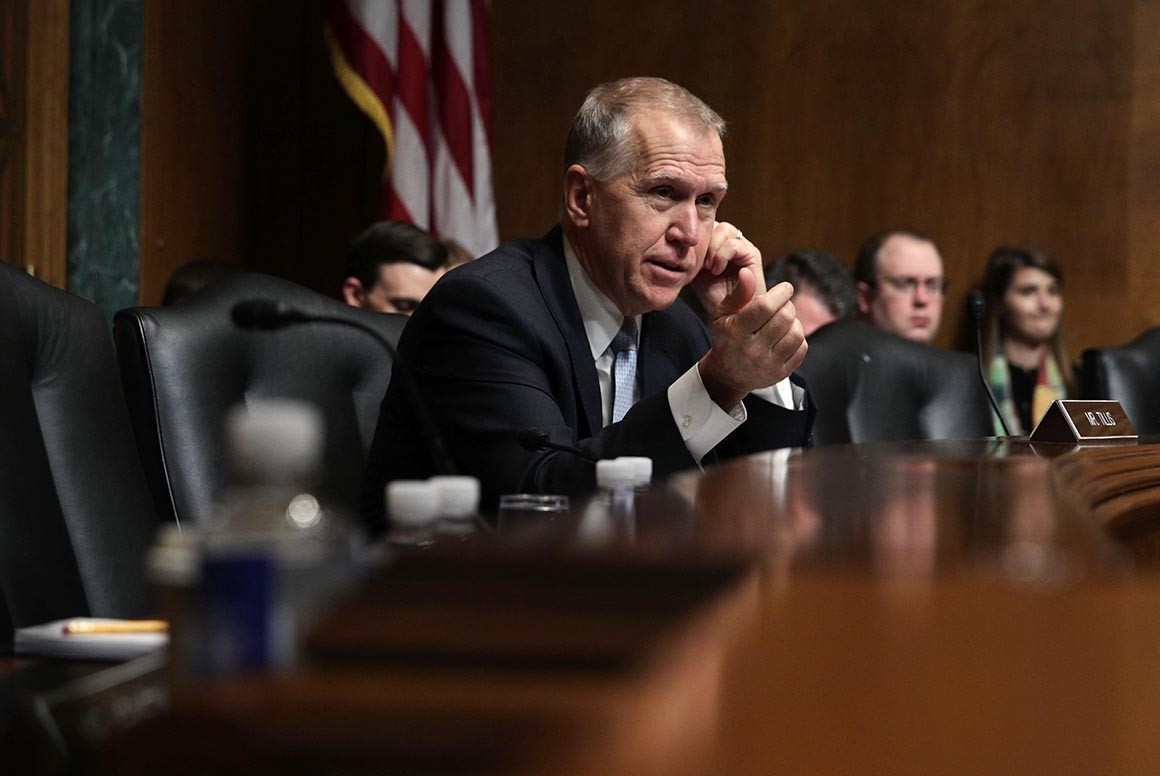
Republican Sen. Thom Tillis is calling for the Senate Banking Committee to probe the Federal Reserve’s independence after a former agency official suggested the upcoming presidential election “falls within the Fed’s purview” as it considers whether to cut interest rates.

Tillis, who is up for reelection next fall in swing state North Carolina, is siding with President Donald Trump in his ongoing feud with Federal Reserve Chairman Jay Powell. Bill Dudley, a former president of the Federal Reserve Bank of New York, wrote in a Bloomberg op-ed that the Fed should consider refusing to offer new economic stimuli because doing so could encourage Trump to plunge further into a trade war with China and would “reassert the Fed’s independence by distancing it from the administration’s policies.”

Tillis said he plans to ask the Banking Committee’s chairman, Sen. Mike Crapo (R-Idaho), about convening a hearing “regarding Fed independence and the danger of this institution taking unprecedented and inappropriate steps to meddle in the presidential election.”

“I am very disappointed that former Fed monetary Vice Chairman Bill Dudley is lobbying the Fed to use its authority as a political weapon against President Trump,” Tillis said in a statement. “The President is standing up for America against China after 30 years of our country and our workers being ripped off and there is now an effort to get the Fed to try to sabotage the President’s efforts.”

Senate Republicans generally stay out of Federal Reserve politics, but Tillis is aligning himself closely with Trump as he faces a primary challenge and a potentially difficult general election. The first-term senator previously supported a bill protecting special counsels, including Robert Mueller, and initially opposed Trump’s declaration of a national emergency on the southern border. He later supported it and has generally not deviated from Trump since.

The president has berated Powell, whom he appointed, for declining to further slash interest rates.

“The only problem we have is Jay Powell and the Fed,” Trump tweeted last week. “He’s like a golfer who can’t putt, has no touch. Big U.S. growth if he does the right thing, BIG CUT — but don’t count on him! So far he has called it wrong, and only let us down.”

The repeated attacks motivated Dudley to wade into the dispute and implore Powell to consider standing firm. He argued that the Federal Reserve’s desire to stay out of politics was admirable “but Trump’s ongoing attacks on Powell and on the institution have made that untenable.”

“Central bank officials face a choice: enable the Trump administration to continue down a disastrous path of trade war escalation, or send a clear signal that if the administration does so, the president, not the Fed, will bear the risks — including the risk of losing the next election,” Dudley wrote. “Trump’s reelection arguably presents a threat to the U.S. and global economy, to the Fed’s independence and its ability to achieve its employment and inflation objectives.”

Source: Politico

JFK to 911 Everything Is A Rich Man’s Trick (film) | YouTube & IMDB

Authoritatively written and narrated by Francis Richard Conolly, the film begins its labyrinthine tale during the era of World War I, when the wealthiest and most powerful figures of industry discovered the immense profits to be had from a landscape of ongoing military conflict. The film presents a persuasive and exhaustively researched argument that these towering figures formed a secret society by which they could orchestrate or manipulate war-mongering policies to their advantage on a global scale, and maintain complete anonymity in their actions from an unsuspecting public. Conolly contends that these sinister puppet masters have functioned and thrived throughout history – from the formation of Nazism to the build-up and aftermath of September 11.

Source: IMDB & YouTube

King Dayne Aipoalani’s Story May Convince You That Hawaii Belongs To The Hawaiians | Business Insider

By Robert Johnson

The circumstances by which Hawaii was annexed by the U.S. are so sketchy that Congress felt obliged to issue an apology in 1993.

It all started 100 years earlier when a group of mostly American businessmen led a paramilitary coup to overthrow Queen Liliʻuokalani. They were passively supported by U.S. Marines who were deployed “to protect American lives and property.”

The coup resulted in a new Hawaiian government under the presidency of Sanford Dole, whose cousin would soon start the Hawaiian Pineapple Company, which became Dole Foods.

Although then-U.S. president Grover Cleveland criticized the events in Hawaii, which he had not authorized, his successor, William McKinley, had no problem annexing Hawaii in 1898.

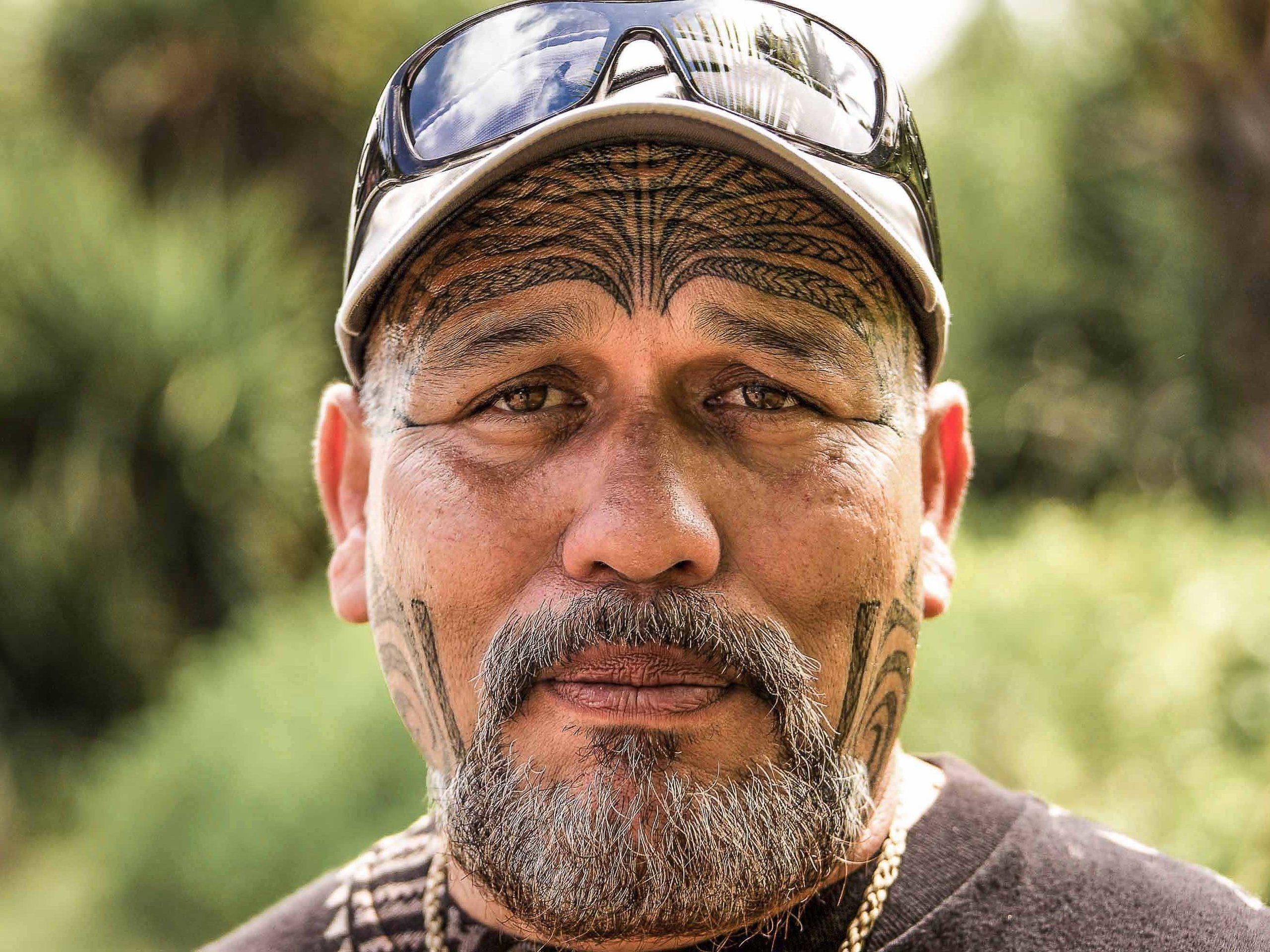
With a history like this, it is not surprising that a Hawaiian sovereignty movement remains committed to reclaiming rights and land for native Hawaiians. While several contenders claim rights to the crown, Dayne Aipoalani of The Polynesian Kingdom of Atooi has taken the movement to regain his peoples’ rights and land in Hawaii to a whole new level.

Business Insider spent more than a week in Hawaii with Aipoalani , also known as Ali`i Nui Aleka Aipoalani. He guided us through his kingdom on two islands, explained what his plans were, and how he plans to fight Washington.

  • King Kamehameha III divided Hawaii among the monarchy’s lesser kings, chiefs, and commoners in the mid-19th century to make sure his people would always have a home in case of invasion.
  • King Kamehameha’s worst fears were confirmed decades later when a coup led by foreign businessmen and supported by the U.S. overthrew his descendant, Queen Liliuokalani, in January 1893.
  • Sanford Dole, who’d pushed for the overthrow, was put in charge of a provisional government, and Liliuokalani was imprisoned. In 1898, Hawaii was annexed by the U.S.
  • Like most Hawaiians, Dayne Gonsalves believes his homelands were taken illegally. He wants to restore Crown Lands to the monarchy under one king: himself.
  • Dayne says he is the great-great-great-grandson of King Kamehameha I and as the new Ali’i Nui, or King, of The Polynesian Kingdom of Atooi, he’s devoting his life to reclaiming the land and resources of his people.
  • To fund travel and diplomacy among islands throughout the South Pacific, Dayne relies on donations from supporters including more than 40,000 Atooi Kingdom citizens worldwide.
  • That money also helps buy U.N.-recognized drivers license and, soon, passport software and supplies. Atooi Federal Marshal Samson Kama says: “Local law enforcement is targeting us with traffic stops and arrests for false credentials. This goes against the U.N. mandate that allows us Native Rights through international law.”
  • The Atooi Kingdom also unveiled its new currency at the U.N. in May.
  • In addition, Atooi has law enforcement badges.
  • More than 100 Federal Marshals.
  • Official license plates.
  • A radio station to broadcast its message.
  • A former U.S. Navy pilot who serves as foreign ambassador.
  • And its own royal flag, which is prevalent throughout the Islands.
  • The Kingdom encompasses an array of Pacific islands, but its capital might be considered Kauai. This is where Dayne grew up and is raising his family in the largely native community of Waimea.
  • Waimea is “Ground Zero” in the fight against the largest agribusinesses in the world, which test and develop herbicides and pesticides in the area.
  • More than anything, The Atooi Kingdom wants indigenous and sustainable farms for its people.
  • Along with producing its own food, Dayne wants to clean up damage already done to the environment.
  • And provide a traditional healing clinic to all islanders, including the hundreds of homeless who live here in Oahu’s massive homeless camp.
  • The King would also place buffer zones around native schools (like this one) within 500 feet of experimental pesticide fields and genetically modified crops, where undisclosed chemicals are sprayed.
  • Waimea schools have twice been evacuated following pesticide applications at adjoining fields. Many believe the sickness among staff and students during these times are from the chemicals, though follow-up studies point a finger at the local stinkweed plant.
  • Many of the world’s largest agricultural giants moved to Kauai in the 1990s. Since then, locals have been demanding to know what chemicals are sprayed on their land, but they are still fighting through the courts for answers.
  • It’s a constant battle and it doesn’t stop there. When Business Insider was in Kauai, Dayne brought us to a sacred spot that had been bulldozed by local transportation crews.
  • Plowing under sacred sites is just one instance of ongoing land conflicts here on Hawaii between natives and local government.
  • Even at Iolani Palace, the last family home of the Hawaiian Royal Family, Dayne’s mission isn’t received with much warmth.
  • The native guide took issue with the Kingdom’s new currency. Since there are many Hawaiian Sovereignty groups claiming rights to the throne, conflict among native Hawaiians is common.
  • Even here, where the Queen was placed under house arrest, Dayne is told he can’t be video interviewed. He shows the guard his badge.
  • But the palace employee remained unimpressed.
  • It’s an ongoing and emotional struggle.
  • Dayne knows he has a long fight ahead of him. Native Hawaiians have the third-highest cancer rate in the country, extremely high rates of diabetes and incidents of infectious diseases — but there is hope.
  • Though the Atooi Nation is a recognized sovereign nation at the U.N., it is not listed as a Non-Self-Governing Territory, which is the U.N. category for countries that should be decolonized. That list includes, among others, American Samoa, Guam, and the U.S. Virgin Islands.
  • After a 30-year fight, French Polynesia recently made the U.N.’s Non-Self-Governing Territory list. Atooi wants to obtain the same status.
  • In the meantime native Hawaiians will carve out an existence wherever they can.
  • As bad as it is for most islanders, it’s even worse for some.

Source: Business Insider