 By Yuriy Humber and Stuart Biggs
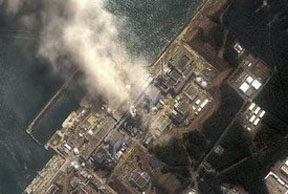
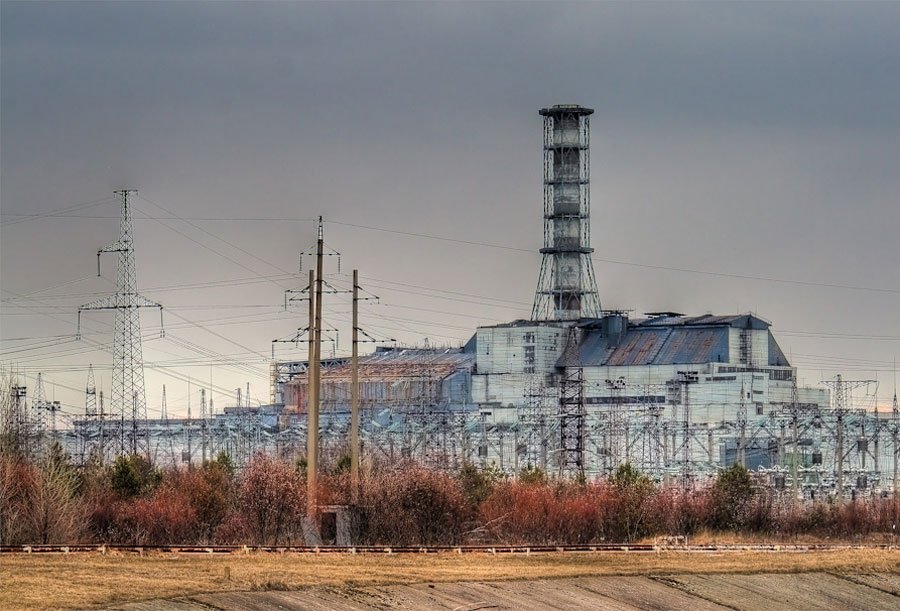
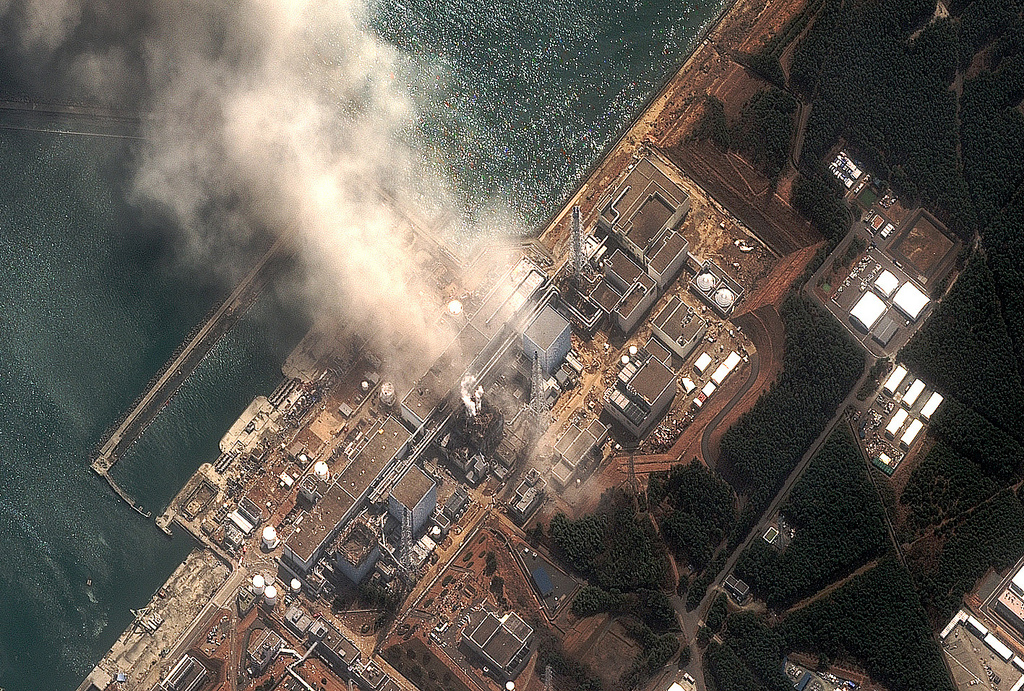
Radioactive soil in pockets of areas near Japan’s crippled nuclear plant have reached the same level as Chernobyl, where a “dead zone” remains 25 years after the reactor in the former Soviet Union exploded.
Soil samples in areas outside the 20-kilometer (12 miles) exclusion zone around the Fukushima plant measured more than 1.48 million becquerels a square meter, the standard used for evacuating residents after the Chernobyl accident, Tomio Kawata, a fellow at the Nuclear Waste Management Organization of Japan, said in a research report published May 24 and given to the government.
Radiation from the plant has spread over 600 square kilometers (230 square miles), according to the report. The extent of contamination shows the government must move fast to avoid the same future for the area around Tokyo Electric Power Co.’s Fukushima Dai-Ichi plant as Chernobyl, scientists said. Technology has improved since the 1980s, meaning soil can be decontaminated with chemicals or by planting crops to absorb radioactive materials, allowing residents to return.
“We need to finish this treatment as quickly as possible, within three years at most,” Tetsuo Iguchi, a specialist in isotope analysis and radiation detection at Nagoya University in central Japan, said in a telephone interview. “If we take longer, people will give up on returning to their homes.”
Soil Samples
 Soil samples showed one site with radiation from Cesium-137 exceeding 5 million becquerels per square meter about 25 kilometers to the northwest of the Fukushima plant, according to Kawata’s study. Five more sites about 30 kilometers from Dai- Ichi showed radiation exceeding 1.48 million becquerels per square meter.
When asked to comment on the report today, Tokyo Electric spokesman Tetsuya Terasawa said the radiation levels are in line with those found after a nuclear bomb test, which disperses plutonium. He declined to comment further.
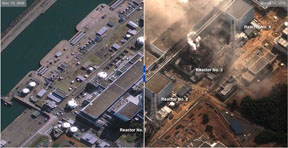
Japan’s government introduced a mandatory exclusion zone 20 kilometers around the plant following the March 11 earthquake and tsunami that knocked out power leading to three reactor meltdowns. Kawata’s study didn’t include samples from inside the exclusion zone, where only government and Tokyo Electric staff may enter.
The government in April ordered the evacuation of towns including Iitate, Katsurao and Namie that are outside the 20- kilometer zone after finding high levels of radiation.
‘As Soon As Possible’
 “Basically, the way in which the current zones have been drawn up aren’t a concern in terms of the impact on health,” said Chief Cabinet Secretary Yukio Edano. “Using Mr. Kawata’s report as a guide, we want to do what we can to improve the soil, so people can return as soon as possible.”
While the area containing soil pockets over 1.48 million becquerels a square meter is smaller than around Chernobyl –600 square kilometers compared with 3,100 square kilometers — the level of contamination means soil needs to be cleaned or removed before residents can return, Kawata said in his report.
“It might take about one or two years for people to return to land outside the 20-kilometer zone,” the University of Nagoya’s Iguchi said. “If we replace the soil, it is possible for people to return even inside the zone.”
The “dead zone” around Chernobyl remains at 30 kilometers, Mykola Kulinich, Ukraine’s ambassador to Japan, said in Tokyo on April 26, the 25th anniversary of the disaster.
Chernobyl Fallout
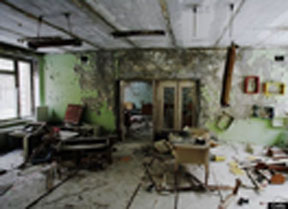 Belarus, which absorbed 80 percent of the fallout from the Chernobyl explosion, estimates that 2 million, or 20 percent of the population, was affected by the Chernobyl catastrophe, while about 23 percent of the country’s land was contaminated, according to a Belarus embassy website. About a fifth of the country’s agricultural land has been rendered unusable, which means some $700 million in losses each year, according to the website.
Using crops was one solution being considered by Belarus with the idea that grains harvested from contaminated areas could then be processed to make ethanol. A study funded by a philanthropy arm of Heineken NV (HEIA) found that radioactive elements do not transfer into ethanol and this would allow Belarus to become a major supplier of the liquid used to dilute gasoline to the European Union.
Crop planting was planned in areas of “low-level” radiation, Michael Rietveld, chief executive officer of Ireland’s Greenfield Partners, which agreed with the Belarus government in 2007 to develop an ethanol business project to decontaminate the soil, said in an interview October 2009.
Crop Planting
“There are cows walking over this land now,” Rietveld said in reference to Belarus. “People are living over there. It’s not a dangerous venture to use crops in low-contaminated areas. Most of the contamination is in the soil not the air.”
The global financial crisis hampered Greenfield’s fund raising and the project closed last year after the Belarus government expressed concerns about the Irish company’s ability to attract financing.
Another solution for Fukushima may be chemical treatment of the soil to allow cesium to be absorbed into porous crystals, such as zeolite, which are more visible and simpler to remove, the University of Nagoya’s Iguchi said.
Restoring the land may be more critical in Japan than Belarus, where the population density is about 46 people per square kilometer, according to United Nations data. That’s more than seven times less than the metric for Japan, where 127.6 million people live on about 378,000 square kilometers.
Road Map
Restoring land use in Fukushima hinges on Tokyo Electric, known as Tepco, ending the crisis at the nuclear station, where three reactors went into meltdown following the earthquake and tsunami that also left more than 23,000 people dead or missing.
The utility on April 17 set out a so-called road map to end the crisis in six to nine months. Tepco said it expects to achieve a sustained drop in radiation levels at the plant within three months, followed by a cold shutdown, where core reactor temperatures fall below 100 degrees Celsius.
The chance of Tepco achieving that goal is six or seven out of 10, William Ostendorff, a member of the U.S. Nuclear Regulatory Commission, said at a hearing of the U.S. Senate Environment and Public Works Committee earlier this week.
Tepco has yet to decide how to deal with the plant site, Megumi Iwashita, a spokeswoman for the company said on May 26.
The most cost-effective solution may be to allow the cesium to move down into the soil to decay, Kathryn Higley, a radiation health physicist at Oregon State University in Corvallis, said in a telephone interview. Cesium has a half-life of about 30 years, according to the U.S. Environmental Protection Agency.
“They’re going to make decisions on an acre-by-acre basis as to what’s going to happen to these facilities,” she said. “The area around Chernobyl is now a nature park. When you move 100,000 people out of an area, nature does pretty well.”
Source: Bloomberg

 Given the arrogance and hubris of modern civilization after the nuclear core meltdown and release of extremely high amounts of dangerous radiation from the cooling rods of the badly damaged Fukishima Dai-ichi nuclear power plant in Japan, a sad realization came loud and clear – humanity is pathologically bent on a path to total species extinction, not only of other living creatures, but of our own human race.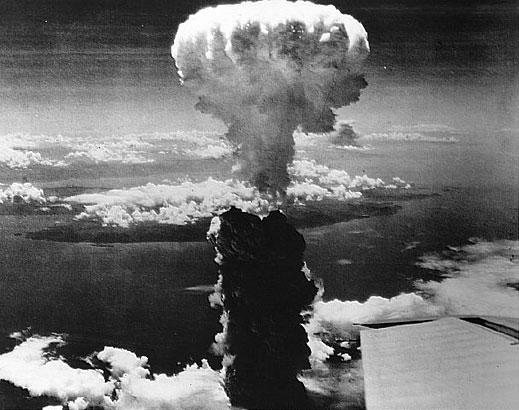



 Liberty International News