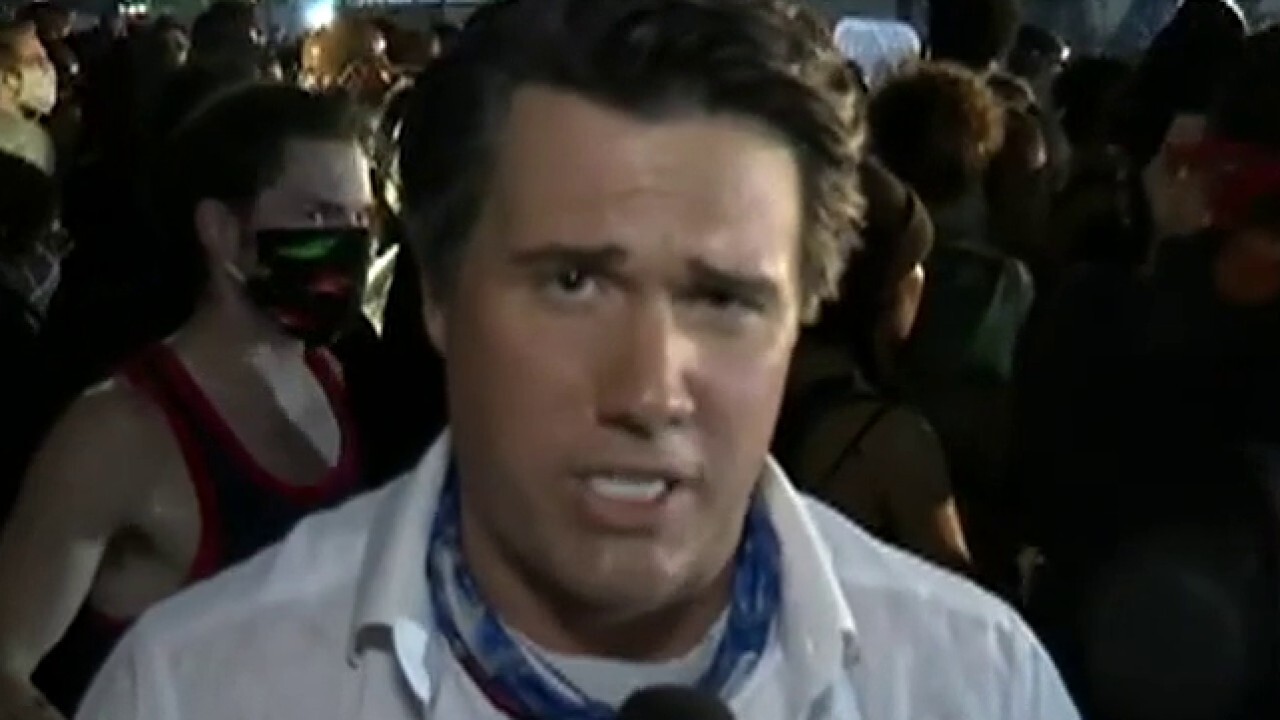
TYT Politics reporter Michael Tracey interviews a “paid protester” from George Soros at a Rep. Doug LaMalfa (R-CA) town hall.
Source:YouTube
TYT Politics reporter Michael Tracey interviews a “paid protester” from George Soros at a Rep. Doug LaMalfa (R-CA) town hall.
Source:YouTube
By Ryan McMaken
There were many reasons to oppose the COVID-19 lockdowns.
They cost human lives in terms of deferred medical treatment. They cost human lives in terms of greater suicide and drug overdoses. Domestic abuse and child abuse have increased. There is also good reason to believe that lockdowns don’t actually work. The lockdown activists capitalized on media-stoked fear to push their authoritarian agenda based not on science, but on the whims of a handful of experts who insisted that they need not present any actual evidence that their bizarre, draconian, and extreme scheme was worth the danger posed to human rights, health, and the economic well-being of billions of human beings.
Those who lacked the obsessive and irresponsible tunnel vision of the prolockdown people warned that there were other dangers as well, in terms of social and political conflict.
[RELATED: “COVID Panic: The New War on Human Rights” by Ryan McMaken.]
It didn’t require an especially clear crystal ball to see that destroying the livelihoods of countless millions while empowering a police state to harass and arrest law-abiding citizens would create a situation that maybe—just maybe—could lead to greater social and political conflict.
Specifically, there are three ways in which the lockdowns laid the groundwork for our current state of unrest.
The COVID-19 stay-at-home orders, business closures, and other forms of coerced social distancing have so far led to job losses for well over 30 million Americans. The unemployment rate has risen to levels not seen since the Great Depression. Food banks are under strain as Americans line up for free food. Thanks to government moratoria on evictions in many areas, it is still unknown to what extent homeowners and renters are unable to pay mortgages and rents, but a wave of delinquencies is almost certainly coming.
To advocates of lockdowns, this is all “worth it” even though these sorts of economic stresses often lead to suicide, stress-induced disease, and death. But impoverishment, unemployment, and financial ruin are all merely “inconvenient,” as described by head lockdown advocate Anthony Fauci.
To someone who isn’t enamored of lockdowns, however, it is clear that millions of job losses are likely to worsen a variety of social ills, sometimes even resulting in violence. Moreover, the current job losses appear to be affecting the young and those who earn lower incomes most.
Lockdown advocates have attempted to avoid responsibility for all this by claiming that it is the pandemic itself that has caused the current economic disaster, and not the lockdowns. This is a baseless assertion. As has been shown, neither the pandemics of 1918 or 1958 led to the sorts of job losses and decline in economic growth that we’re now seeing.
Another outcome of the lockdowns has been the destruction of American social institutions. These institutions include schools (both public and private), churches, coffee shops, bars, libraries, barbershops, and many others.
Lockdown advocates continue to claim that this is no big deal and insist that people just sit at home and “binge watch” television shows. But researchers have long pointed to the importance of these institutions in preserving peace and as a means of defusing social tensions and problems.
As much as lockdown advocates may wish that human beings could be reduced to creatures that do nothing more than work all day and watch television all night, the fact is that no society can long endure such conditions.
Human beings need what are known as “third places.” In a 2016 report, the Brookings Institution described what these places are:
the most effective ones for building real community seem to be physical places where people can easily and routinely connect with each other: churches, parks, recreation centers, hairdressers, gyms and even fast-food restaurants. A recent newspaper article on McDonald’s found that for lower-income Americans, the twin arches are becoming almost the equivalent of the English “pub,” which after all is short for “public house”: groups of retirees meeting for coffee and talk, they might hold regular Bible study meetings there, and people treat the restaurant as an inexpensive hangout.
Third places have a number of important community-building attributes. Depending on their location, social classes and backgrounds can be “leveled-out” in ways that are unfortunately rare these days, with people feeling they are treated as social equals. Informal conversation is the main activity and most important linking function. One commentator refers to third places as the “living room” of society.
The lockdown advocates, in a matter of a few days, cut people off from their third places and insisted, in many cases, that this would be the “new normal” for a year or more.
Yet, these third places cannot simply be shut down—and the public told to just forget about them indefinitely—without creating the potential for violence and other antisocial behavior.
Indeed, third places act as institutions that provide a type of social control that is key to a well-functioning society. In his trenchant book The Revolt of the Elites and the Betrayal of Democracy, historian and social critic Christopher Lasch described the importance of third places in communicating political and social values and conventions to young people, and in setting the bounds of acceptable behavior within the community. Lasch notes that these institutions are also important in defusing violent impulses among the young. Also of great importance is the fact that third places provide a means of social control that is voluntary and not a form of state coercion.
Writing in the 1990s, Lasch was lamenting the decline of third places, although he emphasized their importance even in their modern reduced form. Thanks to the lockdowns, however, these places have been crippled far beyond what Lasch might ever have imagined.
The lockdowns have created a situation in which millions of law-abiding citizens have been deemed criminals merely for seeking to make a living, leave their homes, or engage in peaceful trade.
In many areas, violations of the lockdown orders have been—or even still are, in many places—treated as criminal acts by police. This has greatly increased negative interactions between police and citizens who by no moral definition are criminals of any sort.
Many have already seen the stories: police arresting mothers for using playground equipment, police arresting business owners for using their own property, police beating people for the “crime” of standing on a sidewalk.
Complicating the issue is the apparent fact that police have not enforced social distancing edicts “uniformly.” Some have alleged, for example, that the NYPD has lopsidedly targeted nonwhites in enforcement:
Of the 40 people arrested [for social distancing violations in Brooklyn between March 17 and May 4, 35 were African American, 4 were Hispanic and 1 was white. The arrests were made in neighborhoods—Brownsville, Bedford-Stuyvesant, Cypress Hills and East New York—which have large concentrations of blacks and Latinos.
This may or may not reflect the reality of the general situation, but the fact is that the lockdowns created theperception among many that this is just yet another case of law enforcement targeting certain populations over small-time violations.
Moreover, it is quite plausible that lower-income populations have more often been on the receiving end of state harassment in the name of social distancing. After all, compliance with lockdowns is something of a luxury reserved for higher-income, white-collar residents who can work from home and remain comfortable for long periods in their roomy houses. Working-class people and those with fewer resources are far more likely to need to find income and venture outside during lockdowns. This attracts the attention of police.
Lockdown advocates, apparently in their usual state of extreme naïvete, perhaps believed that further empowering police to violently enforce government decrees against petty infractions would not lead to any unfortunate side effects down the road. Yet criminalizing millions of Americans and subjecting them to heightened police harassment is not a recipe for social tranquility.
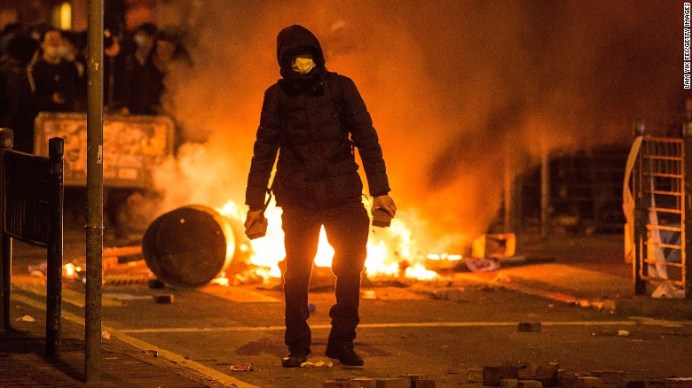
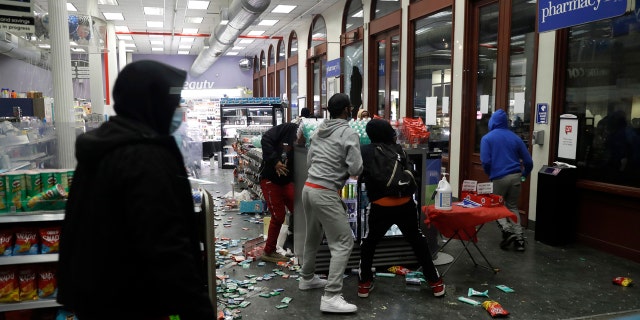
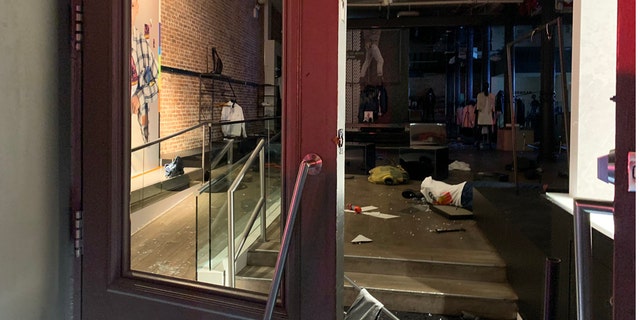
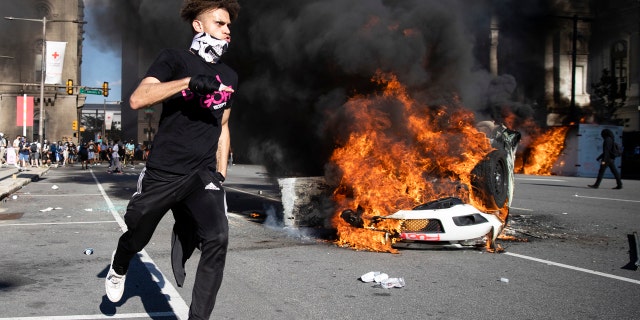
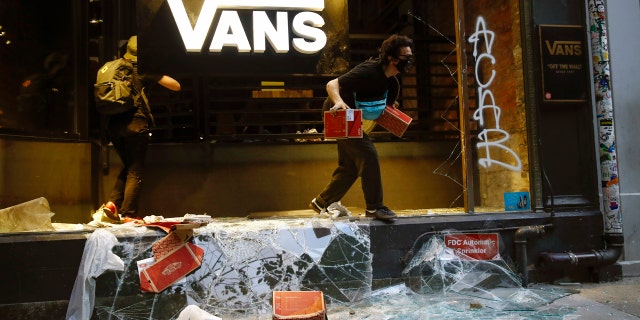
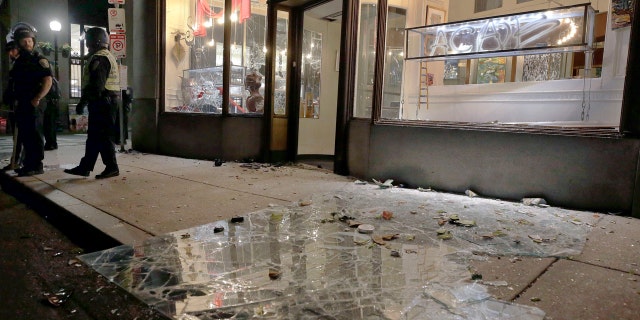
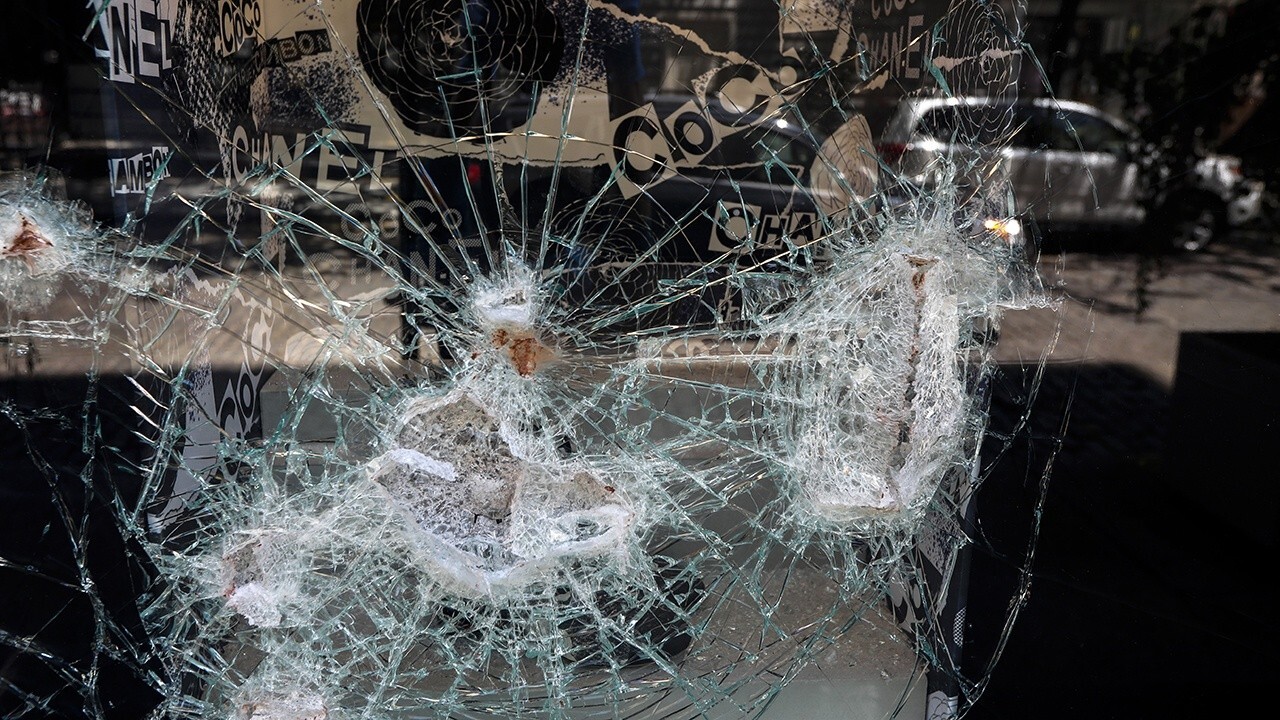
Of course, my comments here should not be interpreted as making excuses for rioters. Smashing up the property of innocent small business owners—or worse, physically harming innocent people—is reprehensible in all circumstances. But this isn’t about making excuses. We’re talking about avoiding extreme and immoral government policies (i.e., police-enforced lockdowns) that remove those institutions and conditions which are important in helping minimize conflict.
Some may insist that the riots would have occurred no matter what, but it’s easy to see how the lockdowns made a bad situation worse. Yes, some of the rioters are lifelong thugs who are always on the lookout for new opportunities to steal and maim. But experience suggests that the pool of people willing to engage in riots is often larger during periods of mass unemployment than during other periods. In addition, those people who exist on the margins of criminality—the sorts of people for whom third places serve an important role in moderating their more antisocial tendencies—are more likely to be swept up in these events when third places are abolished. And, as we have seen, lockdowns also create more opportunities for police abuse that ignite riots of the sort we’ve seen in recent days.
It’s true the responsibility for the riots lies primarily with the rioters. But we cannot deny that policymakers fuel the flames of conflict when they outlaw jobs and destroy people’s social support systems by cutting them off from their communities. It’s also wise to not provoke people by pushing for widespread human rights violations and additional police harassment. But this is what lockdown advocates have done, and their imprudence should not be forgotten.
Source: MISES
Source: YouTube
An interesting perspective from two conservative African-Americans.
Source: YouTube
Source: YouTube
Editor’s Note: Protests, rioting and looting across the USA occurred primarily in the following cities: Minneapolis, MN, Los Angeles, CA, New York, NY, Philadelphia, PA, Nashville, TN, San Francisco, CA, Detroit. MI, Portland, OR, Memphis, TN, Chicago, IL, Atlanta, GA, Washington, DC, Madison WI, Denver, CO, Santa Monica, CA, San Diego, CA (Republican), Boston, MA, Miami, FL (Republican), Oklahoma City, OK (Republican), Scottsdale, AZ (Republican), Windemere, FL, Albuquerque, NM, Sioux City, SD (Republican), Fontana, CA (Republican), Columbus, OH, Houston, TX, Phoenix, AZ, Louisville, KY, Davenport, IA, Jacksonville, FL (Republican), St. Louis, MO, Las Vegas, NV, and Oakland, CA. All but the seven noted had Democrat Mayors.
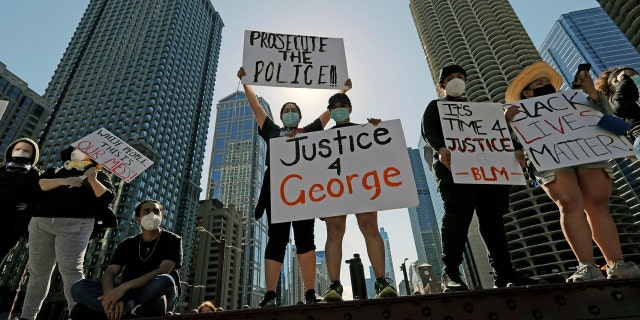
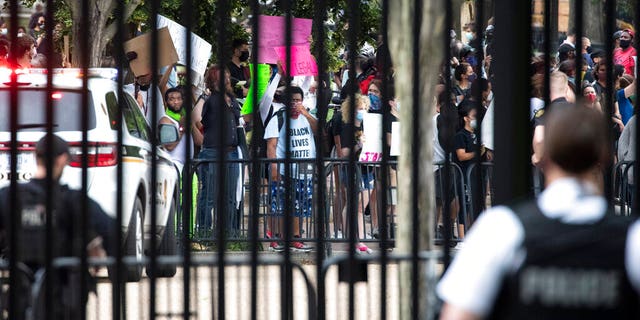
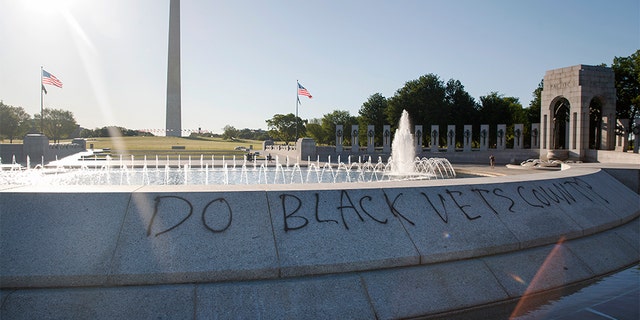
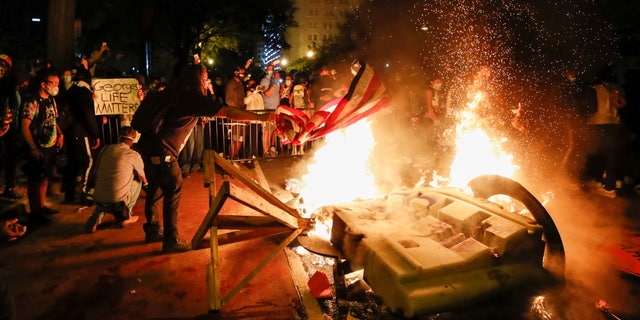
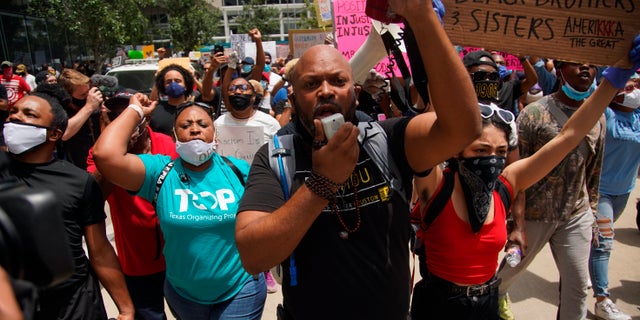
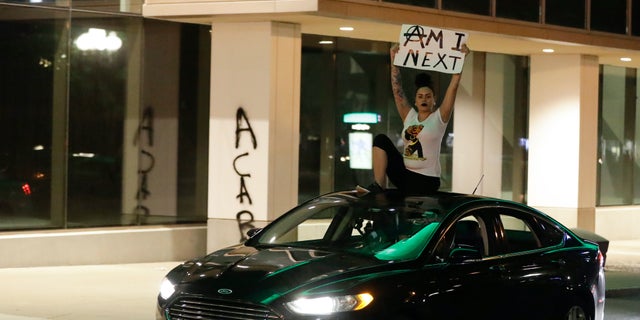
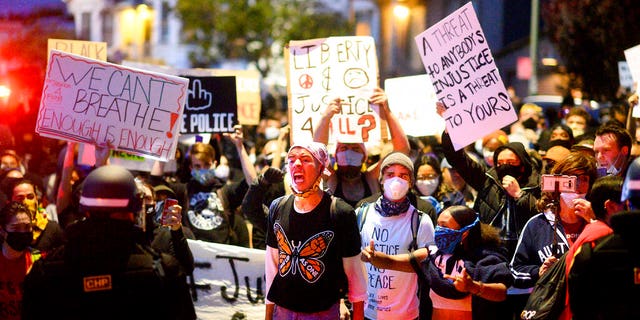
The death of George Floyd, an unarmed black man who died in police custody after a white officer kneeled on his neck for more than 8 minutes, has sparked widespread violent protests in dozens of American cities.
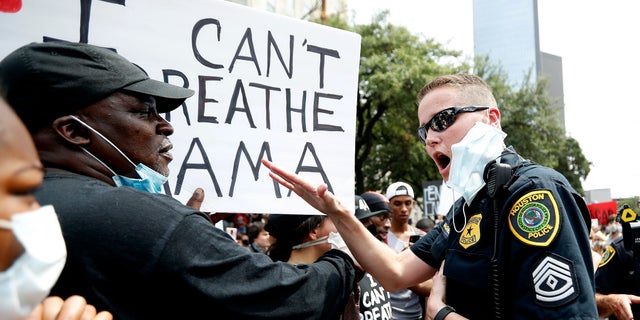
Floyd, 46, was pronounced dead Monday night after he was pinned to the ground under the knee of Minneapolis police officer Derek Chauvin, who is white. In a video recorded by a bystander, Floyd is heard saying he could not breathe.
Four police officers – Chauvin, Tomas Lane, Tou Thao, and J. Alexander Kueng – were fired from the force Tuesday. Chauvin was arrested Friday and charged with murder in the third degree.
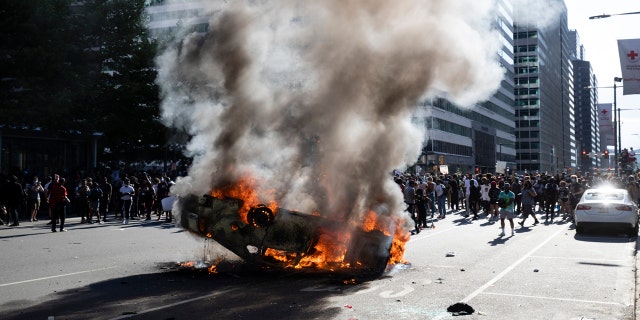
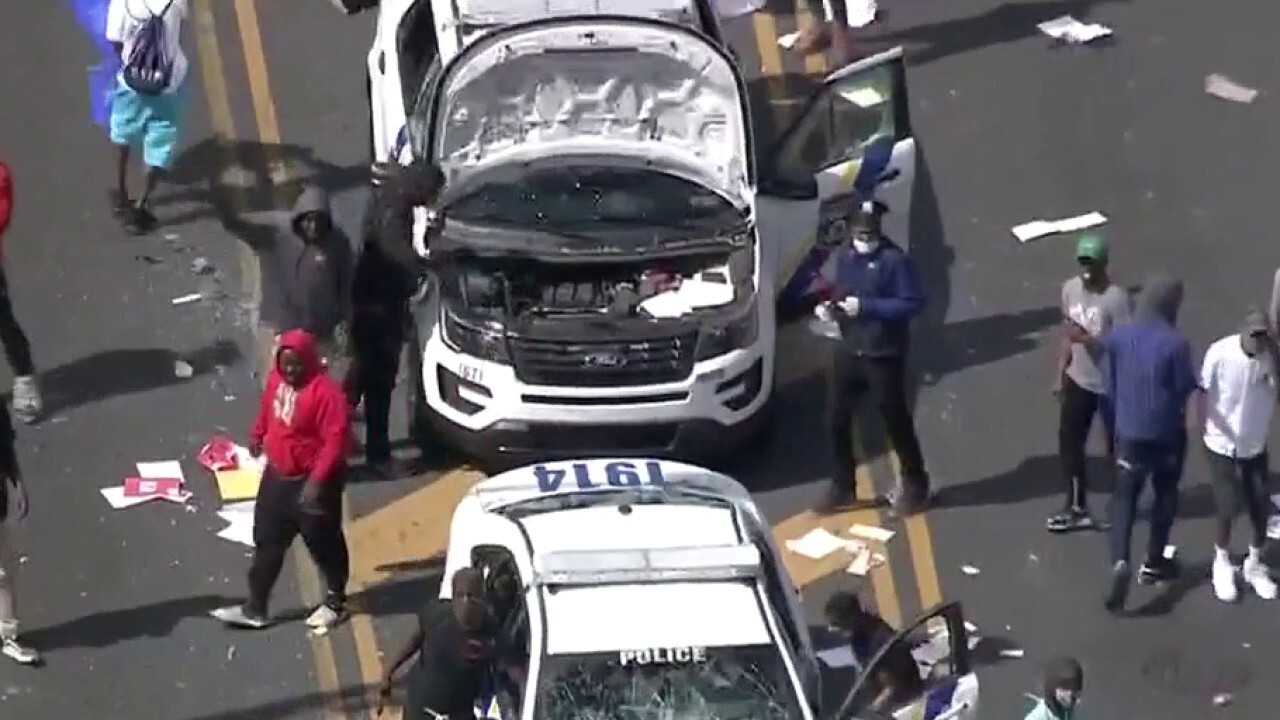
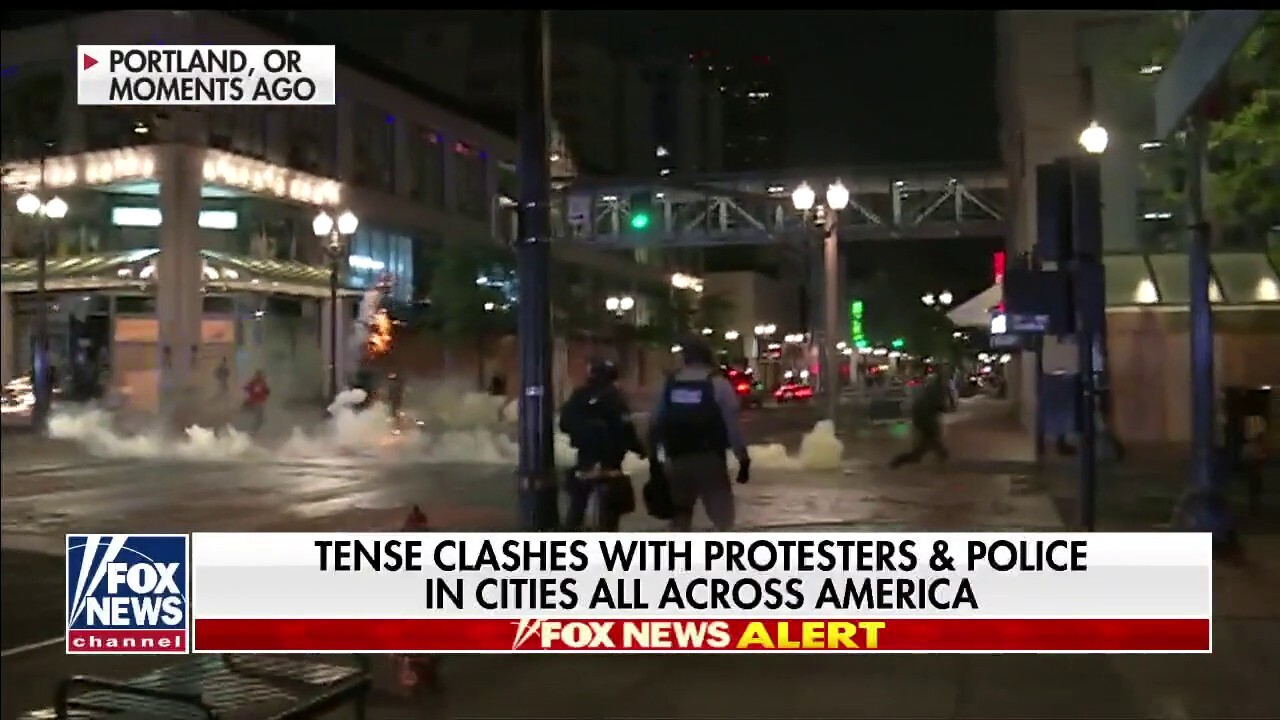
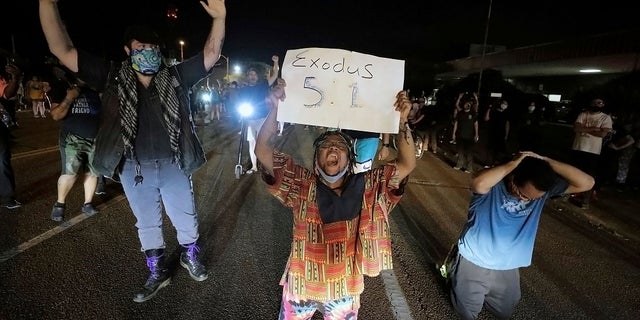
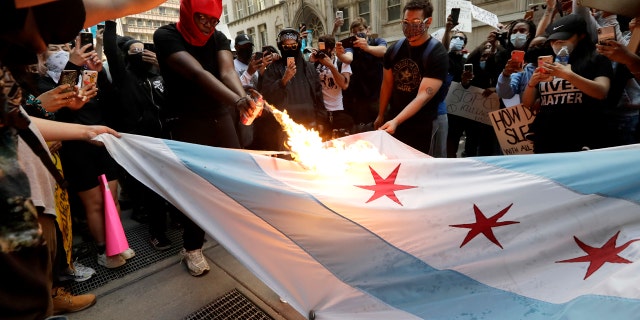
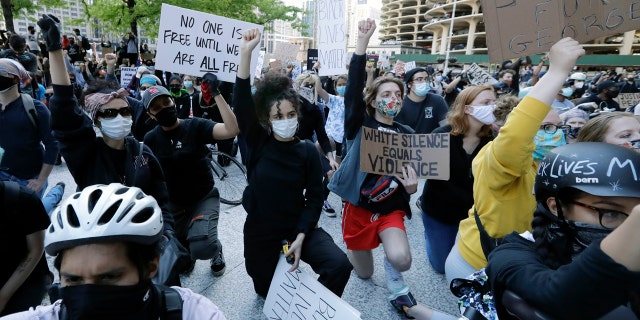
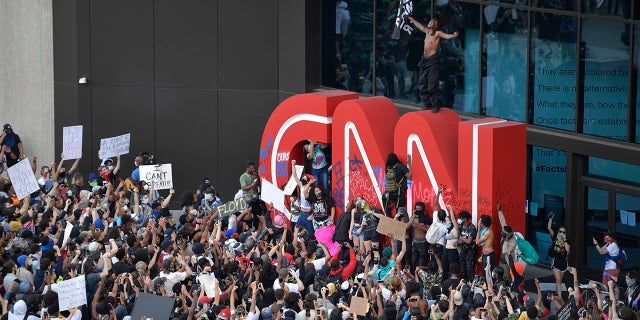
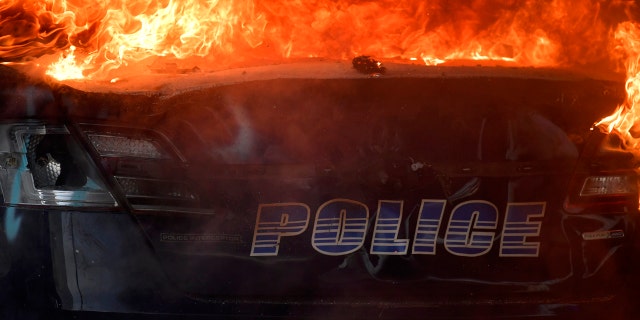
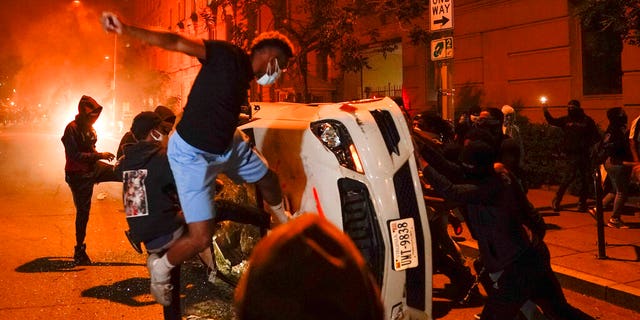
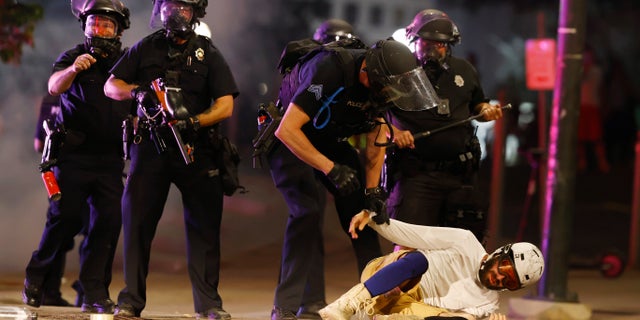
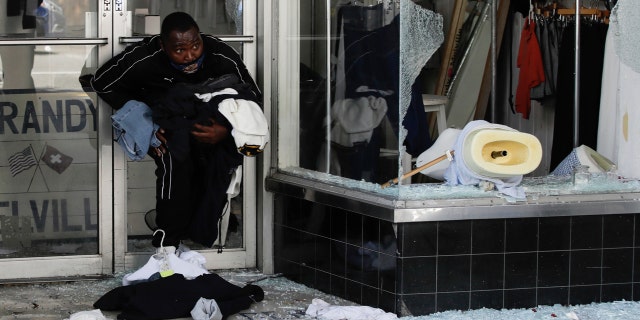
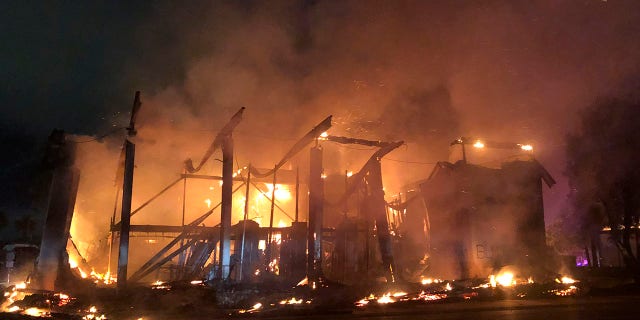
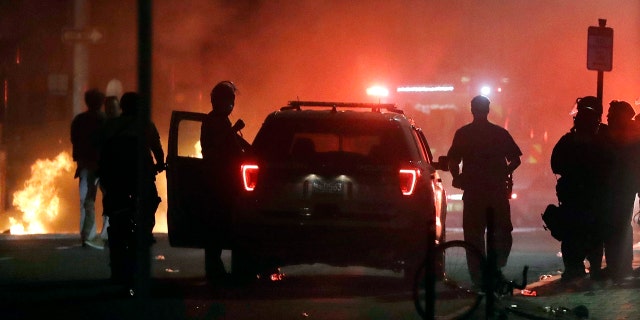
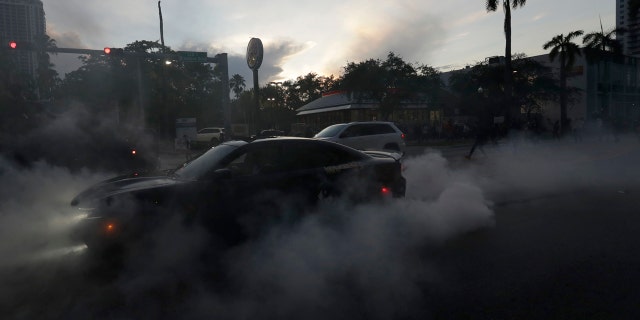
In the days since his death, unrest in every corner of the country left charred and shattered landscapes in dozens of American cities. Here is a list of some of the cities where protests have erupted:
Minneapolis, Minn.

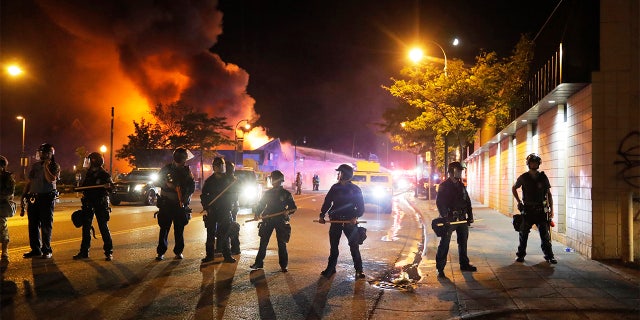
Police stand watch as a firefighters put out a blaze Saturday, May 30, 2020, in Minneapolis. AP Photo/Julio Cortez (AP Photo/Julio Cortez)
Minneapolis has been the epicenter of protests since the death on Memorial Day of Floyd after a police officer pressed his knee on Floyd’s neck for several minutes. The protests have spread to cities across the United States.
Peaceful protests broke out a day after Floyd’s death. The demonstrations quickly escalated to outright violence and looting. For several days after, city residents woke up to fires still burning from the violent protests.
The building of the Minneapolis Police’s 3rd Precinct was overtaken by protesters and burned down by the end of the week.
Be Saturday, protesters were seen defying curfew orders issued by Frey as firefighters sought to put out several business fires after the fourth night of unrest. The curfew lasts from 8 p.m. until 6 a.m. and any violation of it could lead to a misdemeanor charge, which entails 90 days in jail and a $1,000 fine.
Gov. Tim Walz, who authorized the “full mobilization” of the state’s National Guard, said it’s the largest civilian deployment in the state’s history. He said it was three times the size of what was in place during the race riots of the 1960s.

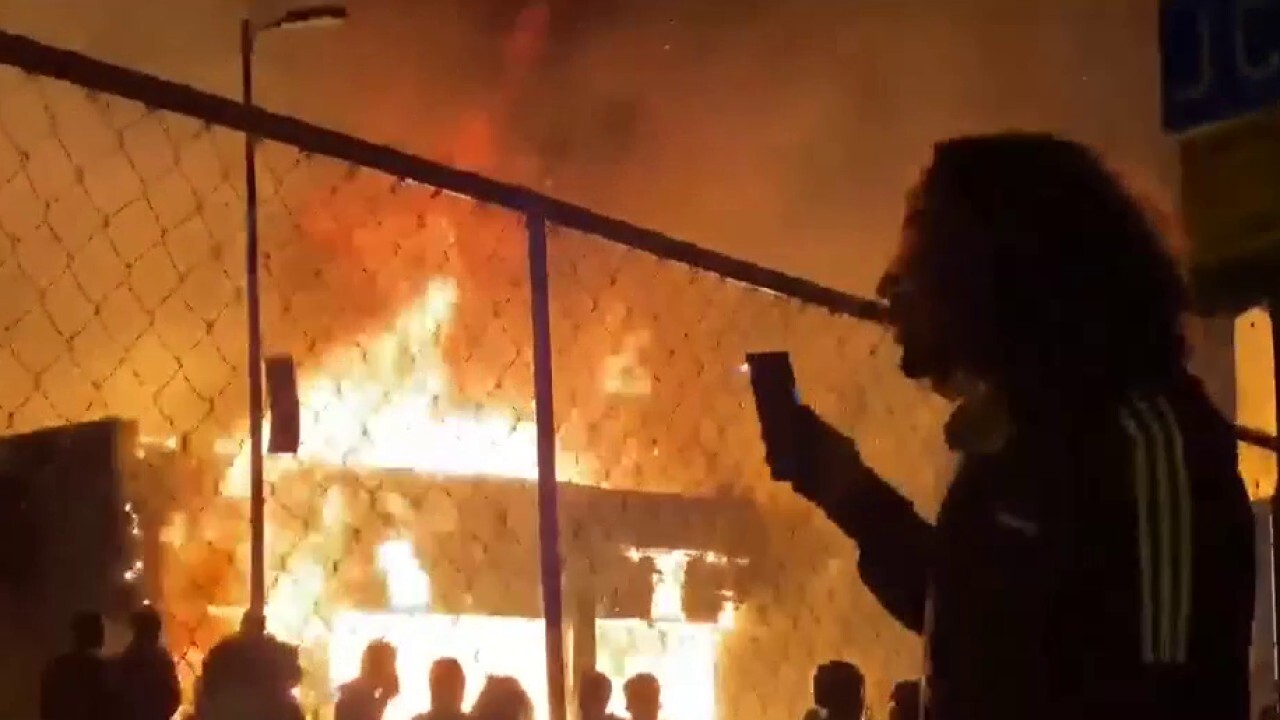
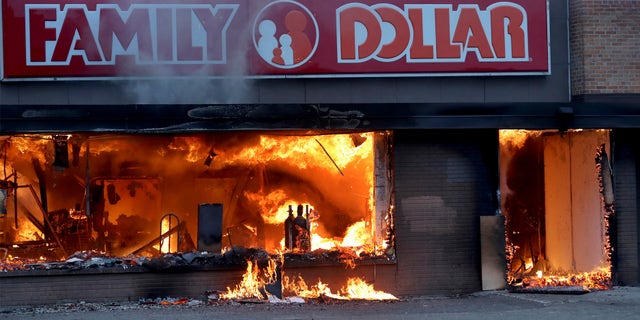
Fire burns inside The Family Dollar Store after a night of unrest and protests in the death of George Floyd early Friday, May 29, 2020 in Minneapolis. (David Joles/Star Tribune via AP)
The Pentagon has been ordered to prepare troops to be sent to the Twin Cities, a move said to be rare in nature.
“This is no longer about protesting,” Frey said Saturday. “This is about violence and we need to make sure that it stops.”
After the fifth day of protests, police said early Sunday they succeeded in stopping violent protests that ravaged parts of the city for several days

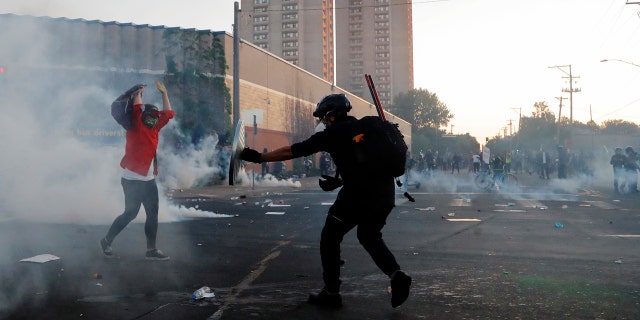
People clear the area after curfew Saturday, May 30, 2020, in Minneapolis.
(AP Photo/Julio Cortez)
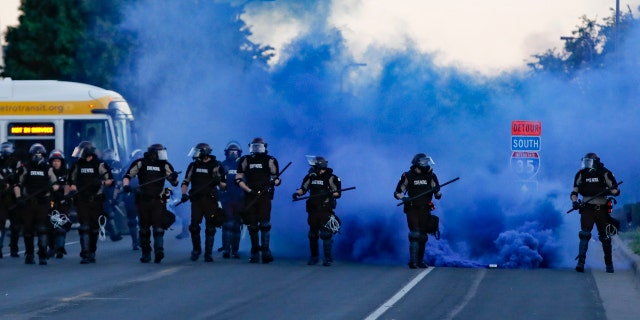
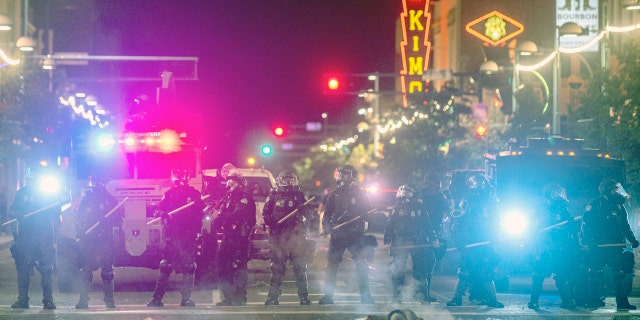
Police, state troopers and National Guard members moved in to break up protests after an 8 p.m. curfew took effect, firing tear gas and rubber bullets to clear streets outside the city police’s 5th Precinct and elsewhere. The show of force came after three days where police mostly declined to engage with protesters.
The tougher tactics also came after the state poured in more than 4,000 National Guard members and said the number would soon rise to nearly 11,000. Dozens of people were arrested as of Sunday morning, FOX9 reported.

Police in riot gear prepares to advance on protesters, Saturday, May 30, 2020, in Minneapolis. (AP Photo/John Minchillo)
As Minneapolis streets appeared largely quiet, Corrections Commissioner Paul Schnell said the heavy response would remain as long as it takes to “quell this situation.”
The tougher tactics came after city and state leaders were criticized for not more strongly confronting violent and damaging protests.
Authorities made a new round of arrests on Sunday night as they worked to enforce the curfew, FOX9 reported.
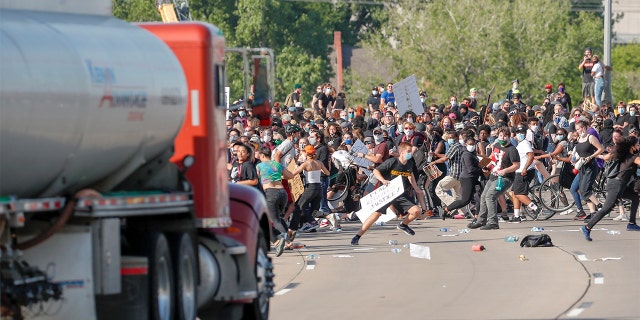
Hours earlier, a semitrailer sped toward a crowd of people protesting on an interstate bridge in a harrowing series of events, forcing the protesters to run for safety.

A tanker truck drives into thousands of protesters marching on 35W north bound highway during a protest against the death in Minneapolis police custody of George Floyd, in Minneapolis, Minnesota, U.S. May 31, 2020. (REUTERS/Eric Miller)
The driver was later identified by the Hennepin County Sheriff’s Office as Bogdan Vechirko, according to Fox 9. Police said he’s being held on suspicion of assault.
Los Angeles, Calif.

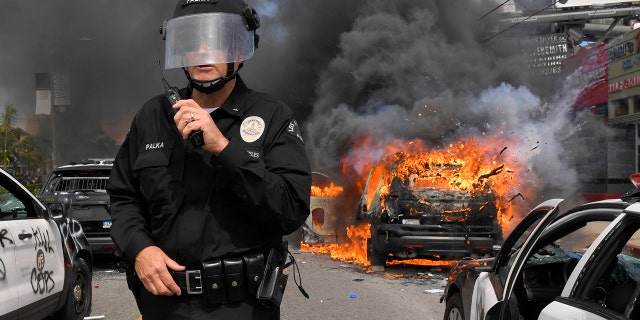
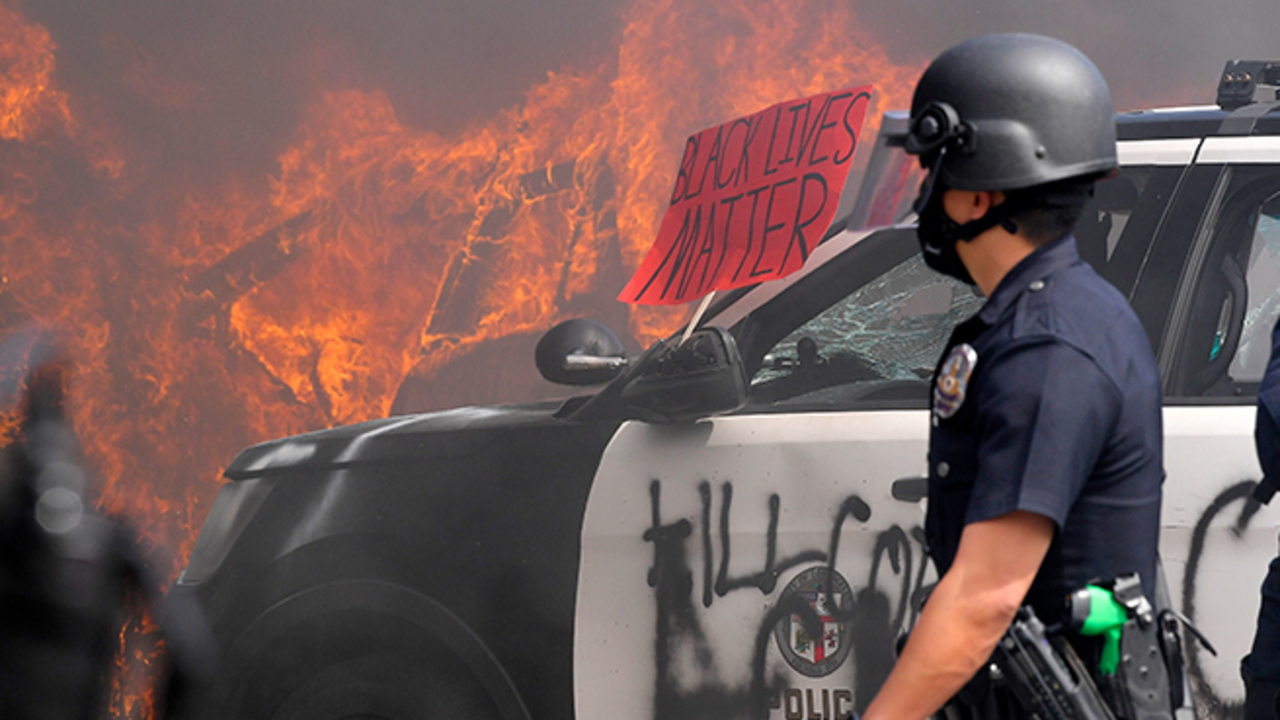
Los Angeles Police Department commander Cory Palka stands among several destroyed police cars as one explodes while on fire during a protest over the death of George Floyd, Saturday, May 30, 2020, in Los Angeles. (AP Photo/Mark J. Terrill)
Protests in Los Angeles began two days after Floyd’s death, with dozens temporarily blocking Highway 101. The demonstrations turned violent in the days after and lasted through the weekend.
On Saturday morning, police worked to disperse crowds in downtown Los Angeles as multiple businesses were looted. Hundreds were reportedly arrested, and at least five police officers were injured, multiple media outlets reported.
By later in the day, Los Angeles Mayor Eric Garcetti imposed a rare citywide curfew and called in the National Guard after demonstrators clashed repeatedly with officers, torched police vehicles, and pillaged businesses in a popular shopping district.
Garcetti said Saturday he asked Gov. Gavin Newsom for 500 to 700 members of the Guard to assist the 10,000 Los Angeles Police Department officers.
Garcetti said the soldiers would be deployed “to support our local response to maintain peace and safety on the streets of our city.”
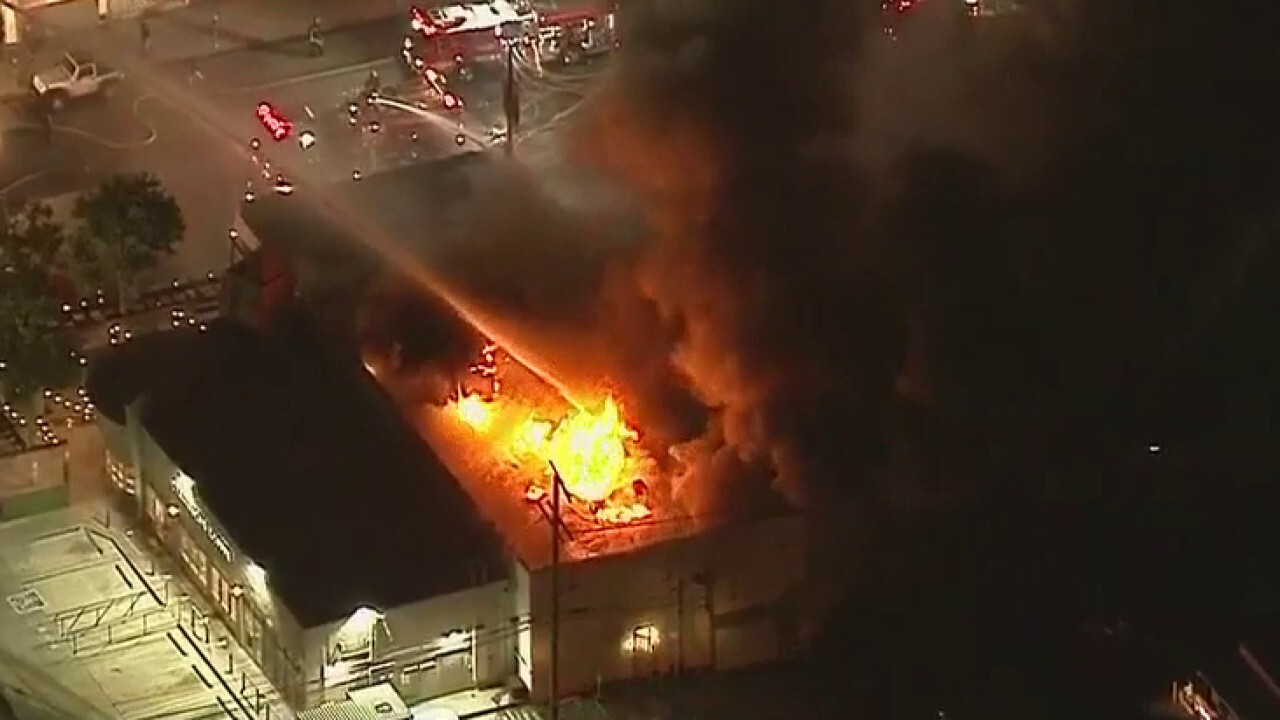
Firefighters responded to dozens of fires, and scores of businesses were damaged.

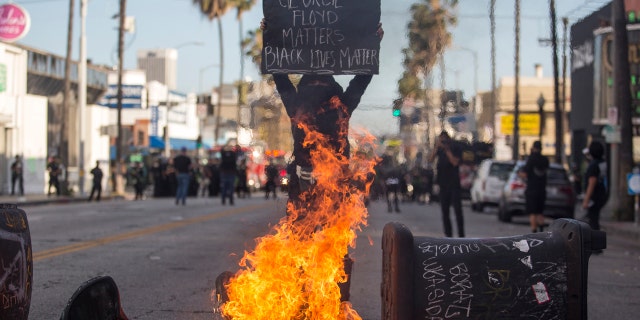
A protester holding a sign stands behind the burning trash cans during a protest over the death of George Floyd, a handcuffed black man in police custody in Minneapolis, in Los Angeles, Saturday, May 30, 2020. (AP Photo/Ringo H.W. Chiu)
“If you’re in pain, I feel that pain. If you’re angry, I get it. But this has moved from a being a protest, to vandalism to destruction, and nobody should be out there making a mistake,” Garcetti told FOX11.

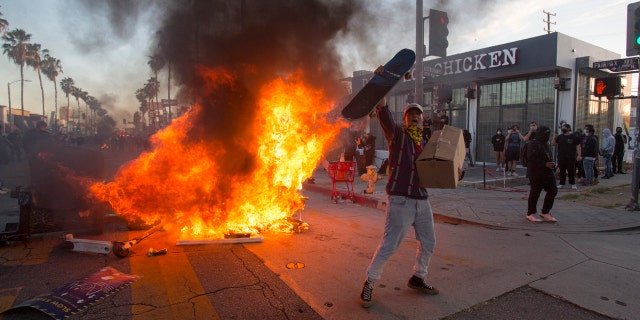
A protester shouts in front of a fire during a protest over the death of George Floyd, a handcuffed black man in police custody in Minneapolis, in Los Angeles, Saturday, May 30, 2020. (AP Photo/Ringo H.W. Chiu)
One of the hardest-hit areas was the area around the Grove, a popular high-end outdoor mall west of downtown where hundreds of protesters swarmed the area, showering police with rocks and other objects and vandalizing shops.

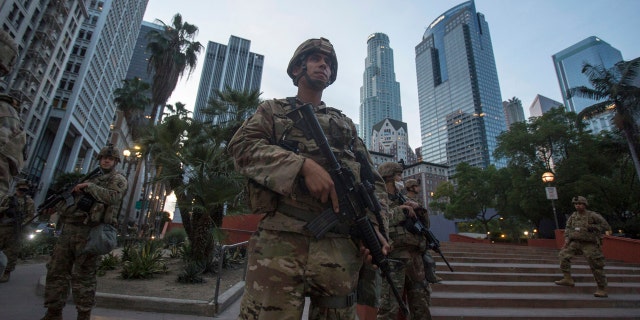
Members of California National Guard stand guard in Pershing Square, Sunday, May 31, 2020, in Los Angeles. (AP Photo/Ringo H.W. Chiu)
A countywide curfew was in effect Sunday night into Monday morning after another day of violence and destruction throughout parts of Los Angeles city and county, FOX11 reported.
The Los Angeles Police Department estimated there were 398 arrests on Saturday night and Sunday morning related to the police protests.

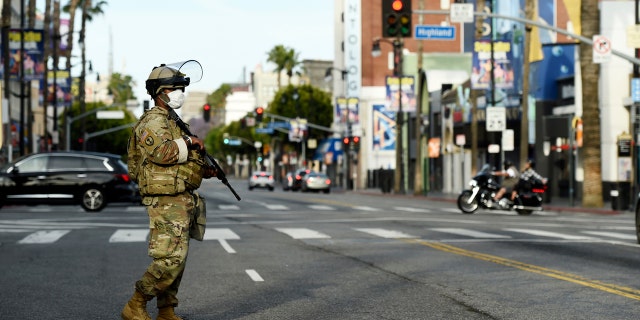
A U.S. National Guard soldier watches over Hollywood Blvd., Sunday, May 31, 2020, in Los Angeles. (AP Photo/Chris Pizzello)
During a press conference Sunday afternoon, LAPD Chief Michel Moore said at least five officers were injured with two being hospitalized. One officer was hit on the head with a brick and suffered a fractured skull but is expected to recover, according to Moore.
The scale of the destruction in Los Angeles was being compared to the 1992 riots when there was more than $1 billion in property damage. There was no estimate of how many businesses suffered damage since protests began Wednesday, but it was clearly extensive.
New York, N.Y.

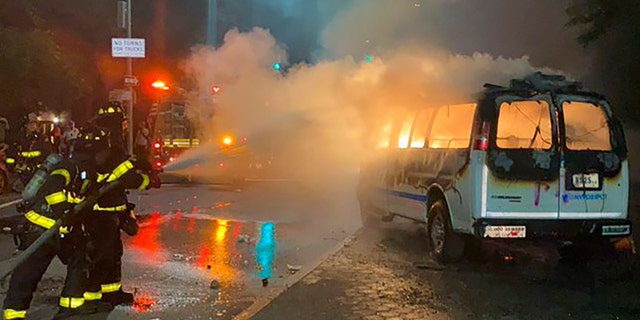
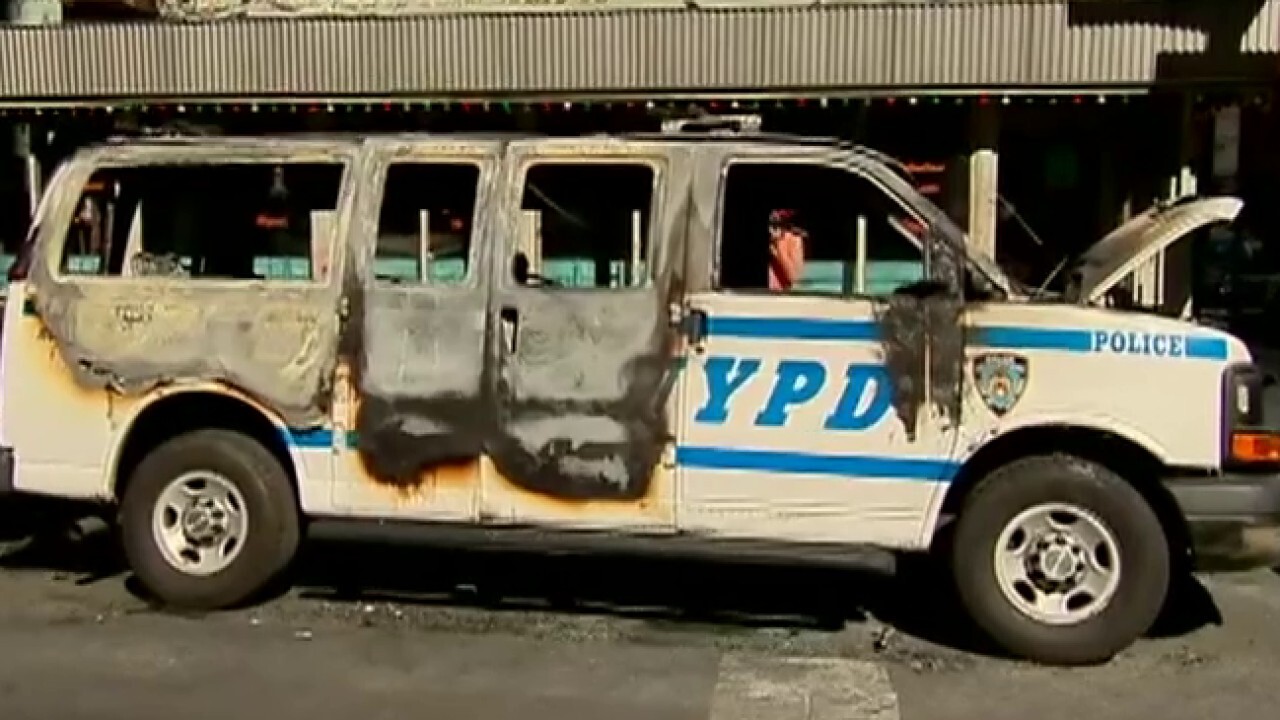
In this photo provided by Khadijah, firefighters work to contain the flames from a New York City Police Department van ablaze, Friday, May 29, 2020, in the Brooklyn borough of New York, amid a protest of the death of George Floyd in police custody on Memorial Day in Minneapolis. (Khadijah via AP)
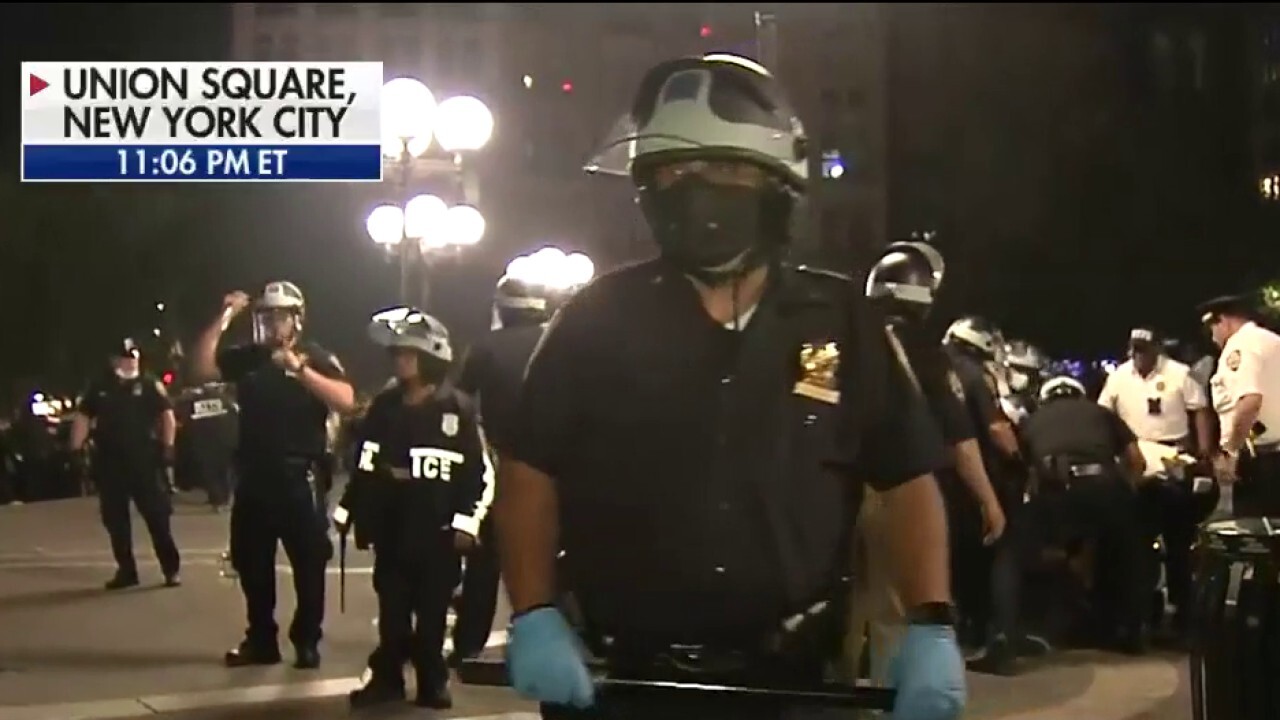
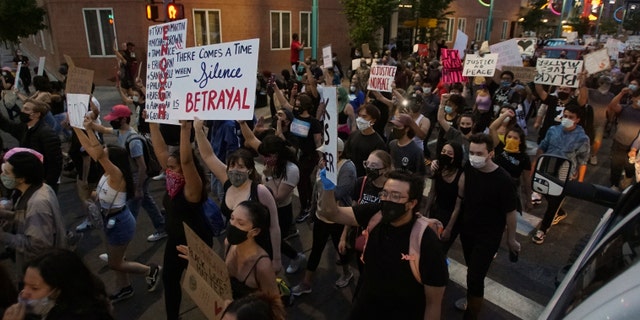
Demonstrators took to New York City streets in protest of Floyd’s death and invoked the names of other black people who died at police hands. Street protests have spiraledinto some of the worst unrest the nation’s largest city has seen in decades.
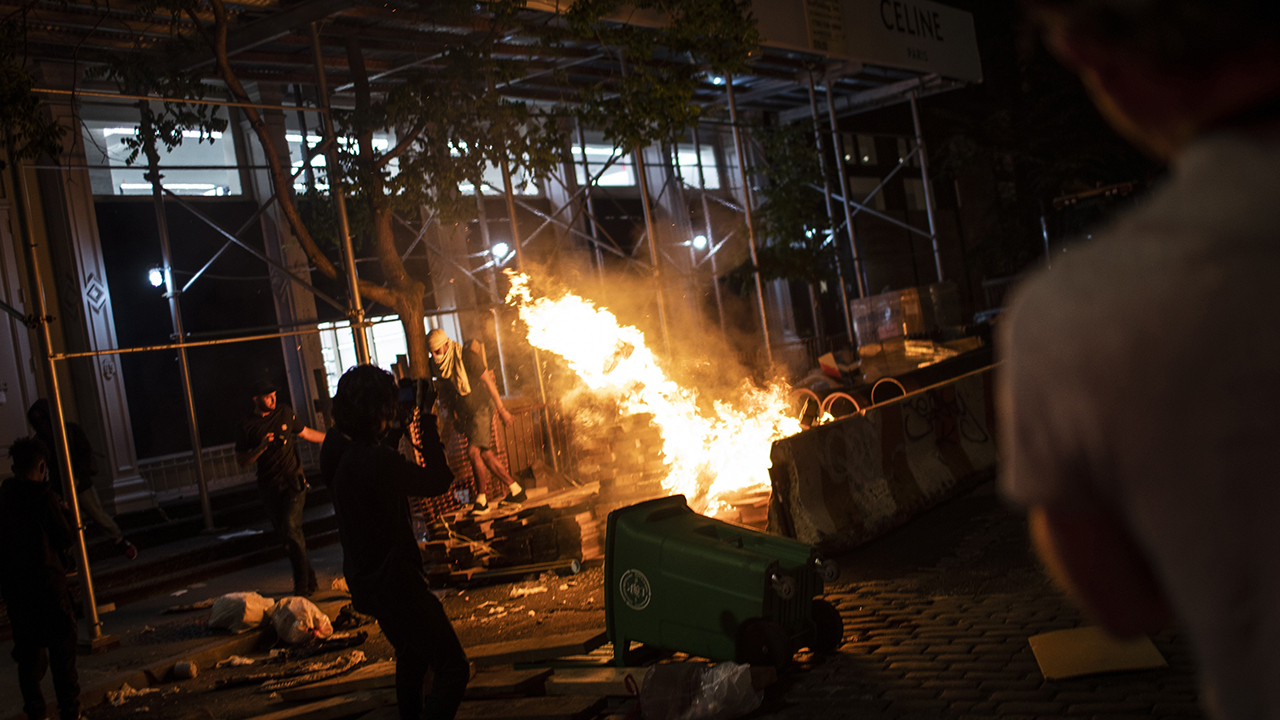
Fires burned, windows got smashed and dangerous confrontations between demonstrators and officers flared Friday and Saturday amid crowds of thousands decrying police killings.

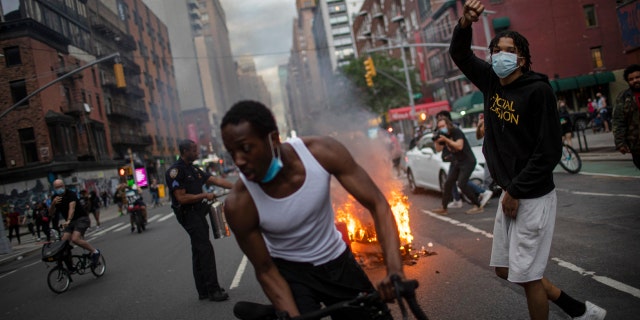
Protesters march down the street as trash burns in the background during a solidarity rally for George Floyd, Saturday, May 30, 2020, in New York. (AP Photo/Wong Maye-E)
The names of black people killed by police, including Floyd and Eric Garner, killed on Staten Island in 2014, were on signs carried by those in the crowd, and in their chants.
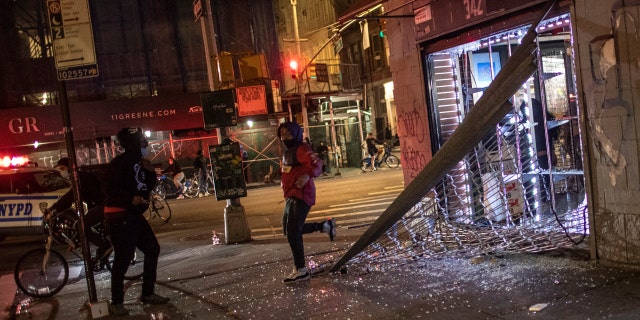
But as day turned into night, a handful of stores in Manhattan had their windows broken and merchandise stolen.
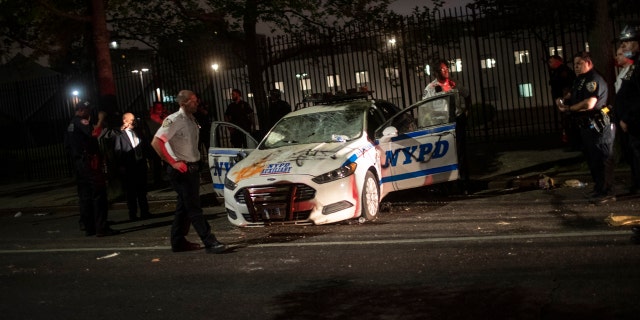
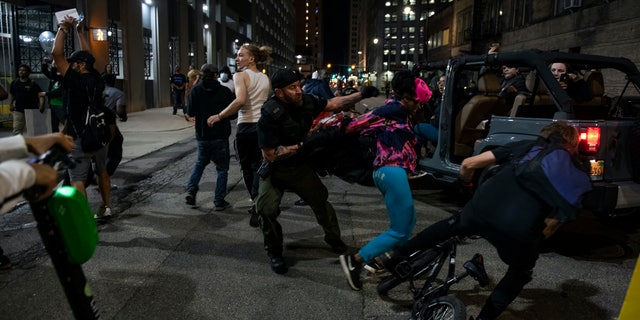
Officers sprayed crowds with chemicals, and video showed two police cruisers lurching into a crowd of demonstrators on a Brooklyn street, knocking several to the ground, after people attacked it with thrown objects, including something on fire. It was unclear whether anyone was hurt.
By Robert F. Kennedy Jr., Chairman, Children’s Health Defense
Vaccines, for Bill Gates, are a strategic philanthropy that feed his many vaccine-related businesses (including Microsoft’s ambition to control a global vaccination ID enterprise) and give him dictatorial control of global health policy.
Gates’ obsession with vaccines seems to be fueled by a conviction to save the world with technology.
Promising his share of $450 million of $1.2 billion to eradicate Polio, Gates took control of India’s National Technical Advisory Group on Immunization (NTAGI) which mandated up to 50 doses (Table 1) of polio vaccines through overlapping immunization programs to children before the age of five. Indian doctors blame the Gates campaign for a devastating non-polio acute flaccid paralysis (NPAFP) epidemic that paralyzed 490,000 children beyond expected rates between 2000 and 2017. In 2017, the Indian government dialed back Gates’ vaccine regimen and asked Gates and his vaccine policies to leave India. NPAFP rates dropped precipitously\
The most frightening [polio] epidemics in Congo, Afghanistan, and the Philippines, are all linked to vaccines.
In 2017, the World Health Organization (WHO) reluctantly admitted that the global explosion in polio is predominantly vaccine strain. The most frightening epidemics in Congo, Afghanistan, and the Philippines, are all linked to vaccines. In fact, by 2018, 70% of global polio cases were vaccine strain.
In 2014, the Gates Foundation funded tests of experimental HPV vaccines, developed by Glaxo Smith Kline (GSK) and Merck, on 23,000 young girls in remote Indian provinces. Approximately 1,200 suffered severe side effects, including autoimmune and fertility disorders. Seven died. Indian government investigations charged that Gates-funded researchers committed pervasive ethical violations: pressuring vulnerable village girls into the trial, bullying parents, forging consent forms, and refusing medical care to the injured girls. The case is now in the country’s Supreme Court.
In 2010, the Gates Foundation funded a phase 3 trial of GSK’s experimental malaria vaccine, killing 151 African infants and causing serious adverse effects including paralysis, seizure, and febrile convulsions to 1,048 of the 5,949 children.
During Gates’ 2002 MenAfriVac campaign in Sub-Saharan Africa, Gates’ operatives forcibly vaccinated thousands of African children against meningitis. Approximately 50 of the 500 children vaccinated developed paralysis. South African newspapers complained, “We are guinea pigs for the drug makers.” Nelson Mandela’s former Senior Economist, Professor Patrick Bond, describes Gates’ philanthropic practices as “ruthless and immoral.”
In 2010, Gates committed $10 billion to the WHO saying, “We must make this the decade of vaccines.” A month later, Gates said in a Ted Talk that new vaccines “could reduce population”. In 2014, Kenya’s Catholic Doctors Association accused the WHO of chemically sterilizing millions of unwilling Kenyan women with a “tetanus” vaccine campaign. Independent labs found a sterility formula in every vaccine tested. After denying the charges, WHO finally admitted it had been developing the sterility vaccines for over a decade. Similar accusations came from Tanzania, Nicaragua, Mexico, and the Philippines.
A 2017 study (Morgenson et. al. 2017) showed that WHO’s popular DTP vaccine is killing more African children than the diseases it prevents. DTP-vaccinated girls suffered 10x the death rate of children who had not yet received the vaccine. WHO has refused to recall the lethal vaccine which it forces upon tens of millions of African children annually.
Global public health advocates around the world accuse Gates of steering WHO’s agenda away from the projects that are proven to curb infectious diseases: clean water, hygiene, nutrition, and economic development. The Gates Foundation only spends about $650 million of its $5 billion dollar budget on these areas. They say he has diverted agency resources to serve his personal philosophy that good health only comes in a syringe.
In addition to using his philanthropy to control WHO, UNICEF, GAVI, and PATH, Gates funds a private pharmaceutical company that manufactures vaccines, and additionally is donating $50 million to 12 pharmaceutical companies to speed up development of a coronavirus vaccine. In his recent media appearances, Gates appears confident that the Covid-19 crisis will now give him the opportunity to force his dictatorial vaccine programs on American children.
Source: Children’s Health Defense
Sponsored by 44 House Democrats insuring that criminals can move to the USA with impunity at U.S. taxpayer expense. This is the most horrendous piece of legislation ever proposed by the radical left/liberal cabal in the House of Representatives. This is treason and should be reckoned with. None or these sponsors have any business staying in the U.S. Congress for one more term.
Source: YouTube
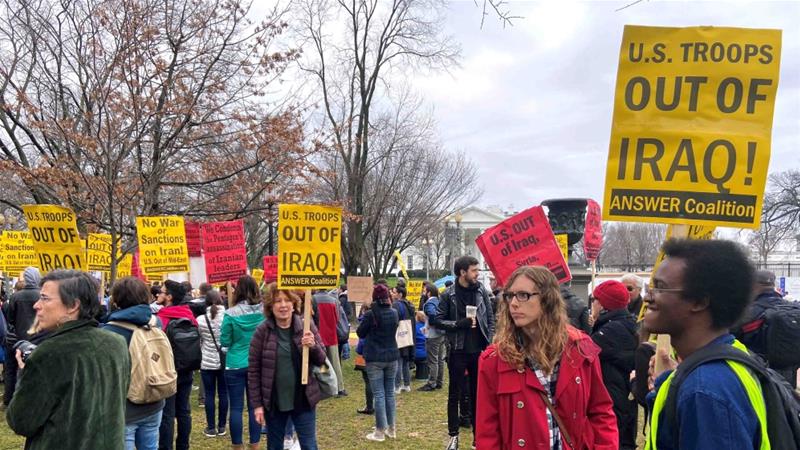
Johnny Liberty, Editor’s Note:Middle Eastern politics is extremely complicated, a tapestry of hatred, vengeance, and generally unneighborly violence that has been perpetuated for centuries. These young protesters with manufactured signs seem clueless as to what they’re protesting. ‘Tis a great party though. This article may shed some light and give the reader an interesting perspective.
By Malak Chabkoun
Immediately after news broke of the assassination of Iranian General Qassem Soleimani and Iraqi militia commander Abu Mahdi al-Muhandis, some left-wing circles in the West proclaimed with great confidence – yet again – that World War III was around the corner. Previously, these same warnings of global doom were evoked when US President Donald Trump ordered rather toothless strikes on empty military targets in Syria and escalated his rhetoric against North Korea’s Kim Jong Un.
And just as a world war did not break out on these previous occasions, it will not break out now either.
Much of the left in the West (the same ones who describe themselves as progressives) also viciously attacked people in the Middle East who celebrated the deaths of Soleimani and al-Muhandis. While it is wrong to praise Trump’s decision to assassinate the two commanders as a “noble deed”, framing what happened within the old, tired left-wing narrative of US imperialism erases the regional context and the suffering of millions of people in the Middle East at the hands of other powers.
Indeed, it is important to expose Trump’s recklessness and political opportunism, but it is inexcusable to ignore the crimes of Soleimani and al-Muhandis and those whom they served.
With an upcoming impeachment trial in the Senate, more Americans disapproving than approving of his presidency, and an election coming up, Trump is trying to cement his position in US politics and play to his base. His term has been marked by no clear domestic or foreign policy agendas, frequent golfing trips that prompt ethical questions about how federal dollars are being spent, and Twitter meltdowns that often do not have anything to do with reality. In short, when Trump ordered the assassinations, his presidency would not necessarily be described as successful.
While it is clear the US president was motivated by domestic considerations, in the aftermath of the attack, he claimed that he ordered it in the name of fighting global “terrorism” and that Soleimani’s assassination meant his reign of “terror” was over.
This rhetoric might help him improve his ratings in advance of his re-election bid in November, but it is simply a lie that Soleimani’s assassination will make the world a safer place. In fact, none of Trump’s interventions in the Middle East has been of any consequence to the security of the region, contrary to what many on the right have claimed.
People in Yemen, Iraq, Syria, Lebanon and elsewhere where Soleimani’s Quds Force has been active will continue to suffer the consequences of Iran’s foreign interference. Al-Muhandis’ death and the limited attacks the United States has carried out on the Popular Mobilisation Forces (PMFs) will not disband the militia, which is heavily entrenched in Iraq.
Similarly, the killing of Abu Bakr al-Baghdadi, the leader of the ISIL (ISIS) group did not make the region any safer from “terrorism”. ISIL attacks have continued, and Russia and the Syrian regime have also continued to use the excuse of “anti-terror operations” to step up their military campaigns against civilians opposed to Bashar al-Assad’s rule, killing hundreds and displacing hundreds of thousands.
Trump’s 2017 and 2018 air raids on Syrian regime targets did nothing to prevent the sustained campaign of extermination Damascus has led against its own population. They also did not result in World War III or war with Russia that some left-wing pundits were predicting on social media.
In fact, throughout his term, Trump has been playing both camps – the right-wing hawks and the left-wing “anti-war” crusaders – with his constant shift of rhetoric between withdrawal and disengagement from the Middle East and aggressive action.
He “pulled out” of Syria, but sent back troops to “guard the oil”. He promised tough action on Iran after attacks in the Gulf but did not retaliate the way his allies wanted.
It is about time that both sides admit Trump makes domestic and foreign policy decisions based on his ego and what suits him, not based on standing up for “our people” or some diabolic imperialistic plot.
The assassinations of Soleimani and al-Muhandis gave some Middle East residents a sense of relief that they have finally been rid of two militia commanders who have brought much suffering to their communities.
But when Syrians, Iraqis, Yemenis and other Arabs posted celebratory comments on the assassinations of two commanders they perceive as war criminals, Iran’s defenders immediately criticised these people, resorting to insisting they didn’t know anything about their own countries, claiming they are pro-imperialism.
In so doing, these self-identified leftists and “anti-war” activists once again downplayed the deaths of hundreds of thousands of people in the region. For them, the only civilian deaths that can be acknowledged are those caused by the military intervention of the US, Israel or their allies.
However, it is hard to cover up the crimes Iran and its regional proxies have committed over the past 10 years. Iran has backed and even advised on the brutal crackdown by the Syrian regime on opposition protests and later the mass killing of civilians through areal bombardment and merciless sieges; it has also sent Afghan refugee children to fight on its behalf in Syria. It has sent military equipment and personnel to the Houthis in Yemen, who just like their enemies, the Saudis and the Emiratis, have been accused of committing war crimes in the Yemeni conflict. In Iraq, they have supported and directed militias which have committed various crimes against Iraqi civilians.
In this sense, it is hardly surprising that Syrians who have gone through the trauma of losing friends and family in the siege of Aleppo and the insult of seeing images of Soleimani marching through their city (which they may never be able to return to) are celebrating his demise. It is also hardly surprising that Iraqi protesters, who have had to drag the bodies of friends shot in the head with Iranian military-grade gas grenades during attacks by Iranian-backed militias on their demonstrations, would now be cheering the demise of al-Muhandis who had been accused of directing the crackdown.
These same left-wing people who proclaim concern about foreign intervention, refuse to acknowledge the Iranian intervention in Syria, Yemen and Iraq when the people of those countries rebelled against authoritarianism, corruption, sectarianism, and socioeconomic collapse. When protests broke out in 2018 and 2019 in Iran against the Iranian authorities, they once again framed them in the foreign-sponsored regime-change narrative.
The constant need to defend the Iranian government, even against the protests of Iranian people who have suffered under this government, is an exercise in mental gymnastics. This is the same left-wing segment that equates criticism of Iran with being an ally of Israel, which is highly problematic given Iran and Israel are committing the same crimes in the Middle East.
There has been much noise about US’s breach of Iraqi sovereignty, but there has been little said of Iranian and Russian actions violating sovereignty in the region. The constant presence of Soleimani in Iraq to issue orders to Iraqi officials and forces is just one of many signs of Iran’s lack of respect for Iraq’s sovereignty. By the admission of these same leftists, Soleimani was intervening in Iraq to “fight” US intervention.
In Syria, what these self-proclaimed anti-war activists see as Iranian and Russian deployment at the invitation of a legitimate president, Syrians see as an occupation allowed by a dictator who they never elected in free and fair elections.
The debate around Soleimani and al-Muhandis’ assassinations has served to illustrate, once again, the inconsistent perception by a segment of the “progressive” left of what constitutes “imperialism”. They readily brand US and Israeli actions as imperialist; yet aggression by others – whether Russia, China, Iran or their allies – which causes equal damage and civilian deaths, is ignored, downplayed, or wrapped in “anti-terror” narratives (rather similar to the ones the US and Israel use).
Thus, US and Israeli attacks on the Iranian forces or the Assad regime have been decried as acts of imperialism while the mass killings of Syrian civilians by occupying powers Iran and Russia have been ignored, questioned or presented as “terrorist” deaths.
Criticising the US and Israel while ignoring the crimes of others, however, does no good for the people on the ground bearing the brunt of geopolitical battles between these global and regional powers. Crying “World War III is coming” every time the US engages in aggression also ignores the fact that millions of people in the Middle East and elsewhere, where US, Israeli and also Iranian, Russian and Chinese intervention have stirred conflict, are already living the realities of such a war.
Being truly anti-war would mean opposing aggression by all and condemning all those accused of war crimes – whether Qassem Soleimani or Eddie Gallagher.
Source: Al Jazeera
Editor’s Note: Indigenous nations are still seeking respect for the sovereignty of their lands stolen by military occupation and Treaties the United States did not honor. Here’s another action re: DAPL pipeline.
Cannon Ball, ND – This morning, at approximately 8am central, water protectors took back unceded territory affirmed in the 1851 Treaty of Ft. Laramie as sovereign land under the control of the Oceti Sakowin, erecting a frontline camp of several structures and tipis on Dakota Access property, just east of ND state highway 1806. This new established camp is 2.5 miles north of the Cannon Ball River, directly on the proposed path of the Dakota Access Pipeline (DAPL). This site is directly across the road from where DAPL security dogs attacked water protectors on September 3rd.
To ensure the protection of this new camp from overtly militarized law enforcement, water protectors have established three road blockades:
North of the Frontline Camp, on Highway 1806
South of the Cannon Ball River, on Highway 1806
And Immediately west of Highway 1806, on county road 134
Police have discharged weapons, using rubber bullets to shoot down drones being used to document the police activity and actions.
This frontline camp is located on the final three 3 miles of the proposed pipeline route, before it connects with the drill pad that will take the pipeline beneath the Missouri River. Active construction of the Dakota Access pipeline is 2 miles west of this frontline camp. Oceti Sakowin water protectors continue an on-going pledge to halt active construction as frequently as possible.
Mekasi Camp-Horinek, an Oceti Sakowin camp coordinator states, “Today, the Oceti Sakowin has enacted eminent domain on DAPL lands, claiming 1851 treaty rights. This is unceded land. Highway 1806 as of this point is blockaded. We will be occupying this land and staying here until this pipeline is permanently stopped. We need bodies and we need people who are trained in non-violent direct action. We are still staying non-violent and we are still staying peaceful.”
Joye Braun, Indigenous Environmental Network organizer states, “We have never ceded this land. If DAPL can go through and claim eminent domain on landowners and Native peoples on their own land, then we as sovereign nations can then declare eminent domain on our own aboriginal homeland. We are here to protect the burial sites here. Highway 1806 has become the no surrender line.”
Ladonna Bravebull Allard, Sacred Stone Camp, “We stand for the water, we stand on our treaties, we stand for unci maka- we stand and face the storm.”
Contact: LaDonna Allard (CSS), ladonnabrave1@aol.com, (701) 426-2064
Dallas Goldtooth (IEN), dallas@ienearth.org, 708-515-6158
Tara Houska (HTE), tara@honorearth.org, (612) 226-9404
Cody Hall (RWC), cody.hall.605@gmail.com, (605) 220-2531
Source: LR Inspire