What If Nestlé and Coke Had to Clean Up Their Own Plastic Pollution? | Organic Consumers Association

coca_cola_sprite_plastic_bottles_ice_1200x630By Julie Wilson

It’s great when consumers take responsibility for using less plastic, and for cleaning up plastic waste in their communities.

But wouldn’t it be better if the corporations that put all that plastic into the marketplace and environment had to take responsibility for cleaning it up?

TAKE ACTION! Tell Congress to Hold Plastic Polluters Accountable by Supporting the Break Free From Plastic Pollution Act of 2020!

Plastic waste—most of it from single-use processed food and drink packaging—contaminates our drinking water, soil, air and waterways, including the deepest parts of the ocean.

The Break Free From Plastic Act of 2020 aims to curb plastics pollution by shifting the responsibility from consumers to the companies that produce plastic.

The bill, introduced by Sen. Tom Udall (D-N.M.) and Rep. Alan Lowenthal (D-Calif.), would hold major plastic polluters, such as Nestlé, PepsiCo and Coca-Cola, accountable for their pollution by requiring them to finance waste and recycling programs.

The Break Free From Plastic Act would also place an all-out ban on certain single-use plastics that are non-recyclable, and prohibit plastic waste from being shipped overseas to developing countries.

Plastic pollution is so rampant in our oceans that scientists predict the sea will contain more plastic than fish by the year 2050.  It also pollutes soil and freshwater.

Tiny bits of plastic or microplastic are contaminating humans, too. The average person eats at least 50,000 particles of microplastic each year—and we inhale a similar amount—studies show.

Consumers should shop responsibly, sure. But it’s time we held the biggest plastic polluters responsible for the damage they cause to the environment and human health.

TAKE ACTION! Tell Congress to Hold Plastic Polluters Accountable by Supporting the Break Free From Plastic Pollution Act of 2020!

Source: Organic Consumers Association

Four lessons from the biggest riots in decades | Sovereign Man

Editor’s Note: When stupid people take to the streets and cause reckless destruction everybody pays the price. Don’t let these radical fools destroy well-being for the rest of us because they’re angry, because they don’t like something, because they are do-nothing complainers. It’s everybody’s responsibility to cool down the flames of discontent and find meaningful ways to solve social, economic and political problems without resorting to violence. Martin Luther King would be ashamed of such violence!

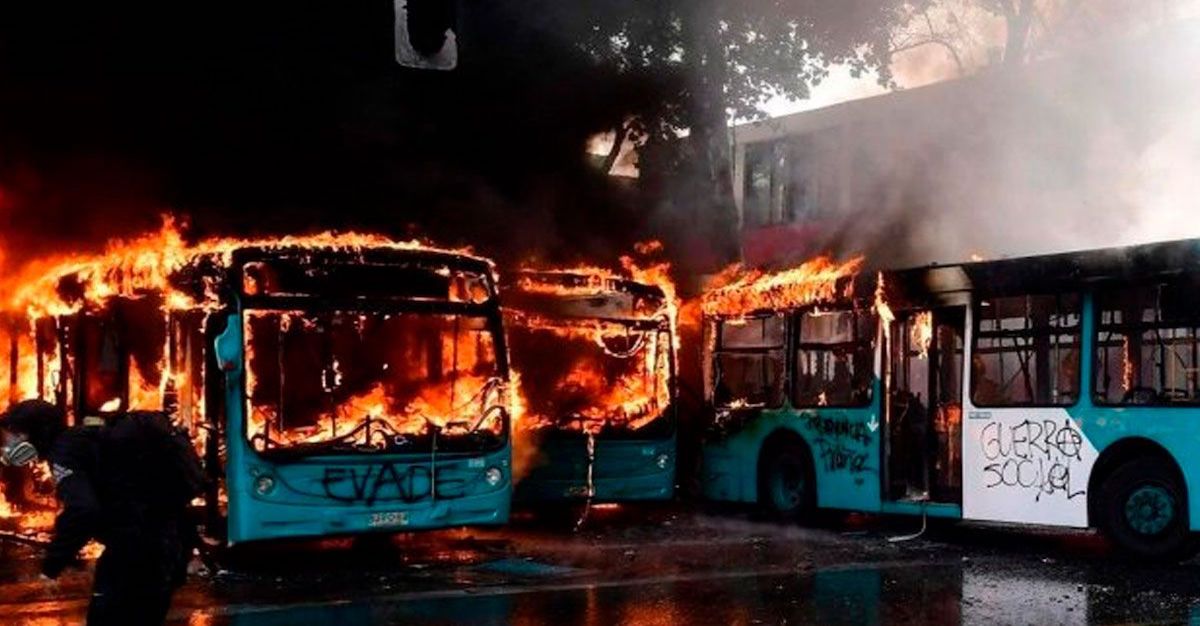
If you’re been following the news, you might have seen reports about civil unrest in Chile– the worst in decades.

I lived in Chile for more than seven years before moving to Puerto Rico; I still have business interests there, along with hundreds of employees (both foreign and local), many of whom I’ve been speaking to over the last few days.

First things first, Chile is ordinarily a quiet, stable, peaceful country.

The last time Chile went to war was 140 years ago back in 1879. They even skipped both world wars.

And while there are occasional protests, Chile is quite tame by Latin American standards.

It’s also the most modern and advanced nation in the region– this is not a destitute, impoverished country.

Chile has thriving industries and a large middle class that’s in better shape than just about anywhere else in the region.

But just like every other country in the world, there are countless imperfections.

Inflation has eaten away at the purchasing power of workers’ incomes, and a lot of people are struggling to make ends meet.

The proverbial straw that broke the camel’s back was a 3% increase in metro fares.

It’s nothing. But it was enough to make thousands of people become completely unglued, resulting in riots, looting, arson, and all-out mayhem.

Let’s talk about some of the key lessons from this:

1) It can happen anywhere.

It’s not just Chile. Looking around the world right now we can see major demonstrations and even violence in places like Hong Kong, Spain, Haiti, Lebanon, etc.

The ‘yellow vest’ movement in France in late 2018/early 2019 brought hundreds of thousands of people out into the streets to torch cars and destroy property, all apparently in protest of rising fuel prices.

Political tensions, social tensions, economic tensions… they exist everywhere, in rich countries and poor countries alike.

People everywhere are tightly wound, and it doesn’t take much for them to become unhinged. If you think this can’t happen where you live, think again.

2) It can happen faster than anyone realizes.

The weather in central Chile is one of the great benefits of living there; it’s warm, sunny, and dry… southern California climate.

And this past Friday was a particularly beautiful day. By lunchtime, people were out in the parks enjoying the weather. It was calm, peaceful, and joyful.

Within a matter of hours the city had turned into a war zone. Hours.

One of my team members told me on the phone yesterday, “If you had said on Friday afternoon that Santiago would be in chaos by nightfall, I would have laughed… And then it happened.”

3) It only takes a few idiots.

There are roughly 18 million people living in Chile. And there may even be a few million people nationwide who are deeply frustrated about the rising cost of living.

But only a few thousand have been stupid enough to cause such chaos and devastation; they’ve destroyed dozens of metro stations, buses, and even lit office buildings and grocery stores on fire.

Innocent people have died. And almost everyone else has had their lives heavily disrupted.

They can’t get to work. Schools are closed. Grocery store lines are crazy. There’s a curfew. Tanks are in the streets.

Most people are rational and peaceful. They might be angry about certain issues, but they know that torching property and killing innocents won’t solve anything.
Only a trivial fraction of a percent of the population are acting like cowards– the ones who steal a bunch of flat-screen televisions from the neighborhood electronics store before setting it on fire.

And they’re selfish and delusional enough to believe in their own righteousness– that their actions are justified as payback because of some economic injustice.

Yeah. Because nothing proves your moral superiority more than looting flat-screen TVs.

4) They often think Socialism is the answer.

Human beings seem hardwired to think that they can solve any economic injustice with Socialism.

More often than not, people don’t even think through the issues. They feel symptoms– difficulty making ends meet, difficulty getting ahead in life, etc. and they get angry.

And that’s where the analysis stops. There is no analysis actually. It’s just anger.

A rational person thinks things through– why is my cost of living increasing? Why aren’t I getting ahead? What’s the root cause of these problems? How can I fix it?

Again, Chile isn’t perfect. Not by a long shot.

But think about the 18-year old kid taking selfie videos while lighting a grocery store on fire because he’s angry… angry that his education was sub-par, angry that he can’t find a good paying job.

And he’s partially right. Public education in Chile is pretty bad, and he doesn’t have the skills for a high-paying career.

But I wonder how many books he’s read this year? How many free online courses has he taken? What has he done to solve his own problem?

Instead of torching buildings, he could have been at home watching countless videos on YouTube learning how to code in Python. For free.

And in developing real, marketable skills, he would become much more valuable and able to command a substantial wage and work remotely for prospective clients and employers worldwide.

But the Socialist mentality is not about solving your own problems.

Socialism means that you don’t have to lift a finger (except to light a match).

You just have to throw a temper tantrum until someone else solves your problems… even if you can’t even define your problem or present a reasonable solution.

I don’t want to make light of the issues; there are several problems that protesters have bought up which I agree with. But neither Socialism nor burning buildings ever solved any problems.

It may take time, but Chile is undoubtedly going to recover from this nightmare and move on. The ‘sane’ population (i.e. the vast majority) is already fighting back and defending their neighborhoods.

Source: Sovereign Man
We Have No Reason to Believe 5G is Safe | Scientific American

By Joel Moskovitz

Editor’s Note: Science is allegedly the foundation for sound reasoning when it comes to evaluating the short and long-term benefits (and drawbacks) of any new technology, but in the case of 5G there is no reliable science to assure us of its safety. Quite the contrary, it’s being deployed globally without concern for the safety of those exposed.

The telecommunications industry and their experts have accused many scientists who have researched the effects of cell phone radiation of “fear mongering” over the advent of wireless technology’s 5G. Since much of our research is publicly-funded, we believe it is our ethical responsibility to inform the public about what the peer-reviewed scientific literature tells us about the health risks from wireless radiation.

The chairman of the Federal Communications Commission (FCC) recently announced through a press release that the commission will soon reaffirm the radio frequency radiation (RFR) exposure limits that the FCC adopted in the late 1990s. These limits are based upon a behavioral change in rats exposed to microwave radiation and were designed to protect us from short-term heating risks due to RFR exposure.

Yet, since the FCC adopted these limits based largely on research from the 1980s, the preponderance of peer-reviewed research, more than 500 studies, have found harmful biologic or health effects from exposure to RFR at intensities too low to cause significant heating.

Citing this large body of research, more than 240 scientists who have published peer-reviewed research on the biologic and health effects of nonionizing electromagnetic fields (EMF) signed the International EMF Scientist Appeal, which calls for stronger exposure limits. The appeal makes the following assertions:

“Numerous recent scientific publications have shown that EMF affects living organisms at levels well below most international and national guidelines. Effects include increased cancer risk, cellular stress, increase in harmful free radicals, genetic damages, structural and functional changes of the reproductive system, learning and memory deficits, neurological disorders, and negative impacts on general well-being in humans. Damage goes well beyond the human race, as there is growing evidence of harmful effects to both plant and animal life.”

The scientists who signed this appeal arguably constitute the majority of experts on the effects of nonionizing radiation. They have published more than 2,000 papers and letters on EMF in professional journals.

The FCC’s RFR exposure limits regulate the intensity of exposure, taking into account the frequency of the carrier waves, but ignore the signaling properties of the RFR. Along with the patterning and duration of exposures, certain characteristics of the signal (e.g., pulsing, polarization)increase the biologic and health impacts of the exposure. New exposure limits are needed which account for these differential effects. Moreover, these limits should be based on a biological effect, not a change in a laboratory rat’s behavior.

The World Health Organization’s International Agency for Research on Cancer (IARC) classified RFR as “possibly carcinogenic to humans” in 2011. Last year, a $30 million study conducted by the U.S. National Toxicology Program (NTP) found “clear evidence” that two years of exposure to cell phone RFR increased cancer in male rats and damaged DNA in rats and mice of both sexes. The Ramazzini Institute in Italy replicated the key finding of the NTP using a different carrier frequency and much weaker exposure to cell phone radiation over the life of the rats.

Based upon the research published since 2011, including human and animal studies and mechanistic data, the IARC has recently prioritized RFR to be reviewed again in the next five years. Since many EMF scientists believe we now have sufficient evidence to consider RFR as either a probable or known human carcinogen, the IARC will likely upgrade the carcinogenic potential of RFR in the near future.

Nonetheless, without conducting a formal risk assessment or a systematic review of the research on RFR health effects, the FDA recently reaffirmed the FCC’s 1996 exposure limits in a letter to the FCC, stating that the agency had “concluded that no changes to the current standards are warranted at this time,” and that “NTP’s experimental findings should not be applied to human cell phone usage.” The letter stated that “the available scientific evidence to date does not support adverse health effects in humans due to exposures at or under the current limits.”

The latest cellular technology, 5G, will employ millimeter waves for the first time in addition to microwaves that have been in use for older cellular technologies, 2G through 4G. Given limited reach, 5G will require cell antennas every 100 to 200 meters, exposing many people to millimeter wave radiation. 5G also employs new technologies (e.g., active antennas capable of beam-forming; phased arrays; massive multiple inputs and outputs, known as massive MIMO) which pose unique challenges for measuring exposures.

Millimeter waves are mostly absorbed within a few millimeters of human skin and in the surface layers of the cornea. Short-term exposure can have adverse physiological effects in the peripheral nervous system, the immune system and the cardiovascular system. The research suggests that long-term exposure may pose health risks to the skin (e.g., melanoma), the eyes (e.g., ocular melanoma) and the testes (e.g., sterility).

Since 5G is a new technology, there is no research on health effects, so we are “flying blind” to quote a U.S. senator. However, we have considerable evidence about the harmful effects of 2G and 3G. Little is known the effects of exposure to 4G, a 10-year-old technology, because governments have been remiss in funding this research. Meanwhile, we are seeing increases in certain types of head and neck tumors in tumor registries, which may be at least partially attributable to the proliferation of cell phone radiation. These increases are consistent with results from case-control studies of tumor risk in heavy cell phone users.

5G will not replace 4G; it will accompany 4G for the near future and possibly over the long term. If there are synergistic effects from simultaneous exposures to multiple types of RFR, our overall risk of harm from RFR may increase substantially. Cancer is not the only risk as there is considerable evidence that RFR causes neurological disorders and reproductive harm, likely due to oxidative stress.

As a society, should we invest hundreds of billions of dollars deploying 5G, a cellular technology that requires the installation of 800,000 or more new cell antenna sites in the U.S. close to where we live, work and play?

Instead, we should support the recommendations of the 250 scientists and medical doctors who signed the 5G Appeal that calls for an immediate moratorium on the deployment of 5G and demand that our government fund the research needed to adopt biologically based exposure limits that protect our health and safety.

Source: Scientific American

President Trump’s $4 Trillion Debt Increase | Committee for a Responsible Federal Budget

Editor’s Note: Take note that continued federal deficit spending will land the United States corporation in an irreversible bankruptcy before 2029 when It would bring total debt to about 97 percent of Gross Domestic Product (GDP). That means the US would owe the Federal Reserve almost 100% of the GDP for the entire year (plus interest). 

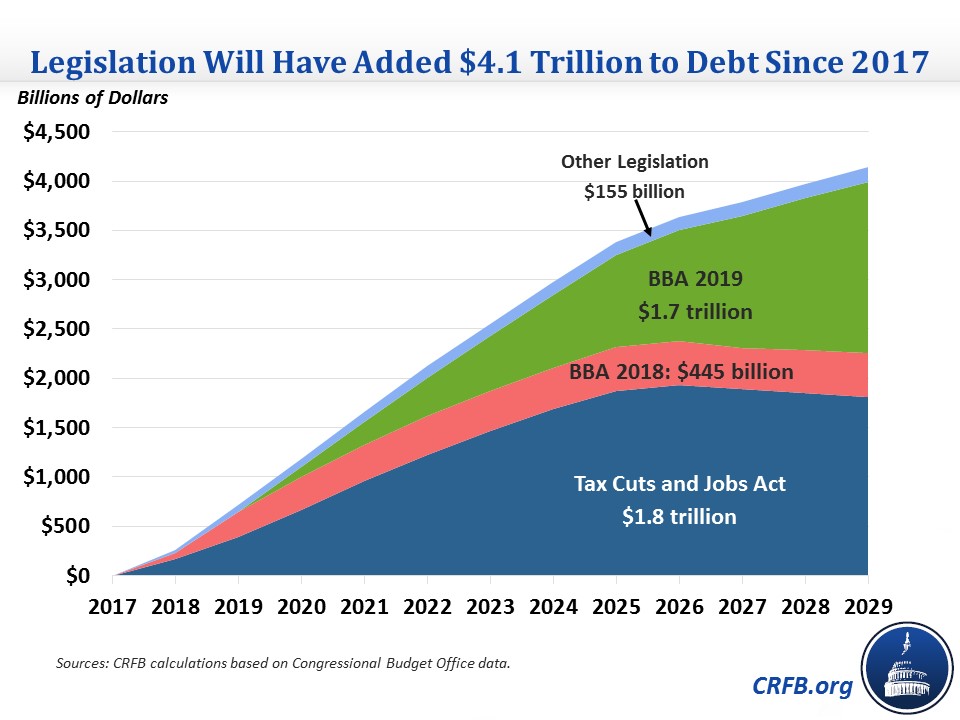
If the recent budget deal is signed into law, it will be the third major piece of deficit-financed legislation in President Trump’s term. In total, we estimate legislation signed by the President will have added $4.1 trillion to the debt between 2017 and 2029. Over a traditional ten-year budget window, the President will have added $3.4 to $3.8 trillion to the debt. The source of the debt expansion is split relatively evenly between tax and spending policy.

The Tax Cuts and Jobs Act (TCJA) was the single largest contributor to the $4.1 trillion figure, increasing debt by $1.8 trillion through 2029 (more than the entire cost is through 2027). This number could easily climb higher if lawmakers extend the individual tax cuts that are set to expire after 2025, which would add another $1 trillion to the debt.

The Bipartisan Budget Act (BBA) of 2018 was nearly as costly on an annual basis, adding nearly $450 billion to the debt due to its two-year nature. However, the Bipartisan Budget Act of 2019 would effectively make the increases in the BBA 2018 permanent, and in doing so, add another $1.7 trillion to the debt through 2029.

Smaller pieces of legislation are responsible for nearly $150 billion of debt. This includes several different bills containing disaster relief or emergency spending and continued delays of three Affordable Care Act (ACA) taxes, among other bills.

This analysis does not include the fiscal impact of many executive actions taken by the President, some which would increase deficits and others which would reduce them. It also assumes that temporary policies expire as scheduled.

If we evaluate the debt added over the standard ten-year window the Congressional Budget Office (CBO) uses, the numbers are similar but slightly smaller. Using the ten-year period (2018-2027) employed in 2017, lawmakers have added $3.8 trillion to deficits. Using the current ten-year period of 2020-2029, the debt increase is $3.4 trillion. Debt added is lower in the later period because some of the laws, like the TCJA and 2018 BBA, had larger short-term, rather than long-term, costs.

Debt Added Since 2017 Over Different Periods

Legislation 2018-2027 Cost 2020-2029 Cost 2017-2029 Cost
Tax Cuts and Jobs Act $1.9 trillion $1.4 trillion $1.8 trillion
Bipartisan Budget Act of 2019 $1.3 trillion $1.7 trillion $1.7 trillion
Bipartisan Budget Act of 2018 $420 billion $190 billion $445 billion
Other Legislation $140 billion $90 billion $155 billion
Total $3.8 trillion $3.4 trillion $4.1 trillion

Source: CRFB calculations based on Congressional Budget Office data.

Importantly, the $4.1 trillion of debt signed into law by President Trump is on top of the $16.2 trillion we already owe and the $9.8 trillion we were projected to borrow over the next decade absent these proposals. It would bring debt to about 97 percent of Gross Domestic Product (GDP) in 2029, compared to 84 percent if no debt-increasing legislation had been passed.

To avoid the huge run-up in debt that is projected in the coming decades, lawmakers should reject unpaid-for spending increases, pay for the tax bill, and address the rising costs and looming insolvency of our nation’s largest health and retirement programs.

Source: Committee for a Responsible Federal Budget

Fake news is real — Artificial Intelligence is going to make it much worse | CNBC

“The Boy Who Cried Wolf” has long been a staple on nursery room shelves for a reason: It teaches kids that joking too much about a possible threat may turn people ignorant when the threat becomes an actual danger.

President Donald Trump has been warning about “fake news” throughout his entire political career putting a dark cloud over the journalism professional. And now the real wolf might be just around the corner that industry experts should be alarmed about.

The threat is called “deepfaking,” a product of AI and machine learning advancements that allows high-tech computers to produce completely false yet remarkably realistic videos depicting events that never happened or people saying things they never said. A viral video starring Jordan Peele and “Barack Obama” warned against this technology in 2018, but the message was not enough to keep Jim Carrey from starring in “The Shining” earlier this week.

The danger goes far beyond manipulating 1980s thrillers. Deepfake technology is allowing organizations that produce fake news to augment their “reporting” with seemingly legitimate videos, blurring the line between reality and fiction like never before — and placing the reputation of journalists and the media at greater risk.

Ben Zhao, a computer science professor at the University of Chicago, thinks the age of getting news on social media makes consumers very susceptible to this sort of manipulation.

“What the last couple years has shown is basically fake news is quite compelling even in [the] absence of actual proof. … So the bar is low,” Zhao said.

The bar to produce a convincing doctored video is lower than people might assume.

Earlier this year a clip purporting to show Democratic leader Nancy Pelosi slurring her words when speaking to the press was shared widely on social media, including at one point by Trump’s attorney Rudy Giuliani. However, closer inspection revealed that the video had been slowed to 75% of its normal speed to achieve this slurring effect, according to the Washington Post. Even with the real video now widely accessible, Hany Farid, a professor at UC Berkeley’s School of Information and a digital forensics expert, said he still regularly receives emails from people insisting the slowed video is the legitimate one.

“Even in these relatively simple cases, we are struggling to sort of set the record straight,” Farid said.

It would take a significant amount of expertise for a fake news outlet to produce a completely fabricated video of Oprah Winfrey endorsing Trump, but researchers say the technology is improving every day. At the University of Washington, computer vision researchers are developing this technology for positive, or at least benign, uses like making video conferencing more realistic and letting students talk to famous historical figures. But this research also leads to questions about potential dangers, as the attempts made by attackers are expected to continually improve.

How to detect a deepfake

To make one of these fake videos, computers digest thousands of still images of a subject to help researchers build a 3-D model of the person. This method has some limitations, according to Zhao, who noted the subjects in many deepfake videos today never blink, since almost all photographs are taken with a person’s eyes open.

However, Farid said these holes in the technology are being filled incredibly rapidly.

“If you asked me this question six months ago, I would’ve said, ‘Yeah, [the technology] is super cool, but there’s a lot of artifacts, and if you’re paying attention, you can probably tell that there’s something wrong,’” Farid said. “But I would say we are … quickly but surely getting to the point where the average person is going to have trouble distinguishing.”

In fact, Zhao said researchers believe the shortcomings that make deepfake videos look slightly off to the eye can readily be fixed with better technology and better hardware.

“The minute that someone says, ‘Here’s a research paper telling you about how to detect this kind of fake video,’ that is when the attackers look at the paper and say, ‘Thank you for pointing out my flaw. I will take that into account in my next-generation video, and I will go find enough input … so that the next generation of my video will not have the same problem,’” Zhao said.

“Once we live in an age where videos and images and audio can’t be trusted … well, then everything can be fake.” – Hany Farid, Professor at UC Berkeley’s School of Information

One of the more recent developments in this field is in generating speech for a video. To replicate a figure such as Trump’s voice, computers can now simply analyze hundreds of hours of him speaking. Then researchers can type out what they want Trump to say, and the computer will make it sound as if he actually said it. Facebook, Google and Microsoft have all more or less perfected this technology, according to Farid.

Manipulated videos of this sort aren’t exactly new — Forest Gump didn’t actually meet JFK, after all. However, Farid says this technology is hitting its stride, and that makes the danger new.

“To me the threat is not so much ‘Oh, there’s this new phenomenon called deepfakes,’” Farid said. “It’s the injection of that technology into an existing environment of mistrust, misinformation, social media, a highly polarized electorate, and now I think there’s a real sort of amplification factor because when you hear people say things, it raises the level of belief to a whole new level.”

The prospect of widespread availability of this technology is raising eyebrows, too. Tech-savvy hobbyists have long been using deepfakes to manufacture pornography, a consistent and comically predictable trend for new technology. But Zhao believes it is only a matter of time before the research-caliber technology gets packaged and released for mass-video manipulation in much broader contexts.

“At some point someone will basically take all these technologies and integrate and do the legwork to build a sort of fairly sophisticated single model, one-stop shop … and when that thing hits and becomes easily accessible to many, then I think you’ll see this becoming much more prevalent,” Zhao said. “And there’s nothing really stopping that right now.”

Facing a massive consumer trust issue

When this happens, the journalism industry is going to face a massive consumer trust issue, according to Zhao. He fears it will be hard for top-tier media outlets to distinguish a real video from a doctored one, let alone news consumers who haphazardly stumble across the video on Twitter.

“Once we live in an age where videos and images and audio can’t be trusted … well, then everything can be fake,” Farid said. “We can have different opinions, but we can’t have different facts. And I think that’s sort of the world we’re entering into when we can’t believe anything that we see.”

Zhao has spent a great deal of time speaking with prosecutors, judges — the legal profession is another sector where the implications are huge — reporters and other professors to get a sense for every nuance of the issue. However, despite his clear understanding of the danger deepfakes pose, he is still unsure of how news outlets will go about reacting to the threat.

“Certainly, I think what can happen is … there will be even less trust in sort of mainstream media, the main news outlets, legitimate journalists [that] sort of react and report real-time stories because there is a sense that anything that they have seen … could be in fact made up,” Zhao said.

Then it becomes a question of how the press deal with the disputes over reality.

“And if it’s someone’s word, an actual eyewitness’ word versus a video, which do you believe, and how do you as an organization go about verifying the authenticity or the illegitimacy of a particularly audio or video?” Zhao asked.

Defeating the deepfakes

Part of this solution may be found in the ledger technology that provides the digital infrastructure to support cryptocurrencies like bitcoin — the blockchain. Many industries are touting blockchain as a sort of technological Tylenol. Though few understand exactly how it works, many swear it will solve their problems.

Farid said companies like photo and video verification platform Truepic, to which he serves as an advisor, are using the blockchain to create and store digital signatures for authentically shot videos as they are being recorded, which makes them much easier to verify later. Both Zhao and Farid are hoping social platforms like Facebook and Twitter will then promote these videos that are verified as authentic over non-verified videos, helping to halt the spread of deepfakes.

“The person creating the fake always has the upper hand,” Farid said. “Playing defense is really, really hard. So I think in the end our goal is not to eliminate these things, but it’s to manage the threat.”

Until this happens, Zhao said the fight against genuinely fake news may not start on a ledger, but in stronger consumer awareness and journalists banding together to better verify sources through third parties.

“One of the hopes that I have for defeating this type of content is that people are just so inundated with news coverage and information about these types of videos that they become fundamentally much more skeptical about what a video means and they will look closer,” Zhao said. “There has to be that level of scrutiny by the consumer for us to have any chance of fighting back against this type of fake content.”

Nicholas Diakopoulos, assistant professor in Northwestern University’s School of Communication and expert on the future of journalism, said via email that the best solutions involve a mix of educational and sociotechnical advances.

“There are a variety of perceptual cues that can be tip-offs to a deepfake and we should be teaching those broadly to the public,” he said.

Diakopoulos has referenced Farid’s work on photo forensics among ideas outlined in an article he wrote for the Columbia Journalism Review last year. He also cited a research project called FaceForensics that uses machine learning to detect, with 98.1% accuracy, whether a video of a face is real. Another research technique under study: Blood flow in video of a person’s face can be analyzed in order to see if pixels periodically get redder when the heart pumps blood.

“On the sociotechnical side, we need to develop advanced forensics techniques that can help debunk synthesized media when put into the hands of trained professionals,” he told CNBC. “Rapid response teams of journalists should be trained and ready to use these tools during the 2020 elections so they can debunk disinformation as quickly as possible.”

Diakopoulos has studied the implications of deepfakes for the 2020 electionsspecifically. He also has written papers on how journalists need to think when “reporting in a machine reality.”

And he remains optimistic.

“If news organizations develop clear and transparent policies of their efforts using such tools to ensure the veracity of the content they publish, this should help buttress their trustworthiness. In an era when we can’t believe our eyes when we see something online, news organizations that are properly prepared, equipped and staffed are poised to become even more trusted sources of information.”

Source: CNBC