SPLC brands evangelical group that fights antisemitism as ‘hate group’ | WND

Editor’s Note: Twenty years ago I found myself (aka “Johnny Liberty” and many of our associates on the distinguished SPLC listed as a “hate group” because we were largely successful in teaching millions of people about sovereignty through our audio courses and offshore seminars. SPLC labeled us as part of their continuing “disinformation” campaign waged on behalf of deep state operatives who wish to destroy this constitutional Republic at all costs. Unfortunately, SPLC was hired to miseducate police officers all across America to harass “constitutionalists” and sovereign citizens.

The Southern Poverty Law Center (SPLC), once widely praised for fighting the KKK, has devolved into routinely slapping its “hate” label on groups that don’t align with its far-left values

With that in mind, there may be a silver lining in SPLC’s designation of Proclaiming Justice to the Nations as a hate group, said PJTN’s founder and president, Laurie Cardoza-Moore.

“If being pro-Israel and against antisemitism is now considered a hate crime, I will wear the SPLC listing as a badge of honor,” she said

But she said that placing her group “alongside bigots and Nazis minimizes the true meaning of hate.”

“In reality, PJTN is on the front lines and in the headlines of fighting against antisemitism on a daily basis.”

She vowed to continue “to fight hate through our thousands of PJTN Watchmen around the globe.”

“Our answer to this absurd listing will be to open more PJTN chapters in American and fight harder to have antisemitism defined and confronted throughout the free world,” Cardoza-Moore said.

She pointed to the irony of SPLC’s claim that PJTN is a “hate” group, since PJTN “exists to fight the world’s oldest hatred – antisemitism.”

“PJTN has gained wide international media acclaim as it encourages state legislators to act against antisemitism and BDS,” the organization’s statement said.

“However, the Southern Poverty Law Center seems to believe that being pro-Israel and against antisemitism is now a hate crime.”

Cardoza-Moore said the SPLC list “has become nothing short of a witch hunt against organizations that don’t share their extremist liberal worldview.”

“Sadly, many institutions still look to the once credible SPLC for advice on hate groups. We hope that being blacklisted will not impede upon our ability to continue defending the Jewish people and Israel against global antisemitism,” she said.

“We will not be marginalized or silenced because of our support for Israel and the Jewish people. This will only strengthen our resolve to work harder. We call upon all of our supporters to write to the SPLC and demand that they immediately remove PJTN from their nefarious list before they lose any credibility they still have as a credible watchdog.”

The organization was established to urge Christians to stand with their Jewish brethren and Israel against the global surge of anti-Semitism.

Cardoza-Moore, who serves as a special envoy to the United Nations, recently called on Christians to stand vigil outside synagogues during the Rosh Hashanah holidays for Jews.

Pointing to several acts of violence against synagogues, she said there is “no justification on earth for these heinous attacks and no American should feel unsafe in their house of worship.”

Source: WND

Citing 1851 Treaty, Water Protectors Establish Road Blockade and Expand Frontline #NoDAPL Camp | LR inspire

Editor’s Note: Indigenous nations are still seeking respect for the sovereignty of their lands stolen by military occupation and Treaties the United States did not honor. Here’s another action re: DAPL pipeline.

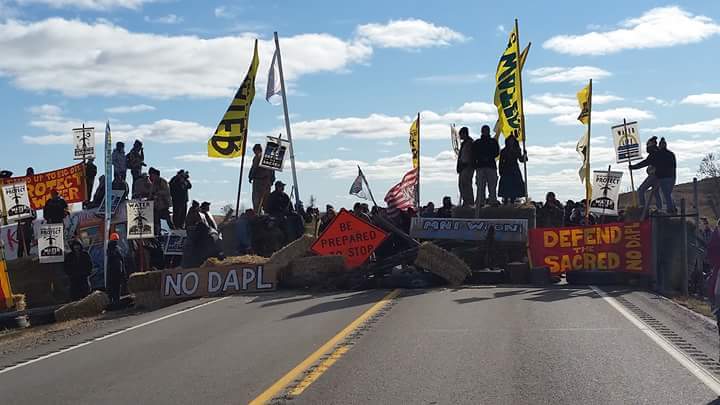
Cannon Ball, ND – This morning, at approximately 8am central, water protectors took back unceded territory affirmed in the 1851 Treaty of Ft. Laramie as sovereign land under the control of the Oceti Sakowin, erecting a frontline camp of several structures and tipis on Dakota Access property, just east of ND state highway 1806. This new established camp is 2.5 miles north of the Cannon Ball River, directly on the proposed path of the Dakota Access Pipeline (DAPL). This site is directly across the road from where DAPL security dogs attacked water protectors on September 3rd.

To ensure the protection of this new camp from overtly militarized law enforcement, water protectors have established three road blockades:

North of the Frontline Camp, on Highway 1806
South of the Cannon Ball River, on Highway 1806
And Immediately west of Highway 1806, on county road 134

Police have discharged weapons, using rubber bullets to shoot down drones being used to document the police activity and actions.

This frontline camp is located on the final three 3 miles of the proposed pipeline route, before it connects with the drill pad that will take the pipeline beneath the Missouri River. Active construction of the Dakota Access pipeline is 2 miles west of this frontline camp. Oceti Sakowin water protectors continue an on-going pledge to halt active construction as frequently as possible.

Mekasi Camp-Horinek, an Oceti Sakowin camp coordinator states, “Today, the Oceti Sakowin has enacted eminent domain on DAPL lands, claiming 1851 treaty rights. This is unceded land. Highway 1806 as of this point is blockaded. We will be occupying this land and staying here until this pipeline is permanently stopped. We need bodies and we need people who are trained in non-violent direct action. We are still staying non-violent and we are still staying peaceful.”

Joye Braun, Indigenous Environmental Network organizer states, “We have never ceded this land. If DAPL can go through and claim eminent domain on landowners and Native peoples on their own land, then we as sovereign nations can then declare eminent domain on our own aboriginal homeland. We are here to protect the burial sites here. Highway 1806 has become the no surrender line.”

Ladonna Bravebull Allard, Sacred Stone Camp, “We stand for the water, we stand on our treaties, we stand for unci maka- we stand and face the storm.”

Contact: LaDonna Allard (CSS), ladonnabrave1@aol.com, (701) 426-2064
Dallas Goldtooth (IEN), dallas@ienearth.org, 708-515-6158
Tara Houska (HTE), tara@honorearth.org, (612) 226-9404
Cody Hall (RWC), cody.hall.605@gmail.com, (605) 220-2531

Source: LR Inspire

Trump goes to the United Nations to argue against everything it stands for — again | Vox

Editor’s Note: This article is a bit sarcastic, as we now expect from many jaded journalists these days, but it does convey the importance of national sovereignty. All nations should put themselves first, look after their own best interests and the welfare of their people instead of imagining that one day a global socialist state will provide for them. This is an important tide shift towards a United Nations of sovereign countries, independent and free. May it become so!

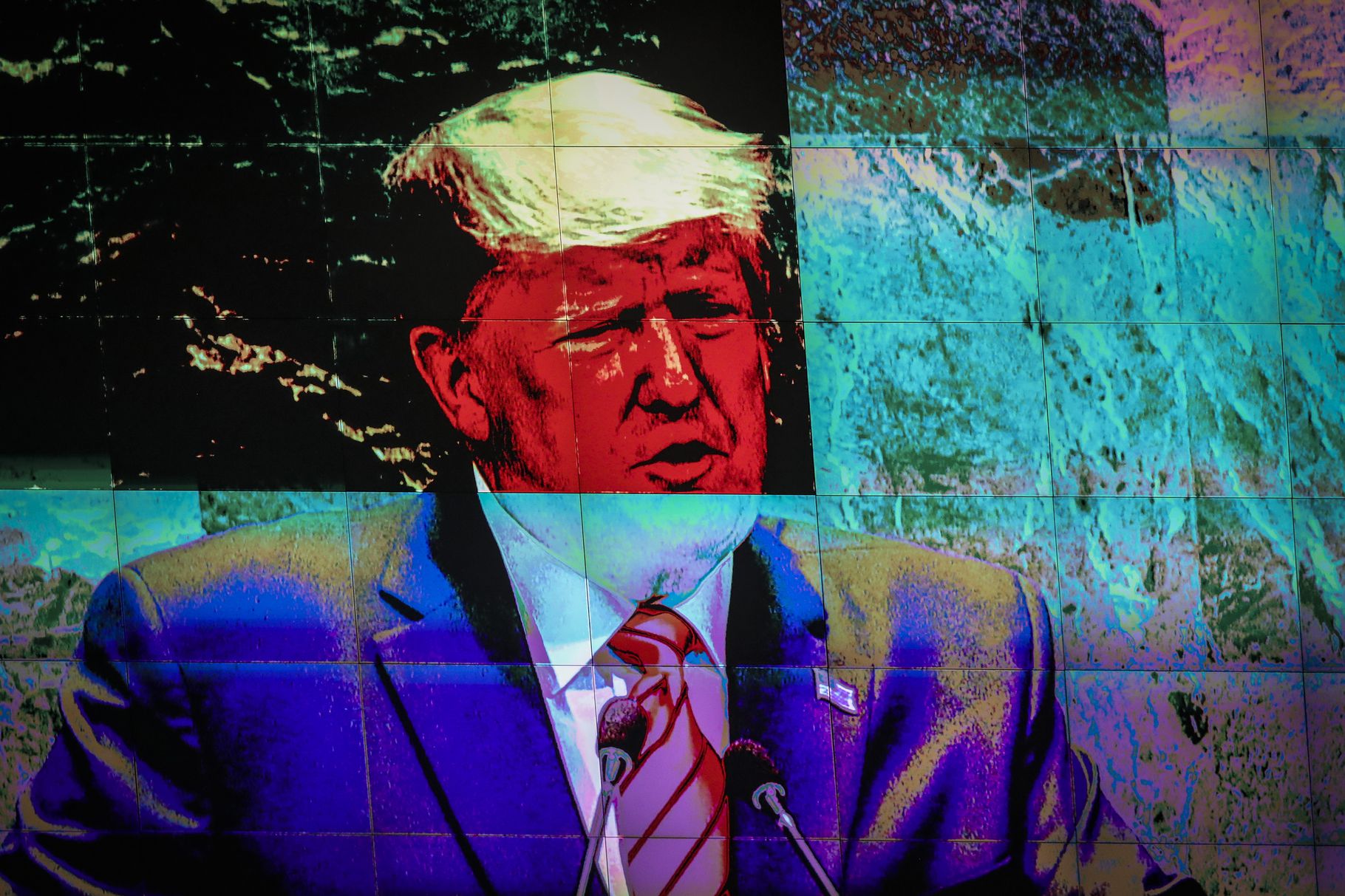
UNITED NATIONS, New York — In his third annual speech to the United Nations General Assembly, President Donald Trump delivered a clear message in favor of nationalism and national sovereignty and against globalism.

But three years into Trump’s presidency, that kind of rhetoric is no longer as shocking as it once was. Most of the world has heard it from him before.

Trump, in an oddly subdued speech in New York on Tuesday, reprised his case that all nations should exert their sovereignty, protect their borders, and reject any mutual and international cooperation that doesn’t put their country’s own interests first. For Trump, it’s “America First;” for everyone else it’s “[Insert Country Here] First.”

“If you want democracy, hold on to your sovereignty,” Trump said. “And if you want peace, love your nation.”

Trump touted the “great” new trade deals he’s working on and lambasted China’s trade practices. He criticized the Iranian regime for its “bloodlust.” He tried to elevate his stalled diplomacy with North Korea. He condemned the socialist regime of Nicolás Maduro in Venezuela. He denounced illegal immigration and even made time to complain about perceived censorship of conservative viewpoints by social media companies and to attack social justice advocates.

It was classic Trump — only without the enthusiasm he usually displays when discussing these pet topics. If anything, Trump seemed bored by his own speech.

There were two rare but notable exceptions: Trump’s stern notice to China that the US is closely watching how it handles the unrest in Hong Kong, and his call to end the criminalization of homosexuality around the world.

The rest, though, was standard Trump fare, and few of the world leaders gathered to hear him speak seemed surprised or rattled by his words. He couldn’t even manage to garner any of last year’s surprised laughs.

Trump’s schtick isn’t shocking anymore. But it shows just how much of an outlier the US is.

“The future does not belong to globalists; it belongs to patriots,” Trump said at the start of his speech.

It seemed like a throwaway line but it was actually a clear articulation of what Trump and leaders of his ilk have been arguing for the past few years: Populist nationalism is the future and multinational cooperation and mutual trust is the past — even if that’s the very vision the United Nations is trying to promote and protect.

And that message has permeated. Brazilian President Jair Bolsonaro, who spoke shortly before Trump, cited the US president’s defense of the sanctity of national sovereignty to push back against worldwide criticism of Bolsonaro’s handling of the Amazon fires. “They even called into question that which we hold as a most sacred value, our sovereignty,” Bolsonaro said at one point.

Trump was sandwiched between a slew of authoritarians and wanna-be authoritarians (Bolsonaro before and Egypt’s Abdel Fattah el-Sisi and then Turkey’s Recep Tayyip Erdoğan afterward), and while the US president paid lip service to democracy, his defense of it didn’t fit with his nationalistic rhetoric.

Trump and some of these other speeches stood in stark contrast to that of UN Secretary-General António Guterres, who addressed the crowd before the world leaders began to take the stage and warned of the “disquiet” currently plaguing the world.

He was mostly referring to the world’s problems — armed conflicts, increasing inequality, the threat of climate change. But Guterres’s argument is that nations need to band together to address these challenges and to promote the rights of all citizens, no matter their homeland. Guterres believes the forum to do so is the United Nations.

Trump’s argument is, as it always has been, that every country needs to look after itself.

Source: Vox

How Anti-Vaccine Sentiment Took Hold in the United States | The New York Times

Editor’s Note: The New York Times (and likely their biggest Big Pharma advertisers) are heralding a strongly-held opinion that choice regarding vaccines should not be an option for parents who may have good reason to believe their children are at risk. The almost completely unregulated vaccine industry is in denial regarding the potentially dangerous side effects, chronic illnesses that can result and in too many cases they’d rather not count – death. Not once in this well-written, one-sided article did the views, opinions or reasoning of the anti-vaccine crowd get acknowledged. This is but one of numerous op-ed articles the New York Times has recently published. 

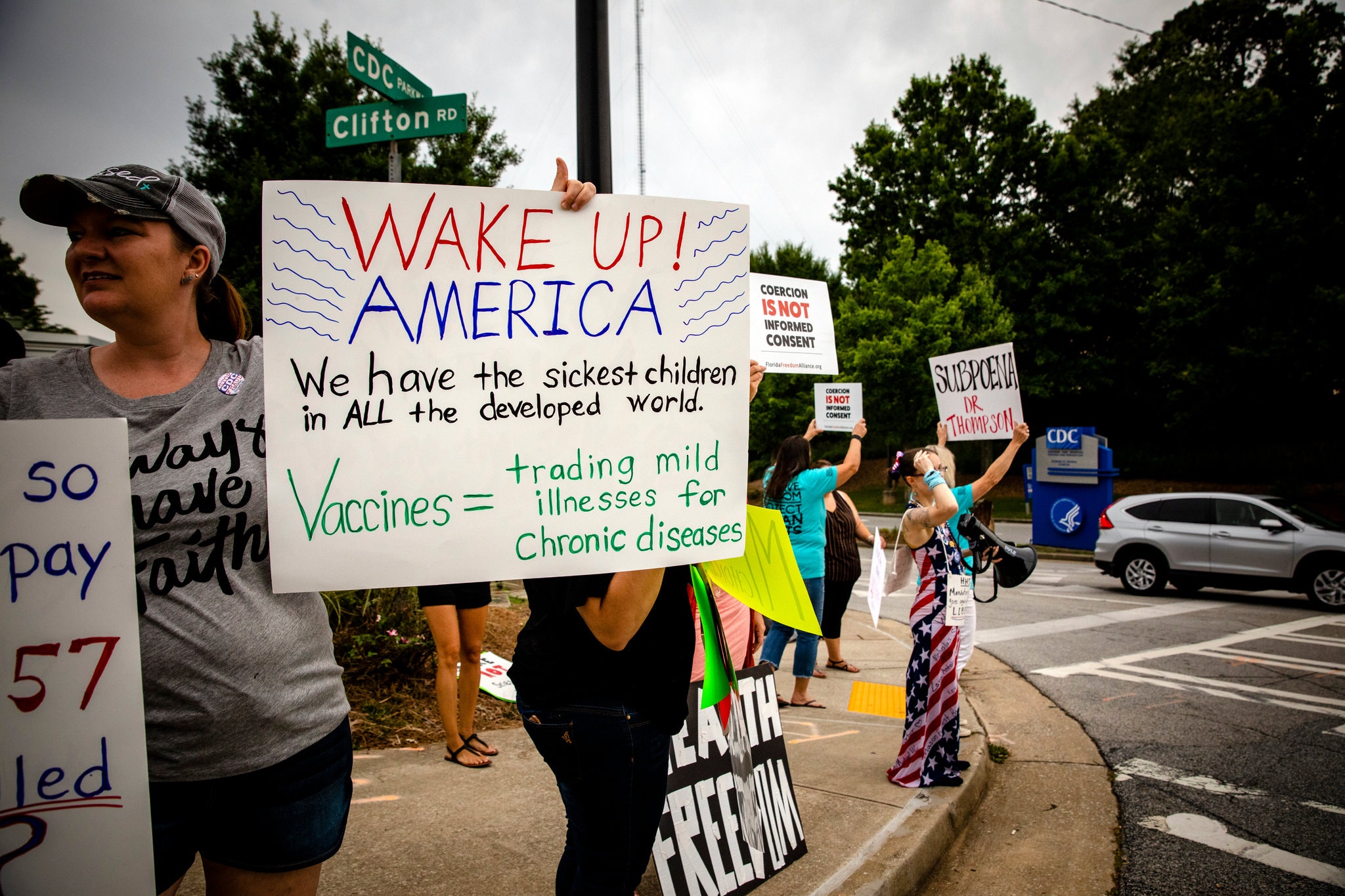
As families face back-to-school medical requirements this month, the country feels the impact of a vaccine resistance movement decades in the making. The question is often whispered, the questioners sheepish. But increasingly, parents at the Central Park playground where Dr. Elizabeth A. Comen takes her young children have been asking her: “Do you vaccinate your kids?”

Dr. Comen, an oncologist who has treated patients for cancers related to the human papillomavirus that a vaccine can now prevent, replies emphatically: Absolutely.

She never imagined she would be getting such queries. Yet these playground exchanges are reflective of the national conversation at the end of the second decade of the 21st century — a time of stunning scientific and medical advances but also a time when the United States may, next month, lose its World Health Organization designation as a country that has eliminated measles, because of outbreaks this year. The W.H.O. has listed vaccine hesitancy as one of the top threats to global health.

As millions of families face back-to-school medical requirements and forms this month, the contentiousness surrounding vaccines is heating up again, with possibly even more fervor.

Though the situation may seem improbable to some, anti-vaccine sentiment has been building for decades, a byproduct of an internet humming with rumor and misinformation; the backlash against Big Pharma; an infatuation with celebrities that gives special credence to the anti-immunization statements from actors like Jenny McCarthy, Jim Carrey and Alicia Silverstone, the rapper Kevin Gates and Robert F. Kennedy Jr. And now, the Trump administration’s anti-science rhetoric.

“Science has become just another voice in the room,” said Dr. Paul A. Offit, an infectious disease expert at Children’s Hospital of Philadelphia. “It has lost its platform. Now, you simply declare your own truth.”

The constituents who make up the so-called vaccine resistant come from disparate groups, and include anti-government libertarians, apostles of the all-natural and parents who believe that doctors should not dictate medical decisions about children. Labeling resisters with one dismissive stereotype would be wrongheaded.

“To just say that these parents are ignorant or selfish is an easy trope,” said Jennifer Reich, a sociologist at the University of Colorado Denver, who studies vaccine-resistant families.

[Why did we start listening to celebrities about vaccines? Read more.]

It remains true that the overwhelming majority of American parents have their children vaccinated. Parent-driven groups like Voices for Vaccines, formed to counter anti-vaccination sentiment, have proliferated. Five states have eliminated exemptions for religious and philosophical reasons, permitting only medical opt-outs.

But there are ominous trends. For highly contagious diseases like measles, the vaccine rate to achieve herd immunity — the term that describes the optimum rate for protecting an entire population — is typically thought to be 95 percent. The Centers for Disease Control and Prevention found that the vaccination rate for the measles, mumps and rubella (M.M.R.) injection in kindergartners in the 2017-2018 school year had slipped nationally to 94.3 percent, the third year in a row it dropped.

Seven states reported rates for the M.M.R. vaccine that were far lower for kindergartners, including Kansas at 89.1 percent; New Hampshire, 92.4 percent; the District of Columbia, 81.3 percent. (The highest is West Virginia at 98.4 percent.)

Almost all states have at least one anti-vaccine group. At least four have registered political action committees, supporting candidates who favor less restrictive vaccine exemption policies.

Public health experts say that patients and many doctors may not appreciate the severity of diseases that immunizations have thwarted, like polio, which can affect the spinal cord and brain — because they probably have not seen cases.

“Vaccines are a victim of their own success,” said Dr. Offit, a co-inventor of a vaccine for rotavirus, which can cause severe diarrhea in young children. “We have largely eliminated the memory of many diseases.”

The growth of vaccine doubt in America coincides with several competing forces and attitudes.

Since the early 2000s, as the number of required childhood vaccines was increasing, a generation of parents was becoming hypervigilant about their children and, through social media, patting each other on the backs for doing so. In their view, parents who permitted vaccination were gullible toadies of status quo medicine.

In 2011, Dana Fuqua, of Aurora, Colo., pregnant with her first child, felt that irresistible pull of groupthink parenting.

She had just moved to the area, so she reached out to mothers’ groups on Facebook. Colorado, with a kindergarten vaccination compliance rate of 88.7 percent, has a rambunctious vaccine-resistant movement. Ms. Fuqua’s new friends urged her to have a drug-free birth, use cloth diapers and never to let a drop of formula pass her baby’s lips. Vaccines, it followed, were anathema.

The women intimidated her. They had advanced degrees; she had only a bachelor of science and a nursing background.

“I didn’t argue with them,” Ms. Fuqua said. “I was so desperate for their support that I compromised by delaying the vaccine schedule, so I wouldn’t get kicked out of the group.”

But when her second child was born prematurely, susceptible to illness, the group’s approval was not as important as her baby’s safety. Her position, she said, shifted from, “‘I can’t hang out with you if you had a vaccine because you could be shedding a virus’” — a common, false belief among the vaccine resistant — to, “ ‘If you haven’t had a vaccine, I will not associate with you.’”

She had both children fully vaccinated.

There have been anti-vaccination movements at least since 1796, when Edward Jenner invented the smallpox vaccine. But many experts say that the current one can be traced to 1982, when NBC aired a documentary, “DPT: Vaccine Roulette,” that took up a controversy percolating in England: a purported tie between the vaccine for pertussis — a potentially fatal disease that can cause lung problems — and seizures in young children.

Doctors sharply criticized the show as dangerously inaccurate. But fear spread. Anti-vaccination groups formed. Many companies stopped making vaccines, which were considered loss-leaders and not worth the corporate headache.

Then, in 1998, Andrew Wakefield, a British gastroenterologist, published a Lancet study (since discredited and withdrawn), associating the M.M.R. vaccine with autism.

Faced with risking autism or measles, some parents thought the answer was obvious. Most had never seen measles, mumps or rubella because vaccines had nearly eliminated them. But they believed they knew autism.

And most people are notoriously poor at assessing risk, say experts in medical decision-making.

Many stumble on omission bias: “We would rather not do something and have something bad happen, than do something and have something bad happen,” explained Alison M. Buttenheim, an associate professor of nursing and health policy at the University of Pennsylvania School of Nursing.

People are flummoxed by numerical risk. “We pay more attention to numerators, such as ‘16 adverse events,’ than we do to denominators, such as ‘per million vaccine doses,’ ” Dr. Buttenheim said.

A concept called “ambiguity aversion” is also involved, she added. “Parents would like to be told that vaccines are 100 percent safe,” she said. “But that’s not a standard we hold any medical treatment to.”

Relatively few people are absolutists about refusing all vaccines. “But if you’re uncertain about a decision, you’ll find those who confirm your bias and cement what you think,” said Rupali J. Limaye, a social scientist who studies vaccine behaviors at the Johns Hopkins Bloomberg School of Public Health.

Nowhere is that reinforcement more clamorous than on social media, Dr. Limaye added. “You may only see your pediatrician a few times a year but you can spend all day on the internet,” she said.

People tend to believe an individual’s anecdotal narrative over abstract numbers. By 2007, when Ms. McCarthy, the actress, insisted that vaccines caused her son’s autism, thousands found her to be more persuasive than data showing otherwise. A nascent movement took hold.

At the same time that these powerful attacks on vaccine confidence were underway, a constellation of trends was emerging.

The definition of a good parent was becoming fraught with the responsibility for overseeing every aspect of a child’s life.

“As we adopted a culture of individualistic parenting, public health became a hard sell,” Dr. Reich said.

The primary reason for healthy people to get the flu shot is to protect those with compromised immune systems, like infants and older adults, from getting sick. But altruism isn’t a great motivator for parents, Dr. Buttenheim said. “They are much more concerned about protecting their own child at all costs,” she said.

Contrast that attitude with the collective good will of the 1950s, say medical sociologists, when American parents who had seen President Franklin Delano Roosevelt’s wheelchair as a debilitating symbol of polio patriotically sought to vaccinate their children to help eradicate the disease worldwide.

By 2014, studies showed that parental confidence in authorities like the C.D.C. and in pediatricians was dropping, especially around vaccines. Mistrust of Big Pharma was even more pronounced.

By then, Donald Trump was offering support on Twitter for the discredited link between autism and vaccination. As president-elect, he met with leaders of the anti-vaccination movement, although as measles cases surged, he endorsed vaccination.

As parenting became rife with orthodoxy, the Marcus Welby model of the paternalistic doctor retreated. Patients asserted autonomy, brandishing internet printouts at doctors. Shared decision-making became the model of doctor-patient engagement.

Pediatricians offered to stagger vaccine schedules. Some were even flexible about vaccinations altogether.

In 2011, shortly after Emma Wagner had given birth in Savannah, Ga., a pediatrician on the ward examined the baby. “He asked me if I was interested in the hepatitis B vaccine,” she said of an inoculation typically done at birth.

She was apprehensive.

He replied, “‘That’s fine, because your 2-day-old daughter isn’t a prostitute and isn’t using I.V. drugs, so hep B isn’t at the top of my worries.’”

Ms. Wagner said she “swallowed the anti-vax Kool-Aid. I was motivated by fear. I thought, ‘Until I know for certain that these are safe, I won’t do it.’ The pediatrician said, ‘I will support your decision and in a few years we’ll talk about exemptions for school.’”

She has since become a staunch supporter of immunization.

Libertarianism also courses through vaccine hesitation, with parents who assert that government should not be able to tell them what to put in their bodies — a position often marketed as “the right to choose.”

“Having the government order them to do something reinforces conspiracy theories,” said Daniel Salmon, director of the Institute for Vaccine Safety at Johns Hopkins. “And people perceive their risk to be higher when it’s not voluntary.”

In reality, he said, one’s risk of harm is greater while driving to an airport than it is being on the airplane itself. But driving is voluntary and gives the illusion of control. People fear flying because they cannot control the plane. By extension, many childhood vaccines are not voluntary, which rattles those who prefer to believe they can control their health.

With so many different but deeply held convictions, public health experts struggle to design vaccine-positive campaigns.

In 2017, researchers applied the six values of “the moral foundations theory” to vaccine attitudes, surveying 1,007 American parents.

The results were intriguing. Those most resistant to vaccines scored highest in two values: purity (“my body is a temple”) and liberty (“I want to make my child’s health care decisions”).

A third, said Saad B. Omer, director of Yale’s Global Health Institute and an author of the study, was also telling: deference to authority — a score indicating whether one was likely to adhere to the advice of experts like a pediatrician or the C.D.C.

Dr. Salmon’s team at Johns Hopkins is working on an app to capture parents’ vaccine attitudes and to tailor information to persuade them to vaccinate their children.

Pediatricians are front-line persuaders, he said, and they should be compensated for the time it takes to educate parents.

Most experts note that physicians themselves, never mind parents, have no idea about the federal vaccine monitoring systems, which have been in place for more than 20 years.

“We ask parents in the first two years of their child’s life to protect them against 14 diseases, that most people don’t see, using fluids they don’t understand,” Dr. Offit said. “It’s time for us to stand back and explain ourselves better.”

Source: The New York Times

Thom Tillis calls for Senate to investigate Fed independence | Politico

Editor’s Note: As a sovereignty educator for over twenty years I taught millions of people about the Federal Reserve, how it was created, the nature of money, banking, etc., and how this forever altered our constitutional Republic. That anybody in the Senate, except Former Congressmen Ron Paul and President Trump, is talking about Federal Reserve independence is good news for the Republic.

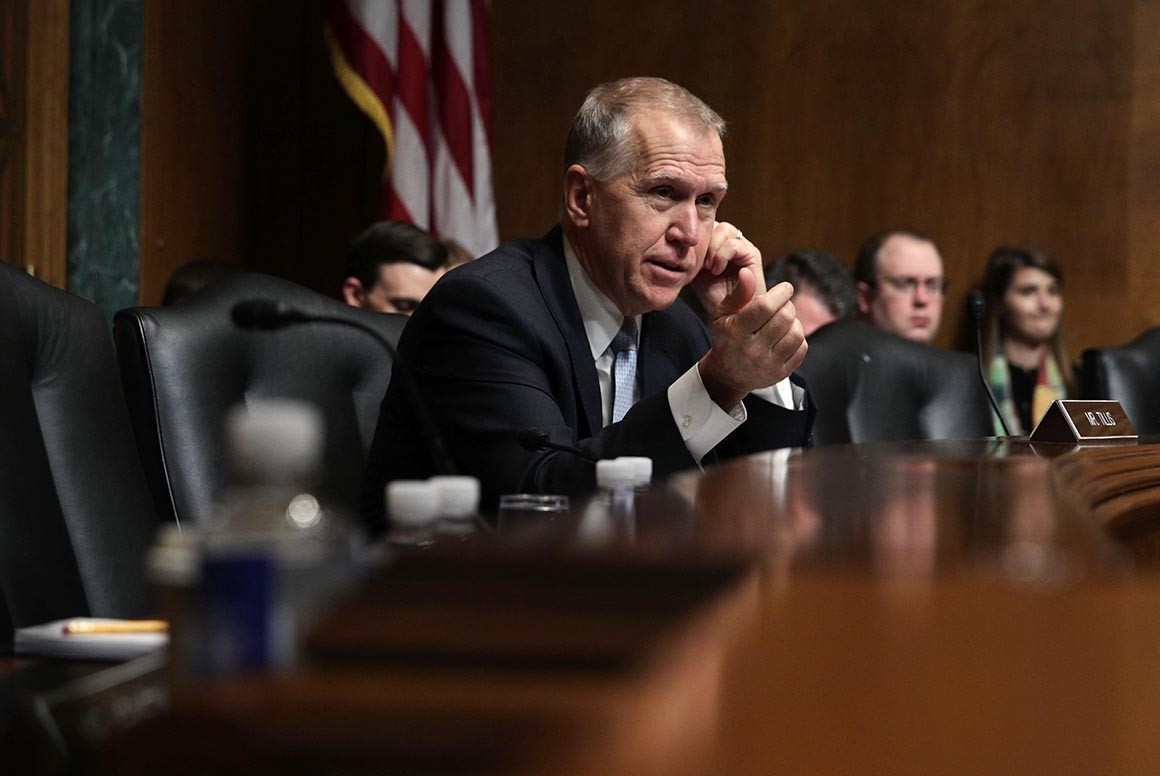
Republican Sen. Thom Tillis is calling for the Senate Banking Committee to probe the Federal Reserve’s independence after a former agency official suggested the upcoming presidential election “falls within the Fed’s purview” as it considers whether to cut interest rates.

Tillis, who is up for reelection next fall in swing state North Carolina, is siding with President Donald Trump in his ongoing feud with Federal Reserve Chairman Jay Powell. Bill Dudley, a former president of the Federal Reserve Bank of New York, wrote in a Bloomberg op-ed that the Fed should consider refusing to offer new economic stimuli because doing so could encourage Trump to plunge further into a trade war with China and would “reassert the Fed’s independence by distancing it from the administration’s policies.”

Tillis said he plans to ask the Banking Committee’s chairman, Sen. Mike Crapo (R-Idaho), about convening a hearing “regarding Fed independence and the danger of this institution taking unprecedented and inappropriate steps to meddle in the presidential election.”

“I am very disappointed that former Fed monetary Vice Chairman Bill Dudley is lobbying the Fed to use its authority as a political weapon against President Trump,” Tillis said in a statement. “The President is standing up for America against China after 30 years of our country and our workers being ripped off and there is now an effort to get the Fed to try to sabotage the President’s efforts.”

Senate Republicans generally stay out of Federal Reserve politics, but Tillis is aligning himself closely with Trump as he faces a primary challenge and a potentially difficult general election. The first-term senator previously supported a bill protecting special counsels, including Robert Mueller, and initially opposed Trump’s declaration of a national emergency on the southern border. He later supported it and has generally not deviated from Trump since.

The president has berated Powell, whom he appointed, for declining to further slash interest rates.

“The only problem we have is Jay Powell and the Fed,” Trump tweeted last week. “He’s like a golfer who can’t putt, has no touch. Big U.S. growth if he does the right thing, BIG CUT — but don’t count on him! So far he has called it wrong, and only let us down.”

The repeated attacks motivated Dudley to wade into the dispute and implore Powell to consider standing firm. He argued that the Federal Reserve’s desire to stay out of politics was admirable “but Trump’s ongoing attacks on Powell and on the institution have made that untenable.”

“Central bank officials face a choice: enable the Trump administration to continue down a disastrous path of trade war escalation, or send a clear signal that if the administration does so, the president, not the Fed, will bear the risks — including the risk of losing the next election,” Dudley wrote. “Trump’s reelection arguably presents a threat to the U.S. and global economy, to the Fed’s independence and its ability to achieve its employment and inflation objectives.”

Source: Politico

Supreme Court rules in case watched for impact on Trump pardons | Politico

The Supreme Court ruled Monday in a closely watched “double jeopardy” case, issuing a decision that preserves states’ power to limit the impact of future pardons by President Donald Trump or his successors.

In a 7-2 ruling, the justices declined to disturb a longstanding legal principle known as dual sovereignty, which allows state governments to bring their own charges against defendants already tried or convicted in federal court, or vice versa.

Lawyers for an Alabama man facing a gun charge in federal court after pleading guilty to the same offense in state court — resulting in a nearly three-year extension of his prison sentence — failed in their effort to persuade the justices to hold that the Constitution’s prohibition on double jeopardy prevents such follow-on prosecutions.

The federal government had argued that overturning the dual-sovereignty doctrine would upend the country’s federalist system, and that the phenomenon of overcriminalization makes states’ ability to preserve their own sphere of influence and prevent federal encroachment on law enforcement more important.

Democrats and others bracing for potential pardons by Trump of individuals convicted in former special counsel Robert Mueller’s investigation were tracking the case, Terance Gamble v. U.S., because a decision overturning the dual sovereigns rule could have complicated efforts by state prosecutors to blunt the impact of any attempt Trump may make to grant clemency to those targeted by Mueller’s team.

Still, the high court case was not seen as make-or-break for state prosecutions because Mueller didn’t bring charges on every potential crime he uncovered. In addition, the federal prosecution of former Trump campaign chairman Paul Manafort resulted in a combination of jury convictions, guilty pleas, mistried charges and dismissals as part of a plea deal.

The complex result in Manafort’s case left fertile ground for New York prosecutors, who jumped into the breach in March with a 16-count indictment charging the longtime lobbyist and political consultant with mortgage fraud, falsifying business records and other crimes. The offenses seemed to partially overlap with crimes Manafort was charged with in federal court in Virginia.

Manafort’s lawyers in the state case have indicated they plan to argue that the indictment obtained by Manhattan District Attorney Cyrus Vance Jr. violates a New York law that limits state prosecutions of crimes already prosecuted at the federal level.

New York’s Democrat-controlled Legislature has been trying to alter that law to limit its application in cases where a defendant receives a presidential pardon or commutation.

A bill aimed at doing that won formal approval last month from both chambers of the state legislature but has not yet been sent to Gov. Andrew Cuomo, who has signaled he plans to sign it. The measure includes language seeking to cover individuals already convicted, tried or who pleaded guilty, but it’s unclear whether applying the law that way is constitutional.

The bulk of the opinions the justices issued Monday were focused on historical evidence about whether the founders expected that dual prosecutions would be permitted or forbidden by the Constitution.

“Gamble’s historical arguments must overcome numerous ‘major decisions of this Court’ spanning 170 years,” Justice Samuel Alito wrote on behalf of the seven-justice majority. “In light of these factors, Gamble’s historical evidence must, at a minimum, be better than middling. And it is not.”

The decision drew separate dissents from justices at opposite ends of the court’s ideological spectrum: liberal Ruth Bader Ginsburg and conservative Neil Gorsuch.

“It is the doctrine’s premise that each government has — and must be allowed to vindicate — a distinct interest in enforcing its own criminal laws,” Ginsburg wrote. “That is a peculiar way to look at the Double Jeopardy Clause, which by its terms safeguards the ‘person’ and restrains the government.” She argued that the legal precedent was weak, noting that “early American courts regarded with disfavor the prospect of successive prosecutions by the Federal and State Governments” and that, with regard to concerns about federal and state governments interfering with each other, “cooperation between authorities is the norm.”

Gorsuch, meanwhile, argued that “a free society does not allow its government to try the same individual for the same crime until it’s happy with the result. Unfortunately, the Court today endorses a colossal exception to this ancient rule against double jeopardy.”

He added that the separate sovereigns exception “finds no meaningful support in the text of the Constitution,” unlike the Constitution’s ban on double jeopardy.

Fordham University law professor Jed Shugerman told POLITICO that the Gamble decision will have “no real impact on Trump cases.” Manafort is still facing state prosecutions in New York and Virginia, which have their own jeopardy rules, he noted. And former national security adviser Michael Flynn’s guilty plea to one count of making false statements to the FBI was limited to federal law, Shugerman said. The same appears true of Roger Stone’s prosecution on false statement and witness tampering charges, he added.

“Trump and others aren’t getting prosecuted federally anyway before 2021, so they haven’t faced a single jeopardy yet,” Shugerman said. “A pardon wouldn’t create jeopardy, so they’d still face state prosecutions post-pardons.”

Some opponents of the proposed New York changes urged legislators to hold off passing them until the Supreme Court ruled in the case decided Monday. Experts said the decision might encourage more states to tinker with their double-jeopardy limits.

“The big question may be how states react to this ruling, and whether it will incentivize some states to ban trials by separate sovereigns of the same defendant for the same conduct, or, now that the Court has said the federal Constitution isn’t offended, whether states that already have such bans might relax them,” said University of Texas law professor Stephen Vladeck.

Source: Politico

Constitution under siege: The Electoral College battle | Metro Voice News

“Every vote should count.” To many that sounds fair. It sounds right. But is it? “The Electoral College is wrong. The person who gets the most votes should be president.” Does that sound right to you?

The answer varies but falls under one fundamental belief: Do you believe America to be a democracy or a republic.

From that divide, you will understand the main difference between what conservatives are trying to preserve and what liberals are trying to fundamentally transform.

During the 2000 Presidential Election, many in the media and the left believed that Al Gore would win the Electoral College and Bush would in the popular vote. This was the last time the media and the Left staunchly defended the Electoral College while lying the groundwork for the very assault on it. It was after this election that I started studying what the Electoral College is and its importance.

So what is the Electoral College? Each state is afforded a certain number of votes, the amount of senators (2) combined with the amount of representatives in the house (which varies according to population). This makes the minimum amount of votes a state gives as three. These votes are determined by the popular vote each state making the winner the President of the United States.

The emphasis on States is important. Each state in America has different needs and desires. Each state under the Electoral College gets to choose which candidate they want as president by majority vote. (That’s the democracy in the republic you hear about.) The candidate that gets the most votes (270 at this time) from these states wins the Presidency. Under this system, each state matters and therefore the people of each individual state are important.

Under a popular vote, the one with the most votes wins. It’s simpler and therefore easier to circumvent most people. That means cheating is easier. Also ignoring large sects of this country also becomes expedient.

Elections are expensive. Under the popular vote, the middle is ignored because all a candidate need win is the big cities of the east and west coast. The Midwest, the Southwest, and parts of the South will no longer matter because their votes won’t win elections. Look at the state of New York. NYC rules the state, and the Democrat Party rules NYC with an iron fist.

Under a popular, every vote counts. That sounds great, but not every vote should count. “Every four years, the dead rise and vote democrat in Chicago,” the old joke says. The truth is sadder; in that, in many big cities, the dead vote. Add to that the millions of illegal aliens that vote. Then add to that those who vote more than once. Then add to that all those miraculous ballots that appear in bags which were handily put to the side in case needed to overturn an election barely won by a Republican which was how Al Franken won his seat in the Senate and many Republicans lost elections in 2018 they won on election night. Every vote counts. In the past election, some counties had more people vote in them than actually lived there by the thousands. Obviously, they all voted Democrats.

Once you put all those numbers together, it’s easy to see popular votes are easily doctored, and elections can easily be stolen. This is especially true because of an outwardly bias media who is out to cover for those on their side of the political aisle and dreg up the basest stories from the most unreliable sources to bury their competition. Many are willing to accept this because they want their candidate to win no matter what the cost. But what happens, when it’s someone they don’t like? At that point it doesn’t matter, because the republic is dead, and the government class rules us all without any checks or balances.

Ignorance is the greatest ally to the enemies of our Constitution. The reason so many are in favor of abolishing the Electoral College is that we have and Education system controlled by the Left who purposely keep their students from learning the importance of America’s greatness and what is needed to keep her free. Our institutes of educations have become indoctrination center of leftist ideology (socialism, humanism, atheism, etc.). Generations of children have become adults with no real understanding of our Constitution, and its greatness.

The Constitution is under siege. The States lost the battle for the Senate. Now the states may lose the battle of the Electoral College. We lose this and we lose the right to choose our leaders. The Republic needs you and me to educate the ignorant and show them why our founders were all against Democracies and why they chose a Republic instead.

Source: Metro Voice News

An Evening with Tucker Carlson: America’s Elites Are on a Ship of Fools. YouTube & Independent.org

Source: YouTube & Independent.org