
Editor’s Note: The unforeseen consequences of unleashing an electronic network worldwide with nowhere to hide, with a bombardment of such powerful frequencies as to disrupt every living system with proven oxygen shattering and immune suppressing technology is beginning to unfold. This article is an industry puff piece for the global leaders of industry promoting 5G as the next panacea for all our problems. My friends, this is a crisis of consciousness and will forever map the trajectory of human evolution. Only robots will survive this 5G rollout. Read it and weep!
By Don Rosenberg
It is not an easy time to be an internationalist, to seek global solutions to global problems amid what feels like one of history’s periodic inclinations toward divisiveness.
Yet, ironically, we’re on the verge of a new age of interconnectedness, when the daily lives of people across the planet will be more closely intertwined than ever. Advances in technology will usher in the age of fifth generation, or 5G, telecommunications. And, if past is prologue, this technological evolution will lead to dramatic societal changes.
The first generation of mobile communications, with brick-sized phones, brought just a handful of users expensive and often unreliable analogue voice calling. The second generation introduced digital voice service that was less likely to be dropped, available to many more people and ultimately cheaper to use. 3G ushered in the mobile internet, mobile computing, and the proliferation of apps. 4G (often called LTE) made possible all we have come to expect of mobile broadband: streaming video and audio; instantaneous ride hailing; the explosion of social media.
We take all this connectivity for granted, but the engineering inside the device in your bag or pocket today would have seemed impossible less than 20 years ago.
So, where will 5G take us?
Think about a world in which not just people but all things are connected: cars to the roads they are on; doctors to the personal medical devices of their patients; augmented reality available to help people shop and learn and explore wherever they are. This requires a massive increase in the level of connectivity.
5G is the technological answer, making possible billions of new connections, and making those connections secure and instantaneous. 5G will impact every industry – autos, healthcare, manufacturing and distribution, emergency services, just to name a few. And 5G is purposely designed so that these industries can take advantage of cellular connectivity in ways that wouldn’t have been possible before, and to scale upwards as use of 5G expands.
But generational change in mobile communications doesn’t just appear overnight. It requires significant effort in research and development and the resources necessary to support that effort. Work on 4G took nearly a decade and the challenges were not easy. Consider one of tens of thousands of problems that needed to be solved as described by an engineer at Qualcomm, where much of this technology was invented:
“When the signal leaves the base station, it can undergo a loss of up to 130 decibels before it reaches your mobile phone. To put that loss into perspective, if you consider the transmitted signal power to be roughly the size of the Earth, then the received signal power would be equivalent to the size of a tiny bacteria.”
That is a tremendous loss of power, and it requires some pretty impressive engineering to compensate for the effect of the loss on the words, pictures, and other data we send and receive across the airwaves in a transparent, seamless and instantaneous way.
But we weren’t alone. The international engineering co-operation that goes into development of a telecom standard illustrates how much can be achieved when disparate national, commercial and scientific parties work together for the common good.
Like 3G and 4G, 5G is the responsibility of the standards-setting organisation 3GPP, where the handful of companies that invent technologies come together with many, many more companies who will develop products that implement those technologies.
Think about this process for a moment: engineers from rival inventing companies, rival product makers, rival wireless network operators, all from different countries and continents, discussing, testing, striving to perfect tens of thousands of different technical solutions that ultimately make up a standard like 5G.
They judge each technical solution using a merit-based, consensus-building approach. This process has been at the foundation of a technological revolution that spawned myriad new industries, millions of new jobs and well over a $1 trillion in economic growth.
It’s the fusion of commercial self-interest with the recognition that some problems are best solved by working together. And it’s not a bad model of human behaviour if we are to meet the World Economic Forum’s goal this year to address the problems of “a fractured world”.
The benefits and advantages of 5G technology are expected to be available sometime in 2019. We believe 5G will change the world even more profoundly than 3G and 4G; that it will be as revolutionary as electricity or the automobile, benefitting entire economies and entire societies.
Developing nations have rivalled or surpassed their industrialised counterparts in benefiting from the deployment of mobile technology, and there’s every reason to think 5G will have an even bigger levelling effect than its predecessors.
Economists estimate the global economic impact of 5G in new goods and services will reach $12 trillion by 2035 as 5G moves mobile technology from connecting people to people and information, towards connecting people to everything.
Many of the benefits probably aren’t yet apparent to us. Wireless network operators initially resisted proposals to give their customers mobile access to the internet, questioning why they would want it. At the dawn of 4G’s adoption no one could have predicted the new business models that grew on the back of mobile broadband, like Uber, Spotify and Facebook.
As the number of chemicals applied to vegetables sold in supermarkets goes up 17-fold, experts say pesticides must be phased out of food production. Report by Claire Robinson
The number of chemicals applied to vegetables sold in supermarkets has increased by up to 17-fold over 40 years, according to data presented at a conference organized by the Epidemiology and Public Health Section of the Royal Society of Medicine in London on 20 November, which I attended on behalf of GMWatch.
Just as disturbing as the data on our escalating exposure to toxic pesticide mixtures was the evidence presented at the conference that the regulatory system for pesticides is failing.
Scientists explained that while the system tests the single active ingredients in pesticides, it fails to test the many accompanying chemicals (adjuvants) used in pesticide formulations to enhance the effectiveness of the active ingredients. It also fails to test the combined effects of the formulations of chemicals used in commercial pesticides, let alone the cocktail effect of being exposed to multiple pesticides, as most farmers, rural residents and consumers are.
Indeed, as one scientist pointed out, there are simply too many potential combinations of chemicals to test and regulate. Nor, we heard, does the regulatory system test low, realistic doses of these chemicals that may give rise to endocrine (hormone) disruption, which can in turn lead to serious illnesses that are increasing in the population.
Because of these facts, there is simply no way of ensuring the safe use of pesticides in agriculture.
Chemical cocktails increasing
Figures released for the first time at the conference showed that the number of toxic chemicals applied to onions, leeks, wheat and potatoes has been steadily increasing since the 1960s.
This is despite industry data showing that the volume of pesticides applied to supermarket vegetables has halved since the 1990s.
The number of pesticides applied to onions and leeks has risen 17-fold from 1.8 in 1966 to 32.6 in 2015, the data showed.
In 1974, fewer than two chemicals were applied to the average wheat crop, but this rose more than 10-fold to 20.7 in 2014. Potatoes are now sprayed with five times more chemicals than in 1975, with the number rising from 5.3 to 30.8 in 2014.
The figures were compiled by the data firm Fera Science and were only made public after the Soil Association, which certifies organic food in the UK, paid for them to be released. While Fera did not measure actual residues present in the produce, the fact that so many pesticides were applied to the growing crops suggests that at least some residues would be found if they were looked for.
The conference followed the publication of an article in the journal Science by Prof Ian Boyd, chief scientific advisor to the UK government’s department of agriculture (DEFRA). Prof Boyd wrote that the assumption by regulators around the world that it is safe to use pesticides at industrial scales across landscapes is false.
Scientist Prof Anne Marie Vinggaard of the National Food Institute in Denmark warned that chemicals that have no effect in isolation can have a pronounced toxic effect when found in mixtures. In real life we are exposed not to one chemical at a time but to mixtures. In addition, commercial pesticide formulations, many of which are endocrine disruptors, are themselves mixtures of active ingredients and adjuvants. “We are exposed to a lot of chemicals acting together,” said Prof Vinggaard. “We must take account of this cocktail effect.”
But pesticide regulations fail to do so.
Pesticides linked to low sperm quality
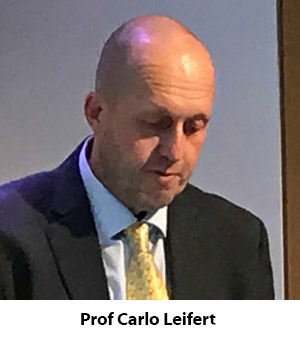
Prof Carlo Leifert, director of the Centre for Organics Research at Southern Cross University in Australia, cited research showing higher sperm counts and density in men working for the Danish organic farming association and a separate US study showing that high levels of dietary pesticide exposure were linked to low sperm quality in men.
Prof Leifert’s presentation came soon after the publication of a study implicating pesticide-treated foods in fertility problems in women. In the study, published in JAMA Internal Medicine, Harvard researchers followed 325 women at an infertility clinic and found that women who regularly ate pesticide-treated fruits and vegetables had lower success rates getting pregnant with IVF, while women who ate organic food had reduced risk of pregnancy loss and increased fertility.
Eat organic to minimize exposure
Dr Michael Antoniou, head of the Gene Expression and Therapy Group at King’s College London, told the Royal Society of Medicine conference that the adjuvants in commercial pesticide formulations can be toxic in their own right and in some cases more toxic than the declared active ingredients. Yet only the active ingredients are tested and assessed for long-term health effects in the regulatory process.
Dr Antoniou also said that research on hormone-disrupting chemicals, including pesticides, shows that very low realistic doses can be more toxic than higher doses. As pesticides are not tested for low dose effects for regulatory purposes, these effects can be missed by regulatory agencies, leading to a situation in which the public can be exposed to hormone-disrupting levels of these chemicals. This is a matter of concern because hormone disruption is implicated in a large number of diseases that are becoming increasingly widespread, such as hormone-related cancers, obesity, and diabetes.
Dr Antoniou said that regulators around the world have been slow to keep up with the scientific knowledge of harm from low doses of endocrine disrupting chemicals. These effects are not controversial in the scientific community and yet the EU has still not decided how to define endocrine disruptive chemicals, let alone how to regulate them.
Dr Antoniou described his research showing that long term exposure to very low doses of Roundup herbicide far below regulatory permitted levels caused non-alcoholic fatty liver disease (NAFLD) in rats. NAFLD has now reached epidemic proportions in the US and Europe, with around 25% of the population suffering from it.
Dr Antoniou told the audience, which included doctors who treat chemically damaged people, “As a precaution, you should minimise your exposure to pesticides. The only way to guarantee that is by eating organically.”
Industry perspectives
Occasions like this are often interesting from the point of view of finding out the industry line on the scientific and public relations challenges it is facing, and this event was no exception. One such line was offered by Sarah Mukherjee, CEO of the Crop Protection Association (CPA). Mukherjee is a former BBC journalist who began her presentation by stating that she had no scientific background. Her presentation consisted of emotive stories of her deprived childhood, with the implication that organic food is a luxury that only the affluent can afford and that pesticides were needed to ensure an affordable food supply for all. She did not address any of the scientific points presented by the earlier speakers. In fact, she was not present for those sessions and only arrived later in the day.
The tone and content of her presentation did not sit well with the detailed information on the proven effects of low-dose pesticides provided by the scientist speakers in the morning sessions. It was remarkable for its failure to offer any evidence at all to back up Mukherjee’s premise that we are better off with pesticides.
Glyphosate and cancer
Mukherjee’s closest brush with science was an attempt to exonerate glyphosate herbicides from suspicion of carcinogenicity by quoting the latest updated findings from the Agricultural Health Study (AHS) in the US. These found no link between glyphosate and non-Hodgkin’s lymphoma, a type of cancer. Mukherjee used these findings as a stick to beat IARC, the World Health Organization cancer agency that upset the pesticide industry by concluding that glyphosate was a probable carcinogen.
But what Mukherjee failed to mention was that the study update did find a link between glyphosate and another type of cancer, acute myeloid leukemia (AML) – a link that the researchers said should be followed up with further research. She also did not mention a fact pointed out by the scientist Dr Jennifer Sass – that while the link did not reach statistical significance at the 95% confidence level (a 95% certainty that the findings are not by chance but point to a real effect of glyphosate), at the 90% confidence level it would have been significant. As Sass commented, “With a deadly form of cancer like AML, pesticide applicators, farmers, and other highly exposed people may want to take protective measures, even if studies are only 90% confident in the link to AML cancer.”
Mukherjee also failed to mention that IARC took the AHS’s “no effect” finding from glyphosate into consideration in its assessment of glyphosate, since previous findings from the AHS that were already published at the time of IARC’s review had also found no effect. Other epidemiological studies did find a link between glyphosate and non-Hodgkin’s lymphoma. This contradictory evidence is why IARC said there was only “limited” proof of a glyphosate link with cancer from epidemiological studies. However, it classified glyphosate as a probable carcinogen on the basis of “sufficient” evidence in controlled laboratory studies on animals. These types of study, unlike epidemiological studies, demonstrate a causal link and are therefore a far stronger form of evidence.
I was not the only audience member to conclude that Mukherjee was seriously out of her depth among a speaker line-up of heavyweight scientists, addressing an audience of scientists, medics, and experts from relevant fields. One scientist told me he was shocked that the CPA chose to send Mukherjee as its representative to such an event: “Couldn’t they find a scientist who was willing to take this on?”
Is organic food elitist?
Mukherjee’s “organic food is elitist” meme did not play well with me. I speak as someone who at one point in my life lived in a partnership in which neither of us had any income or savings and we had to survive off very meagre state benefits. Yet we ate organic 100% of the time. We did it by cooking fresh food from scratch each day (it didn’t take much time), buying via farm box delivery schemes rather than from supermarkets, eating mostly vegetarian, and – obviously – not spending money on luxuries.
On our occasional forays to the supermarket to buy loo rolls and cleaning fluids, we were gobsmacked at the large amounts of money being spent on the weekly shop by families with trolleys full of processed food. Even without getting into discussions about the “externalized” costs of eating pesticide-contaminated food, such as getting sick, we simply could not afford that type of food. So who exactly were the elite in this situation? Certainly not us. This is just one example among many of Mukherjee’s irrational and frankly insulting approach to the vital topic of food security.
Speakers in support of pesticide safety
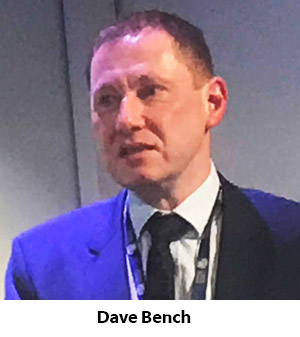
The other people speaking in support of the safety and benefits of pesticides were Dr Chris Hartfield of the National Farmers Union (NFU) and Dave Bench of the UK government’s Health and Safety Executive.
Mr Bench described the regulatory system for pesticides, which he portrayed as robust and as balancing the risks of pesticides against the benefits to society.
Dr Hartfield showed a long list of Integrated Pest Management (IPM) techniques, in which pesticides are only sprayed as a last resort as and when absolutely necessary. He said that 16,820 farmers in the UK are using these techniques on 4.4 million hectares of land.
However, members of the audience were skeptical of this claim. Guy Watson, an organic farmer from Riverford Farm in Devon, said that his conventional farmer neighbour laid out his spraying schedule well in advance of the growing season and that all the pesticides were sprayed in accord with the schedule, whether they were needed or not. He suspected that farmers’ practice of IPM was confined to a paper exercise that was not borne out by the reality in the fields.
Mr Watson’s skepticism about UK farmers’ use of IPM was amply supported by the data presented at the conference showing the increasing numbers of pesticides sprayed on our food.
Some members of the audience who suffered repeated exposures to pesticide spraying because they lived near treated fields agreed that a cavalier attitude to the use of pesticides seemed to be the norm among conventional farmers.
Georgina Downs of the UK Pesticides Campaign, which represents rural residents affected by pesticides sprayed in their localities, commented after the conference: “There was the usual gross misinformation stated by the CPA and the NFU – most importantly their insistence that there is a rigorous regulatory system in place for pesticides. There simply is not, and this lie cannot continue to be peddled.
“The conventional chemical farming system has been an untested, unregulated, and unlawful experiment with human health and the environment that has caused untold damage.”
Is farming without pesticides possible?
Agro-industry lobbyists would have us believe that farmers cannot manage without pesticides. What is more, they claim that even organic farmers regularly spray a vast array of pesticides permitted under organic standards. But this picture is far from the reality. Most organic farmers do not spray because they take other measures to protect their crops, such as rotating crops to prevent attacks from over-wintering pests, using barrier methods against pests, cultivating hedges and plants to attract insects and animals that eat pests, and planting cover crops to suppress weeds.
This was confirmed by the final speaker at the conference, Peter Melchett, who has been an organic farmer for 19 years and a conventional farmer before that. He said that since converting to organic he has only had to spray a single field once. The one lapse was due to his mistake in planting two related crops in the same field two years running. A pest over-wintered in the field, only to emerge the following year to devour the new crop. Mr Melchett said he never repeated his mistake – and has never had to spray again.
Take-home message
The take-home message from the non-industry speakers at the conference was that the regulatory system for pesticides has failed and cannot be reformed in a way that renders these chemicals safe. As we’ve seen, the system does not test the adjuvants, or the commercial pesticide formulations, or the chemical cocktails to which we are exposed. Neither does it test low, realistic doses that may give rise to endocrine disruption. Therefore pesticides must be eradicated from food production and farming must be entirely converted to proven-successful organic and agroecological practices.
Editor’s Note: Robert F. Kennedy Jr. is continuing his personal crusade against Big Pharma and Big Government collusion, authoring a hard-hitting article explaining that the government are withholding information from the public about vaccines – and covering up vaccine deaths – in order to protect pharmaceutical companies.
Vaccine scientists and the public health community cautiously and occasionally will admit that vaccines can cause adverse reactions just like “any other medication or biological product.” Although experts are less willing to openly disclose the fact that adverse reactions can and do include death, one has only to look at reports to the U.S. Vaccine Adverse Event Reporting System (VAERS) to see that mortality is a possible outcome.
From 1990 through 2010, for example, VAERS received 1,881 reports of infant deaths following vaccination, representing 4.8% of the adverse events reported for infants over the 20-year period.
Moreover, analysts acknowledge that VAERS, as a passive surveillance system, is subject to substantial underreporting. A federal government report from 2010 affirms that VAERS captures only about 1% of vaccine adverse reports.
On the international frontier, the public health community—with the World Health Organization (WHO) in the vanguard—previously used a six-category framework to investigate and categorize serious adverse events following immunization (AEFI), including death.
Guided by this tool, public health teams examined temporal criteria and possible alternative explanations to determine whether the relationship of an AEFI to vaccine administration was “very likely/certain,” “probable,” “possible,” “unlikely,” “unrelated,” or “unclassifiable.”
In 2013, the WHO’s Global Advisory Committee on Vaccine Safety discarded the prior tool, ostensibly because users “sometimes [found it] difficult to differentiate between ‘probable,’ ‘possible,’ and ‘unlikely’ categories.” The WHO enlisted vaccine experts to develop a “simpler” algorithm that would be more readily “applicable” to vaccines. The resulting four-category system now invites public health teams to classify an AEFI as either “consistent,” “inconsistent,” or “indeterminate” with a vaccine-related causal association or as “unclassifiable.”
Despite the patina of logic suggested by the use of an algorithm, “the final outcome of the case investigation depends on the personal judgment of the assessor” [emphasis added], especially (according to the tool’s proponents) when the process “yields answers that are both consistent and inconsistent with a causal association to immunization.”
In a 2017 letter in the Indian Journal of Medical Ethics, Drs. Jacob Puliyel (an India-based pediatrician and member of India’s National Technical Advisory Group on Immunization) and Anant Phadke (an executive member of the All India Drug Action Network) raise important questions about the revised tool.
They describe an Orwellian Catch-22 situation wherein it is nearly impossible to categorize post-vaccine deaths as vaccine-related. This is because the revised algorithm does not allow users to classify an AEFI as “consistent with causal association with vaccine” unless there is evidence showing that the vaccine caused a statistically significant increase in deaths during Phase III clinical trials.
By definition, however, any vaccine not found to “retain safety” in Phase III trials cannot proceed to Phase IV (licensure and post-marketing surveillance). The result of the algorithm’s convoluted requirements is that any deaths that occur post-licensure become “coincidental” or “unclassifiable.”
Drs. Puliyel and Phadke describe what happened in India when the country’s National AEFI committee assessed 132 serious AEFI cases reported between 2012 and 2016, including 54 infant deaths that followed administration of a pentavalent all-in-one vaccine intended to protect recipients against diphtheria, tetanus, pertussis, hepatitis B, and Haemophilus influenzae type b infections. For babies who survived hospitalization, the committee classified three-fifths (47/78) of the AEFI as causally related to vaccines (with 47% of the incidents viewed as “product-related” and 13% as “error-related”), but they rated nearly all (52/54) of the deaths as either coincidental (54%) or unclassifiable (43%) despite mounting evidence that pentavalent and hexavalent vaccines are increasing the risk of sudden unexpected death in infants.
…doctors who “naïvely” accept biased reports on vaccine safety “are losing the trust of the public and in the process…endangering public health.”
The absurdity and negligence inherent in the ultimately subjective WHO checklist have not escaped the attention of others in India and beyond. In a series of comments published in the journal Vaccine in response to the 2013 publication of the revised tool, commenters issued the following scathing remarks:
“Even if a healthy child dies within minutes following vaccination and there is no alternate explanation for the AEFI, even then the powers that be could easily declare that death as coincidental and not due to the vaccine, thanks to the new AEFI. This is dangerous ‘science’.”
“Amongst the 20 items of their checklist, no less than 15 (75%) are devoted to refute a vaccine-induced causality [emphasis in original]…. After all and as the authors confess with an astonishing ingenuousness, the main point is to ‘maintain public confidence in immunization programs.’”
“People understand that there are no true coincidences—only events that have been made to appear to be coincidental by either a genuine lack of understand[ing] of the overall facts leading to the ‘coincidence’ reported or by the deliberate suppression of the facts, including when…AEFIs that result in death are made to ‘disappear.’”
“It seems that huge business in [the] vaccine industry is affecting [the] science of vaccines and we are developing various ways to promote the business at the cost of human lives. …Going for a less sensitive tool for safety concerns is not only illogical but risky for the children of the world.”
Unfortunately, many vaccine proponents appear to be more concerned with forestalling “misconceptions” and “erroneous conclusions about cause and effect” than they are about preventing and identifying adverse events following vaccination. The result, as Dr. Puliyel argues, is that doctors who “naïvely” accept biased reports on vaccine safety “are losing the trust of the public and in the process…endangering public health.”
Editor’s Note: The dumping of highly radioactive material in the Pacific Ocean from Japan’s Fukushima has been occurring for years with no plans to stop dumping or bio-remediate this massive problem for all life in our oceans. This is yet another by-product of civilization which has been ignored by government, scientists and climate-change activists.
Tepco has confirmed it plans to release the radioactive material from the Fukushima plant into the ocean saying that the “decision has already been made”. The decision has an upset local fisherman who says the decision will kill their industry as a result of a massive loss of sea life.
Under the controversial plan, which could be a massive environmental disaster, the radioactive material tritium, which is being used to cool reactors whose cooling systems were damaged in 2011 tsunami, will now be released into the ocean.
rt.com reports: “I’m very sorry that Tepco has been prolonging making a decision,” the new chairman of Tokyo Electric Power Company Holdings (TEPCO) Takashi Kawamura told reporters on Thursday, reported Reuters. “We could have decided much earlier, and that is Tepco’s responsibility.”
The plan still requires the approval of the Japanese government before TEPCO can proceed. Some 770,000 tons (metric) of tritium-containing water is currently stored in 580 tanks at the plant, reported the Japan Times. Toxic water at the plant is currently being treated through a processing system that can remove 62 different types of radioactive material, except tritium.
The local fishermen cooperative has hit out at the plan, saying it had not been discussed with local residents. “Releasing (tritium) into the sea will create a new wave of unfounded rumors, making our efforts all for naught,” Kanji Tachiya, head of a local fishermen cooperative, told the Japan Times.
Situated 10 meters above sea-level, three of the nuclear power plant’s six reactors’ cooling systems were crippled by flooding caused by the tsunami, making the disaster the worst since the Chernobyl catastrophe in the USSR in 1986.
The plan still requires the approval of the Japanese government before TEPCO can proceed. Related: Fukushima Radiation: The Entire Pacific Ocean Has Been Contaminated, And It’s Going To Get Worse Fukushima Radiation: Your Days of Eating Pacific Ocean Fish Are Over, Or Worse Officials Warn: Fukushima Has Now Contaminated 1/3 Of The World’s Oceans
Over the past two years, many thousands of broadcast hours and probably millions of words have been devoted to Donald Trump’s relationship with the truth. Equally, the President has made accusations of dishonesty and bias against the media and his political opponents a central part of his persona and presidency.
What lies are told about the President? Is he lying when he makes these allegations? In a feverish atmosphere of claim and counterclaim, when everyone seems to reflexively accuse everyone else of “fake news”, it can be difficult to know what’s what.
There are many articles that exist detailing lies and misleading claims made by the Trump administration. This article is intended as a neutral, reliable analysis of the lies, false allegations and misleading claims made about and against Donald Trump since his inauguration in January 2017. We’ve attempted to strip away the hyperbole, name-calling and generalizations, and examine the patterns and trends at work: what characterizes these lies and exaggerations, the effect they have, what might explain them.
We pay particular attention to selected examples — claims that have gained prominence among the mainstream opposition to Trump, revealing much about the methods, priorities, and tone of that opposition, and illustrating how this movement both cultivates and plays off a number of caricatures of the 45th President and at times falls prey to a handful of identifiable and repeated errors of thought.
This is nothing new. Supporters and opponents of every high-profile politician in American history have done exactly the same, but in the current cultural atmosphere, where “the truth” is universally, even manically, exalted as an abstract concept but then widely degraded in practice, it’s essential to confront, correct, and analyze patterns of falsehoods like these.
This is not an exhaustive list. For that, and a litany of fact checks of claims made by the President, you can browse the Snope archive on him.
The focus here is on attacks against Trump. So for the purpose of this article, we’re not interested in false claims that are intended to reflect favorably on him. Nor does this analysis address claims made against his family members, of which there have been many. It’s also limited to the period following the inauguration on 20 January. This analysis was primarily based on an in-depth search of our own archives.
The Many Donald Trumps
Broadly speaking, most of the falsehoods levelled against Trump fall into one or more of five categories, each of them drawing from and feeding into five public personas inhabited by the President.
They are:
Donald Trump: International Embarrassment
Trump the Tyrant
Donald Trump: Bully Baby
Trump the Buffoon
Trump the Cruel Bigot
Some of these claims are downright fake, entirely fabricated by unreliable or dubious web sites and presented as satire, or otherwise blatantly false. But the rest — some of which have gained significant traction and credibility from otherwise serious people and organizations — provide a fascinating insight into the tactics and preoccupations of the broad anti-Trump movement known as “the Resistance,” whether they were created by critics of the President or merely shared by them.
Generally speaking, we discovered that they are characterized and driven by four types of errors of thought:
Alarmism
A lack of historical context or awareness
Cherry-picking of evidence (especially visual evidence)
A failure to adhere to Occam’s Razor — the common-sense understanding that the simplest explanation for an event or behavior is the most likely.
Infused throughout almost all these claims, behind their successful dissemination, is confirmation bias: the fuel that drives the spread of all propaganda and false or misleading claims among otherwise sensible and skeptical people. Confirmation bias is the tendency to look for, find, remember and share information that confirms the beliefs we already have, and the tendency to dismiss, ignore and forget information that contradicts those beliefs. It is one of the keys to why clever people, on all sides of every disagreement, sometimes believe stupid things that aren’t true.
We’re going to take a look at the four major types of falsehood we found, which correspond with Donald Trump’s five public personas, and point out along the way how various errors in thought have played a role in their origins and their spread.
Donald Trump: International Embarrassment
What’s remarkable is the extent to which false claims about the President revolve around body language, nonverbal gestures and symbolism, all phenomena that are notoriously open to interpretation. These lies and misrepresentations are also often based on snapshots — visual evidence presented without proper context.
Take, for example, the claim that Trump was the only world leader at a G7 summit in May not to take notes, based on a photograph posted to Twitter by French President Emannuel Macron. Here Trump was portrayed as unprepared and out of his depth on the world stage, with a “ten-second attention span”. However, the claim was entirely untrue, with other images and video of the meeting showing that Trump did indeed have notes and a pen. Not only that, but the very image used to make the false claim clearly shows two other world leaders sitting with no note-taking paraphernalia. In this case, even the cherry-picked evidence chosen to make the point undermines it.
Or, from the same G7 summit, the claim that Trump was caught on video raising his middle fingerto Italian PM Paolo Gentiloni. Here we have Trump, contemptuous of other world leaders, once again risking international incident with his short temper and foul manners.
Except that he didn’t. The original source of the claim is revealing — the Twitter account of GiveHimTheFinger.com, an anti-Trump website that encourages his opponents to send the White House postcards designed as a middle finger. A longer video of the discussion shows that Trump and Gentiloni spoke cordially before the incident, which undermines the implicit logic behind the claim — that Trump was expressing anger or distain for Gentiloni. Indeed, no one has ever explained why Trump supposedly flipped him the bird, and so Occam’s Razor comes into play here.
While it is possible, of course, that Trump had such a mercurial change of heart about Gentiloni that he went from sharing warm words with him to publicly insulting him in a matter of minutes, is it not far more likely that the US President just had an itchy head?
And then there’s Newsweek’s claim that Indian Prime Minister Narendra Modi “evaded” Trump’s “notorious… bone-crunching power handshake”, about which there has been a seemingly endless supply of every imaginable kind of analysis.
“In his visit to the White House Monday,” wrote Tom Porter in June, “Indian Prime Minister Narendra Modi neatly sidestepped the challenge, swooping in for two bear hugs with the president during a joint press conference in the Rose Garden.” What’s missing from this account, in a theme repeated throughout this collection, is historical context, either by deliberate omission or due to the author’s lack of awareness.
Modi, as has long been noted, is famous for hugging world leaders, a gesture he bestowed upon Trump’s predecessor Barack Obama, as well as the last two presidents of France, among others. Rather than being an example of yet another world leader “fighting back” (as the Guardian’s Jonathan Freedland has described what are essentially firm handshakes), this was an example of India’s prime minister continuing to greet another world leader in the way he always has.
Lack of historical context and cherry-picked evidence also played a role in another particularly egregious episode, in which Occupy Democrats placed a photograph of Pope Francis frowning beside Trump, next to one of the Pontiff grinning beside Barack Obama.
“See the difference?” the caption asked. Of course: Pope happy, Pope sad. But proper context (and basic common sense) would make it clear that no meaning whatsoever can be gleaned from these two snapshots.
People in the company of someone they like don’t keep a smile constantly plastered on their faces while devoutly maintaining a scowl when forced to hang out with someone who is not their favorite. And our facial expressions often have nothing to do with the people in our immediate vicinity (think: trapped gas, or checking your phone at the dinner table). A photograph of Francis frowning next to Obama was not hard to come by. Nor was one of him grinning next to Trump.
See the difference?
Trump the Tyrant
The second major strand of falsehood we have observed is one that portrays Trump as a would-be dictator, straying beyond his constitutional powers and imposing his will on whatever and whomever he chooses.
It has to be said that these claims have primarily come in the form of blatantly fabricated posts and stories from disreputable sources. Like a satirical News Werthy article that reported that Trump was looking into an executive order to abolish impeachment, or an artist’s “Future Internment Camp” signs in various vacant lots, which were mistaken for genuine by some readers and observers.
Then there was the satirical article that reported Trump had signed an executive order declaring himself the popular vote winner in 2016’s presidential election, or the claim that he had imposed martial law in Chicago, using a video of a police tank which has been in use since 2010. However, there have been more serious claims made about Trump’s supposedly authoritarian tendencies; a story published by the website Learn Progress offers a good illustration of this:“Trump Says Americans Have “No Right” to Protest Him. TYRANNY” reads the headline. In reality, three protesters thrown out of a Trump rally in March 2016 later sued him, alleging incitement to violence. As part of that case, lawyers for the President filed a motion arguing, in part, that protesters did not have a right to disrupt a campaign rally to the extent that they effectively denied the event organizers their own freedom of expression.
This is far more specific and limited than the absolutist way the motion was misrepresented in the article’s headline. Once again, a clue as to the falsehood of the claim is to be found in the very evidence used as its basis. The motion itself is prefaced by the disclaimer: “Of course, protestors have their own First Amendment right to express dissenting views…” So not only did the evidence not support the claim that Trump thinks that Americans have “no right” to protest him, it actually supported the opposite.
A final example of how rushed and alarmist conclusions, a lack of context, and a pre-existing caricature of Trump as an incipient dictator have played a role in false claims made against him came early on in his presidency. In the days following Trump’s inauguration, claims emerged that his administration had literally rewritten the Bill of Rights, changing all mention of “people” to “citizens”.
The story horrified readers. “Not a joke,” read one widely-shared tweet, “not a drill.” But also, not true. The administration had changed WhiteHouse.gov’s summary of the Constitution, but not the Constitution itself. What’s more, the change from “people” to “citizens” in this summary had already been made during the tenure of President Barack Obama.
Donald Trump: Bully Baby
Closely linked to the “dictator” trope are several false claims based on Trump’s persona as a thin-skinned, narcissistic baby, lashing out at perceived insults and bullying much less powerful people. So when, in May, Stephen Colbert made a controversial joke about Trump performing fellatio on Vladimir Putin, it was almost inevitable that a fake story would follow, claiming that the President had forced CBS to fire Colbert, in a single phone call. Similarly, Alec Baldwin’s popular portrayal of Trump on Saturday Night Live prompted this fake story, which reported that the President had signed an executive order cancelling the show.
In the same vein, Crayola’s decision to drop the “dandelion” crayon was falsely attributed to pressure from an image-obsessed Trump administration, worried that children were using that particular color to create unflattering pictures of the President.
Sometimes these claims seem plausible enough to gain even more credibility and traction. In April, Trump met the public at the traditional White House Easter Egg Roll. A teenaged boy asked him to sign his “Make America Great Again” hat, and the President obliged, but appeared to toss the hat in the air.
This was presented as a callous act from a bullying, villainous Donald Trump by observers such as the Resistance Report web site, which wrote ” Trump Just Ruined This Kid’s Day at the Easter Egg Roll.” However, another camera angle clearly shows that Trump was playfully tossing the hat back to the boy, who happily receives the hat and walks away.
But even without the second camera angle, Occam’s Razor comes into play once again. Does it make sense that Donald Trump, asked by an enthusiastic young man to sign a hat bearing his iconic slogan, would sign the hat and then, smiling, deliberately throw it away from the boy? Or is it more likely that Trump was being playful with someone who acted admiringly towards him, and tossed the hat in the air with the intention of giving it back to the boy?
Trump’s “thin-skinned” persona has also been the source of falsehoods, like the one shared by writer Dana Schwartz in January, who claimed the President had doctored a photograph to make his hands look bigger. She attempted to prove this by comparing two pictures of the same embrace between Donald Trump and Barack Obama. The claim was based entirely on the fact that Trump’s left hand appeared bigger in one image than the other, but otherwise provided no evidence that the picture had been doctored.
This also ignored the fact that the two images were taken from slightly different angles and distances, enough to organically make one hand appear bigger than the other.
Trump the Buffoon
Another major strand of falsehood about the President is the one that feeds into his persona as a bumbling fool, prone to accidents and devoid of any cultural sophistication.
Here, one claim stands out. In March, Ireland’s Taoiseach (Prime Minister) Enda Kenny came to the White House for a traditional St Patrick’s Day visit with the sitting President. During a speech, Trump recited a verse (the relevant section starts at 9:21):
As we stand together with our Irish friends, I’m reminded of that proverb — and this is a good one, this is one I like, I’ve heard it for many, many years and I love it:
“Always remember to forget the friends that proved untrue, but never forget to remember those that have stuck by you.”
The response was huge. Almost instantly, Trump was mocked for citing as an Irish proverb a poem written by a Nigerian man. The Daily Kos web site wrote:
[Trump] took his moment to read the following, which he described as an old “Irish proverb”…Within minutes, the true origins of the “Irish proverb” were known and surprise! Not Irish. In fact, the words were from Nigerian poet Albashir Adam Alhassan.
Alhassan was born to Nigerian parents in the Kano State of Nigeria, which, coincidentally, is not Ireland. But according to Trump, it doesn’t matter if a proverb isn’t Irish; he can make it Irish.
It’s actually strange. I’m wondering what must have made him relate it to Ireland even if he loves the lines.
Stephen Colbert devoted this three-minute segment to eviscerating what he presented as Trump’s cultural deafness and downright ignorance:
“That’s very nice, that’s very sweet,” Colbert said of Trump’s recitation:
Very sweet thought. Only problem — Trump’s “favorite Irish proverb” is not a proverb, it’s a poem, and it’s not from Ireland, it’s written by a Nigerian poet… Irish, Nigerian — it’s an honest mistake.
Only problem, as Colbert might say, Trump never once claimed the proverb was Irish.
The video of Trump’s remarks has been played countless times, embedded into mocking reports, and retweeted by thousands of people, aghast at his tone-deafness. The clip would have been edited by staff at Late Night for use, and Colbert himself would have heard the President’s words immediately before launching into the segment (which is frankly difficult to watch) in the knowledge that it is based on an entirely fabricated characterization. Not once, apparently, did anyone hear what Trump actually said — “a proverb”, not “an Irish proverb”.
Why would Trump relate the words to the Irish? The answer to the question posed by Albashir Alhassan is once again so simple that it appears to have eluded almost everyone.
“As we stand together with our Irish friends,” is how Trump prefaced his recitation. Now remember what those words were. “Always remember to forget the friends that proved untrue, but never forget to remember those that have stuck by you.” Standing next to the leader of a country with a long-standing friendly relationship with the United States, accompanied by “Irish friends”, Trump recited a verse about the loyalty of true friends. It makes complete sense for him to have read these words, and not once did he ever describe them as “Irish”.
Set aside the fact that, far from being written in 2013, those words date back at least 80 years; set aside, even, the fact that they appear online in several places, described as an “Irish proverb“. Trump never said they were Irish anyway.
The entire episode is a remarkable example of something bordering on collective hallucination, most likely brought on by confirmation bias. Here hundreds of thousands of people — including professional journalists working for influential news organizations, and a chat show host with more than three million nightly viewers — literally heard Trump say something he never said, in most cases probably because it confirmed a pre-existing image of the President as a poorly read, culturally ignorant buffoon.
Other fake stories have simply been designed to make him look ridiculous, like the widely-shared photographs doctored to show Trump with fake diarrhea stains on his golf pants, wearing a diaperor balloon breasts, or posing with a stripper.
Trump the Cruel Bigot
The final strand of false claims we are examining are those that have contributed to, and fed off, an image of the President and his administration as racist, homophobic, anti-immigrant, and cruel toward poor people.
Some are entirely fabricated or intended as satire, like the claim that Trump was planning to deport American Indians to India, and another that he had made English the official language of the U.S., or stories claiming that the President had banned the full-face Muslim veil or Sharia law.
Others, however, have gained more mainstream traction. The predominant theme, here, has been alarmism, particularly at the beginning of Trump’s tenure. On Inauguration Day, the actor and activist George Takei warned his Twitter followers that the new White House had removed references to climate change, healthcare, civil rights and LGBT rights from its web site. While that was true, content of all kinds was temporarily removed from WhiteHouse.gov and archived during a routine transition between the Obama and Trump administrations.
Similarly, there were claims that Trump’s administration had removed LGBT categories from the 2020 Census. In reality, such categories have never been included in the U.S. Census, reports that the Census Bureau had dropped plans to introduce them stemmed from a clerical error, and there is no evidence the Trump was involved in the Census Bureau’s decision-making anyway.
Trump has also been accused of various cruel cuts and attacks on funding and services, particularly around the time he proposed the 2018 Budget to Congress. In March, the Occupy Democrats web site claimed in a headline “Trump Just Announced Plan to End ‘Meals on Wheels’”. In this case, Trump proposed eliminating the Community Development Block Grant, which provides funding to several programs, including Meals on Wheels. However, only 3 percent of Meals on Wheels’ funding comes from federal sources like the Community Development Block Grant.
So not only did Trump not announce a plan to end Meals on Wheels, as such, but it would be an enormous exaggeration even to say that the effect of his proposals would be to end the program. We do not wish to downplay the fact that Meals on Wheels is a tremendously important program for many, and that any cuts at all might affect them; however, it is important to keep a sense of perspective in an environment increasingly fueled by outrage.
The president’s persona as callous and cruel also fed into, and was supported by fabricated stories such as the Satira Tribune’s claim that he had cut funding for the veteran suicide hotline, because he didn’t want the U.S. military to appear “weak”, or a fake Donald Trump tweet declaring that drug-testing would be a prerequisite for benefits recipients.
Conclusion
It has to be acknowledged that since January, many of Trump’s opponents, and even lukewarm supporters, have found considerable fault with his policies and behavior, based on accurate facts. There have been many occasions when Trump himself, undistorted and unfiltered, contributed mightily to the five personas we have outlined.
Indeed, in many instances the false claims against him carry a grain of truth. The president’s plan to scrap the Community Development Block Grant was real, and could very reasonably be expected to have significant consequences across a number of services and programs, including Meals on Wheels. All this is true, but it makes it no less false and no more acceptable to claim, on this basis, that he had singled out Meals on Wheels for elimination. He had not.
In some ways, these sorts of massive exaggerations and gross distortions are even more corrosive and destructive than fake news about diarrhea on the golf course, because they bear some distant relationship with the truth.
When her kids were young, Tracey Woodruff, PhD, MPH, knew more than most people about environmental toxics. After all, she was a senior scientist at the Environmental Protection Agency (EPA). But even she never dreamed, as she rocked her children to sleep at night, that the plastic baby bottles she used to feed them contained toxic chemicals that could leach into the warm milk.
Back then, in the late 1990s, it wasn’t widely known that the chemicals used in plastic sippy cups and baby bottles can potentially disrupt child development by interfering with the hormone system. That, in turn, could alter the functionality of their reproductive systems or increase their risk of disease later in their lives.
Woodruff’s children have since grown into physically healthy teenagers, but many children are not as lucky. Unregulated chemicals are increasing in use and are prevalent in products Americans use every day. Woodruff is concerned by the concurrent rise in many health conditions, like certain cancers or childhood diseases, and the fact that the environment is likely to play a role in those conditions. What motivates her is the belief that we need to know more about these toxics so we can reduce our exposure to the worst of them and protect ourselves and our children from their harmful effects. (Woodruff points out that the word “toxics” as a noun means any poisonous substances, from either chemical or biological sources, whereas “toxins” are poisons only from biological sources, either plant or animal.)
The PRHE is dedicated to identifying, measuring and preventing exposure to environmental contaminants that affect human reproduction and development. Its work weaves together science, medicine, policy and advocacy.
For example, research over the past 10 years by UCSF scientists and others has showed that bisphenol A (BPA) – an industrial chemical used since the 1950s to harden plastics in baby bottles, toys and other products – is found in the blood of those exposed to items made with BPA and that it can harm the endocrine systems of fetuses and infants. As a result, the Food and Drug Administration (FDA) outlawed BPA in baby products in 2012, and some manufacturers developed BPA-free products. But now scientists believe the chemicals that replaced BPA may be just as harmful.
Furthermore, BPA is only one in a long, long list of chemicals we encounter every day in our homes, schools, workplaces and communities. And scientists have barely scratched the surface of understanding them. Of the thousands and thousands of chemicals registered with the EPA for use by industry, the agency has regulated only a few.
“In the last 50 years, we have seen a dramatic increase in chemical production in the United States,” Woodruff explains. Concurrently, there’s been an increase in the incidence of conditions like attention deficit hyperactivity disorder (ADHD), autism, childhood cancers, diabetes and obesity. “It’s not just genetic drift,” Woodruff maintains.
And we’re all at risk from increasing chemical exposure. The water we run from our taps, the lotion we smear on our skin, the shampoo we rub in our hair, even the dust in our houses is full of synthetic chemicals.
Preventing Exposure in Babies
PRHE experts do more than just measure such trends. They also collaborate with clinical scientists and obstetricians at Zuckerberg San Francisco General Hospital (ZSFG), so their findings directly benefit pregnant patients. “We partner with the clinical scientists,” explains Woodruff, “because they look at treatments for disease, and environment might be a missing factor in the cause and prevention of disease.”
The water we run from our taps, the lotion we smear on our skin, the shampoo we rub in our hair, even the dust in our houses is full of synthetic chemicals.
Though environmental toxics affect us all, there’s a reason PRHE focuses on pregnant women and children, Woodruff adds. Exposure to even tiny amounts of toxic substances during critical developmental stages can have outsize effects. So exposure to toxics is especially detrimental to fetuses, infants and young children, as well as preteens and teenagers.
“If you prevent the problem at the beginning, you get a lifetime of benefits,” says Woodruff.
The U.S. Centers for Disease Control and Prevention (CDC) began measuring human exposure to chemicals in 1976. These so-called “biomonitoring” studies found a range of toxics in subjects’ blood and urine – substances like DDT, BPA, air pollutants, pesticides, dioxins and phthalates. Phthalates, for example, are a class of chemicals known to be endocrine disruptors but widely used as softeners in plastics and as lubricants in personal-care products. Biomonitoring has determined that women of reproductive age evidence higher levels of phthalates than the population at large. One reason, says Woodruff, is that young women use more products like perfume, deodorant, shampoo and conditioner.
Woodruff herself recently led a study in which UCSF researchers collected blood samples from pregnant women at ZSFG. After the women delivered their babies, the researchers collected umbilical cord blood samples – and discovered that almost 80 percent of the chemicals detected in the maternal blood samples had passed through the placenta to the cord blood. It was the most extensive look yet at how the chemicals that pregnant women are exposed to also appear in their babies’ cord blood (and followed an earlier study by Woodruff that marked the first time anyone had counted the number of chemicals in the blood of pregnant women). Published in the Nov. 1, 2016, print edition of Environmental Science and Technology, the study also found that many chemicals were absorbed at greater levels by the fetuses than by the pregnant women.
The good news is that the work done by Woodruff and her team shows a clear impact. Following bans (some permanent and some temporary) on certain phthalates, for example, UCSF researchers measured declines in the urinary concentrations of the permanently banned types in a representative sample of the U.S. population.
Crusader for a Healthy Environment
Woodruff’s degree is in engineering, and she notes that in the 1980s, when she was in school, a lot of engineers went into the defense industry. “People talk about joining the military to serve their country,” Woodruff says. “I also wanted to do something positive for society, and I felt joining the EPA was the best way to serve my country.”
She spent 13 years at the federal agency, as a scientist and policy advisor, studying the effects of air pollution on children’s health. The topic interested her, she says, “because children are vulnerable and can’t speak for themselves.” Her analysis of data collected under the Clean Air Act, for example, found that air pollution is linked to infant mortality. She also determined that pregnant African American women had higher exposure to air pollution and more adverse pregnancy outcomes than the population at large.
Nearly 25 years later, her work at UCSF is motivated by the same sense of advocacy and zeal. She joined the PRHE in 2007, shortly after its founding by Linda Giudice, MD, PhD. “What we do,” she says, “is bring the best scientific tools from the varied fields at UCSF to bear on uncovering and better understanding the links between the environment and health and translate that science into prevention by improving public policy.”
While Woodruff has many influential scientific publications to her name, she’s also a sought-after guest for radio interviews and talk shows. She even appeared in a popular 2013 documentary, The Human Experiment, narrated by Sean Penn. In response to questions from the public, she tries to strike a practical note. “You don’t want to freak people out,” she says. “At the same time, people assume if they can buy it, it’s safe. That is just not the case.”
In her own home in Oakland, Woodruff has made slow changes over time. “I got rid of carpet. … The padding can contain toxic chemicals. I waited to buy a couch … too long according to my family,” she laughs. (Couches without flame-retardants didn’t become available in California until after the state changed its flammability standard in 2014, making it possible to sell couches that are flammability-safe but are made without flame-retardant chemicals.) “I still have a couch that probably has flame-retardants, but I am just ignoring it. We eat mostly organic to reduce pesticide exposure. Less is more in personal-care products,” she adds.
Does she make her own shampoo?
“Oh, my God, no,” she answers. “Who has the time? This should not be a burden to people. Systems should be in place so that we can be free of the burden. This is why we need the EPA, and this is where policy comes in.”
Policies for the People
“It’s important for people to realize there are things you can do to lower your exposure to toxic chemicals, but some things you can’t do.”
For example, Woodruff explains, Americans would have had a hard time limiting their exposure to lead before leaded gasoline became illegal in 1996 (though the phaseout started in the mid-1970s). Until then, no amount of personal awareness could protect someone from lead – it was in the air that everyone breathed.
We do not always consider EPA a public health agency, but it is.
Tracy Woodruff, PhD, MPH
Director of UCSF’s Program on Reproductive Health and the Environment (PRHE)
She offers another example specific to the PRHE’s efforts. “When California outlawed flame retardants,” she says, “we saw levels decrease by about two-thirds in the blood of pregnant patients at ZSFG. Through these studies, we can evaluate the effectiveness of public policy. It’s clear that when the government acts to reduce exposures to toxic chemicals … we see a positive change. We do not always consider EPA a public health agency, but it is.”
Woodruff and her colleagues also have been working over the last several years to help strengthen the federal Toxic Substances Control Act (TSCA) of 1976. It was well recognized that the law was flawed and allowed thousands of chemicals to be used in the marketplace without testing for safety, she explains. When bipartisan calls to strengthen the law led Congress to amend it in 2016, PRHE experts partnered with obstetricians and gynecologists to provide scientific evidence about the need for improved standards, deadlines and transparency. As rules for the amended TSCA are rolled out over the next two years, “we’ll be right in there to promote the use of science for the public’s health,” says Woodruff.
She’s also bringing environmental toxics to the attention of her UCSF colleagues in other disciplines. “One of the reasons we love being at UCSF is we can learn from people who are doing completely different things,” she says. For example, she is working with researchers who study the placenta, since her 2016 study showed that environmental toxics permeate the placenta. And with developmental biologist Diana Laird, PhD, an associate professor in the Center for Reproductive Sciences, Woodruff is co-leading the Environmental Health Initiative (EHI). The EHI’s goal is to involve researchers from throughout UCSF – from the biological, population and translation sciences – in solving and preventing the environmental burden of disease, starting with ensuring healthy pregnancies.
“The EHI will link faculty across the campus, to add an environmental component to their work,” Woodruff says. “We have already hosted several networking events and symposia with the Research Development Office toward our goal of ‘norming’ the environment within the research community. We want people to be saying, ‘We need to address the environmental consequences to fully solve health issues.’”
“This is about prevention,” she concludes. “People talk about nutrition and social competencies of health. There’s another thing, which is the physical environment. The missing ingredient is toxics in the environment.”
Sometimes conspiracy theories turn out to be true. Therefore, it’s worth assessing them, even if their claims appear wholly outlandish. Especially if their claims appear wholly outlandish.
Generally speaking, conspiracy theories form where there is a vacuum of verifiable facts associated with a controversial, usually tragic event. The concept has evolved over the years and is a part of our popular culture.
There are legions of conspiracy theorists and “truthers” who have devoted their lives to certain theories, and there are legions of skeptics who have devoted their lives to debunking those theories. All the while, conspiracy theories of every stripe and variety festoon the footnotes of history. Even the origin of the phrase itself is subject to conspiracy theory, as some researchers have argued that the CIA invented and promulgated the term in order to marginalize fringe thinkers and neutralize investigations.
The internet has obviously had a profound effect on conspiracy theories, simultaneously helping and hurting the cause. While a world of information is at people’s fingertips, so to are alternate worlds of manufactured propaganda. While the Internet may appear to be a democratized, unfiltered path toward facts and truth, it is easily manipulated. Powerful corporations pay a lot of money to have their dirty laundry buried in the search results underneath contrived puff pieces.
With nearly the entire mainstream media apparatus at their disposal, the government is a maestro at this practice. As we learned from so-called Operation Mockingbird — a conspiracy theory fact discussed in my first post on the subject, “Conspiracy Theories That Turned Out to Be True,” — hundreds, if not thousands of news organizations have been conscripted into working with the CIA to support pro-government narratives. That was in the 1960s. One can only imagine how vast the network is now. Not to mention the fact that a single proprietary algorithm owned by Google dictates the vast majority of the population’s exposure to a subject.
In Part 1, I noted that the list had been meticulously whittled down to focus only on conspiracies that have been irrefutably proven to be fact. There are hundreds of conspiracy theories I think are likely to be true that are not on this list because there simply isn’t enough hard evidence yet to confirm it 100%. I also aimed for a good mixture of old conspiracies and new conspiracies. With groups like Wikileaks and Anonymous out there, the last decade has witnessed a dam burst of new data and documents. Thanks to intrepid journalists, whistleblowers, hacktivists, and leakers, the human race continues to tear down the wall of lies erected by the corporatocracy.
Without further ado, let’s get to it….ten more conspiracy theories we can start calling conspiracy facts.
1. Operation Ajax, the CIA’s Iranian Coup
In Iran it was called 28 Mordad coup; the United Kingdom contributed under the name Operation Boot. However you refer to it, Operation Ajax was an Iranian coup that in 1953 deposed the democratically elected Muhammad Mossadeq and reinstalled the monarchical power of Shah Mohammed Reza Pahlavi. The primary cause of the coup was Mossadeq’s attempt to nationalize the Iran’s oil fields, which threatened the oil profits of Britain’s Anglo-Persian Oil Company (AIOC). The U.S. — in addition to protecting its ally’s petroleum monopoly — viewed Mossadeq’s move as communist aggression and therefore helped plan the return to power of one the world’s more insidious dictators, the shah. Operation Ajax resulted almost directly in 1979 Iranian revolution that created an anti-West Islamic republic led by the Ayatollah Khomeini.
Though it was long considered an open secret, the U.S. government kept the truth behind Operation Ajax concealed from the American people until very recently. The CIA declassified various documents on the 60th anniversary of the coup.
Because of the recent declassification, much information relevant to this CIA-sponsored coup is now available in the CIA’s archives.
In describing Operation Ajax, the CIA itself has become rather oddly self-reflective:
“The world has paid a heavy price for the lack of democracy in most of the Middle East. Operation Ajax taught tyrants and aspiring tyrants that the world’s most powerful governments were willing to tolerate limitless oppression as long as oppressive regimes were friendly to the West and to Western oil companies. That helped tilt the political balance in a vast region away from freedom and toward dictatorship.”
In a recent interview on Democracy Now, Bernie Sanders remarked to Amy Goodman that this seminal chapter in the history of U.S./Middle East relations is almost entirely ignored by mainstream media. “Have you seen many shows about that on NBC?” he asked the crowd.
2. “Nayirah,” the False Pretext for the first Gulf War
It’s now commonly believed that the second Iraq War was sold to the American people — and their congressional representatives — based on an elaborate web of lies and manipulated intelligence. What is less commonly known is that the first Iraq War came about in a very similar fashion. While, surprisingly, there is broad agreement that “Operation Desert Storm” was a worthwhile war, many people overlook the role of a fifteen-year-old girl named “Nayirah,” whose 1990 testimony to the Congressional Human Rights Caucus is credited with cementing the idea of Iraqi war crimes in the American popular consciousness. Nayirah testified to having witnessed Iraqi troops tearing babies from their incubators in Kuwaiti hospitals and leaving them to die on the floor. It’s a profoundly disturbing image….and one that was entirely fictitious.
After a lengthy investigation, Amnesty International and other independent watchdog groups discovered that the situation described by Nayirah was fabricated by a PR firm named Hill & Knowlton (the largest in the world at this time), which was hired by the group Citizens for a Free Kuwait in order to create propaganda that would galvanize pro-war sentiment. The man overseeing the campaign was Bush political confidante Craig Fuller. This was a massive project utilizing 119 H&K executives in 12 offices across the United States and even involved casting Nayirah, who turned out to be Nayirah al-Sabah, daughter of Saud bin Nasir Al-Sabah, Kuwaiti ambassador to the United States. The Justice Department, which could have investigated the entire effort under the Foreign Agents Registration Act, turned a blind eye, allowing the Bush administration to pull off a massive “Wag the Dog”-style ideological false flag. Others call it “atrocity propaganda,” a form of psyop (psychological operation).
The “Nayirah” story is just another example of the government falsifying a narrative in order to manipulate the public into supporting war. This kind of psychological propaganda continued all through the second Iraq War and the War on Terror. Just recently, it was revealed that the Pentagon paid PR firm Bell Pottinger $540 million to create fake terrorist videos in Iraq.
3. Operation Paperclip
Originally called Operation Overcast, Operation Paperclip was the codename of the secret American plan to conscript Nazi scientists into U.S. intelligence services at the end of World War II. This ushered in and shielded about 1,500 Germans, including some engineers and technicians. Ostensibly, the purpose of this redeployment by the Joint Intelligence Objectives Agency (JIOA) was to prevent Nazi scientific intelligence from helping reconstitute a new German government; it was also a tactic meant to ensure the Soviet Union didn’t acquire any new technology.
Whatever strategic mindset might have lived inside Operation Paperclip, at its core, the project gave American identities to some of the most ruthless war criminals the world has ever seen.
According to Ynet, the new Nazi CIA scientists helped develop chemical weapons for the U.S. and worked alongside American scientists to develop LSD, which the CIA viewed as a ‘truth serum.’
4. Operation Gladio: Anti-Communist False Flags in Italy
Operation Gladio was the post-World War II love-child of a CIA/NATO/M16 plot to battle communism in Italy. The operation lasted two decades and used CIA-created “stay behind” networks as part of a “Strategy of Tension” that coordinated multiple terrorist attacks from the late 1960s to the early 1980s. Authorities blamed these attacks on Marxists and other left-wing political opponents in order to stigmatize and condemn communism. The operation involved multiple bombings that killed hundreds of innocent people, including children. The most notable attack was the August 2, 1980, bombing of the Bologna train station, which killed 85 people.
In an Anti-Media piece written about five confirmed false flag operations (which includes Operation Gladio, I wrote:
“How do we know about Operation Gladio in spite of its incredibly clandestine nature? There are two principle sources. One, the investigations of Italian judge Felice Casson, whose presentation was so compelling it forced Italian Prime Minister Giulio Andreotti to confirm Gladio’s existence. The second source is testimony from an actual Gladio operative, Vincenzo Vinciguerra, who is serving a life sentence for murder. In a 1990 interview with the Guardian, Vincenzo stated that Gladio was designed to psychologically coerce the Italian public to rely on the state for security.”
Operation Gladio is a textbook modern “false flag.” It used terror and violence to discredit an ideology (communism). And to think, this came at a time before the internet when the CIA didn’t have a fully entrenched mainstream media to trumpet, echo, and build consensus around every little nuance (though they were working on it with COINTELPRO and Operation Mockingbird). Nowadays, the CIA has multinational propaganda machines — the news networks — to make sure all terrorist attacks fit into the carefully scripted narrative that manufactures consent around our wars for oil, natural gas, and other resources.
5. Government uses insect and rodent drones to spy
It’s somewhat of a cliche to jokingly refer to a surrounding insect or bird as a clandestine spy deployed by the government to watch you. While we lack certain specifics on the ubiquity of the technology, we know definitively that the government has the technology to surveil citizens using insects and other small animals, and they use this technology in military applications.
There is some evidence to suggest that insect drones are used domestically to spy on citizens. In 2007, this theory conspiracy theory took shape when anti-war protesters reported strange buzzing insects. Written off as tin foil material, officials dismissed the suggestion that the government used insect drones to spy. Multiple witnesses reported erratic dragonfly-type objects hovering in the sky. The very next year, the U.S. Air Force announced their intended use of insect-sized spies ‘as tiny as bumblebees’ to infiltrate buildings in order to ‘photograph, record, and even attack insurgents and terrorists.‘ The government has come clean about its use of drones to spy on American citizens, so it’s difficult to believe they wouldn’t have at least tried insect drones.
While we can’t say with 100% certainty that there are insect drones spying on American citizens, though it’s exceedingly likely, what is irrefutable is the use of micro air vehicles (MAVs) and “spy animals” as war-time tools. DARPA launched its Stealthy Insect Sensor Project in 1999 as an effort to deputize bees as bomb locators in war zones. This was just the first phase in an ongoing project. In her book The Pentagon’s Brain: An Uncensored History of DARPA, America’s Top Secret Military Research Agency, journalist Annie Jacobsen revealed that the agency’s near-future trajectory is to introduce “biohybrids” — part animal, part machine cyborgs — into the United States’ military arsenal.
“DARPA has already succeeded in creating a rat that will be steered by remote control by implanting an electrode in its brain.
“And it’s done the same thing with a moth which is really remarkable because the scientists implanted the electrodes in the pupa stage of the moth when it was still a worm! And then it transformed into having wings, and those tiny little micro-sensors transformed with the moth and the DARPA scientists were able to steer that moth.”
6. CIA assassinations and coups in foreign countries
When operatives for the Democratic Party claim the 2016 United States presidential election was tampered with by a foreign entity, it’s hard not to cringe at the irony. Firstly, they’ve presented no evidence, except to claim that government intelligence agencies believe it to be true. Sorry, that’s not actually evidence. That’s like the police saying they have DNA evidence but never actually scientifically presenting it in court. It’s kind of unnerving that we even have to point that out. Secondly, our own government and intelligence agencies, namely the CIA, have actively and aggressively subverted countless foreign elections over the last century and, in some cases, have outright funded the assassinations of candidates.
This subject could easily fill a multi-volume book, and countless authors have worked over the years to uncover the role of the CIA in foreign coups. Using every tool in their arsenal — including white, grey, and black psychological operations, counterinsurgencies, and brutal coups aimed at repressing and destroying radically democratic candidates — the CIA has subverted the “will of the people” across the world.
The most commonly noted instances of the CIA meddling in foreign elections and governments include the following:
This is but a small sampling of countries where even mainstream news outlets and, in many cases, the CIA itself, admits calamitous U.S. involvement. There are literally dozens more and, of course, this is restricting the conversation to soft coups — otherwise, we could certainly include the complete military decimation of Iraq, Afghanistan, Libya, and other Middle Eastern countries during the War on Terror, as well as the myriad imperial wars against perceived communist threats.
‘A foreign government hacked and subverted our election!’
The irony is thick with this one. Payback’s a bitch…..which, of course, isn’t giving our intelligence agencies, who have proven themselves to be pathological liars, the benefit of the doubt regarding their claims of Russian collusion during the 2016 presidential election. It’s just to kind of say…..you reap the harvest you have sown. When you look at the track record of the United States government, it’s a wonder the average citizen is safe traveling abroad.
7. Mainstream media is the propaganda branch of the State Department
People have long accused the media of being a proxy branch of the State Department, a highly sophisticated and well-produced form of manufactured consensus and controlled opposition all rolled into one. In ostensibly democratic nations, a free and independent press is of paramount importance. But in the U.S., we find a cohesion of the state and corporate news networks that do not constitute ‘state-run media’ in the traditional sense — but it’s close.
Our first solid documentation that the media is an echo chamber for the government came with the disclosure of what has come to be called Operation Mockingbird. This nefarious and far-reaching conspiracy was documented in Part 1 and involved the CIA essentially conscripting journalists, American news agencies, and major broadcasters to become domestic propagandists and spies. Eventually, this CIA/media symbiosis included journalists from all the top news organizations. Literally, thousands of people were involved.
This infiltration of the American media and press took place during the 1950s, at the start of the Cold War, and was carried out under the auspices of fighting communism. The CIA began to restrict its use of journalists in the Operation Mockingbird program in 1976, but many people believe it has since transmogrified into something far more powerful, nefarious, and ubiquitous today. We’re still in the early stages of proving to the masses that mainstream media is little more than a mouthpiece and propaganda machine for the government and its various agencies, but the evidence is accumulating.
During the 2016 presidential election, Wikileaks exposed a number of disturbing revelations showing collusion between the media and political operatives. This included collusion between the media, the Democratic National Committee, and the Hillary Clinton campaign. But it wasn’t just about swaying the election. New revelations showed that the government actively infiltrates powerful media corporations in order to shape their content and narratives. One of the best examples of this was the State Department’s role in affecting a CBS 60 Minutes interview with Julian Assange.
Edward Snowden
✔@Snowden
New government doc states @60Minutes planted government questions to shape @Wikileaks interview. If true, sad to see.
A more comprehensive list of examples of the Orwellian symbiotic relationship between the press and the government can be found here.
Perhaps the most disturbing recent addition to this chapter was the “Countering Disinformation Act” that President Obama slipped into the National Defense Authorization Act (NDAA) on Christmas Eve of last year. In the context of the still-festering narrative of foreign interference in the 2016 presidential election, the act’s putative goal was to fight “fake news,” which many believe is actually a campaign to silence and dismantle alternative media on the Internet.
In order to accomplish this, the government is establishing a Global Engagement Center for managing disinformation and propaganda. Since we already know our government routinely performs psychological operations (psyops, or as they’ve been recently rebranded, Military Information Support Operations [MISO]), it should come as no surprise that manipulating the civilian population is a permanent goal. In fact, in the 2013 National Defense Authorization Act, the government formally legalized the use of psyops on U.S. citizens. So how does this Global Engagement Center factor in?
The new law states:
“The Center is authorized to provide grants or contracts of financial support to civil society groups, media content providers, nongovernmental organizations, federally funded research and development centers, private companies, or academic institutions for the following purposes:
To support local independent media who are best placed to refute foreign disinformation and manipulation in their own communities.
To collect and store examples in print, online, and social media, disinformation, misinformation, and propaganda directed at the United States and its allies and partners.
To analyze and report on tactics, techniques, and procedures of foreign information warfare with respect to disinformation, misinformation, and propaganda.
To support efforts by the Center to counter efforts by foreign entities to use disinformation, misinformation, and propaganda to influence the policies and social and political stability of the United States and United States allies and partner nations.”
While it may not immediately strike one as sinister, this codification of repressing journalists and voices the government deems to be disinformation while creating an even more centralized infrastructure to control “fact-based narratives” in the media should be highly alarming to anyone who cares about a free press. It would seem that while the State already has a steel grip on corporate news networks, they are struggling to control the influence of online independent media. This new law may be the start of this century’s Operation Mockingbird — a new full-scale infiltration of the local news and a war against anti-establishment narratives on the Internet. This is already taking the form of algorithmic censorship through Facebook and Google, as well as a weaponization of the “fake news” narrative.
8. The Deep State (or the conspiracy theory formerly known as The New World Order)
“For decades, extreme ideologies on both the left and the right have clashed over the conspiratorial concept of a shadowy secret government often called the New World Order pulling the strings on the world’s heads of state and captains of industry.
“The phrase New World Order is largely derided as a sophomoric conspiracy theory entertained by minds that lack the sophistication necessary to understand the nuances of geopolitics. But it turns out the core idea — one of deep and overarching collusion between Wall Street and government with a globalist agenda — is operational in what a number of insiders call the “Deep State.”
In the wake of the 2016 election, the concept of the Deep State has grown into somewhat of a common phrase in the lexicon of alternative media theorists, crossing political boundaries and resonating across the ideological spectrum. Everyone from alt-left socialists to alt-righters now agrees there is an unelected cabal of elite neo-conservative corporatists and crony lawmakers running the geopolitical show.
Because it’s such a complex subject and permeates so many different academic, economic, and state apparatuses, it’s virtually impossible to issue a single, simple definition of the Deep State. If I were to hazard one, I would call it “the nexus of Wall Street and the national security state — a relationship where elected and unelected figures join forces to consolidate power and serve vested interests.” But even that is vague. We could also call it “the failure of our visible constitutional government and the cross-fertilization of corporatism with the globalist war on terror.”
Former Republican congressional aide Mike Lofgren gets more specific with who is involved:
“It is a hybrid of national security and law enforcement agencies: the Department of Defense, the Department of State, the Department of Homeland Security, the Central Intelligence Agency and the Justice Department. I also include the Department of the Treasury because of its jurisdiction over financial flows, its enforcement of international sanctions and its organic symbiosis with Wall Street.”
In his writing, Lofgren emphasized the role of FISA international surveillance courts. This was confirmed in a very interesting way when President Donald Trump accused former President Obama of tapping his phones, a charge Obama aides deflected by saying that if such a warrant had been issued, it would have been done through a FISA court. This shows how presidents are able to skirt the constitution by outsourcing surveillance requests. It also shows the interconnectedness of these agencies.
However you want to describe it, it’s the natural conclusion of Operation Mockingbird and most certainly a reality that the elites would have rather kept under the radar. Fortunately for the people of the Earth, revelations from Wikileaks and other whistleblowers have, over the last couple decades, made it abundantly clear that the Deep State (the New World Order) not only exists, but also that it’s far more sinister and powerful than early conspiracy theorists could have ever imagined.
9. CIA used psychics to infiltrate the Soviet Union during Cold War
It’s a plot in a science fiction movie or TV show we’ve all seen: a psychic being leveraged by a law enforcement agency to track down a criminal. The concept of a government psychic program was popularized by the film The Men Who Stare at Goats, which lampooned the mythical STARGATE program supposedly run by the CIA. Most people scoffed at the reality of this and considered it a wacky conspiracy theory, but a recently declassified trove of hundreds of thousands of CIA files finally confirmed not only that psychics are regularly used by police and other law enforcement agencies, but also that the government actually weaponized psychics during the Cold War to try to infiltrate the Soviet Union and gain information.
The documents, made publicly available thanks to the activist group Muckrock, confirm there were top-secret CIA and Defense Department programs to use remote viewing to infiltrate Soviet military installments. There were also programs developing ways to engage in “psychic warfare,” including the development of a “psychic shield” to block Soviet psychics.
10. CIA monitors U.S. citizens via their smart devices
Early in 2017, the organization Wikileaks began releasing their first post-2016 election cables with a series of explosive data dumps regarding the CIA’s cyber hacking abilities and exploits. It is called Vault 7. Updated serially in “Year Zero,” “Dark Matter,” “Marble,” “Grasshopper,” “HIVE,” “Weeping Angel,” and “Scribbles,” the documents show the unprecedented collection of cyber vulnerabilities, exploits, and hacking abilities consolidated within the agency that many believe constitute wide-ranging breaches of civil liberties.
Chief among these breaches is domestic surveillance and extrajudicial cyberhacking, which the Wikileaks documents confirm are taking place in an abundance of forms. The Vault 7 documents confirm that: The CIA can break into Android and iPhone handsets and all kinds of computers; the agency has the ability to hack into Apple iPhones and Android smartphones and actually assume full remote control of the device; the CIA can access consumer smart TVs to listen in on surrounding conversations; the agency looked into ways to hack into cars and crash them, allowing ‘nearly undetectable assassinations’ (an assertion that may be relevant to the Michael Hastings case); the CIA concealed vulnerabilities that could be exploited by hackers from other countries or governments.
This is just the beginning. Early in the release, Julian Assange said the documents released represented only a tiny fraction of the total data that was forthcoming. Wikileaks’ episodic data dumps on the CIA’s cyber hacking programs are nothing less than stunning. The establishment’s reaction to the ongoing releases verifies how big of a deal they are. One congressman went so far as to refer to Julian Assange and his whistleblowing outfit as a “foreign terrorist organization.” This isn’t new or unexpected, as the group’s slow but inexorable drips of revelations about government malfeasance continue to confound and disturb private citizens, consumer rights activists, tech companies, and international leaders alike.
Reality Check
Of course, not all conspiracy theories are true. In fact, there are hundreds, even thousands, that have been roundly debunked. Unfortunately, there are those who seek to lie and invent fictions for monetary gain and fame. Misinformation, propaganda, and dishonesty exist at all levels of society.
However, sometimes conspiracy theories turn out to be true. Therefore, it’s worth assessing them, even if their claims appear wholly outlandish. Especially if their claims appear wholly outlandish.
The conspiracy theory is a tool in a larger toolkit used by those who wish to decode the grossly imperfect and fluid narrative describing our world. When investigated responsibly, conspiracy theories function as part of a conceptual spectrum of analysis with which we can investigate government and corporate abuses of power and the manufacturing of ‘consensus reality.’ In the 21st century, when the very transmission of information can be considered criminal, being a responsible conspiracy theorist just means you practice due diligence and hunger for the truth.
Hands up: who loves freedom of speech? By our count, roughly all of you now have your hands waving about in the air. And why wouldn’t you? Free speech is a cornerstone of any modern democracy and arguably the most important provision in the US Constitution.
But just because we all agree that something is awesome doesn’t mean that it’s going to be around forever. Right now, free speech is under assault across the world. And unless we do something to defend it soon, we’re gonna find ourselves living in a world where the “free” part of free speech is only ever used ironically.
Ten: The War On Online Comments
You may have noticed that the Internet is a pretty nasty place. If you don’t believe us, feel free to go on Twitter and start sending out, say, pro-feminist or anti-Islam messages and see how long it takes for a lynch mob to form. But there’s recognizing that an environment is toxic, and then there’s attempting to sterilize it with a flamethrower. Right now, big Internet companies are choosing the latter.
Take the popular comment system Disqus. The company recently announced it was going to start censoring hate speech on its platform by deleting posts it deems “toxic.” In practical terms, this means that a shady algorithm will be removing reader comments from sites like Listverse without any input from our moderators or editors.
This is, to put it mildly, insane. It’s one thing for a site owner to decide what they will allow on their own site; it’s another for a comment platform to make that decision for them. Debates on controversial topics risk being censored because some biased algorithm deems something “inappropriate.” Then there’s the fact that it’s not Disqus’s place to delete inappropriate stuff in the first place. The First Amendment explicitly defends stuff most people would class as hate speech.[1] If we truly believe in free speech, that means believing that even the worst viewpoints have a right to be aired online.
Nine: Assaults On Anonymity
In 2014, the Internet group Anonymous doxed a whole bunch of KKKmembers, releasing their identities online. People across the political spectrum cheered. Those who didn’t focused on the danger of accidentally outing an innocent person as a Klansman. But precious few spoke out about the real danger of doxing. By taking away these dumb racists’ right to express their dumbly racist opinions anonymously, the hackers were imperiling free speech for us all.
Multiple US Supreme Court rulings have asserted that the right to anonymous speech is covered by the First Amendment.[2] Three of the Founding Fathers, for example, wrote the Federalist Papers under a pseudonym. Anonymity gives us the chance to criticize the government without fear of reprisal. It lets us publish pictures of Muhammad without worrying about being gunned down in the street.
Doxing endangers all of that. It’s a growing threat in our online world, but actual doxing isn’t the real problem. It’s how we respond to it that really matters.
If we act like it’s cool to dox Klansmen, Gamergaters, outspoken feminists, or anyone at all, we’re signaling that some people don’t deserve anonymous speech. That’s a slippery path to go down. It means people will stop saying what they truly think for fear of their identity being outed. When we’re scared to speak our minds, we no longer have free speech.
Eight: Rising Blasphemy Cases
Last week, Ireland announced it was dropping a blasphemy case against British actor and comedian Stephen Fry. Pause and let that sink in for a second. The crazy thing here isn’t that Ireland decided not to prosecute a comedian for saying God was “stupid.” It’s the fact that the law to prosecute him with even existed in the first place.
Sadly, the Irish example is one of a rising number of blasphemy cases that is threatening to destroy free speech across the world.[3] While Islamic nations tend to be worse, jailing or even executing people who insult the Prophet, Western countries are also getting in on the action. Poland prosecuted a singer in 2014 for ripping up a Bible onstage, while Greece handed out a ten-month suspended sentence to a guy who uploaded a picture of an Orthodox monk with pasta Photoshopped onto his face. Both convictions were quashed on appeal, but the fact that they ever went to trial is appalling.
As others have pointed out before, blasphemy laws don’t even make much sense on their own terms. If your God can’t deal with some doofus making spaghetti pictures of him, then he isn’t much of a God in the first place. Yet it seems not everyone sees it this way. As Britain’s Independent newspaper noted, a shocking number of people online responded to the 2015 Charlie Hebdo massacre not by reposting the offending cartoons (as we’re proud to say Listverse did) but by blaming the cartoonists for drawing them in the first place. If that’s not covertly supporting blasphemy laws, we don’t know what is.
Seven: The War On Journalism
It can seem right now like the media is everyone’s favorite punching bag. While it’s right and proper that journalists should be challenged on shoddy research, it’s a problem when people start thinking of journalists as the “enemy.” As the Index on Censorship has noted, this hostile climate led to 2016 being the most dangerous year for journalism in decades.[4]
Freedom of the press is so entwined with free speech that the First Amendment explicitly mentions it. If a journalist can’t file a story that makes the powerful look bad, then it doesn’t matter what the man on the street is or isn’t free to say; you are living in an anti-democratic society. Worryingly, this appears to be the case across the world more and more often. Journalists are frequently murdered for writing unflattering stories in places like Russia or locked up and “purged” from their jobs in countries like Turkey (as 2,500 recently were following the coup attempt against Erdogan).
Worryingly, the West, too, is turning its back on media freedom. France recently passed a law that could throw journalists in jail for seven years for protecting sources, while in the US, President Trump has threatened to muzzle the press with egregious new libel laws.
Six: Destroying Speakers’ Lives
At what point did we as a society decide that it was cool to completely ruin people’s lives just for speaking their minds? That’s a serious question. In the last few years, a trend has been building that sees those who slip up and say something “bad” forced from their jobs, publicly humiliated, and never able to work again.
This is seen clearest on US campuses. Over the past few years, students have tried to destroy the lives of administrators who wrote an e-mail that refused to condemn insensitive Halloween costumes, other students who made “all lives matter” posters, fraternities that threw Kanye West–themed parties, journalism students who wrote articles critical of Black Lives Matter, and professors who committed microaggressions as bizarre as questioning the concept of microaggressions.[5]
Is anyone else shivering due to the subzero chilling effect here? Worryingly, such humiliation of those who speak up exists outside the campus, too. In 2013, two random guys at a tech conference were covertly filmed making jokes about “big dongles.” They wound up losing their jobs over the phrase’s perceived misogyny. When we’re at the stage that we can’t even make piss-poor jokes with our friends without our livelihoods being trashed, something is seriously wrong.
Five: ‘Cultural Appropriation’
While we’re talking about insane assaults on free speech, we might as well deal with cultural appropriation. Wikipedia helpfully defines this as “ the adoption or use of the elements of one culture by members of another culture.” In practical terms, it means that talking about anything from a culture that isn’t your own can now land you in big trouble.
For example, a professor at the University of Ottawa had her student exercise classes cancelled for discussing yoga, with complainants likening her class to “genocide.” Also, food website Bon Appetit removed a contributor’s video and made them apologize after they confused the foods ramen and pho (which is certainly dumb but not worth getting censored over).[6] Or how about when Iggy Azalea was hounded online for being a white rapper. J.K. Rowling was harassed for daring to write a Native American magician into one of her books.
Does anyone else think this is completely absurd? While not as awful as arresting journalists or putting blasphemers on trial, we seem to have gotten to the stage where people are forced into silence on some subjects because they’re not from a specific demographic. When we’re seriously debating if it’s okay for a non-Asian food blogger to write Chinese food recipes, something has gone badly wrong with our culture’s conception of free speech.
Four: The Assassin’s Veto
There’s nothing like the fear of death to stop you from speaking your mind. That’s the whole concept behind the assassin’s veto. By gruesomely killing a handful of people who say something you dislike, you’ll shut down that entire avenue of conversation. Right now, it’s a veto that’s being wielded across the world to terrifying extremes.[7]
A whole lot of the time, it’s directed against those who insult or denigrate Islam. The murder of Dutch filmmaker Theo Van Gogh for making a film about Muslim women being abused, the massacre of the Charlie Hebdo staff, and the hacking to death of atheist bloggers in Bangladesh has made even joking about Muhammad a dance with death. But it goes further than just the extremists of one religion. In Mexico, drug cartels have taken to torturing and brutally murdering anyone who speaks out against them. In Italy, the Mafia does likewise. In the US, both pro-choice and anti-abortion activists have been shot for simply expressing their opinions.
The bleakest part of all this is that it works. Speeches, plays, concerts, comedy shows, and lectures are all routinely canceled because of threats. Feminists, critics of Islam, right-wing speakers, and more have all been forced to curtail their own freedom of speech in case someone kills them. The effect is to dampen free speech across the entire world.
Three: Weaponized Protest
Freedom of speech includes the right to protest speech you disagree with. Those who punch protestors at rallies can no more claim to support free speech than Lenin could claim to support capitalism. But there’s exercising your democratic right to protest, and then there’s using that right to completely shut down the views you’re protesting against. Recently, it seems that protestors are aiming solely for the latter.
The idea of creating an environment your opponent is afraid to enter seems to have really taken off around 2013. Prior to that, protests at campuses rarely blocked an invited speaker from attending. Today, you hear about canceled lectures[8] with mind-numbing regularity. Right-wing speakers like Milo Yiannopoulos, Anne Coulter, and Ben Shapiro have been chased off college campuses, as have left-wing speakers like pro-abortion Supreme Court justice Carol Beier. Each time it happens, it demonstrates how little value is now placed on free speech and enlightened debate, versus simply shouting your enemy down.
Two: Awful Misuse Of Sexual Assault Law
We can’t believe we have to write this sentence. Penning an essay that deals with student-lecturer relationships in US colleges is not sexual harassment. We all know that. Yet, sexual harassment is exactly what it has been classed as. In 2015, feminist film professor Laura Kipnis (pictured above) was placed under investigation and risked losing her job for writing that very essay. The reason for all this? The chilling, free speech–destroying Title IX.[9]
If you’ve never heard of it, Title IX was a piece of legislation which President Nixon introduced that originally protected women from discrimination in colleges. Under Obama, its remit was expanded, and now it deals with sexual assault and sexual violence against female students. At least, it’s supposed to. But the wording is so vague that it can conceivably be made to define almost anything as “assault” or “harassment.” The result? A swathe of American professors unable to start an intellectual discussion without wondering if they’re going to be fired and smeared as sexual abusers.
This isn’t abuse as you or I would define it. Professors have been labeled as sexual deviants simply for using the phrase “f—, no” in front of students. They’ve been investigated as sex offenders for having relationships with students years after those students have graduated. In the most chilling case of all, they’ve even been investigated for complaining about the chilling effect of Title IX itself.
By branding those who use rude words or want to discuss harassment as sex offenders, we’re destroying any pretense of intellectual freedom on US campuses. Not only that, but we’re trivializing genuinely awful things like rape, and for what?
One: Partisan ‘Free Speech’
We mentioned earlier that supporting free speech means supporting free speech you do not like. Intellectually, we all agree with this. But in reality? It seems when push comes to shove, many people are only cool with free speech so long as it aligns with their values.
We saw this recently with the firing of flamboyant alt-right controversialist Milo Yiannopoulos from Breitbart. As long as Milo was using his free speech to attack women, feminists, and liberals, Breitbart was willing to champion his rights. The moment Milo said something that shocked conservatives (namely defending gay relationships between older men and teenage boys), they ditched him. Or look at parts of the left. During the Bush years, they vigorously defended the rights of libraries to stock books that the religious right disagreed with. Now they want to ban those same books for including “microaggressions.”
The trouble with writing about free speech is that people love their partisanbubble. They love to believe, for example, that being anti–free speech is purely the preserve of college liberals. But college conservatives also shut down speakers and try to get professors fired. A National Coalition Against Censorship survey recently found that both sides of the political spectrum are demanding trigger warnings for the different things they find offensive in books.[10] Yet if you asked most of them what they thought of free speech, we’re willing to bet they’d say they love it and that it was those on the opposite side who were against it.
If we carry on this partisan path, things are just going to get worse where the freedom to speak our minds is concerned. The real, terrifying assaults on free speech don’t come when small groups try to impose restrictions on us. They come when politics so blinds us that we’re willing to let our side say anything they want and then cheer them on when they try to shut down the other side completely.