Eight years after its informant uncovered criminal wrongdoing inside Russia’s nuclear industry, the FBI has identified 37 pages of documents that might reveal what agents told the Obama administration, then-Secretary of State Hillary Clinton and others about the controversial Uranium One deal.
There’s just one problem: The FBI claims it must keep the memos secret from the public.
Their excuses for the veil of nondisclosure range from protecting national security and law enforcement techniques to guarding the privacy of individual Americans and the ability of agencies to communicate with each other.
Sound familiar?
It’s a lot like the initial reasons the bureau was reluctant to turn over documents in the Russia collusion investigation, such as former FBI agent Peter Strzok’s “stop Trump” texts or the revelation that Clinton and the Democrats funded the Steele dossier.
The FBI’s declaration and list of withheld documents — entitled simply “Uranium One Transaction” — were posted recently inside its Freedom of Information Act (FOIA) online vault.
The bureau actually released a handful of documents, but it wasn’t a big stretch of either freedom or information. It actually just released already public letters from members of Congress demanding answers in the Uranium One case.
I was the reporter who first disclosed last fall that a globetrotting American businessman, William Douglas Campbell, managed to burrow his way inside Russian President Vladimir Putin’s nuclear giant, Rosatom, in 2009 posing as a consultant while working as an FBI informant.
Campbell gathered extensive evidence for his FBI counterintelligence handlers by early 2010 that Rosatom’s main executive in the United States, Vadim Mikerin, orchestrated a racketeering plot involving kickbacks, bribes and extortion that corrupted the main uranium trucking company in the United States. That is a serious national security compromise by any measure.
The evidence was compiled as Secretary Clinton courted Russia for better relations, as her husband former President Clinton collected a $500,000 speech payday in Moscow, and as the Obama administration approved the sale of a U.S. mining company, Uranium One, to Rosatom.
The sale — made famous years later by author Peter Schweizer and an epic New York Times exposé in 2015 — turned over a large swath of America’s untapped uranium deposits to Russia.
Mikerin was charged and convicted, along with some American officials, but not until many years later. Ironically, the case was brought by none other than current Deputy Attorney General Rod Rosenstein — a magnet for controversy, it turns out.
But the years-long delay in prosecution mean that no one in the public, or in Congress, was aware that the FBI knew through Campbell about the Russian bribery plot as early as 2009 — well before the Obama-led Committee on Foreign Investment in the United States (CFIUS) approved Uranium One in fall 2010.
Since the emergence of Campbell’s undercover work, there has been one unanswered question of national importance.
Did the FBI notify then-President Obama, Hillary Clinton and other leaders on the CFIUS board about Rosatom’s dark deeds before the Uranium One sale was approved, or did the bureau drop the ball and fail to alert policymakers?
Neither outcome is particularly comforting. Either the United States, eyes wide open, approved giving uranium assets to a corrupt Russia, or the FBI failed to give the evidence of criminality to the policymakers before such a momentous decision.
Campbell tells me his FBI handlers assured him they had briefed Obama and then-FBI Director Robert Mueller, now the Russia special prosecutor, on Rosatom’s criminal activities as part of the president’s daily briefing and that agents suggested to him that “politics” was the reason the sale was allowed to go through.
After I broke the Campbell story, a predictable pattern occurred. President Trump and the Republicans took note. On the flip side, Democrats attacked the credibility of the informer — despite evidence the FBI had given him a hefty $50,000 award of thanks after the case was finished.
And the Jeff Sessions-Rod Rosenstein Justice Department, likely feeling the heat of President Trump’s watchful eye, announced that a prosecutor from Utah was named to look into the matter.
Campbell was interviewed by the FBI, but that was 10 months ago. Since then, nothing has been made public to address the overriding public interest issue.
Perhaps the FBI’s unexpected “release” — and I use that word loosely, since they gave up no public information of importance — in the FOIA vault was a warning flare designed to remind America there might be evidence worth looking at.
One former U.S. official, who had access to the evidence shared with CFIUS during the Uranium One deal, said this to me: “There is definitely material that would be illuminating to the issues that have been raised. Somebody should fight to make it public.”
That somebody could be President Trump, who could add these 37 pages of now-secret documents to his declassification order he is considering in the Russia case.
Or, those Republicans leading the charge on exposing failures in the Russia probe could use their bully pulpits to pressure for the release.
From what we now know, either the CFIUS process was corrupted or broken, or the FBI dropped the ball.
Author: John Solomon is an award-winning investigative journalist whose work over the years has exposed U.S. and FBI intelligence failures before the Sept. 11 attacks, federal scientists’ misuse of foster children and veterans in drug experiments, and numerous cases of political corruption. He is The Hill’s executive vice president for video.
Seventeen years ago on this day I was soaking at Stewart Hot Springs in Northern California enjoying a one-day retreat and massage. I heard musings about the attack on the World Trade Center there, but didn’t take it seriously until the next day when I returned to my offices at the Ashland Resource Center on Oak Street across from the Historic Ashland Armory and saw live news coverage for the first time. The news anchors were babbling incoherently as the events were unfolding before our eyes.
I knew then and understood clearly that my life, all our lives would change forever in America. For those who survived, for those who died and for those who bravely gave their lives in service to others may you be forever blessed and remembered.
Six years ago I went to Ground Zero and took this picture looking out from an adjacent building.
More than two dozen MS-13 gang members and affiliates were arrested and charged following a monthslong murder and drug trafficking investigation centered on a rural California farm city that the gang turned into a base for its operations, U.S. and state prosecutors said Friday.
MS-13 took advantage of limited resources in the city of Mendota and used it and other areas of Fresno County to “conduct their crimes, to hide out from crimes that they committed in other jurisdictions and to prepare to commit crimes in states as far away as New York,” Fresno County District Attorney Lisa Smittcamp said at a news conference in Fresno with state and federal officials.
Mendota has a population of roughly 11,000 people and lies 35 miles (60 kilometers) west of Fresno in California’s agriculturally rich Central Valley. Nearly the entire population is Hispanic, with many immigrants from El Salvador.
MS-13 is linked to more than 12 murders in Mendota and western Fresno County over the past two years, said McGregor Scott, the U.S. attorney in Sacramento. The federal charges announced Friday include allegations that two MS-13 gang members kidnapped and murdered a Fresno County man in December.
Scott said the investigation — dubbed “Blue Inferno” — uncovered evidence tying the gang to at least 30 murders and assaults in Mendota, Los Angles, Las Vegas, New York City and Houston. The evidence has prompted additional prosecutions in other cities, he said.
“This is a good day,” he said. “An extremely violent street gang which has terrorized western Fresno County has been completely dismantled and several murders and violent crimes across the nation have been resolved in a resounding way,” he said.
MS-13, or La Mara Salvatrucha, was formed in Los Angeles in the 1980s by refugees from El Salvador and is linked to many slayings in certain parts of the U.S. In California, the gang has clashed with rival Nortenos gang members. It also targets its own members for violating gang rules.
Nortenos are a street gang connected to the Nuestra Familia, a prison gang that originally formed in the California state prison system in the 1960s, according to federal prosecutors.
President Donald Trump has singled out the MS-13 gang as a threat to the U.S. and blames weak border enforcement for the group’s crimes. But many gang members were born in the U.S.
So the white nationalists are once again coming to Charlottesville. Get ready not only for some bombastic theatrics, but also for a replay of the progressive media’s Charlottesville narrative: Hey, look at those racists in MAGA hats! This proves that, whatever the history of Democratic Party bigotry, racism today is in the Trump column. Bigotry now is on the right.
But this narrative is a lie. First of all, no one has ever conducted a valid empirical survey of neo-Nazis or Ku Klux Klansmen to prove they voted for Trump. This is why the media needs visual images that seem to confirm an unproven thesis. In the aftermath of the initial Charlottesville, I was struck by a solitary white supremacist in a MAGA hat being interviewed by more than a dozen reporters. This one guy — otherwise culturally and politically impotent — was portrayed as visual proof that white nationalism is a malevolent Trump phenomenon.
In my new book, Death of a Nation, I examined the lives of the leading white nationalists in America today. Virtually without exception, they are on the left. Let’s start with Jason Kessler, organizer of last year’s Charlottesville rally. The Southern Poverty Law Center looked into his background and was astounded to discover that he had been an Obama supporter and active in the left-wing Occupy Wall Street movement.
What could be more interesting than to examine why an Obama supporter could become a white supremacist? Or how an Occupy activist transitioned into a defender of the white cause? Yet the progressive media went dead silent on this one. Only one local Charlottesville newspaper, The Daily Progress, bothered to dig into this, noting that Kessler’s previous tweets, his neighbors and several of his friends “attest that he held strong liberal convictions.”
Laura Kleiner is a Democratic activist who dated Kessler for several months in 2013. According to the article, “She said Kessler was very dedicated to his liberal principles, and that he was a strict vegetarian, abstained from alcohol and drugs, embraced friends of different ethnicities, and was an atheist.” Kleiner added of Kessler, “He broke up with me and a lot of it was because I was not liberal enough. I am a very progressive Democrat, but he didn’t like that I’m a Christian.”
I mentioned Kessler’s leftist background on social media and he lashed out angrily by releasing a video denouncing me. The video itself is rambling, incoherent and laced with obscenities. The most interesting thing about it is that Kessler attacks me as a rich, brown-skinned guy who only stands up for big business and special interests. In other words, notwithstanding his disavowal of my portrait of him, Kessler sounds just like the left-wing racist I made him out to be.
Andrew Anglin is the co-editor of the neo-Nazi website Daily Stormer. In March 2007, Anglin posted about Donald Trump, attaching a video clip from a roast of former New York mayor Rudy Guiliani. Giuliani appears in the video in drag, and Trump rams his face into Giuliani’s chest. It was all apparently in fun. Even so, Anglin describes them both as “fags” and writes that Giuliani is clearly involved in a “twisted homosexual transvestite affair with Donald Trump.”
Anglin visited Southeast Asia in 2010-2011 where he became a rainforest activist, dated Filipina women, and railed on his podcast against Christian missionaries. “You see the way white people — and it is white people — went around the whole world and f***ed everybody. I think the white race should be bred out.” This was a sentiment he routinely expressed.
Lisa Turner, women’s coordinator of a white nationalist group called the World Church of the Creator — which is interestingly enough an atheist organization — insists that the greatest problem in the world is Christianity. “The philosophy behind Christianity,” she says, “is utterly poisonous. Turn the other cheek, love your enemy—these kinds of ideas have put a guilt trip on the white race. The biggest enemies we have out there are the Christian churches.” Doesn’t sound very much like Trump to me.
Finally, there is Richard Spencer, the poster boy of white supremacy, who is so controversial that when he showed up to speak in Florida the governor declared a state of emergency. Spencer is unfailingly portrayed in the mainstream media as a right-winger. To check this out, I interviewed Spencer for my new movie Death of a Nation. The film is now out nationwide, and when the audiences hear Spencer describe his convictions in his own words, they gasp out loud.
Why? Because it becomes clear that Spencer is no conservative; in fact, he is firmly on the left. He flatly rejects the idea that “all men are created equal.” He insists that rights don’t come from God; they come from the centralized state. He rejects the Reagan agenda of individual liberty and free market capitalism, embracing the concept of an expanded welfare state including nationalized health care. He doesn’t think Reagan was a great president, naming as his favorites a series of Democratic presidents including Democratic Party founder Andrew Jackson. At one point he breaks down and confesses he’s a progressive.
What really blows away the audience is not merely Spencer’s left-wing politics, but the full realization that we have all been victims of a bogus narrative. Some white nationalists collaborate in this narrative, because it brings fame and notoriety to their otherwise powerless group. In exchange they provide the mainstream media with an ideological script extremely useful to the left. But the script is fake, because in reality conservatives and white nationalists are not only in different camps, they are in opposed camps.
There’s a wild conspiracy theory being perpetuated by the Trump-hating mainstream media right now that claims the president is reversing an Obama-era ban on the use of pesticides and GMOs (genetically-modified organisms) in national wildlife refuges. But an in-depth Natural Newsinvestigation has revealed that this claim is just more fake news, as Obama never actually banned either of these poisons from nationally-owned land.
In fact, a 2014 memo issued by Obama about the types of chemicals and agricultural inputs that are allowed on federal land is almost identical to the one recently issued by Trump – meaning there’s been virtually no change in the policy for at least the past four years. But this isn’t what the liberal media is now reporting as it tries to claim that Trump is “destroying the environment” – which is just the latest psy-op to rile up the public against the president.
All during the Obama years, Natural News was at the forefront of reporting on such issues, seeing as how monitoring GMOs and chemical pesticides and herbicides is our forte. If you go back in our archives and search for these topics, you’ll see that Obama was hardly a friend of the environment, nor was he at all concerned about damaging toxins and fake food crops invading federal land.
Because it was Obama engaging in this sleight-of-hand – remember, it was Obama who lied on the campaign trail about banning the very same GMOs that he ultimately allowed in wildlife refuges – the mainstream media was nowhere to be found in condemning him. But now that Trump is basically affirming this Obama-era policy with no changes, the liberal liars would have us all believe that Trump “hates the environment” and is “destroying the planet.”
“The latest assault comes from a wave of extremely deceptive, misleading stories that now claim the Trump administration has reversed an Obama-era regulatory decision that banned the use of neonics and GMOs on national wildlife refuge lands,” says Mike Adams, the Health Ranger.
“They claim the memo completely reverses the Obama-era pesticide ban. But a factual reading of the two memos (one from 2014, one from 2018) shows this interpretation to be highly inaccurate, if not deliberately deceptive.”
You can read the two memos side by side and see for yourself the deception by visiting this link.
The fake media harms us all
What’s stunningly hypocritical about those criticizing the president over the fake news it made up about him is that it’s suddenly popular to oppose the deadly chemical poisons that independent media outlets like Natural News have been warning about for years. We’ve faced plenty of criticism, mockery, and abuse for simply warning about the dangers of GMOs and crop chemicals, both of which are harming children by the millions, not to mention the environment.
However, now that Trump is at the helm continuing this status quo, liberal news outlets are going nuts pretending like they care about these same issues – the exception being that they only seem to care about the wildlife refuges, and not about children. It’s just another sick ploy by these psychopaths to target Trump when, in fact, they couldn’t care less about either planet or children.
While we’re in full agreement that Trump needs to stop this chemical assault on our planet and our children, the truth of the matter is that nothing has changed under his presidency, despite what the fake media is claiming. GMOs and crop chemicals are still being used just as they always were, and still need to be fought against, regardless of who the sitting president might be.
The Trump administration did not rise, prima facie, like Venus on a half shell from the sea. Donald Trump is the result of a long process of political, cultural and social decay. He is a product of our failed democracy. The longer we perpetuate the fiction that we live in a functioning democracy, that Trump and the political mutations around him are somehow an aberrant deviation that can be vanquished in the next election, the more we will hurtle toward tyranny. The problem is not Trump. It is a political system, dominated by corporate power and the mandarins of the two major political parties, in which we don’t count. We will wrest back political control by dismantling the corporate state, and this means massive and sustained civil disobedience, like that demonstrated by teachers around the country this year. If we do not stand up we will enter a new dark age.
The Democratic Party, which helped build our system of inverted totalitarianism, is once again held up by many on the left as the savior. Yet the party steadfastly refuses to address the social inequality that led to the election of Trump and the insurgency by Bernie Sanders. It is deaf, dumb and blind to the very real economic suffering that plagues over half the country. It will not fight to pay workers a living wage. It will not defy the pharmaceutical and insurance industries to provide Medicare for all. It will not curb the voracious appetite of the military that is disemboweling the country and promoting the prosecution of futile and costly foreign wars. It will not restore our lost civil liberties, including the right to privacy, freedom from government surveillance, and due process. It will not get corporate and dark money out of politics. It will not demilitarize our police and reform a prison system that has 25 percent of the world’s prisoners although the United States has only 5 percent of the world’s population. It plays to the margins, especially in election seasons, refusing to address substantive political and social problems and instead focusing on narrow cultural issues like gay rights, abortion and gun control in our peculiar species of anti-politics.
In an open and democratic political process, one not dominated by party elites and corporate money, these people would not hold political power. They know this. They would rather implode the entire system than give up their positions of privilege.
This is a doomed tactic, but one that is understandable. The leadership of the party, the Clintons, Nancy Pelosi, Chuck Schumer, Tom Perez, are creations of corporate America. In an open and democratic political process, one not dominated by party elites and corporate money, these people would not hold political power. They know this. They would rather implode the entire system than give up their positions of privilege. And that, I fear, is what will happen. The idea that the Democratic Party is in any way a bulwark against despotism defies the last three decades of its political activity. It is the guarantor of despotism.
Trump has tapped into the hatred that huge segments of the American public have for a political and economic system that has betrayed them. He may be inept, degenerate, dishonest and a narcissist, but he adeptly ridicules the system they despise. His cruel and demeaning taunts directed at government agencies, laws and the established elites resonate with people for whom these agencies, laws and elites have become hostile forces. And for many who see no shift in the political landscape to alleviate their suffering, Trump’s cruelty and invective are at least cathartic.
Trump, like all despots, has no ethical core. He chooses his allies and appointees based on their personal loyalty and fawning obsequiousness to him. He will sell anyone out. He is corrupt, amassing money for himself—he made $40 million from his Washington, D.C., hotel alone last year—and his corporate allies. He is dismantling government institutions that once provided some regulation and oversight. He is an enemy of the open society. This makes him dangerous. His turbocharged assault on the last vestiges of democratic institutions and norms means there will soon be nothing, even in name, to protect us from corporate totalitarianism.
But the warnings from the architects of our failed democracy against creeping fascism, Madeleine Albright among them, are risible. They show how disconnected the elites have become from the zeitgeist. None of these elites have credibility. They built the edifice of lies, deceit and corporate pillage that made Trump possible. And the more Trump demeans these elites, and the more they cry out like Cassandras, the more he salvages his disastrous presidency and enables the kleptocrats pillaging the country as it swiftly disintegrates.
It refuses to critique or investigate the abuses by corporate power, which has destroyed our democracy and economy and orchestrated the largest transfer of wealth upward in American history.
The press is one of the principal pillars of Trump’s despotism. It chatters endlessly like 17th-century courtiers at the court of Versailles about the foibles of the monarch while the peasants lack bread. It drones on and on and on about empty topics such as Russian meddling and a payoff to a porn actress that have nothing to do with the daily hell that, for many, defines life in America. It refuses to critique or investigate the abuses by corporate power, which has destroyed our democracy and economy and orchestrated the largest transfer of wealth upward in American history. The corporate press is a decayed relic that, in exchange for money and access, committed cultural suicide. And when Trump attacks it over “fake news,” he expresses, once again, the deep hatred of all those the press ignores. The press worships the idol of Mammon as slavishly as Trump does. It loves the reality-show presidency. The press, especially the cable news shows, keeps the lights on and the cameras rolling so viewers will be glued to a 21st-century version of “The Cabinet of Dr. Caligari.” It is good for ratings. It is good for profits. But it accelerates the decline.
All this will soon be compounded by financial collapse. Wall Street banks have been handed $16 trillion in bailouts and other subsidies by the Federal Reserve and Congress at nearly zero percent interest since the 2008 financial collapse. They have used this money, as well as the money saved through the huge tax cuts imposed last year, to buy back their own stock, raising the compensation and bonuses of their managers and thrusting the society deeper into untenable debt peonage. Sheldon Adelson’s casino operations alone got a $670 million tax break under the 2017 legislation. The ratio of CEO to worker pay now averages 339 to 1, with the highest gap approaching 5,000 to 1. This circular use of money to make and hoard money is what Karl Marx called “fictitious capital.” The steady increase in public debt, corporate debt, credit card debt and student loan debt will ultimately lead, as Nomi Prins writes, to “a tipping point—when money coming in to furnish that debt, or available to borrow, simply won’t cover the interest payments. Then debt bubbles will pop, beginning with higher yielding bonds.”
An economy reliant on debt for its growth causes our interest rate to jump to 28 percent when we are late on a credit card payment. It is why our wages are stagnant or have declined in real terms—if we earned a sustainable income we would not have to borrow money to survive. It is why a university education, houses, medical bills and utilities cost so much. The system is designed so we can never free ourselves from debt.
However, the next financial crash, as Prins points out in her book “Collusion: How Central Bankers Rigged the World,” won’t be like the last one. This is because, as she says, “there is no Plan B.” Interest rates can’t go any lower. There has been no growth in the real economy. The next time, there will be no way out. Once the economy crashes and the rage across the country explodes into a firestorm, the political freaks will appear, ones that will make Trump look sagacious and benign.
And so, to quote Vladimir Lenin, what must be done?
We must invest our energy in building parallel, popular institutions to protect ourselves and to pit power against power. These parallel institutions, including unions, community development organizations, local currencies, alternative political parties and food cooperatives, will have to be constructed town by town. The elites in a time of distress will retreat to their gated compounds and leave us to fend for ourselves. Basic services, from garbage collection to public transportation, food distribution and health care, will collapse. Massive unemployment and underemployment, triggering social unrest, will be dealt with not through government job creation but the brutality of militarized police and a complete suspension of civil liberties. Critics of the system, already pushed to the margins, will be silenced and attacked as enemies of the state. The last vestiges of labor unions will be targeted for abolition, a process that will soon be accelerated given the expected ruling in a case before the Supreme Court that will cripple the ability of public-sector unions to represent workers. The dollar will stop being the world’s reserve currency, causing a steep devaluation. Banks will close. Global warming will extract heavier and heavier costs, especially on the coastal populations, farming and the infrastructure, costs that the depleted state will be unable to address. The corporate press, like the ruling elites, will go from burlesque to absurdism, its rhetoric so patently fictitious it will, as in all totalitarian states, be unmoored from reality. The media outlets will all sound as fatuous as Trump. And, to quote W.H. Auden, “the little children will die in the streets.”
As a foreign correspondent I covered collapsed societies, including the former Yugoslavia. It is impossible for any doomed population to grasp how fragile the decayed financial, social and political system is on the eve of implosion. All the harbingers of collapse are visible: crumbling infrastructure; chronic underemployment and unemployment; the indiscriminate use of lethal force by police; political paralysis and stagnation; an economy built on the scaffolding of debt; nihilistic mass shootings in schools, universities, workplaces, malls, concert venues and movie theaters; opioid overdoses that kill some 64,000 people a year; an epidemic of suicides; unsustainable military expansion; gambling as a desperate tool of economic development and government revenue; the capture of power by a tiny, corrupt clique; censorship; the physical diminishing of public institutions ranging from schools and libraries to courts and medical facilities; the incessant bombardment by electronic hallucinations to divert us from the depressing sight that has become America and keep us trapped in illusions. We suffer the usual pathologies of impending death. I would be happy to be wrong. But I have seen this before. I know the warning signs. All I can say is get ready.
Global Research Note: 7 years after the Fukushima Daiichi nuclear disaster, we bring to the attention of our readers this piece originally published in October 2013. This situation is far more serious that what is described in this article.
The map below comes from the Nuclear Emergency Tracking Center. It shows that radiation levels at radiation monitoring stations all over the country are elevated. As you will notice, this is particularly true along the west coast of the United States. Every single day, 300 tons of radioactive water from Fukushima enters the Pacific Ocean. That means that the total amouont of radioactive material released from Fukushima is constantly increasing, and it is steadily building up in our food chain.
Ultimately, all of this nuclear radiation will outlive all of us by a very wide margin. They are saying that it could take up to 40 years to clean up the Fukushima disaster, and meanwhile countless innocent people will develop cancer and other health problems as a result of exposure to high levels of nuclear radiation. We are talking about a nuclear disaster that is absolutely unprecedented, and it is constantly getting worse. The following are 28 signs that the west coast of North America is being absolutely fried with nuclear radiation from Fukushima…
By Michael Snyder
1. Polar bears, seals and walruses along the Alaska coastline are suffering from fur loss and open sores…
Wildlife experts are studying whether fur loss and open sores detected in nine polar bears in recent weeks is widespread and related to similar incidents among seals and walruses.
The bears were among 33 spotted near Barrow, Alaska, during routine survey work along the Arctic coastline. Tests showed they had “alopecia, or loss of fur, and other skin lesions,” the U.S. Geological Survey said in a statement.
At island rookeries off the Southern California coast, 45 percent of the pups born in June have died, said Sharon Melin, a wildlife biologist for the National Marine Fisheries Service based in Seattle. Normally, less than one-third of the pups would die. It’s gotten so bad in the past two weeks that the National Oceanic and Atmospheric Administration declared an “unusual mortality event.”
3. Along the Pacific coast of Canada and the Alaska coastline, the population of sockeye salmon is at a historic low. Many are blaming Fukushima.
5. A vast field of radioactive debris from Fukushima that is approximately the size of California has crossed the Pacific Ocean and is starting to collide with the west coast.
6. It is being projected that the radioactivity of coastal waters off the U.S. west coast could double over the next five to six years.
7. Experts have found very high levels of cesium-137 in plankton living in the waters of the Pacific Ocean between Hawaii and the west coast.
8. One test in California found that 15 out of 15 bluefin tuna were contaminated with radiation from Fukushima.
9. Back in 2012, the Vancouver Sun reported that cesium-137 was being found in a very high percentage of the fish that Japan was selling to Canada…
• 73 percent of mackerel tested
• 91 percent of the halibut
• 92 percent of the sardines
• 93 percent of the tuna and eel
• 94 percent of the cod and anchovies
• 100 percent of the carp, seaweed, shark and monkfish
Some fish samples tested to date have had very high levels of radiation: one sea bass sample collected in July, for example, had 1,000 becquerels per kilogram of cesium.
“Look at what’s going on now: They’re dumping huge amounts of radioactivity into the ocean — no one expected that in 2011,” Daniel Hirsch, a nuclear policy lecturer at the University of California-Santa Cruz, told Global Security Newswire. “We could have large numbers of cancer from ingestion of fish.”
12. BBC News recently reported that radiation levels around Fukushima are “18 times higher” than previously believed.
13. An EU-funded study concluded that Fukushima released up to 210 quadrillion becquerels of cesium-137 into the atmosphere.
14. Atmospheric radiation from Fukushima reached the west coast of the United States within a few days back in 2011.
15. At this point, 300 tons of contaminated water is pouring into the Pacific Ocean from Fukushima every single day.
16. A senior researcher of marine chemistry at the Japan Meteorological Agency’s Meteorological Research Institute says that “30 billion becquerels of radioactive cesium and 30 billion becquerels of radioactive strontium” are being released into the Pacific Ocean from Fukushima every single day.
18. According to a professor at Tokyo University, 3 gigabecquerels of cesium-137 are flowing into the port at Fukushima Daiichi every single day.
19. It has been estimated that up to 100 times as much nuclear radiation has been released into the ocean from Fukushima than was released during the entire Chernobyl disaster.
20. One recent study concluded that a very large plume of cesium-137 from the Fukushima disaster will start flowing into U.S. coastal waters early next year…
Ocean simulations showed that the plume of radioactive cesium-137 released by the Fukushima disaster in 2011 could begin flowing into U.S. coastal waters starting in early 2014 and peak in 2016.
21. It is being projected that significant levels of cesium-137 will reach every corner of the Pacific Ocean by the year 2020.
22. It is being projected that the entire Pacific Ocean will soon “have cesium levels 5 to 10 times higher” than what we witnessed during the era of heavy atomic bomb testing in the Pacific many decades ago.
23. The immense amounts of nuclear radiation getting into the water in the Pacific Ocean has caused environmental activist Joe Martino to issue the following warning…
“Your days of eating Pacific Ocean fish are over.”
24. The Iodine-131, Cesium-137 and Strontium-90 that are constantly coming from Fukushima are going to affect the health of those living the the northern hemisphere for a very, very long time. Just consider what Harvey Wasserman had to say about this…
Iodine-131, for example, can be ingested into the thyroid, where it emits beta particles (electrons) that damage tissue. A plague of damaged thyroids has already been reported among as many as 40 percent of the children in the Fukushima area. That percentage can only go higher. In developing youngsters, it can stunt both physical and mental growth. Among adults it causes a very wide range of ancillary ailments, including cancer.
Cesium-137 from Fukushima has been found in fish caught as far away as California. It spreads throughout the body, but tends to accumulate in the muscles.
Strontium-90’s half-life is around 29 years. It mimics calcium and goes to our bones.
25. According to a recent Planet Infowars report, the California coastline is being transformed into “a dead zone”…
The California coastline is becoming like a dead zone.
If you haven’t been to a California beach lately, you probably don’t know that the rocks are unnaturally CLEAN – there’s hardly any kelp, barnacles, sea urchins, etc. anymore and the tide pools are similarly eerily devoid of crabs, snails and other scurrying signs of life… and especially as compared to 10 – 15 years ago when one was wise to wear tennis shoes on a trip to the beach in order to avoid cutting one’s feet on all the STUFF of life – broken shells, bones, glass, driftwood, etc.
There are also days when I am hard-pressed to find even a half dozen seagulls and/or terns on the county beach.
You can still find a few gulls trolling the picnic areas and some of the restaurants (with outdoor seating areas) for food, of course, but, when I think back to 10 – 15 years ago, the skies and ALL the beaches were literally filled with seagulls and the haunting sound of their cries both day and night…
NOW it’s unnaturally quiet.
26. A study conducted last year came to the conclusion that radiation from the Fukushima nuclear disaster could negatively affect human life along the west coast of North America from Mexico to Alaska “for decades”.
27. According to the Wall Street Journal, it is being projected that the cleanup of Fukushima could take up to 40 years to complete.
28. Yale Professor Charles Perrow is warning that if the cleanup of Fukushima is not handled with 100% precision that humanity could be threatened “for thousands of years“…
“Conditions in the unit 4 pool, 100 feet from the ground, are perilous, and if any two of the rods touch it could cause a nuclear reaction that would be uncontrollable. The radiation emitted from all these rods, if they are not continually cool and kept separate, would require the evacuation of surrounding areas including Tokyo. Because of the radiation at the site the 6,375 rods in the common storage pool could not be continuously cooled; they would fission and all of humanity will be threatened, for thousands of years.”
Are you starting to understand why so many people are so deeply concerned about what is going on at Fukushima?
Editor’s Note: The unforeseen consequences of unleashing an electronic network worldwide with nowhere to hide, with a bombardment of such powerful frequencies as to disrupt every living system with proven oxygen shattering and immune suppressing technology is beginning to unfold. This article is an industry puff piece for the global leaders of industry promoting 5G as the next panacea for all our problems. My friends, this is a crisis of consciousness and will forever map the trajectory of human evolution. Only robots will survive this 5G rollout. Read it and weep!
By Don Rosenberg
It is not an easy time to be an internationalist, to seek global solutions to global problems amid what feels like one of history’s periodic inclinations toward divisiveness.
Yet, ironically, we’re on the verge of a new age of interconnectedness, when the daily lives of people across the planet will be more closely intertwined than ever. Advances in technology will usher in the age of fifth generation, or 5G, telecommunications. And, if past is prologue, this technological evolution will lead to dramatic societal changes.
The first generation of mobile communications, with brick-sized phones, brought just a handful of users expensive and often unreliable analogue voice calling. The second generation introduced digital voice service that was less likely to be dropped, available to many more people and ultimately cheaper to use. 3G ushered in the mobile internet, mobile computing, and the proliferation of apps. 4G (often called LTE) made possible all we have come to expect of mobile broadband: streaming video and audio; instantaneous ride hailing; the explosion of social media.
We take all this connectivity for granted, but the engineering inside the device in your bag or pocket today would have seemed impossible less than 20 years ago.
So, where will 5G take us?
Think about a world in which not just people but all things are connected: cars to the roads they are on; doctors to the personal medical devices of their patients; augmented reality available to help people shop and learn and explore wherever they are. This requires a massive increase in the level of connectivity.
5G is the technological answer, making possible billions of new connections, and making those connections secure and instantaneous. 5G will impact every industry – autos, healthcare, manufacturing and distribution, emergency services, just to name a few. And 5G is purposely designed so that these industries can take advantage of cellular connectivity in ways that wouldn’t have been possible before, and to scale upwards as use of 5G expands.
But generational change in mobile communications doesn’t just appear overnight. It requires significant effort in research and development and the resources necessary to support that effort. Work on 4G took nearly a decade and the challenges were not easy. Consider one of tens of thousands of problems that needed to be solved as described by an engineer at Qualcomm, where much of this technology was invented:
“When the signal leaves the base station, it can undergo a loss of up to 130 decibels before it reaches your mobile phone. To put that loss into perspective, if you consider the transmitted signal power to be roughly the size of the Earth, then the received signal power would be equivalent to the size of a tiny bacteria.”
That is a tremendous loss of power, and it requires some pretty impressive engineering to compensate for the effect of the loss on the words, pictures, and other data we send and receive across the airwaves in a transparent, seamless and instantaneous way.
But we weren’t alone. The international engineering co-operation that goes into development of a telecom standard illustrates how much can be achieved when disparate national, commercial and scientific parties work together for the common good.
Like 3G and 4G, 5G is the responsibility of the standards-setting organisation 3GPP, where the handful of companies that invent technologies come together with many, many more companies who will develop products that implement those technologies.
Think about this process for a moment: engineers from rival inventing companies, rival product makers, rival wireless network operators, all from different countries and continents, discussing, testing, striving to perfect tens of thousands of different technical solutions that ultimately make up a standard like 5G.
They judge each technical solution using a merit-based, consensus-building approach. This process has been at the foundation of a technological revolution that spawned myriad new industries, millions of new jobs and well over a $1 trillion in economic growth.
It’s the fusion of commercial self-interest with the recognition that some problems are best solved by working together. And it’s not a bad model of human behaviour if we are to meet the World Economic Forum’s goal this year to address the problems of “a fractured world”.
The benefits and advantages of 5G technology are expected to be available sometime in 2019. We believe 5G will change the world even more profoundly than 3G and 4G; that it will be as revolutionary as electricity or the automobile, benefitting entire economies and entire societies.
Developing nations have rivalled or surpassed their industrialised counterparts in benefiting from the deployment of mobile technology, and there’s every reason to think 5G will have an even bigger levelling effect than its predecessors.
Economists estimate the global economic impact of 5G in new goods and services will reach $12 trillion by 2035 as 5G moves mobile technology from connecting people to people and information, towards connecting people to everything.
Many of the benefits probably aren’t yet apparent to us. Wireless network operators initially resisted proposals to give their customers mobile access to the internet, questioning why they would want it. At the dawn of 4G’s adoption no one could have predicted the new business models that grew on the back of mobile broadband, like Uber, Spotify and Facebook.
As the number of chemicals applied to vegetables sold in supermarkets goes up 17-fold, experts say pesticides must be phased out of food production. Report by Claire Robinson
The number of chemicals applied to vegetables sold in supermarkets has increased by up to 17-fold over 40 years, according to data presented at a conference organized by the Epidemiology and Public Health Section of the Royal Society of Medicine in London on 20 November, which I attended on behalf of GMWatch.
Just as disturbing as the data on our escalating exposure to toxic pesticide mixtures was the evidence presented at the conference that the regulatory system for pesticides is failing.
Scientists explained that while the system tests the single active ingredients in pesticides, it fails to test the many accompanying chemicals (adjuvants) used in pesticide formulations to enhance the effectiveness of the active ingredients. It also fails to test the combined effects of the formulations of chemicals used in commercial pesticides, let alone the cocktail effect of being exposed to multiple pesticides, as most farmers, rural residents and consumers are.
Indeed, as one scientist pointed out, there are simply too many potential combinations of chemicals to test and regulate. Nor, we heard, does the regulatory system test low, realistic doses of these chemicals that may give rise to endocrine (hormone) disruption, which can in turn lead to serious illnesses that are increasing in the population.
Because of these facts, there is simply no way of ensuring the safe use of pesticides in agriculture.
Chemical cocktails increasing
Figures released for the first time at the conference showed that the number of toxic chemicals applied to onions, leeks, wheat and potatoes has been steadily increasing since the 1960s.
This is despite industry data showing that the volume of pesticides applied to supermarket vegetables has halved since the 1990s.
The number of pesticides applied to onions and leeks has risen 17-fold from 1.8 in 1966 to 32.6 in 2015, the data showed.
In 1974, fewer than two chemicals were applied to the average wheat crop, but this rose more than 10-fold to 20.7 in 2014. Potatoes are now sprayed with five times more chemicals than in 1975, with the number rising from 5.3 to 30.8 in 2014.
The figures were compiled by the data firm Fera Science and were only made public after the Soil Association, which certifies organic food in the UK, paid for them to be released. While Fera did not measure actual residues present in the produce, the fact that so many pesticides were applied to the growing crops suggests that at least some residues would be found if they were looked for.
The conference followed the publication of an article in the journal Science by Prof Ian Boyd, chief scientific advisor to the UK government’s department of agriculture (DEFRA). Prof Boyd wrote that the assumption by regulators around the world that it is safe to use pesticides at industrial scales across landscapes is false.
Scientist Prof Anne Marie Vinggaard of the National Food Institute in Denmark warned that chemicals that have no effect in isolation can have a pronounced toxic effect when found in mixtures. In real life we are exposed not to one chemical at a time but to mixtures. In addition, commercial pesticide formulations, many of which are endocrine disruptors, are themselves mixtures of active ingredients and adjuvants. “We are exposed to a lot of chemicals acting together,” said Prof Vinggaard. “We must take account of this cocktail effect.”
But pesticide regulations fail to do so.
Pesticides linked to low sperm quality
Prof Carlo Leifert, director of the Centre for Organics Research at Southern Cross University in Australia, cited research showing higher sperm counts and density in men working for the Danish organic farming association and a separate US study showing that high levels of dietary pesticide exposure were linked to low sperm quality in men.
Prof Leifert’s presentation came soon after the publication of a study implicating pesticide-treated foods in fertility problems in women. In the study, published in JAMA Internal Medicine, Harvard researchers followed 325 women at an infertility clinic and found that women who regularly ate pesticide-treated fruits and vegetables had lower success rates getting pregnant with IVF, while women who ate organic food had reduced risk of pregnancy loss and increased fertility.
Eat organic to minimize exposure
Dr Michael Antoniou, head of the Gene Expression and Therapy Group at King’s College London, told the Royal Society of Medicine conference that the adjuvants in commercial pesticide formulations can be toxic in their own right and in some cases more toxic than the declared active ingredients. Yet only the active ingredients are tested and assessed for long-term health effects in the regulatory process.
Dr Antoniou also said that research on hormone-disrupting chemicals, including pesticides, shows that very low realistic doses can be more toxic than higher doses. As pesticides are not tested for low dose effects for regulatory purposes, these effects can be missed by regulatory agencies, leading to a situation in which the public can be exposed to hormone-disrupting levels of these chemicals. This is a matter of concern because hormone disruption is implicated in a large number of diseases that are becoming increasingly widespread, such as hormone-related cancers, obesity, and diabetes.
Dr Antoniou said that regulators around the world have been slow to keep up with the scientific knowledge of harm from low doses of endocrine disrupting chemicals. These effects are not controversial in the scientific community and yet the EU has still not decided how to define endocrine disruptive chemicals, let alone how to regulate them.
Dr Antoniou described his research showing that long term exposure to very low doses of Roundup herbicide far below regulatory permitted levels caused non-alcoholic fatty liver disease (NAFLD) in rats. NAFLD has now reached epidemic proportions in the US and Europe, with around 25% of the population suffering from it.
Dr Antoniou told the audience, which included doctors who treat chemically damaged people, “As a precaution, you should minimise your exposure to pesticides. The only way to guarantee that is by eating organically.”
Industry perspectives
Occasions like this are often interesting from the point of view of finding out the industry line on the scientific and public relations challenges it is facing, and this event was no exception. One such line was offered by Sarah Mukherjee, CEO of the Crop Protection Association (CPA). Mukherjee is a former BBC journalist who began her presentation by stating that she had no scientific background. Her presentation consisted of emotive stories of her deprived childhood, with the implication that organic food is a luxury that only the affluent can afford and that pesticides were needed to ensure an affordable food supply for all. She did not address any of the scientific points presented by the earlier speakers. In fact, she was not present for those sessions and only arrived later in the day.
The tone and content of her presentation did not sit well with the detailed information on the proven effects of low-dose pesticides provided by the scientist speakers in the morning sessions. It was remarkable for its failure to offer any evidence at all to back up Mukherjee’s premise that we are better off with pesticides.
Glyphosate and cancer
Mukherjee’s closest brush with science was an attempt to exonerate glyphosate herbicides from suspicion of carcinogenicity by quoting the latest updated findings from the Agricultural Health Study (AHS) in the US. These found no link between glyphosate and non-Hodgkin’s lymphoma, a type of cancer. Mukherjee used these findings as a stick to beat IARC, the World Health Organization cancer agency that upset the pesticide industry by concluding that glyphosate was a probable carcinogen.
But what Mukherjee failed to mention was that the study update did find a link between glyphosate and another type of cancer, acute myeloid leukemia (AML) – a link that the researchers said should be followed up with further research. She also did not mention a fact pointed out by the scientist Dr Jennifer Sass – that while the link did not reach statistical significance at the 95% confidence level (a 95% certainty that the findings are not by chance but point to a real effect of glyphosate), at the 90% confidence level it would have been significant. As Sass commented, “With a deadly form of cancer like AML, pesticide applicators, farmers, and other highly exposed people may want to take protective measures, even if studies are only 90% confident in the link to AML cancer.”
Mukherjee also failed to mention that IARC took the AHS’s “no effect” finding from glyphosate into consideration in its assessment of glyphosate, since previous findings from the AHS that were already published at the time of IARC’s review had also found no effect. Other epidemiological studies did find a link between glyphosate and non-Hodgkin’s lymphoma. This contradictory evidence is why IARC said there was only “limited” proof of a glyphosate link with cancer from epidemiological studies. However, it classified glyphosate as a probable carcinogen on the basis of “sufficient” evidence in controlled laboratory studies on animals. These types of study, unlike epidemiological studies, demonstrate a causal link and are therefore a far stronger form of evidence.
I was not the only audience member to conclude that Mukherjee was seriously out of her depth among a speaker line-up of heavyweight scientists, addressing an audience of scientists, medics, and experts from relevant fields. One scientist told me he was shocked that the CPA chose to send Mukherjee as its representative to such an event: “Couldn’t they find a scientist who was willing to take this on?”
Is organic food elitist?
Mukherjee’s “organic food is elitist” meme did not play well with me. I speak as someone who at one point in my life lived in a partnership in which neither of us had any income or savings and we had to survive off very meagre state benefits. Yet we ate organic 100% of the time. We did it by cooking fresh food from scratch each day (it didn’t take much time), buying via farm box delivery schemes rather than from supermarkets, eating mostly vegetarian, and – obviously – not spending money on luxuries.
On our occasional forays to the supermarket to buy loo rolls and cleaning fluids, we were gobsmacked at the large amounts of money being spent on the weekly shop by families with trolleys full of processed food. Even without getting into discussions about the “externalized” costs of eating pesticide-contaminated food, such as getting sick, we simply could not afford that type of food. So who exactly were the elite in this situation? Certainly not us. This is just one example among many of Mukherjee’s irrational and frankly insulting approach to the vital topic of food security.
Speakers in support of pesticide safety
The other people speaking in support of the safety and benefits of pesticides were Dr Chris Hartfield of the National Farmers Union (NFU) and Dave Bench of the UK government’s Health and Safety Executive.
Mr Bench described the regulatory system for pesticides, which he portrayed as robust and as balancing the risks of pesticides against the benefits to society.
Dr Hartfield showed a long list of Integrated Pest Management (IPM) techniques, in which pesticides are only sprayed as a last resort as and when absolutely necessary. He said that 16,820 farmers in the UK are using these techniques on 4.4 million hectares of land.
However, members of the audience were skeptical of this claim. Guy Watson, an organic farmer from Riverford Farm in Devon, said that his conventional farmer neighbour laid out his spraying schedule well in advance of the growing season and that all the pesticides were sprayed in accord with the schedule, whether they were needed or not. He suspected that farmers’ practice of IPM was confined to a paper exercise that was not borne out by the reality in the fields.
Mr Watson’s skepticism about UK farmers’ use of IPM was amply supported by the data presented at the conference showing the increasing numbers of pesticides sprayed on our food.
Some members of the audience who suffered repeated exposures to pesticide spraying because they lived near treated fields agreed that a cavalier attitude to the use of pesticides seemed to be the norm among conventional farmers.
Georgina Downs of the UK Pesticides Campaign, which represents rural residents affected by pesticides sprayed in their localities, commented after the conference: “There was the usual gross misinformation stated by the CPA and the NFU – most importantly their insistence that there is a rigorous regulatory system in place for pesticides. There simply is not, and this lie cannot continue to be peddled.
“The conventional chemical farming system has been an untested, unregulated, and unlawful experiment with human health and the environment that has caused untold damage.”
Is farming without pesticides possible?
Agro-industry lobbyists would have us believe that farmers cannot manage without pesticides. What is more, they claim that even organic farmers regularly spray a vast array of pesticides permitted under organic standards. But this picture is far from the reality. Most organic farmers do not spray because they take other measures to protect their crops, such as rotating crops to prevent attacks from over-wintering pests, using barrier methods against pests, cultivating hedges and plants to attract insects and animals that eat pests, and planting cover crops to suppress weeds.
This was confirmed by the final speaker at the conference, Peter Melchett, who has been an organic farmer for 19 years and a conventional farmer before that. He said that since converting to organic he has only had to spray a single field once. The one lapse was due to his mistake in planting two related crops in the same field two years running. A pest over-wintered in the field, only to emerge the following year to devour the new crop. Mr Melchett said he never repeated his mistake – and has never had to spray again.
Take-home message
The take-home message from the non-industry speakers at the conference was that the regulatory system for pesticides has failed and cannot be reformed in a way that renders these chemicals safe. As we’ve seen, the system does not test the adjuvants, or the commercial pesticide formulations, or the chemical cocktails to which we are exposed. Neither does it test low, realistic doses that may give rise to endocrine disruption. Therefore pesticides must be eradicated from food production and farming must be entirely converted to proven-successful organic and agroecological practices.
Over the past two years, many thousands of broadcast hours and probably millions of words have been devoted to Donald Trump’s relationship with the truth. Equally, the President has made accusations of dishonesty and bias against the media and his political opponents a central part of his persona and presidency.
What lies are told about the President? Is he lying when he makes these allegations? In a feverish atmosphere of claim and counterclaim, when everyone seems to reflexively accuse everyone else of “fake news”, it can be difficult to know what’s what.
There are many articles that exist detailing lies and misleading claims made by the Trump administration. This article is intended as a neutral, reliable analysis of the lies, false allegations and misleading claims made about and against Donald Trump since his inauguration in January 2017. We’ve attempted to strip away the hyperbole, name-calling and generalizations, and examine the patterns and trends at work: what characterizes these lies and exaggerations, the effect they have, what might explain them.
We pay particular attention to selected examples — claims that have gained prominence among the mainstream opposition to Trump, revealing much about the methods, priorities, and tone of that opposition, and illustrating how this movement both cultivates and plays off a number of caricatures of the 45th President and at times falls prey to a handful of identifiable and repeated errors of thought.
This is nothing new. Supporters and opponents of every high-profile politician in American history have done exactly the same, but in the current cultural atmosphere, where “the truth” is universally, even manically, exalted as an abstract concept but then widely degraded in practice, it’s essential to confront, correct, and analyze patterns of falsehoods like these.
This is not an exhaustive list. For that, and a litany of fact checks of claims made by the President, you can browse the Snope archive on him.
The focus here is on attacks against Trump. So for the purpose of this article, we’re not interested in false claims that are intended to reflect favorably on him. Nor does this analysis address claims made against his family members, of which there have been many. It’s also limited to the period following the inauguration on 20 January. This analysis was primarily based on an in-depth search of our own archives.
The Many Donald Trumps
Broadly speaking, most of the falsehoods levelled against Trump fall into one or more of five categories, each of them drawing from and feeding into five public personas inhabited by the President.
They are:
Donald Trump: International Embarrassment
Trump the Tyrant
Donald Trump: Bully Baby
Trump the Buffoon
Trump the Cruel Bigot
Some of these claims are downright fake, entirely fabricated by unreliable or dubious web sites and presented as satire, or otherwise blatantly false. But the rest — some of which have gained significant traction and credibility from otherwise serious people and organizations — provide a fascinating insight into the tactics and preoccupations of the broad anti-Trump movement known as “the Resistance,” whether they were created by critics of the President or merely shared by them.
Generally speaking, we discovered that they are characterized and driven by four types of errors of thought:
Alarmism
A lack of historical context or awareness
Cherry-picking of evidence (especially visual evidence)
A failure to adhere to Occam’s Razor — the common-sense understanding that the simplest explanation for an event or behavior is the most likely.
Infused throughout almost all these claims, behind their successful dissemination, is confirmation bias: the fuel that drives the spread of all propaganda and false or misleading claims among otherwise sensible and skeptical people. Confirmation bias is the tendency to look for, find, remember and share information that confirms the beliefs we already have, and the tendency to dismiss, ignore and forget information that contradicts those beliefs. It is one of the keys to why clever people, on all sides of every disagreement, sometimes believe stupid things that aren’t true.
We’re going to take a look at the four major types of falsehood we found, which correspond with Donald Trump’s five public personas, and point out along the way how various errors in thought have played a role in their origins and their spread.
Donald Trump: International Embarrassment
What’s remarkable is the extent to which false claims about the President revolve around body language, nonverbal gestures and symbolism, all phenomena that are notoriously open to interpretation. These lies and misrepresentations are also often based on snapshots — visual evidence presented without proper context.
Take, for example, the claim that Trump was the only world leader at a G7 summit in May not to take notes, based on a photograph posted to Twitter by French President Emannuel Macron. Here Trump was portrayed as unprepared and out of his depth on the world stage, with a “ten-second attention span”. However, the claim was entirely untrue, with other images and video of the meeting showing that Trump did indeed have notes and a pen. Not only that, but the very image used to make the false claim clearly shows two other world leaders sitting with no note-taking paraphernalia. In this case, even the cherry-picked evidence chosen to make the point undermines it.
Or, from the same G7 summit, the claim that Trump was caught on video raising his middle fingerto Italian PM Paolo Gentiloni. Here we have Trump, contemptuous of other world leaders, once again risking international incident with his short temper and foul manners.
Except that he didn’t. The original source of the claim is revealing — the Twitter account of GiveHimTheFinger.com, an anti-Trump website that encourages his opponents to send the White House postcards designed as a middle finger. A longer video of the discussion shows that Trump and Gentiloni spoke cordially before the incident, which undermines the implicit logic behind the claim — that Trump was expressing anger or distain for Gentiloni. Indeed, no one has ever explained why Trump supposedly flipped him the bird, and so Occam’s Razor comes into play here.
While it is possible, of course, that Trump had such a mercurial change of heart about Gentiloni that he went from sharing warm words with him to publicly insulting him in a matter of minutes, is it not far more likely that the US President just had an itchy head?
And then there’s Newsweek’s claim that Indian Prime Minister Narendra Modi “evaded” Trump’s “notorious… bone-crunching power handshake”, about which there has been a seemingly endless supply of every imaginable kind of analysis.
“In his visit to the White House Monday,” wrote Tom Porter in June, “Indian Prime Minister Narendra Modi neatly sidestepped the challenge, swooping in for two bear hugs with the president during a joint press conference in the Rose Garden.” What’s missing from this account, in a theme repeated throughout this collection, is historical context, either by deliberate omission or due to the author’s lack of awareness.
Modi, as has long been noted, is famous for hugging world leaders, a gesture he bestowed upon Trump’s predecessor Barack Obama, as well as the last two presidents of France, among others. Rather than being an example of yet another world leader “fighting back” (as the Guardian’s Jonathan Freedland has described what are essentially firm handshakes), this was an example of India’s prime minister continuing to greet another world leader in the way he always has.
Lack of historical context and cherry-picked evidence also played a role in another particularly egregious episode, in which Occupy Democrats placed a photograph of Pope Francis frowning beside Trump, next to one of the Pontiff grinning beside Barack Obama.
“See the difference?” the caption asked. Of course: Pope happy, Pope sad. But proper context (and basic common sense) would make it clear that no meaning whatsoever can be gleaned from these two snapshots.
People in the company of someone they like don’t keep a smile constantly plastered on their faces while devoutly maintaining a scowl when forced to hang out with someone who is not their favorite. And our facial expressions often have nothing to do with the people in our immediate vicinity (think: trapped gas, or checking your phone at the dinner table). A photograph of Francis frowning next to Obama was not hard to come by. Nor was one of him grinning next to Trump.
See the difference?
Trump the Tyrant
The second major strand of falsehood we have observed is one that portrays Trump as a would-be dictator, straying beyond his constitutional powers and imposing his will on whatever and whomever he chooses.
It has to be said that these claims have primarily come in the form of blatantly fabricated posts and stories from disreputable sources. Like a satirical News Werthy article that reported that Trump was looking into an executive order to abolish impeachment, or an artist’s “Future Internment Camp” signs in various vacant lots, which were mistaken for genuine by some readers and observers.
Then there was the satirical article that reported Trump had signed an executive order declaring himself the popular vote winner in 2016’s presidential election, or the claim that he had imposed martial law in Chicago, using a video of a police tank which has been in use since 2010. However, there have been more serious claims made about Trump’s supposedly authoritarian tendencies; a story published by the website Learn Progress offers a good illustration of this:“Trump Says Americans Have “No Right” to Protest Him. TYRANNY” reads the headline. In reality, three protesters thrown out of a Trump rally in March 2016 later sued him, alleging incitement to violence. As part of that case, lawyers for the President filed a motion arguing, in part, that protesters did not have a right to disrupt a campaign rally to the extent that they effectively denied the event organizers their own freedom of expression.
This is far more specific and limited than the absolutist way the motion was misrepresented in the article’s headline. Once again, a clue as to the falsehood of the claim is to be found in the very evidence used as its basis. The motion itself is prefaced by the disclaimer: “Of course, protestors have their own First Amendment right to express dissenting views…” So not only did the evidence not support the claim that Trump thinks that Americans have “no right” to protest him, it actually supported the opposite.
A final example of how rushed and alarmist conclusions, a lack of context, and a pre-existing caricature of Trump as an incipient dictator have played a role in false claims made against him came early on in his presidency. In the days following Trump’s inauguration, claims emerged that his administration had literally rewritten the Bill of Rights, changing all mention of “people” to “citizens”.
The story horrified readers. “Not a joke,” read one widely-shared tweet, “not a drill.” But also, not true. The administration had changed WhiteHouse.gov’s summary of the Constitution, but not the Constitution itself. What’s more, the change from “people” to “citizens” in this summary had already been made during the tenure of President Barack Obama.
Donald Trump: Bully Baby
Closely linked to the “dictator” trope are several false claims based on Trump’s persona as a thin-skinned, narcissistic baby, lashing out at perceived insults and bullying much less powerful people. So when, in May, Stephen Colbert made a controversial joke about Trump performing fellatio on Vladimir Putin, it was almost inevitable that a fake story would follow, claiming that the President had forced CBS to fire Colbert, in a single phone call. Similarly, Alec Baldwin’s popular portrayal of Trump on Saturday Night Live prompted this fake story, which reported that the President had signed an executive order cancelling the show.
In the same vein, Crayola’s decision to drop the “dandelion” crayon was falsely attributed to pressure from an image-obsessed Trump administration, worried that children were using that particular color to create unflattering pictures of the President.
Sometimes these claims seem plausible enough to gain even more credibility and traction. In April, Trump met the public at the traditional White House Easter Egg Roll. A teenaged boy asked him to sign his “Make America Great Again” hat, and the President obliged, but appeared to toss the hat in the air.
This was presented as a callous act from a bullying, villainous Donald Trump by observers such as the Resistance Report web site, which wrote ” Trump Just Ruined This Kid’s Day at the Easter Egg Roll.” However, another camera angle clearly shows that Trump was playfully tossing the hat back to the boy, who happily receives the hat and walks away.
But even without the second camera angle, Occam’s Razor comes into play once again. Does it make sense that Donald Trump, asked by an enthusiastic young man to sign a hat bearing his iconic slogan, would sign the hat and then, smiling, deliberately throw it away from the boy? Or is it more likely that Trump was being playful with someone who acted admiringly towards him, and tossed the hat in the air with the intention of giving it back to the boy?
Trump’s “thin-skinned” persona has also been the source of falsehoods, like the one shared by writer Dana Schwartz in January, who claimed the President had doctored a photograph to make his hands look bigger. She attempted to prove this by comparing two pictures of the same embrace between Donald Trump and Barack Obama. The claim was based entirely on the fact that Trump’s left hand appeared bigger in one image than the other, but otherwise provided no evidence that the picture had been doctored.
This also ignored the fact that the two images were taken from slightly different angles and distances, enough to organically make one hand appear bigger than the other.
Trump the Buffoon
Another major strand of falsehood about the President is the one that feeds into his persona as a bumbling fool, prone to accidents and devoid of any cultural sophistication.
Here, one claim stands out. In March, Ireland’s Taoiseach (Prime Minister) Enda Kenny came to the White House for a traditional St Patrick’s Day visit with the sitting President. During a speech, Trump recited a verse (the relevant section starts at 9:21):
As we stand together with our Irish friends, I’m reminded of that proverb — and this is a good one, this is one I like, I’ve heard it for many, many years and I love it:
“Always remember to forget the friends that proved untrue, but never forget to remember those that have stuck by you.”
The response was huge. Almost instantly, Trump was mocked for citing as an Irish proverb a poem written by a Nigerian man. The Daily Kos web site wrote:
[Trump] took his moment to read the following, which he described as an old “Irish proverb”…Within minutes, the true origins of the “Irish proverb” were known and surprise! Not Irish. In fact, the words were from Nigerian poet Albashir Adam Alhassan.
Alhassan was born to Nigerian parents in the Kano State of Nigeria, which, coincidentally, is not Ireland. But according to Trump, it doesn’t matter if a proverb isn’t Irish; he can make it Irish.
It’s actually strange. I’m wondering what must have made him relate it to Ireland even if he loves the lines.
Stephen Colbert devoted this three-minute segment to eviscerating what he presented as Trump’s cultural deafness and downright ignorance:
“That’s very nice, that’s very sweet,” Colbert said of Trump’s recitation:
Very sweet thought. Only problem — Trump’s “favorite Irish proverb” is not a proverb, it’s a poem, and it’s not from Ireland, it’s written by a Nigerian poet… Irish, Nigerian — it’s an honest mistake.
Only problem, as Colbert might say, Trump never once claimed the proverb was Irish.
The video of Trump’s remarks has been played countless times, embedded into mocking reports, and retweeted by thousands of people, aghast at his tone-deafness. The clip would have been edited by staff at Late Night for use, and Colbert himself would have heard the President’s words immediately before launching into the segment (which is frankly difficult to watch) in the knowledge that it is based on an entirely fabricated characterization. Not once, apparently, did anyone hear what Trump actually said — “a proverb”, not “an Irish proverb”.
Why would Trump relate the words to the Irish? The answer to the question posed by Albashir Alhassan is once again so simple that it appears to have eluded almost everyone.
“As we stand together with our Irish friends,” is how Trump prefaced his recitation. Now remember what those words were. “Always remember to forget the friends that proved untrue, but never forget to remember those that have stuck by you.” Standing next to the leader of a country with a long-standing friendly relationship with the United States, accompanied by “Irish friends”, Trump recited a verse about the loyalty of true friends. It makes complete sense for him to have read these words, and not once did he ever describe them as “Irish”.
Set aside the fact that, far from being written in 2013, those words date back at least 80 years; set aside, even, the fact that they appear online in several places, described as an “Irish proverb“. Trump never said they were Irish anyway.
The entire episode is a remarkable example of something bordering on collective hallucination, most likely brought on by confirmation bias. Here hundreds of thousands of people — including professional journalists working for influential news organizations, and a chat show host with more than three million nightly viewers — literally heard Trump say something he never said, in most cases probably because it confirmed a pre-existing image of the President as a poorly read, culturally ignorant buffoon.
Other fake stories have simply been designed to make him look ridiculous, like the widely-shared photographs doctored to show Trump with fake diarrhea stains on his golf pants, wearing a diaperor balloon breasts, or posing with a stripper.
Trump the Cruel Bigot
The final strand of false claims we are examining are those that have contributed to, and fed off, an image of the President and his administration as racist, homophobic, anti-immigrant, and cruel toward poor people.
Some are entirely fabricated or intended as satire, like the claim that Trump was planning to deport American Indians to India, and another that he had made English the official language of the U.S., or stories claiming that the President had banned the full-face Muslim veil or Sharia law.
Others, however, have gained more mainstream traction. The predominant theme, here, has been alarmism, particularly at the beginning of Trump’s tenure. On Inauguration Day, the actor and activist George Takei warned his Twitter followers that the new White House had removed references to climate change, healthcare, civil rights and LGBT rights from its web site. While that was true, content of all kinds was temporarily removed from WhiteHouse.gov and archived during a routine transition between the Obama and Trump administrations.
Similarly, there were claims that Trump’s administration had removed LGBT categories from the 2020 Census. In reality, such categories have never been included in the U.S. Census, reports that the Census Bureau had dropped plans to introduce them stemmed from a clerical error, and there is no evidence the Trump was involved in the Census Bureau’s decision-making anyway.
Trump has also been accused of various cruel cuts and attacks on funding and services, particularly around the time he proposed the 2018 Budget to Congress. In March, the Occupy Democrats web site claimed in a headline “Trump Just Announced Plan to End ‘Meals on Wheels’”. In this case, Trump proposed eliminating the Community Development Block Grant, which provides funding to several programs, including Meals on Wheels. However, only 3 percent of Meals on Wheels’ funding comes from federal sources like the Community Development Block Grant.
So not only did Trump not announce a plan to end Meals on Wheels, as such, but it would be an enormous exaggeration even to say that the effect of his proposals would be to end the program. We do not wish to downplay the fact that Meals on Wheels is a tremendously important program for many, and that any cuts at all might affect them; however, it is important to keep a sense of perspective in an environment increasingly fueled by outrage.
The president’s persona as callous and cruel also fed into, and was supported by fabricated stories such as the Satira Tribune’s claim that he had cut funding for the veteran suicide hotline, because he didn’t want the U.S. military to appear “weak”, or a fake Donald Trump tweet declaring that drug-testing would be a prerequisite for benefits recipients.
Conclusion
It has to be acknowledged that since January, many of Trump’s opponents, and even lukewarm supporters, have found considerable fault with his policies and behavior, based on accurate facts. There have been many occasions when Trump himself, undistorted and unfiltered, contributed mightily to the five personas we have outlined.
Indeed, in many instances the false claims against him carry a grain of truth. The president’s plan to scrap the Community Development Block Grant was real, and could very reasonably be expected to have significant consequences across a number of services and programs, including Meals on Wheels. All this is true, but it makes it no less false and no more acceptable to claim, on this basis, that he had singled out Meals on Wheels for elimination. He had not.
In some ways, these sorts of massive exaggerations and gross distortions are even more corrosive and destructive than fake news about diarrhea on the golf course, because they bear some distant relationship with the truth.
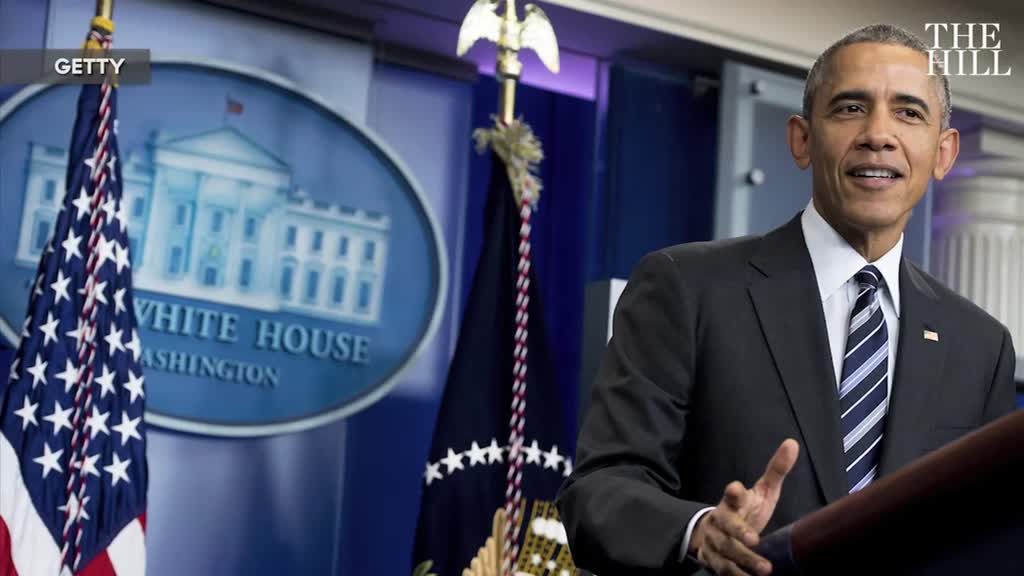 Eight years after its informant uncovered criminal wrongdoing inside Russia’s nuclear industry, the FBI has identified 37 pages of documents that might reveal what agents told the Obama administration, then-Secretary of State Hillary Clinton and others about the controversial Uranium One deal.

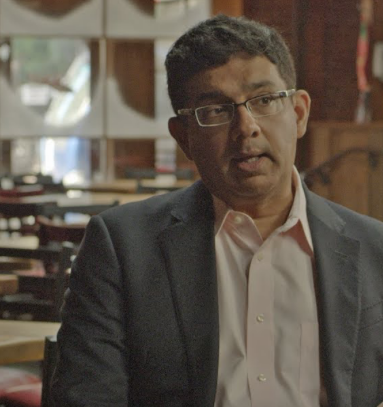
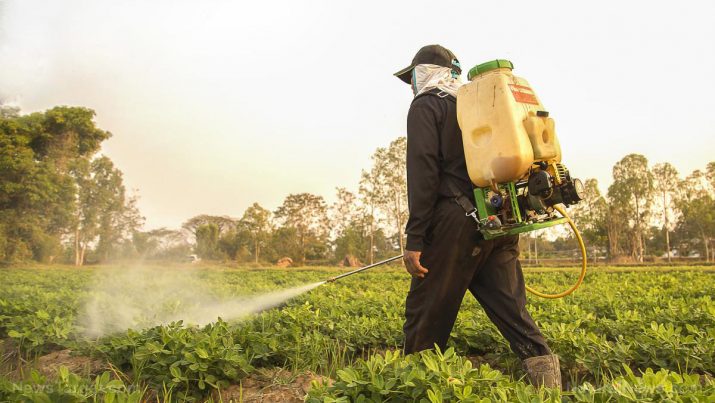
 The Trump administration did not rise, prima facie, like Venus on a half shell from the sea. Donald Trump is the result of a long process of political, cultural and social decay. He is a product of our failed democracy. The longer we perpetuate the fiction that we live in a functioning democracy, that Trump and the political mutations around him are somehow an aberrant deviation that can be vanquished in the next election, the more we will hurtle toward tyranny. The problem is not Trump. It is a political system, dominated by corporate power and the mandarins of the two major political parties, in which we don’t count. We will wrest back political control by dismantling the corporate state, and this means massive and sustained civil disobedience, like that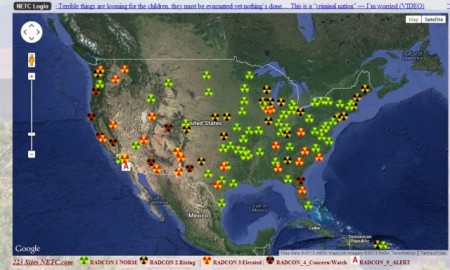




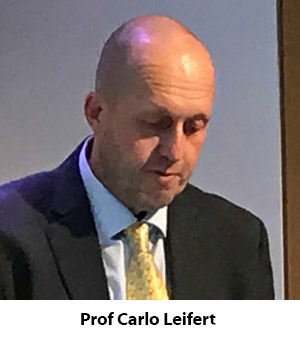



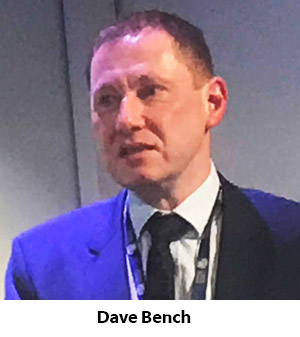 However, members of the audience were skeptical of this claim. Guy Watson, an organic farmer from Riverford Farm in Devon, said that his conventional farmer neighbour laid out his spraying schedule well in advance of the growing season and that all the pesticides were sprayed in accord with the schedule, whether they were needed or not. He suspected that farmers’ practice of IPM was confined to a paper exercise that was not borne out by the reality in the fields.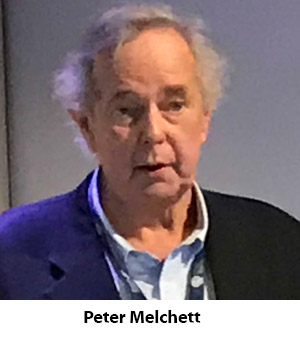


 Liberty International News