
As the number of chemicals applied to vegetables sold in supermarkets goes up 17-fold, experts say pesticides must be phased out of food production. Report by Claire Robinson
The number of chemicals applied to vegetables sold in supermarkets has increased by up to 17-fold over 40 years, according to data presented at a conference organized by the Epidemiology and Public Health Section of the Royal Society of Medicine in London on 20 November, which I attended on behalf of GMWatch.
Just as disturbing as the data on our escalating exposure to toxic pesticide mixtures was the evidence presented at the conference that the regulatory system for pesticides is failing.
Scientists explained that while the system tests the single active ingredients in pesticides, it fails to test the many accompanying chemicals (adjuvants) used in pesticide formulations to enhance the effectiveness of the active ingredients. It also fails to test the combined effects of the formulations of chemicals used in commercial pesticides, let alone the cocktail effect of being exposed to multiple pesticides, as most farmers, rural residents and consumers are.
Indeed, as one scientist pointed out, there are simply too many potential combinations of chemicals to test and regulate. Nor, we heard, does the regulatory system test low, realistic doses of these chemicals that may give rise to endocrine (hormone) disruption, which can in turn lead to serious illnesses that are increasing in the population.
Because of these facts, there is simply no way of ensuring the safe use of pesticides in agriculture.
Chemical cocktails increasing
Figures released for the first time at the conference showed that the number of toxic chemicals applied to onions, leeks, wheat and potatoes has been steadily increasing since the 1960s.
This is despite industry data showing that the volume of pesticides applied to supermarket vegetables has halved since the 1990s.
The number of pesticides applied to onions and leeks has risen 17-fold from 1.8 in 1966 to 32.6 in 2015, the data showed.
In 1974, fewer than two chemicals were applied to the average wheat crop, but this rose more than 10-fold to 20.7 in 2014. Potatoes are now sprayed with five times more chemicals than in 1975, with the number rising from 5.3 to 30.8 in 2014.
The figures were compiled by the data firm Fera Science and were only made public after the Soil Association, which certifies organic food in the UK, paid for them to be released. While Fera did not measure actual residues present in the produce, the fact that so many pesticides were applied to the growing crops suggests that at least some residues would be found if they were looked for.
The conference followed the publication of an article in the journal Science by Prof Ian Boyd, chief scientific advisor to the UK government’s department of agriculture (DEFRA). Prof Boyd wrote that the assumption by regulators around the world that it is safe to use pesticides at industrial scales across landscapes is false.
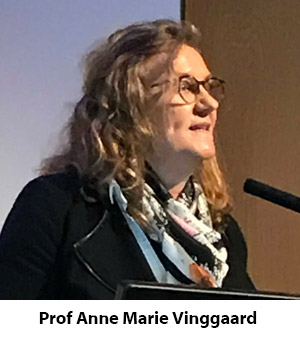
Scientist Prof Anne Marie Vinggaard of the National Food Institute in Denmark warned that chemicals that have no effect in isolation can have a pronounced toxic effect when found in mixtures. In real life we are exposed not to one chemical at a time but to mixtures. In addition, commercial pesticide formulations, many of which are endocrine disruptors, are themselves mixtures of active ingredients and adjuvants. “We are exposed to a lot of chemicals acting together,” said Prof Vinggaard. “We must take account of this cocktail effect.”
But pesticide regulations fail to do so.
Pesticides linked to low sperm quality
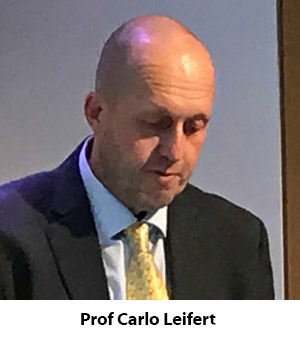
Prof Carlo Leifert, director of the Centre for Organics Research at Southern Cross University in Australia, cited research showing higher sperm counts and density in men working for the Danish organic farming association and a separate US study showing that high levels of dietary pesticide exposure were linked to low sperm quality in men.
Prof Leifert’s presentation came soon after the publication of a study implicating pesticide-treated foods in fertility problems in women. In the study, published in JAMA Internal Medicine, Harvard researchers followed 325 women at an infertility clinic and found that women who regularly ate pesticide-treated fruits and vegetables had lower success rates getting pregnant with IVF, while women who ate organic food had reduced risk of pregnancy loss and increased fertility.
Eat organic to minimize exposure
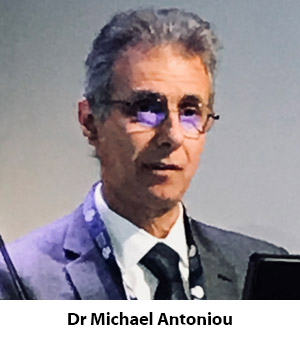
Dr Michael Antoniou, head of the Gene Expression and Therapy Group at King’s College London, told the Royal Society of Medicine conference that the adjuvants in commercial pesticide formulations can be toxic in their own right and in some cases more toxic than the declared active ingredients. Yet only the active ingredients are tested and assessed for long-term health effects in the regulatory process.
Dr Antoniou also said that research on hormone-disrupting chemicals, including pesticides, shows that very low realistic doses can be more toxic than higher doses. As pesticides are not tested for low dose effects for regulatory purposes, these effects can be missed by regulatory agencies, leading to a situation in which the public can be exposed to hormone-disrupting levels of these chemicals. This is a matter of concern because hormone disruption is implicated in a large number of diseases that are becoming increasingly widespread, such as hormone-related cancers, obesity, and diabetes.
Dr Antoniou said that regulators around the world have been slow to keep up with the scientific knowledge of harm from low doses of endocrine disrupting chemicals. These effects are not controversial in the scientific community and yet the EU has still not decided how to define endocrine disruptive chemicals, let alone how to regulate them.
Dr Antoniou described his research showing that long term exposure to very low doses of Roundup herbicide far below regulatory permitted levels caused non-alcoholic fatty liver disease (NAFLD) in rats. NAFLD has now reached epidemic proportions in the US and Europe, with around 25% of the population suffering from it.
Dr Antoniou told the audience, which included doctors who treat chemically damaged people, “As a precaution, you should minimise your exposure to pesticides. The only way to guarantee that is by eating organically.”
Industry perspectives

Occasions like this are often interesting from the point of view of finding out the industry line on the scientific and public relations challenges it is facing, and this event was no exception. One such line was offered by Sarah Mukherjee, CEO of the Crop Protection Association (CPA). Mukherjee is a former BBC journalist who began her presentation by stating that she had no scientific background. Her presentation consisted of emotive stories of her deprived childhood, with the implication that organic food is a luxury that only the affluent can afford and that pesticides were needed to ensure an affordable food supply for all. She did not address any of the scientific points presented by the earlier speakers. In fact, she was not present for those sessions and only arrived later in the day.
The tone and content of her presentation did not sit well with the detailed information on the proven effects of low-dose pesticides provided by the scientist speakers in the morning sessions. It was remarkable for its failure to offer any evidence at all to back up Mukherjee’s premise that we are better off with pesticides.
Glyphosate and cancer
Mukherjee’s closest brush with science was an attempt to exonerate glyphosate herbicides from suspicion of carcinogenicity by quoting the latest updated findings from the Agricultural Health Study (AHS) in the US. These found no link between glyphosate and non-Hodgkin’s lymphoma, a type of cancer. Mukherjee used these findings as a stick to beat IARC, the World Health Organization cancer agency that upset the pesticide industry by concluding that glyphosate was a probable carcinogen.
But what Mukherjee failed to mention was that the study update did find a link between glyphosate and another type of cancer, acute myeloid leukemia (AML) – a link that the researchers said should be followed up with further research. She also did not mention a fact pointed out by the scientist Dr Jennifer Sass – that while the link did not reach statistical significance at the 95% confidence level (a 95% certainty that the findings are not by chance but point to a real effect of glyphosate), at the 90% confidence level it would have been significant. As Sass commented, “With a deadly form of cancer like AML, pesticide applicators, farmers, and other highly exposed people may want to take protective measures, even if studies are only 90% confident in the link to AML cancer.”
Mukherjee also failed to mention that IARC took the AHS’s “no effect” finding from glyphosate into consideration in its assessment of glyphosate, since previous findings from the AHS that were already published at the time of IARC’s review had also found no effect. Other epidemiological studies did find a link between glyphosate and non-Hodgkin’s lymphoma. This contradictory evidence is why IARC said there was only “limited” proof of a glyphosate link with cancer from epidemiological studies. However, it classified glyphosate as a probable carcinogen on the basis of “sufficient” evidence in controlled laboratory studies on animals. These types of study, unlike epidemiological studies, demonstrate a causal link and are therefore a far stronger form of evidence.
I was not the only audience member to conclude that Mukherjee was seriously out of her depth among a speaker line-up of heavyweight scientists, addressing an audience of scientists, medics, and experts from relevant fields. One scientist told me he was shocked that the CPA chose to send Mukherjee as its representative to such an event: “Couldn’t they find a scientist who was willing to take this on?”
Is organic food elitist?
Mukherjee’s “organic food is elitist” meme did not play well with me. I speak as someone who at one point in my life lived in a partnership in which neither of us had any income or savings and we had to survive off very meagre state benefits. Yet we ate organic 100% of the time. We did it by cooking fresh food from scratch each day (it didn’t take much time), buying via farm box delivery schemes rather than from supermarkets, eating mostly vegetarian, and – obviously – not spending money on luxuries.
On our occasional forays to the supermarket to buy loo rolls and cleaning fluids, we were gobsmacked at the large amounts of money being spent on the weekly shop by families with trolleys full of processed food. Even without getting into discussions about the “externalized” costs of eating pesticide-contaminated food, such as getting sick, we simply could not afford that type of food. So who exactly were the elite in this situation? Certainly not us. This is just one example among many of Mukherjee’s irrational and frankly insulting approach to the vital topic of food security.

Speakers in support of pesticide safety
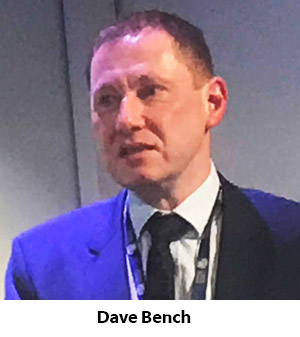
The other people speaking in support of the safety and benefits of pesticides were Dr Chris Hartfield of the National Farmers Union (NFU) and Dave Bench of the UK government’s Health and Safety Executive.
Mr Bench described the regulatory system for pesticides, which he portrayed as robust and as balancing the risks of pesticides against the benefits to society.
Dr Hartfield showed a long list of Integrated Pest Management (IPM) techniques, in which pesticides are only sprayed as a last resort as and when absolutely necessary. He said that 16,820 farmers in the UK are using these techniques on 4.4 million hectares of land.
 However, members of the audience were skeptical of this claim. Guy Watson, an organic farmer from Riverford Farm in Devon, said that his conventional farmer neighbour laid out his spraying schedule well in advance of the growing season and that all the pesticides were sprayed in accord with the schedule, whether they were needed or not. He suspected that farmers’ practice of IPM was confined to a paper exercise that was not borne out by the reality in the fields.
Mr Watson’s skepticism about UK farmers’ use of IPM was amply supported by the data presented at the conference showing the increasing numbers of pesticides sprayed on our food.
Some members of the audience who suffered repeated exposures to pesticide spraying because they lived near treated fields agreed that a cavalier attitude to the use of pesticides seemed to be the norm among conventional farmers.
Georgina Downs of the UK Pesticides Campaign, which represents rural residents affected by pesticides sprayed in their localities, commented after the conference: “There was the usual gross misinformation stated by the CPA and the NFU – most importantly their insistence that there is a rigorous regulatory system in place for pesticides. There simply is not, and this lie cannot continue to be peddled.
“The conventional chemical farming system has been an untested, unregulated, and unlawful experiment with human health and the environment that has caused untold damage.”
Is farming without pesticides possible?
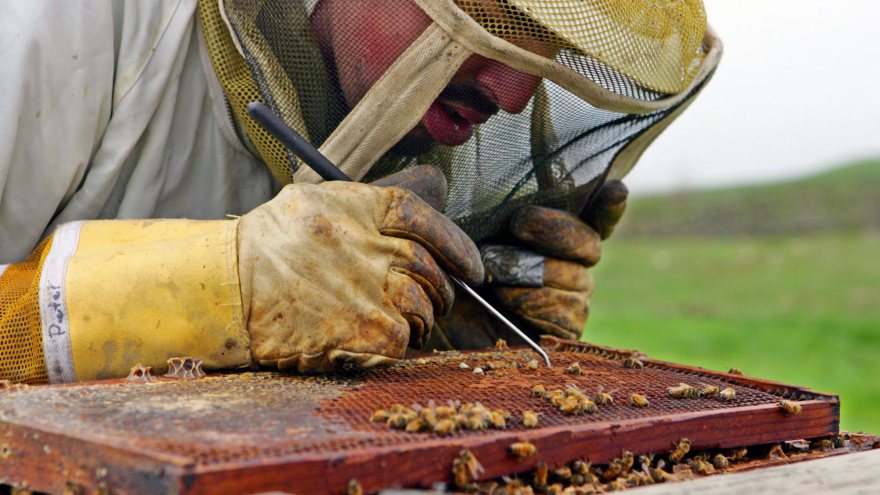
Agro-industry lobbyists would have us believe that farmers cannot manage without pesticides. What is more, they claim that even organic farmers regularly spray a vast array of pesticides permitted under organic standards. But this picture is far from the reality. Most organic farmers do not spray because they take other measures to protect their crops, such as rotating crops to prevent attacks from over-wintering pests, using barrier methods against pests, cultivating hedges and plants to attract insects and animals that eat pests, and planting cover crops to suppress weeds.
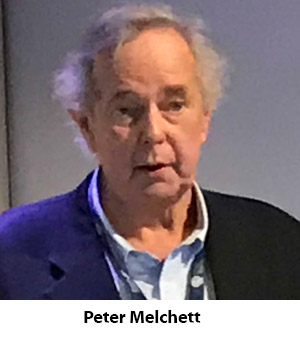
This was confirmed by the final speaker at the conference, Peter Melchett, who has been an organic farmer for 19 years and a conventional farmer before that. He said that since converting to organic he has only had to spray a single field once. The one lapse was due to his mistake in planting two related crops in the same field two years running. A pest over-wintered in the field, only to emerge the following year to devour the new crop. Mr Melchett said he never repeated his mistake – and has never had to spray again.
Take-home message
The take-home message from the non-industry speakers at the conference was that the regulatory system for pesticides has failed and cannot be reformed in a way that renders these chemicals safe. As we’ve seen, the system does not test the adjuvants, or the commercial pesticide formulations, or the chemical cocktails to which we are exposed. Neither does it test low, realistic doses that may give rise to endocrine disruption. Therefore pesticides must be eradicated from food production and farming must be entirely converted to proven-successful organic and agroecological practices.
Source: GM Watch







 Liberty International News