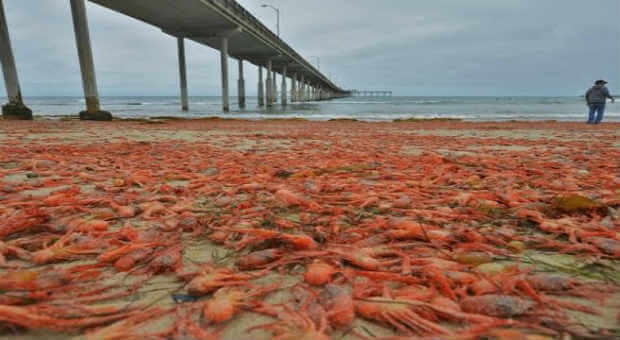
Western Wildfires Are Due to Arson and Stupidity, Not Climate Change | American Thinker

By Chris Talgo <ctalgo@heartland.org>

Unfortunately, we are living in a world where facts don’t matter much anymore. For instance, the wildfires that have swept across the western United States over the past few weeks are being almost universally blamed on climate change, even though the facts tell otherwise.

The fires in California and Oregon are not due to climate change. They are due to arson and sheer stupidity on the part of many, including those who are responsible for the environmental stewardship that is supposed to prevent them in the first place.

According to the Cal Fire San Bernardino Unit, “the El Dorado Fire, burning near Oak Glen in San Bernardino County, was caused by a smoke generating pyrotechnic device, used during a gender reveal party.” Chalk this one up to stupidity, not climate change.

Likewise, the Almeda Fire in Oregon, which has burned more than 600 homes, cannot be tied to climate change whatsoever because it was caused by arsonists. As Ashland Police Chief Tighe O’Meara said, “We have good reason to believe that there was a human element to it. We’re going to pursue it as a criminal investigation until we have reason to believe that it was otherwise.”

There are several more reports of arsonists instigating the blazes that are currently destroying hundreds of thousands of acres in the West.

Despite these facts, Rep. Nancy Pelosi (D-CA), recently said, “Mother Earth is angry. She’s telling us, whether, she’s telling us with hurricanes on the Gulf Coast, fires in the West, whatever it is, that climate crisis is real and has an impact.”

Of course, Pelosi didn’t offer one iota of evidence to support her contention that climate change is somehow responsible for all this. And since when did Mother Earth begin speaking to the Speaker of the House?

Not to be outdone, California Gov. Gavin Newsom also laid blame for his state’s out-of-control wildfires on climate change. “I say this lovingly — not as an ideologue, but as someone who prides himself on being open to argument, interested in evidence — but I quite literally have no patience for climate change deniers,” Newsom said. “It’s completely inconsistent, that point of view, with the reality on the ground, the facts as we are experiencing. You may not believe it intellectually, but your own eyes, your own experiences tell a different story.”

Conveniently, Newsom failed to mention that California has one of the poorest records of implementing commonsense environmental stewardship protocols, which no doubt has played a significant factor in the Golden State’s proclivity for wildfires over the past several years.

According to California’s state oversight agency, “During its review, the Commission found that California’s forests suffer from neglect and mismanagement, resulting in overcrowding that leaves them susceptible to disease, insects and wildfire.”

In other words, under decades of Democratic leadership, California has woefully underinvested in forest management efforts, which have left forests grossly overgrown and prone to wildfire.

Making matters worse, California’s insistence on becoming the renewable energy utopia of the United States has led the state’s primary energy utility, PG&E, to disregard properly maintaining existing energy infrastructure.

As the San Diego Union Tribune reports, “every dollar spent on additional costs of renewable energy results in a dollar not available to spend on culling vegetation, insulating power lines, placing lines underground and other measures.”

As if that were not enough, the article also notes, “a report prepared by the independent consulting firm Beacon Economics for the San Francisco-based think tank Next 10 estimated California wildfires last year produced about nine times more emissions than were reduced across the entire state’s economy between 2016 and 2017 — and wildfires contributed more than the commercial, residential or agriculture sectors did in 2017.”

Ironically, Newsom’s naïve attempt (and his predecessors) to make the Golden State the renewable energy mecca has actually led to more carbon emissions because the state’s abundant forests have been turned into a giant tinderbox.

Adding insult to injury, Newsom has pledged to double-down on his efforts to make California more reliant on renewable energy, regardless of the uptick in wildfires and rolling blackouts.

And the claim that wildfires are increasing is 100 percent false. According to the Congressional Research Service, the prevalence of wildfires has decreased over the past three decades. As the report notes, “Over the past 10 years, there were an average of 64,100 wildfires annually and an average of 6.8 million acres burned annually. In 2019, 50,477 wildfires burned 4.7 million acres nationwide, below the annual average for both statistics.”

John Adams once said, “Facts are stubborn things. They cannot be altered by our wishes, our inclinations, or the dictates of our passions.”

Fact-shunners like Gov. Newsom and Rep. Pelosi ought to put their wishes and passions aside and deal with the reality that their state is being decimated by wildfires due to their incompetence and ignorance, not because of so-called climate change.

Source: American Thinker

‘A Bomb in the Center of the Climate Movement’: Michael Moore Damages Our Most Important Goal

mckibben-vs-michael-moore-2By Bill McKibben

If you’re looking for a little distraction from the news of the pandemic — something a little gossipy, but with a point at the end about how change happens in the world — this essay may soak up a few minutes.

I’ll tell the story chronologically, starting a couple of weeks ago on the eve of the 50th Earth Day. I’d already recorded my part for the Earth Day Live webcast, interviewing the great indigenous activists Joye Braum and Tara Houska about their pipeline battles. And then the news arrived that Oxford University — the most prestigious educational institution on planet earth — had decided to divest from fossil fuels. It was one of the great victories in that grinding eight-year campaign, which has become by some measures the biggest anti-corporate fight in history, and I wrote a quick email to Naomi Klein, who helped me cook it up, so that we could gloat together just a bit. I was, it must be said, feeling pleased with myself.

Ah, but pride goeth before a fall. In the next couple of hours came a very different piece of news. People started writing to tell me that the filmmaker Michael Moore had just released a movie called Planet of the Humans on YouTube. That wasn’t entirely out of the blue — I’d been hearing rumors of the film and its attacks on me since the summer before, and I’d taken them seriously. Various colleagues and I had written to point out that they were wrong; Naomi had in fact taken Moore aside in an MSNBC greenroom and restated what she had already laid out to him in writing. But none of that had apparently worked; indeed, from what people were now writing to tell me, I was the main foil of the film. I put together a quick response, and I hoped that it would blow over.

But it didn’t. Perhaps because everyone’s at home with not much to do, lots of people watched it — millions by some counts. And I began to hear from them. Here’s an email that arrived first thing Earth Day morning: “Happy Dead Earth Day. Time’s up Bill. You have been outed for fraud. What a MASSIVE disappointment you are. Sell out. Hypocrite beyond imagination. Biomass bullshit seller. Forest destroyer. How is it possible you have led all of us down the same death trap road of false hope? The YOUTH! How dare you! Shame on you!” More followed, to say the least. (If you’re wondering whether it hurts to get this kind of email, the answer is yes. In a time of a pandemic, it’s hard to feel too much self-pity, but that doesn’t mean it’s easy to read someone accusing you of betraying your own life’s work.)

Basically, Moore and his colleagues have made a film attacking renewable energy as a sham and arguing that the environmental movement is just a tool of corporations trying to make money off green energy. “One of the most dangerous things right now is the illusion that alternative technologies, like wind and solar, are somehow different from fossil fuels,” Ozzie Zehner, one of the film’s producers, tells the camera. When visiting a solar facility, he insists: “You use more fossil fuels to do this than you’re getting benefit from it. You would have been better off just burning the fossil fuels.”

That’s not true, not in the least — the time it takes for a solar panel to pay back the energy used to build it is well under four years. Since it lasts three decades, it means 90 percent of the power it produces is pollution-free, compared with zero percent of the power from burning fossil fuels. It turns out that pretty much everything else about the movie was wrong — there have been at least 24 debunkings, many of them painfully rigorous; as one scientist wrote in a particularly scathing takedown, “Planet of the Humans is deeply useless. Watch anything else.” Moore’s fellow filmmaker Josh Fox, in an epic unraveling of the film’s endless lies, got in one of the best shots: “Releasing this on the eve of Earth Day’s 50th anniversary is like Bernie Sanders endorsing Donald Trump while chugging hydroxychloroquine.”

Here’s long-time solar activist (and, oh yeah, the guy who wrote “Heart of Gold“) Neil Young: “The amount of damage this film tries to create (succeeding in the VERY short term) will ultimately bring light to the real facts, which are turning up everywhere in response to Michael Moore’s new erroneous and headline grabbing TV publicity tour of misinformation. A very damaging film to the human struggle for a better way of living, Moore’s film completely destroys whatever reputation he has earned so far.”

But enough about the future of humanity. Let’s talk about me, since I got to be the stand-in for “corporate environmentalism” for much of the film. Cherry-picking a few clips culled from the approximately ten zillion interviews, speeches, and panels I’ve engaged in these past decades, the filmmaker made two basic points. One, that I was a big proponent of biomass energy — that is, burning trees to generate power. Two, that I was a key part of “green capitalism,” trying somehow to profit from selling people on the false promise of solar and wind power.

The first has at least a kernel of — not truth, but history. Almost two decades ago, wonderful students at the rural Vermont college where I teach proposed that the oil-burning heat plant be replaced with one that burned woodchips. I thought it was a good idea, and when it finally came to pass in 2009, I spoke at its inauguration. This was not a weird idea — at the time, most environmentalists thought likewise, because as new trees grow back in place of the ones that have been cut, they will soak up the carbon released in the burning. “At that point I would have done the same,” Bill Moomaw, who is one of the most eminent researchers in the field, put it. “Because we hadn’t done the math yet.” But as scientists did begin to do the math, a different truth emerged: Burning trees put a puff of carbon into air now, which is when the climate system is breaking. That this carbon may be sucked up a generation hence is therefore not much help. And as that science emerged, I changed my mind, becoming an outspoken opponent of biomass. (Something else happened too: the efficiency of solar and wind power soared, meaning there was ever less need to burn anything. The film’s attacks on renewable energy are antique, dating from a decade ago, when a solar panel cost 10 times what it does today; engineers have since done their job, making renewable energy the cheapest way to generate power on our planet.)

As for the second charge, it’s simply a lie — indeed, it’s the kind of breathtaking black-is-white lie that’s come to characterize our public life at least since Vietnam veteran John Kerry was accused by the right wing of committing treason. I have never taken a penny from green energy companies or mutual funds or anyone else with a role in these fights. I’ve never been paid by environmental groups either, not even 350.org, which I founded and which I’ve given all I have to give. I’ve written books and given endless talks challenging the prevailing ideas about economic growth, and I’ve run campaigns designed entirely to cut consumption.

Let me speak as plainly as I know how. When it comes to me, it’s not that Planet of the Humans overstates the case, or gets it partly wrong, or opens an argument worth having: it is a sewer. I’ll finish with just the smallest example: In the credits, it defensively claims that I began opposing biomass only last year, in response to news of this film. In fact, as we wrote the filmmakers on numerous occasions, I’ve been on the record about the topic for years. Here, for instance, is a piece from 2016 with the not very subtle title “Burning Trees for Electricity Is a Bad Idea.” Please read it. When you do, you will see that the filmmakers didn’t just engage in bad journalism (though they surely did), they acted in bad faith. They didn’t just behave dishonestly (though they surely did), they behaved dishonorably. I’m aware that in our current salty era those words may sound mild, but in my lexicon they are the strongest possible epithets.

A reasonable question: Given that the film has been so thoroughly debunked, can it really cause problems?

I’ve spent the past three decades, ever since I wrote The End of Nature at the age of 28, deeply committed to realism: no fantasy, no spin, no wish will help us deal with the basic molecular structure of carbon dioxide. That commitment to reality has to carry over into every part of one’s life. So, realistically, most of the millions of people who watch this film will not read the careful debunkings. Most of them will assume, in the way we all do when we watch something, that there must be something there, it must be half true anyway. (That’s why propaganda is effective).

Actually, we won’t. We’ve dropped the price of sun and wind 90 percent in the last decade (since the days when Moore, et al. were apparently collecting their data). As Stanford professor Marc Jacobson has made clear, we could get much of the way there in relatively short and affordable order, by building out panels and turbines, by making our lives more efficient, by consuming less and differently. But that would require breaking the political power of the fossil fuel industry, which in turn would require a big movement, which in turn would require coming together, not splitting apart.

It’s that kind of movement we’ve been trying to build for a long time. I remember its first real gathering in force in the U.S., with tens of thousands of us standing on the Mall in Washington on a bitter February day in 2013 to demand an end to Keystone and other climate action. “All I’ve ever wanted to see was a movement of people to stop climate change,” I told the crowd. “And now I’ve seen it.”

We did an immense amount of work to get to that moment, helping will a movement into being. But from that moment on, for me it’s been mostly gravy — the great pleasure of watching the movement grow and then explode. Watching the kids who had built college divestment campaigns graduate to form the Sunrise Movement and launch the Green New Deal. Watching Extinction Rebellion start to shake whole cities. Watching the emergence of the climate strikers — and getting to know Greta Thunberg and many of the 10,000 others like her across the world. In each case, I’ve tried to help a little, largely just by amplifying their voices and urging others to pay attention.

I remember very well the night that same autumn after an overflow talk in Providence when my daughter, then a sophomore at Brown, said something typically wise to me: “I think you should probably be less famous in the years ahead.” I knew what she meant even as she said it, because of course I’d already sensed a bit of it myself. It wasn’t that she thought I was a bad leader — it was that we needed to build a movement that was less attached to leaders in general (and probably white male ones in particular) if we were going to attain the kind of power we needed.

And so, even then I began consciously backing off, not in my work but in my willingness to dominate the space. I stepped down as board chair at 350.org, and really devoted myself to introducing people to new leaders from dozens of groups. So many of those leaders come from frontline communities, indigenous communities — from the people already paying an enormous price for the warming they did so little to cause. Their voices are breaking through, and thank heaven: If you follow my twitter feed, you’ll see that the most common word, after “heatwave”, is “thanks,” offered to whoever is doing something useful and good.

If you get the chance to read the (free) New Yorker climate newsletterI started earlier this year, you’ll see the key feature is called Passing the Mic: So far I’ve interviewed Nicole Poindexter, Jerome Foster II, Mary Heglar, Ellen Dorsey, Thea Sebastian, Virginia Hanusik, Tara Houska, Vann R. Newkirk II, and Christiana Figueres; this week Jane Kleeb; next week Alice Arena, helping lead the fight against a new gas pipeline across Massachusetts.

I think that one thing that defines those movements is their adversaries — in this case the fossil fuel industry above all. And I think the thing that weakens those movements is when they start trying to identify adversaries within their ranks. Much has been made over the years about the way that progressives eat their own, about circular firing squads and the like. I think there’s truth to it: there’s a collection of showmen like Moore who enjoy attracting attention to themselves by endlessly picking fights. They’re generally not people who actually try to organize, to build power, to bring people together. That’s the real, and difficult, work — not purity tests or calling people out, but calling them in. At least, that’s how it seems to me: The battle to slow down global warming in the short time that physics allots us requires ever bigger movements.

It’s been a great privilege to get to help build those movements. And if I worry that my effectiveness has been compromised, it’s not a huge worry, precisely because there are now so many others doing this work — generations and generations of people who have grown up in this fight. I think, more or less, we’re all headed in the right direction, that people are getting the basic message right: conserve energy; replace coal and gas and oil with wind and sun; break the political power of the fossil fuel industry; demand just transitions for workers; build a world that reduces ruinous inequality; and protect natural systems, both because they’re glorious and so they can continue to soak up carbon. I don’t know if we’re going to get this done in time — sometimes I kick myself for taking too long to figure out we needed to start building movements. But I know our chances are much improved if we do it together.

Source: Rolling Stone

The Truth Behind Coronavirus Pandemic: COVID-19 Lockdown & The Economic Crash | London Real


https://youtu.be/gMTZu6_TjU8

Johnny Liberty, Editor’s Notes: Why Destroy the Global Economic System During the Coronavirus Crisis (and replace it with another that better serves the Global Power Structure)?

  • Global Bankers will pull trillions of dollars of equity out of the economic system (stocks, real estate values, business values) to rollback the debt obligations of the international bankers (because of the nature of the debt-based monetary system)
  • Total Economic Shutdown will destroy millions of family businesses, small businesses and medium sized businesses leaving a larger share to the big, corporate players.
  • Total Economic Shutdown will drop millions of people in countries around the world to the very bottom of the economic ladder. This is economic suicide for We the People and a few thousand dollars of government subsidies will not restore even a fraction of the losses.
  • Don’t believe what you’re being told because somebody in a suit said so. Question authority and do your own independent research.
  • The Coronavirus crisis is not about public health or caring for the elderly.
  • The Global Power Structure doesn’t care one iota about the health and welfare of the elderly. Protecting the elderly is a convenient excuse to destroy the existing economic order and impose a New World Order run by an elite few at the top of the pyramid.
  • Who benefits? The Global Power Structure, or 1%, will be the one who will benefit.
  • What is the result? To impose a Global Technocracy run by experts, scientists, technocrats, politicians and artificial intelligence under their total control. Your every move will be watched and tracked. You will be plugged into “The Matrix”.
  • For this you can thank the Coronavirus panic and overreaction.

Source: London Real & YouTube

Noam Chomsky: Sanders Threatens the Establishment by Inspiring Popular Movements| Truthout

Editor’s Note: While I don’t agree with Chomsky’s assertions that Trump committed numerous crimes (which were neither enumerated or specified even in the impeachment process), or that Trump naively be compared to Hitler, Chomsky’s analysis of the current political situation on the left is of great value.

The impeachment trial of Donald Trump for power abuses is winding down, with his acquittal all but ensured when the Senate reconvenes on Wednesday to vote on the articles of impeachment. Yet, his real crimes continue to receive scant attention, and it is Sen. Bernie Sanders who is regarded by the political establishment as the most dangerous politician because of his commitment to a just and equitable social order and a sustainable future. Meanwhile, the conclusion of the Davos meeting in January demonstrated the global elites’ ongoing commitment to unimpeded planetary destruction.

This is indeed the state of the contemporary U.S. political environment, as the great public intellectual Noam Chomsky points out in thisexclusive interview for Truthout.

C.J. Polychroniou: The impeachment trial of Donald Trump is nearly over, and what a farce it has been — something you had predicted from the start, which is also the reason why you thought that an impeachment inquiry was a rather foolish move on the part of the Democrats. With that in mind, what does this farcical episode tell us about the contemporary state of U.S. politics, and do you anticipate any political fallout in the 2020 election?

Noam Chomsky: It seemed clear from the outset that the impeachment effort could not be serious, and would end up being another gift by the Democrats to Trump, much as the Mueller affair was. Any doubts about its farcical nature were put to rest by its opening spectacle: Supreme Court Chief Justice John Roberts struggling to keep a straight face while swearing in senators who solemnly pledged that they would be unmoved by partisan concerns, and at once proceeded as everyone know they would to behave and vote along strictly party lines. Could there be a clearer exhibition of pure farce?

Are the crimes discussed a basis for impeachment? Seems so to me. Has Trump committed vastly more serious crimes? That is hardly debatable. What might be debatable is whether he is indeed the most dangerous criminal in human history (which happens to be my personal view). Hitler had been perhaps the leading candidate for this honor. His goal was to rid the German-run world of Jews, Roma, homosexuals and other deviants, along with tens of millions of Slav Untermenschen. But Hitler was not dedicated with fervor to destroying the prospects of organized human life on Earth in the not-distant future (along with millions of other species).

Trump is. And those who think he doesn’t know what he’s doing haven’t been looking closely.

Is that a wild and ludicrous exaggeration? Or the very simple and apparent truth? It’s not difficult to figure out the answer. We’ve discussed it often before. There is no need to review what is happening on Trump’s watch while he devotes every effort to accelerating the race to catastrophe, trailed by such lesser lights as Brazil’s Jair Bolsonaro and Australia’s Scott Morrison.

Every day brings new forebodings. We have just learned, for example, that the gigantic Thwaites Glacier in West Antarctica has been eroding from warm water below. The Washington Postdescribes this as “a troubling finding that could speed its melt in a region with the potential to eventually unleash more than 10 feetof sea-level rise,” adding, “Scientists already knew that Thwaites was losing massive amounts of ice more than 600 billion tonsover the past several decades, and most recently as much as 50 billion tons per year.It has now been confirmed, as suspected, thatthis was occurring because a layer of relatively warmer ocean water, which circles Antarctica below the colder surface layer, had moved closer to shore and begun to eat away at the glaciers themselves, affecting West Antarctica in particular.The chief scientist involved in the study warns that this may signalan unstoppable retreat that has huge implications for global sea-level rise.

That’s today. Tomorrow will be something worse.

What’s causing the warmer water? No secret. This is only one of the likely irreversible tipping points that may be reached if “the Chosen One,” as he modestly describes himself, is granted another four years to carry out his project of global destruction.

We have just witnessed an extraordinary event at the January Davos meeting of the Masters of the Universe, as they are called; for Adam Smith, they were only “the masters of mankind,” but 250 years ago it was just British merchants and manufacturers.

The conference opened with Trump’s oration about what a fabulous creature he is. The encomium was interrupted only by a comment that we should not bealarmistabout the climate. His Magnificence was followed by the quiet and informed comments of a 17-year old girl instructing the heads of state, CEOs, media leaders and grand intellectuals about what it means to be a responsible adult.

Quite a spectacle.

Trump’s war on organized life on Earth is only the barest beginning. More narrowly, in recent days, the Chosen One has issued executive orders ridding the country of the plague of regulations that protect children from mercury poisoning and preserve the country’s water supplies and lands, along with other impediments to further enrichment of Trump’s primary constituency, extreme wealth and corporate power.

On the side, he has been casually proceeding to dismantle the last vestiges of the arms control regime that has provided some limited degree of security from terminal nuclear war, eliciting cheers from the military industry. And as we have just learned, the great pacifist who is committed to end interventions “dropped more bombs and other munitions in Afghanistan last year than any other year since documentation began in 2006, Air Force data shows.

He is also ramping up his acts of war which is what they are against Iran. I won’t even go into his giving Israel what the Israeli press calls “a gift to the right,” formally giving the back of his imperial hand to international law, the World Court, the UN Security Council and overwhelming international opinion, while shoring up the Evangelical vote for the 2020 election. The prerogative of supreme power.

In brief, the list of Trump’s crimes is immense, not least the worst crime in human history. But none merit a nod in the impeachment proceedings. This is hardly a novelty; rather the norm. The current proceedings are often compared with Watergate. Nixon’s hideous crimes were eliminated from the charges against him despite the efforts of Rep. Robert Frederick Drinan and a few others. The Nixon impeachment charges focused on his illegal acts to harm Democrats.

Any resemblance to the farce that is now winding up? Does it suggest some insight into what motivates the powerful?

Speaking of the 2020 election, the corporate Democratic establishment and the liberal media are once again mobilizing to undermine Bernie Sanders, even though he may very well be the most electable Democrat. First, can you summarize for us what you perceive to be the core of Sanders’s politico-ideological gestalt, and then explain what scares both conservatives and liberals the possibility of someone like Sanders leading the country?

The core of Sanders’spolitico-ideological gestaltis his long-standing commitment to the interests of the large majority of the population, not the top 0.1 percent (not 1 percent, 0.1 percent) who hold more than 20 percent of the country’s wealth, not the very rich who were the prime beneficiaries of the slow recovery from the 2008 disaster caused by financial capital. The U.S. achievement in this regard far surpasses that of other developed countries, so we learn from recently released studies, which show that in the U.S., 65 percent of the growth of the past decade went to the very rich; next in line was Germany, at 51 percent, then declining sharply. The same studies show that if current trends persist, in the next decade all growth in the U.S. will go to the rich.

The welfare of these sectors has never been Sanders’s concern.

The Democratic establishment and liberal media are hardly likely to look kindly on someone who forthrightly proclaims, I have no use for those regardless of their political partywho hold some foolish dream of spinning the clock back to days when unorganized labor was a huddled, almost helpless mass…. Only a handful of unreconstructed reactionaries harbor the ugly thought of breaking unions. Only a fool would try to deprive working men and women of the right to join the union of their choice.By right to work” laws, for example, or by hiring scabs, or by threatening to ship jobs to Mexico to undermine organizing efforts, to sample the bipartisan political leadership.

That’s surely the kind of socialist wild man whom the country is not ready to tolerate.

The wild man in this case is President Dwight Eisenhower, the last conservative president. His remarks are a good illustration of how far the political class has shifted to the right under Clintonite “New Democrats” and the Reagan-Gingrich Republicans. The latter have drifted so far off the political spectrum that they are ranked near neo-fascist parties in the international spectrum, well to the right of “conservatives.”

Even more threatening than Sanders’s proposals to carry forward New Deal-style policies, I think, is his inspiring a popular movement that is steadily engaged in political action and direct activism to change the social order — a movement of people, mostly young, who have not internalized the norms of liberal democracy: that the public are “ignorant and meddlesome outsiders” who are to be “spectators, not participants in action,” entitled to push a lever every four years but are then to return to their TV sets and video games while the “responsible men” look after serious matters.

This is a fundamental principle of democracy as expounded by prominent and influential liberal 20thcentury American intellectuals, who took cognizance of “the stupidity of the average man” and recognized that we should not be deluded by “democratic dogmatisms about men being the best judges of their own interests.” They are not; we are — the “responsible men,” the “intelligent minority.” The “bewildered herd” must therefore be “put in their place” by “necessary illusions” and “emotionally potent simplifications.” These are among the pronouncements of the most influential 20thcentury public intellectual, Walter Lippmann, in his “progressive essays on democracy”; Harold Lasswell, one of the founders of modern political science; and Reinhold Niebuhr, the admired “theologian of the (liberal) establishment.” All highly respected Wilson-FDR-Kennedy liberals.

Inspiring a popular movement that violates these norms is a serious attack on democracy, so conceived, an intolerable assault against good order.

I believe we witnessed something similar in the last U.K. elections in the case of Jeremy Corbyn. Do you agree? And, if so, what does this tell us about liberal democracy, which is nowadays in serious trouble itself on account of the rise and spread of authoritarianism and the far right in many parts of the world?

There are definite similarities. Corbyn, a decent and honorable man, was subjected to an extraordinary flood of vilification and defamation, which he was unable to confront. At the same time, polls indicated that the policies that he put forth and that had led to a remarkable victory for Labour in 2017 remained popular. A special feature in the U.K. was Brexit, a matter I won’t go into here (my personal opinion, for what it’s worth, is that it is a serious blow to both Britain and the EU, and is likely to cause Britain — or what remains of it — to become even more of a vassal of the U.S. than it has been under Blair’s New Labour and the Tories, whose social and economic policies have caused the country great harm). Corbyn’s vacillation on the Brexit issue, which became a toxic one, surely contributed to the negative feelings about him that seem to have been a major factor in the electoral disaster for Labour, but it was only one.

As in the case of Sanders, I suspect that the prime reason for the bitter hatred of Corbyn on the part of a very wide spectrum of the British establishment is his effort to turn the Labour Party into a participatory organization that would not leave electoral politics in the hands of the Labour bureaucracy and would proceed beyond the narrow realm of electoral politics to far broader and constant activism and engagement in public affairs.

More generally, much of the world is aflame. As the men of Davos recognized with trepidation at their January meeting, the peasants are coming with their pitchforks: The neoliberal order they have imposed for the past 40 years, while ultra-generous to them and their class, has had a bitter impact on the general population. A leading theme at Davos was that the Masters must declare that they are changing their stance from service to the rich to attending to the concerns of “stakeholders” — working people and communities. Another theme was that while not “alarmists,” they acknowledge the threat of global warming.

The unstated implication is that there is no need for regulations and other actions about climate change: We Big Boys will take care of it. Greta Thunberg and the other children demonstrating out there can go back to school. And now that we see the flaws in our neoliberal model of capitalism, you can put aside all those disruptive political programs calling for health care, rights of workers, women, the poor. We’re taking care of it, so just go back to your private pursuits, keeping to democratic norms.

As the neoliberal order is visibly collapsing, it is giving rise to “morbid symptoms” (to borrow Gramsci’s famous phrase when the fascist plague was looming). Among these are the spread of authoritarianism and the far right that you mention. More generally, what we are witnessing is quite understandable anger, resentment and contempt for the political institutions that have implemented the neoliberal assault — but also the rise of activist movements that seek to overcome the ills of global society and to stem and reverse the race to destruction.

The confrontation could hardly have been exhibited more dramatically than by the appearance of Greta Thunberg immediately after the most powerful man in the worldthe leader in the race to destruction had admonished the Masters to disdain the “heirs of yesterday’s foolish fortune tellers” (virtually 100 percent of climate scientists) and to take up his wrecking ball.

Source: Truthout

Bernie Sanders unveils comprehensive $16.3 trillion Green New Deal plan amid climate crisis | CNN

Editor’s Note: I include this post as an interesting conversation starter, but do not consider the Green New Deal a sound proposal for addressing climate change (unless you intend on bankrupting the country to achieve it). 

By Gregory King

Sen. Bernie Sanders on Thursday added progressive meat to the bones of the Green New Deal with the release of his comprehensive $16.3 trillion climate change program ahead of a campaign stop in Paradise, California, the city leveled by a devastating 2018 wildfire.

Sanders was an early backer of the activist-inspired Green New Deal framework and introduced, with Reps. Alexandria Ocasio-Cortez and Earl Blumenauer, a resolution in July to declare climate change a national emergency.

“Young people, advocates, tribes, cities and states all over this country have already begun this important work,” the campaign says in its new pitch, “and we will continue to follow their lead.”

The Sanders plan channels the rhetoric of the climate movement, calling for a World War II-style mobilization to halt and reverse the effects of global warming over a decade. In the process, the campaign claims, it would create 20 million new jobs in “steel and auto manufacturing, construction, energy efficiency retrofitting, coding and server farms, and renewable power plants.” Sanders’ blueprint will be compared to proposals put forward by Sen. Elizabeth Warren and Washington Gov. Jay Inslee, who released a robust suite of cross-sector plans before ending his campaign on Wednesday.

In a CNN poll from late April, 96% of potential Democratic voters said “aggressive action to slow the effects of climate change” was somewhat or very important — the closest to a unanimous finding in the survey. The Democratic National Committee has so far not hosted a climate-specific debate, but 10 of the 2020 primary candidates will take part in a September 4 CNN town hall focused exclusively on the crisis.

During his time in office, President Donald Trump has rolled back dozens of environmental rules and regulations. Sanders in his plan promises to “aggressively enforce” the Clean Air Act, through the Environmental Protection Agency, to restrict dangerous emissions.

But the proposals unveiled Thursday go much further.

Sanders’ prime targets include meeting the Intergovernmental Panel on Climate Change’s goal of 100% renewable energy for electricity and transportation by 2030; cutting domestic emissions by 71% over that period; creating a $526 billion electric “smart grid;” investing $200 billion in the Green Climate Fund; and prioritizing what activists call a “just transition” for fossil fuel workers who would be dislocated during the transition.

The Vermont independent would also cut off billions in subsidies to fossil fuel companies and impose bans on extractive practices, including fracking and mountaintop coal mining, while halting the import and export of coal, oil and natural gas. Additionally, he would use his Justice Department and the Securities and Exchange Commission to pursue criminal and civil cases against energy companies that hid or withheld information — over decades — about the damage their businesses were doing to the environment.

Sanders in 2015 and 2016, during his first presidential campaign, memorably called climate change the foremost national security threat. In recent remarks on the campaign trail, he has promised to reassert US power internationally by taking a more assertive role in climate talks.

“Climate change cannot only be addressed by the United States. It is a global issue,” Sanders said this week in Iowa. “But my promise to you is, instead of ignoring this issue as Trump does, I will help lead the world in bringing countries together to address the issue.”

The proposal is the most in-depth to date from Sanders, who says it will “pay for itself over 15 years” and includes new details on the potential funding sources.

The most significant, at an estimated $6.4 trillion, would come from revenue generated by the sale of clean energy — which will be administered by publicly owned utilities — between 2023 and 2035. Before that, Sanders would cut military spending used to protect global energy interests by more than $1.2 trillion while hitting up fossil fuel companies for more than $3 trillion in “litigation (against polluters), fees, and taxes.” An additional $2.3 trillion, the campaign says, would be raised from the taxes paid on the 20 million new jobs it promises to create.

Part of that money would go toward mitigating the damage already done by climate change — with $162 billion set aside for coastal communities under threat and an additional $18 billion going toward firefighters to combat a spike in dangerous wildfires like the one in Paradise.

To deliver the political will for such a radical transformation, Sanders, as he has throughout his presidential campaigns, is counting on the youth-led activists and progressive movements that he has often inspired and, now, hopes to count on as a source of electoral strength.
Their continued vigor and ability to successfully pressure elected officials is written into the plan.

“We will do this,” the campaign says, “by coming together in a truly inclusive movement that prioritizes young people, workers, indigenous peoples, communities of color, and other historically marginalized groups to take on the fossil fuel industry and other polluters to push this over the finish line and lead the globe in solving the climate crisis.”

Study touts planting 1 trillion trees as most effective climate change solution | The Hill

Healthy green trees in a forest of old spruce, fir and pine trees in wilderness of a national park. Sustainable industry, ecosystem and healthy environment concepts and background.

The cheapest way to halt the effects of climate change could be planting 1 trillion trees, according to a new study.

The study in the journal Science, first reported by The Associated Press, found that planting trees could be the most effective way to remove carbon from the atmosphere, but cautioned that it would have little effect without a reduction of emissions around the globe.

“This is by far — by thousands of times — the cheapest climate change solution” study co-author Thomas Crowther, an ecologist at the Swiss Federal Institute of Technology, said.

“It’s certainly a monumental challenge, which is exactly the scale of the problem of climate change,” he added.

Though, Crowther cautioned, “None of this works without emissions cuts.”

Scientists with the United Nations have called for a major reduction in carbon emissions over the next decade to stave off the worst effects of climate change, including rising sea levels and dangerous weather phenomena.

Lawmakers around the world have debated on how to address the issue, and in 2017 the U.S. withdrew from a major accord meant to battle climate change due to President Trump‘s opposition to the pact.

Democratic candidates for president, including former Vice President Joe Biden, have called for the U.S. to rejoin the agreement. Progressives are pushing an ambitious plan to cut U.S. carbon emissions, the Green New Deal, introduced earlier this year by Sen. Ed Markey (D-Mass.) and Rep. Alexandria Ocasio-Cortez (D-N.Y.).

If enacted, the Green New Deal calls for the transition of America’s energy grid away from fossil fuels to renewable energy.

Source: The Hill

Planting Billions of Trees Is the ‘Best Climate Change Solution Available Today,’ Study Finds | EcoWatch

Planting more than 500 billion trees could remove around 25 percent of existing carbon from the atmosphere, a new study has found. What’s more: there’s enough space to do it.

The study, published in Science Friday, set out to assess how much new forest the earth could support without encroaching on farmland or urban areas and came up with a figure of 0.9 billion hectares, an area roughly the size of the U.S., BBC News reported. That makes reforestation “the most effective solution” for mitigating the climate crisis, the researchers concluded.

“Our study shows clearly that forest restoration is the best climate change solution available today and it provides hard evidence to justify investment,” senior study author and ETH-Zürich Professor Tom Crowther said, as BBC News reported. “If we act now, this could cut carbon dioxide in the atmosphere by up to 25 percent, to levels last seen almost a century ago.”

The new trees would remove around 200 gigatonnes of carbon, or two thirds of what humans have pumped into the atmosphere since the industrial revolution.

However, the researchers emphasized that tree planting was not a replacement for reducing greenhouse gas emissions or phasing out the use of fossil fuels.

“None of this works without emissions cuts,” Crowther told Time.

Even if tree planting began today, it would take 50 to 100 years for the new trees to soak up those 200 gigatonnes of carbon, he told The Guardian. And, as National Geographic pointed out, the researchers found that potential tree-planting land could shrink by one-fifth by 2050 even if global temperature rise is limited to 1.5 degrees Celsius above pre-industrial levels, as some tropical areas could grow too hot to support forests.

Even so, Crowther said tree planting was an important means of immediate climate action.

It’s “a climate change solution that doesn’t require President Trump to immediately start believing in climate change, or scientists to come up with technological solutions to draw carbon dioxide out of the atmosphere,” Crowther told The Guardian. “It is available now, it is the cheapest one possible and every one of us can get involved.”

Assistant-Director General at the UN Food and Agriculture Organization René Castro praised the study’s utility.

“We now have definitive evidence of the potential land area for re-growing forests, where they could exist and how much carbon they could store,” Castro said, as The Guardian reported.

To reach their conclusions, the researchers first looked at around 80,000 satellite photographs of protected forest areas around the world to assess the tree cover in each. They then used Google Earth Engine mapping software to develop a model for predicting where new trees could grow, National Geographic explained. They found that more than half of the world’s reforestation potential was located in six countries: China, the U.S., Russia, Australia, Canada and Brazil.

However, trends are moving in the opposite direction in Brazil, where deforestation is on the rise under the right-wing government of President Jair Bolsonaro. Recent satellite images show that a football-field-sized swath of the Amazon is being lost every minute, according to National Geographic.

Bolsonaro has also been hostile to the rights of indigenous communities to the forest. But such rights are essential for conservation: deforestation rates are much lower in forests that recognize indigenous claims.

“We have served as guardians of these lands for generations … We also understand how to restore them to health,” Joan Carling, a member of the Kankanaey tribe in the Philippines and co-convener of the Indigenous Peoples Major Group for Sustainable Development, told National Geographic by email. “With the security of our lands and resources, we can prevent destructive logging, mining, agri-business, and other projects from occurring in our territories.”

Political realities are why some scientists criticized the optimism of Crowther’s findings.

“Planting trees to soak up two-thirds of the entire anthropogenic carbon burden to date sounds too good to be true. Probably because it is,” University of Reading professor Martin Lukac told BBC News. “This far, humans have enhanced forest cover on a large scale only by shrinking their population size (Russia), increasing productivity of industrial agriculture (the West) or by direct order of an autocratic government (China). None of these activities look remotely feasible or sustainable at global scale.”

University College London professor Simon Lewis, meanwhile, said that the amount of carbon the study said trees would absorb was too high. He said the study had not accounted for the carbon already in the soil before trees were planted or the hundreds of years it would take for the trees to achieve their full storage potential, The Guardian reported.

Source: EcoWatch

How 5G will change (destroy) the world | World Economic Forum

large_m297nKs9NwkwFNcZIsHG-pB8DPtURngI4QodH4rR8Rc

Editor’s Note: The unforeseen consequences of unleashing an electronic network worldwide with nowhere to hide, with a bombardment of such powerful frequencies as to disrupt every living system with proven oxygen shattering and immune suppressing technology is beginning to unfold. This article is an industry puff piece for the global leaders of industry promoting 5G as the next panacea for all our problems. My friends, this is a crisis of consciousness and will forever map the trajectory of human evolution. Only robots will survive this 5G rollout. Read it and weep!

By Don Rosenberg

It is not an easy time to be an internationalist, to seek global solutions to global problems amid what feels like one of history’s periodic inclinations toward divisiveness.

Yet, ironically, we’re on the verge of a new age of interconnectedness, when the daily lives of people across the planet will be more closely intertwined than ever. Advances in technology will usher in the age of fifth generation, or 5G, telecommunications. And, if past is prologue, this technological evolution will lead to dramatic societal changes.

The first generation of mobile communications, with brick-sized phones, brought just a handful of users expensive and often unreliable analogue voice calling. The second generation introduced digital voice service that was less likely to be dropped, available to many more people and ultimately cheaper to use. 3G ushered in the mobile internet, mobile computing, and the proliferation of apps. 4G (often called LTE) made possible all we have come to expect of mobile broadband: streaming video and audio; instantaneous ride hailing; the explosion of social media.

We take all this connectivity for granted, but the engineering inside the device in your bag or pocket today would have seemed impossible less than 20 years ago.

So, where will 5G take us?

Think about a world in which not just people but all things are connected: cars to the roads they are on; doctors to the personal medical devices of their patients; augmented reality available to help people shop and learn and explore wherever they are. This requires a massive increase in the level of connectivity.

5G is the technological answer, making possible billions of new connections, and making those connections secure and instantaneous. 5G will impact every industry – autos, healthcare, manufacturing and distribution, emergency services, just to name a few. And 5G is purposely designed so that these industries can take advantage of cellular connectivity in ways that wouldn’t have been possible before, and to scale upwards as use of 5G expands.

But generational change in mobile communications doesn’t just appear overnight. It requires significant effort in research and development and the resources necessary to support that effort. Work on 4G took nearly a decade and the challenges were not easy. Consider one of tens of thousands of problems that needed to be solved as described by an engineer at Qualcomm, where much of this technology was invented:

“When the signal leaves the base station, it can undergo a loss of up to 130 decibels before it reaches your mobile phone. To put that loss into perspective, if you consider the transmitted signal power to be roughly the size of the Earth, then the received signal power would be equivalent to the size of a tiny bacteria.”

That is a tremendous loss of power, and it requires some pretty impressive engineering to compensate for the effect of the loss on the words, pictures, and other data we send and receive across the airwaves in a transparent, seamless and instantaneous way.

But we weren’t alone. The international engineering co-operation that goes into development of a telecom standard illustrates how much can be achieved when disparate national, commercial and scientific parties work together for the common good.

Like 3G and 4G, 5G is the responsibility of the standards-setting organisation 3GPP, where the handful of companies that invent technologies come together with many, many more companies who will develop products that implement those technologies.

Think about this process for a moment: engineers from rival inventing companies, rival product makers, rival wireless network operators, all from different countries and continents, discussing, testing, striving to perfect tens of thousands of different technical solutions that ultimately make up a standard like 5G.

They judge each technical solution using a merit-based, consensus-building approach. This process has been at the foundation of a technological revolution that spawned myriad new industries, millions of new jobs and well over a $1 trillion in economic growth.

It’s the fusion of commercial self-interest with the recognition that some problems are best solved by working together. And it’s not a bad model of human behaviour if we are to meet the World Economic Forum’s goal this year to address the problems of “a fractured world”.

The benefits and advantages of 5G technology are expected to be available sometime in 2019. We believe 5G will change the world even more profoundly than 3G and 4G; that it will be as revolutionary as electricity or the automobile, benefitting entire economies and entire societies.

Developing nations have rivalled or surpassed their industrialised counterparts in benefiting from the deployment of mobile technology, and there’s every reason to think 5G will have an even bigger levelling effect than its predecessors.

Economists estimate the global economic impact of 5G in new goods and services will reach $12 trillion by 2035 as 5G moves mobile technology from connecting people to people and information, towards connecting people to everything.


Many of the benefits probably aren’t yet apparent to us. Wireless network operators initially resisted proposals to give their customers mobile access to the internet, questioning why they would want it. At the dawn of 4G’s adoption no one could have predicted the new business models that grew on the back of mobile broadband, like Uber, Spotify and Facebook.

Now, according to the European Patent Office, the number of patent applications related to “smart connected objects” has surged 54% over the last three years, suggesting new, related and as-yet unknown inventions will arrive even before 5G becomes available.

This is news that should encourage us amid glum commentaries on the state of the world. There is promise yet in what we’re capable of achieving.

Source: World Economic Forum

Scientists warn of toxic chemical cocktail sprayed on food | GM Watch


As the number of chemicals applied to vegetables sold in supermarkets goes up 17-fold, experts say pesticides must be phased out of food production. Report by Claire Robinson

The number of chemicals applied to vegetables sold in supermarkets has increased by up to 17-fold over 40 years, according to data presented at a conference organized by the Epidemiology and Public Health Section of the Royal Society of Medicine in London on 20 November, which I attended on behalf of GMWatch.

Just as disturbing as the data on our escalating exposure to toxic pesticide mixtures was the evidence presented at the conference that the regulatory system for pesticides is failing.

Scientists explained that while the system tests the single active ingredients in pesticides, it fails to test the many accompanying chemicals (adjuvants) used in pesticide formulations to enhance the effectiveness of the active ingredients. It also fails to test the combined effects of the formulations of chemicals used in commercial pesticides, let alone the cocktail effect of being exposed to multiple pesticides, as most farmers, rural residents and consumers are.

Indeed, as one scientist pointed out, there are simply too many potential combinations of chemicals to test and regulate. Nor, we heard, does the regulatory system test low, realistic doses of these chemicals that may give rise to endocrine (hormone) disruption, which can in turn lead to serious illnesses that are increasing in the population.

Because of these facts, there is simply no way of ensuring the safe use of pesticides in agriculture.

Chemical cocktails increasing

Figures released for the first time at the conference showed that the number of toxic chemicals applied to onions, leeks, wheat and potatoes has been steadily increasing since the 1960s.

This is despite industry data showing that the volume of pesticides applied to supermarket vegetables has halved since the 1990s.

The number of pesticides applied to onions and leeks has risen 17-fold from 1.8 in 1966 to 32.6 in 2015, the data showed.

In 1974, fewer than two chemicals were applied to the average wheat crop, but this rose more than 10-fold to 20.7 in 2014. Potatoes are now sprayed with five times more chemicals than in 1975, with the number rising from 5.3 to 30.8 in 2014.

The figures were compiled by the data firm Fera Science and were only made public after the Soil Association, which certifies organic food in the UK, paid for them to be released. While Fera did not measure actual residues present in the produce, the fact that so many pesticides were applied to the growing crops suggests that at least some residues would be found if they were looked for.

Anne_Marie_Vinggaard

The conference followed the publication of an article in the journal Science by Prof Ian Boyd, chief scientific advisor to the UK government’s department of agriculture (DEFRA). Prof Boyd wrote that the assumption by regulators around the world that it is safe to use pesticides at industrial scales across landscapes is false.

Scientist Prof Anne Marie Vinggaard of the National Food Institute in Denmark warned that chemicals that have no effect in isolation can have a pronounced toxic effect when found in mixtures. In real life we are exposed not to one chemical at a time but to mixtures. In addition, commercial pesticide formulations, many of which are endocrine disruptors, are themselves mixtures of active ingredients and adjuvants. “We are exposed to a lot of chemicals acting together,” said Prof Vinggaard. “We must take account of this cocktail effect.”

But pesticide regulations fail to do so.
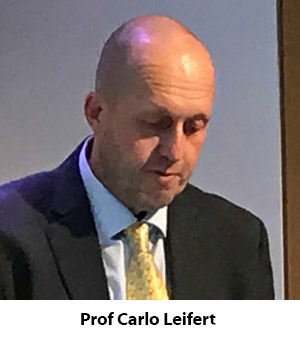
Carlo Leifert

Pesticides linked to low sperm quality

Prof Carlo Leifert, director of the Centre for Organics Research at Southern Cross University in Australia, cited research showing higher sperm counts and density in men working for the Danish organic farming association and a separate US study showing that high levels of dietary pesticide exposure were linked to low sperm quality in men.

Prof Leifert’s presentation came soon after the publication of a study implicating pesticide-treated foods in fertility problems in women. In the study, published in JAMA Internal Medicine, Harvard researchers followed 325 women at an infertility clinic and found that women who regularly ate pesticide-treated fruits and vegetables had lower success rates getting pregnant with IVF, while women who ate organic food had reduced risk of pregnancy loss and increased fertility.

Eat organic to minimize exposure

Dr Michael Antoniou

Dr Michael Antoniou, head of the Gene Expression and Therapy Group at King’s College London, told the Royal Society of Medicine conference that the adjuvants in commercial pesticide formulations can be toxic in their own right and in some cases more toxic than the declared active ingredients. Yet only the active ingredients are tested and assessed for long-term health effects in the regulatory process.

Dr Antoniou also said that research on hormone-disrupting chemicals, including pesticides, shows that very low realistic doses can be more toxic than higher doses. As pesticides are not tested for low dose effects for regulatory purposes, these effects can be missed by regulatory agencies, leading to a situation in which the public can be exposed to hormone-disrupting levels of these chemicals. This is a matter of concern because hormone disruption is implicated in a large number of diseases that are becoming increasingly widespread, such as hormone-related cancers, obesity, and diabetes.

Dr Antoniou said that regulators around the world have been slow to keep up with the scientific knowledge of harm from low doses of endocrine disrupting chemicals. These effects are not controversial in the scientific community and yet the EU has still not decided how to define endocrine disruptive chemicals, let alone how to regulate them.

Dr Antoniou described his research showing that long term exposure to very low doses of Roundup herbicide far below regulatory permitted levels caused non-alcoholic fatty liver disease (NAFLD) in rats. NAFLD has now reached epidemic proportions in the US and Europe, with around 25% of the population suffering from it.

Dr Antoniou told the audience, which included doctors who treat chemically damaged people, “As a precaution, you should minimise your exposure to pesticides. The only way to guarantee that is by eating organically.”

Industry perspectives

Sarah Mukherjee

Occasions like this are often interesting from the point of view of finding out the industry line on the scientific and public relations challenges it is facing, and this event was no exception. One such line was offered by Sarah Mukherjee, CEO of the Crop Protection Association (CPA). Mukherjee is a former BBC journalist who began her presentation by stating that she had no scientific background. Her presentation consisted of emotive stories of her deprived childhood, with the implication that organic food is a luxury that only the affluent can afford and that pesticides were needed to ensure an affordable food supply for all. She did not address any of the scientific points presented by the earlier speakers. In fact, she was not present for those sessions and only arrived later in the day.

The tone and content of her presentation did not sit well with the detailed information on the proven effects of low-dose pesticides provided by the scientist speakers in the morning sessions. It was remarkable for its failure to offer any evidence at all to back up Mukherjee’s premise that we are better off with pesticides.

Glyphosate and cancer

Mukherjee’s closest brush with science was an attempt to exonerate glyphosate herbicides from suspicion of carcinogenicity by quoting the latest updated findings from the Agricultural Health Study (AHS) in the US. These found no link between glyphosate and non-Hodgkin’s lymphoma, a type of cancer. Mukherjee used these findings as a stick to beat IARC, the World Health Organization cancer agency that upset the pesticide industry by concluding that glyphosate was a probable carcinogen.

But what Mukherjee failed to mention was that the study update did find a link between glyphosate and another type of cancer, acute myeloid leukemia (AML) – a link that the researchers said should be followed up with further research. She also did not mention a fact pointed out by the scientist Dr Jennifer Sass – that while the link did not reach statistical significance at the 95% confidence level (a 95% certainty that the findings are not by chance but point to a real effect of glyphosate), at the 90% confidence level it would have been significant. As Sass commented, “With a deadly form of cancer like AML, pesticide applicators, farmers, and other highly exposed people may want to take protective measures, even if studies are only 90% confident in the link to AML cancer.”

Mukherjee also failed to mention that IARC took the AHS’s “no effect” finding from glyphosate into consideration in its assessment of glyphosate, since previous findings from the AHS that were already published at the time of IARC’s review had also found no effect. Other epidemiological studies did find a link between glyphosate and non-Hodgkin’s lymphoma. This contradictory evidence is why IARC said there was only “limited” proof of a glyphosate link with cancer from epidemiological studies. However, it classified glyphosate as a probable carcinogen on the basis of “sufficient” evidence in controlled laboratory studies on animals. These types of study, unlike epidemiological studies, demonstrate a causal link and are therefore a far stronger form of evidence.

I was not the only audience member to conclude that Mukherjee was seriously out of her depth among a speaker line-up of heavyweight scientists, addressing an audience of scientists, medics, and experts from relevant fields. One scientist told me he was shocked that the CPA chose to send Mukherjee as its representative to such an event: “Couldn’t they find a scientist who was willing to take this on?”

Is organic food elitist?

Mukherjee’s “organic food is elitist” meme did not play well with me. I speak as someone who at one point in my life lived in a partnership in which neither of us had any income or savings and we had to survive off very meagre state benefits. Yet we ate organic 100% of the time. We did it by cooking fresh food from scratch each day (it didn’t take much time), buying via farm box delivery schemes rather than from supermarkets, eating mostly vegetarian, and – obviously – not spending money on luxuries.

On our occasional forays to the supermarket to buy loo rolls and cleaning fluids, we were gobsmacked at the large amounts of money being spent on the weekly shop by families with trolleys full of processed food. Even without getting into discussions about the “externalized” costs of eating pesticide-contaminated food, such as getting sick, we simply could not afford that type of food. So who exactly were the elite in this situation? Certainly not us. This is just one example among many of Mukherjee’s irrational and frankly insulting approach to the vital topic of food security.

Dr Chris Hartfield

Speakers in support of pesticide safety

The other people speaking in support of the safety and benefits of pesticides were Dr Chris Hartfield of the National Farmers Union (NFU) and Dave Bench of the UK government’s Health and Safety Executive.

Mr Bench described the regulatory system for pesticides, which he portrayed as robust and as balancing the risks of pesticides against the benefits to society.

Dr Hartfield showed a long list of Integrated Pest Management (IPM) techniques, in which pesticides are only sprayed as a last resort as and when absolutely necessary. He said that 16,820 farmers in the UK are using these techniques on 4.4 million hectares of land.

Dave BenchHowever, members of the audience were skeptical of this claim. Guy Watson, an organic farmer from Riverford Farm in Devon, said that his conventional farmer neighbour laid out his spraying schedule well in advance of the growing season and that all the pesticides were sprayed in accord with the schedule, whether they were needed or not. He suspected that farmers’ practice of IPM was confined to a paper exercise that was not borne out by the reality in the fields.

Mr Watson’s skepticism about UK farmers’ use of IPM was amply supported by the data presented at the conference showing the increasing numbers of pesticides sprayed on our food.

Some members of the audience who suffered repeated exposures to pesticide spraying because they lived near treated fields agreed that a cavalier attitude to the use of pesticides seemed to be the norm among conventional farmers.

Georgina Downs of the UK Pesticides Campaign, which represents rural residents affected by pesticides sprayed in their localities, commented after the conference: “There was the usual gross misinformation stated by the CPA and the NFU – most importantly their insistence that there is a rigorous regulatory system in place for pesticides. There simply is not, and this lie cannot continue to be peddled.

“The conventional chemical farming system has been an untested, unregulated, and unlawful experiment with human health and the environment that has caused untold damage.”

Is farming without pesticides possible?

Agro-industry lobbyists would have us believe that farmers cannot manage without pesticides. What is more, they claim that even organic farmers regularly spray a vast array of pesticides permitted under organic standards. But this picture is far from the reality. Most organic farmers do not spray because they take other measures to protect their crops, such as rotating crops to prevent attacks from over-wintering pests, using barrier methods against pests, cultivating hedges and plants to attract insects and animals that eat pests, and planting cover crops to suppress weeds.
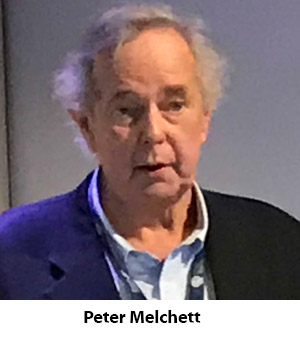
Peter Melchett

This was confirmed by the final speaker at the conference, Peter Melchett, who has been an organic farmer for 19 years and a conventional farmer before that. He said that since converting to organic he has only had to spray a single field once. The one lapse was due to his mistake in planting two related crops in the same field two years running. A pest over-wintered in the field, only to emerge the following year to devour the new crop. Mr Melchett said he never repeated his mistake – and has never had to spray again.

Take-home message

The take-home message from the non-industry speakers at the conference was that the regulatory system for pesticides has failed and cannot be reformed in a way that renders these chemicals safe. As we’ve seen, the system does not test the adjuvants, or the commercial pesticide formulations, or the chemical cocktails to which we are exposed. Neither does it test low, realistic doses that may give rise to endocrine disruption. Therefore pesticides must be eradicated from food production and farming must be entirely converted to proven-successful organic and agroecological practices.

Source: GM Watch
Plans To Release Entire Fukushima Waste Into Ocean Confirmed By Tepco | Social Consciousness

Editor’s Note: The dumping of highly radioactive material in the Pacific Ocean from Japan’s Fukushima has been occurring for years with no plans to stop dumping or bio-remediate this massive problem for all life in our oceans. This is yet another by-product of civilization which has been ignored by government, scientists and climate-change activists.  

Tepco has confirmed it plans to release the radioactive material from the Fukushima plant into the ocean saying that the “decision has already been made”. The decision has an upset local fisherman who says the decision will kill their industry as a result of a massive loss of sea life.

Under the controversial plan, which could be a massive environmental disaster, the radioactive material tritium, which is being used to cool reactors whose cooling systems were damaged in 2011 tsunami, will now be released into the ocean.

rt.com reports: “I’m very sorry that Tepco has been prolonging making a decision,” the new chairman of Tokyo Electric Power Company Holdings (TEPCO) Takashi Kawamura told reporters on Thursday, reported Reuters. “We could have decided much earlier, and that is Tepco’s responsibility.”

The plan still requires the approval of the Japanese government before TEPCO can proceed. Some 770,000 tons (metric) of tritium-containing water is currently stored in 580 tanks at the plant, reported the Japan Times. Toxic water at the plant is currently being treated through a processing system that can remove 62 different types of radioactive material, except tritium.

The local fishermen cooperative has hit out at the plan, saying it had not been discussed with local residents. “Releasing (tritium) into the sea will create a new wave of unfounded rumors, making our efforts all for naught,” Kanji Tachiya, head of a local fishermen cooperative, told the Japan Times.

Situated 10 meters above sea-level, three of the nuclear power plant’s six reactors’ cooling systems were crippled by flooding caused by the tsunami, making the disaster the worst since the Chernobyl catastrophe in the USSR in 1986.

The plan still requires the approval of the Japanese government before TEPCO can proceed. Related: Fukushima Radiation: The Entire Pacific Ocean Has Been Contaminated, And It’s Going To Get Worse Fukushima Radiation: Your Days of Eating Pacific Ocean Fish Are Over, Or Worse Officials Warn: Fukushima Has Now Contaminated 1/3 Of The World’s Oceans

Source: Social Consciousness