What the Dow’s 28% Crash Tells Us About the Economy | Bloomberg

2400x-1Johnny Liberty, Editor’s Note: This is exactly why we stayed out of the markets due to the possibility of extreme fluctuation due to events beyond our control (e.g., coronavirus). This market adjustment was long overdue and the Power Structure took advantage of the “panic” in partnership with Big Media to remove trillions of dollars of value.

By Dave Merrill and Esha Dey

It is hard to follow the stomach–turning plunge across financial markets without hearing a reference to the Dow.

Professional money managers, as well as casual investors, often look at the Dow—or the Dow Jones Industrial Average—to get a 30-thousand feet view of the markets. Referred to as simply the Dow, it is a price–weighted average of 30 blue–chip U.S. stocks that are generally the leaders in their industry.

Amid the current carnage, observing the index can help in gauging the damage the coronavirus is inflicting on portfolios, and whether the downturn is a short-turn consequence of disrupted supply chains and skittish consumer demand or a broader symptom of a bull market that has run its course.

To better understand the differing aspects of the economy and the signals they are flashing, we have grouped the 30 Dow stocks into nine broad economic sectors—health care, energy, consumer staples, communication services, information technology, consumer discretionary, financials, industrials and basic materials. Here is an overview of the U.S. stock market through the lens of the Dow.

Graphic1

Components of a 8,300-Point Drop

Critics of the Dow say that it inaccurately portrays the general market as stocks with a higher price, such as Apple and Boeing, are over represented. Boeing is a relevant example as its current decline does not only reflect troubles related to the coronavirus outbreak, but also its ongoing crisis that was triggered by two fatal crashes of its 737 Max jet within a span of five months early last year. However, it is now the most significant contributor to the Dow’s drop since its peak on Feb. 12.

Graphic2

Percentage Drop by Industry Sectors, Best to Worst Performing

As shown in the chart above, certain stocks, such as Walmart, have been fairly resilient, with consumer staples as a group faring better than the rest overall. On average, stocks in four other sectors, health care, communications services, information technology and consumer discretionary are performing better than the overall drop of 28% in the Dow.

Consumer Staples

-7.7%
These consumer products are those that remain in family budgets regardless of financial problems in the larger economy, and are expectedly doing relatively better than the rest of the index. Walmart’s stock is seen as a “place to hide” amid the looming threat of a recession, while grocery sales overall are surging as consumers stock up and get ready to wait out the pandemic.

Health Care

-13.6%
Shares of pharmaceutical and biotechnology drug developers have done well amid the widespread panic, as several companies unveiled plans to combat Covid-19. At the same time, investors soured on the nation’s hospitals, which already saddled with debt, may feel an increased pressure as elective surgeries are delayed. Also, if the economy slides into a recession, it might mean the hospitals would get more patients that are covered by Medicare and Medicaid, which are less profitable, as well as see an increase in unpaid bills.

Communication Services

-20.4%
While the Dow includes just two companies from this group—Walt Disney and Verizon—overall, the sector’s stocks have done better than the broader market given a mixed exposure to the virus spread. The crisis has led to a drastic drop in ticket sales at movie theaters, yet, another part of the sector—like wireless service provider Verizon—remains largely insulated from any coronavirus impact, though equipment sales could see some declines due to supply constraints and store closings.

Information Technology

-25.5%
Technology companies—be it IBM, Apple or Microsoft—are being seen as reasonably defensive as patient investors look ahead to key tailwinds in 5G technologies, cloud computing products and artificial intelligence, even though strained global supply chains may have put a dent in near-term optimism.

Consumer Discretionary

-30.8%
Discretionary spends, such as buying new shoes, clothes, furnitures or cars, or even eating out, are expected to go down, reflected in the sharp decline seen in the stocks of Nike and McDonald’s. Restaurant stocks have continued to slide, as more companies shifted to takeout only, either by choice or state/city mandate, while cruise-line operators’ stocks are in a freefall.

Financials

-32.4%
Financial companies have been among the hardest hit as the virus threatened to tip the economy into a recession, with the KBW index of top U.S. banks falling nearly 40% since mid-February when the broader virus-fueled selloff began. With the Federal Reserve slashing its benchmark rate to near zero over the weekend, banks’ profits are expected to feel the squeeze, along with rising concern that borrowers may not be able to pay back loans in a faltering economy.

Industrials

-37.6%
With the virus outbreak forcing social distancing, and keeping people from buying cars or taking flights, the impact is rippling through the manufacturing industry and its supply chain. Factories and plants across the globe are being forced to shut down. Boeing, which was already struggling to sort out its troubles related to the 737 Max aircraft that was grounded last year after two fatal crashes, is now facing a double whammy as the airline industry sees an unprecedented drop in demand. That may, in turn, force airlines to defer their aircraft orders, or even cancel some if the situation does not improve in a few more months. The overall investor nervousness is also reflected in the shares of Caterpillar and United Technologies, two stocks that can be seen as bellwethers of the global industrial economy.

Energy

-38.4%
Energy stocks are taking a beating as the sector faces demand headwinds from coronavirus, while the ongoing price war between Saudi Arabia and Russia isn’t helping anyone’s cause. Energy is the worst-performing group in the S&P 500 this year, down 54%. Meanwhile, U.S. shale drillers are responding by slashing their capital budgets and dividends in a bid to weather the downturn.

Materials

-46.1%
The S&P 500 Materials index has lost about 28% since the rout started on Feb. 21. The worst hit sectors were chemical, fertilizer and industrial metals, all of which depend on the global economy for the demand of their products. The pullback led to fertilizer maker Mosaic Co. and plastic producer LyondellBasell Industries N.V. to lose about 50% of their stock value since the sell-off began. Meanwhile, gold miner Newmont Corp. was the least affected stock within the materials, as gold prices held up relatively well amid global panic selling.

Recoveries from Collapse

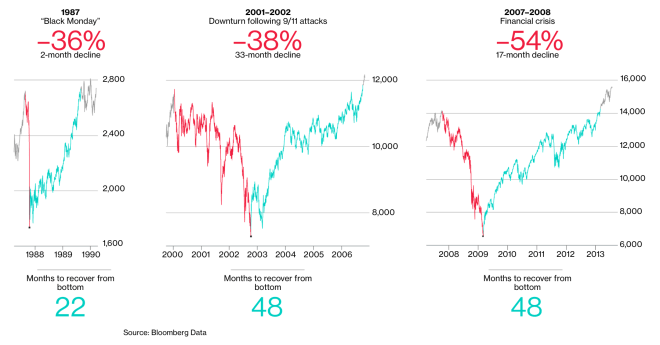
Since the 1980s, the Dow has recorded three other losses of more than 25% from previous highs. Historically, recoveries from these lows have taken many months.
Graphic3
Source: Bloomberg

The U.S. Wants Smartphone Location Data to Fight Coronavirus. Privacy advocates are worried | NBC News

200318-coronavirus-new-york-oculus-se-1039p_e7dd421e936d5d4b551425cf3f86fb44.fit-1240wJohnny Liberty, Editor’s Note: As Edward Snowden was correct to reveal to the international press (at the sacrifice of his own well-being and freedom) that the NSA had abused their power and broke the law in gathering metadata on every American citizen, giving more power to the government is not a wise move regardless of the reason. Once they have that power, they’ll always have it (and will eventually abuse it). For example, the USA Patriot Act continues to be in force today without a tangible terrorist threat. Your civil liberties and sovereign rights continue to be compromised daily.

By Dylan Byers

Federal health officials say they could use anonymous, aggregated user data collected by the tech companies to map the spread of the virus.

The White House and the Centers for Disease Control and Prevention are asking Facebook, Google and other tech giants to give them greater access to Americans’ smartphone location data in order to help them combat the spread of the coronavirus, according to four people at companies involved in the discussions who are not authorized to speak about them publicly.

Federal health officials say they could use anonymous, aggregated user data collected by the tech companies to map the spread of the virus — a practice known as “syndromic surveillance” — and prevent further infections. They could also use the data to see whether people were practicing “social distancing.”

Some sources stressed that the effort would be anonymized and that government would not have access to specific individuals’ locations. They noted that users would be required to opt-in to the effort.

The federal effort, first reported by The Washington Post, will force the tech giants to weigh their commitments to user privacy against their desire to help combat a disease that has cost thousands of human lives and upended the global economy.

Full coverage of the coronavirus outbreak

The government officials have held at least two calls in recent days with representatives from the companies, the sources said. Those officials are “very serious” about making this happen, a person at one of the tech companies said.

Similar and more aggressive surveillance practices have already been put to use in China, South Korea and Israel. The moves have set off alarm bells among privacy advocates who fear what the government may do with users’ data.

Facebook already provides health researchers and nongovernmental organizations in some countries with anonymized data to help disease prevention efforts. Laura McGorman, policy lead of Facebook’s “Data for Good” program, said a similar effort could be used “to understand and help combat the spread of the virus.”

But other sources warned that providing the government with greater access to anonymized location data now could lead to the erosion of individual privacy down the line, especially if the government starts to ask for non-anonymized data.

Representatives from Facebook, Google, Twitter, Apple, Amazon, Microsoft, IBM and Cisco all took part in the call with White House and federal health officials. Spokespeople for the companies declined to comment on the discussions.

Source: NBC News

The Coronavirus: An Excuse to Grab More of Our Freedoms | Ron Paul Institute

Johnny Liberty, Editor’s Note: So sorry that Ron Paul’s voice is no longer present in the U.S. Congress as he’s always been a voice of reason and wisdom. Beyond the scientific and medical facts emerging re: coronavirus, there is a social/political hit job being engineered and orchestrated upon the American people with full complicity of the Power Structure behind Big Media. Those willing to advance the cause of Big Government and World Government (i.e. Globalists) are always prepared to take power at the expense of your civil liberties and sovereign rights. Be aware and take notice of your willingness to surrender to fear and sacrifice not only your rights, but the rights of others. Put the coronavirus in perspective and take every precaution to retain your sanity and good health.

By Ron Paul

Governments love crises because when the people are fearful they are more willing to give up freedoms for promises that the government will take care of them. After 9/11, for example, Americans accepted the near-total destruction of their civil liberties in the PATRIOT Act’s hollow promises of security.

It is ironic to see the same Democrats who tried to impeach President Trump last month for abuse of power demanding that the Administration grab more power and authority in the name of fighting a virus that thus far has killed less than 100 Americans.

Declaring a pandemic emergency on Friday, President Trump now claims the power to quarantine individuals suspected of being infected by the virus and, as Politico writes, “stop and seize any plane, train or automobile to stymie the spread of contagious disease.” He can even call out the military to cordon off a US city or state.

State and local authoritarians love panic as well. The mayor of Champaign, Illinois, signed an executive order declaring the power to ban the sale of guns and alcohol and cut off gas, water, or electricity to any citizen. The governor of Ohio just essentially closed his entire state.

The chief fearmonger of the Trump Administration is without a doubt Anthony Fauci, head of the National Institute of Allergy and Infectious Diseases at the National Institutes of Health. Fauci is all over the media, serving up outright falsehoods to stir up even more panic. He testified to Congress that the death rate for the coronavirus is ten times that of the seasonal flu, a claim without any scientific basis.

On Face the Nation, Fauci did his best to further damage an already tanking economy by stating, “Right now, personally, myself, I wouldn’t go to a restaurant.” He has pushed for closing the entire country down for 14 days.

Over what? A virus that has thus far killed just over 5,000 worldwide and less than 100 in the United States? By contrast, tuberculosis, an old disease not much discussed these days, killed nearly 1.6 million people in 2017. Where’s the panic over this?

If anything, what people like Fauci and the other fearmongers are demanding will likely make the disease worse. The martial law they dream about will leave people hunkered down inside their homes instead of going outdoors or to the beach where the sunshine and fresh air would help boost immunity. The panic produced by these fearmongers is likely helping spread the disease, as massive crowds rush into Walmart and Costco for that last roll of toilet paper.

The madness over the coronavirus is not limited to politicians and the medical community. The head of the neoconservative Atlantic Council wrote an editorial this week urging NATO to pass an Article 5 declaration of war against the COVID-19 virus! Are they going to send in tanks and drones to wipe out these microscopic enemies?

People should ask themselves whether this coronavirus “pandemic” could be a big hoax, with the actual danger of the disease massively exaggerated by those who seek to profit – financially or politically – from the ensuing panic.

That is not to say the disease is harmless. Without question people will die from coronavirus. Those in vulnerable categories should take precautions to limit their risk of exposure. But we have seen this movie before. Government over-hypes a threat as an excuse to grab more of our freedoms. When the “threat” is over, however, they never give us our freedoms back.

Source: Ron Paul Institute

The Coronavirus COVID-19 Pandemic: The Real Danger is “Agenda ID2020” | Global Research

Screen-Shot-2020-03-12-at-12.06.03

Johnny Liberty, Editor’s Note: If the author of this article hadn’t worked for the World Bank and World Health Organization for decades I might have hesitated in publishing this article. But the premise for forced vaccinations are now more believable than ever as an objective of the Coronavirus crisis (engineered by the overreaction of global, national, state and local governments.

By Peter Koenig

What is the infamous ID2020? It is an alliance of public-private partners, including UN agencies and civil society. It’s an electronic ID program that uses generalized vaccination as a platform for digital identity.

“It seems, the more there is written about the causes of the Coronavirus – the more the written analyses are overshadowed by a propaganda and fear-mongering hype. Questions for the truth and arguments for where to look for the origins and how the virus may have spread and how to combat it, are lost in the noise of wanton chaos. But isn’t that what the “Black Men” behind this intended pandemic want – chaos, panic, hopelessness, leading to human vulnerability – a people becoming easy prey for manipulation?”

Today WHO declared the coronavirus COVID-19 a “pandemic” – when there is not the slightest trace of a pandemic. A pandemic might be the condition, when the death to infection rate reaches more than 12%. In Europe, the death rate is about 0.4%, or less. Except for Italy which is a special case, where the peak of the death rate was 6% (see below for further analysis).

China, where the death rate peaked only a few weeks ago at about 3%, is back to 0.7% – and rapidly declining, while China is taking full control of the disease – and that with the help of a not-spoken-about medication developed 39 years ago by Cuba, called “Interferon Alpha 2B (IFNrec)”, very effective for fighting viruses and other diseases, but is not known and used in the world, because the US under the illegal embargo of Cuba does not allow the medication to be marketed internationally.

WHO has most likely received orders from “above”, from those people who also manage Trump and the “leaders” (sic) of the European Union and her member countries, those who aim to control the world with force – the One World Order.

This has been on the drawing board for years. The final decision to go ahead NOW, was taken in January 2020 at the World Economic Forum (WEF) in Davos – behind very much closed doors, of course. The Gates, GAVI (an association of vaccination-promoting pharmaceuticals), Rockefellers, Rothschilds et al, they are all behind this decision – the implementation of Agenda ID2020.

After the pandemic has been officially declared, the next step may be – also at the recommendation either by WHO, or individual countries, “force vaccination”, under police and/or military surveillance. Those who refuse may be penalized (fines and / or jail – and force-vaccinated all the same).

If indeed force-vaccination will happen, another bonanza for Big Pharma, people really don’t know what type of cocktail will be put into the vaccine, maybe a slow killer, that acts-up only in a few years – or a disease that hits only the next generation – or a brain debilitating agent, or a gene that renders women infertile …. all is possible – always with the aim of full population control and population reduction. In a few years’ time, one doesn’t know, of course, where the disease comes from. That’s the level of technology our bio-war labs have reached (US, UK, Israel, Canada, Australia…).

Another hypothesis, at this point only a hypothesis, but a realistic one, is that along with the vaccination – if not with this one, then possibly with a later one, a nano-chip may be injected, unknown to the person being vaccinated. The chip may be remotely charged with all your personal data, including bank accounts – digital money. Yes, digital money that’s what “they” are aiming at, so you really have no control any more over your health and other intimate data, but also over your earnings and spending. Your money could be blocked, or taken away – as a ‘sanction’ for misbehavior, for swimming against the stream. You may become a mere slave of the masters. Comparatively, feudalism may appear like a walk in the park.

It’s not for nothing that Dr. Tedros, DG of WHO, said a few days ago, we must move towards digital money, because physical paper and coin money can spread diseases, especially endemic diseases, like the coronavirus. A precursor for things to come? – Or for things already here? – In many Scandinavian countries cash is largely banned and even a bar of chocalate can be paid only electronically.

We are moving towards a totalitarian state of the world. This is part of Agenda ID2020 – and these steps to be implemented now – prepared since long, including by the coronavirus computer simulation at Johns Hopkins in Baltimore on 18 October 2019, sponsored by the WEF and the Bill and Melinda Gates Foundation.

Bill Gates, one of the chief advocates of vaccinations for everybody, especially in Africa – is also a huge advocate of population reduction. Population reduction is among the goals of the elite within the WEF, the Rockefellers, Rothschilds, Morgens – and a few more. The objective: fewer people (a small elite) can live longer and better with the reduced and limited resources Mother Earth is generously offering.

This had openly been propagated already in the 1960s and 70s by Henry Kissinger, Foreign Secretary in de Nixon Administration, a co-engineer of the Vietnam war, and main responsible for the semi-clandestine bombing of Cambodia, a genocide of millions of unarmed Cambodian civilians. Along with the CIA-Kissinger engineered coup on 9/11, 1973, in Chile, killing the democratically elected Salvador Allende and putting the military dictator Pinochet in power, Kissinger has committed war crimes. Today, he is a spokesman (so to speak) for Rockefeller and their  “Bilderberger Society”.

Two weeks after the computer simulation at Johns Hopkins Medical Center in Baltimore, Maryland, that “produced” (aka simulated) 65 million deaths (!), the COVID-19 virus first appeared in Wuhan. By now it is almost certain that the virus was brought to Wuhan from outside, most likely from a bio-war lab in the US. See also this and this.

What is the infamous ID2020? It is an alliance of public-private partners, including UN agencies and civil society. It’s an electronic ID program that uses generalized vaccination as a platform for digital identity. The program harnesses existing birth registration and vaccination operations to provide newborns with a portable and persistent biometrically-linked digital identity. GAVI, the Global Alliance for Vaccines and Immunization, identifies itself on its website as a global health partnership of public and private sector organizations dedicated to “immunization for all”. GAVI is supported by WHO, and needless to say, its main partners and sponsors are the pharma-industry.

The ID2020 Alliance at their 2019 Summit, entitled “Rising to the Good ID Challenge”, in September 2019 in New York, decided to roll out their program in 2020, a decision confirmed by the WEF in January 2020 in Davos. Their digital identity program will be tested with the government of Bangladesh. GAVI, the Vaccine Alliance, and “partners from academia and humanitarian relief” (as they call it), are part of the pioneer party.

Is it just a coincidence that ID2020 is being rolled out at the onset of what WHO calls a Pandemic? – Or is a pandemic needed to ‘roll out’ the multiple devastating programs of ID2020?

Here is what Anir Chowdhury, policy advisor of the Bangladesh government program, has to say:

“We are implementing a forward-looking approach to digital identity that gives individuals control over their own personal information, while still building off existing systems and programs. The Government of Bangladesh recognizes that the design of digital identity systems carries far-reaching implications for individuals’ access to services and livelihoods, and we are eager to pioneer this approach.”

Wow! Does Mr. Anir Chowdhury know what he is getting into?

Back to the Pandemic and the panic. Geneva, the European seat of the United Nations, including the headquarters of WHO, is basically shot down. Not unlike the lock-down that started in Venice and later expanded to northern Italy until a few days ago – and now the lock-down covers all of Italy. Similar lock-down may soon also be adopted by France – and other European vassal states to the Anglo-Zionist empire.

Numerous memoranda with similar panic-mongering contents from different UN agencies in Geneva are circulating. Their key message is – cancel all mission travel, all events in Geneva, visits to the Palais des Nations, the Geneva Cathedral, other monuments and museums. The latest directives, many agencies instruct their staff to work from home, not to risk contamination from public transportation.

This ambiance of panic and fear – outstrips any sense of reality, when the truth doesn’t matter. People can’t even think any more about the causes and what may be behind it. Nobody believes you (anymore), when you refer to Event 201, the coronavirus simulation, the Wuhan Military Games, the closing last August 7, of the high-security biological war lab at Fort Detrick, Maryland…. what could have at one point been an eye opener for many, today is sheer conspiracy theory. The power of propaganda. A destabilizing power – destabilizing countries and people, destroying economies, creating hardship for people who may lose their jobs, usually the ones who can least afford it.

Also, at this time it becomes increasingly important to remind people that the outbreak in China was targeting the Chinese genome. Did it later mutate to transgress the ‘borders’ of Chinese DNA? When did that happen, if it happened? Because at the beginning it was clear that even the infected victims in other parts of the world, were to 99.9% of Chinese descent.

What happened later, when the virus spread to Italy and Iran, is another issue, and opens the way to a number of speculations.

(i) There were various strains of the virus circulated in sequence – so as to destabilize countries around the world and to confound the populace and media, so that especially nobody of the mainstream may come to the conclusion that the first strain was targeting China in a bio-war.

(ii) In Iran, I have a strong suspicion that the virus was an enhanced form of MERS (Middle East Respiratory Syndrome, man-made, broke out first in Saudi Arabia in 2012 , directed to the Arabic genome) – which was somehow introduced into government circles (by aerosol spray?) – with the goal of “Regime Change” by COVID19-caused death. Its Washington’s wishful thinking for at least the last 30 years.

(iii) In Italy – why Italy? – Maybe because Washington / Brussels wanted to hit Italy hard for having been officially the first country to sign a Belt and Road (BRI) accord with China (actually the first was Greece, but nobody is supposed to know that China came to the rescue of Greece, destroyed by Greece’s brothers, the EU members, mainly Germany and France).

(iv) The hype about the high death to infection rate in Italy, as of the time of this writing: 10,149 infections vs. 631 deaths = death rate of 6.2 (comparatively Iran: 8042 infections vs. 291 deaths = 3.6 death rate). The death rate of Italy is almost double that of Iran and almost ten-fold that of average Europe. (Are these discrepancies the result of failures in the establishing reliable data pertaining to “infections”, see our observations pertaining to Italy below).

Why? – Was is Italy being affected with virus panic? Was there a much stronger strain introduced to Italy?

The common flu in Europe in the 2019 / 2020 season, has apparently so far killed about 16,000 (in the US the death toll is, according to CDC between 14,000 and 32,000, depending on which CDC website you look at).

Could it be that among the Italian coronavirus deaths there were also common flu victims, as the affected victims are mostly elderly with respiratory preconditions? Also, symptoms are very similar between coronavirus and the common flu, and nobody questions and checks the official authorities’ narrative?

Maybe not all the coronavirus strains come from the same laboratory. A journalist from Berlin of Ukrainian origin, told me this morning that Ukraine is host to some 5 high security US bio-war labs. They test regularly new viruses on the population – yet, when strange diseases break out in the surroundings of the labs, nobody is allowed to talk about it. Something similar, she says, is happening in Georgia, where there are even more Pentagon / CIA bio-war labs – and where also new and strange diseases break out.

All of this makes the composite picture even more complicated. Overarching all is this super hype is profit driven, the quest for instant profit, instant benefits from the suffering of the people. This panic making is a hundred-fold of what it’s worth. What these kingpins of the underworld, who pretend to run the upper world, perhaps miscalculated, is that in today’s globalized and vastly outsourced world the west depends massively on China’s supply chain, for consumer goods, and for intermediary merchandise – and, foremost for medication and medical equipment. At least 80% of medication or ingredients for medication, as well as for medical equipment comes from China. The western China dependence for antibiotics is even higher, some 90%.  The potential impacts on health are devastating.

During the height of the COVID-19 epidemic China’s production apparatus for everything was almost shut-down. For deliveries that were still made, merchandise vessels were regularly and categorically turned back from many harbors all around the world. So, the west has tricked itself into a shortage-of-everything mode by waging a  de facto “economic war” on China. How long will it last? – Nobody knows, but China’s economy which was down by about half, has rapidly recovered to above 80% of what it was before the coronavirus hit. How long will it last to catch up with the backlog?

What is behind it all? – A total crackdown with artificially induced panic to the point where people are screaming “help, give us vaccinations, display police and military for our security” – or even if the public despair doesn’t go that far, it would be easy for the EU and US authorities to impose a military stage of siege for “health protection of the people”. In fact, CDC (Center for Disease Control in Atlanta), has already designed harshly dictatorial directives for a “health emergency”.

Along with forced vaccination, who knows what would be contained in the cocktail of ‘’mini-diseases” injected, and what their long-term effects might be. Similar to those of GMOs, where all sorts of germs could be inserted without us, the commons, knowing?

We may indeed be just at the beginning of the implementation of ID2020 – which includes, forced vaccination, population reduction and total digital control of everybody – on the way to One World Order – and global financial hegemony – Full Spectrum Dominance, as the PNAC (Plan for a New American Century) likes to call it.

A windfall for China. China has been purposely targeted for “economic destruction”, because of her rapidly advancing economy, an economy soon to overtake that of the now hegemon, the US of A, and because of China’s strong currency, the Yuan, also potentially overtaking the dollar as the world’s main reserve currency.

Both occurrences would mean the end of US dominance over the world. The coronavirus disease, now in more than 80 countries, has crashed the stock markets, a decline of at least 20% over the last few weeks – and rising; the feared consequences from the virus of an economic slow-down, if not recession, has slashed petrol prices within about two weeks almost in half. However, without China’s central bank interference, the Yuan’s value vis-à-vis the dollar has been rather stable, at around 7 Yuan to the dollar. That means, the Chinese economy, despite COVID-19, is receiving still much trust around the globe.

Advice to China – buy all the US and European corporate shares you can at current rock-bottom prices from the stock markets that collapsed by a fifth or more, plus buy lots of oil futures. When the prices recover, you have not only made billions, probably trillions from the west, but you also may own or hold significant and influence-yielding amounts of shares in most of the largest US and European corporations – and will be able to help call the shots of their future endeavors.

There is however, one little silver lining oscillating at the horizon full of dark clouds. It could miraculously be an awakening of consciousness of a critical mass that could put an end to it all. Although, we seem to be far from such a miracle, somewhere in a hidden corner of our brain, we all have a spark of consciousness left. We have the spiritual capacity to abandon the disaster path of western neoliberal capitalism, and instead espouse solidarity, compassion and love for each other and for our society. That may be the only way to break the gridlock and doom of western egocentric greed.

Peter Koenig is an economist and geopolitical analyst. He is also a water resources and environmental specialist. He worked for over 30 years with the World Bank and the World Health Organization around the world, including in Palestine, in the fields of environment and water. He lectures at universities in the US, Europe and South America. He writes regularly for Global Research; ICH; RT; Sputnik; PressTV; The 21st Century; Greanville Post; Defend Democracy Press, TeleSUR; The Saker Blog, the New Eastern Outlook (NEO); and other internet sites. He is the author of Implosion – An Economic Thriller about War, Environmental Destruction and Corporate Greed – fiction based on facts and on 30 years of World Bank experience around the globe. He is also a co-author of The World Order and Revolution! – Essays from the Resistance. He is a Research Associate of the Centre for Research on Globalization.

Source: Global Research

Coronavirus will bankrupt more people than it kills — and that’s the real global emergency | MSN

BB115Vng.img
By Omar Hassan

Coronavirus’s economic danger is exponentially greater than its health risks to the public. If the virus does directly affect your life, it is most likely to be through stopping you going to work, forcing your employer to make you redundant, or bankrupting your business.

The trillions of dollars wiped from financial markets this week will be just the beginning, if our governments do not step in. And if President Trump continues to stumble in his handling of the situation, it may well affect his chances of re-election. Joe Biden in particular has identified Covid-19 as a weakness for Trump, promising “steady, reassuring” leadership during America’s hour of need.

Provided by The IndependentWorldwide, Covid-19 has killed 4,389 with 31 US deaths as of today. But it will economically cripple millions, especially since the epidemic has formed a perfect storm with stock market crashes, an oil war between Russia and Saudi Arabia, and the spilling over of an actual war in Syria into another potential migrant crisis.

We may look back on coronavirus as the moment when the threads that hold the global economy together came unstuck; and startups and growing businesses like mine could end up paying the price.

Just as important as fighting the virus — if not more important — is vaccinating our economies against the incoming pandemic of panic. Human suffering can come in the form of illness and death. But it can also be experienced as not being able to pay the bills or losing your home.

Small businesses in particular are struggling as supply chains dry up, leaving them without products or essential materials. Factory closures in China have led to a record low in the country’s Purchasing Manager’s Index which measures manufacturing output. China is the world’s largest exporter and is responsible for a third of global manufacturing, so China’s problem is everyone’s problem — even in the midst of a trade war between the White House and Beijing.

All this makes it even more worrying that governments continue to see this as a health crisis, not an economic one. It is time the economists took over from the doctors, before the real pandemic spreads.

It is difficult to imagine Italy not entering a recession (the world’s ninth-largest economy is now on lockdown). It is also difficult to imagine that failing to affect Europe and its largest trading partner, the United States. And it is impossible to see how any of this will not add up to a global downturn, unless governments step in faster and harder than they did 12 years ago during the last financial crisis.

The stakes are higher this time, because there seems to be a coordinated effort to economically hurt many Western countries, and warn them away from the aggressive trade policies that Trump has so enthusiastically adopted.

Although China bore the brunt of the virus’s economic and human cost, many in Beijing will see a silver lining in the weakening of the US economy, and a distraction from Trump’s trade wars that appeared to be escalating with no end in sight.

Almost perfectly synchronized with the coronavirus, a Russia-Saudi oil war has erupted. In the short-term, both Moscow and Riyadh can afford the 30 per cent overnight drop in the oil price. But America’s shale gas business cannot: The more expensive process of fracking means that much of the US oil sector will simply not exist if oil prices stay at historic lows, leading to shut downs, job losses and perhaps even state-level recessions.

President Trump has pushed through overdue payroll tax cuts and help for hourly workers — measures that will help both employers and employees survive. In the UK, Chancellor Rishi Sunak yesterday unveiled a ‘Coronavirus Budget’. But everyone needs to think bigger if they want to properly deal with how this new factor changes the status quo.

This is about much more than coronavirus, oil prices, or even the global economy. This is about the balance of power between East and West. The epicenter of this has been, for the last 10 years, Syria. After a decade of conflict on the ground, the face-off seems to have now escalated from proxy war to economic conflict.The emerging superpowers of Russia and China witnessed what many saw as American irrelevance in Syria. And they are now trying to cement their vision of a truly multi-polar world. Rather than allowing US ally Saudi Arabia to lead the oil markets through the OPEC cartel, Russia and China want to reshape global markets — and power balances — to their advantage.

To survive these shifts, the US, UK and others will need to protect the future of their businesses, large and small, and look for opportunities to benefit from the new economic world order, not deny it. Ignoring these changes will be even more damaging than any flu pandemic.

Source: MSN

Coronavirus: Do Not Fear the Bogeyman with Dr. Bruce Lipton | Facebook

89621950_10221435692665557_8413839365200936960_nBy Bruce Lipton, Author of “The Biology of Belief”
The world is currently gripped in fear of the scary coronavirus. Let’s first get one fact clear: If you have ever had a cold or flu in your life, odds are that it was the result of a coronavirus infection. Yes, coronaviruses cause colds.

But, we are being programmed with the belief that this particular cold virus is “deadly.” This fear has shut down concerts, conferences, and major public events all over the world. The fear has led to quarantines and closing down of international travel. It has even led to a major scarcity of toilet paper in Australia, where concerned citizens emptied the shelves of this commodity in anticipation that they will be walled up in their homes with this infection.

First, how deadly is this version of the virus? Yes, there have been corona-related deaths reported with the statistics suggesting that ~2% of the infected population dies. Wow! That number is almost 1% more deaths than are attributed to any conventional flu the world experiences. What is misleading is the fear that everyone who carries this virus may die from their cold. This is simply untrue! The health of almost all the victims of this coronavirus was already compromised before they were infected.

For example, the following information was provided by the news in regard to the 6 patients that died of the virus in the state of Washington last week:

Washington State:

  • Six people have died in Washington and health officials have identified 18 cases.
  • Four of the cases in King County were linked to the Life Care nursing facility in Kirkland. More than 50 residents and staff at the facility are being tested.The deaths announced Monday, according to health officials, included:
  • A male in his 70s, who lived at LifeCare. He had underlying health conditions and died Sunday.
  • A female resident of LifeCare in her 70s. She also had underlying health conditions and died Sunday.
  • A woman in her 80s, who was already reported as in critical condition at EvergreenHealth, died Sunday.
  • A Snohomish County resident at EvergreenHealth also died but details of that patient have not been given.

Two previously reported deaths included a man in his 70s who had underlying health conditions and had been a resident of LifeCare. He died at EvergreenHealth on Feb. 29. The other was a man in his 50s with underlying health conditions. He was admitted with serious respiratory issues and tested positive for the virus. He died at EvergreenHealth Medical Center in Kirkland.

As emphasized in this report, the health of all those that died with the coronavirus was already compromised. Healthy people get cold and flu symptoms, while those already sick and near death’s door may experience the “Grim Reaper” when infected by the virus. True, sick people are more vulnerable to the virus; healthy people really have nothing to fear.

As presented in The Biology of Belief, stress is responsible for up to 90% of illness, including heart disease, cancer and diabetes. When an individual is in stress, the release of stress hormones (e.g., cortisol) shuts down the immune system to conserve the body’s energy for running away from the perceived stressor, that proverbial “saber-toothed tiger.” Stress hormones are so effective at compromising the immune system, that physicians therapeutically provide recipients of organ transplants with stress hormones to prevent their immune system from rejecting the foreign implant.

The conclusion is clear: The fear of the coronavirus is more deadly than the virus itself!

The media (perhaps in conjunction with the pharmaceutical industry) is compromising people’s health using the fear card! This is the result of negative thinking (the nocebo effect) which is the complete opposite of the placebo effect manifest through positive thinking! If you make efforts to stay healthy, with good nutrition, exercise, taking vitamins and supplements, and more importantly, avoiding stress (e.g., the “fear” of the virus), even if you do get infected with the virus, you will likely only end up with a cold and/or slight fever.

If you are someone with a compromised immune system, it is supportive to surround yourself with loving family and friends, nature, and positive thoughts as well as any other nutrition and vitamins that you may already be taking for your health and wellbeing. Following your intuition about what is best for you is key! The point here is that no matter who you are and what your state of health, you will only benefit from steering clear of the fear and supporting yourself in whatever way feels best to you.

Please remember the truth of quantum physics, the most valid of all sciences on the planet: Consciousness is creating your life experiences! Are you being conscious of disease … or of health? Wishing you all Health, Happiness and Harmony.

Source: Facebook

Russia, China Spreading False Narratives About Coronavirus: US State Department Official | The Epoch Times

state-department-logo-700x420Johnny Liberty, Editor’s Note: While it’s true both Russia and China have their own agendas so does the Unites States. The coronavirus has taken the world by storm, with nation states unprepared for the consequences of such a globally disruptive event. Whether the coronavirus was engineered in a bioweapons laboratory and accidentally released is of less consequence than the social and economic blowback which will be felt worldwide. If the truth ever be told (which unlikely it ever will be), unscrupulous propaganda agents from any country are not serving the best interests of humanity to protect themselves against the onslaught of this lethal virus. 
By Eva Fu

U.S. adversaries such as Russia and China are propagating false information about the novel coronavirus outbreak amid a global public health crisis, according to a top State Department official tasked with countering foreign propaganda threats.

“The coronavirus is an example of where we’ve seen adversaries take advantage of a health crisis where people are terrified worldwide—to try to advance their priorities,” Lea Gabrielle, who leads the Global Engagement Center at the State Department, said during a Senate hearing on March 5.

While both countries’ propaganda malign and undermine free societies, the intent and the style of their state-directed campaigns differ greatly, according to Gabrielle.

“One of the best practices in countering propaganda and disinformation is exposing it,” she said.

Moscow

The Kremlin has put “the entire ecosystem of Russia disinformation at play,” including state proxy websites, state media, and “swarms of online false personas pushing out false narratives,” she explained.

While the aim of restoring its image as a global superpower, Moscow “seeks to weaken its adversaries by manipulating the information environment in nefarious ways, polarizing domestic political conversations, and attempting to destroy the public’s faith in good governance, independent media, and democratic principles,” Gabrielle said.

In February, senior State Department official Philip Reeker accused Russia of engaging thousands of social media accounts to promote unfounded conspiracy theories, such as the claim that the United States developed the virus as a biological weapon to “wage economic war” on China.

“By spreading disinformation about coronavirus, Russian malign actors are once again choosing to threaten public safety by distracting from the global health response,” Reeker told Agence France Presse at the time.

The lies, Gabrielle said, are a convenient tool for the Kremlin to distract the public. By creating and discrediting a fictitious “enemy”—the West—the Russian government could justify its existing political system and shift its internal troubles away from the international spotlight. In doing so, the Kremlin also “seeks to nurture the most extreme or divisive elements of society,” she said.

Beijing

Unlike Russia, which “seeks to chaotically disrupt the current world order to accomplish its goals, the CCP [Chinese Communist Party] seeks to deliberately shape it to Beijing’s advantage,” according to Gabrielle.

Beijing’s attempts to censor “the sheer extent of this global public health crisis” have brought such CCP goals into full display: from downplaying death toll numbers, stifling critics, to silencing whistleblowers who raised red flags about the virus during the outbreak’s early stages, she said.

CHINA-HEALTH-VIRUS
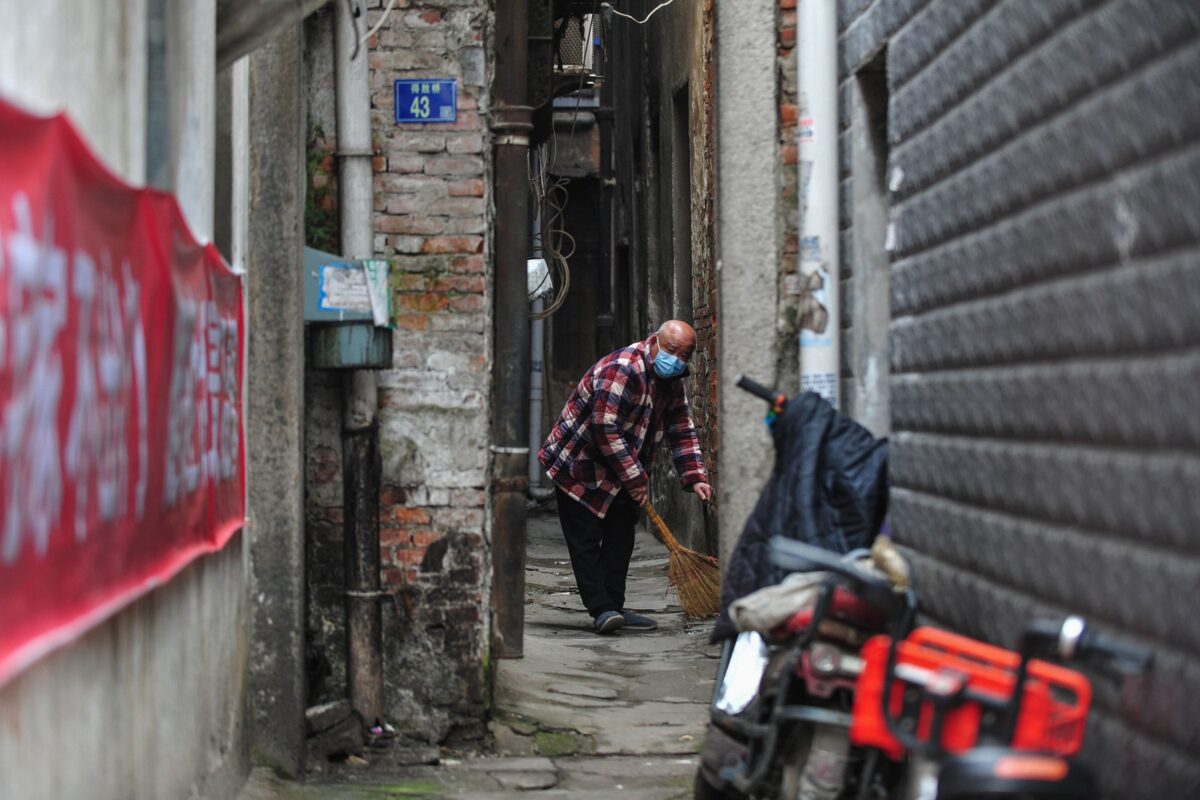
A resident wearing a face mask sweeps the floor in Wuhan in China’s central Hubei province on March 4, 2020. (STR/AFP via Getty Images)

Chinese doctor Li Wenliang, among the first to raise attention about a “SARS-like” outbreak on social media, was accused of rumor-mongering. He later died of the virus, after contracting it from a patient he was treating. Three citizen journalists, Fang Bin, Chen Qiushi, and Li Zehua, were recently arrested while documenting the outbreak in Wuhan.

Chinese messaging app WeChat and video streaming app YY have been using keywords to censor social media posts with virus-related terms—likely due to “official guidance,” according to a new report by Canadian cyber research group Citizen Lab.

Such state-sanctioned efforts “underscore Beijing’s sensitivity to being portrayed as anything other than a responsible actor at home and abroad,” Gabrielle said.

On March 5, the U.S. Senate unanimously passed a resolution to honor Li. Sen. Tom Cotton (R-Ark.) said the doctor was “victimized by his own government, the Chinese Communist Party.”

‘Whole-of-Government’ Campaign

Beijing’s propaganda operatives are comprehensive, deploying a “whole-of-government approach”: political, economic, military, and information tools are used to push the regime’s narrative domestically and globally, Gabrielle said.

More recently, the Chinese regime has walked back its initial claims that the virus came from a live animal and seafood market in Wuhan. Zhao Lijian, a spokesperson for the country’s foreign ministry, said on March 5 that “it is yet undetermined where the virus originated,” stressing that Beijing has been “widely acclaimed” for its “signature strength, efficiency, and speed.”

Epoch Times Photo
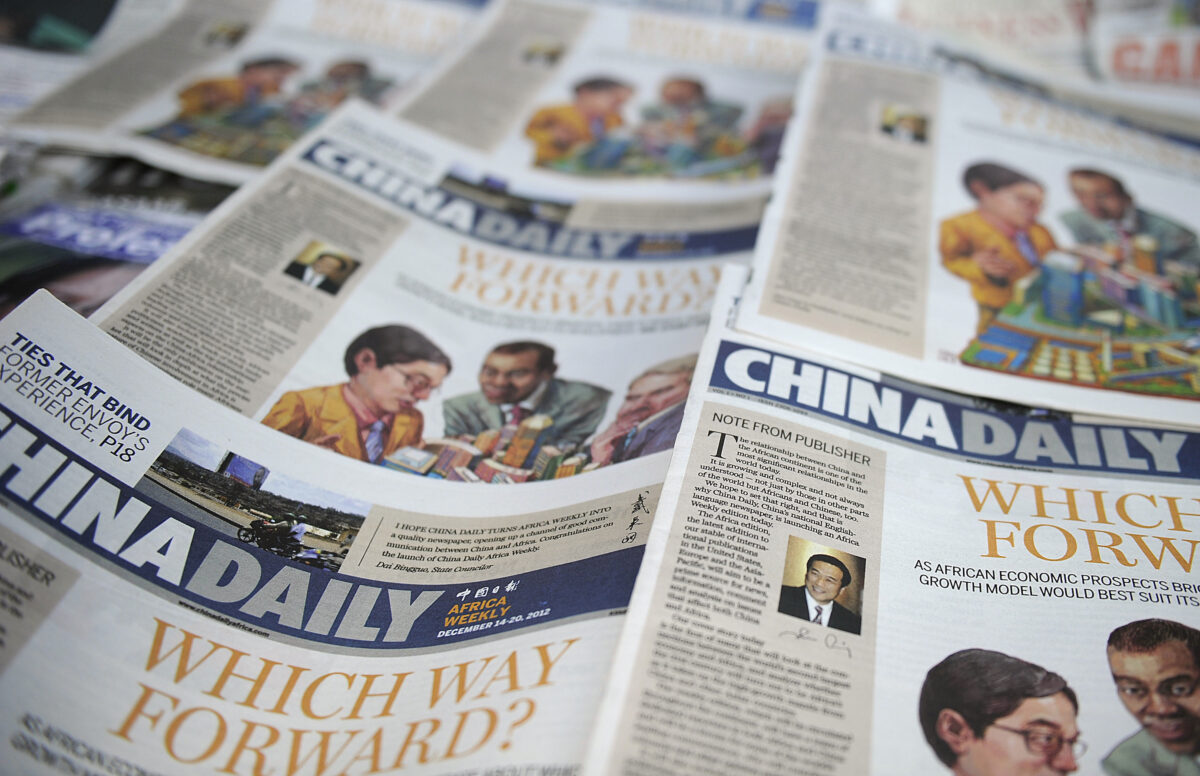
Copies of the Africa edition of the China Daily newspaper sits on a newsstand in the Kenyan capital Nairobi on Dec. 14, 2012. (Tony Karumba/AFP via Getty Images)

In recent days, Chinese state media have spread the false claim that the virus originated in the United States.

State outlets also published a series of articles bolstering China’s response to the outbreak. One March 5 article in China Daily, for example, said the government’s fight against the virus was “a story of pride.”

Pushing back on Beijing’s claims about the virus’s country of origin, U.S. State Secretary Mike Pompeo noted that the CCP itself had said “it came from Wuhan.”

“We have pretty high confidence that we know where this began [i.e. China], and we have high confidence too that there was information that could have been made available more quickly and data that could have been provided and shared among health professionals across the world,” he told CNBC on March 6.

“It’s most unfortunate,” he added.

Source: The Epoch Times

The Best #Coronavirus News You’ve Heard All Month | Wireless Dangers Australia

Source: YouTube

The Mysterious Origin of the Wuhan Coronavirus | The Epoch Times

CHINA-HEALTH-VIRUSIt has been two months since the outbreak of the coronavirus in Wuhan and its spread has shown no signs of slowing down in China. More than 35 Chinese cities have been put on lockdown by Chinese authorities in an attempt to isolate confirmed and suspected cases. The lives of millions of people are in danger as the virus shows signs of spreading further in China as well as internationally.

There are significant gaps in the official investigations into the origins of the novel Coronavirus. In order to contain the virus, one first needs to understand how a virus that allegedly originated in animals found its way to humans. For this to happen, the Chinese authorities need to release their animal testing data and samples. Testing results from animal samples collected at epicenters would give important insights into what animals might serve as intermediate hosts for the new coronavirus.

This is critical to the containment of the epidemic. For example, if rats are the intermediate hosts for this virus, it would be futile to shut down the cities to restrict people’s movements while infected rats are still moving freely. Results from animal samples could also guide policy decisions that would reduce the risk of another outbreak.

An Animal Origin of the Virus

Scientific studies based on phylogenetic analysis have researched the sequence of the novel coronavirus, compared it to other coronavirus sequences, and found it likely originated in bats. Researchers from the Wuhan Institute of Virology found the genome in the virus found in patients was 96 percent identical to that of an existing bat coronavirus, according to a study published in the journal Nature. But there have been other theories as well. One Chinese study suggested, for example, that snakes were the source of transmission to humans. However, many scientists believe that reptiles are a less likely source and that mammals like rats and pigs, and some birds, have been the primary reservoir for coronaviruses.

With this in mind, phylogenetic studies of viral genome sequences need to be supported by animal studies to confirm the origin of the infection, as well as to determine whether there is an intermediate host.

It is not an easy task for a virus to establish zoonotic transmission, and coronaviruses rarely leap from animal to human infection with high transmissibility. There is even less chance to see a coronavirus leap directly from bats to humans. To infect new hosts, mutations need to occur with the viral surface proteins and/or envelope and structural genes, so that the mutated viruses can bind and enter the cells of new species, and efficiently complete the replication cycles in the new hosts.

Some scientists have argued that coronaviruses can jump directly to humans, without mutating or passing through an intermediate species. However, an intermediate host was clearly needed to establish zoonotic transmission to humans in the previous outbreaks of coronaviruses. Many studies suggested that the bat coronavirus jumped from its natural host bats to civets and then to humans during the 2003 SARS outbreak, and it jumped from bats to camels and then to humans for the MERS outbreak. So, civets and camels would serve as intermediate hosts for zoonotic transmission.

Because bats were not sold at the Huanan market in Wuhan—the epicenter of the infection—at the time of the outbreak, this suggests the existence of another intermediate animal host that may have transferred the virus to humans.

What is the most puzzling is that there have been no reports on the testing of animal samples collected in any epicenters in Wuhan, especially at the Huanan seafood market, to identify what animals might be the host or intermediate hosts of this novel Wuhan coronavirus.

Chinese scientists published a report in Lancet recently which stated that “the majority of the earliest cases included reported exposure to the Huanan Seafood Wholesale Market” and that patients could have been infected through zoonotic or environmental exposures. Another report on Lancet by Chinese CDC scientists claimed that “on the basis of current data, it seems likely that the 2019-nCoV causing the Wuhan outbreak might also be initially hosted by bats, and might have been transmitted to humans via currently unknown wild animal(s) sold at the Huanan seafood market.”

However, so far, no information was released about the amount, and species, of wild animals present at the Huanan seafood market upon closure; nor about how the animals were managed or disposed of when the market was closed on Jan. 1, 2020. And no information was released about how many animal samples were tested for SARS-CoV or Wuhan Coronavirus via viral nucleic acid testing methods.

Official Chinese state news agency Xinhua reported on Jan. 26 that 33 samples out of 585 environmental samples collected at the Huanan Seafood market were positive for nucleic acids from new Coronavirus, suggesting the virus originated from wild animals or stocks sold there. However, these samples were from the environment—not from animals.

It would be an ultimate failure of the Wuhan public health commission and Chinese CDC if no animal samples were collected and tested prior to, or at the time of, the shutting-down of the Huanan seafood market, where many animals were sold at the time of the outbreak. It would be similar to conducting an investigation on a food-borne disease outbreak without taking restaurant food samples related to the outbreak, and instead taking dining table surface swabs to test.

Background of the Huanan Seafood Market Closure

The 2019-nCoV has caused rapid infection in China and spread to other countries outside China, which has led to a global health crisis.

The Huanan seafood market is known to be a major outlet for the collection and distribution of live and dead wild animals. These included live wolves, hedgehogs, deer, birds, snakes, goats, hares, and boars that were sold and available in the east section of the seafood market.

A Wuhan medical and health committee identified multiple pneumonia cases associated with Huanan seafood market, which were announced on Dec. 31, 2019. The seafood market was closedby the Wuhan government on Jan. 1.

Chinese medical reporters visited the market on Dec. 31, 2019, the evening before its closure on Jan.1 where they observed poor hygiene, and wild animal bodies and organs disposed of in an unorganized manner. This suggested that a relatively large quantity of wild animals were still present at the market upon the forced closure.

No Information on Wild Animals at the Seafood Market Was Disclosed

Yet, no information was released about the amount, and species, of animals present upon closure, how many animals were tested for Coronavirus, and how the animals were managed or disposed of upon the closure of the market on Jan. 1. A Chinese media outlet, Yicai, inquired about the outcome of the wild animals sold at the market and confirmed that there was no disclosure from the Wuhan government.

Dr. Guan Yi, the current director (China affairs) of the State Key Laboratory for Emerging Infectious Diseases at the University of Hong Kong, visited Wuhan on Jan. 21 with the goal of identifying the animal source. He mentioned in a media interview that locals refused to cooperate with him. He pointed out that with the market now closed, it would be difficult to investigate the origin of the virus. He said the “Huanan seafood market was cleaned after the closure, ‘the crime scene’ was gone, and how can you solve a case without evidence?”

Gao Fu, director of the Chinese Center for Disease Control and Prevention stated, “it is clear that the source of infection was from wild animals, but we don’t know which species due to closure of the seafood market.”

The Huge Risks of Not Identifying the Original or Intermediate Animal Hosts

The U.S. Center for Disease Control (CDC) stated that “much is unknown about how 2019-nCoV, a new coronavirus, spreads.” So far the understanding is that the major pathway of 2019-nCoV infection is respiratory droplet transmission and contact from humans to humans.

Guan Yi and Kwok-yung Yuen of the University of Hong Kong (HKU) et. al. identified severe acute respiratory syndrome coronavirus (SARS-CoV) from caged palm civets from live animal markets in China in 2003. Their studies lead to the subsequent ban on selling civets and the closing of all wild animal markets in Guangdong and helped to confine the SARS epidemic.

Typically, if an animal is identified as host or source of spread of disease, authorities and the CDC would initiate prevention and control measures such as an awareness campaign, proper quarantine of sick animals and disposal of carcasses as well as monitoring the potential route for how the disease spread zoonotically.

Rodents are known to infest seafood markets. For example, tens of thousands of rodents are expected to be unleashed in Japan as one big fish market is closed.

Huanan seafood market is also infested by rodents. If rodents were elucidated as being a potential host for coronavirus, the risk of rats infesting beyond the current quarantine zone still persists. Given the fact that coronavirus was detected from feces from patients from Shenzhen and that bat SARS-like virus strains were isolated from bat feces, the possible fecal-oral route of 2019-nCoV transmission in addition to respiratory droplet transmission would lead to a reasonable warning for people to avoid contact with animals like rats. Thus, if rodents are indeed a source or host of the 2019-NCoV infection, then, rodent contamination of food or water is a potential way for the disease to spread, which needs to be brought to the awareness of the international community.

Similarly, if birds or other species were the hosts of 2019-nCoV in the seafood market, the information pertaining to the species, amount, virus type, biological reactions, and potential routes of spreading of the virus also need to be identified or reported to the world so that appropriate prevention measures could be taken.

It would be serious incompetence and malfeasance if Chinese authorities did not attempt to collect nasal, fecal, and blood samples from animals and birds sold at the seafood market. Testing animal samples would reveal very important information regarding the zoonotic transmission routes, the trends of viral mutations in this outbreak, and the loopholes in the current countermeasures.

Were There Other Epicenters Besides the Huanan Seafood Market?

The Chinese CDC did release data from environmental samples from the seafood market and suggested that “it is originated from wild animals with species uncertain.”

A team which included Dr. Feng from the Chinese CDC published a report titled “Early Transmission Dynamics in Wuhan, China, of Novel Coronavirus-Infected Pneumonia,” in the New England Journal of Medicine on Jan. 29, 2020. The paper stated that “Although the majority of the earliest cases were linked to the Huanan Seafood Wholesale Market and the patients could have been infected through zoonotic or environmental exposures…the majority of the earliest cases included reported exposure to the Huanan Seafood Wholesale Market, but there was an exponential increase in the number of nonlinked cases beginning in late December.”

The Possibility 2019-nCoV Originated From Bat SARS-Like Virus (Bat-SL-CoV)

One recent Lancet report on Jan. 29, 2020, titled “Genomic characterisation and epidemiology of 2019 novel coronavirus: implications for virus origins and receptor binding,” stated that “A Blast search of the complete genomes of 2019-nCoV revealed that the most closely related viruses available on GenBank were bat-SL-CoV-ZC45 (sequence identity 87.99%; query coverage 99%) and another SARS-like betacoronavirus of bat origin, bat-SL-CoV-ZXC21 (accession number MG772934;23 87.23%;” “Notably, the 2019-nCoV strains were less genetically similar to SARS-CoV (about 79%) and MERS-CoV (about 50%).”

This message might be interpreted as 2019-nCoV being biologically closer related to SARS-like betacoronavirus of Bat origin and bats may be the original host of this virus. However, the authors did not claim that the only host to 2019-nCoV is a bat.

The paper stated that “However, despite the importance of bats, several facts suggest that another animal is acting as an intermediate host between bats and humans. First, the outbreak was first reported in late December, 2019, when most bat species in Wuhan are hibernating. Second, no bats were sold or found at the Huanan seafood market, whereas various non-aquatic animals (including mammals) were available for purchase. Third, the sequence identity between 2019-nCoV and its close relatives bat-SL-CoVZC45and bat-SL-CoVZXC21 was less than 90%, which is reflected in the relatively long branch between them. Hence, bat-SL-CoVZC45 and bat-SL-CoVZXC21 are not direct ancestors of 2019-nCoV. Fourth, in both SARS-CoV and MERS-CoV, bats acted as the natural reservoir, with another animal (masked palm civet for SARS-CoV35 and dromedary camels for MERS-CoV) acting as an intermediate host, with humans as terminal hosts. Therefore, on the basis of current data, it seems likely that the 2019-nCoV causing the Wuhan outbreak might also be initially hosted by bats, and might have been transmitted to humans via currently unknown wild animal(s) sold at the Huanan seafood market.”

They mentioned that most bats in Wuhan are hibernating and no bats are sold at the Huanan seafood market. Thus, the chance of physical contact from bats to spread the virus to humans or animals at Wuhan is highly unlikely.

Studies From Wuhan Institute of Virology on Bat SARS-Like CoV.

Zheng-Li Shi and several other researchers at the Wuhan Institute of Virology published an article in Nature in 2013 titled “Isolation and characterization of a bat SARS-like coronavirus that uses the ACE2 receptor.”

In that study, their team harvested from anal swabs or fecal samples from bats and found 2 strains of sequences from Bat SARS-Like CoVthat termed as RsSHC014 and Rs3367. They process 95% nucleotide sequence identity with human SARS-CoV Tor2 strain.

Isolation of a new bat virus in a study published in the Journal of Virology on Dec. 30, 2015, titled “Isolation and Characterization of a Novel Bat Coronavirus Closely Related to the Direct Progenitor of Severe Acute Respiratory Syndrome Coronavirus,” found that the virus, named SL-CoV-WIV1, was almost identical to Rs3367 with 99.9% genome sequence identity. The researchers identified that WIV1 can use human ACE2 as an entry receptor and has the potential to infect human cells in this study. Subsequently, the same research group isolated another bat virus that can use ACE2 and infect human cell lines in the lab in 2015.

In addition, Dr. Shi’s group conducted another study in 2018 to address the question of whether some bat viruses can infect humans via using human ACE2, without the need of an intermediate host. But to the date of their study, “no direct transmission of SARS-Like CoVs from bats to people has been reported”.

They collected serum from 218 residents who live close to bat caves with bats carrying the viruses. Those caves were the places where the Shi group collected the virus samples. Then ELISA assays were conducted to detect antibodies to bat SARS-CoV, since antibody existence would suggest a prior exposure to the bat coronavirus. They found that only 6 out of 218 (2.7 %) subjects showed seropositivity, which suggested likely infections to bat SARS-CoVs or related viruses. No clinical symptoms have been manifested in the 6 positive persons in the past 12 months. As a control, they collected 240 samples from random blood donors in Wuhan, 1000 km away from Yunnan, none of the Wuhan blood samples showed any positivity to bat SARS-like CoV.

This data suggests that the chance of bat virus infecting humans is very low, <2.9% if possible, and with no obvious symptoms in human beings that live very close to the bat caves. No infection from a bat to a human has been reported in Wuhan as of 2018.

Track Record of Wuhan Institute of Virology on Engineering ‘Gain-of-Function’ Bat SARS-Like CoV.

Zhengli Shi’s group at the Institute of Virology at Wuhan was successful in isolating two infectious clones of bat SARS-Like CoV: SL-CoV-WIV1 and WIV16 from bats. In their further studies, they found out that these SL-CoV Spike protein (S protein) “[were] unable to use any of the three ACE2 molecules as its receptor; Second, the SL-CoV failed to enter cells expressing the bat ACE2; Third, the chimeric S covering the previously defined receptor-binding domain gained its ability to enter cells via human ACE2, albeit with different efficiencies for different constructs; Fourth, a minimal insert region ( Amino acids 310 to 518 ) was found to be sufficient to convert the SL-CoV S from non-ACE2 binding to human ACE2 binding.”

Therefore, Shi’s group found in a study published in the Journal of Virology in February 2008 that the natural bat coronavirus cannot use the human ACE2 receptor to infect humans. However, when inserted with some amino acids from position 310 to 518 for the bat CoV S protein sequence, the chimeric bat CoV can use the human ACE2 receptor.

Meanwhile, another research group led by Dr. Li published their finding in 2013 that 5 amino acid sites on CoV spike proteins are crucial in making the binding to human ACE2 on SARS virus (those positions are Y442, L472, N479, D480, T487). These 5 sites just lie in the region that the Shi group noted to be important above.

Later, Li and Shi jointly conducted a gain-of-function study published in the Journal of Virology in September 2015 on the MERS virus and a bat virus (strain HKU4) in 2015. Since MERS virus can enter human cells but HKU4 can not, they introduced 2 single mutations in the HKU4 spike protein and found that the new mutant S protein can enable HKU4 to enter human cells. If they mutated 2 sites in MERS spike, the resulting MERS pseudovirus (experimental virus) cannot enter human cells anymore.

Furthermore, Shi’s group joined an international group to generate a chimeric virus with the bat virus SHC014 they harvested in Yunnan. Since they know SHC014 is unlikely to bind to human ACE2, they “synthesized the SHC014 spike in the context of the replication competent, mouse-adapted SARS-CoV backbone”. So, that is a lab-engineered virus with SARS-CoV Mouse adapted backbone (MA15) but with SHC014 spike.

To their surprise, the chimeric virus (SHC014-MA15) can use SHC014 spike to bind to human ACE2 receptor and enter human cells. SHC014-MA15 can also cause disease in mice and cause death as well. Existing vaccines to SARS cannot protect animals from SHC014-MA15 infection. Therefore, these chimeric virus studies can lead to the generation of more pathogenic, more deadly CoV strains in mammalian models.

Due to the U.S. government-mandated pause on the gain-of-function (GOF) studies, this international research did not proceed further at that time. However, there is no evidence that Shi’s group in China stopped any further study on the track of introducing GOF mutations on the CoV. And it is clear that Shi’s group already mastered the reverse-engineering technology that is sufficient to introduce mutation in current SARS-CoV or SARS-Like CoV to create mutant infectious coronavirus.

Interestingly, Shi’s group published on bioRxiv on Jan. 23, 2020 that a new bat coronavirus that they detected in Yunnan, named BatCov RaTG13, shares 96.2 percent overall genome sequence identity with 2019-nCoV. However, this virus was never mentioned or published in their research before.

In the sequence information provided by them in the supplemental material and method section, 3 sequences are shared between the 2019-nCoV they collected and the RATG13 virus but not in any of the other SARS or Bat SARS-Like CoV families in the paper listed. The 3 sequences are located close to N terminus of the spike protein, they are GTNGTKR, NNKSWM, RSYLTPGD.

Possibilities of an Animal Host of 2019-nCoV at Huanan Seafood Market 

One recent Lancet paper titled “Genomic characterisation and epidemiology of 2019 novel coronavirus: implications for virus origins and receptor binding,” reported that “as a typical RNA virus, the average evolutionary rate for coronaviruses is roughly 10⁴nucleotide substitutions per site per year, with mutations arising during every replication cycle. It is, therefore, striking that the sequences of 2019-nCoV from different patients described here were almost identical, with greater than 99.9% sequence identity. This finding suggests that 2019-nCoV originated from one source within a very short period and was detected relatively rapidly.”

With mutations in every cycle, it is highly unlikely for different bats to host viruses with the same sequence. If bats alone are not enough for virus transmission, another animal is needed as the intermediate host, and the chance of the virus being identical is even slimmer. Since the seafood market is not the only source for the outbreak, it is reasonable to postulate that if another animal is the intermediate host for the virus, that animal needs to have contact with bats, allow bat coronavirus to proliferate in them, and, eventually, the animal needs to have the capacity to transmit viruses to human beings who may or may not have contact with the Huanan seafood market.

Therefore, there have been serious questions on whether this Wuhan coronavirus outbreak was due to a leak or mishandling of laboratory animals used in coronavirus studies. This is a reasonable public inquiry regarding the source of the outbreak and it warrants a transparent investigation from the Chinese authorities and foreign disease control and laboratory operation experts. This is not just about the accountability of medical ethics or laboratory safety operations, it is directly related to the current endeavors to contain the virus outbreak.

While the animal host of 2019-nCoV is yet to be identified, the data and information from possible animal hosts and potential zoonic infection is imperative for prevention and controlling disease on an international scale.

The Huanan seafood market has a high potential of harboring the animal host. Animal data and profiling results from the Huanan seafood market need to be disclosed immediately by Chinese authorities even if they are negative results. It is imperative for U.S. CDC and WHO officers to demand that Chinese authorities release the information about animal testing data.

If Chinese authorities refuse to disclose testing data for animal samples, it could imply an intentional cover-up of the true origin of the 2019-nCoV outbreak.

Source: The Epoch Times