Source: YouTube

Source: YouTube
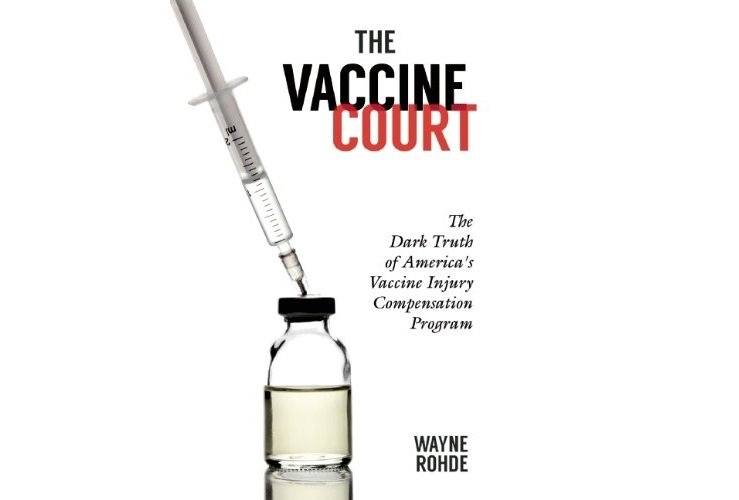 Vaccine injury cases are on the rise people, so if you’ve got your head in the sand and you haven’t been paying attention, it’s time to wake up.
Here’s a little background for those of you just getting started.
Ronnie Reagan… almost 30 years ago to the day, the 40th president of the United States signed away the rights of Americans to sue vaccine makers, replacing them with a law that forces families who have suffered vaccine injury or death to sue the U.S. government instead of a pharmaceutical company.
As a result, special masters from the United States Special Claims Court, also known for our purposes as the vaccine court, are given full authority as judge with no jury to decide the fate of Americans who have had the unfortunate ‘luck’ to be stricken by a vaccine injury — which can range from chronic, mild symptoms to death.
Once a year, this non-traditional court provides the public with a glimpse into its inner workings, by issuing an annual report on its website — a ritual that happens every January. The report is sent to the President of Congress, otherwise known as the Vice President of the United States, where it is intended to serve as a bell weather monitoring reactions the American public may be having to vaccinations that are increasingly becoming forced by government mandates around the country.
Great, right? Accountability in action?
Wrong.
The report, which is consistently ignored by mainstream media/politicians/health officials and the CDC, lies dormant on the reports page of the U.S. Special Claims Court website.
No headlines, no press release, no analysis, no alert the media, no nothing.
No surprise, given that most people in America don’t even know that vaccines were ruled to be unavoidably unsafe by the U.S. Supreme Court in 2011. Also no surprise, that mainstream, co-opted, globalist elite media constantly ignore this report, along with sane arguments made by health freedom advocates about the dangers and risks of vaccine injury (‘look! a unicorn!’), instead using terms like ‘the science is in,’ and vaccine risk has been ‘debunked,’ to deter rational discussion pertaining to evidence that is hiding in plain sight.
Also no surprise that the U.S. Special Claims Court offers up an ineffective, low tech, archaic version of the report every year. Instead of a nice, sort-able spread sheet, the court posts a scanned PDF document — a format which requires labor-intensive activities to conduct any sort of concrete analysis. One must either re-data-entry all 220+ pages which would take weeks, or conduct an extensive, hand-written breakdown by vaccine of each case, combined with extensive tallying and organization efforts in order to identify statistical relevance and trends emerging from the vaccine court.
Is this by design? Perhaps. Most definitely it is at the very least a deterrent from having anybody actually sit down and try to analyze the damn thing.
Which is exactly why we do it, every year since 2014. Not to be deterred, it took us 10 months to finally finish our analysis of this year’s report. But once we did, the trends we found were shocking — not just because of what they revealed about the continual increase in vaccine injury, but also because of the deafening silence present among the halls of mainstream media, as vaccine injury continues to be a subject that journalists and media outlets ignore — chalking it up to yet another conspiracy theory from yet another fake news site.
Well pull up a chair and hold on to your hats, because guess what we discovered:
 The rest of the settlements not pictured here are: Tetanus, $4 million; HPV $3.4 million, up from almost nothing in 2014 (one to watch in January when the 2016 report is issued); MMR, which actually decreased from the number one position last year to under $1 m — an 88%+ decrease in payouts; pertussis, $1.7 million; thimerisol $1.5 million; HIB, $345k, menginococal $500k, HEP A $408k, DPT & Polio, $210k & rotovirus $76k.
You may have noticed we omitted the second place winner, ‘other.’ Here’s why.
‘Other’ illustrates perfectly the dodgy nature of the vaccine court report, and its lack of transparency in the vaccine court process. Instead of identifying which combination of vaccines are being charged with injury or death and labeling the case accordingly, a special master can decide to label a vaccine case ‘other,’ thereby diluting its affect on the overall numbers in the final analysis.
In 2015, the ‘other’ category was the second largest increase in vaccine settlement payments, totaling $21.5 million in payouts, up 388% from $4.4 million in payouts the year before.
We’re not accusing anybody of anything. But, 388% increase is a lot. What combination of vaccines is causing such an increase? Doesn’t the public have a right to know? If the court decided, for example, that there were too many flu shot settlements mounting for the year, couldn’t it simply skew the data by categorizing certain cases as ‘other,’ which would artificially deflate the flu category?
Did we mention that these results are ONLY for the judgements — cases that are found in favor of the plaintiff. It does NOT include the EXTENSIVE legal fees for both sides, which are paid for by the U.S. government whether the lawyer wins or loses the case? Those are categorized as costs. And instead of submitting them in the report along with any judgments that are awarded, often they are entered as separate entries, making the exercise of linking them with their judgement payouts that much harder, requiring yet another step in the arduous, analysis of data.
The total dollar payout of legal fees for the vaccine court in 2015 is $42 million.
Also, a hand full of settlements in the payout are based on annuities — that means that the payouts (many of which total more than $1 million) reoccur annually. That’s because life as they knew it for some plaintiffs disappeared after their vaccine injury occurred, and the costs to care for them in perpetuity for the life of the plaintiff requires an annual sum that is often extensive.
Share far and wide people, it’s time to turn the tide.
Republished with permission of The Mom Street Journal. Read the full article at TheMomStreetJournal.com.
 Editor’s Note: 5G technology is being rapidly deployed in the next few years without any concern for the short or long-term health effects upon human beings (and other living creatures as well). It’s being touted as a “technological boon” (certainly for the companies who’ll profit from it), but for the rest of us? The jury is out, because no trial about “benefits vs. dangers” has been set.
Whether we like it or not, 5G (fifth generation) wireless internet technology is slowly but surely being rolled out across the globe. Promising faster speeds, better connectivity and virtually instant data transfers, 5G is being hailed as a technological boon.
Service providers promise that 5G will enable downloads at 100 times greater speeds than 4G technology. This would translate to the ability to download a full HD movie in less than 10 seconds. 5G also promises more stable connections and greater capacity, enabling networks to handle multiple high-demand applications simultaneously.
However, while the media continues to sing its praises, very little has been said about its potential dangers – of which there are many. Studies have found that 5G technology will emit radiation at levels never before experienced by human beings, which could have devastating – and irreversible – effects.
Despite the potentially serious dangers, however, Waking Times reported recently that a collaboration of tech giants and defense contractors will soon be launching huge, football-sized drones into the stratosphere above Hawaii, from where they will beam massive amounts of 5G radiation down to the Earth below. (Related: Experts WARN — 5G technology will blanket the Earth with ultra-high microwave frequencies.)
According to the Use Determination Application compiled for the Research Corporation of the University of Hawaii, the purpose of the HAWK30 program “is to develop new airborne overhead 5G communication, which would provide strong wireless service over a large area, including deep valleys, remote lands, and over the ocean.”
The Federal Aviation Administration (FAA) has granted the project a COA2 certificate of authorization, which will allow the drones to operate in a 150 square mile radius for up to two years. The area which will be covered by the drones includes the Molokini crater, a popular tourist spot that boasts 300,000 visitors annually, as well as beautiful tropical waters that are home to tropical fish and a special humpback whale national marine sanctuary.
Experts warn, however, that these drones pose significant risks. Waking Times reported:
Radiation harm is a concern as one HAWK30 drone broadcasts the equivalent of 1800 cell towers, albeit at a much lower power level, however, power is irrelevant to health effects except for tissue heating. Thousands of peer reviewed research studies document the non-thermal effects of wireless radiation on humans and other living things. In some experiments the lowest power levels caused the most leakage in the blood-brain barrier. An inverse relationship between power and health effects has even been shown. Wireless technology is not made safe by reducing the power.
The HAPS drones which will be used in the project will fly at 70 miles per hour and have a 260-foot wingspan and 10 propellers each. Each drone will boast cell site coverage of 124 miles in diameter, creating a blanket of radiation over the entire area.
There are other issues in addition to radiation concerns. Waking Times warns:
In addition to irradiating all life forms within range, this type of massive flying wing has a bad safety record. Two high altitude drones have been built by AeroVironment and they both fell from the sky and crashed. In fact, the drone is so experimental that almost no regulations exist to govern it. Project officials appear ready to take full advantage of this, having boasted about schooling the FAA and writing their own rules.
But a 1.5 ton HAWK30 falling from the stratosphere could have devastating effects. Only 2300 Newtons of force crush a human skull wearing a helmet. Falling from a height of 70,000 feet, a 1.5 ton object would impact with 266,756,000 Newtons of force!
Eventually the project leaders plan to turn the island of L?na’I into a manufacturing plant and launch pad for thousands of drones which will be sent across the globe, blanketing the planet in cancer-causing radiation. Learn more about the dangers of 5G technology at Radiation.news.
Source: Natural News
 Editor’s Note: Sixty-seven years old and I’ve never had health insurance, haven’t seen a medical doctor since 1983, stay away from pharmaceutical and recreational drugs of all kinds, get plenty of exercise, eat healthy, mostly vegan and raw food. Although such a lifestyle may seem radical or unrealistic for many people, it’s a better option than paying through the nose for a morsel of health security. Hippocrates once said, “If you’re not your own doctor, you’re a fool.”
The cost of family health coverage in the U.S. now tops $20,000, an annual survey of employers found, a record high that has pushed an increasing number of American workers into plans that cover less or cost more, or force them out of the insurance market entirely.
“It’s as much as buying a basic economy car,” said Drew Altman, chief executive officer of the Kaiser Family Foundation, “but buying it every year.” The nonprofit health research group conducts the yearly survey of coverage that people get through work, the main source of insurance in the U.S. for people under age 65.
While employers pay most of the costs of coverage, according to the survey, workers’ average contribution is now $6,000 for a family plan. That’s just their share of upfront premiums, and doesn’t include co-payments, deductibles and other forms of cost-sharing once they need care.
The seemingly inexorable rise of costs has led to deep frustration with U.S. health care, prompting questions about whether a system where coverage is tied to a job can survive. As premiums and deductibles have increased in the last two decades, the percentage of workers covered has slipped as employers dropped coverage and some workers chose not to enroll. Fewer Americans under 65 had employer coverage in 2017 than in 1999, according to a separate Kaiser Family Foundation analysis of federal data. That’s despite the fact that the U.S. economy employed 17 million more people in 2017 than in 1999.
“What we’ve been seeing is a slow, slow kind of drip-drip erosion in employer coverage,” Altman said.
Employees’ costs for health care are rising more quickly than wages or overall economy-wide prices, and the working poor have been particularly hard-hit. In firms where more than 35% of employees earn less than $25,000 a year, workers would have to contribute more than $7,000 for a family health plan. It’s an expense that Altman calls “just flat-out not affordable.” Only one-third of employees at such firms are on their employer’s health plans, compared with 63% at higher-wage firms, according to the Kaiser Family Foundation’s data.
The survey is based on responses from more than 2,000 randomly selected employers with at least three workers, including private firms and non-federal public employers.
Deductibles are rising even faster than premiums, meaning that patients are on the hook for more of their medical costs upfront. For a single person, the average deductible in 2019 was $1,396, up from $533 in 2009. A typical household with employer health coverage spends about $800 a year in out-of-pocket costs, not counting premiums, according to research from the Commonwealth Fund. At the high end of the range, those costs can top $5,000 a year.
While raising deductibles can moderate premiums, it also increases costs for people with an illness or who get hurt. “Cost-sharing is a tax on the sick,” said Mark Fendrick, director of the Center for Value-Based Insurance Design at the University of Michigan.
Under the Affordable Care Act, insurance plans must cover certain preventive services such as immunizations and annual wellness visits without patient cost-sharing. But patients still have to pay out-of-pocket for other essential care, such as medication for chronic conditions like diabetes or high blood pressure, until they meet their deductibles.
Many Americans aren’t prepared for the risks that deductibles transfer to patients. Almost 40% of adults can’t pay an unexpected $400 expense without borrowing or selling an asset, according to a Federal Reserve surveyfrom May.
That’s a problem, Fendrick said. “My patient should not have to have a bake sale to afford her insulin,” he said.
Source: Bloomberg
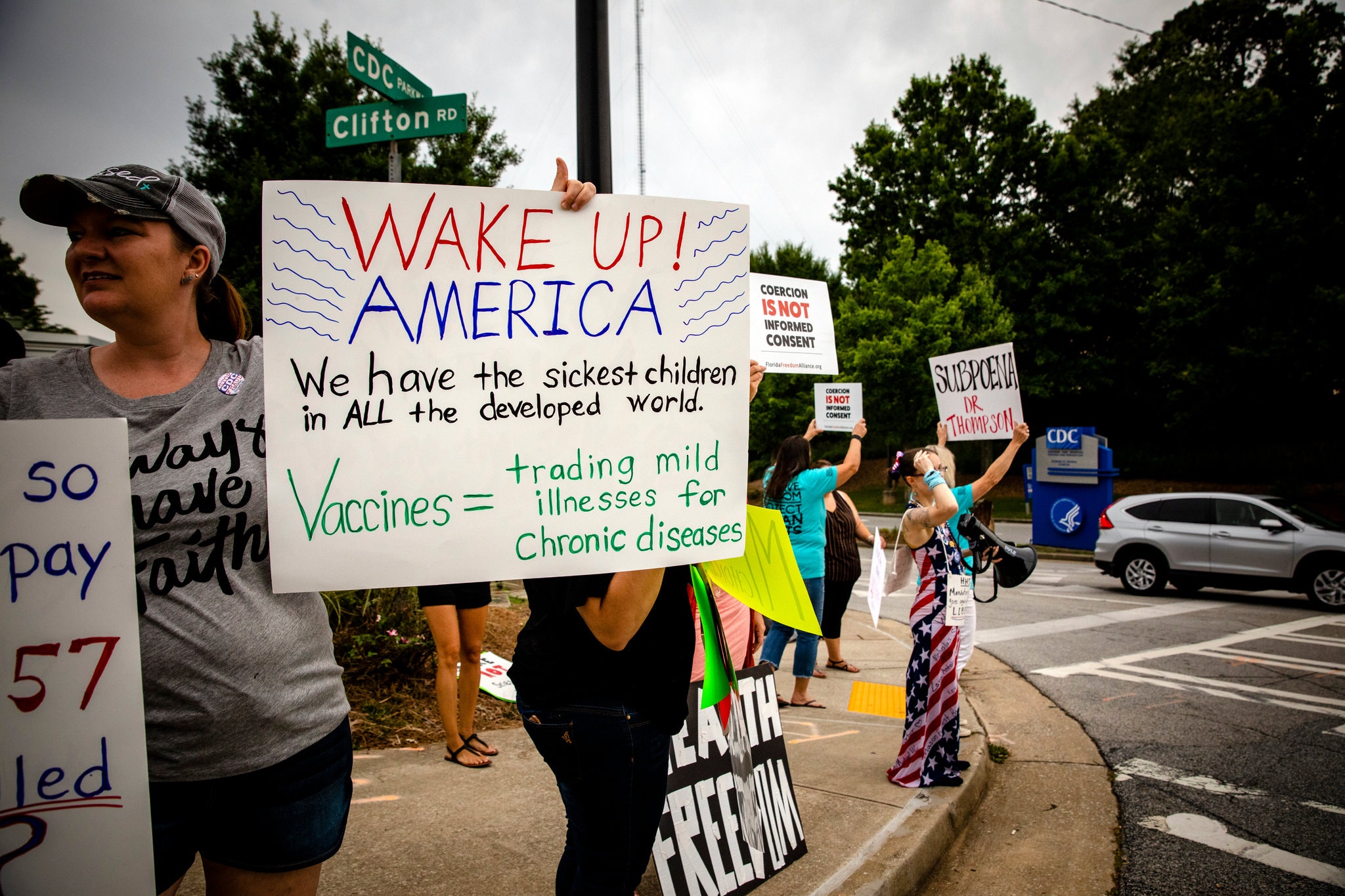 Editor’s Note: The New York Times (and likely their biggest Big Pharma advertisers) are heralding a strongly-held opinion that choice regarding vaccines should not be an option for parents who may have good reason to believe their children are at risk. The almost completely unregulated vaccine industry is in denial regarding the potentially dangerous side effects, chronic illnesses that can result and in too many cases they’d rather not count – death. Not once in this well-written, one-sided article did the views, opinions or reasoning of the anti-vaccine crowd get acknowledged. This is but one of numerous op-ed articles the New York Times has recently published.
As families face back-to-school medical requirements this month, the country feels the impact of a vaccine resistance movement decades in the making. The question is often whispered, the questioners sheepish. But increasingly, parents at the Central Park playground where Dr. Elizabeth A. Comen takes her young children have been asking her: “Do you vaccinate your kids?”
Dr. Comen, an oncologist who has treated patients for cancers related to the human papillomavirus that a vaccine can now prevent, replies emphatically: Absolutely.
She never imagined she would be getting such queries. Yet these playground exchanges are reflective of the national conversation at the end of the second decade of the 21st century — a time of stunning scientific and medical advances but also a time when the United States may, next month, lose its World Health Organization designation as a country that has eliminated measles, because of outbreaks this year. The W.H.O. has listed vaccine hesitancy as one of the top threats to global health.
As millions of families face back-to-school medical requirements and forms this month, the contentiousness surrounding vaccines is heating up again, with possibly even more fervor.
Though the situation may seem improbable to some, anti-vaccine sentiment has been building for decades, a byproduct of an internet humming with rumor and misinformation; the backlash against Big Pharma; an infatuation with celebrities that gives special credence to the anti-immunization statements from actors like Jenny McCarthy, Jim Carrey and Alicia Silverstone, the rapper Kevin Gates and Robert F. Kennedy Jr. And now, the Trump administration’s anti-science rhetoric.
“Science has become just another voice in the room,” said Dr. Paul A. Offit, an infectious disease expert at Children’s Hospital of Philadelphia. “It has lost its platform. Now, you simply declare your own truth.”
The constituents who make up the so-called vaccine resistant come from disparate groups, and include anti-government libertarians, apostles of the all-natural and parents who believe that doctors should not dictate medical decisions about children. Labeling resisters with one dismissive stereotype would be wrongheaded.
“To just say that these parents are ignorant or selfish is an easy trope,” said Jennifer Reich, a sociologist at the University of Colorado Denver, who studies vaccine-resistant families.
[Why did we start listening to celebrities about vaccines? Read more.]
It remains true that the overwhelming majority of American parents have their children vaccinated. Parent-driven groups like Voices for Vaccines, formed to counter anti-vaccination sentiment, have proliferated. Five states have eliminated exemptions for religious and philosophical reasons, permitting only medical opt-outs.
But there are ominous trends. For highly contagious diseases like measles, the vaccine rate to achieve herd immunity — the term that describes the optimum rate for protecting an entire population — is typically thought to be 95 percent. The Centers for Disease Control and Prevention found that the vaccination rate for the measles, mumps and rubella (M.M.R.) injection in kindergartners in the 2017-2018 school year had slipped nationally to 94.3 percent, the third year in a row it dropped.
Seven states reported rates for the M.M.R. vaccine that were far lower for kindergartners, including Kansas at 89.1 percent; New Hampshire, 92.4 percent; the District of Columbia, 81.3 percent. (The highest is West Virginia at 98.4 percent.)
Almost all states have at least one anti-vaccine group. At least four have registered political action committees, supporting candidates who favor less restrictive vaccine exemption policies.
Public health experts say that patients and many doctors may not appreciate the severity of diseases that immunizations have thwarted, like polio, which can affect the spinal cord and brain — because they probably have not seen cases.
“Vaccines are a victim of their own success,” said Dr. Offit, a co-inventor of a vaccine for rotavirus, which can cause severe diarrhea in young children. “We have largely eliminated the memory of many diseases.”
The growth of vaccine doubt in America coincides with several competing forces and attitudes.
Since the early 2000s, as the number of required childhood vaccines was increasing, a generation of parents was becoming hypervigilant about their children and, through social media, patting each other on the backs for doing so. In their view, parents who permitted vaccination were gullible toadies of status quo medicine.
In 2011, Dana Fuqua, of Aurora, Colo., pregnant with her first child, felt that irresistible pull of groupthink parenting.
She had just moved to the area, so she reached out to mothers’ groups on Facebook. Colorado, with a kindergarten vaccination compliance rate of 88.7 percent, has a rambunctious vaccine-resistant movement. Ms. Fuqua’s new friends urged her to have a drug-free birth, use cloth diapers and never to let a drop of formula pass her baby’s lips. Vaccines, it followed, were anathema.
The women intimidated her. They had advanced degrees; she had only a bachelor of science and a nursing background.
“I didn’t argue with them,” Ms. Fuqua said. “I was so desperate for their support that I compromised by delaying the vaccine schedule, so I wouldn’t get kicked out of the group.”
But when her second child was born prematurely, susceptible to illness, the group’s approval was not as important as her baby’s safety. Her position, she said, shifted from, “‘I can’t hang out with you if you had a vaccine because you could be shedding a virus’” — a common, false belief among the vaccine resistant — to, “ ‘If you haven’t had a vaccine, I will not associate with you.’”
She had both children fully vaccinated.
There have been anti-vaccination movements at least since 1796, when Edward Jenner invented the smallpox vaccine. But many experts say that the current one can be traced to 1982, when NBC aired a documentary, “DPT: Vaccine Roulette,” that took up a controversy percolating in England: a purported tie between the vaccine for pertussis — a potentially fatal disease that can cause lung problems — and seizures in young children.
Doctors sharply criticized the show as dangerously inaccurate. But fear spread. Anti-vaccination groups formed. Many companies stopped making vaccines, which were considered loss-leaders and not worth the corporate headache.
Then, in 1998, Andrew Wakefield, a British gastroenterologist, published a Lancet study (since discredited and withdrawn), associating the M.M.R. vaccine with autism.
Faced with risking autism or measles, some parents thought the answer was obvious. Most had never seen measles, mumps or rubella because vaccines had nearly eliminated them. But they believed they knew autism.
And most people are notoriously poor at assessing risk, say experts in medical decision-making.
Many stumble on omission bias: “We would rather not do something and have something bad happen, than do something and have something bad happen,” explained Alison M. Buttenheim, an associate professor of nursing and health policy at the University of Pennsylvania School of Nursing.
People are flummoxed by numerical risk. “We pay more attention to numerators, such as ‘16 adverse events,’ than we do to denominators, such as ‘per million vaccine doses,’ ” Dr. Buttenheim said.
A concept called “ambiguity aversion” is also involved, she added. “Parents would like to be told that vaccines are 100 percent safe,” she said. “But that’s not a standard we hold any medical treatment to.”
Relatively few people are absolutists about refusing all vaccines. “But if you’re uncertain about a decision, you’ll find those who confirm your bias and cement what you think,” said Rupali J. Limaye, a social scientist who studies vaccine behaviors at the Johns Hopkins Bloomberg School of Public Health.
Nowhere is that reinforcement more clamorous than on social media, Dr. Limaye added. “You may only see your pediatrician a few times a year but you can spend all day on the internet,” she said.
People tend to believe an individual’s anecdotal narrative over abstract numbers. By 2007, when Ms. McCarthy, the actress, insisted that vaccines caused her son’s autism, thousands found her to be more persuasive than data showing otherwise. A nascent movement took hold.
At the same time that these powerful attacks on vaccine confidence were underway, a constellation of trends was emerging.
The definition of a good parent was becoming fraught with the responsibility for overseeing every aspect of a child’s life.
“As we adopted a culture of individualistic parenting, public health became a hard sell,” Dr. Reich said.
The primary reason for healthy people to get the flu shot is to protect those with compromised immune systems, like infants and older adults, from getting sick. But altruism isn’t a great motivator for parents, Dr. Buttenheim said. “They are much more concerned about protecting their own child at all costs,” she said.
Contrast that attitude with the collective good will of the 1950s, say medical sociologists, when American parents who had seen President Franklin Delano Roosevelt’s wheelchair as a debilitating symbol of polio patriotically sought to vaccinate their children to help eradicate the disease worldwide.
By 2014, studies showed that parental confidence in authorities like the C.D.C. and in pediatricians was dropping, especially around vaccines. Mistrust of Big Pharma was even more pronounced.
By then, Donald Trump was offering support on Twitter for the discredited link between autism and vaccination. As president-elect, he met with leaders of the anti-vaccination movement, although as measles cases surged, he endorsed vaccination.
As parenting became rife with orthodoxy, the Marcus Welby model of the paternalistic doctor retreated. Patients asserted autonomy, brandishing internet printouts at doctors. Shared decision-making became the model of doctor-patient engagement.
Pediatricians offered to stagger vaccine schedules. Some were even flexible about vaccinations altogether.
In 2011, shortly after Emma Wagner had given birth in Savannah, Ga., a pediatrician on the ward examined the baby. “He asked me if I was interested in the hepatitis B vaccine,” she said of an inoculation typically done at birth.
She was apprehensive.
He replied, “‘That’s fine, because your 2-day-old daughter isn’t a prostitute and isn’t using I.V. drugs, so hep B isn’t at the top of my worries.’”
Ms. Wagner said she “swallowed the anti-vax Kool-Aid. I was motivated by fear. I thought, ‘Until I know for certain that these are safe, I won’t do it.’ The pediatrician said, ‘I will support your decision and in a few years we’ll talk about exemptions for school.’”
She has since become a staunch supporter of immunization.
Libertarianism also courses through vaccine hesitation, with parents who assert that government should not be able to tell them what to put in their bodies — a position often marketed as “the right to choose.”
“Having the government order them to do something reinforces conspiracy theories,” said Daniel Salmon, director of the Institute for Vaccine Safety at Johns Hopkins. “And people perceive their risk to be higher when it’s not voluntary.”
In reality, he said, one’s risk of harm is greater while driving to an airport than it is being on the airplane itself. But driving is voluntary and gives the illusion of control. People fear flying because they cannot control the plane. By extension, many childhood vaccines are not voluntary, which rattles those who prefer to believe they can control their health.
With so many different but deeply held convictions, public health experts struggle to design vaccine-positive campaigns.
The results were intriguing. Those most resistant to vaccines scored highest in two values: purity (“my body is a temple”) and liberty (“I want to make my child’s health care decisions”).
A third, said Saad B. Omer, director of Yale’s Global Health Institute and an author of the study, was also telling: deference to authority — a score indicating whether one was likely to adhere to the advice of experts like a pediatrician or the C.D.C.
Dr. Salmon’s team at Johns Hopkins is working on an app to capture parents’ vaccine attitudes and to tailor information to persuade them to vaccinate their children.
Pediatricians are front-line persuaders, he said, and they should be compensated for the time it takes to educate parents.
Most experts note that physicians themselves, never mind parents, have no idea about the federal vaccine monitoring systems, which have been in place for more than 20 years.
“We ask parents in the first two years of their child’s life to protect them against 14 diseases, that most people don’t see, using fluids they don’t understand,” Dr. Offit said. “It’s time for us to stand back and explain ourselves better.”
Source: The New York Times
 Japan will not develop and invest in the creation of fifth-generation mobile networks. This is stated on the official website of the Ministry of High Technologies of the country. Officials expressed the opinion that the creation of a faster Internet than previously is dangerous for the population and may adversely affect people’s health and labor productivity.
A study by the University of Nagasaki provides figures confirming the increase in the number of mental disorders and fatigue among high-speed Internet users. According to scientists, the more a person manages to conduct intellectual operations per minute, the more he is prone to the development of stress, absent-mindedness and an increase in nervous excitement. The Ministry of Health supplements colleagues and assures that using 5G networks can reduce the average life expectancy in the country for the first time in 60 years, and the impact of high-speed Internet is comparable to the effects of radiation on the human body.
“We need to think about the health of the Japanese. Our country has already accelerated economically so that today we have nowhere to hurry. It is necessary to stabilize this state. 5G is fraught with great danger. So we think not only we, yesterday this information was confirmed by the US ambassador to Japan. If America, China or the EU countries are ready to risk their people for the sake of progress, then such a strategy is unacceptable for our welfare state, ”said Nobunari Kabato, Minister of High Technologies.
The bill to ban fifth-generation mobile networks in the country has already been submitted to the Japanese parliament.
Source: Красная Армия & Web Archive
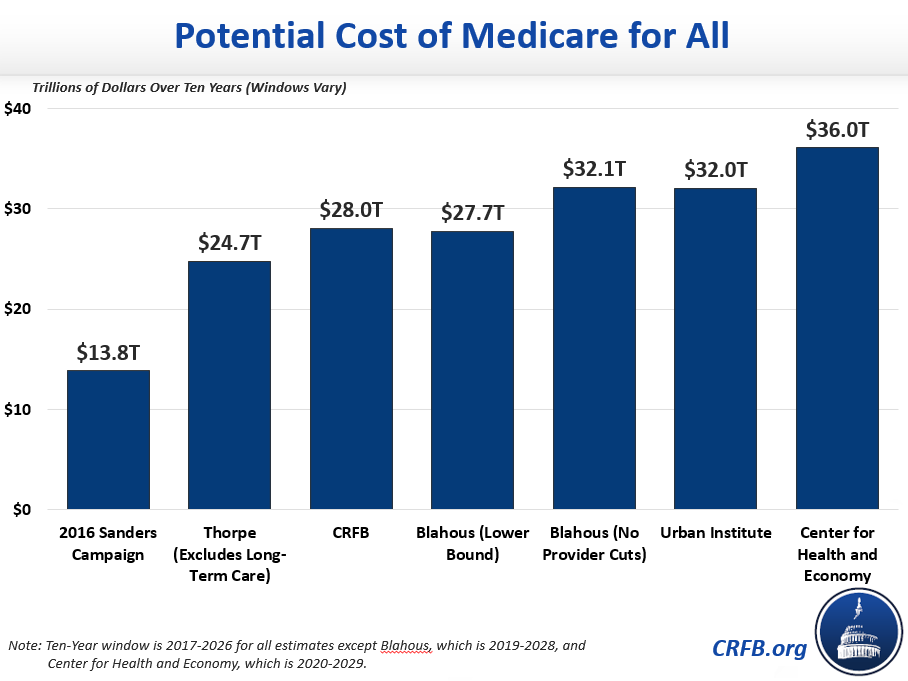 Representative Pramila Jayapal (D-WA), a co-chair of the Medicare for All Caucus, released a bill today that would adopt a single-payer system, where the federal government replaces private health insurance companies as the sole provider of most health care financing. While we are not aware of any estimates of this particular proposal, similar proposals have been estimated to cost the federal government roughly $28-32 trillion over a decade.
Representative Jayapal’s Medicare for All Act would replace nearly all current insurance with a government-run single-payer plan and extend that plan to those who currently lack health coverage. The plan itself would be far more generous than either Medicare or most private coverage, as it would include no deductibles or copayments, would not restrict beneficiaries to networks of care, and would offer a broad suite of benefits including dental care, vision care, transportation for disabled and low-income patients, certain dietary and nutritional care, long-term care, and other long-term services and support. The proposal also establishes a global health budget, moves away from fee-for-service and toward lump-sum payments for many providers, includes a number of measures to hold down drug prices, and makes a variety of other changes to the health care system.
The proposal is broadly similar to Senator Sanders’s proposed single-payer plan introduced during the 2016 Presidential campaign. While the campaign itself estimated that plan would cost the federal government about $14 trillion over a decade, most other estimates that we are aware of are at least twice that high.
At the time, for example, the Committee for a Responsible Federal Budget estimated roughly that the plan would cost $28 trillion through 2026 (we estimated the Sanders plan in particular would also raise $11 trillion of revenue, leading to $17 trillion of net costs). All other estimates come to similar conclusions.
For example, economist Kenneth Thorpe estimated that single-payer health care would cost the federal government $24.7 trillion through 2026, excluding the costs associated with long-term care benefits (likely about $3 trillion). The Urban Institute estimated a $32 trillion cost over the same period, including those long-term care benefits. The Center for Health and Economy (H&E) produced an estimate that the American Action Forum calculates would cost the federal government $36 trillion through 2029.
In addition, former Social Security and Medicare Trustee and current Mercatus Center fellow Chuck Blahous estimated that Medicare for All as proposed in Senator Sanders’s 2017 legislation would cost the federal government $27.7 trillion through 2028 assuming steep provider cuts and $32.1 trillion assuming no provider cuts (these estimates, like most others, assume immediate implementation).
Importantly, these totals represent the increased cost to the federal government, not the change of total national health expenditures. National health expenditures would likely change by no more than a few trillion dollars over decade. The direction of that change is unclear and would depending on the whether the increased cost of expanding coverage (by making health insurance more generous and offering it to more people) is larger or smaller than the amount saved from lower provider payments, drug payments, and administrative spending.
The totals also do not represent debt impact, which would depend not only on the cost to the federal government but also on any funds the government might choose to raise through premiums, taxes, or both. For example, Senator Sanders’s campaign plan included roughly $11 trillion of tax increases, which could fund more than one-third of Medicare for All.
While any new revenue would in part be replacing current premiums, identifying pay-fors still remains a challenge. Enacting this type of Medicare for All would mean increasing federal spending by about 60 percent (excluding interest), and financing a $30 trillion program would require the equivalent of tripling payroll taxes or more than doubling all other taxes.
Supporters of Medicare for All should work to identify new revenue, premiums, and/or spending cuts to finance new federal costs or else scale back their proposal if they are unable to identify sufficient funding.
Source: Committee for a Responsible Federal Budget
By Bobby Azarian, Ph.D.
Editor’s Note: There are lots of problems with this analysis especially because many assertions are sourced from the liberal media which has an agenda, but it has some interesting talking points for understanding our current political situation. Our nation was divided long before Donald Trump became President, his election just brought this fact to the surface. There are two America’s and they are not even talking with each other anymore.
Whether we want to or not, we must try to understand the Donald Trump phenomenon, as it has completely swept the nation and also fiercely divided it. What is most baffling about it all is Trump’s apparent political invincibility. As he himself said even before he won the presidential election, “I could stand in the middle of 5th Avenue and shoot somebody and I wouldn’t lose voters.” Unfortunately for the American people, this wild-sounding claim appears to be truer than not. It should also motivate us to explore the science underlying such peculiar human behavior, so we can learn from it, and potentially inoculate against it.
In all fairness, we should recognize that lying is sadly not uncommon for politicians on both sides of the political aisle, but the frequency and magnitude of the current president’s lies should have us all wondering why they haven’t destroyed his political career, and instead perhaps strengthened it. Similarly, we should be asking why his inflammatory rhetoric and numerous scandals haven’t sunk him. We are talking about a man who was caught on tape saying, “When you’re a star, they let you do it. You can do anything. Grab them by the pussy.” Politically surviving that video is not normal, or anything close to it, and such a revelation would likely have been the end of Barack Obama or George Bush had it surfaced weeks before the election.
While dozens of psychologists have analyzed Trump, to explain the man’s political invincibility, it is more important to understand the minds of his staunch supporters. While various popular articles have illuminated a multitude of reasons for his unwavering support, there appears to be no comprehensive analysis that contains all of them. Since there seems to be a real demand for this information, I have tried to provide that analysis below.
Some of the explanations come from a 2017 review paper published in the Journal of Social and Political Psychology by the psychologist and UC Santa Cruz professor Thomas Pettigrew. Others have been put forth as far back as 2016, by me, in various articles and blog posts for publications like Psychology Today. A number of these were inspired by insights from psychologists like Sheldon Solomon, who laid the groundwork for the influential Terror Management Theory, and David Dunning, who did the same for the Dunning-Kruger effect.
This list will begin with the more benign reasons for Trump’s intransigent support. As the list goes on, the explanations become increasingly worrisome, and toward the end, border on the pathological. It should be strongly emphasized that not all Trump supporters are racist, mentally vulnerable, or fundamentally bad people. It can be detrimental to society when those with degrees and platforms try to demonize their political opponents or paint them as mentally ill when they are not. That being said, it is just as harmful to pretend that there are not clear psychological and neural factors that underlie much of Trump supporters’ unbridled allegiance.
The psychological phenomena described below mostly pertain to those supporters who would follow Trump off a cliff. These are the people who will stand by his side no matter what scandals come to light, or what sort of evidence for immoral and illegal behavior surfaces.
1. Practicality Trumps Morality
For some wealthy people, it’s simply a financial matter. Trump offers tax cuts for the rich and wants to do away with government regulation that gets in the way of businessmen making money, even when that regulation exists for the purpose of protecting the environment. Others, like blue-collared workers, like the fact that the president is trying to bring jobs back to America from places like China. Some people who genuinely are not racist (those who are will be discussed later) simply want stronger immigration laws because they know that a country with open borders is not sustainable. These people have put their practical concerns above their moral ones. To them, it does not make a difference if he’s a vagina-grabber, or if his campaign team colluded with Russia to help him defeat his political opponent. It is unknown whether these people are eternally bound to Trump in the way others are, but we may soon find out if the Mueller investigation is allowed to come to completion.
2. The Brain’s Attention System Is More Strongly Engaged by Trump
According to a study that monitored brain activity while participants watched 40 minutes of political ads and debate clips from the presidential candidates, Donald Trump is unique in his ability to keep the brain engaged. While Hillary Clinton could only hold attention for so long, Trump kept both attention and emotional arousal high throughout the viewing session. This pattern of activity was seen even when Trump made remarks that individuals didn’t necessarily agree with. His showmanship and simple language clearly resonate with some at a visceral level.
3. America’s Obsession with Entertainment and Celebrities
Essentially, the loyalty of Trump supporters may in part be explained by America’s addiction to entertainment and reality TV. To some, it doesn’t matter what Trump actually says because he’s so amusing to watch. With the Donald, you are always left wondering what outrageous thing he is going to say or do next. He keeps us on the edge of our seat, and for that reason, some Trump supporters will forgive anything he says. They are happy as long as they are kept entertained.
4. “Some Men Just Want to Watch the World Burn.”
Some people are supporting Trump simply to be rebellious or to introduce chaos into the political system. They may have such distaste for the establishment and democrats like Hillary Clinton that their support for Trump is a symbolic middle finger directed at Washington. These people may have other issues, like an innate desire to troll others or an obsession with schadenfreude.
5. The Fear Factor: Conservatives Are More Sensitive to Threat
Science has shown that the conservative brain has an exaggerated fear response when faced with stimuli that may be perceived as threatening. A 2008 study in the journal Science found that conservatives have a stronger physiological reaction to startling noises and graphic images compared to liberals. A brain-imaging study published in Current Biology revealed that those who lean right politically tend to have a larger amygdala — a structure that is electrically active during states of fear and anxiety. And a 2014 fMRI study found that it is possible to predict whether someone is a liberal or conservative simply by looking at their brain activity while they view threatening or disgusting images, such as mutilated bodies. Specifically, the brains of self-identified conservatives generated more activity overall in response to the disturbing images.
These brain responses are automatic and not influenced by logic or reason. As long as Trump continues to portray Muslims and Hispanic immigrants as imminent threats, many conservative brains will involuntarily light up like light bulbs being controlled by a switch. Fear keeps his followers energized and focused on safety. And when you think you’ve found your protector, you become less concerned with offensive and divisive remarks.
6. The Power of Mortality Reminders and Perceived Existential Threat
A well-supported theory from social psychology, known as Terror Management Theory, explains why Trump’s fear mongering is doubly effective. The theory is based on the fact that humans have a unique awareness of their own mortality. The inevitably of one’s death creates existential terror and anxiety that is always residing below the surface. In order to manage this terror, humans adopt cultural worldviews — like religions, political ideologies, and national identities — that act as a buffer by instilling life with meaning and value.
Terror Management Theory predicts that when people are reminded of their own mortality, which happens with fear mongering, they will more strongly defend those who share their worldviews and national or ethnic identity, and act out more aggressively towards those who do not. Hundreds of studies have supported this hypothesis, and some have specifically shown that triggering thoughts of death tends to shift people towards the right.
Not only do death reminders increase nationalism, they may influence voting habits in favor of more conservative presidential candidates. And more disturbingly, in a study with American students, scientists found that making mortality salient increased support for extreme military interventions by American forces that could kill thousands of civilians overseas. Interestingly, the effect was present only in conservatives.
By constantly emphasizing existential threat, Trump may be creating a psychological condition that makes the brain respond positively rather than negatively to bigoted statements and divisive rhetoric.
7. The Dunning-Kruger Effect: Humans Often Overestimate Their Political Expertise
Some who support Donald Trump are under-informed or misinformed about the issues at hand. When Trump tells them that crime is skyrocketing in the United States, or that the economy is the worst it’s ever been, they simply take his word for it.
The Dunning-Kruger effect explains that the problem isn’t just that they are misinformed; it’s that they are completely unaware that they are misinformed, which creates a double burden.
Studies have shown that people who lack expertise in some area of knowledge often have a cognitive bias that prevents them from realizing that they lack expertise. As psychologist David Dunning puts it in an op-ed for Politico, “The knowledge and intelligence that are required to be good at a task are often the same qualities needed to recognize that one is not good at that task — and if one lacks such knowledge and intelligence, one remains ignorant that one is not good at the task. This includes political judgment.” These people cannot be reached because they mistakenly believe they are the ones who should be reaching others.
8. Relative Deprivation — A Misguided Sense of Entitlement
Relative deprivation refers to the experience of being deprived of something to which one believes they are entitled. It is the discontent felt when one compares their position in life to others who they feel are equal or inferior but have unfairly had more success than them.
Common explanations for Trump’s popularity among non-bigoted voters involve economics. There is no doubt that some Trump supporters are simply angry that American jobs are being lost to Mexico and China, which is certainly understandable, although these loyalists often ignore the fact that some of these careers are actually being lost due to the accelerating pace of automation.
These Trump supporters are experiencing relative deprivation, and are common among the swing states like Ohio, Michigan, and Pennsylvania. This kind of deprivation is specifically referred to as “relative,” as opposed to “absolute,” because the feeling is often based on a skewed perception of what one is entitled to.
9. Lack of Exposure to Dissimilar Others
Intergroup contact refers to contact with members of groups that are outside one’s own, which has been experimentally shown to reduce prejudice. As such, it’s important to note that there is growing evidence that Trump’s white supporters have experienced significantly less contact with minorities than other Americans. For example, a 2016 study found that “…the racial and ethnic isolation of Whites at the zip-code level is one of the strongest predictors of Trump support.” This correlation persisted while controlling for dozens of other variables. In agreement with this finding, the same researchers found that support for Trump increased with the voters’ physical distance from the Mexican border. These racial biases might be more implicit than explicit, the latter which is addressed in #14.
10. Trump’s Conspiracy Theories Target the Mentally Vulnerable
While the conspiracy theory crowd — who predominantly support Donald Trump and crackpot allies like Alex Jones and the shadowy QAnon — may appear to just be an odd quirk of modern society, some of them may suffer from psychological illnesses that involve paranoia and delusions, such as schizophrenia, or are at least vulnerable to them, like those with schizotypy personalities.
The link between schizotypy and belief in conspiracy theories is well-established, and a recent study published in the journal PsychiatryResearch has demonstrated that it is still very prevalent in the population. The researchers found that those who were more likely to believe in outlandish conspiracy theories, such as the idea that the U.S. government created the AIDS epidemic, consistently scored high on measures of “odd beliefs and magical thinking.” One feature of magical thinking is a tendency to make connections between things that are actually unrelated in reality.
Donald Trump and media allies target these people directly. All one has to do is visit alt-right websites and discussion boards to see the evidence for such manipulation.
11. Trump Taps into the Nation’s Collective Narcissism
Collective narcissism is an unrealistic shared belief in the greatness of one’s national group. It often occurs when a group who believes it represents the ‘true identity’ of a nation — the ‘ingroup,’ in this case White Americans — perceives itself as being disadvantaged compared to outgroups who are getting ahead of them ‘unrightfully.’ This psychological phenomenon is related to relative deprivation (#6).
A study published last year in the journal Social Psychological and Personality Science found a direct link between national collective narcissism and support for Donald Trump. This correlation was discovered by researchers at the University of Warsaw, who surveyed over 400 Americans with a series of questionnaires about political and social beliefs. Where individual narcissism causes aggressiveness toward other individuals, collective narcissism involves negative attitudes and aggressiontoward ‘outsider’ groups (outgroups), who are perceived as threats.
Donald Trump exacerbates collective narcissism with his anti-immigrant, anti-elitist, and strongly nationalistic rhetoric. By referring to his supporters, an overwhelmingly white group, as being “true patriots” or “real Americans,” he promotes a brand of populism that is the epitome of “identity politics,” a term that is usually associated with the political left. Left-wing identity politics, as misguided as they may sometimes be, are generally aimed at achieving equality, while the right-wing brand is based on a belief that one nationality or race is superior or entitled to success and wealth for no other reason than identity.
12. The Desire to Want to Dominate Others
Social dominance orientation (SDO) — which is distinct from but related to authoritarian personality (#13) — refers to people who have a preference for the societal hierarchy of groups, specifically with a structure in which the high-status groups have dominance over the low-status ones. Those with SDO are typically dominant, tough-minded, and driven by self-interest.
In Trump’s speeches, he appeals to those with SDO by repeatedly making a clear distinction between groups that have a generally higher status in society (White), and those groups that are typically thought of as belonging to a lower status (immigrants and minorities). A 2016 survey study of 406 American adults published last year in the journal Personality and Individual Differences found that those who scored high on both SDO and authoritarianism were more likely to vote for Trump in the election.
13. Authoritarian Personality
Authoritarianism refers to the advocacy or enforcement of strict obedience to authority at the expense of personal freedom, and is commonly associated with a lack of concern for the opinions or needs of others. Authoritarian personality is characterized by belief in total and complete obedience to authority. Those with this personality often display aggression toward outgroup members, submissiveness to authority, resistance to new experiences, and a rigid hierarchical view of society. Authoritarianism is often triggered by fear, making it easy for leaders who exaggerate threat or fear monger to gain their allegiance.
Although authoritarian personality is found among liberals, it is more common among the right-wing around the world. President Trump’s speeches, which are laced with absolutist terms like “losers” and “complete disasters,” are naturally appealing to those with such a personality.
While research showed that Republican voters in the U.S. scored higher than Democrats on measures of authoritarianism before Trump emerged on the political scene, a 2016 Politico survey found that high authoritarians greatly favored then-candidate Trump, which led to a correct prediction that he would win the election, despite the polls saying otherwise.
14. Racism and Bigotry
It would be grossly unfair and inaccurate to say that every one of Trump’s supporters have prejudice against ethnic and religious minorities, but it would be equally inaccurate to say that few do. The Republican party, going at least as far back to Richard Nixon’s “southern strategy,” has historically used tactics that appealed to bigotry, such as lacing speeches with “dog whistles” — code words that signaled prejudice toward minorities that were designed to be heard by racists but no one else.
While the dog whistles of the past were subtler, Trump’s signaling is sometimes shockingly direct. There’s no denying that he routinely appeals to racist and bigoted supporters when he calls Muslims “dangerous” and Mexican immigrants “rapists” and “murderers,” often in a blanketed fashion. Perhaps unsurprisingly, a recent study has shown that support for Trump is correlated with a standard scale of modern racism.
Source: Psychology Today

There’s a wild conspiracy theory being perpetuated by the Trump-hating mainstream media right now that claims the president is reversing an Obama-era ban on the use of pesticides and GMOs (genetically-modified organisms) in national wildlife refuges. But an in-depth Natural Newsinvestigation has revealed that this claim is just more fake news, as Obama never actually banned either of these poisons from nationally-owned land.
In fact, a 2014 memo issued by Obama about the types of chemicals and agricultural inputs that are allowed on federal land is almost identical to the one recently issued by Trump – meaning there’s been virtually no change in the policy for at least the past four years. But this isn’t what the liberal media is now reporting as it tries to claim that Trump is “destroying the environment” – which is just the latest psy-op to rile up the public against the president.
All during the Obama years, Natural News was at the forefront of reporting on such issues, seeing as how monitoring GMOs and chemical pesticides and herbicides is our forte. If you go back in our archives and search for these topics, you’ll see that Obama was hardly a friend of the environment, nor was he at all concerned about damaging toxins and fake food crops invading federal land.
Because it was Obama engaging in this sleight-of-hand – remember, it was Obama who lied on the campaign trail about banning the very same GMOs that he ultimately allowed in wildlife refuges – the mainstream media was nowhere to be found in condemning him. But now that Trump is basically affirming this Obama-era policy with no changes, the liberal liars would have us all believe that Trump “hates the environment” and is “destroying the planet.”
“The latest assault comes from a wave of extremely deceptive, misleading stories that now claim the Trump administration has reversed an Obama-era regulatory decision that banned the use of neonics and GMOs on national wildlife refuge lands,” says Mike Adams, the Health Ranger.
“They claim the memo completely reverses the Obama-era pesticide ban. But a factual reading of the two memos (one from 2014, one from 2018) shows this interpretation to be highly inaccurate, if not deliberately deceptive.”
You can read the two memos side by side and see for yourself the deception by visiting this link.
What’s stunningly hypocritical about those criticizing the president over the fake news it made up about him is that it’s suddenly popular to oppose the deadly chemical poisons that independent media outlets like Natural News have been warning about for years. We’ve faced plenty of criticism, mockery, and abuse for simply warning about the dangers of GMOs and crop chemicals, both of which are harming children by the millions, not to mention the environment.
However, now that Trump is at the helm continuing this status quo, liberal news outlets are going nuts pretending like they care about these same issues – the exception being that they only seem to care about the wildlife refuges, and not about children. It’s just another sick ploy by these psychopaths to target Trump when, in fact, they couldn’t care less about either planet or children.
While we’re in full agreement that Trump needs to stop this chemical assault on our planet and our children, the truth of the matter is that nothing has changed under his presidency, despite what the fake media is claiming. GMOs and crop chemicals are still being used just as they always were, and still need to be fought against, regardless of who the sitting president might be.
Source: Pesticides News/Natural News
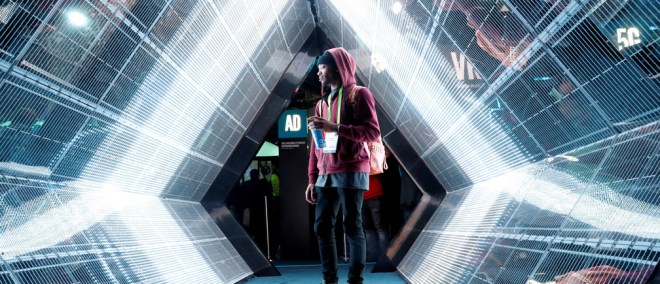
Editor’s Note: The unforeseen consequences of unleashing an electronic network worldwide with nowhere to hide, with a bombardment of such powerful frequencies as to disrupt every living system with proven oxygen shattering and immune suppressing technology is beginning to unfold. This article is an industry puff piece for the global leaders of industry promoting 5G as the next panacea for all our problems. My friends, this is a crisis of consciousness and will forever map the trajectory of human evolution. Only robots will survive this 5G rollout. Read it and weep!
By Don Rosenberg
It is not an easy time to be an internationalist, to seek global solutions to global problems amid what feels like one of history’s periodic inclinations toward divisiveness.
Yet, ironically, we’re on the verge of a new age of interconnectedness, when the daily lives of people across the planet will be more closely intertwined than ever. Advances in technology will usher in the age of fifth generation, or 5G, telecommunications. And, if past is prologue, this technological evolution will lead to dramatic societal changes.
The first generation of mobile communications, with brick-sized phones, brought just a handful of users expensive and often unreliable analogue voice calling. The second generation introduced digital voice service that was less likely to be dropped, available to many more people and ultimately cheaper to use. 3G ushered in the mobile internet, mobile computing, and the proliferation of apps. 4G (often called LTE) made possible all we have come to expect of mobile broadband: streaming video and audio; instantaneous ride hailing; the explosion of social media.
We take all this connectivity for granted, but the engineering inside the device in your bag or pocket today would have seemed impossible less than 20 years ago.
So, where will 5G take us?
Think about a world in which not just people but all things are connected: cars to the roads they are on; doctors to the personal medical devices of their patients; augmented reality available to help people shop and learn and explore wherever they are. This requires a massive increase in the level of connectivity.
5G is the technological answer, making possible billions of new connections, and making those connections secure and instantaneous. 5G will impact every industry – autos, healthcare, manufacturing and distribution, emergency services, just to name a few. And 5G is purposely designed so that these industries can take advantage of cellular connectivity in ways that wouldn’t have been possible before, and to scale upwards as use of 5G expands.
But generational change in mobile communications doesn’t just appear overnight. It requires significant effort in research and development and the resources necessary to support that effort. Work on 4G took nearly a decade and the challenges were not easy. Consider one of tens of thousands of problems that needed to be solved as described by an engineer at Qualcomm, where much of this technology was invented:
“When the signal leaves the base station, it can undergo a loss of up to 130 decibels before it reaches your mobile phone. To put that loss into perspective, if you consider the transmitted signal power to be roughly the size of the Earth, then the received signal power would be equivalent to the size of a tiny bacteria.”
That is a tremendous loss of power, and it requires some pretty impressive engineering to compensate for the effect of the loss on the words, pictures, and other data we send and receive across the airwaves in a transparent, seamless and instantaneous way.
Like 3G and 4G, 5G is the responsibility of the standards-setting organisation 3GPP, where the handful of companies that invent technologies come together with many, many more companies who will develop products that implement those technologies.
Think about this process for a moment: engineers from rival inventing companies, rival product makers, rival wireless network operators, all from different countries and continents, discussing, testing, striving to perfect tens of thousands of different technical solutions that ultimately make up a standard like 5G.
They judge each technical solution using a merit-based, consensus-building approach. This process has been at the foundation of a technological revolution that spawned myriad new industries, millions of new jobs and well over a $1 trillion in economic growth.
It’s the fusion of commercial self-interest with the recognition that some problems are best solved by working together. And it’s not a bad model of human behaviour if we are to meet the World Economic Forum’s goal this year to address the problems of “a fractured world”.
The benefits and advantages of 5G technology are expected to be available sometime in 2019. We believe 5G will change the world even more profoundly than 3G and 4G; that it will be as revolutionary as electricity or the automobile, benefitting entire economies and entire societies.

Developing nations have rivalled or surpassed their industrialised counterparts in benefiting from the deployment of mobile technology, and there’s every reason to think 5G will have an even bigger levelling effect than its predecessors.
Economists estimate the global economic impact of 5G in new goods and services will reach $12 trillion by 2035 as 5G moves mobile technology from connecting people to people and information, towards connecting people to everything.
Many of the benefits probably aren’t yet apparent to us. Wireless network operators initially resisted proposals to give their customers mobile access to the internet, questioning why they would want it. At the dawn of 4G’s adoption no one could have predicted the new business models that grew on the back of mobile broadband, like Uber, Spotify and Facebook.

Now, according to the European Patent Office, the number of patent applications related to “smart connected objects” has surged 54% over the last three years, suggesting new, related and as-yet unknown inventions will arrive even before 5G becomes available.
This is news that should encourage us amid glum commentaries on the state of the world. There is promise yet in what we’re capable of achieving.
Source: World Economic Forum
 Liberty International News