Japan expected to dump over 1 MILLION TONS of radioactive Fukushima water into Pacific, fishermen fear ‘catastrophic impact’ | RT.com

The Japanese government is planning to release more than one million tons of contaminated radioactive water from the Fukushima nuclear plant into the Pacific Ocean, angering fishermen, local media have reported.

Japan has debated what to do with the rapidly increasing store of radioactive wastewater for years, and now the decision to release it into the ocean could be confirmed by the end of the month.

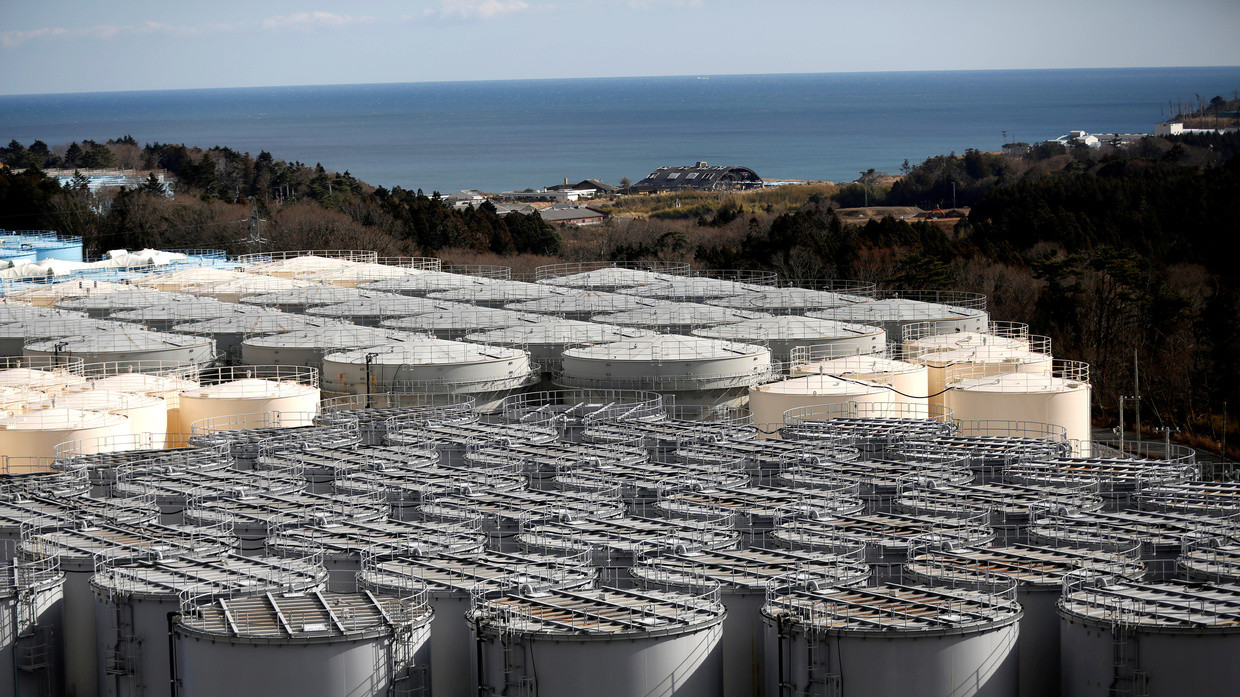
Currently, Japan houses the water in more than 1,000 tanks, but with 170 additional tons of the radioactive by-product being produced every day, storage space is quickly running out.

It is estimated that all tanks will have reached maximum capacity by the summer of 2022 and Japanese Chief Cabinet Secretary Katsunobu Kato said on Friday that the decision was one they could “not keep delaying,” Kyodo News reported.

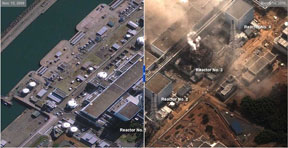
The water is used to cool the Fukushima nuclear reactor core, which went into meltdown after the catastrophic 2011 earthquake and tsunami that struck the plant. 

The government previously considered building more tanks to house the additional water, or attempting to evaporate the water into the atmosphere, but an advisory panel recommended releasing it into the ocean as the most efficient solution. However, the release process is not expected to begin until 2022 and is likely to take 30 years to complete.

The prospect of an ocean release has reignited concerns among local fishermen who fear it could destroy their industry.

“We are terrified that if even one fish is found to have exceeded the [radiation] safety standards after the treated water is released, people’s trust in us will plummet,” Kyodo News quoted a local fisherman as saying. 

Hiroshi Kishi, who heads a confederation of Japanese fishing cooperatives told officials last week that the release could have a “catastrophic impact” on the industry. 

Fishing was completely halted following the 2011 disaster, and despite a recent recovery, fishermen in the region continue to face international trade restrictions. South Korea, which still bans all fish imports from the region, has described the proposal as a “grave threat.” 

The initial meltdown in 2011 forced the evacuation of 150,000 people from within 20km of the plant as well as from outside areas that experienced high levels of fallout. The clean-up process is expected to take many more years to complete.

Source: RT

Japan may abandon the development of 5G networks for the health of citizens | Красная Армия

Japan will not develop and invest in the creation of fifth-generation mobile networks. This is stated on the official website of the Ministry of High Technologies of the country. Officials expressed the opinion that the creation of a faster Internet than previously is dangerous for the population and may adversely affect people’s health and labor productivity.

A study by the University of Nagasaki provides figures confirming the increase in the number of mental disorders and fatigue among high-speed Internet users. According to scientists, the more a person manages to conduct intellectual operations per minute, the more he is prone to the development of stress, absent-mindedness and an increase in nervous excitement. The Ministry of Health supplements colleagues and assures that using 5G networks can reduce the average life expectancy in the country for the first time in 60 years, and the impact of high-speed Internet is comparable to the effects of radiation on the human body.

“We need to think about the health of the Japanese. Our country has already accelerated economically so that today we have nowhere to hurry. It is necessary to stabilize this state. 5G is fraught with great danger. So we think not only we, yesterday this information was confirmed by the US ambassador to Japan. If America, China or the EU countries are ready to risk their people for the sake of progress, then such a strategy is unacceptable for our welfare state, ”said Nobunari Kabato, Minister of High Technologies.

The bill to ban fifth-generation mobile networks in the country has already been submitted to the Japanese parliament.

Source: Красная АрмияWeb Archive

Study touts planting 1 trillion trees as most effective climate change solution | The Hill

Healthy green trees in a forest of old spruce, fir and pine trees in wilderness of a national park. Sustainable industry, ecosystem and healthy environment concepts and background.

The cheapest way to halt the effects of climate change could be planting 1 trillion trees, according to a new study.

The study in the journal Science, first reported by The Associated Press, found that planting trees could be the most effective way to remove carbon from the atmosphere, but cautioned that it would have little effect without a reduction of emissions around the globe.

“This is by far — by thousands of times — the cheapest climate change solution” study co-author Thomas Crowther, an ecologist at the Swiss Federal Institute of Technology, said.

“It’s certainly a monumental challenge, which is exactly the scale of the problem of climate change,” he added.

Though, Crowther cautioned, “None of this works without emissions cuts.”

Scientists with the United Nations have called for a major reduction in carbon emissions over the next decade to stave off the worst effects of climate change, including rising sea levels and dangerous weather phenomena.

Lawmakers around the world have debated on how to address the issue, and in 2017 the U.S. withdrew from a major accord meant to battle climate change due to President Trump‘s opposition to the pact.

Democratic candidates for president, including former Vice President Joe Biden, have called for the U.S. to rejoin the agreement. Progressives are pushing an ambitious plan to cut U.S. carbon emissions, the Green New Deal, introduced earlier this year by Sen. Ed Markey (D-Mass.) and Rep. Alexandria Ocasio-Cortez (D-N.Y.).

If enacted, the Green New Deal calls for the transition of America’s energy grid away from fossil fuels to renewable energy.

Source: The Hill

How 5G will change (destroy) the world | World Economic Forum

large_m297nKs9NwkwFNcZIsHG-pB8DPtURngI4QodH4rR8Rc

Editor’s Note: The unforeseen consequences of unleashing an electronic network worldwide with nowhere to hide, with a bombardment of such powerful frequencies as to disrupt every living system with proven oxygen shattering and immune suppressing technology is beginning to unfold. This article is an industry puff piece for the global leaders of industry promoting 5G as the next panacea for all our problems. My friends, this is a crisis of consciousness and will forever map the trajectory of human evolution. Only robots will survive this 5G rollout. Read it and weep!

By Don Rosenberg

It is not an easy time to be an internationalist, to seek global solutions to global problems amid what feels like one of history’s periodic inclinations toward divisiveness.

Yet, ironically, we’re on the verge of a new age of interconnectedness, when the daily lives of people across the planet will be more closely intertwined than ever. Advances in technology will usher in the age of fifth generation, or 5G, telecommunications. And, if past is prologue, this technological evolution will lead to dramatic societal changes.

The first generation of mobile communications, with brick-sized phones, brought just a handful of users expensive and often unreliable analogue voice calling. The second generation introduced digital voice service that was less likely to be dropped, available to many more people and ultimately cheaper to use. 3G ushered in the mobile internet, mobile computing, and the proliferation of apps. 4G (often called LTE) made possible all we have come to expect of mobile broadband: streaming video and audio; instantaneous ride hailing; the explosion of social media.

We take all this connectivity for granted, but the engineering inside the device in your bag or pocket today would have seemed impossible less than 20 years ago.

So, where will 5G take us?

Think about a world in which not just people but all things are connected: cars to the roads they are on; doctors to the personal medical devices of their patients; augmented reality available to help people shop and learn and explore wherever they are. This requires a massive increase in the level of connectivity.

5G is the technological answer, making possible billions of new connections, and making those connections secure and instantaneous. 5G will impact every industry – autos, healthcare, manufacturing and distribution, emergency services, just to name a few. And 5G is purposely designed so that these industries can take advantage of cellular connectivity in ways that wouldn’t have been possible before, and to scale upwards as use of 5G expands.

But generational change in mobile communications doesn’t just appear overnight. It requires significant effort in research and development and the resources necessary to support that effort. Work on 4G took nearly a decade and the challenges were not easy. Consider one of tens of thousands of problems that needed to be solved as described by an engineer at Qualcomm, where much of this technology was invented:

“When the signal leaves the base station, it can undergo a loss of up to 130 decibels before it reaches your mobile phone. To put that loss into perspective, if you consider the transmitted signal power to be roughly the size of the Earth, then the received signal power would be equivalent to the size of a tiny bacteria.”

That is a tremendous loss of power, and it requires some pretty impressive engineering to compensate for the effect of the loss on the words, pictures, and other data we send and receive across the airwaves in a transparent, seamless and instantaneous way.

But we weren’t alone. The international engineering co-operation that goes into development of a telecom standard illustrates how much can be achieved when disparate national, commercial and scientific parties work together for the common good.

Like 3G and 4G, 5G is the responsibility of the standards-setting organisation 3GPP, where the handful of companies that invent technologies come together with many, many more companies who will develop products that implement those technologies.

Think about this process for a moment: engineers from rival inventing companies, rival product makers, rival wireless network operators, all from different countries and continents, discussing, testing, striving to perfect tens of thousands of different technical solutions that ultimately make up a standard like 5G.

They judge each technical solution using a merit-based, consensus-building approach. This process has been at the foundation of a technological revolution that spawned myriad new industries, millions of new jobs and well over a $1 trillion in economic growth.

It’s the fusion of commercial self-interest with the recognition that some problems are best solved by working together. And it’s not a bad model of human behaviour if we are to meet the World Economic Forum’s goal this year to address the problems of “a fractured world”.

The benefits and advantages of 5G technology are expected to be available sometime in 2019. We believe 5G will change the world even more profoundly than 3G and 4G; that it will be as revolutionary as electricity or the automobile, benefitting entire economies and entire societies.

Developing nations have rivalled or surpassed their industrialised counterparts in benefiting from the deployment of mobile technology, and there’s every reason to think 5G will have an even bigger levelling effect than its predecessors.

Economists estimate the global economic impact of 5G in new goods and services will reach $12 trillion by 2035 as 5G moves mobile technology from connecting people to people and information, towards connecting people to everything.


Many of the benefits probably aren’t yet apparent to us. Wireless network operators initially resisted proposals to give their customers mobile access to the internet, questioning why they would want it. At the dawn of 4G’s adoption no one could have predicted the new business models that grew on the back of mobile broadband, like Uber, Spotify and Facebook.

Now, according to the European Patent Office, the number of patent applications related to “smart connected objects” has surged 54% over the last three years, suggesting new, related and as-yet unknown inventions will arrive even before 5G becomes available.

This is news that should encourage us amid glum commentaries on the state of the world. There is promise yet in what we’re capable of achieving.

Source: World Economic Forum

Plans To Release Entire Fukushima Waste Into Ocean Confirmed By Tepco | Social Consciousness

Editor’s Note: The dumping of highly radioactive material in the Pacific Ocean from Japan’s Fukushima has been occurring for years with no plans to stop dumping or bio-remediate this massive problem for all life in our oceans. This is yet another by-product of civilization which has been ignored by government, scientists and climate-change activists.  

Tepco has confirmed it plans to release the radioactive material from the Fukushima plant into the ocean saying that the “decision has already been made”. The decision has an upset local fisherman who says the decision will kill their industry as a result of a massive loss of sea life.

Under the controversial plan, which could be a massive environmental disaster, the radioactive material tritium, which is being used to cool reactors whose cooling systems were damaged in 2011 tsunami, will now be released into the ocean.

rt.com reports: “I’m very sorry that Tepco has been prolonging making a decision,” the new chairman of Tokyo Electric Power Company Holdings (TEPCO) Takashi Kawamura told reporters on Thursday, reported Reuters. “We could have decided much earlier, and that is Tepco’s responsibility.”

The plan still requires the approval of the Japanese government before TEPCO can proceed. Some 770,000 tons (metric) of tritium-containing water is currently stored in 580 tanks at the plant, reported the Japan Times. Toxic water at the plant is currently being treated through a processing system that can remove 62 different types of radioactive material, except tritium.

The local fishermen cooperative has hit out at the plan, saying it had not been discussed with local residents. “Releasing (tritium) into the sea will create a new wave of unfounded rumors, making our efforts all for naught,” Kanji Tachiya, head of a local fishermen cooperative, told the Japan Times.

Situated 10 meters above sea-level, three of the nuclear power plant’s six reactors’ cooling systems were crippled by flooding caused by the tsunami, making the disaster the worst since the Chernobyl catastrophe in the USSR in 1986.

The plan still requires the approval of the Japanese government before TEPCO can proceed. Related: Fukushima Radiation: The Entire Pacific Ocean Has Been Contaminated, And It’s Going To Get Worse Fukushima Radiation: Your Days of Eating Pacific Ocean Fish Are Over, Or Worse Officials Warn: Fukushima Has Now Contaminated 1/3 Of The World’s Oceans

Source: Social Consciousness

Alaska & Washington Salmon Tested For Radiation | Simply Info

SalmonA Seattle fish company had some of their fish privately tested in late 2013. With all the US government agencies refusing to test anything and growing consumer anxiety due to the lack of information, Loki Fish company paid for private testing.

This is some of the only North American seafood testing done. While the current findings of these limited samples is somewhat good news, more testing is needed to have a better understanding of the situation across a large geographic area of ocean. These are a “snapshot” of a much larger picture. More testing should be done by more parties and done over time to understand the potential progression of radionuclides in the environment. Artificial isotopes like cesium 137, 134 or strontium 90 should not be ingested, even in small amounts ideally. Even small amounts have the potential to add to health damage that can cause cancer and other health problems over time.

What Loki Fish found in their testing was out of seven samples, five were below the level of detection and two had low levels of cesium. One sample had cesium 134, a marker that confirms at least that contamination came from Fukushima Daiichi due to the short half life. The two with detectable levels were:

  • Alaskan Keta at 1.4Bq/kg for Cesium 137
  • Alaskan Pink at 1.2Bq/kg for Cesium 134

The other five samples that were below the detection level were:

  • Coho – Southeast Alaska
  • Sockeye  – Southeast Alaska
  • King – Southeast Alaska
  • Pink  – Puget Sound
  • Keta  – Puget Sound

Copies of the actual test results can be found here:
https://www.dropbox.com/sh/it071klk0uyss5i/pBryvo1Yz3

Source: Fukuleaks

US Gov’t: Alaska island “appears to show impacts from Fukushima” — “Significant cesium isotope signature” detected — Scientists anticipate more marine life to be impacted as ocean plume arrives | ENENEWS

FukushimaDaiichi-BeforeAfter-288Amchitka Island, Alaska, Biological Monitoring Report 2011 Sampling Results
September 2013: To determine what [Fukushima Dai-ichi’s] direct release of radioactive materials into the atmosphere might have contributed to the background radiation on Amchitka and Adak Islands, semiquantitative gamma spectrometry measurements were made […] The results imply that Dolly Varden [a type of fish], rockweed, and to a lesser extent, Irish lord [a type of fish] appear to contain a significant cesium isotope signature from Fukushima Dai-ichi. The estimated 134Cs/137Cs activity ratios in pooled fauna samples at the time sampled ranged from <30 to about 60 percent. Observations of Fukushima-derived fallout impacting on this region are supported by findings of elevated levels of 134Cs (and 137Cs) in lichen and soil collected from both the Adak and Amchitka regions. […]

Lichen sample from mid-2011 expressed in picocuries/kilogram — Lichen on  the island had less than 70 pCi/kg of Cs-137 in 1997.

Department of Energy:
Biological Monitoring at Amchitka Appears to Show Impacts from Fukushima Dai-ichi Incident […] The U.S. Department of Energy Office Legacy Management (LM) has a long-term stewardship mission to protect human health and the environment from the legacy of underground nuclear testing conducted at Amchitka Island, Alaska, from 1965 to 1971. […] Atmospheric monitoring in the United States showed elevated cesium activities shortly after the [Fukushima] nuclear incident. LM scientists anticipated that atmospheric transport of cesium would potentially increase the cesium activities in the 2011 biological samples collected near Amchitka. Because cesium-134 has a relatively short half-life of 2 years and indicates leakage from a nuclear reactor, it is a clear indicator of a recent nuclear accident […] Because the Amchitka 2011 sampling event occurred soon after the Fukushima nuclear accident, the biota impacted by atmospheric precipitation showed the greatest impact (e.g., species that live in freshwater or shallow ocean waters) when compared to marine biota living in deeper water. This is because ocean currents are a slower transport process than wind currents. LM scientists anticipate that the marine biota will show the impacts of Fukushima during the next sampling event, currently scheduled to occur in 2016. […]

Source: ENENEWS

Fukushima Debacle Risks Chernobyl ‘Dead Zone’ as Radiation in Soil Soars | Bloomberg

By Yuriy Humber and Stuart Biggs

Radioactive soil in pockets of areas near Japan’s crippled nuclear plant have reached the same level as Chernobyl, where a “dead zone” remains 25 years after the reactor in the former Soviet Union exploded.

Soil samples in areas outside the 20-kilometer (12 miles) exclusion zone around the Fukushima plant measured more than 1.48 million becquerels a square meter, the standard used for evacuating residents after the Chernobyl accident, Tomio Kawata, a fellow at the Nuclear Waste Management Organization of Japan, said in a research report published May 24 and given to the government.

Radiation from the plant has spread over 600 square kilometers (230 square miles), according to the report. The extent of contamination shows the government must move fast to avoid the same future for the area around Tokyo Electric Power Co.’s Fukushima Dai-Ichi plant as Chernobyl, scientists said. Technology has improved since the 1980s, meaning soil can be decontaminated with chemicals or by planting crops to absorb radioactive materials, allowing residents to return.

“We need to finish this treatment as quickly as possible, within three years at most,” Tetsuo Iguchi, a specialist in isotope analysis and radiation detection at Nagoya University in central Japan, said in a telephone interview. “If we take longer, people will give up on returning to their homes.”

Soil Samples
Soil samples showed one site with radiation from Cesium-137 exceeding 5 million becquerels per square meter about 25 kilometers to the northwest of the Fukushima plant, according to Kawata’s study. Five more sites about 30 kilometers from Dai- Ichi showed radiation exceeding 1.48 million becquerels per square meter.

When asked to comment on the report today, Tokyo Electric spokesman Tetsuya Terasawa said the radiation levels are in line with those found after a nuclear bomb test, which disperses plutonium. He declined to comment further.

Japan’s government introduced a mandatory exclusion zone 20 kilometers around the plant following the March 11 earthquake and tsunami that knocked out power leading to three reactor meltdowns. Kawata’s study didn’t include samples from inside the exclusion zone, where only government and Tokyo Electric staff may enter.

The government in April ordered the evacuation of towns including Iitate, Katsurao and Namie that are outside the 20- kilometer zone after finding high levels of radiation.

‘As Soon As Possible’

“Basically, the way in which the current zones have been drawn up aren’t a concern in terms of the impact on health,” said Chief Cabinet Secretary Yukio Edano. “Using Mr. Kawata’s report as a guide, we want to do what we can to improve the soil, so people can return as soon as possible.”

While the area containing soil pockets over 1.48 million becquerels a square meter is smaller than around Chernobyl –600 square kilometers compared with 3,100 square kilometers — the level of contamination means soil needs to be cleaned or removed before residents can return, Kawata said in his report.

“It might take about one or two years for people to return to land outside the 20-kilometer zone,” the University of Nagoya’s Iguchi said. “If we replace the soil, it is possible for people to return even inside the zone.”

The “dead zone” around Chernobyl remains at 30 kilometers, Mykola Kulinich, Ukraine’s ambassador to Japan, said in Tokyo on April 26, the 25th anniversary of the disaster.

Chernobyl Fallout

Belarus, which absorbed 80 percent of the fallout from the Chernobyl explosion, estimates that 2 million, or 20 percent of the population, was affected by the Chernobyl catastrophe, while about 23 percent of the country’s land was contaminated, according to a Belarus embassy website. About a fifth of the country’s agricultural land has been rendered unusable, which means some $700 million in losses each year, according to the website.

Using crops was one solution being considered by Belarus with the idea that grains harvested from contaminated areas could then be processed to make ethanol. A study funded by a philanthropy arm of Heineken NV (HEIA) found that radioactive elements do not transfer into ethanol and this would allow Belarus to become a major supplier of the liquid used to dilute gasoline to the European Union.

Crop planting was planned in areas of “low-level” radiation, Michael Rietveld, chief executive officer of Ireland’s Greenfield Partners, which agreed with the Belarus government in 2007 to develop an ethanol business project to decontaminate the soil, said in an interview October 2009.

Crop Planting

“There are cows walking over this land now,” Rietveld said in reference to Belarus. “People are living over there. It’s not a dangerous venture to use crops in low-contaminated areas. Most of the contamination is in the soil not the air.”

The global financial crisis hampered Greenfield’s fund raising and the project closed last year after the Belarus government expressed concerns about the Irish company’s ability to attract financing.

Another solution for Fukushima may be chemical treatment of the soil to allow cesium to be absorbed into porous crystals, such as zeolite, which are more visible and simpler to remove, the University of Nagoya’s Iguchi said.

Restoring the land may be more critical in Japan than Belarus, where the population density is about 46 people per square kilometer, according to United Nations data. That’s more than seven times less than the metric for Japan, where 127.6 million people live on about 378,000 square kilometers.

Road Map

Restoring land use in Fukushima hinges on Tokyo Electric, known as Tepco, ending the crisis at the nuclear station, where three reactors went into meltdown following the earthquake and tsunami that also left more than 23,000 people dead or missing.

The utility on April 17 set out a so-called road map to end the crisis in six to nine months. Tepco said it expects to achieve a sustained drop in radiation levels at the plant within three months, followed by a cold shutdown, where core reactor temperatures fall below 100 degrees Celsius.

The chance of Tepco achieving that goal is six or seven out of 10, William Ostendorff, a member of the U.S. Nuclear Regulatory Commission, said at a hearing of the U.S. Senate Environment and Public Works Committee earlier this week.

Tepco has yet to decide how to deal with the plant site, Megumi Iwashita, a spokeswoman for the company said on May 26.

The most cost-effective solution may be to allow the cesium to move down into the soil to decay, Kathryn Higley, a radiation health physicist at Oregon State University in Corvallis, said in a telephone interview. Cesium has a half-life of about 30 years, according to the U.S. Environmental Protection Agency.

“They’re going to make decisions on an acre-by-acre basis as to what’s going to happen to these facilities,” she said. “The area around Chernobyl is now a nature park. When you move 100,000 people out of an area, nature does pretty well.”

Source: Bloomberg