Johnny Liberty, Editor’s Note: This is the third and final interview between Brian Rose and David Icke. After the first and second interviews which he exposed the COVID-19 pandemic as an opportunity for the Global Power Structure, or cult as he calls it, to impose their decades long New World Order (NWO) agenda to destroy the sovereignty of nations.
Their ultimate goal is to undermine freedom, destroy independent small businesses, reduce the human race to a starving population fighting each other for survival and impose a an absolute totalitarian control system which includes mandatory vaccines laced with microchips/nanobots. All this is run robotically with the rollout of 5G networks.
Immediately after the second interview, David Icke was banned from Facebook and YouTube for violating “community” standards (and daring to air a controversial perspective the Global Power Structure doesn’t want you to hear about).
You can believe Icke’s perspective or not, but it’s your sovereign right (i.e., human right) to be able to hear his perspective and decide for yourself. For anyone knowledgable in his field of research, you would know Icke is speaking truth if the technocrats have to go to the extreme measures of squashing/censoring the message to stop his message from getting out to the uninformed. Friends of Liberty, do listen and decide for yourself, but under no circumstances bury your head in the sand. This is the turning point of human civilization and our individual awareness and collective decisions will determine the fate of all humanity.
By David Rose & David Icke
The Broadcast They Don’t Want You To See… The Ideas They Don’t Want You To Hear…
On May 3, 2020 at 5pm UK time, David Icke is LIVE on the DIGITAL FREEDOM PLATFORM for the largest LIVESTREAM of a conversation in human history. This single broadcast could change the course of humanity.
If we get the information now, we can act on it, we can change course.
If We Are Silenced, It Could Be The End of Humanity As We Know It.
WE NEED YOU!
Based on the popularity of our previous Icke I and II interviews, we expect to have a MILLION PEOPLE ACCESSING THIS LIVE.
As a member of the London Real Army you can make a difference by sharing this link and sharing this video.
Be Brave. Stand Up. Fight For Your Freedom.
What Will You Tell Your Grandchildren You Did During The Removal Of Civil Rights During The Great Pandemic?
Did You Stay At Home And Did What You Were Told? Or Did You Fight For Your Freedom Of Speech?
Join Us And Let’s Change The World.
WE WILL NOT BE CENSORED.
WE WILL NOT BE SILENCED.
WE WILL NOT BE STOPPED.
Johnny Liberty, Editor’s Note: This is a fine documentary with the utmost detail about how COVID-19 was created in a Wuhan bioweapons laboratory and debunks the Chinese Communist Party (CCP) version of reality which insists that it originated in the Huanan Seafood Market. Click here on on the above graphic to watch the film.
By Joshua Phillips, Investigative Reporter
As the world is gripped by the ongoing pandemic, many questions remain about the origin of the Chinese Communist Party (CCP) virus—commonly known as the novel coronavirus.
Join Epoch Times senior investigative reporter Joshua Philipp as he explores the known facts surrounding the CCP virus and the global pandemic it caused.
In his investigation, Philipp explores the scientific data, and interviews top scientists and national security experts. And while the mystery surrounding the virus’s origin remains, much is learned about the CCP’s cover-up that led to the pandemic and the threat it poses to the world.
From the start of the virus outbreak in China, the Chinese Communist Party (CCP) has not been forthcoming with information about the virus. In the early days of the outbreak, medical professionals who sounded the alarm were reprimanded by police for spreading “rumors.”
Initially, the CCP said the virus originated at the Huanan Seafood Market, even though it knew patient zero had no connection with the market. Fearing that it might be held accountable for the worldwide pandemic, the CCP shifted its narrative to suggest that the virus originated in the United States and was brought to China by the U.S. military.
As a leading voice in covering China for the past 20 years, we understand very well the CCP’s deceptive nature and its history of cover-ups. With this outbreak, we saw a case of history repeating itself—in 2003, we exposed the CCP’s cover-up of the SARS epidemic in China, far ahead of other media.
In this documentary, we present viewers with the known scientific data and facts surrounding the origin of the virus along with experts’ opinions. We don’t draw conclusions, but we point out that serious questions remain about the origins of the virus as well as the CCP’s handling of the outbreak.
Some of our viewers felt the documentary was taking a position on the origin of the virus, which was not our intent. The documentary has been slightly updated as of April 14 to better reflect our position, which is not to provide a definitive answer, but rather to present the known facts.
While joining conservative host Hugh Hewitt on his radio show on Tuesday, Attorney General Bill Barr spoke out on the coronavirus lockdowns here in the United States, stating that the stay at home orders are beginning to do more damage than the virus itself.
Barr explained that the lockdown decision was initially a good move to slow the virus however he feels that it is starting to go for too long.
“These are unprecedented burdens on civil liberties right now. You know, the idea that you have to stay in your house is disturbingly close to house arrest,” Barr said. “I’m not saying it wasn’t justified. I’m not saying in some places it might still be justified. But it’s very onerous, as is shutting down your livelihood.”
The Attorney General continued by comparing the coronavirus shutdowns to chemotherapy treatments.
“Your first thing is to drive [the cancer] back to a more manageable state, and that’s what we’re doing and have done,” the attorney general stated. “The question is, you can’t just keep on feeding the patient chemotherapy and say ‘well, we’re killing the cancer,’ because we’re getting to the point where we’re killing the patient.”
Nearly 22 million people have applied for unemployment benefits in the past month, a rough estimate of the number of people that have either lost their jobs or been furloughed since states began implementing strict stay-at-home orders to slow the spread of the coronavirus. The Department of Labor reported the latest claims numbers on Thursday, and the number of jobs lost has likely continued to climb steeply since.
Protests have broken out across several states such as Michigan, North Carolina, and Ohio of residents demanding that state governors loosen stringent regulations that are forcing many businesses to stay closed.
The pain of many businesses has been compounded since the Paycheck Protection Program, a federal relief fund meant to float businesses through the pandemic, went dry last week. Democrats in Washington have delayed a fresh cash infusion to the program to secure more funding for state and local governments. A bill is expected to pass the Senate on Tuesday.
Nearly 805,000 people have tested positive for the coronavirus in the United States, and roughly 44,000 deaths have been attributed to the virus by Tuesday afternoon. New York, the state hardest hit by the pandemic, accounts for nearly half of total U.S. deaths with about 20,000.
A handful of states are preparing to relax emergency restriction in the coming days and will allow many people to begin working, albeit with some social distancing rules for the foreseeable future. Gov. Brian Kemp of Georgia is expected to be one of the first to begin opening his state, announcing on Monday that he would lift his stay-at-home order by the end of the week.
A federal investigation found CDC researchers not following protocol.
By Beth Mole
As the new coronavirus took root across America, the US Centers for Disease Control and Prevention sent states tainted test kits in early February that were themselves seeded with the virus, federal officials have confirmed.
The contamination made the tests uninterpretable, and—because testing is crucial for containment efforts—it lost the country invaluable time to get ahead of the advancing pandemic.
The CDC had been vague about what went wrong with the tests, initially only saying that “a problem in the manufacturing of one of the reagents” had led to the failure. Subsequent reporting suggested that the problem was with a negative control—that is, a part of the test meant to be free of any trace of the coronavirus as a critical reference for confirming that the test was working properly overall.
Now, according to investigation results reported by The New York Times, federal officials confirm that sloppy laboratory practices at two of three CDC labs involved in the tests’ creation led to contamination of the tests and their uninterpretable results.
“Just tragic”
Shortly after the problems became apparent in early February, the Food and Drug Administration sent Timothy Stenzel, chief of in vitro diagnostics and radiological health, to the CDC to investigate what was going wrong. According to the Times, he found a lack of coordination and inexperience in commercial manufacturing.
Problems that led to the contamination included researchers coming and going from labs working on the test kits without changing their coats and researchers sharing lab space to both assemble test components and handle samples containing the coronavirus.
The CDC said in a statement Saturday to the Times that the agency “did not manufacture its test consistent with its own protocol.” Though the CDC appeared reluctant to admit contamination was at the root of the problem, the Times noted that in a separate statement the CDC seemed to acknowledge such problems, saying the agency has since “implemented enhanced quality control to address the issue and will be assessing the issue moving forward.”
After the CDC first sent its test kit to states in early February, it took the agency around a month to fix the problem. By then, the virus had invaded many communities unimpeded, and any chance that the US had at containing its spread had virtually vanished. By mid-March, many states turned to mitigation efforts, such as social distancing, to try to blunt—rather than prevent—the life-threatening, healthcare-overwhelming effects of COVID-19.
“It was just tragic,” Scott Becker, executive director of the Association of Public Health Laboratories, told the Times. “All that time when we were sitting there waiting, I really felt like, here we were at one of the most critical junctures in public health history, and the biggest tool in our toolbox was missing.”
As of the morning of April 20, the US has confirmed more than 760,000 cases of COVID-19 and more than 40,700 deaths. The numbers are expected to be underestimates due to the slow and still limited amount of testing.
So, I had this hope that the next thing I posted here would be a grand explanation about my extended absence, all the weird stuff that’s happened over the past few years, my loss of faith in nutrition as a front-line approach to healing, and various other sundries I’ve been storing up in my brain-attic.
But then COVID-19 happened, and if that isn’t the biggest cosmic plan-changer that ever did plan-change, then I don’t know what is. So we’re gonna roll with it. And at the risk of writing something that’ll already be outdated by the time I hit publish (such is the nature of current events), I’m hoping this post will stay evergreen (or at least ever-chartreuse) by sheer virtue of its universal core theme: navigating conflicting, emotionally charged narratives in which objectivity behooves us but doesn’t come easy.
So LET US BEGIN.
In case you didn’t notice, the cyber-world (and its 3D counterpart, I assume, but we’re not allowed to venture there anymore) is currently a hot mess of Who and what do we believe? This is zero percent surprising. Official agencies have handled COVID-19 with the all grace of a three-legged elephant—waffling between the virus being under control/not under control/OMG millions dead/wait no 60,000/let’s pack the churches on Easter!/naw, lockdown-til-August/face masks do nothing/face masks do something, but healthcare workers need them more/FACE MASKS FOR EVERY FACE RIGHT NOW PLEASE AND THANK YOU/oh no a tiger got the ‘rona!; on and on. It’s dizzying. Maddening. The opposite of confidence-instilling. And as a very predictable result, guerrilla journalism has grown to fill the void left by those who’ve failed to tell us, with any believability, what’s going on.
Exercising our investigative rights is usually a good thing. You guys know me. I’m all about questioning established narratives and digging into the forces that crafted them. It’s literally my life. Good things happen when we flex our thinking muscle, and nothing we’re told should be immune to scrutiny.
But there’s a shadow side here, too—what I’ll henceforth refer to as “lopsided skepticism.” This is what happens when we question established narratives… but not the non-established ones. More specifically, when we go so hog wild ripping apart The Official Story that we somehow have no skepticism left over for all the new stuff we’re replacing it with.
And that, my friends, is exactly what’s happening right now.
I’ve been watching homegrown theories about COVID-19 spiral through various social platforms, born from a mix of data (sometimes) and theory (usually) and anecdote (always). They’re generally a pushback against the mainstream narrative about the coronavirus’s timeline, severity, concern-worthiness, fatality rate, treatment, infection breadth, classification guidelines, origin… round and round we go. Some theories are reasonable (“Has the virus been here longer than we think?”), some are untenable (“The ‘virus’ is actually radiation poisoning from 5G towers!”), and many more lie somewhere between.
Most importantly, they all have one thing in common: a tendency to embrace any and all supportive data without, well, making sure it’s true.
Y’all know what I’m talking about. Evidence we’d never give the time of day if it didn’t work in our favor. The “I remember reading somewhere…”, the “I have a friend who knows someone who…”, YouTube interviews that are impossible to fact-check (but please just trust this person’s top-secret info from an organization they can’t name without the Feds beating down their door), crowdsourced anecdotes, retracted papers, retweeted screenshots of Facebook comments from people whose names and profile pictures are blacked out, the whole shebang.
This stuff. Is. EVERYWHERE.
Unfortunately, throwing a bunch of really bad evidence together can create the illusion of a well-supported theory. And this is what’s happening, my dudes. This is what it’s come to. In our rabid quest to undermine the Powers That Be andfigure out what’s really going on, we’ve thrown quality control out the window and become that which we loathe: loyalists to narrative over data.
Case in point, let’s look at what might be the most popular COVID-19 theory circulating right now: that mortality stats are getting padded by assigning deaths to COVID-19 that are really from other causes—thereby making this whole thing seem worse than it actually is. Depending on the sub-theory, this might be due to financial incentives for hospitals (more COVID-19 patients = more $$$); a coordinated government hoax to trick people into relinquishing their sovereignty; a way to butter us up for mass ID microchipping; something something lizard people; and so on.
And from what I’ve seen—and by all means correct me if I’m missing something—this theory draws on the following claims:
The CDC has literally issued guidelines telling doctors and medical examiners to classify deaths as COVID-19 if they “presume” the patient has it—no test results needed.
CDC data shows a precipitous drop in pneumonia deaths right around the same time COVID-19 became a thing—suggesting pneumonia deaths have been getting reclassified as COVID-19 deaths, and creating the illusion of a pandemic.
People who die with coronavirus, but not from coronavirus, are getting counted as COVID-19 deaths—again inflating the body count.
Despite COVID-19 mortality skyrocketing, total mortality is staying the same (or even dropping)—suggesting a “cause of death” shuffle, if you will, and betraying the idea that we’re seeing additional deaths from a new disease. (Alternatively: “Only people with preexisting medical conditions are dying and they were gonna keel over any minute anyhow.”)
This theory would be pretty awful if it’s true. We’d have been got. Duped. Manipulated AF. But how solid is the evidence? Have we actually peeled this thing apart piece by piece before getting all ragey about the injustice of it all?
Oh, we haven’t? Well GUESS WHAT WE’RE GOING TO DO NOW?
Let the unpeeling commence.
Claim #1
1. First, the whole “CDC is telling people to report COVID-19 deaths without testing!” ordeal. The damning bits come from the CDC’s COVID-19 reporting guide (PDF), which gives permission to use COVID-19 on a death certificate if it’s “suspected or likely” and “‘probable’ or ‘presumed’”:
And also says it’s okay to report COVID-19 without testing confirmation:
The point of contention here, which has sparked something of an outrage in important places such as Twitter, is that these guidelines allow a level of guesswork that could mess things up real bad. Especially if there’s already some sort of incentive to bend data in the direction of more coronavirus deaths. What if people assign COVID-19 willy nilly to anyone who has a cough or fever? Or who had a poorly-timed bout of allergies? Where does the line get drawn? For sure, “probable,” “presumed,” “suspected,” and “likely” aren’t very reassuring words when it comes to a disease we’ve shut down the whole globe to contain.
But is this actually conspiracy worthy? And, in a clinical setting, with actual doctors doing doctor things rather than us internet-dwelling oafs imagining how it all might go, would these guidelines really lead to a significant over-reporting of COVID-19 deaths?
For starters, let’s look more closely at that CDC reporting guide. Although it does say COVID-19 deaths can be assigned without a positive test result, it also emphasizes the importance of drawing from all available evidence in order to make an informed judgment:
And medical examiners are broadly allowed to list “causes that are suspected,” and to “use words such as ‘probable’ or ‘presumed’”—again, for any death-cause:
And here we see the CDC’s Instructions for Completing the Cause-of-Death Section of the Death Certificate telling us again that a condition can be listed as “probable” even if there isn’t a definitive diagnosis (and also the words YOUR and OPINION written in CAPS because the CDC successfully learned how to yell on the internet; good job, CDC):
*I know it’s tiny; click for bigger
Are you sick of this yet? Guess what? Alzheimer’s deaths can get the same code whether the disease is confirmed or “probable”:
Oh hey, remember 83 seconds ago when we were so mad that COVID-19 deaths could be listed as “probable” or “presumed”? Because it seemed like some unique-to-coronavirus word twist intended to help pad the death stats? REMEMBER?
No. Just no. This same language is consistent through all the cause of death guidelines, no matter the killer in question. It’s been that way for years. And COVID-19 is even lucky enough to get separate codes for “probable” versus “confirmed” cases, which is more than we can say for some other diseases. (And to boot, some places were already seeing COVID-19 mortality explode before reporting the “probable” deaths at all.) Heck, the guidelines for coronavirus deaths are far more straightforward than the maze-like estimation formula the CDC takes for flu mortality.
In short—and please make me eat my words if I’ve overlooked something important here—this really isn’t outrage-worthy. Certifying any form of death is an imperfect, partly subjective process, and concessions for that reality are baked into all sorts of official guidelines. If overzealous COVIDing is happening (and you’re welcome to investigate any theory-offshoots that it is), it’s not because the CDC told death certifiers to cook the books.
Claim #2
2. As for pneumonia deaths getting classified as COVID-19 deaths? This graph of CDC data has been making the rounds as evidence that something very shady, very shady indeed, is going on. As you can see, around week 10 of this year (starting March 2nd), pneumonia mortality told its wife it loved her and then jumped off a cliff:
If we’re already primed to think the COVID-19 numbers are being doctored, we might take this graph at face value and add it to our stash of outrage fodder. But that would not be smart, friends. Face value is where critical thinking goes to die. And so, in the spirit of questioning literally everything, we must ask: could anything else explain what we’re seeing?
As a matter of fact, yes! So much yes! We only have to venture as far as the CDC’s Provisional Death Counts for Coronavirus Disease (COVID-19) page to see what’s up. Go take a look. Especially the “Delays in reporting” section. Thar be some gold.
Basically, the CDC’s death-certificate-processing system is a slow, laborious beast that ensures any recent mortality data is always incomplete. They give a decent rundown of how death certificates get handled from start to finish:
Provisional counts of deaths are underestimated relative to final counts. This is due to the many steps involved in reporting death certificate data. When a death occurs, a certifier (e.g. physician, medical examiner or coroner) will complete the death certificate with the underlying cause of death and any contributing causes of death. In some cases, laboratory tests or autopsy results may be required to determine the cause of death. Completed death certificate are sent to the state vital records office and then to NCHS for cause of death coding.
And here we have a special shoutout to our favorite infectious diseases, noting that pneumonia, flu, and COVID-19 certificates take extra long to trickle into the data pool due to manual coding (emphases mine):
At NCHS, about 80% of deaths are automatically processed and coded within seconds, but 20% of deaths need to manually coded, or coded by a person. Deaths involving certain conditions such as influenza and pneumonia are more likely to require manual codingthan other causes of death. Furthermore, all deaths with COVID-19 are manually coded. Death certificates are typically manually coded within 7 days of receipt, although the coding delay can grow if there is a large increase in the number of deaths. As a result, underestimation of the number of deaths may be greater for certain causes of death than others.
Zooming in even further, the CDC gives some stats conveying just how incomplete their recent data is, and boy howdy is it a sorry sight. At any given moment, data from two weeks ago is likely to be barely over a quarter complete, while data from eight weeks ago is still less than three-quarters complete:
Previous analyses of provisional data completeness from 2015 suggested that mortality data is approximately 27% complete within 2 weeks, 54% complete within 4 weeks, and at least 75% complete within 8 weeks of when the death occurred.Pneumonia deaths are 26% complete within 2 weeks, 52% complete within 4 weeks, and 72% complete within 8 weeks (unpublished). Data timeliness has improved in recent years, and current timeliness is likely higher than published rates.
The CDC even slaps this little disclaimer after each table of COVID-19, pneumonia, and flu death counts:
Once again, with feeling: CDC mortality figures are initially very incomplete, low-balled-as-all-get-out, and retroactively fill in over time. Which means a weird pneumonia death-drop will show up any time we check the most recent data, COVID or No-vid.
To illustrate, Joseph Dunn graphed the CDC’s pneumonia data as it appeared on the same mid-March week of each year since 2013. Behold:
Look at all them swan dives!
And data scientist Tyler Morgan even went to the trouble of graphing the data from every weekly CDC pneumonia report published in the last decade, to show how the lines shift as data gets back-filled. Click here or on the image below for the really cool animation (it’s weirdly beautiful and absolutely worth the 30 seconds of your life):
In other words, there’s nothing anomalous at all about 2020’s pneumonia trends. Nothing. The popular graph up top is a meaningless piece of hooey and it’s sad that it went viral.
Note: there’s an issue here I’m cognizant of, but intentionally not touching on yet, which is that some people believe the CDC (and any other government organization) literally makes up data from thin air, thus rendering all of the above irrelevant. This level of conspiracy is beyond the scope of this post, but I may try to address it at some point later on. Not from a data angle, but from a psychological one.
Claim #3
3. Here we have the wildly popular claim that people are dying with COVID-19, not really from COVID-19. At least, not in the numbers we’re being told. It’s basically a steroided-up version of Claim #1—just with more trickery and plot-thickness and finger-tenting.
The evidence for this one is a lot harder to fact-check, because there are actually no facts to check. Its trueness rests on us believing that doctors and death-certifiers are being marionetted by evil forces and/or just plumb don’t know what they’re doing.
The closest thing we’ve got to “evidence” are citationless social media statements like the above, which we’re expected to trust because LOOK AT ALL THOSE RETWEETS!, a few well-publicized examples of allegedly mis-assigned COVID-19 deaths, and Youtube interviews with people who are pretty sure they know what’s going on. Like this one, featuring Dr. Annie Bukacek, with nearly 750,000 views at the time of writing.
Apparently, she knows her stuff. And the stuff she knows is that the coronavirus figures are being manipulated!
Hmmm…
Hmmmmmm…
Hmmmmmmmmm.
Serious question: how many of us bothered to look Dr. Bukacek up before thrusting her atop a pedestal of trustworthiness? And sharing her video far across the lands? And assuming she’s an impartial commentator on the whole situation (her praiseful introducer was literally her pastor)? Should we really put faith in someone we didn’t even know existed ten seconds ago just because 1) they’re telling us what we want to hear and 2) an internet headline made them sound prestigious?
By the way, to state the obvious, this is me intentionally and very shamelessly cherry-picking to make a point. Not all of her reviews are bad. Nor do the existing ones necessarily prove she isn’t credible. And if we wanted to be truly fair, we could prod deeper and ask whether she might be getting bad-review-bombed due to her vocal pro-life activism or religious affiliation or anti-vaccine stance (she’s definitely got some haterz). There’s a lot of sticky tricky gray-zone business in evaluating reputation, which is why—whenever possible—we should investigate a person’s claims rather than their character.
But the issue here is that with Dr. Bukacek, we can’t “investigate her claims” without installing cameras into every death certifier’s brain and watching what unfolds within their basal ganglias. So we’re left with only her word. And one person’s word is not useful data. Even if it’s the best of persons and the best of words.
Now, to play devil’s advocate with my own arguments here, there’s another popular video—this one featuring Coronavirus Response Coordinator Deborah Birx—that seems more genuinely suspect. I saved this one for last because it might actually have some merit. In it, Dr. Birx talks about the USA’s “very liberal approach to mortality” and outright states that people who die with COVID-19 are counted as COVID-19 deaths:
Transcript: There are other countries that if you had a preexisting condition, and let’s say the virus caused you to go to the ICU and then have a heart or kidney problem, some countries are recording that as a heart issue or a kidney issue and not a COVID-19 death. Right now we’re still recording it and we’ll—I mean the great thing about having forms that come in and a form that has the ability to mark it as COVID-19 infection, the intent is right now that those—if someone dies with COVID-19 we are counting that [as a COVID-19 death].
It’s not surprising this clip went gangbusters! It seems like a deal-clinching A-ha for anyone who suspected COVID-19 was getting slapped onto every death possible.
However, here and always, context matters. After all, this segment was carefully cropped from a much longer coronavirus briefing from April 7th. And if we listen to the full segment—the audience question that came before this clip, and the follow-up question that came after it, and the follow-up answer Dr. Birx gave, and the addendum answer Dr. Anthony Fauci gave—we can better orient ourselves in the conversation that was happening.
Go have a listen. The relevant stuff starts at the 1:39:07 mark:
Could it be that Dr. Birx thought the question-asker was wondering if lack of testing might cause under-reporting, and tried to reassure her by explaining that the current COVID hotspots are flush with tests? And that people with “heart or kidney problems” wouldn’t be reported as dying from those things if they’d ended up in the ICU from coronavirus? (Especially given that COVID-19 itself can cause cardiac injury and kidney damage?)
It sounds to me like the thrust of the asker’s question—which was more along the lines of “Are we sure we’re not over-counting deaths?!”—went over the heads of the task force, and they addressed a different issue than the one she was trying to get at.
But I can’t read minds. And I can’t prove that it’s not all just political doublespeak and of course they understood the question. And I think there’s far too little information in this video alone to assess it from a “scam vs. not-scam” angle. And most importantly, in the absence of actual mortality data that could clue us in to potential over-reporting, I doubt analyzing this thing to smithereens can bring us any closer to the truth.
But, you be the judge. And speaking of mortality data…
Claim #4
4. Lastly and not leastly: the claim that COVID-19 isn’t actually causing excess mortality; we’re just reshuffling death causes to stack up higher for COVID-19 and lower for everything else. Boom, insta-pandemic!
First, a note. This is a Very Important claim. It’s the supreme ruler of all the claims that came before it and perhaps all those incipient ones that will come after. It has executive power and a VIP card for entry into the most highly guarded chambers of our brains. This is because, unlike causes of death, actual body counts can’t be fudged. This is the one true test. If COVID-19 really is taking lives en masse above and beyond what we’d expect from normal death trends, total mortality is where it’ll show up. If it’s not, then our game of death-code musical chairs will be revealed for the con that it is.
Again: Very Important claim. This is the crux of it, my dear readers.
Fortunately, there’s an easy way to test this claim: looking at total mortality trends in areas that COVID-19 has purportedly ravaged, and comparing that to historical mortality in the same location. An absence of anomalous death spikes—taking into account, of course, delays in processing death certificates and the lag time between infection and dying—would suggest we’re over-reporting COVID-19. And if excess mortality does appear, then we either have to concede that COVID-19 isn’t a nothingburger after all, or propose that some other ghastly, unnamed entity is stealing lives very coincidentally at the same time we have a made-up pandemic.
*Keep in mind, too, that our current near-global quarantine should slash deaths from accidents and certain crimes and infectious disease—and thus “normal” mortality rates for right now would likely be lower than for previous years.
So let’s dig into this. The “COVID-19 is overblown” theory asserts that total mortality isn’t doing anything unusual. At least not significantly so. No more than a bad flu year, let’s say. And depending on the source, we may be furnished with graphs that seem to demonstrate this truth to our hungry, data-seeking eyes, such as the following for England and Wales:
There’s one very big problem here. Check the dates.
Almost universally, the “See, it’s nothing!” graphs use data from mid to late March, when COVID-19 was just starting to pick up steam in the areas it’s most recently terrorized. And in March, there really weren’t massive mortality spikes, except perhaps for Italy. Nothing to see here, folks was true. And no one in the infectious disease world was claiming otherwise. In March, the rumblings of upcoming mortality explosions was what people were getting worried about, not the numbers as they then stood. The whole deal with “exponential growth” is that it’s—wait for it—exponential. This is how we went from 0 reported COVID-19 deaths in the USA on February 15th, 65 deaths one month later, and 30,000 deaths yet another month later.
So let’s see what happens when we look, instead, at more recent data from countries with known COVID-19 outbreaks. (This site is a great starting resource for raw mortality data and some visuals.)
First, here’s what’s up with England and Wales now (source):
And another depiction suggesting COVID-19 deaths may be under-reported (data source and image source):
A big chunk o’ Europe getting excess-mortalitied (source):
New York City, graphed by the New York Times (article here; viewable with free subscription) (NOTE: this data is almost two weeks outdated and the the April deaths are now many magnitudes higher):
We could do this all day, but you get the point.
Here’s the deal, folks. People. Are. Dying. The mortality trends for COVID-19-affected areas look like what happens when you’re trying to draw a straight line and then sneeze. This is not normal. This is not how things “should” look. We can argue all we want about how accurate the COVID-19-specific data is—and indeed, there’s plenty to argue about— but total mortality doesn’t lie. This is real.
Final Thoughts
By all means, the above peel-apart is far from complete. I’m sure there are more viral videos we could assess, more statistics to double-check, more anomalies to ponder. The point isn’t to reach a final conclusion here—just to demonstrate the process. The level of detail that must go into investigating a theory before we let ourselves fully entertain it. And if that process seems exhausting, excessive, excruciatingly nit-picky, too time consuming—well, it’s the price of admission for calling ourselves “informed.” Anything less and we’re operating on faith. Which is okay, if that’s our goal. But we must call it what it is.
Now maybe you’re thinking, “Okay, the ‘COVID-19 deaths are getting padded’ theory didn’t really hold up. But what about G5 radiation causing virus symptoms? What about mandatory vaccine agendas getting pushed on the world? What about COVID-19 being a bioweapon? What about what about what about?”
To which I say, Yes! Great! What about them indeed! Put on your best-tailored thinking cap and go find out. Marinate in all the data you can find. Watch out for claims that seem sciencey but trace back to a 4chan post. Be mindful of the universal human tendency to filter out things we disagree with and embrace any evidence that we like. Dig in, first and foremost, with the goal of proving yourself wrong. If you can’t, then perhaps there’s something there.
Of course, I realize the type of deep-dive we did in this post isn’t always possible, and not everyone can sit at home all day opening so many browser tabs that their MacBook freezes with a “System Has Run Run Out of Application Memory” error (anyone else? No? Just me?). Sometimes we need shortcuts. So for anyone who really wants to do the work, to prioritize truth-seeking over ideology, to stay oriented in reality, to let go of false narratives, but who doesn’t have infinite time to do so: here are some questions to ask whenever a new or alternative theory presents itself. Especially a theory we find ourselves enamored with. None of these questions can substitute for ruthlessly investigating, but they can help us stay grounded in situations where our minds easily lead us astray.
Am I claiming to see through the media’s fear-mongering, but falling prey to conspiracy fear-mongering instead?
Am I being pressured to accept this theory in order to be “woke” or “not sheeple”?
Have I read the full context of this quote, clip, or screenshot before assuming I know what it means?
Does the group promoting this theory invite questions and critiques? Or does it flippantly dismiss those things and/or attack its doubters?
If this same form of evidence (Youtube interview, social media comment, etc.) was used to support the “other side” instead of mine, would I still consider it trustworthy?
Am I taking time to research counter-arguments to these ideas, even when I want them to be true?
Am I looking for good vs. evil narratives as a distraction from my immediate reality? Is getting worked up about hypothetical injustice easier than being present with what is?
Am I embracing this theory as a way to feel like I have control—by naming an enemy in a situation where I’m otherwise helpless?
Does seeing myself as a “good guy” on the side of “truth” or “justice” make me feel validated, empowered, and important?
It’s easy to trick ourselves into thinking we’re being Good Skeptics when we’ve really only lifted one veil of many. There’s nothing “woke” about rejecting the official story while gullibly swallowing its alternatives.
Rather, waking up means waking up to ourselves. It’s recognizing that the battle of good and evil we project onto the world is playing out daily within ourselves. It’s committing to seeing “what is,” instead of stories about “what is.” It’s spreading our skepticism evenly across the info-scape instead of saving it for the things we already distrust.
So here it is, you guys. This is me groveling at the collective feet of the internet, with one thing to say: to anyone—everyone—listening, we need to reflect on how we’re processing the claims we hear. If we’re going to question official narratives, we need to question alternative narratives with the same degree of rigor. There’s no use retiring our sheeplehood from the mainstream only to rejoin the herd on a different pasture.
According to a bombshell new report, the World Health Organization (WHO) blocked medical experts from recommending travel bans to help stop the spread of the Coronavirus during the early days of the pandemic.
“A report by Australia’s Sky News revealed that on January 30, WHO bureaucrats met with a group of doctors and medical experts to discuss a response to the coronavirus, which at the time was spreading from Wuhan, China, to nations like the United States, Italy, Iran, and South Korea,” Breitbart reports. “The report is based on the meeting’s official records.”Medical experts were intent on implementing travel bans however they were talked out of it by WHO bureaucrats during a meeting in Geneva, Switzerland. The bans would have most likely saved thousands of lives.
Check out what Sky News digital editor Jack Houghton had to say:
[WHO] actually decided not to go ahead with [travel ban recommendations] and not declare a global health emergency but there were a few dissenting voices. So the official meeting records say there was a divergence of views but they won’t actually go into detail about who was trying to block it. But there were doctors there who wanted to issue travel bans and the World Health Organization blocked it.
Breitbart continues:
In early and late February, while thousands of coronavirus cases were confirmed across the world, WHO bureaucrats continuously urged nations not to impose travel bans.
“WHO continues to advise against the application of travel or trade restrictions to countries experiencing COVID-19 outbreaks,” an official WHO statement from February 29 reads.
Despite WHO bureaucrats stopping the experts from recommending travel bans to nations looking to keep the coronavirus from spreading, President Trump moved forward with travel bans on China and Iran within weeks of the first confirmed case in the U.S.
About a month later, Trump issued a travel ban on Europe after the nation’s leading medical experts said the coronavirus was primarily being spread due to European travel. Specifically, National Institute of Allergy and Infectious Diseases Director Dr. Anthony Fauci said the travel bans were critical to fighting the coronavirus.
“I believe we would be in a worse position,” Fauci told congressional lawmakers on March 11 when asked what position the U.S. would have been in if not for Trump’s travel bans.
A study by experts at Mount Sinai states that New York City’s record-high coronavirus cases and deaths are “predominately” due to travel from Europe.
As Breitbart News reported, Australia implemented similar life-saving immigration restrictions despite the opposition of WHO bureaucrats. Australia moved relatively quickly to ban travel from China regardless of WHO Director-General Tedros Adhanom Ghebreyesu claiming such bans would “unnecessarily interfere with international travel and trade.”
Editor’s Note: This is a fine overview and summary of the film about the origins of the Wuhan virus.
By Jo-Est B. Tan
Part 1. The Story of The Seafood Market
The Wuhan Health Commission released an internal notice on December 30, 2019 saying, “There has been a continuous occurrence of pneumonia cases of unknown cause at Huanan Seafood Market”
Shortly afterward, the Wuhan Health Commission issued a public notice saying that new pneumonia cases were related to the seafood market, but did not transmit virus from human to human.
“Some medical institutions found a link between the pneumonia cases and the Huanan Seafood Market” but that “there was no evidence of ‘obvious human to human transmission’ and no infection among medical personnel.”
So on January 1, 2020, the Huanan Seafood market posted a notice of closure, and had a thorough clean up. Guan Yi, a Hong Kong expert mentioned that it was like they were trying to cover up a crime scene. Officials in Wuhan said that most of the pneumonia cases have had a history in the Huanan Seafood.
On January 26, 2020, the Institute of Virology of China, CDC said that 33 of the 585 environmental samples from Wuhan market had the novel coronavirus nucleic acid, and added that the virus came from wild animals in the market.
On January 24, The Lancet produced an article called Clinical features of patients infected with 2019 novel coronavirus in Wuhan, China that suggested the virus might not have originated from the market.
The first author of the paper was Huang Chaolin, the Deputy Director of Jin Yin-tan Hospital, and this facility was the first to treat patients with the unknown pneumonia in Wuhan.
Dr. Sean Lin, former Lab Director of the Viral Disease Branch, Walter Reed Army Institute of Research said the symptom onset of the first patient was on December 1, 2019, and had no relation to the Huanan Seafood Market, and no epidemiological link was found between the first patient and later cases.
On December 10, 2019, there were 3 more cases, and 2 of the 3 cases had no relation to the Huanan Seafood Market.
Since December 15, 2019, a cluster of cases with a history of seafood market exposure have been reported. Soon after the December 10, 2019 analysis of 3 patients, there were 14 of 41 patients studied that were found to not have been to the Huanan Seafood Market.
Judy A. Mikovits, Ph.D., a molecular biologist and former Director of Lab of Antiviral Mechanism NCI, pointed out that a Lancet article said that patient zero was did not even go to the seafood market, and that there are no bats at the market or anywhere close. However, a high similarity of SARS CoV-2 nucleotide sequences were found with bat-related viruses.
But reports from NBC and Fox News have stated that bats are a likely source of the Coronavirus COVID-19 pandemic.
On Janaury 29, The Lancet said 50 of the 99 cases from Jin Yan-Tan, were unrelated to the market.
The New England Journal added that the 45 cases confirmed before January 1st have not been to the market. This information came from two authors who are doctors and medical experts from China.
Daniel Lucy, an epidemiologist from the University of Georgetown said that if the Lancet paper was accurate, the first case would have been infected as early as November 2019 because due to the incubation period of the virus.
This can only mean that the virus was spreading in different areas in Wuhan before the reports suggested that the pneumonia cases had a history of exposure to the seafood market that reportedly started on December 15.
The first panel of experts from the National Health Commission arrived in Wuhan on December 31, 2019. After investigating cases in Jin Yin-Tan hospital, they said that the initial criteria for a confirmed case are fever, history to the seafood market, and whole-genomer sequencing.
The second group of experts that consisted of Zhong Nanshan arrived on January 18th and revised the criteria. They questioned why exposure to the seafood market would be a criterion when one third of the cases were unrelated to that area.
Dr. Lin pointed out the existence of a clear outside source of the infection and possible malfeasance involved in the Chinese information that the CPP is trying to cover up.
“It can go a long way to covering up the actual source by imposing a false place and you’re not looking at the actual victims, then you’re only allowed to find your keys under the light post,” said Mikovits.
Asian Affairs Experts Columnist Gordon Chang thinks the reports of deaths and cases by China are highly ‘suspicious’.
“Beijing for six weeks, in December, in January, suppressed information of the epidemic and then when they officially acknowledged it on January 20, they then started a campaign of suppression of information.
“We know that because the central leading group that was announced on January 26 has a nine person roster, and it’s very heavy with propaganda officials.
“The vice chairman of the group is the Communist Party’s propaganda czar. It appears that the Party’s main goal here is suppression of information, controlling the narrative. That’s more important to them than actually ending the epidemic,” he said.
Part 2 The Mysterious Gene Sequence
China released the full genome sequence of the Wuhan novel coronavirus on January 10, and virologists worldwide started analyzing it.
On February 3, a paper by Zhang Yongzhen from the National Institute of Communicable Disease Control and Prevention and his team, along with the School of Public Health of Fudan University was published by Nature which claimed that the Wuhan coronavirus is closely related to CoVZC45 and CoVZXC21, which are viruses sampled from bats in Zhoushan by the People’s Liberation Army.
The Wuhan coronavirus has an 89.1% nucleotide similarity to the CoVZC45 and exhibits 100% amino acid similarity in the NSP7and E proteins.
Other scientists then used Blast, a program developed by the National Institute of Health and the National Center for Biotechnology Information to compare the viral sequence based on the data released by Chinese authorities on January 12, and the results match with Zhang’s findings.
Scientist Lu Roujian from Chinese Center for Disease Control and Prevention published a paper in The Lancet on January 30 saying the Wuhan Virus has an 88% similarity to two bat-derived SARS-like coronaviruses collected in Zhoushan, Zhejiang Province.
Additionally, a 2018 paper says that scientists from the Research Institute for Medicine of Nanjing Command have confirmed that there are many SARS-like coronavirus in Zhoushan City which are referred to as Zhoushan virus.
Philipp explains that the Wuhan coronavirus is highly similar to a bat SARS-like coronavirus discovered by the Nanjing Military Research Institute with 100% amino acid similarity in NSP7 and the envelope protein (e protein).
With that information out, Dr. Lin thinks that this might have been created somewhere, just not in a natural environment.
“Hard to see a protein is 100% identical when the virus jumps species. That’s suggesting maybe the virus could be generated with a reverse engineer process.”
Mikovits says the similarity “can’t possibly be a natural mutation.”
“It almost certainly is a recombination event that was laboratory driven,” she said.
Philipp discovered that on January 21, “researchers from the Institute Pasteur Shangai Chinese Academy of Sciences published a paper in Science China Life Sciences suggests that a key part of S protein of Wuhan virus has high homology with the SARS virus.”
The S proteins allow the virus to enter human cells.
“The S proteins are like little mushrooms attached to the surface of the virus. These are also known as spine proteins or spike proteins and are an important tool for the coronavirus to invade human cells.
“The S protein acts as a key which can unlock the lock on the surface of the cell and then invade the cell to propagate and destroy it.”
Dr. Lin says this is the reason for multiorgan failure.
“That’s probably one of the important reasons contributing to multiorgan failure. They can spread out in the human body much faster.”
Mikovits says the virus couldn’t possibly enter human cells without the S protein.
“That’s the lock and key. That’s going to be what drives it right through human cells.
“So now you’re allowing that access to human tissues because the spike proteins of the natural evolutionary strains don’t infect human cells at all.
“And clearly if that spike protein from SARS weren’t on the new COVID-19 or SARS2, it wouldn’t be able to enter human cells.”
This only shows that the virus was modified in a laboratory,
“This is evidence that it couldn’t’ go through the seafood market because how did you get that spike protein off the original SARS from bats or any other way.”
“It’s lab-derived,” she added.
The Shanghai P3 laboratory, which first shared the Wuhan coronavirus genome, was then ordered by authorities to stop operating on February 28. Professor Zhang Yongzhen and his team worked on this laboratory.
A February 26 report on Caixin, a media company associated with the CPP, says Zhang and his team isolated and completed the genome sequence of the unknown virus on January 5.
On the same day, the Shanghai Public Health Clinical Center this to the National Health Commission, and recommended prevention measures.
No response was given as of January 11, so the team publicized the sequence on virological.org, which is the first worldwide.
On January 1, the Hubei Health Committee ordered genome sequencing organizations saying “Existing virus samples must be destroyed. Information about the samples, related papers and related data are all prohibited from release”
The Chinese science community was basically told to keep quiet.
Chang thinks that the CPP is just plain dangerous.
“It’s the response to this virus is extremely troubling. It ignored it for six weeks. It allowed it to spread around China. This is dangerous, irresponsible behavior.”
Former US Air Force brigadier general Robert S. Spalding says that China is responsible for every COVID-19 case.
“Every person that it harms is directly attributable to the Chinese Communist Party.”
Part 3 The Discoveries of Dr. Shi Zhengli
Dr. Shi Zhengli, virologist from the Wuhan Institute of Virology, has been studying bats and coronaviruses for many years and was the first to locate the key to how cross-species transmission can happen that would infect humans.
Zhengli has been researching about coronavirus since the 2003 outbreak. Since 2010, Zhengli and her team have been studying how coronaviruses can be transmitted to humans.
In 2010, Zhengli and her team finally published a paper showing how they discovered “the passageway for coronaviruses to enter human bodies.”
Another paper published by the same team in 2013 showed that they were able to successfully isolate 3 viruses from bats, and one of those had an S protein that integrated with human ACE-2 receptors, which only suggested that “direct human infection of SARS-like viruses to humans without the need for an intermediate host.”
Furthermore, in a 2015 paper, her team discussed a synthetic, and self-replicating Chimeric virus. This virus basically had the ability to allow for cross-species infection. Animals trials were also done on mice and subjects had lung damage that had no cure.
“Zhengli’s successful splicing of the SARS virus was a key to open the door to the cross-species transmission.”
Zhengli then mentioned she wanted experiments on primates.
“Her move to research on primates suggest this was to more closely simulate the infection of humans, with this new synthetic virus.”
This had the academic community concerned.
Simon Wain-Hobson of the Pasteur Institute in France told Nature, “If the new virus escaped, nobody could project the trajectory.”
Mikovits thinks that this is just evidence that the virus was made in a laboratory.
“Her work proves the hypothesis that it could not possibly have been generated in a natural, zoonotic transmission but had to come from a hospital setting, the laboratory setting, the bio safety level 4 Wuhan research facility.”
On November 14, 2018, Zhengli gave a presentation called “Studies on Bat Coronavirus and its cross-species infection”. The Shanghai Jiao Tong University has since deleted reports of the study on their website.
Chang thinks that since China is blaming the US for the virus, the latter should just lay out the facts.
“The US needs to defend itself because China is propagating this narrative that we [US] spread the coronavirus to China.”
“The US needs to just come out with the facts about how China took coronavirus samples from Canada and the US, they sent them to Wuhan.”
Part 4 The Secret of the Wuhan P4 Laboratory
On February 3, Zhengli published a paper on Nature on February 3 saying the virus was of “probable bat origin”, and used the same key as SARS to infiltrate human bodies.
Zhengli added that the 2019-nCov genome sequence was 96.2% consistent with a bat coronavirus originating in Yunnan, China called RaTG13, suggesting the Wuhan virus comes from a natural source.
But it drew skepticism, as the outbreak started in Wuhan, the place where the P4 laboratory is located that has various similar viruses and might leakage might have happened. But the government decided to blame the seafood market, which doesn’t even sell bats.
Chinese authorities prevented international experts from joining the investigation and attacked doctors such as Li Wenliang who disclosed the outbreak for spreading rumors.
The big question is why would the CCP censor information if the virus did actually come from a natural source?
Chang says that the alleged origin of the virus is peculiar to say the least.
“Almost every disease that starts in China begins in Guangdong Province that surrounds Hong Kong in the south, but Wuhan is in the central portion of the country, and so this was extremely unusual.”
The Lab Origin theory can’t even be considered a conspiracy since no there is no definitive answer regarding the origin of the virus.
“It’s not a conspiracy theory to think that the coronavirus came from the Wuhan lab. And until we know [the truth], the theory about the lab origin is certainly something that we should consider.”
On January 2, an email from the Director-General from the institute said, “Notice regarding the strict prohibition of disclosure of any information related to the Wuhan unknown pneumonia. “
“National Health Commission clearly mandates that all detection, empirical data, results, and conclusions related to this outbreak cannot be published on self-media or social media, nor disclosed to any media (including state media) or collaborative organizations (including any technical services companies”
On January 21, ”a new drug, “Remdesivir” provided to China by the US for Wuhan Coronavirus treatment was patented by the Wuhan Institute of Virology”
During the month of February, a lot of things happened regarding the P4 laboratory.
On February 3, Dr. Wu Xiaohua blew the whistle using his real name that Shi Zhengli’s haphazard laboratory management may have led the Wuhan virus to leak from the lab.
On February 4, Chairman of Duoyi, Xu Bo, blew the whistle using his real name that the by Wuhan Institute of Virology was suspected of manufacturing and leaking the Wuhan virus
On February 7, “Top Biochemical Weapon Expert” of the People’s Liberation Army, Chen Wei, officially assumed control over the Wuhan Institute of Virology’s P4 laboratory.
On February 14, Xi Jinping called for the inclusion of biosecurity into China’s national security framework, and to accelerate the introduction of a biosecurity law.
On February 15, the Institute refuted widely spread rumors on Chinese social media that female graduate Huang Yanling was patient zero, and had perished. However, Huang’s photo, CV, and thesis were all removed from the institute’s website, leaving only her name.
On February 17, Institute researcher Chen Quanjiao, blew the whistle using her real name that Director-General of the Institute, Wang Yanyi, was suspected of leaking the virus.
In addition, Dr. Francis Boyle, famous for drafting the Biological Weapons Anti-Terrorism Act of 1989, said, “The novel coronavirus we’re facing here is an offensive biological warfare weapon.”
In 1999, the People’s Liberation Army published a book called “Unrestricted Warfare” discussing how weaker nations can fight against stronger nations in the context of modern warfare.
Author Qiao Liang wrote “After the first Taiwan Strait crisis, we realized that if Chinese and American military fought head on, we are at a disadvantage. Therefore we need a new strategy to help our military tilt the balance of power”
The Federation of American Scientists expressed concern saying that the CCP has advanced chemical warfare projects, including research, development, manufacturing, and weaponizing capabilities.
Spalding thinks China wants to be the best in biological weapons.
“I believe they have them. I think they want to be the most advanced nation on earth when it comes to biological weapons.”
Anthony Shaffer, former CIA trained officer says that China has some big plans.
“There’s a lot of concern about what China’s ambitions are regarding long term global domination.
“Their military doctrines indicated that they intend to be the dominant political and military force to Pacific Rim”
Chang says that the US should start defending itself since China has declared ‘war’,
“Last May, the communist party, through People’s Daily, carried a piece which said there was a “people’s war” against the United States. There is a war. China told us there’s one.”
Part 5 Facing The Pandemic
The virus has spread to 190 countries. Europe is now the center of the outbreak, and the US has called a state of national emergency.
Spalding emphasizes that China has a strong influence on many organizations, including the World Health Organization.
“All you have to do is look at the photo of Tedros (Adhanom, Director-General of WHO) and Xi (Jin Ping, Chinese president) shaking hands. It really is indicative of how China controls many of these international institutions.”
“You can see that the WHO is essentially following Chinese communist party’s guidelines.”
Chang similarly acknowledges how China is willing to go the extra mile to conceal essential information.
“From the very beginning of the coronavirus outbreak, the communist party has done its best to prevent the CDC and others from studying the origin of the disease.”
Mikovits says that the real fight is not against the virus, but against the CPP.
“The biggest issue is fighting a system that is determined to cover up and persecute anyone who reveals the truth behind.”
Chang thinks the same.
“Every country has diseases, but in China they become national emergencies and global emergencies because the real disease here is communism.”
Philipp also added that the scientists who suggested the lab theory declined to be interviewed and avoided questions regarding the virus.
Shaffer thinks the media such as those In the US have also been influenced by China because they wouldn’t discuss subjects that are sensitive to China being responsible for the deaths of thousands.
“In this case there is a lot of things not being said.”
Spalding says that this is because those media companies make a lot of money from China, and if they go against the country’s wishes, then they would suffer great consequences.
“Chinese communist party suppressing speech in the West because these companies make money from China. The CCP is going to punish them if they essentially publish this stuff. There is no other reason”
Chang thinks that China’s influence alone contributed to the spread of the virus.
“Communist Party is maligned and is grossly irresponsible. It has pressured governments to keep their borders open and it had to know that would result in the fast spread of coronavirus to other countries.”
5G is the newest wireless networking technology that phones, smartwatches, cars, and other mobile devices, and who knows what else, will use in the coming years, but it won’t be available in every country at the same time.
North Americans have already seen smaller iterations of 5G networks pop up, but it’s only just now, in 2020, taking off in most areas due to the elemental challenges of 5G networks. Estimates say that by 2023, up to 32 percent of North American mobile connections will be on a 5G network.
UNITED STATES
5G fixed wireless broadband internet from Verizon, C Spire, and Starry is currently available at a handful of locations, and Verizon, AT&T, Sprint, and T-Mobile have mobile 5G services available in various cities. More areas will get at-home and mobile 5G this year, from those companies and others like U.S. Cellular.
Canada’s Telus Mobility has given 2020 as the year 5G is available to its customers, but explains that people in the Vancouver area can expect early access.
Wireless provider Claro began testing 5G in Puerto Rico in 2019.
Central America 5G
Central American countries will most likely see a slow 5G rollout.
HONDURAS
Ericsson announced in December 2018, that Tigo had chosen the company to modernize its radio access network. The deal “includes the provision of a 5G-ready multi-standard network.”
There’s no word on when 5G will reach Honduras but this agreement is an important first step.
South America 5G
South American countries with the greatest populations began to see 5G come out in spurts beginning in late 2019.
CHILE
Entel is the largest telecommunications company in Chile and has partnered with Ericsson to bring 5G wireless service to Chilean customers.
ARGENTINA
Movistar and Ericsson tested 5G systems in 2017 and will likely roll it out to customers around the same time that Chile sees 5G.
BRAZIL
After having signed an agreement to help develop and deploy the technology, we expect Brazil to usher in 5G service starting sometime in 2020.
This time range is also supported by Qualcomm director Helio Oyama, who has stated that 5G will most likely hit Brazil a few years after it’s commercially available elsewhere in 2020.
COLOMBIA
Telefónica Telecom, Colombia’s largest telecommunications company, will likely have 5G services available for customers in 2020.
Telecommunications company Tigo reached a deal with Ericsson to prepare their network for 5G. Ericsson said in December 2018, that they will “expand TIGO’s existing network and modernize the existing 2G/3G and 4G sites, making the network the best fit for TIGO to deliver 5G and IoT services in the future.”
It’s not yet clear when Tigo customers will see 5G in Paraguay, but this deal is definitely a good starting point.
ARUBA
SETAR is Aruba’s leading communications provider, and through a partnership with Nokia, the two expect full coverage on the island by 2022.
Asia 5G
5G is live in a handful of areas, with widespread coverage expected this year.
SOUTH KOREA
These three South Korean companies collaborated to bring mobile 5G to the country on December 1, 2018: SK Telecom, LG Uplus, and KT. They began with 5G service for select businesses only, but on April 5, opened up 5G for others, too, via the Samsung Galaxy S10 5G.
LG Uplus’ 5G network went live in Seoul and surrounding locations, with LS Mtron as their first customer. With over 4,000 5G base stations positioned in Incheon, Seoul, and Gyeonggi, the company planned over 7,000 more to be deployed by the end of 2018.
KT previously collaborated with Intel to showcase 5G service at the 2018 Olympic Winter Games in PyeongChang, and plans to invest over $20 billionthrough 2023 in 5G and other innovative technologies.
According to the ICT and Broadcasting Technology Policy director at the Ministry of Science and ICT, Heo Won-seok, five percent of the country’s mobile users will be on a 5G network in 2020, and 90 percent by 2026.
The 5G service launched with a maximum data rate of 3.4 Gbps that will increase to 4.1 Gbps in June 2020. See the NTT DOCOMO 5G smartphone pagefor device options.
In September 2018, NTT DOCOMO successfully achieved 25–27 Gbps download speeds in a 5G trial with Mitsubishi Electric. The test could be used to develop a high-speed 5G network that works with vehicles.
Three wireless carriers launched 5G in China on October 31, 2019: China Mobile, China Telecom, and China Unicom.
However, these companies don’t provide widespread 5G coverage just yet. The most popular areas with 5G in China right now include Beijing, Shanghai, and Shenzhen.
3 Hong Kong launched 5G on April 1, 2020. According to the press release, 5G is expected to cover indoor and outdoor areas in all districts in Hong Kong within 2020.
SmarTone is another company looking into serving 5G in China.
According to Ooredoo, a telecom company in Qatar that has been working on implementing 5G since 2016, they were the first company in the world to provide commercial 5G access.
5G is currently only available in Qatar, but since Ooredoo has markets in Iraq, Oman, Palestine, Maldives, Singapore, Algeria, and other countries, it isn’t a stretch to think that we’ll see 5G reach those areas in 2020.
Vodafone is another company providing 5G in Qatar. In late 2018, the company launched a 5G network in Katara Cultural Village and Souq Waqif, and before that, in Abu Hamour, Azizya, Al Mamoura, Al Rayyan, Salwa Road, and Umm Salal Mohammed. Vodafone Qatar offers unlimited 5G plans and a handful of 5G phones.
KUWAIT
Two telecommunication companies in Kuwait have launched 5G service.
On the same day, just hours later, Ooredoo announced similar news. The 5G plans available from Ooredoo include a 500 GB 45 KWD /month plan and a 1 TB 65 KWD /month plan.
STC (formerly called VIVA) is another telecom company in Kuwait that has launched 5G services. See the 5G coverage map on their website for details.
STC launched a 5G Innovation Center that was created to “explore, develop, and launch new 5G use cases in Kuwait by 2019.” As of February 2019, they had over 1,000 5G NR sites ready to go, and will roll out nationwide 5G services in partnership with Huawei.
In early 2019, Etisalat UAE reached a deal with Huawei to “offer its latest state of the art network solutions including 5G wireless, 5G service oriented core and 5G ready transport network to facilitate smooth 5G technology adaption.” Etisalat UAE also selected Ericsson to deploy a 5G network in the United Arab Emirates, both mobile broadband and fixed wireless access.
5G is also coming to the United Arab Emirates from du. Officially called EITC, or Emirates Integrated Telecommunications Company, they announced in early 2019 the rollout of 700 5G sites. Their partners include Nokia and Huawei.
According to Manoj Sinha, the minister of the Department of Telecommunications, India is set to adopt 5G this year: “When the world will roll out 5G in 2020, I believe India will be at par with them.”
On top of that, in August 2018, one of India’s largest telecom providers, Vodafone Idea Limited (previously called Idea Cellular), merged with Vodafone (which was the world’s second-largest phone company before the merger). Vodafone was already preparing for 5G, having set up “future ready technology” in 2017 by upgrading their entire radio network to support 5G.
A 5G test network is being erected in 2020 from Cavil Wireless.
INDONESIA
Anyone who attended the Asian Games in 2018 could have tried out 5G in Jakarta, Indonesia. A special Telkomsel SIM card was needed in order to connect to the network.
It’s unclear whether Indonesia will see commercial 5G begin to roll out in 2020 or later, but a trial of this size was a great indicator that they’re on a track of some sort. Plus, the company has partnered with Ericsson to upgrade their network in preparation for 5G.
In November, the company trialed 5G fixed wireless access solutions with Samsung in Istanbul. Turkcell’s CEO commented that “Today, with 5G, we have shown that the latest generation of high-speed wireless access is now possible for our customers. Our goal is clear: to make Turkey one of the first countries in the world with 5G technology.”
In early 2019, the Information and Communication Technologies Authority (BTK) in Turkey approved 5G trials in Istanbul, Izmir, and Ankara. The companies involved include Turkcell, Vodafone Turkey, and TT Mobil.
Turk Telekom is another company looking into bringing 5G to Turkey. In September 2019, the CEO said that the company is the “most ready operator for 5G in terms of fiber infrastructure prevalence.”
It’s clear that Turkcell is on the right path to providing Turkey with 5G, but it’s unclear when, exactly, customers can expect a live network.
VIETNAM
Vietnam will see 5G in 2020. According to the country’s state-owned and largest telecom company, Viettel, 5G trials were run in 2019 and they plan to have a network ready in June of 2020.
There are a few mobile network operators in Iran, the largest of which is Mobile Telecommunication Company of Iran (MCI). MCI currently offers “4.5G” internet, which shows that they’re on a path to providing 5G in Iran. They also signed an agreement with Nokia in 2017 to develop 5G technology in Iran.
Iran’s second-largest provider, Irancell, provides both mobile and fixed wireless internet services. In late 2017, in collaboration with Ericsson, the two performed their first 5G test in Tehran and said that 5G will be available in Iran in 2020.
Taiwan Star offers its customers a 5G upgrade experience that they can enroll in to take advantage of reduced prices once 5G rolls out in Taiwan.
SINGAPORE
StarHub announced in November 2018, that they, in partnership with Nokia, completed their first outdoor pilot of 5G on the 3.5 GHz frequency band. However, there’s no information on when StarHub will have a 5G network ready for Singaporean customers.
The IMDA (Info-communications Media Development Authority) is an organization of the Singaporean government that says a 5G network rollout will take place in 2020. There might even be two networks coming to Singapore since IMDA plans to allocate millimeter bands for 5G that “will be sufficient for at least two nationwide 5G networks.”
In fact, all four telcos might bring 5G to Singapore, including Singtel, M1, and TPG Telecom.
PHILIPPINES
The wireless communications company Smart has been testing 5G since 2016 and announced in June of 2018 the launch of 5G TehnoLab, their 5G innovation lab. Smart plans to have a 5G-ready network live for customers in 2020.
Globe Telecom has a 5G fixed wireless broadband service called Globe At Home Air Fiber 5G, offering speeds up to 100 Mbps and data packages as large as 2 TB.
Although Bangladesh is one of the top 10 most populous countries in the world, it was very slow to roll out 4G and will likely also take much longer than other countries to implement 5G.
In early 2018, the country’s telecom regulator BTRC said that “The world will embrace 5G in 2020. So, we too will have to accept new technology and must move on to 5G. There is no option for procrastination.”
BTRC is expected to auction spectrum for 5G services before the end of 2020 to allow for widespread 5G coverage by 2026.
BTCL and Banglalink are two companies to watch for 5G in Bangladesh.
MALAYSIA
5G in Malaysia will likely start to be available in specific areas in 2020.
In early 2019, Maxis and Huawei and U Mobile and ZTE signed MoUs (memorandums of understanding) to collaborate on 5G deployment in Malaysia.
TM announced in late 2019 that they’d be participating in the 5G Demonstration Project to test new 5G features and learn how to best deploy 5G in Malaysia. They’ve tested using 5G for smart traffic lights, smart safety and security, and smart parking.
The Malaysian Communications and Multimedia Commission (MCMC) expects commercial deployment of 5G in Malaysia to take place by the third quarter of 2020.
PAKISTAN
5G might go live for consumers this year given that the Pakistan Telecommunication Authority prepared for public 5G trials in 2019.
Another tip that 5G is coming to Pakistan is that the country’s 4G pioneer Zongalso became the first company in the country to test 5G services in August 2019.
Telenor Pakistan is looking into bringing 5G to the country as well, but no dates have been released.
SAUDI ARABIA
5G has been available in Saudi Arabia through Saudi Telecom Company (STC)since June 2019, but only in specific areas of major cities and only through home routers (no mobile option, yet).
According to the company’s CEO:
5G is considered as a very important step toward digitalization and connecting everything, which supports Saudi Arabia’s Vision 2030 toward economic diversification.
The 5G release in Saudi Arabia took place months after the company reached a deal with Ericsson to launch 5G in the country. STC has also partnered with Nokia to roll out 5G in Saudi Arabia; they announced in early 2019 that the rollout phase had already started.
5G in Bahrain arrived in July 2019 when STC (previously called VIVA) launched their 5G data plans. You can get mobile 5G from STC with one of their 5G phones, or 5G at home with the 5G router. The service is available in areas like Reef Island, Amwaj Islands, and Riffa Views.
5G in Kazakhstan isn’t coming as soon as other countries despite the fact that it’s the ninth-largest country in the world. However, according to Prime Minister Askar Mamin, 5G is definitely in sight, calling for an “Action Plan for the implementation of 5G in Kazakhstan.”
Askar Mamin said in a meeting held in May 2019, that 5G is expected to cover all Kazakhstan settlements that have a population greater than 50 thousand people.
Service provider Smart Axiata will most likely be the first company to launch 5G in Cambodia. They were the first service provider to make 4G available in the country in 2014, and followed up in 2019 by showcasing the country’s first 5G live trial. The company expects the first few years of their 5G rollout in Cambodia to be focused on hotspots in major cities.
Vodacom Group, which was the first to introduce 4G, 3G, and 2G in South Africa, is at it again with the release of a 5G trial in Lesotho in August 2018. They showcased a fixed wireless access (FWA) network using a temporary license in the 3.5 GHz band.
Rain is another South African telecom that’s rolling out 5G. From November 11, 2019 and onward, Rain customers can access the 5G network from home in parts of Johannesburg and Tshwane, with more areas becoming available throughout 2020. Check 5G coverage in South Africa with the Rain coverage map.
MTN Group Limited partnered with Ericsson in November 2018, to deploy a fixed wireless access 5G site in Midrand. Although MTN South African hasn’t announced a 5G release date, the trials and tests they’ve performed shows that they’re interested in developing 5G applications and might one day offer customers a 5G network.
Tigo Senegal and Ericsson are working together to upgrade its network to roll out LTE across 1,000 sites. While this isn’t 5G service, it is an important stepping stone.
The telecom company Inwi, which covers over 90 percent of the country with mobile internet access, is bringing 5G to Morocco.
The two other licensed telecom companies in Morocco are Orange Morocco and Maroc Telecom, but both have been silent on a 5G deployment in the country.
DEMOCRATIC REPUBLIC OF THE CONGO
The release date for 5G in the Congo is unclear, but according to Léon Juste Ibombo, the country’s minister of Posts, Telecommunications and Digital Economy, we know that the 5G rollout will involve Applus and Congo Telecom:
Investments in Congo’s telecommunications sector are astronomical and the state needs credible companies to help it implement the digital economy ecosystem. This company will help our incumbent operator, Congo Telecom, to implement 5G.
TUNISIA
Ooredoo Tunisia has partnered with Nokia through the use of the company’s AirGile cloud-native core, to transition Ooredoo to a place where it can provide Tunisia customers with 5G.
5G networks are live right now in some European countries, and others will get 5G during 2020.
NORWAY
Telenor, the country’s biggest telecom operator, launched 5G in Norway in March, 2020, following early testing from 2017. These locations currently have access to the 5G network: Kongsberg, Elverum, Bodø, Askvoll, Fornebu, Kvitfjell, Longyearbyen and Spikersuppa in Oslo, and Trondheim.
Telia Company is another mobile network operator in Norway that opened its first 5G test network in December 2018. Their first trial partner was the Odeon movie theater in Oslo, marking the world’s first 5G cinema. Managing director of Telia Norway said in their December press release, “We are going to develop 5G-based solutions industry by industry, area by area.”
Telia Norway also partnered with Norwegian ISP Get to launch a 5G pilot in a family home, complete with smart tech from Futurehome. Get’s product director said “This family is far ahead of the rest of us, with a home filled with clever things connected through 5G. It is something the rest of us will not experience for several years, but it’s really fun to see what we will get with the latest technology.”
GERMANY
According to the 5G Strategy for Germany, released by Germany’s Federal Ministry of Transport and Digital Infrastructure (BMVI), trial installations began in 2018 with a commercial launch in 2020. 5G is planned to be rolled out “over the period to 2025.”
Deutsche Telekom rolled out 5G in Germany in Berlin, Darmstadt, Munich, Bonn, and Cologne in September 2019. Connectivity is possible through the Samsung Galaxy S10 5G, Samsung Galaxy Note10+ 5G, Huawei Mate 20 X 5G, and HTC 5G Hub. A total of at least 20 major German cities will have 5G by the end of 2020, and they plan to cover 90 percent of the country with 5G by 2025.
Broadband telecom provider Telefónica Germany revealed in December 2018, that in collaboration with Nokia, they finished building their “Early 5G Innovation Cluster” in Berlin. It will be used to “test and measure the performance and coverage of first 5G services in a dense urban area.”
German ISP United Internet AG is another potential 5G player, having announced in early 2019 that they’d be taking part in a 5G spectrum auction.
CZECH REPUBLIC
Vodafone will provide 5G services to customers in Karlovy Vary by July 2020. This will come a full year after the company tested a 5G holographic call in the same city.
UNITED KINGDOM
The UK’s largest network operator, EE, was the first to launch 5G in the UK on May 30, 2019. Service started in London, Cardiff, Edinburgh, Belfast, Birmingham, and Manchester, and the company now operates the 5G network in over 70 cities and towns.
EE was also the first in the world to offer the OnePlus 7 Pro 5G smartphone, but they also offer their customers the Samsung Galaxy S20 Ultra 5G, OPPO Reno 5G, LG V50 ThinQ, and other 5G phones. See their list of 5G phones for all of them.
Vodafone UK is another big mobile telecommunications provider in the UK. After testing how 5G can be used in car communications and successfully completing a holographic phone call using 5G, they launched their fifth-gen network in seven cities on July 3, bringing their total 5G coverage to 15 UK locations. The Vodafone 5G phones you can use on the network include the Samsung Galaxy S10 5G and Xiaomi Mi MIX 3 5G.
O2 has a 5G network in the United Kingdom, too. It’s currently available in 20 locations, including London, Edinburgh, Cardiff, Belfast, Leeds, Slough, Leicester, Lisburn, Manchester, Birmingham, Glasgow, Liverpool, Newcastle, Bradford, Sheffield, Bristol, and other locations. There are several 5G phonesyou can use on the O2 5G network.
CityFibre and Arqiva are two more companies with 5G trials in London. They’re in the process of creating a “5G-ready network platform nationwide that will provide the best network at the best economics for Mobile Network Operators.”
Vodafone launched 5G in Italy in these five cities in June 2019: Naples, Bologna, Milan, Turin, and Rome. The company plans to roll out 5G to 100 cities by 2021. There are several 5G phones you can buy through Vodafone’s website.
TIM (Telecom Italia), the largest telecom provider in Italy, made 5G available in Naples, Rome, and Turin as of July 5, 2019. Their 5G network went live in another six cities before the start of 2020: Milan, Bologna, Verona, Florence, Matera, and Bari. By 2021, 120 towns and cities will be covered with TIM’s 5G network.
The first 5G network in Switzerland went live April 17, 2019, via Swisscom. It launched in 54 towns, including Basel, Bern, Chur, Davos, Geneva, Lausanne, and Zurich. According to Swisscom, more than 90 percent of the population is covered.
The country’s second-largest telecommunications company, Sunrise, is also working to release 5G in Switzerland. They’ve already covered over 200 cities/villages with 5G, blanketing 80–98% of Dietikon, Bülach, Opfikon, Autafond, and other locations with 5G coverage. There’s a Sunrise 5G coverage map available, which also lists all the areas you can get Sunrise 5G service in Switzerland.
The company currently offers four 5G smartphones: Samsung Galaxy S10 5G, Samsung Galaxy Note10+ 5G, Huawei Mate 20 X 5G, and Xiaomi Mi MIX 3 5G. They also provide the HTC 5G Hub.
Salt (formerly Orange Communications) is another telecom company planning 5G in Switzerland. They revealed in January 2019 that they selected Nokia to upgrade their radio and mobile core network to provide mobile 5G services.
According to Vodafone, 5G speeds at launch can be up to 1 Gbps, but will increase to up to 2 Gbps before the end of the year. You need a 5G phone from Vodafone Spain to access the network.
After initially purchasing spectrum to implement 5G, Vodafone Spain launched 5G trials in various cities in June 2018, including Madrid, Valencia, Seville, and Barcelona. In late 2018, they installed a 5G network node in La Nave, Madrid, and in February 2019 used standards-based 5G phones to complete their first 5G video calls between Madrid and Barcelona.
Orange plans to launch 5G in Spain in 2020. The company revealed in early 2019 that they made their first 5G call using their next-gen network in Valencia and will continue testing the 5G technology in Seville, Vigo, Malaga, Barcelona, Bilbao, and other cities.
AUSTRIA
Network operator A1 kicked off their path toward 5G in Austria by making their first 5G data connection in Gmünd in early January 2019. See their 5G plans and phones here.
Hutchison Three Austria and ZTE are deploying 5G in Austria, too. Their first business client was in Linz, and with 20 5G sites set up by June 2019, it marked Austria’s first city with continuous 5G coverage.
FINLAND
The Elisa Oyj telecommunications company in Finland opened a commercial 5G network in Tampere in June 2018, claiming to be “first in world to launch commercial 5G.” According to their 5G coverage map, the network is also located in Oulu, Kuopio, Helsinki, Jyväskylä, and other areas.
DNA is another Finnish telecommunications company bringing 5G to Finland. They began offering fixed wireless access service in December, 2019. However, the company says that even with the introduction of 5G, 4G will remain the primary network technology used by most people.
RUSSIA
In 2018, Russia’s largest mobile operator, Mobile TeleSystems (MTS), partnered with Samsung to run various 5G tests that included video calls, ultra-low latency video games, and 4K video streaming.
These 5G tests were performed to show that not only is 5G coming to Russia but that Samsung’s 5G routers, tablets, and other devices are fully capable of running on a 5G network.
According to GSMA, 5G networks will cover over 80 percent of the Russian population by 2025, so it can be assumed that a big portion of the country will have access even sooner.
Another indicator that 5G in Russia is coming sooner than later is the 5G research center that’s open in Innopolis, a high-tech city in the Republic of Tatarstan.
Tele2 Russia is another telecom company bringing 5G to Russia. In collaboration with Ericsson, the company announced in February 2019 that they’d deploy 50,000 base stations in Russia. However, Tele2’s CEO says “Before launching 5G networks, Russia must first address several infrastructure issues.”, so customers might have to wait a while to receive 5G services.
LUXEMBOURG
Orange is currently the only European telecommunications company that has announced 5G plans for Luxembourg.
SLOVAKIA
It’s unclear when 5G is coming to Slovakia, but mobile operator SWAN Mobilesigned a 5G commercial contract with ZTE in early 2019 to kick off 5G rollout plans. In July 2019, the two performed the the country’s first 5G video call.
The telecom giant Vodafone went live with a 5G network in Cork, Dublin, Galway, Limerick, and Waterford on August 13, 2019.
eir’s 5G network is live as well. Its launch locations included Dublin, Limerick, Kilkenny, Waterford, Cork, Galway, Dundalk, and more. There’s an eir 5G coverage map with all the locations.
Vodafone is also working on fixed wireless access. In early December 2018, the company announced that they would begin trials for rural 5G broadband in Roscommon, Gorey, Dungarvan, and Clonmel, covering 20,000 premises.
Imagine is another telecom bringing 5G to Ireland. They announced the launch of their 5G-ready fixed broadband network in February 2019 and plan to build out over 300 sites to cover over one million premises by the fall of 2020.
As an Irish company, we are delighted to announce this significant investment and a new approach which will finally solve this problem and deliver much needed, fast and reliable high-speed broadband to homes, businesses and communities across regional and rural Ireland, today and into the future.
The 5G Strategy for Romania projects an action plan with concrete tasks and deadlines for deployment, targeting the launch of services in 2020 and 5G service coverage of all urban centers and major land transport routes by 2025.
RCS & RDS is the largest Romanian cable and satellite TV company, and they also have 5G available through the Digi Mobil 5G Smart network.
Orange launched 5G in Romania in November 2019. Coverage started in Bucharest, Cluj-Napoca, and Iasi, and will reach more areas throughout 2020. See the Orange 5G coverage map for details.
In early 2019, in collaboration with Volvo CE and Ericsson, Telia erected a 5G network in Eskilstuna with the primary focus being industrial use, such as remote-controlled machines.
A Tele2 5G network is coming to Sweden as well. They plan on providing access in 2020, but confirms that it’ll take a few years before the majority of people will have high-speed access.
POLAND
Polish mobile phone network T-Mobile Polska announced on December 7, 2018, the launch of the country’s first 5G network. It’s currently available only in the center of Warsaw via five base stations, but T-Mobile plans to develop 5G in other locations to reach the entire country.
According to T-Mobile,
Devices providing access to the network have been distributed to selected T‑Mobile partners, so they can be used in order to develop new business solutions and products, which will be eventually offered on the mass market.
Orange is another European mobile network operator that will launch 5G in Poland, but it won’t have a commercially available network up and running until 2020 or 2021.
Polkomtel’s Plus mobile phone network operator is rolling out 5G in Poland in 2020 with Ericsson’s 5G technology. The network will initially be deployed across Warsaw, Gdańsk, Katowice, Łódź, Poznań, Szczecin, and Wrocław.
PORTUGAL
Vodafone brought Portugal its first 5G connection on December 12, 2018, via a 5G smartphone prototype from Qualcomm. The company also tested a virtual reality game and video call on Ericsson’s 5G network.
testbed for innovation and research for industry partners and academia. TalTech University´s scientists and students, as well as companies and startups can create and test solutions that require fast, high-quality data connection.
support 5G use cases such as robotics control, industrial automation, 5G/LTE dual connectivity and Fixed Wireless Access for high performance last mile connectivity.
Mobile telecom company Azercell is planning to launch 5G in Azerbaijan. In early 2019, the company chose Ericsson in a two-year 5G deal to provide the telecom company with radio equipment and related services.
ICELAND
Síminn is the leading provider of wireless communication services in Iceland. They announced in early 2019 that they’d be partnering with Ericsson to deploy 5G-ready equipment to the country.
THE NETHERLANDS
T-Mobile is promising nationwide 5G coverage in the Netherlands in 2020. In the summer of 2019, T-Mobile announced the launch of three 5G research locations: Scheveningen, The Hague Tech, and the T-Mobile head office in The Hague.
Vodafone Malta doesn’t have a solid 5G release date yet, but they’re working on bringing 5G to Malta. On October 4, 2019, Vodafone Malta began letting customers try out 5G in areas of Birkirkara, St Julians, and Sliema.
Oceania 5G
Most major countries in Oceania saw limited 5G roll-out in 2019 with greater availability arriving in 2020.
AUSTRALIA
Australia’s second largest telecommunications company, Optus, launched 5G for mobile and home use on November 4, 2019. The launch involved over 290 5G sites in Sydney, Canberra, Adelaide, Brisbane, Melbourne, Perth, and other locations in NSW, Victoria, and Queensland. See the Optus 5G coverage mapfor details.
Telstra announced in August 2018, that they had enabled 5G technology in areas of the Gold Coast, giving the state of Queensland the country’s first 5G-ready network. They also enabled 5G mobile base stations in Adelaide, Canberra, and Perth in October 2018, and in Melbourne and Sydney in December. According to the CEO, Telstra erected 200+ 5G-capable sites before the end of 2018.
In November 2018, Telstra confirmed that they completed Australia’s very first 5G connection on a live network. The company’s Network Engineering Executive said that they will “continue testing over the coming months to improve data rates and overall performance in readiness for device availability.”
Vodafone has provided a 2020 release date for 5G in Australia. This is a reasonable time frame considering that not only is Vodafone the country’s largest mobile provider but because they partnered with Nokia in 2019 to agree to a 2020 5G rollout. Vodafone users can expect 5G in these areas.
Vodafone is another 5G player in New Zealand. They switched on 5G in parts of Auckland, Wellington, Christchurch, and Queenstown on December 10, 2019. See Vodafone New Zealand’s 5G-ready phones.
According to SK Telecom, the plan has been to start the 5G rollout in Guam in “highly concentrated central areas of cities, local business customers and areas that lack fixed-line infrastructure.” Coverage will then extend to wider areas.
Snowden fears that world leaders will hold onto new emergency powers well after the pandemic ends.
In addition to quarantines and lockdowns, some governments like those in China, Taiwan, and South Korea have been using a surveillance strategy called “contact tracing” to reduce the spread of the novel coronavirus.
While each country’s contact tracing program has slight variations, all of them are essentially cell phone apps that keep a running record of the user’s heath and the health records of all the people they come into contact with.
If a cell phone comes in close contact with someone who might have the virus, the user receives a text message informing them and then instructing them to self-quarantine for 14 days.
However, the quarantine is not necessarily voluntary, depending on where you live. In some countries, phones have been used as a sort of house arrest ankle-bracelet that will notify authorities if the person being monitored leaves the house for any reason.
These apps are being touted as the way to end the shut down in both Italy and the UK and it appears that officials are going to be taking things in that direction.
At face value, it may appear that this could be a useful strategy in preventing the spread of disease, but privacy advocates and tech experts are concerned that this information could be misused and that the unprecedented surveillance capabilities could be kept and held by corrupt governments long after the pandemic is over.
In a recent interview with Vice, NSA whistleblower Edward Snowden expressed his concerns about the coming surveillance program, calling it the “architecture of oppression.”
“Do you truly believe that when the first wave, this second wave, the 16th wave of the coronavirus is a long-forgotten memory, that these capabilities will not be kept? That these datasets will not be kept? No matter how it is being used, what’ is being built is the architecture of oppression,” Snowden said.
Snowden recognized that the virus was a serious threat and said that the intelligence community was well aware that it was only a matter of time before a massive pandemic crippled the country, even back when he was working in the NSA.
“There is nothing more foreseeable as a public health crisis in a world where we are just living on top of each other in crowded and polluted cities, than a pandemic. And every academic, every researcher who’s looked at this knew this was coming. And in fact, even intelligence agencies, I can tell you firsthand, because they used to read the reports had been planning for pandemics,” he said.
Snowden questioned the positive numbers that have come out of China in recent weeks and pointed out that the Chinese government has been credited with reducing the spread of the illness because they took such draconian measures during the lockdown.
Perhaps their extreme strategy is not working as well as they say it is, but since the government maintained tight control of any information coming out of the country, it is impossible to say for sure.
“If you’re looking at countries like China, where cases seem to have leveled off, how much can we trust that those numbers are actually true? I don’t think we can. Particularly, we see the Chinese government recently working to expel Western journalists at precisely this moment where we need credible independent warnings in this region,” Snowden said.
In a statement published on Friday, Apple and Google announced that they were teaming up in a rare partnership to develop compatible contact tracing apps, which they claim will work on an “opt-in” basis.
However, according toBloomberg, the companies are planning to eventually build the contact tracing into the device’s updates.
Apple and Google insist that you will still be able to opt-out of the program if you don’t want to participate, but it is possible that rankings on these apps could be used to gain entry into grocery stores or larger businesses and events once the economy opens up again.
“As authoritarianism spreads, as emergency laws proliferate, as we sacrifice our rights, we also sacrifice our capability to arrest the slide into a less liberal and less free world,” Snowden warned.
By Robert F. Kennedy Jr., Chairman, Children’s Health Defense
Vaccines, for Bill Gates, are a strategic philanthropy that feed his many vaccine-related businesses (including Microsoft’s ambition to control a global vaccination ID enterprise) and give him dictatorial control of global health policy.
Gates’ obsession with vaccines seems to be fueled by a conviction to save the world with technology.
Promising his share of $450 million of $1.2 billion to eradicate Polio, Gates took control of India’s National Technical Advisory Group on Immunization (NTAGI) which mandated up to 50 doses (Table 1) of polio vaccines through overlapping immunization programs to children before the age of five. Indian doctors blame the Gates campaign for a devastating non-polio acute flaccid paralysis (NPAFP) epidemic that paralyzed 490,000 children beyond expected rates between 2000 and 2017. In 2017, the Indian government dialed back Gates’ vaccine regimen and asked Gates and his vaccine policies to leave India. NPAFP rates dropped precipitously\
The most frightening [polio] epidemics in Congo, Afghanistan, and the Philippines, are all linked to vaccines.
In 2014, the Gates Foundation funded tests of experimental HPV vaccines, developed by Glaxo Smith Kline (GSK) and Merck, on 23,000 young girls in remote Indian provinces. Approximately 1,200 suffered severe side effects, including autoimmune and fertility disorders. Seven died. Indian government investigations charged that Gates-funded researchers committed pervasive ethical violations: pressuring vulnerable village girls into the trial, bullying parents, forging consent forms, and refusing medical care to the injured girls. The case is now in the country’s Supreme Court.
South African newspapers complained, ‘We are guinea pigs for the drug makers.’
In 2010, the Gates Foundation funded a phase 3 trial of GSK’s experimental malaria vaccine, killing 151 African infants and causing serious adverse effects including paralysis, seizure, and febrile convulsions to 1,048 of the 5,949 children.
In 2010, Gates committed $10 billion to the WHO saying, “We must make this the decade of vaccines.” A month later, Gates said in a Ted Talk that new vaccines “could reduce population”. In 2014, Kenya’s Catholic Doctors Association accused the WHO of chemically sterilizing millions of unwilling Kenyan women with a “tetanus” vaccine campaign. Independent labs found a sterility formula in every vaccine tested. After denying the charges, WHO finally admitted it had been developing the sterility vaccines for over a decade. Similar accusations came from Tanzania, Nicaragua, Mexico, and the Philippines.
A 2017 study (Morgenson et. al. 2017) showed that WHO’s popular DTP vaccine is killing more African children than the diseases it prevents. DTP-vaccinated girls suffered 10x the death rate of children who had not yet received the vaccine. WHO has refused to recall the lethal vaccine which it forces upon tens of millions of African children annually.
Global public health advocates around the world accuse Gates of steering WHO’s agenda away from the projects that are proven to curb infectious diseases: clean water, hygiene, nutrition, and economic development. The Gates Foundation only spends about $650 million of its $5 billion dollar budget on these areas. They say he has diverted agency resources to serve his personal philosophy that good health only comes in a syringe.
In addition to using his philanthropy to control WHO, UNICEF, GAVI, and PATH, Gates funds a private pharmaceutical company that manufactures vaccines, and additionally is donating $50 million to 12 pharmaceutical companies to speed up development of a coronavirus vaccine. In his recent media appearances, Gates appears confident that the Covid-19 crisis will now give him the opportunity to force his dictatorial vaccine programs on American children.
 Johnny Liberty, Editor’s Note: This is the third and final interview between Brian Rose and David Icke. After the first and second interviews which he exposed the COVID-19 pandemic as an opportunity for the Global Power Structure, or cult as he calls it, to impose their decades long New World Order (NWO) agenda to destroy the sovereignty of nations.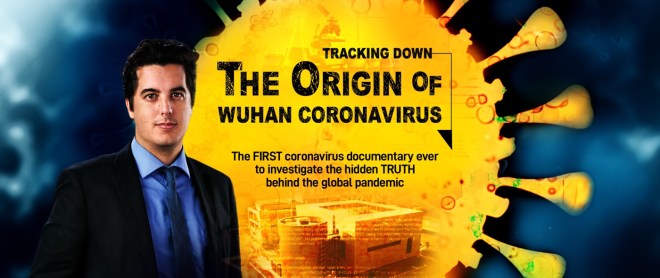
 By Collin Rugg
 By Denise Minger





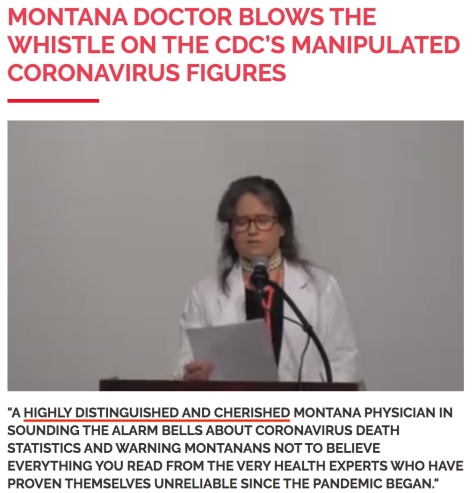

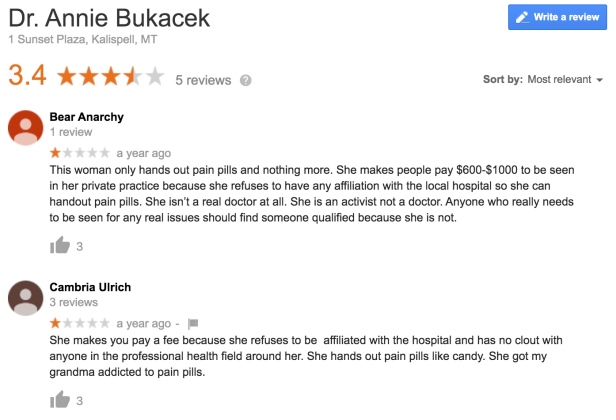


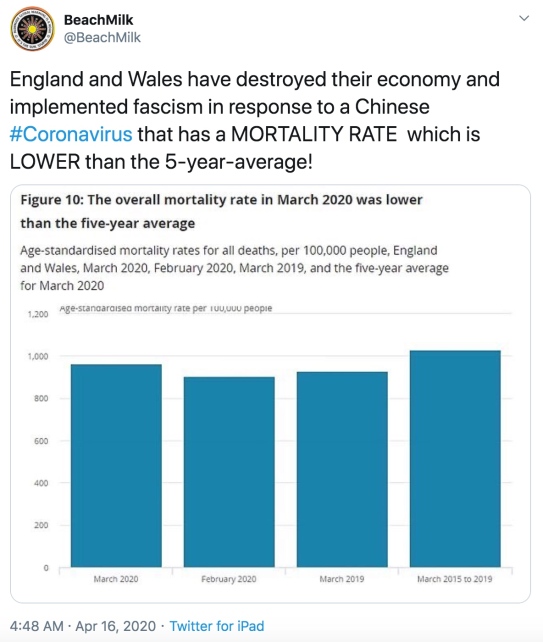


 By Collin Rugg
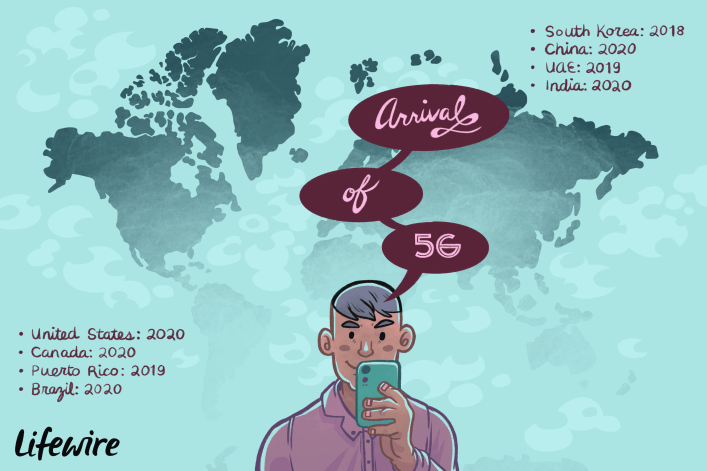
 By John Vibes
 By Robert F. Kennedy Jr., Chairman, Children’s Health Defense
 Liberty International News