Gates’ Globalist Vaccine Agenda: A Win-Win for Pharma and Mandatory Vaccination | Children’s Health Defense

04-09-20_Gates-and-Fauci_Featured_ImageBy Robert F. Kennedy Jr., Chairman, Children’s Health Defense

Vaccines, for Bill Gates, are a strategic philanthropy that feed his many vaccine-related businesses (including Microsoft’s ambition to control a global vaccination ID enterprise) and give him dictatorial control of global health policy.

Gates’ obsession with vaccines seems to be fueled by a conviction to save the world with technology.

Promising his share of $450 million of $1.2 billion to eradicate Polio, Gates took control of India’s National Technical Advisory Group on Immunization (NTAGI) which mandated up to 50 doses (Table 1) of polio vaccines through overlapping immunization programs to children before the age of five. Indian doctors blame the Gates campaign for a devastating non-polio acute flaccid paralysis (NPAFP) epidemic that paralyzed 490,000 children beyond expected rates between 2000 and 2017. In 2017, the Indian government dialed back Gates’ vaccine regimen and asked Gates and his vaccine policies to leave India. NPAFP rates dropped precipitously\

The most frightening [polio] epidemics in Congo, Afghanistan, and the Philippines, are all linked to vaccines.

In 2017, the World Health Organization (WHO) reluctantly admitted that the global explosion in polio is predominantly vaccine strain. The most frightening epidemics in Congo, Afghanistan, and the Philippines, are all linked to vaccines. In fact, by 2018, 70% of global polio cases were vaccine strain.

In 2014, the Gates Foundation funded tests of experimental HPV vaccines, developed by Glaxo Smith Kline (GSK) and Merck, on 23,000 young girls in remote Indian provinces. Approximately 1,200 suffered severe side effects, including autoimmune and fertility disorders. Seven died. Indian government investigations charged that Gates-funded researchers committed pervasive ethical violations: pressuring vulnerable village girls into the trial, bullying parents, forging consent forms, and refusing medical care to the injured girls. The case is now in the country’s Supreme Court.

South African newspapers complained, ‘We are guinea pigs for the drug makers.’

In 2010, the Gates Foundation funded a phase 3 trial of GSK’s experimental malaria vaccine, killing 151 African infants and causing serious adverse effects including paralysis, seizure, and febrile convulsions to 1,048 of the 5,949 children.

During Gates’ 2002 MenAfriVac campaign in Sub-Saharan Africa, Gates’ operatives forcibly vaccinated thousands of African children against meningitis. Approximately 50 of the 500 children vaccinated developed paralysis. South African newspapers complained, “We are guinea pigs for the drug makers.” Nelson Mandela’s former Senior Economist, Professor Patrick Bond, describes Gates’ philanthropic practices as “ruthless and immoral.”

In 2010, Gates committed $10 billion to the WHO saying, “We must make this the decade of vaccines.” A month later, Gates said in a Ted Talk that new vaccines “could reduce population”. In 2014, Kenya’s Catholic Doctors Association accused the WHO of chemically sterilizing millions of unwilling Kenyan women with a  “tetanus” vaccine campaign. Independent labs found a sterility formula in every vaccine tested. After denying the charges, WHO finally admitted it had been developing the sterility vaccines for over a decade.  Similar accusations came from Tanzania, Nicaragua, Mexico, and the Philippines.

A 2017 study (Morgenson et. al. 2017) showed that WHO’s popular DTP vaccine is killing more African children than the diseases it prevents. DTP-vaccinated girls suffered 10x the death rate of children who had not yet received the vaccine. WHO has refused to recall the lethal vaccine which it forces upon tens of millions of African children annually.

Global public health advocates around the world accuse Gates of steering WHO’s agenda away from the projects that are proven to curb infectious diseases: clean water, hygiene, nutrition, and economic development. The Gates Foundation only spends about $650 million of its $5 billion dollar budget on these areas.  They say he has diverted agency resources to serve his personal philosophy that good health only comes in a syringe.

In addition to using his philanthropy to control WHO, UNICEF, GAVI, and PATH, Gates funds a private pharmaceutical company that manufactures vaccines, and additionally is donating $50 million to 12 pharmaceutical companies to speed up development of a coronavirus vaccine. In his recent media appearances, Gates appears confident that the Covid-19 crisis will now give him the opportunity to force his dictatorial vaccine programs on American children.

Source: Children’s Health Defense

Liberty: The Last Casualty of the Pandemic | The Epoch Times

electoral-college-founding-documents-webJohnny Liberty, Editor’s Note: Finally, somebody’s writing about the overreaching power of the federal, state and local governments during this COVID-19 crisis. After 911 the USA Patriot Act was passed and never repealed. It was just up for renewal a few weeks ago. Will there ever be a return to this new normal?

By Dustin Bass

In December, the outbreak in the City of Wuhan, located in China’s Hubei province, was officially detected. On Jan. 31, Health and Human Services declared a public health emergency. On March 11, the World Health Organization (WHO) declared the coronavirus a pandemic. On March 13, President Trump declared a national emergency.

In the span of that following week, gatherings of 250 or more were discouraged and then banned by numerous states. That number immediately dropped to 50, and now it has dropped to 10. Gavin Newsom, the governor of California, banned all gatherings for the largest state in the Union. It was unprecedented. No matter. Eleven other states quickly followed suit. More are to follow, as 17 other states have banned gatherings of 10 or more.

The rapidly escalated reactions prove that the threat to our national health is very high. The threat to our individual freedoms? Higher. From the Declaration of Independence to the Amendments, recent government action flies directly in the face of the nation’s founding documents.

The Declaration of Independence

The founding document of our nation stated that “we are endowed by our Creator with certain unalienable rights, that among these are life, liberty and the pursuit of happiness.” The biological threat against the former has ushered in an existential threat to the latter two. One may argue that without the first, the other two cannot exist. True. But without the latter two, what is the point of the first?

Unless Americans merely perceive this moment in our history as “light and transient,” then there should be no need to clamor. Americans have grown accustomed to the subtle threats to our freedoms since John Adams and the Fifth Congress; and as long as citizens are still free to determine the course of the country every two, four, or six years, then these “evils are sufferable.”

This is unless, of course, we perceive those threats to be a “long train of abuses and usurpations.” The federal government has rarely felt a restriction on its massive powers, like the constant wars in far off places, spying on citizens, dislodging citizens without habeas corpus, or creating unelected government agencies armed with the three branches of power.

State governments now have become fearless in exercising their might by forcing people into their homes under the threat of penalty of law. It is for this reason the Founding Fathers created our extended republic so instead of overthrowing a king, voters would be able to “throw off such government” every two, four, or six years. Citizens need not look solely at the federal government, but at their local and state governments as well.

The Constitution of the United States of America

There are 50 States and 50 Constitutions, which all fall under the supreme law of the land: the Constitution of the United States of America. Our national Constitution was ordained and established to provide six services to the People. One of those is to “secure the Blessings of Liberty to ourselves and our Posterity.”

With state governments seamlessly conducting the aforementioned gathering bans; the shutting down of non-essential businesses in 18 states, along with three other states shutting down non-essential retail; the mandatory quarantines of 13 states; and the forced closure of bars and restaurants, except for take-out and delivery, in nearly every state in the Union, it may prove difficult for the blessings of liberty to reach our posterity.

In a state of national emergency and pandemic, however, there are no solutions—there are only trade-offs. The trade-off for a dramatically decreased risk of contracting the coronavirus and having it spread further is the surrender of several rights listed in the Constitution.

The Amendments

The right that has been most obviously violated is “the right to peacefully assemble.” Of course that ends with “to petition the Government for a redress of grievances.”

Some may argue that people are not conducting a redress of grievances against the government; therefore, the First Amendment doesn’t apply. But a redress of grievances is not truly possible without the threat of assembly. Petitions on Change.org are easy ways to obtain signatures, but they don’t assume the power of a physical redress.

This violation of the right to assembly causes a direct violation of the free exercise of religion. Churches have been forced to close, and groups have been dispelled throughout the nation due to their size. Congregating is the most common form of Americans’ ability to exercise their religion; it’s the tradition of religious practitioners going back millennia. In fact, as a majority of religious people in the United States practice Christianity, Hebrews 10:25 states to not forsake assembling together.

Some government officials have taken the opportunity to target religious groups. In Indiana, Allen County Health Commissioner Dr. Deborah McMahan issued a recommendation against gatherings of more than 10, but prohibited churches from gathering together, even in non-church venues. The state’s attorney general, Curtis Hill, contested McMahan’s order as “unconstitutional religious discrimination.” The order was rescinded.

In Houston, bars and restaurants are under threat of a $1,000 fine or 180 days in jail for not maintaining social distancing in their place of business. This penalty is on par with a first-time drug offense. Houston’s Harris County, one of the nation’s largest counties, has even gone so far as to create a hotline for people to report businesses not in compliance.

In this economic crisis, business owners have more to worry about than the precise spacing between customers, which has created a possible violation of the Fourth Amendment of being secure in their person.

Comparable to the case in Indiana, businesses are not treated equally, as places such as WalMart, Target, and grocery chains are free of these threats. Considering the dire economic situation the country is in, this could qualify as a violation of the Eighth Amendment, as a $1,000 fine in many cases would be excessive. These two examples definitely do not exemplify equal protection, a violation of the 14th Amendment.

The nation, in this time of crisis, does feel on fire. Alarmingly, our founding documents are being used to put out the flames. When this crisis passes, and it will as all do, the search will inevitably begin for what remains among the ashes.

Dustin Bass is the co-founder of The Sons of History, a YouTube seriesand weekly podcast about all things history. He is a former-journalist-turned-entrepreneur. He is also an author.

Source: The Epoch Times

Edward Snowden says COVID-19 could give governments invasive new data-collection powers that could last long after the pandemic | Business Insider

5e7de83b487c224a1c2a56b7Edward Snowden, the man who exposed the breadth of spying at the US’s National Security Agency, has warned that an uptick in surveillance amid the coronavirus crisis could lead to long-lasting effects on civil liberties.

During a video-conference interview for the Copenhagen Documentary Film Festival, Snowden said that, theoretically, new powers introduced by states to combat the coronavirus outbreak could remain in place after the crisis has subsided.

Fear of the virus and its spread could mean governments “send an order to every fitness tracker that can get something like pulse or heart rate” and demand access to that data, Snowden said.

“Five years later the coronavirus is gone, this data’s still available to them — they start looking for new things,” Snowden said. “They already know what you’re looking at on the internet, they already know where your phone is moving, now they know what your heart rate is. What happens when they start to intermix these and apply artificial intelligence to them?”

While no reports appear to have surfaced so far of states demanding access to health data from wearables like the Apple Watch, many countries are fast introducing new methods of surveillance to better understand and curb the spread of the coronavirus.

Numerous European countries, including Italy, the UK, and Germany, have struck deals with telecoms companies to use anonymous aggregated data to create virtual heat maps of people’s movements.

Israel granted its spy services emergency powers to hack citizens’ phones without a warrant. South Korea has been sending text alertsto warn people when they may have been in contact with a coronavirus patient, including personal details like age and gender. Singapore is using a smartphone app to monitor the spread of the coronavirus by tracking people who may have been exposed.

In Poland, citizens under quarantine have to download a government app that mandates they respond to periodic requests for selfies. Taiwan has introduced an “electronic fence” system that alerts the police if quarantined patients move outside their homes.

Source: Business Insider

What good are constitutional rights if they are violated when Americans get sick? | The Washington Times

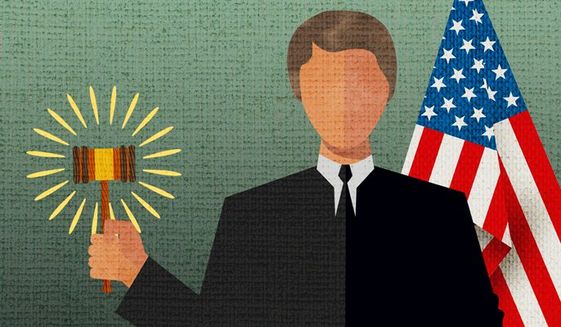
B4-NAPO-Judge-Rule-_c0-127-686-526_s561x327By Andrew P. Napolitano

One of my Fox colleagues recently sent me an email attachment of a painting of the framers signing the Constitution of the United States. Except in this version, George Washington — who presided at the Constitutional Convention — looks at James Madison — who was the scrivener at the Convention — and says, “None of this counts if people get sick, right?”

In these days of state governors issuing daily decrees purporting to criminalize the exercise of our personal freedoms, the words put into Washington’s mouth are only mildly amusing. Had Washington actually asked such a question, Madison, of all people, would likely have responded: “No. This document protects our natural rights at all times and under all circumstances.”

It is easy, 233 years later, to offer that hypothetical response, particularly since the Supreme Court has done so already when, as readers of this column will recall, Abraham Lincoln suspended the constitutionally guaranteed writ of habeas corpus — the right to be brought before a judge upon arrest — only to be rebuked by the Supreme Court.

The famous line above by Benjamin Franklin, though uttered in a 1755 dispute between the Pennsylvania legislature and the state’s governor over taxes, nevertheless provokes a truism.

Namely, that since our rights come from our humanity, not from the government, foolish people can only sacrifice their own freedoms, not the freedoms of others.

Thus, freedom can only be taken away when the government proves fault at a jury trial. This protection is called procedural due process, and it, too, is guaranteed in the Constitution.

Of what value is a constitutional guarantee if it can be violated when people get sick? If it can, it is not a guarantee; it is a fraud. Stated differently, a constitutional guarantee is only as valuable and reliable as is the fidelity to the Constitution of those in whose hands we have reposed it for safekeeping.

Because the folks in government, with very few exceptions, suffer from what St. Augustine called libido dominandi — the lust to dominate — when they are confronted with the age-old clash of personal liberty versus government force, they will nearly always come down on the side of force.

How do they get away with this? By scaring the daylights out of us. I never thought I’d see this in my lifetime, though our ancestors saw this in every generation. In America today, we have a government of fear. Machiavelli offered that men obey better when they fear you than when they love you. Sadly, he was right, and the government in America knows this.

But Madison knew this as well when he wrote the Constitution. And he knew it four years later when he wrote the Bill of Rights. He intentionally employed language to warn those who lust to dominate that, however they employ governmental powers, the Constitution is “the Supreme Law of the Land” and all government behavior in America is subject to it.

Even if the legislature of the State of New York ordered, as my friend Gov. Andrew Cuomo — who as the governor, cannot write laws that incur criminal punishment — has ordered, it would be invalid as prohibited by the Constitution.

This is not a novel or an arcane argument. This is fundamental American law. Yet, it is being violated right before our eyes by the very human beings we have elected to uphold it. And each of them — every governor interfering with the freedom to make one’s own choices — has taken an express oath to comply with the Constitution.

You want to bring the family to visit grandma? You want to engage in a mutually beneficial, totally voluntary commercial transaction? You want to go to work? You want to celebrate Mass? These are all now prohibited in one-third of the United States.

I tried and failed to find Mass last Sunday. When did the Catholic Church become an agent of the state? How about an outdoor Mass?

What is the nature of freedom? It is an unassailable natural claim against all others, including the government. Stated differently, it is your unconditional right to think as you wish, to say what you think, to publish what you say, to associate with whomever wishes to be with you no matter their number, to worship or not, to defend yourself, to own and use property as you see fit, to travel where you wish, to purchase from a willing seller, to be left alone. And to do all this without a government permission slip.

What is the nature of government? It is the negation of freedom. It is a monopoly of force in a designated geographic area. When elected officials fear that their base is slipping, they will feel the need to do something — anything — that will let them claim to be enhancing safety. Trampling liberty works for that odious purpose. Hence a decree commanding obedience, promising safety and threatening punishment.

These decrees — issued by those who have no legal authority to issue them, enforced by cops who hate what they are being made to do, destructive of the freedoms that our forbearers shed oceans of blood to preserve and crushing economic prosperity by violating the laws of supply and demand — should all be rejected by an outraged populace, and challenged in court.

These challenges are best filed in federal courts, where those who have trampled our liberties will get no special quarter. I can tell you from my prior life as a judge that most state governors fear nothing more than an intellectually honest, personally courageous, constitutionally faithful federal judge.

Fight fear with fear.

• Andrew P. Napolitano, a former judge of the Superior Court of New Jersey, is a regular contributor to The Washington Times. He is the author of nine books on the U.S. Constitution.

Source: Washington Times

Facebook Censoring Former U.S. Congressman Ron Paul Based on Bogus Politifact ‘Fact-Check’ | Ron Paul Institute

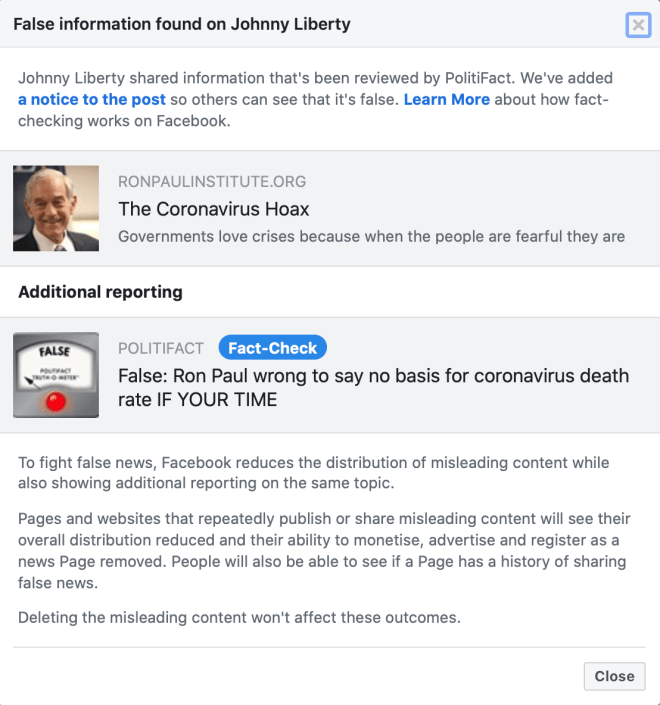
FalseinformationfoundonJohnnyLibertySocial media behemoth Facebook has just acted to censor and suppress Ron Paul’s latest weekly column, “The Coronavirus Hoax,” based on a hatchet job “fact check” by the notoriously biased “Politifact” organization.

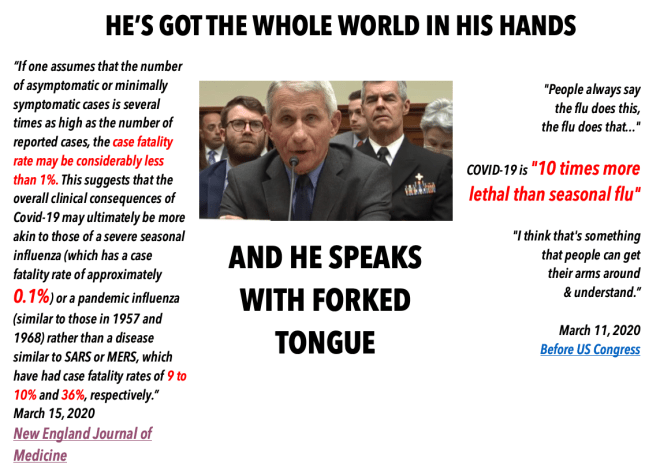
At issue is Dr. Paul’s statement that National Institute of Allergy and Infectious Diseases director Anthony Fauci’s claim that the coronavirus is “ten times more deadly” than the seasonal influenza virus is “without any scientific basis.” Fauci made the claim recently in testimony before the US Congress in a move that significantly ramped up the fear factor in the US over the virus.

The Politifact “fact check” is literally drenched in sarcasm and bias, with Ron Paul being described as “a sometimes conspiracy-minded Texas doctor” and Fauci described as a “universally trusted person.”

For a “just the facts” analysis, that’s a lot of editorializing.

The Politifact hit piece admits that, “It’s not yet known what the death rate from the current coronavirus, COVID-19, will be,” but concludes nevertheless that, “early data indicate it is more than 10 times higher than the death rate for the flu.”

So if you don’t know how can you know?

One reason to question the “scientific basis” of Fauci’s claim is that Fauci contradicted his own statement before Congress in a recent article he co-authored in the New England Journal of Medicine.

If a scientist writes one thing in a scholarly journal and testifies very differently before Congress, does it not raise questions as to the “scientific basis” of the divergent claims?

Here are the two Anthony Faucis. Which one is scientifically based? Both can’t be:

fa

Founded by the Poynter Institute, Politifact is an outfit with a clear political agenda and it is not to promote truth and accuracy in the media. Rather, it is all about suppressing media outlets with which they disagree. It is all about creating blacklists in a McCarthyite push to control the flow of information.

Interestingly enough, major funders of the Poynter Institute include “open society” advocate George Soros along with Charles Koch (both founders and major funders of the “Quincy Institute“).

Soros loves an “open society” as long as it does not in any way challenge his own political biases. If anyone holds different views, he’ll spend millions to shut down debate.

The Poynter Institute is also funded by the United States government itself, via major grants from the National Endowment for Democracy. So here is what happens when you scratch below the surface a bit: The suppression of views like those of Ron Paul which are unpopular among those who control the foreign policy narrative are actually financed by the US government itself.

Do any of our dear readers support the US government taking our tax money and using it to shut Ron Paul up?

How is it that Facebook tries to sell itself as politically neutral, just making sure only facts are allowed through, while at the same time partnering with such a politically biased and unethical organization as Politifact and the Poynter Institute? Is Facebook really about fostering a lively debate or is it about controlling the narrative favored by the Washington elites?

We have fact-checked Politifact’s fact checkers and we find them to be biased, sloppy, and inimical to the values we should share as Americans in favor of open debate.

And Facebook? End your suppression of Dr. Ron Paul’s op-ed on the coronavirus!

Source: Ron Paul Institute

SPLC brands evangelical group that fights antisemitism as ‘hate group’ | WND

Editor’s Note: Twenty years ago I found myself (aka “Johnny Liberty” and many of our associates on the distinguished SPLC listed as a “hate group” because we were largely successful in teaching millions of people about sovereignty through our audio courses and offshore seminars. SPLC labeled us as part of their continuing “disinformation” campaign waged on behalf of deep state operatives who wish to destroy this constitutional Republic at all costs. Unfortunately, SPLC was hired to miseducate police officers all across America to harass “constitutionalists” and sovereign citizens.

The Southern Poverty Law Center (SPLC), once widely praised for fighting the KKK, has devolved into routinely slapping its “hate” label on groups that don’t align with its far-left values

With that in mind, there may be a silver lining in SPLC’s designation of Proclaiming Justice to the Nations as a hate group, said PJTN’s founder and president, Laurie Cardoza-Moore.

“If being pro-Israel and against antisemitism is now considered a hate crime, I will wear the SPLC listing as a badge of honor,” she said

But she said that placing her group “alongside bigots and Nazis minimizes the true meaning of hate.”

“In reality, PJTN is on the front lines and in the headlines of fighting against antisemitism on a daily basis.”

She vowed to continue “to fight hate through our thousands of PJTN Watchmen around the globe.”

“Our answer to this absurd listing will be to open more PJTN chapters in American and fight harder to have antisemitism defined and confronted throughout the free world,” Cardoza-Moore said.

She pointed to the irony of SPLC’s claim that PJTN is a “hate” group, since PJTN “exists to fight the world’s oldest hatred – antisemitism.”

“PJTN has gained wide international media acclaim as it encourages state legislators to act against antisemitism and BDS,” the organization’s statement said.

“However, the Southern Poverty Law Center seems to believe that being pro-Israel and against antisemitism is now a hate crime.”

Cardoza-Moore said the SPLC list “has become nothing short of a witch hunt against organizations that don’t share their extremist liberal worldview.”

“Sadly, many institutions still look to the once credible SPLC for advice on hate groups. We hope that being blacklisted will not impede upon our ability to continue defending the Jewish people and Israel against global antisemitism,” she said.

“We will not be marginalized or silenced because of our support for Israel and the Jewish people. This will only strengthen our resolve to work harder. We call upon all of our supporters to write to the SPLC and demand that they immediately remove PJTN from their nefarious list before they lose any credibility they still have as a credible watchdog.”

The organization was established to urge Christians to stand with their Jewish brethren and Israel against the global surge of anti-Semitism.

Cardoza-Moore, who serves as a special envoy to the United Nations, recently called on Christians to stand vigil outside synagogues during the Rosh Hashanah holidays for Jews.

Pointing to several acts of violence against synagogues, she said there is “no justification on earth for these heinous attacks and no American should feel unsafe in their house of worship.”

Source: WND

How Anti-Vaccine Sentiment Took Hold in the United States | The New York Times

Editor’s Note: The New York Times (and likely their biggest Big Pharma advertisers) are heralding a strongly-held opinion that choice regarding vaccines should not be an option for parents who may have good reason to believe their children are at risk. The almost completely unregulated vaccine industry is in denial regarding the potentially dangerous side effects, chronic illnesses that can result and in too many cases they’d rather not count – death. Not once in this well-written, one-sided article did the views, opinions or reasoning of the anti-vaccine crowd get acknowledged. This is but one of numerous op-ed articles the New York Times has recently published. 

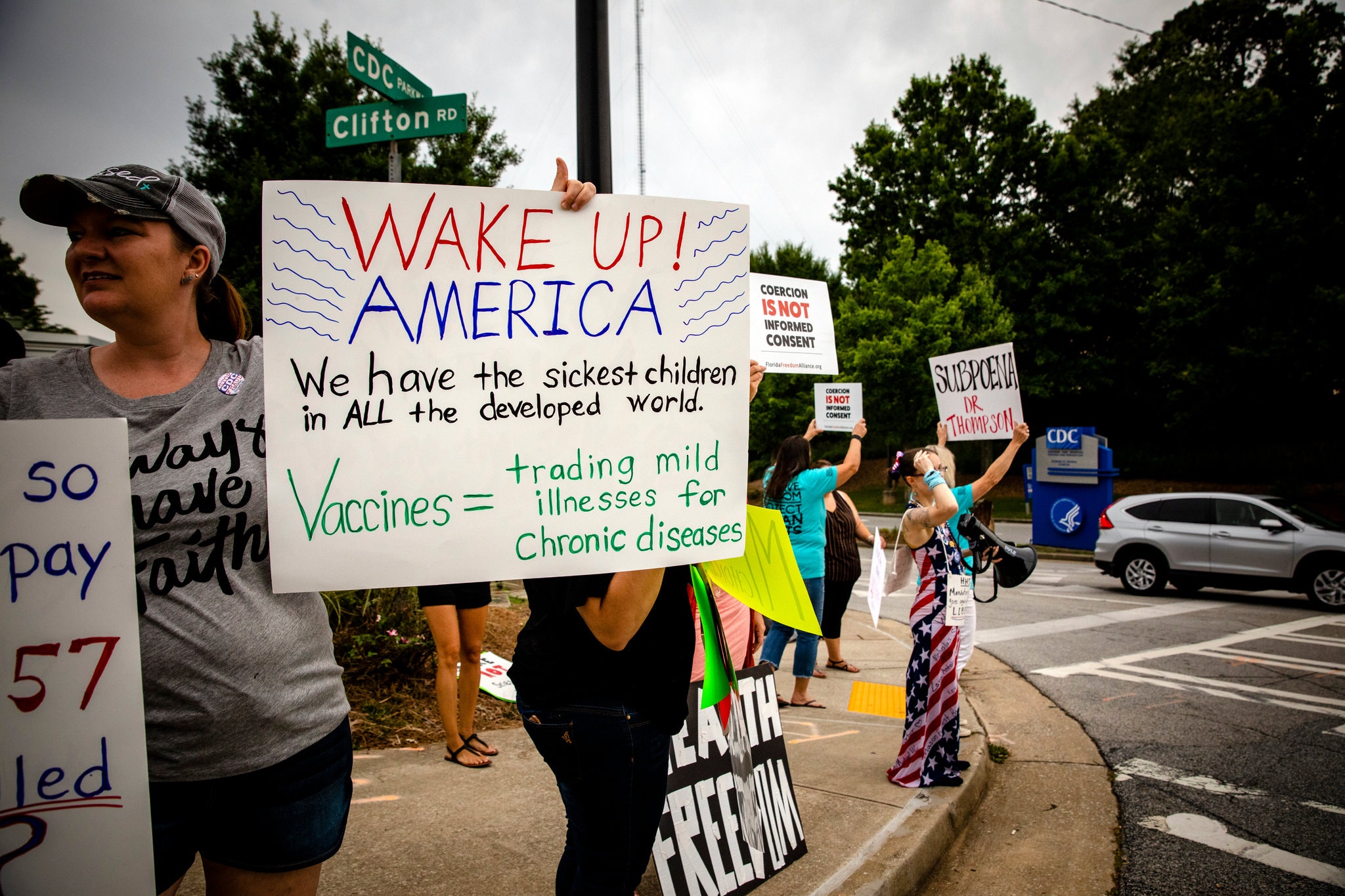
As families face back-to-school medical requirements this month, the country feels the impact of a vaccine resistance movement decades in the making. The question is often whispered, the questioners sheepish. But increasingly, parents at the Central Park playground where Dr. Elizabeth A. Comen takes her young children have been asking her: “Do you vaccinate your kids?”

Dr. Comen, an oncologist who has treated patients for cancers related to the human papillomavirus that a vaccine can now prevent, replies emphatically: Absolutely.

She never imagined she would be getting such queries. Yet these playground exchanges are reflective of the national conversation at the end of the second decade of the 21st century — a time of stunning scientific and medical advances but also a time when the United States may, next month, lose its World Health Organization designation as a country that has eliminated measles, because of outbreaks this year. The W.H.O. has listed vaccine hesitancy as one of the top threats to global health.

As millions of families face back-to-school medical requirements and forms this month, the contentiousness surrounding vaccines is heating up again, with possibly even more fervor.

Though the situation may seem improbable to some, anti-vaccine sentiment has been building for decades, a byproduct of an internet humming with rumor and misinformation; the backlash against Big Pharma; an infatuation with celebrities that gives special credence to the anti-immunization statements from actors like Jenny McCarthy, Jim Carrey and Alicia Silverstone, the rapper Kevin Gates and Robert F. Kennedy Jr. And now, the Trump administration’s anti-science rhetoric.

“Science has become just another voice in the room,” said Dr. Paul A. Offit, an infectious disease expert at Children’s Hospital of Philadelphia. “It has lost its platform. Now, you simply declare your own truth.”

The constituents who make up the so-called vaccine resistant come from disparate groups, and include anti-government libertarians, apostles of the all-natural and parents who believe that doctors should not dictate medical decisions about children. Labeling resisters with one dismissive stereotype would be wrongheaded.

“To just say that these parents are ignorant or selfish is an easy trope,” said Jennifer Reich, a sociologist at the University of Colorado Denver, who studies vaccine-resistant families.

[Why did we start listening to celebrities about vaccines? Read more.]

It remains true that the overwhelming majority of American parents have their children vaccinated. Parent-driven groups like Voices for Vaccines, formed to counter anti-vaccination sentiment, have proliferated. Five states have eliminated exemptions for religious and philosophical reasons, permitting only medical opt-outs.

But there are ominous trends. For highly contagious diseases like measles, the vaccine rate to achieve herd immunity — the term that describes the optimum rate for protecting an entire population — is typically thought to be 95 percent. The Centers for Disease Control and Prevention found that the vaccination rate for the measles, mumps and rubella (M.M.R.) injection in kindergartners in the 2017-2018 school year had slipped nationally to 94.3 percent, the third year in a row it dropped.

Seven states reported rates for the M.M.R. vaccine that were far lower for kindergartners, including Kansas at 89.1 percent; New Hampshire, 92.4 percent; the District of Columbia, 81.3 percent. (The highest is West Virginia at 98.4 percent.)

Almost all states have at least one anti-vaccine group. At least four have registered political action committees, supporting candidates who favor less restrictive vaccine exemption policies.

Public health experts say that patients and many doctors may not appreciate the severity of diseases that immunizations have thwarted, like polio, which can affect the spinal cord and brain — because they probably have not seen cases.

“Vaccines are a victim of their own success,” said Dr. Offit, a co-inventor of a vaccine for rotavirus, which can cause severe diarrhea in young children. “We have largely eliminated the memory of many diseases.”

The growth of vaccine doubt in America coincides with several competing forces and attitudes.

Since the early 2000s, as the number of required childhood vaccines was increasing, a generation of parents was becoming hypervigilant about their children and, through social media, patting each other on the backs for doing so. In their view, parents who permitted vaccination were gullible toadies of status quo medicine.

In 2011, Dana Fuqua, of Aurora, Colo., pregnant with her first child, felt that irresistible pull of groupthink parenting.

She had just moved to the area, so she reached out to mothers’ groups on Facebook. Colorado, with a kindergarten vaccination compliance rate of 88.7 percent, has a rambunctious vaccine-resistant movement. Ms. Fuqua’s new friends urged her to have a drug-free birth, use cloth diapers and never to let a drop of formula pass her baby’s lips. Vaccines, it followed, were anathema.

The women intimidated her. They had advanced degrees; she had only a bachelor of science and a nursing background.

“I didn’t argue with them,” Ms. Fuqua said. “I was so desperate for their support that I compromised by delaying the vaccine schedule, so I wouldn’t get kicked out of the group.”

But when her second child was born prematurely, susceptible to illness, the group’s approval was not as important as her baby’s safety. Her position, she said, shifted from, “‘I can’t hang out with you if you had a vaccine because you could be shedding a virus’” — a common, false belief among the vaccine resistant — to, “ ‘If you haven’t had a vaccine, I will not associate with you.’”

She had both children fully vaccinated.

There have been anti-vaccination movements at least since 1796, when Edward Jenner invented the smallpox vaccine. But many experts say that the current one can be traced to 1982, when NBC aired a documentary, “DPT: Vaccine Roulette,” that took up a controversy percolating in England: a purported tie between the vaccine for pertussis — a potentially fatal disease that can cause lung problems — and seizures in young children.

Doctors sharply criticized the show as dangerously inaccurate. But fear spread. Anti-vaccination groups formed. Many companies stopped making vaccines, which were considered loss-leaders and not worth the corporate headache.

Then, in 1998, Andrew Wakefield, a British gastroenterologist, published a Lancet study (since discredited and withdrawn), associating the M.M.R. vaccine with autism.

Faced with risking autism or measles, some parents thought the answer was obvious. Most had never seen measles, mumps or rubella because vaccines had nearly eliminated them. But they believed they knew autism.

And most people are notoriously poor at assessing risk, say experts in medical decision-making.

Many stumble on omission bias: “We would rather not do something and have something bad happen, than do something and have something bad happen,” explained Alison M. Buttenheim, an associate professor of nursing and health policy at the University of Pennsylvania School of Nursing.

People are flummoxed by numerical risk. “We pay more attention to numerators, such as ‘16 adverse events,’ than we do to denominators, such as ‘per million vaccine doses,’ ” Dr. Buttenheim said.

A concept called “ambiguity aversion” is also involved, she added. “Parents would like to be told that vaccines are 100 percent safe,” she said. “But that’s not a standard we hold any medical treatment to.”

Relatively few people are absolutists about refusing all vaccines. “But if you’re uncertain about a decision, you’ll find those who confirm your bias and cement what you think,” said Rupali J. Limaye, a social scientist who studies vaccine behaviors at the Johns Hopkins Bloomberg School of Public Health.

Nowhere is that reinforcement more clamorous than on social media, Dr. Limaye added. “You may only see your pediatrician a few times a year but you can spend all day on the internet,” she said.

People tend to believe an individual’s anecdotal narrative over abstract numbers. By 2007, when Ms. McCarthy, the actress, insisted that vaccines caused her son’s autism, thousands found her to be more persuasive than data showing otherwise. A nascent movement took hold.

At the same time that these powerful attacks on vaccine confidence were underway, a constellation of trends was emerging.

The definition of a good parent was becoming fraught with the responsibility for overseeing every aspect of a child’s life.

“As we adopted a culture of individualistic parenting, public health became a hard sell,” Dr. Reich said.

The primary reason for healthy people to get the flu shot is to protect those with compromised immune systems, like infants and older adults, from getting sick. But altruism isn’t a great motivator for parents, Dr. Buttenheim said. “They are much more concerned about protecting their own child at all costs,” she said.

Contrast that attitude with the collective good will of the 1950s, say medical sociologists, when American parents who had seen President Franklin Delano Roosevelt’s wheelchair as a debilitating symbol of polio patriotically sought to vaccinate their children to help eradicate the disease worldwide.

By 2014, studies showed that parental confidence in authorities like the C.D.C. and in pediatricians was dropping, especially around vaccines. Mistrust of Big Pharma was even more pronounced.

By then, Donald Trump was offering support on Twitter for the discredited link between autism and vaccination. As president-elect, he met with leaders of the anti-vaccination movement, although as measles cases surged, he endorsed vaccination.

As parenting became rife with orthodoxy, the Marcus Welby model of the paternalistic doctor retreated. Patients asserted autonomy, brandishing internet printouts at doctors. Shared decision-making became the model of doctor-patient engagement.

Pediatricians offered to stagger vaccine schedules. Some were even flexible about vaccinations altogether.

In 2011, shortly after Emma Wagner had given birth in Savannah, Ga., a pediatrician on the ward examined the baby. “He asked me if I was interested in the hepatitis B vaccine,” she said of an inoculation typically done at birth.

She was apprehensive.

He replied, “‘That’s fine, because your 2-day-old daughter isn’t a prostitute and isn’t using I.V. drugs, so hep B isn’t at the top of my worries.’”

Ms. Wagner said she “swallowed the anti-vax Kool-Aid. I was motivated by fear. I thought, ‘Until I know for certain that these are safe, I won’t do it.’ The pediatrician said, ‘I will support your decision and in a few years we’ll talk about exemptions for school.’”

She has since become a staunch supporter of immunization.

Libertarianism also courses through vaccine hesitation, with parents who assert that government should not be able to tell them what to put in their bodies — a position often marketed as “the right to choose.”

“Having the government order them to do something reinforces conspiracy theories,” said Daniel Salmon, director of the Institute for Vaccine Safety at Johns Hopkins. “And people perceive their risk to be higher when it’s not voluntary.”

In reality, he said, one’s risk of harm is greater while driving to an airport than it is being on the airplane itself. But driving is voluntary and gives the illusion of control. People fear flying because they cannot control the plane. By extension, many childhood vaccines are not voluntary, which rattles those who prefer to believe they can control their health.

With so many different but deeply held convictions, public health experts struggle to design vaccine-positive campaigns.

In 2017, researchers applied the six values of “the moral foundations theory” to vaccine attitudes, surveying 1,007 American parents.

The results were intriguing. Those most resistant to vaccines scored highest in two values: purity (“my body is a temple”) and liberty (“I want to make my child’s health care decisions”).

A third, said Saad B. Omer, director of Yale’s Global Health Institute and an author of the study, was also telling: deference to authority — a score indicating whether one was likely to adhere to the advice of experts like a pediatrician or the C.D.C.

Dr. Salmon’s team at Johns Hopkins is working on an app to capture parents’ vaccine attitudes and to tailor information to persuade them to vaccinate their children.

Pediatricians are front-line persuaders, he said, and they should be compensated for the time it takes to educate parents.

Most experts note that physicians themselves, never mind parents, have no idea about the federal vaccine monitoring systems, which have been in place for more than 20 years.

“We ask parents in the first two years of their child’s life to protect them against 14 diseases, that most people don’t see, using fluids they don’t understand,” Dr. Offit said. “It’s time for us to stand back and explain ourselves better.”

Source: The New York Times

Scientists warn of toxic chemical cocktail sprayed on food | GM Watch


As the number of chemicals applied to vegetables sold in supermarkets goes up 17-fold, experts say pesticides must be phased out of food production. Report by Claire Robinson

The number of chemicals applied to vegetables sold in supermarkets has increased by up to 17-fold over 40 years, according to data presented at a conference organized by the Epidemiology and Public Health Section of the Royal Society of Medicine in London on 20 November, which I attended on behalf of GMWatch.

Just as disturbing as the data on our escalating exposure to toxic pesticide mixtures was the evidence presented at the conference that the regulatory system for pesticides is failing.

Scientists explained that while the system tests the single active ingredients in pesticides, it fails to test the many accompanying chemicals (adjuvants) used in pesticide formulations to enhance the effectiveness of the active ingredients. It also fails to test the combined effects of the formulations of chemicals used in commercial pesticides, let alone the cocktail effect of being exposed to multiple pesticides, as most farmers, rural residents and consumers are.

Indeed, as one scientist pointed out, there are simply too many potential combinations of chemicals to test and regulate. Nor, we heard, does the regulatory system test low, realistic doses of these chemicals that may give rise to endocrine (hormone) disruption, which can in turn lead to serious illnesses that are increasing in the population.

Because of these facts, there is simply no way of ensuring the safe use of pesticides in agriculture.

Chemical cocktails increasing

Figures released for the first time at the conference showed that the number of toxic chemicals applied to onions, leeks, wheat and potatoes has been steadily increasing since the 1960s.

This is despite industry data showing that the volume of pesticides applied to supermarket vegetables has halved since the 1990s.

The number of pesticides applied to onions and leeks has risen 17-fold from 1.8 in 1966 to 32.6 in 2015, the data showed.

In 1974, fewer than two chemicals were applied to the average wheat crop, but this rose more than 10-fold to 20.7 in 2014. Potatoes are now sprayed with five times more chemicals than in 1975, with the number rising from 5.3 to 30.8 in 2014.

The figures were compiled by the data firm Fera Science and were only made public after the Soil Association, which certifies organic food in the UK, paid for them to be released. While Fera did not measure actual residues present in the produce, the fact that so many pesticides were applied to the growing crops suggests that at least some residues would be found if they were looked for.

Anne_Marie_Vinggaard

The conference followed the publication of an article in the journal Science by Prof Ian Boyd, chief scientific advisor to the UK government’s department of agriculture (DEFRA). Prof Boyd wrote that the assumption by regulators around the world that it is safe to use pesticides at industrial scales across landscapes is false.

Scientist Prof Anne Marie Vinggaard of the National Food Institute in Denmark warned that chemicals that have no effect in isolation can have a pronounced toxic effect when found in mixtures. In real life we are exposed not to one chemical at a time but to mixtures. In addition, commercial pesticide formulations, many of which are endocrine disruptors, are themselves mixtures of active ingredients and adjuvants. “We are exposed to a lot of chemicals acting together,” said Prof Vinggaard. “We must take account of this cocktail effect.”

But pesticide regulations fail to do so.
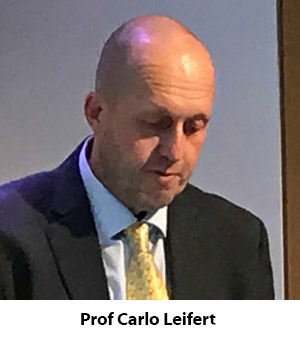
Carlo Leifert

Pesticides linked to low sperm quality

Prof Carlo Leifert, director of the Centre for Organics Research at Southern Cross University in Australia, cited research showing higher sperm counts and density in men working for the Danish organic farming association and a separate US study showing that high levels of dietary pesticide exposure were linked to low sperm quality in men.

Prof Leifert’s presentation came soon after the publication of a study implicating pesticide-treated foods in fertility problems in women. In the study, published in JAMA Internal Medicine, Harvard researchers followed 325 women at an infertility clinic and found that women who regularly ate pesticide-treated fruits and vegetables had lower success rates getting pregnant with IVF, while women who ate organic food had reduced risk of pregnancy loss and increased fertility.

Eat organic to minimize exposure

Dr Michael Antoniou

Dr Michael Antoniou, head of the Gene Expression and Therapy Group at King’s College London, told the Royal Society of Medicine conference that the adjuvants in commercial pesticide formulations can be toxic in their own right and in some cases more toxic than the declared active ingredients. Yet only the active ingredients are tested and assessed for long-term health effects in the regulatory process.

Dr Antoniou also said that research on hormone-disrupting chemicals, including pesticides, shows that very low realistic doses can be more toxic than higher doses. As pesticides are not tested for low dose effects for regulatory purposes, these effects can be missed by regulatory agencies, leading to a situation in which the public can be exposed to hormone-disrupting levels of these chemicals. This is a matter of concern because hormone disruption is implicated in a large number of diseases that are becoming increasingly widespread, such as hormone-related cancers, obesity, and diabetes.

Dr Antoniou said that regulators around the world have been slow to keep up with the scientific knowledge of harm from low doses of endocrine disrupting chemicals. These effects are not controversial in the scientific community and yet the EU has still not decided how to define endocrine disruptive chemicals, let alone how to regulate them.

Dr Antoniou described his research showing that long term exposure to very low doses of Roundup herbicide far below regulatory permitted levels caused non-alcoholic fatty liver disease (NAFLD) in rats. NAFLD has now reached epidemic proportions in the US and Europe, with around 25% of the population suffering from it.

Dr Antoniou told the audience, which included doctors who treat chemically damaged people, “As a precaution, you should minimise your exposure to pesticides. The only way to guarantee that is by eating organically.”

Industry perspectives

Sarah Mukherjee

Occasions like this are often interesting from the point of view of finding out the industry line on the scientific and public relations challenges it is facing, and this event was no exception. One such line was offered by Sarah Mukherjee, CEO of the Crop Protection Association (CPA). Mukherjee is a former BBC journalist who began her presentation by stating that she had no scientific background. Her presentation consisted of emotive stories of her deprived childhood, with the implication that organic food is a luxury that only the affluent can afford and that pesticides were needed to ensure an affordable food supply for all. She did not address any of the scientific points presented by the earlier speakers. In fact, she was not present for those sessions and only arrived later in the day.

The tone and content of her presentation did not sit well with the detailed information on the proven effects of low-dose pesticides provided by the scientist speakers in the morning sessions. It was remarkable for its failure to offer any evidence at all to back up Mukherjee’s premise that we are better off with pesticides.

Glyphosate and cancer

Mukherjee’s closest brush with science was an attempt to exonerate glyphosate herbicides from suspicion of carcinogenicity by quoting the latest updated findings from the Agricultural Health Study (AHS) in the US. These found no link between glyphosate and non-Hodgkin’s lymphoma, a type of cancer. Mukherjee used these findings as a stick to beat IARC, the World Health Organization cancer agency that upset the pesticide industry by concluding that glyphosate was a probable carcinogen.

But what Mukherjee failed to mention was that the study update did find a link between glyphosate and another type of cancer, acute myeloid leukemia (AML) – a link that the researchers said should be followed up with further research. She also did not mention a fact pointed out by the scientist Dr Jennifer Sass – that while the link did not reach statistical significance at the 95% confidence level (a 95% certainty that the findings are not by chance but point to a real effect of glyphosate), at the 90% confidence level it would have been significant. As Sass commented, “With a deadly form of cancer like AML, pesticide applicators, farmers, and other highly exposed people may want to take protective measures, even if studies are only 90% confident in the link to AML cancer.”

Mukherjee also failed to mention that IARC took the AHS’s “no effect” finding from glyphosate into consideration in its assessment of glyphosate, since previous findings from the AHS that were already published at the time of IARC’s review had also found no effect. Other epidemiological studies did find a link between glyphosate and non-Hodgkin’s lymphoma. This contradictory evidence is why IARC said there was only “limited” proof of a glyphosate link with cancer from epidemiological studies. However, it classified glyphosate as a probable carcinogen on the basis of “sufficient” evidence in controlled laboratory studies on animals. These types of study, unlike epidemiological studies, demonstrate a causal link and are therefore a far stronger form of evidence.

I was not the only audience member to conclude that Mukherjee was seriously out of her depth among a speaker line-up of heavyweight scientists, addressing an audience of scientists, medics, and experts from relevant fields. One scientist told me he was shocked that the CPA chose to send Mukherjee as its representative to such an event: “Couldn’t they find a scientist who was willing to take this on?”

Is organic food elitist?

Mukherjee’s “organic food is elitist” meme did not play well with me. I speak as someone who at one point in my life lived in a partnership in which neither of us had any income or savings and we had to survive off very meagre state benefits. Yet we ate organic 100% of the time. We did it by cooking fresh food from scratch each day (it didn’t take much time), buying via farm box delivery schemes rather than from supermarkets, eating mostly vegetarian, and – obviously – not spending money on luxuries.

On our occasional forays to the supermarket to buy loo rolls and cleaning fluids, we were gobsmacked at the large amounts of money being spent on the weekly shop by families with trolleys full of processed food. Even without getting into discussions about the “externalized” costs of eating pesticide-contaminated food, such as getting sick, we simply could not afford that type of food. So who exactly were the elite in this situation? Certainly not us. This is just one example among many of Mukherjee’s irrational and frankly insulting approach to the vital topic of food security.

Dr Chris Hartfield

Speakers in support of pesticide safety

The other people speaking in support of the safety and benefits of pesticides were Dr Chris Hartfield of the National Farmers Union (NFU) and Dave Bench of the UK government’s Health and Safety Executive.

Mr Bench described the regulatory system for pesticides, which he portrayed as robust and as balancing the risks of pesticides against the benefits to society.

Dr Hartfield showed a long list of Integrated Pest Management (IPM) techniques, in which pesticides are only sprayed as a last resort as and when absolutely necessary. He said that 16,820 farmers in the UK are using these techniques on 4.4 million hectares of land.

Dave BenchHowever, members of the audience were skeptical of this claim. Guy Watson, an organic farmer from Riverford Farm in Devon, said that his conventional farmer neighbour laid out his spraying schedule well in advance of the growing season and that all the pesticides were sprayed in accord with the schedule, whether they were needed or not. He suspected that farmers’ practice of IPM was confined to a paper exercise that was not borne out by the reality in the fields.

Mr Watson’s skepticism about UK farmers’ use of IPM was amply supported by the data presented at the conference showing the increasing numbers of pesticides sprayed on our food.

Some members of the audience who suffered repeated exposures to pesticide spraying because they lived near treated fields agreed that a cavalier attitude to the use of pesticides seemed to be the norm among conventional farmers.

Georgina Downs of the UK Pesticides Campaign, which represents rural residents affected by pesticides sprayed in their localities, commented after the conference: “There was the usual gross misinformation stated by the CPA and the NFU – most importantly their insistence that there is a rigorous regulatory system in place for pesticides. There simply is not, and this lie cannot continue to be peddled.

“The conventional chemical farming system has been an untested, unregulated, and unlawful experiment with human health and the environment that has caused untold damage.”

Is farming without pesticides possible?

Agro-industry lobbyists would have us believe that farmers cannot manage without pesticides. What is more, they claim that even organic farmers regularly spray a vast array of pesticides permitted under organic standards. But this picture is far from the reality. Most organic farmers do not spray because they take other measures to protect their crops, such as rotating crops to prevent attacks from over-wintering pests, using barrier methods against pests, cultivating hedges and plants to attract insects and animals that eat pests, and planting cover crops to suppress weeds.
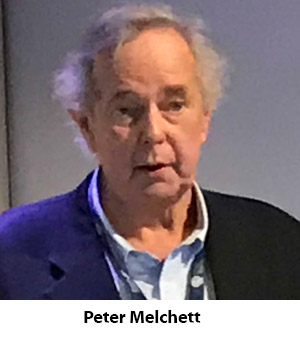
Peter Melchett

This was confirmed by the final speaker at the conference, Peter Melchett, who has been an organic farmer for 19 years and a conventional farmer before that. He said that since converting to organic he has only had to spray a single field once. The one lapse was due to his mistake in planting two related crops in the same field two years running. A pest over-wintered in the field, only to emerge the following year to devour the new crop. Mr Melchett said he never repeated his mistake – and has never had to spray again.

Take-home message

The take-home message from the non-industry speakers at the conference was that the regulatory system for pesticides has failed and cannot be reformed in a way that renders these chemicals safe. As we’ve seen, the system does not test the adjuvants, or the commercial pesticide formulations, or the chemical cocktails to which we are exposed. Neither does it test low, realistic doses that may give rise to endocrine disruption. Therefore pesticides must be eradicated from food production and farming must be entirely converted to proven-successful organic and agroecological practices.

Source: GM Watch

Why Last Night Was Not Just Huge For Pot, But The Entire Criminal Justice System | Think Progress

ProportionalPunishmentBy

Last night wasn’t a good night for Democrats. But when asked instead to vote on issues that many Democrats care about, voters backed progressive ballot initiatives around the country. This is particularly true in the area of criminal justice, which has become a rare point of bipartisanship among some Democrats and Republicans. In a spate of ballot initiatives around the country, voters sent a signal that they are ready to reform a system that has sent more people in the United States to jail than in any other country in the world.

Each of these initiatives embraces a notion known as “Smart on Crime.” The phrase is a replacement for the old adage of “tough-on-crime” and means that, rather than threatening heavy punishments for a long list of so-called crimes, jurisdictions focus instead on doing what actually, empirically, makes communities safer. In reducing or eliminating penalties for some actions that would be better addressed through public health or rehabilitative policies, jurisdictions can focus more resources on serious, violent crimes. Or, as U.S. Attorney General Eric Holder put it last year, “Too many people go to too many prisons for far too long for no good law enforcement reason.”

Marijuana

Alaska, Oregon, and Washington, D.C. put pot legalization on the ballot, and all three passed it. As of last night, there are now more than double the number of jurisdictions that have legalized marijuana for recreational use, even as it remains federally prohibited. In Washington, D.C., where African Americans make up almost half the population, the margin of victory was staggering, with voters supporting the measure by a ratio of 7 to 3.

Alaska and Oregon were not as certain to pass the initiatives. But both passed by margins of several points ballot initiatives that don’t just legalize possession and growth of pot, but also its sale and taxation. (Washington, D.C. is not permitted to tax and regulate by ballot initiative, and lawmakers plan to follow up with a bill to achieve this).

In each of these jurisdictions, different messages dominated. In libertarian-heavy Alaska, where pot policy was already liberalized, the focus of the campaign was that marijuana is no less safe than alcohol, and those who use it shouldn’t be penalized differently. In Washington, D.C., by contrast, a significant population of very liberal gentrifiers mixed with longtime African American residents who are sick and tired of criminal justice policies that arrest African Americans for pot at eight times the rate of whites.

Majorities also voted in favor of medical marijuana. In Guam, a measure to pass medical marijuana passed early in the day. And in Florida, a medical marijuana ballot initiative that became heavily politicized with a well-funded opposition movement failed, but only because it required a 60 percent vote to amend the Constitution. Despite the initiative’s failure, a solid majority — 58 percent — voted in favor of the measure. The initiative’s loss is still a bit of a surprise, because polls have shown that support among Florida residents for the idea of medical marijuana is as high as 90 percent. In fact, lawmakers passed a much narrower medical marijuana provision last year that, remarkably, had the support of almost every state lawmaker. If their goal in passing it was to pick off support for the more expansive measure on the ballot, they succeeded.

Rounding off the evening, two cities in New Mexico — Santa Fe and Bernalillo — voted to decriminalize pot.

The statewide initiatives won’t go into effect today. There will be months of policy-making, political wrangling, and pushback from Congress. But majorities in every jurisdiction where the question was posed voted to reduce the penalties for marijuana.

Proportional Penalties

In California, voters passed an initiative that embraces that Smart on Crime notion in a more comprehensive way. Proposition 47 reduces the penalties for low-level nonviolent offenses including many drug and property crimes, on the notion that locking people up who haven’t done anything dangerous doesn’t do anybody any good. The initiative changes a number of offenses from felonies to misdemeanors, meaning the sentence for conviction is much lower, and that the impact on an individual’s criminal record won’t be as significant. Many job and voting restrictions, for example, only apply to felonies. Offenses that will be affected by the measure include drug possession offenses, as well as shoplifting, credit card fraud, and forgery.

The initiative also means that some 10,000 individuals already behind bars will be eligible for re-sentencing. This is particularly relevant for California, which has been struggling to reduce its prison population since the U.S. Supreme Court declared its prisons so overcrowded that they violate the Eighth Amendment prohibition against cruel and unusual punishment.

With a passage rate of 58 percent, the initiative may serve as a model for other states. The state already decriminalized marijuana possession several years ago, and has seen arrests go down without significant adverse consequences.

Bail Reform

In New Jersey, Democrats and Republicans have joined forces over the past year to pass a package of measures that ensure those behind bars are those who pose a greater danger to society, not the ones who can’t afford to pay bail. Lawmakers took up the issue after a study found that some 40 percent of those who are jailed after they are arrested but before their trial or conviction are there simply because they were poor.

The idea behind bail is that individuals who are charged with a crime put up a bond of significant value to increase the likelihood that they will return for future court dates. But the system creates a class divide. Many are charged with bail under $2,500 — a sum that many wealthier individuals can pay, but is completely out of reach for low-income defendants. Those who end up stuck behind bars pending their trial do not have the same capacity to defend their case. They are more likely to eventually plead guilty, and many have called pretrial detention “ransom” intended to extract such guilty pleas.

Two companion bills were passed by the New Jersey legislature to make the bail system less about how much money defendants have, and more about whether they pose a danger to the public. One bill passed by the legislature took income out of the equation for less dangerous offenders by conducting risk assessments of defendants, and allow those not deemed dangerous to participate in a monitoring program until their trail, rather than to sit in jail. A second bill put Tuesday’s ballot initiative before the voters. That ballot initiative asked voters to give judges power to hold the most dangerous offenders behind bars before their trial — even if they could afford bail. By passing this measure Tuesday, the bail reform package is now fully in effect.

Gun Violence

The idea of “Smart on Crime” initiatives is to eliminate the counterproductive criminal policies and re-allocate resources toward those policies that actually reduce violent crime. To that end, some might also consider it a win that in Washington State (where pot is already legal), voters both approved a measure to close a loophole in firearms background checks, and rejected a competing ballot initiative that would have narrowed the state’s gun laws. The measure means that gun sellers and buyers can’t get around limitations on who can own a guy by selling them in private online sales or at gun shows.

Source:  Think Progress

What To Do if The Police Stop You at a Music Festival | Showbams

festival-lawyer_2postWritten by The Festival Lawyer

I know what you are thinking. What the heck’s a Festival Lawyer?

Is it a Public Defender who helps you out if you get arrested at a concert? No. (Although, to be honest, I wish I had thought of that as a job option after law school).

I’m a criminal defense attorney with a background as a former prosecutor. But I also have a background as a drummer, a DJ, and avid festival goer. The idea behind “The Festival Lawyer” column is to combine these backgrounds to give you legal and practical advice that will make you a safer, more responsible Festival Goer.

Advice like how to protect your rights if the police approach you at a concert. Or how to recognize the symptoms of a drug or alcohol overdose. We will talk about things like California’s Medical Marijuana laws or what to do if stopped for a DUI on your way to a concert. But mainly, the column will be focused on how we can make the Festival Experience work better for everyone as a more responsible, positive community.

As an aside, I’ve noticed that as soon as I start talking about knowing your rights, a certain percentage of people start complaining that I am somehow “teaching people how to commit crimes.”

This is dangerous nonsense. We don’t live in a police state (well, not yet anyway). As citizens it is not only our right but our duty to know and defend our Constitutional Rights and keep an eye on the police.

Anyway, let’s start with a hypothetical situation where the police stop you out of the blue in the middle of a music festival and start questioning you. They don’t say why they are stopping you but just immediately ask permission to search your person and backpack.

What should you do?


1. Like the Clash said, “Know Your Rights.”

Okay, quick criminal procedure tutorial.

In any encounter with the police, a Judge will be looking after the fact at whether the police had a right to stop you in the first place. This is because the 4th Amendment of the Constitution says that you have a right as a citizen to freely go about your business unless the police can show they had a belief you were engaged in criminal activity.

What the police have to show to a Judge later depends completely on whether the Judge finds that you were being “arrested”, “detained” or were “free to leave”.

If the police arrest you, they have to show they had “Probable Cause” to believe you were committing a crime.

On the other hand, the police will probably argue that they weren’t arresting you but just “detaining” you. A “detention” is a situation where the police stop you briefly while they investigate a crime but haven’t arrested you yet. In a detention, the police have a much lower burden of proof. They only have to show a “reasonable suspicion” as to why they were detaining you. Or the police may argue that their entire contact with you was just a “consensual encounter” where you were free to go at anytime. In a consensual encounter, they don’t really need to justify why they stopped you because they were just talking to you and you were “free to leave”, (Because people always feel free to walk away when contacted by the police, right?)


2. Remember the Festival Lawyer’s Key Phrases.

So knowing the above, what should you do If a cop stops you?

The first question out of your mouth should be, “Am I being detained?” Then, “Why? What am being stopped for? Am I free to go, or am I under arrest?”

Memorize this. Repeat it out loud: “Am I being detained? Why? Am I free to go, or am I under arrest?”

Yes I am aware that like the cop in 99 Problems, the cop may not appreciate you being so “sharp as a tack” and view you as a potential troublemaker.

So your job in this situation is to keep calm and cool. Be respectful but clear and firm in what you are saying. It is completely reasonable (and legal) to ask why you are being stopped and whether you are free to go. By asking from the start if you are under arrest or free to leave you are forcing the officer to tell you exactly what is happening and whether you are a suspect.


3. Miranda Rights Myths vs. Reality

One of the most common urban myths out there is that the police have to read you your Miranda rights or the arrest gets thrown out of court.

Not true. The police don’t have to read you these rights. In fact, the police have the right to completely lie to you in any interview. The only time they have to read Miranda rights is if:

  • A) You are under arrest
  • B) They want to use a statement you made after being arrested in court against you.

The Right against Self Incrimination is in the Bill of Rights for a reason. USE IT. You should NEVER give a statement to the police without a lawyer. Period. No exceptions.

In the above scenario, questions like “whose backpack is this?” should be answered with a firm, “Officer, I am choosing to remain silent. I want a lawyer.”


4. Do not give the authorities consent to search you.

One other major Constitutional right you have is the right to be free from an unlawful search of your person and property.

So lets say you are already in a Festival when the police approach you. They won’t let you leave and ask for permission to search your backpack. (Obviously, security has a right to search you as you enter a festival and go through their initial security screening.)

Cops always make it seem like you’re some kind of a criminal if you express the slightest hesitation about having your property searched without a warrant. You can expect to hear an “If you have nothing to hide, why can’t we search your stuff?” type of verbal approach from the cops.

Know this…If the police are asking you permission to search you or your property, it usually means they know they are making an illegal search. Let that sink in for a second. When the police ask you “Can I search this bag?”, they KNOW they are asking you to let them make a search they are not legally entitled to make.

My advice? Respectfully tell the police officer, “I’m not giving you consent to search my property.” If they ask what you have to hide, don’t argue with them. Simply say again, “Officer, I’m sorry I’m not giving you consent to search my person or my property. If I’m free to leave I’d like to leave. If not, I’d like a lawyer please…”

At this point, they can still search you if they have probable cause, but what you’ve done with your statements is make them declare their reason for doing so and force them to show they are legally entitled to search you.


5. Document the Encounter.

In future columns we are going to talk a lot about what a Festival Buddy is and what their responsibilities are. In this scenario, the Festival Buddy’s job isn’t to yell “Hey man leave him alone” or drunkenly argue with the cops. Festival Buddy’s job is to whip out his or cell phone and document the entire encounter.

SPOILER ALERT – COPS REALLY FREAKING HATE THIS. The best thing to happen to Civil Liberties in this country was the invention of the cell phone camera and YouTube. But just bear in mind, cops will do just about anything to avoid having you upload your video of them on YouTube or on Social Media.

This is an area where your own comfort level has to dictate how far you push it. Legally, since you are in a public place you are completely entitled to film and record what is happening. But cops will sometimes argue that you are “interfering with an investigation” and threaten to arrest you. Or if you have had anything to drink they will suddenly decide that you are “publicly intoxicated” and try to arrest you. As a Festival Buddy you have to decide if you can safely film what is happening. That’s because your other job as FB is to stay out of custody and post bail and let your buddy’s family know he just got arrested.

I suggest that you say the following if cops order you to turn off your camera.

“Officer, I’m not interfering with you in any way. I am just documenting this arrest. This is a public place and I’m entitled to record this”.

While making this statement, I would make a show of backing up and getting out of the way to prove that you are not interfering but just observing.

If that doesn’t work and your Latin is good you can just tell them, “Quis custodiet ipsos custodes” (pssst…that’s a joke but go ahead and Google it kids)

If things get crazier, be sure to get footage of the cop screaming “turn that camera off” before you turn it off. Everyone (You Tube, Media, Juries, Internal Affairs) loves footage of cops screaming “turn off that camera” to a calm person who is doing nothing but saying “I’m not interfering, just watching to make sure you are following the law.”

Okay that’s it for this column. Be sure to follow me on Twitter @Festivallawyer and be sure to tweet at me for comments on this story or future story ideas. I’ll be back in two weeks with a new column!


BIO – The Festival Lawyer is not a professional writer (duh). I am also not a journalist or concert promoter. I am just a fan who has gone to concerts all my life. I like to say that I’ve gone to a “saw Pink Floyd, The Clash, White Stripes before they broke up” and “I wish I had started wearing ear plugs a long time ago” years-worth of concerts. I’m hoping you will consider The Festival Lawyer your legal spirit guide.

Source: Showbams