Trump Dream Team 2025 – 2028

Donald J. Trump, 45th & 47th President of the United States

Donald John Trump (born June 14, 1946) is an American politician, media personality, and businessman who served as the 45th president of the United State from 2017 to 2021. He won the 2024 election as the nominee of the Republican Party and is now the president-elect of the United States. He is scheduled to begin his second term on January 20, 2025, as the nation’s 47th president and will be the second president in American history to serve nonconsecutive terms, with Grover Cleveland being the first.

• Mission to Make America Great Again (MAGA)

JD Vance, Vice President
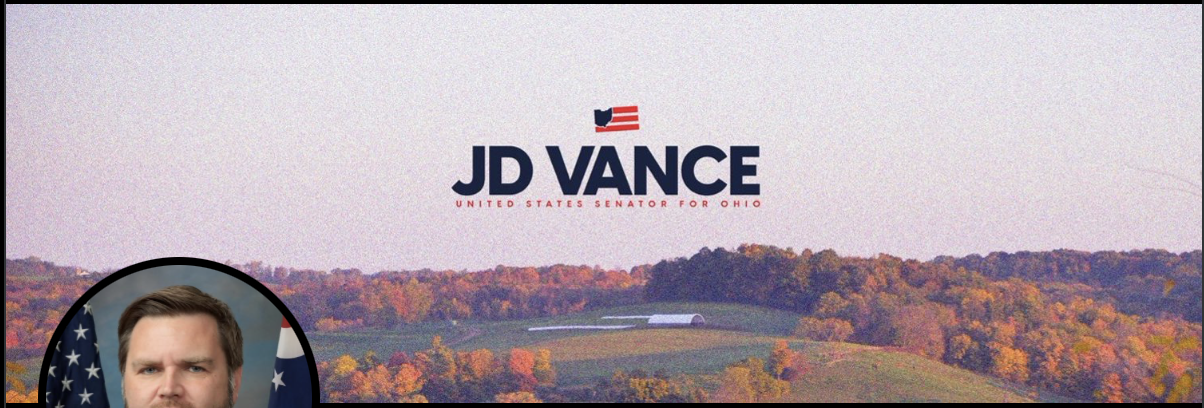
James David Vance (born James Donald Bowman;[a] August 2, 1984) is an American politician, attorney, author, and former United States Marine who is the vice president-elect of the United States. A member of the Republican Party, he has served since 2023 as the junior United States senator from Ohio. He was Donald Trump‘s running mate in the 2024 presidential election.

Susie Wiles, Chief of Staff

Susan Wiles (née Summerall; born May 14, 1957) is an American political consultant who served as co-chair of Donald Trump‘s 2024 presidential campaign, having previously worked on his 2016 campaign, as well as Ronald Reagan‘s 1980 campaign. She was chosen by president-elect Trump to serve as the 32nd White House chief of staff in the second Trump administration, set to begin in January 2025. She will be the first woman to hold the position.

Stephen Miller, Deputy Chief of Staff

Stephen Miller (born August 23, 1985)[1] is an American political advisor who served as a senior advisor for policy and White House director of speechwriting to President Donald Trump.[2]  He was previously the communications director for then-Senator Jeff Sessions. He was also a press secretary for U.S. representatives Michele Bachmann and John Shadegg.

Karoline Leavitt, White House Press Secretary
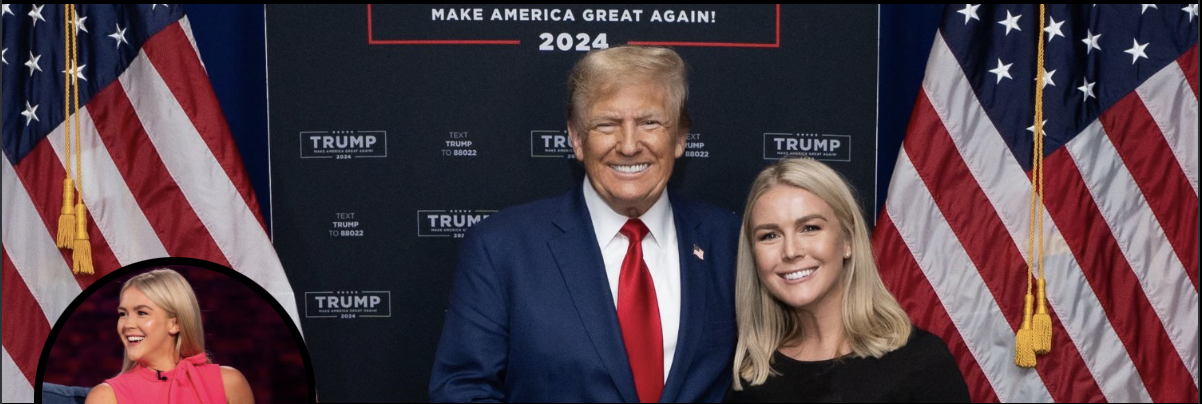
Karoline Claire Leavitt (born August 24, 1997)[1] is an American political aide currently serving as the national press secretary for Donald Trump’s 2024 presidential campaign.[2] She previously served as an assistant press secretary and presidential writer during the first Donald Trump administrationas well as a spokesperson for MAGA Inc., a pro-Trump Super PAC. In 2022, she ran for the U.S. House of Representatives in New Hampshire’s 1st district, becoming the second member of Generation Z to win a congressional primary. She lost the general election to incumbent Chris Pappas.[3] On November 15, 2024, president-elect Donald Trump chose Leavitt as his White House press secretary to succeed Karine Jean-Pierre.[4] She will be the youngest press secretary in United States history.[5]:

Russell Vought, White House Budget Office
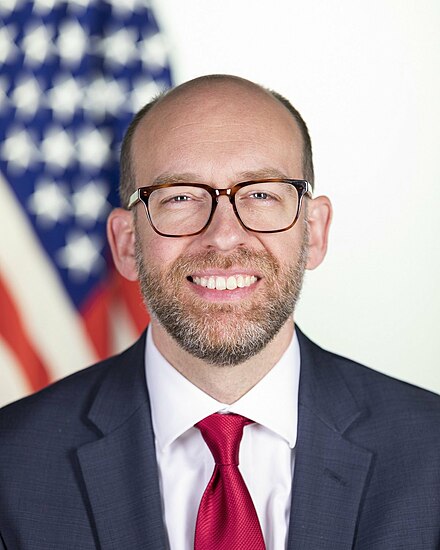
Russell Thurlow Vought (born March 26, 1976), or Russ Vought is an American former government official who was the director of the Office of Management and Budget from July 2020 to January 2021. He was previously deputy director of the OMB for part of 2018, and acting director from 2019 to 2020.

Sebastian Gorka & Alex Wong, Senior National Security Staff

Sebastian Lukács Gorka (HungarianGorka Sebestyén Lukács; born October 22, 1970)[2] is a British-Hungarian-American media host and commentator, currently affiliated with Salem Radio Network and NewsMax TV, and a former United States government official. He served in the first Trump administration as a Deputy Assistant to the President for seven months, from January until August 2017.[3][4][5][6]

Pete Hegseth, Secretary of Defense

Peter Brian Hegseth (/ˈhɛɡsɛθ/; born June 6, 1980) is an American television presenter, author, and former Army National Guard officer who has been announced as the forthcoming nominee for United States Secretary of Defense in Donald Trump‘s second cabinet. A political commentator for Fox News since 2014 and weekend co-host of Fox & Friends from 2017 to 2024, he was previously the executive director of Vets for Freedom and Concerned Veterans for America.

Doug Collins, Secretary of Veteran’s Administration (VA)

Paul Douglas Collins (born July 28, 1951) is an American basketballexecutive, former player, coach and television analyst in the National Basketball Association (NBA). He played in the NBA from 1973 to 1981 for the Philadelphia 76ers, earning four NBA All-Star selections. He then became an NBA coach in 1986, and had stints coaching the Chicago BullsDetroit PistonsWashington Wizards and Philadelphia 76ers. Collins also served as an analyst for various NBA-related broadcast shows.[1] He is a recipient of the Curt Gowdy Media Award. In April 2024, Collins was elected to the Naismith Memorial Basketball Hall of Fame class of 2024 by the Contributors Committee.[2]

Marco Rubio, Secretary of State
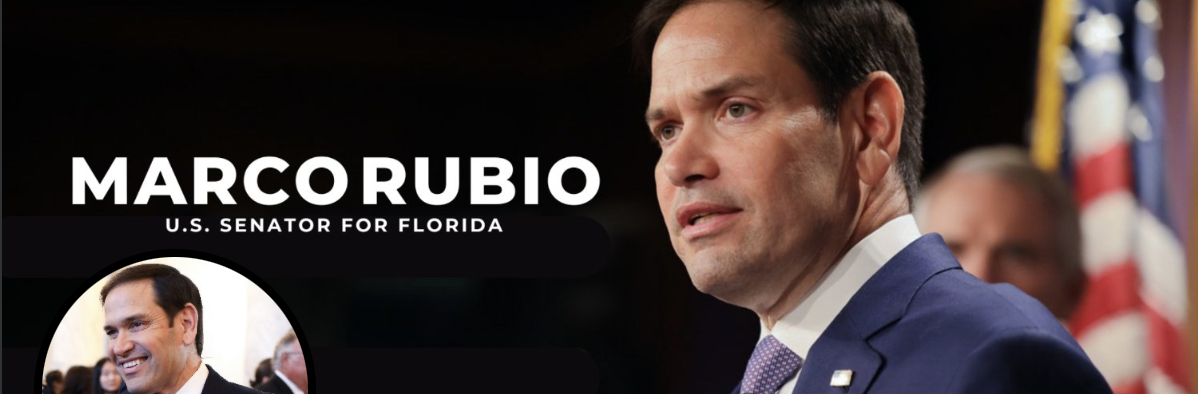
Marco Antonio Rubio (/ˈruːbioʊ/; born May 28, 1971) is an American politician and lawyer serving as the senior United States senator from Florida, a seat he has held since 2011. A member of the Republican Party, he served as Speaker of the Florida House of Representatives from 2006 to 2008. Rubio sought the Republican nomination for president of the United States in 2016, winning the presidential primaries in Minnesota, the District of Columbia, and Puerto Rico, but was ultimately unsuccessful.

Kristi Noem, Secretary of Homeland Security
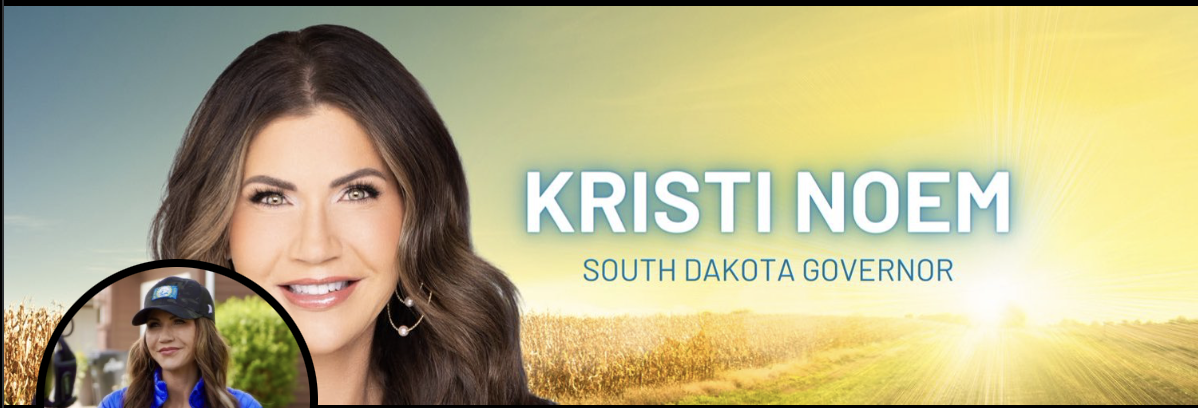
Kristi Lynn Noem (/noʊm/ NOHM;[1] née Arnold; born November 30, 1971) is an American politician who has served since 2019 as the 33rd governor of South Dakota. A member of the Republican Party, she was the U.S. representative for South Dakota’s at-large congressional district from 2011 to 2019, and a member of the South Dakota House of Representatives for the 6th district from 2007 to 2011.

Tom Homan, Border Czar
Thomas Douglas Homan[1] is an American former police officer, immigration official, and political commentator who served during the Obama administration, and will have served in both Trump administrations. He served as acting director of the U.S. Immigration and Customs Enforcement (ICE) from January 30, 2017, to June 29, 2018.[2] Homan advocates deportation of illegal immigrants and opposes sanctuary city policies. Within the government, he was among the most strident proponents of separating children from their parents as a means of deterring illegal entry into the country.[3] After 2018, he began contributing to Fox News as a commentator.[4] In November 2024, Trump announced that Homan will serve as “border czar” during his second presidency.[5]

Pam Bondi, Attorney General, Department of Justice (DOJ)
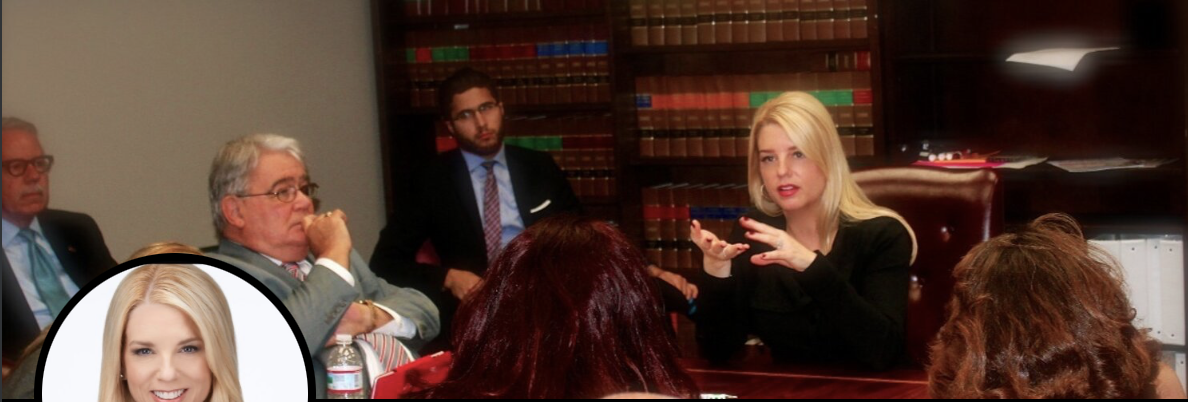
Pamela Jo Bondi[1] (born November 17, 1965) is an American attorney, lobbyist, and politician. A member of the Republican Party, she served as Florida attorney general from 2011 to 2019, the first woman elected to the office. In 2020, Bondi was one of President Donald Trump‘s defense lawyers during his first impeachment trial. By 2024, she led the legal arm of the Trump-aligned America First Policy Institute. On November 21, 2024, president-elect Trump announced she would be nominated for United States attorney general after previous nominee Matt Gaetz withdrew.

John Ratcliffe, Director of the CIA
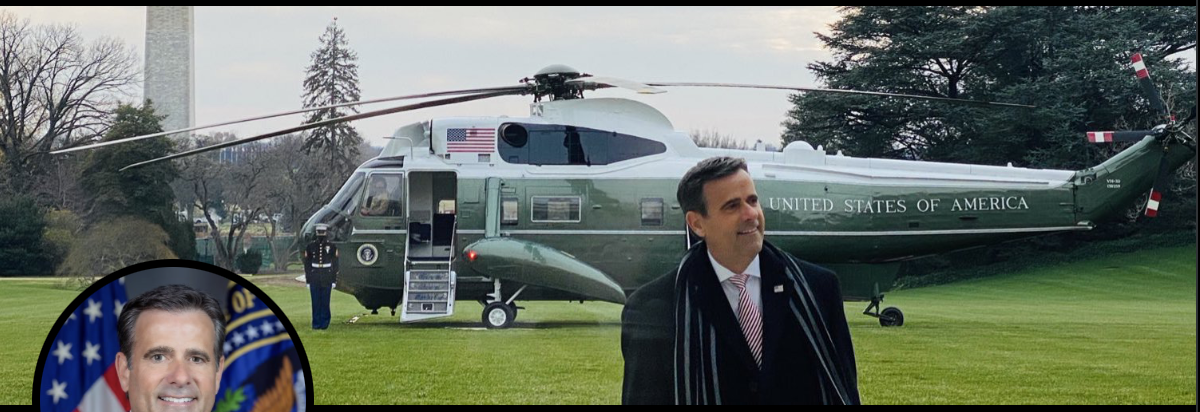
John Lee Ratcliffe[5] (born October 20, 1965) is an American politician and attorney who served as the director of national intelligence from 2020 to 2021. He previously served as the U.S. representative for Texas‘s 4th districtfrom 2015 to 2020. During his time in Congress, Ratcliffe was regarded as one of the most conservative members.[6][7] Ratcliffe also served as mayor of Heath, Texas, from 2004 to 2012 and acting United States attorney for the Eastern District of Texas from May 2007 to April 2008.

President Donald Trump announced on July 28, 2019, that he intended to nominate Ratcliffe to replace Dan Coats as director of national intelligence.[8][9] Ratcliffe withdrew after Republican senators raised concerns about him, former intelligence officials said he might politicize intelligence, and media revealed Ratcliffe’s embellishments regarding his prosecutorial experience in terrorism and immigration cases.[10][11][12][13]

Tulsi Gabbard, Director of National Intelligence (DNI)

Tulsi Gabbard (/ˈtʌlsi ˈɡæbərd/ TUL-see GAB-ərd; born April 12, 1981) is an American politician and military officer serving as a Lieutenant colonel in the U.S. Army Reserve[2][3] since 2021, having previously served in Hawaii Army National Guard from 2003 to 2020.[3][4] In November 2024, President-electTrump selected Gabbard for the position of Director of national intelligence in his second term, starting January 2025.[2][5] A former Congresswoman, Gabbard served as U.S. Representative for Hawaii’s 2nd congressional district from 2013 to 2021. She was the first Samoan-American member of Congress.[6] She was a candidate in the 2020 Democratic presidential primaries.[7][8] She left the Democratic Party in 2022 to become an independent. In 2024, she joined the Republican Party.[9][10][11]

Author For Love of Country

Mike Waltz, National Security Advisor
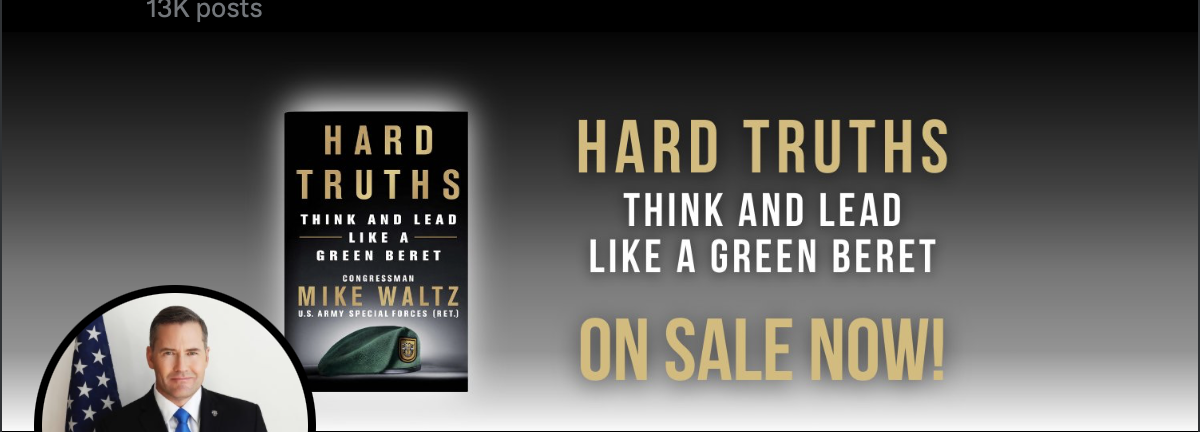
Michael George Glen Waltz (born January 31, 1974) is an American politician and a colonel in the United States Army serving as the U.S. representative for Florida’s 6th congressional district. A member of the Republican Party, he was first elected in 2018 and succeeded Ron DeSantis, who went on to be elected the 46th governor of Florida in 2018. On November 12, 2024, President-elect Donald Trump announced he will appoint Waltz to serve as his national security advisor.

Author of Hard Truths: Think & Lead Like A Green Beret

Kash Patal, Director of the FBI
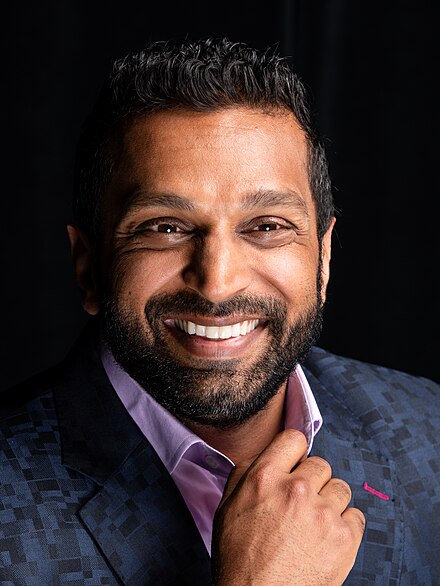
Kashyap Pramod Vino “Kash” Patel (born February 25, 1980)[1] is an American attorney and former government official. He served as a U.S. National Security Council official, senior advisor to the acting Director of National Intelligence, and chief of staff to the acting United States secretary of defense during the Trump presidency.[2][3][4] A member of the Republican Party, Patel previously worked as a senior aide to congressman Devin Nuneswhen he chaired the House Intelligence Committee.[5] He was previously a federal public defender, a federal prosecutor working on national security cases, and a legal liaison to the United States Armed Forces.[6]

• Does Christopher Wray Has To Resign First?

Scott Bessent, Secretary of Treasury

Scott Kenneth Homer Bessent (/ˈbɛsənt/ BEH-sənt; born August 1962) is an American hedge fund manager. He was a partner at Soros Fund Management and the founder of Key Square Group, a global macro investment firm.[1][2] Bessent has been a major fundraiser and donor for Donald Trump. He was an economic advisor for Trump’s 2024 presidential campaign. In November 2024, President-elect Trump named Bessent his nominee for Secretary of the Treasury.[3]

Is Bessent Compromised By Association with Soros & Rockefellers?
• Scott Bessent, who will lead the Treasury Department, previously worked at George Soros Fund Management from 1991 to 2000, and then again as Chief Investment Officer from 2011 to 2015. During this period, he made a significant bet against the British pound, contributing to Soros’ famous “breaking of the Bank of England” and earning billions for the firm. The London office was led by Peter Soros, George Soros’ nephew, who has been named by Epstein’s former butler, Alfred Rodriguez, as having been involved in Epstein’s s*x trafficking activities. Bessent is also on the Board of Trustees at Rockefeller University, alongside prominent figures in the globalist establishment. ~ Shadow of Era

Howard Lutnick, Secretary of Commerce
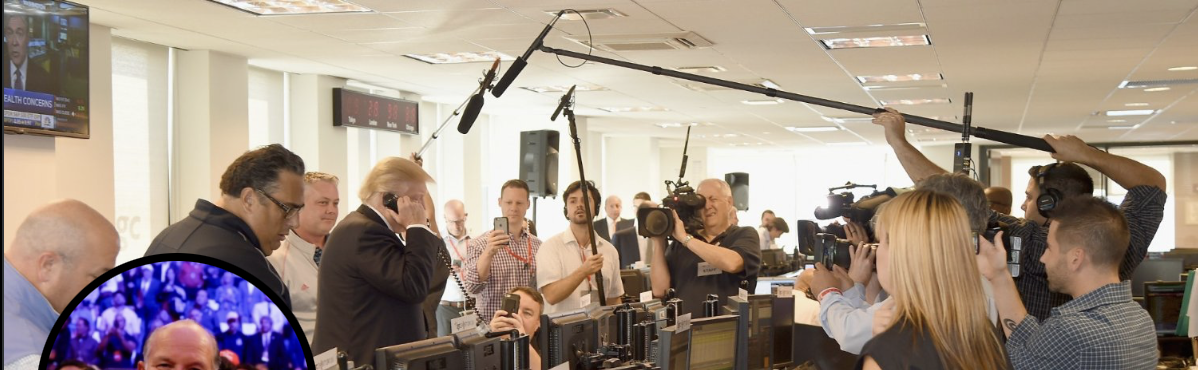
Howard William Lutnick (/ˈlʌtnɪk/; born July 14, 1961[1]) is an American businessman, who succeeded Bernard Gerald Cantor as the head of Cantor Fitzgerald. Lutnick is the chairman and CEO of Cantor Fitzgerald and BGC Group. After losing 658 employees, including his brother, in the September 11 attacks, Lutnick also survived the subsequent collapse of the towers on the ground, and has since become known for his charity efforts through the Cantor Fitzgerald Relief Fund, which helps to aid families of victims of the attacks and natural disasters. He was a fundraiser for Donald Trump’s 2020 and 2024 presidential campaigns, as well as a vocal proponent of Trump’s proposal to implement broad tariffs. In November 2024, President-elect Trump announced that he intended to nominate Lutnick as secretary of commerce. He was also co-founder of DOGE.

To Be Determined, Administrator of the SBA

Image Here…

Wikipedia:

Brendon Carr, Commissioner of the Federal Communications Commission (FCC)
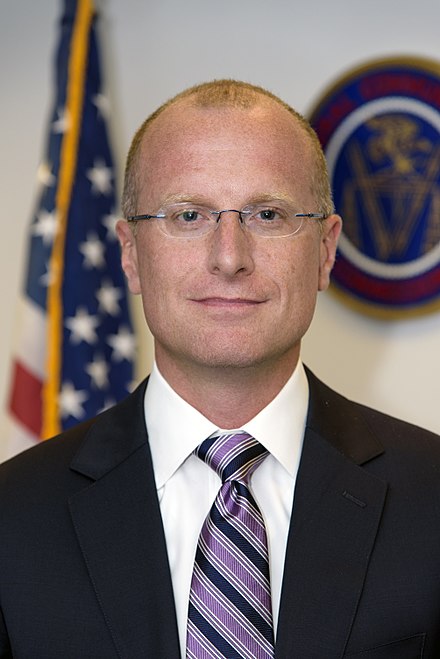
Brendan Thomas Carr (born January 5, 1979) is an American lawyer who has served as a member of the Federal Communications Commission (FCC) since 2017.[7] Appointed to the position by Donald Trump, Carr previously served as the agency’s general counsel and as an aide to FCC commissioner Ajit Pai. In private practice, Carr formerly worked as a telecommunications attorney at Wiley Rein.[8]

Carr supports changes to Section 230 of the Communications Decency Actand opposes net neutrality protections.[9][10] Carr is noted for his support for banning TikTok on national security grounds.[11][12] He is an opponent of content moderation on digital platforms, saying he would seek to “dismantle the censorship cartel and restore free speech rights.”[13][14] He authored a chapter in Mandate for Leadership: The Conservative Promise, the blueprint document of Heritage Foundation‘s Project 2025, which outlines proposed policies for a future Donald Trump administration. In office, Carr has been noted for being unusually vocal about public policy issues for a regulatory appointee, accusing House Intelligence Committee chair Adam Schiff of overseeing a “secret and partisan surveillance machine”.[15]

Restore Net Neutrality & Equalize the Internet Playing Field

Lori Chavez-DeRemer, Secretary of Labor
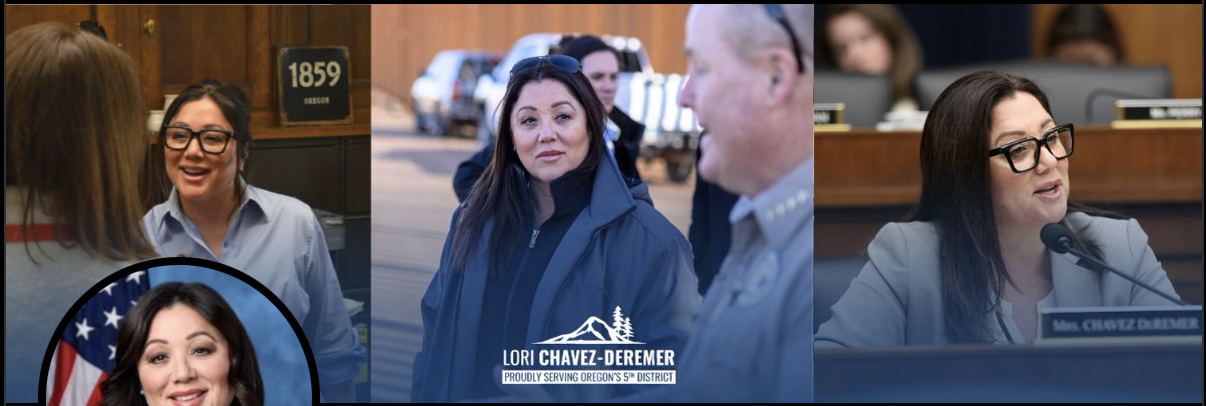
Lori Michelle Chávez-DeRemer (/ˈtʃɑːvɛzdəˈriːmər/; born April 7, 1968)[1] is an American politician serving as the U.S. Representative for Oregon’s 5th congressional district since 2023.[2] A member of the Republican Party, Chavez-DeRemer served as mayor of Happy Valley, Oregon, from 2011 to 2019. She is the first Republican woman to represent Oregon in the House. Additionally, she is one of the first two Hispanic women (alongside Andrea Salinas) elected to the United States Congressfrom Oregon. Chavez-DeRemer served one term in the House before being defeated in 2024 by Democrat Janelle Bynum. On November 22, 2024, President-elect Donald Trump nominated Chavez-DeRemer as his. Secretary of Labor.[3]

Scott Turner, Secretary of Housing & Urban Development
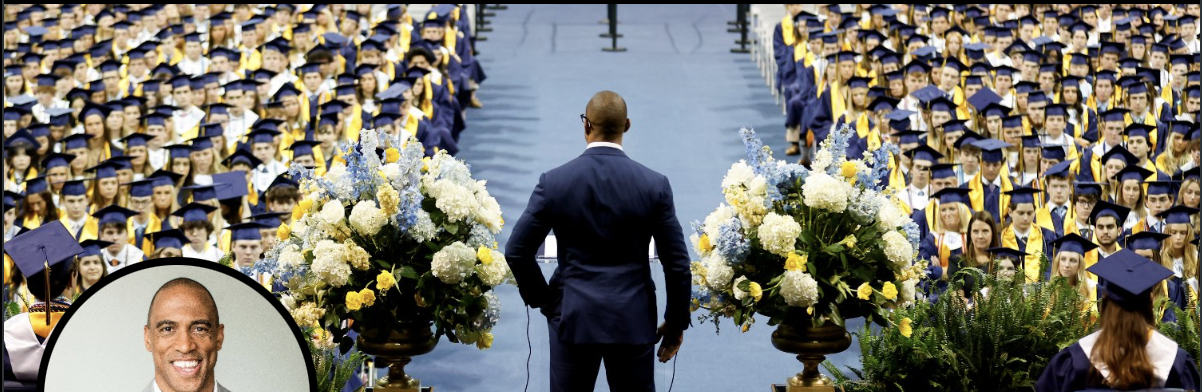
Eric Scott Turner (born February 26, 1972) is an American businessman, motivational speaker, politician, and former professional football player, who previously served as the executive director of the White HouseOpportunity and Revitalization Council.[1]Turner formerly served as a Texas state representative for the 33rd District, which includes part of Collin County and all of Rockwall County. Before entering politics, Turner was an American football cornerbackwho played in the National Football League(NFL) for nine seasons. In November 2024, Trump announced his intention to name Turner as the Secretary of Housing and Urban Development in his second administration.[2]

Robert F. Kennedy, Secretary of Health & Human Services
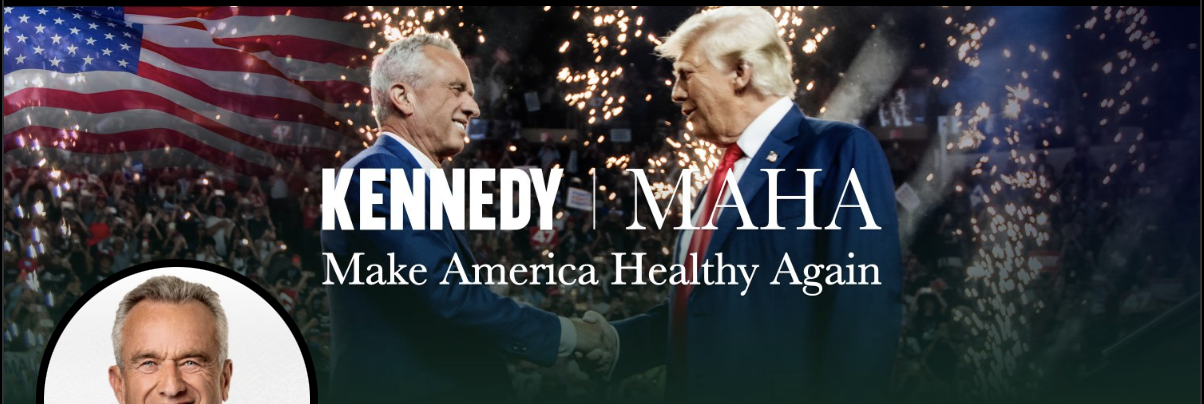
Robert Francis Kennedy Jr. (born January 17, 1954), also known by his initials RFK Jr., is an American politician, environmental lawyeranti-vaccine activist and conspiracy theorist whom President-elect Donald Trump has nominated to serve as United States secretary of health and human services.[1] Kennedy is the chairman and founder of Children’s Health Defense, an anti-vaccine advocacy group and proponent of COVID-19 vaccine misinformation.[2][3] He was on the ballot in some states as an independentcandidate in the 2024 United States presidential election.[4] A member of the Kennedy family, he is a son of United States Attorney General and senator Robert F. Kennedy, and a nephew of U.S. president John F. Kennedy and senator Ted Kennedy.

• Mission to Make America Healthy Again (MAHA)

Dr. Mehmet Oz, Administrator of the Centers for Medicare and Medicaid Services (CMS)
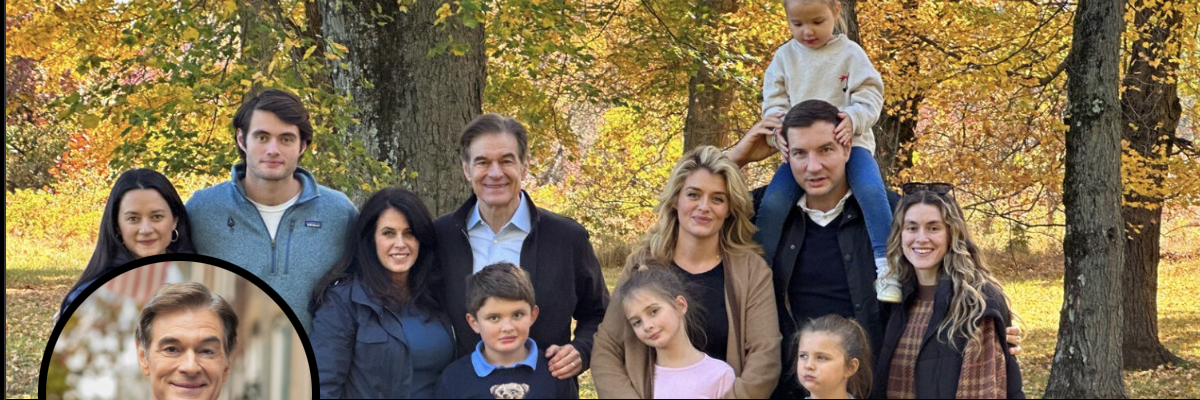
Mehmet Cengiz Öz[a] (/məˈmɛt ˈdʒɛŋɡɪz ɒz/meh-MET JENG-gihz oz; Turkish: [mehˈmetdʒeɲˈɟiz øz]; born June 11, 1960),[2] also known as Dr. Oz (/ɒz/), is a Turkish-American television personality, physician, author, professor emeritus of cardiothoracic surgery at Columbia University,[3] and former political candidate.[4]

Dr. Jay Bhattacharya, MD, Ph.D., Director of the National Institutes of Health (NIH)

Jayanta “Jay” Bhattacharya (born 1968) is an American professor of medicine, economics, and health research policy at Stanford University. He is the director of Stanford’s Center for Demography and Economics of Health and Aging. His research focuses on the economics of health care.[2][3][4] In 2021, Bhattacharya was opposed to lockdowns and mask mandates as a response to the COVID-19 pandemic.[5][6] With Martin Kulldorff and Sunetra Gupta, he was a co-author in 2020 of the Great Barrington Declaration, which advocated lifting COVID-19restrictions on lower-risk groups to develop herd immunity through widespread infection, while promoting the fringe notion that vulnerable people could be simultaneously protected from the virus.[7][8][9] The declaration was criticized as being unethical and infeasible by Tedros Adhanom Ghebreyesus, the director-general of the World Health Organization.[10]

• Co-Author of The Great Barrington Declaration

Dr. Dave Weldon, Director of the Centers for Disease Control (CDC)
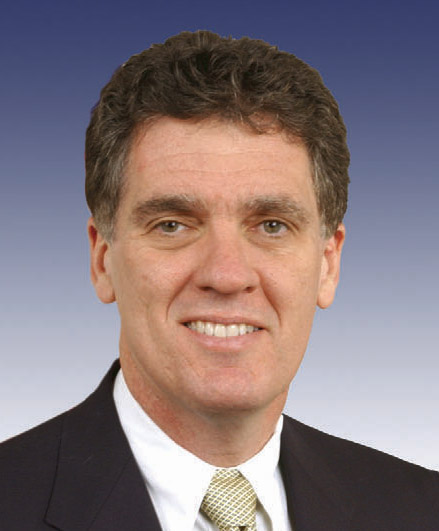
David Joseph Weldon (born August 31, 1953) is an American politician and physician. He was a Republican member of the United States House of Representatives, representing Florida’s 15th congressional district, and was an unsuccessful candidate for the Republican nomination in Florida’s 2012 U.S. Senate race. In November 2024, Donald Trump named Weldon as the director of the Centers for Disease Control and Prevention.[1]

• Mission to Restoring Truth & Transparency

Marty Makary MD, MPH, Commissioner of the Food & Drug Administration (FDA)

Martin Adel Makary (/məˈkæri/) is a British-American surgeon, professor, author, and medical commentator. He practices surgical oncology and gastrointestinal laparoscopic surgery at the Johns Hopkins Hospital, is Mark Ravitch Chair in Gastrointestinal Surgery at Johns Hopkins School of Medicine, and teaches public health policy as Professor of Surgery and Public Health at the Johns Hopkins Bloomberg School of Public Health.  Makary is an advocate for disruptive innovationin medicine and physician-led initiatives, such as The Surgical Checklist, which he developed at Johns Hopkins and which was later popularized in Atul Gawande’s best-selling book The Checklist Manifesto.[1] \

Makary was named one of the most influential people in healthcare by HealthLeader magazine in 2013.[2]In 2018, Makary was elected to the National Academy of Medicine.[3] During the COVID-19 pandemic, Makary was an early advocate for universal masking to control the pandemic and recommended vaccines for adults.[4] However, he was an outspoken opponent of broad COVID-19 vaccine mandates and, in late 2021 and early 2022, non-pharmaceutical interventions meant to reduce transmission in schools and universities.[5][6] In November 2024, President-Elect Donald Trump announced Makary would be his nominee to head the FDA as the commissioner of Food and Drugs.[7]

Mission to Examine the Causes of Chronic Illness
• “The greatest perpetrator of misinformation during the COVID pandemic has been the United States government … Public health officials were intellectually dishonest. They lied to the American people.” ~ Marty Makary, MD, MPH
Author of Blind Spots

Dr. Janette Nesheiwat, US Surgeon General
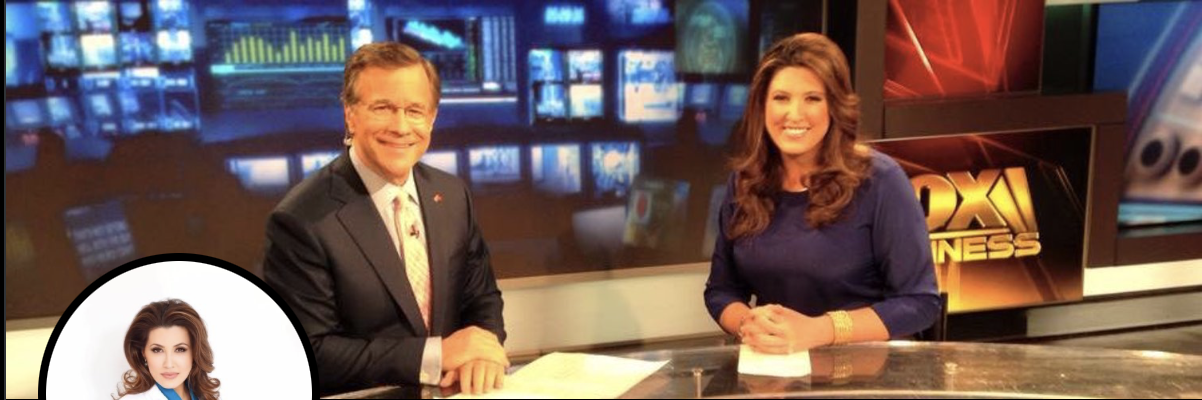
Janette Nesheiwat (born 25 August 1980) is an American physician who is the nominee for United States surgeon general.[2] Nesheiwat has served as an assistant medical director of CityMD[3] and is currently a medical contributor on Fox News.[4]

• Getting Flak for Her Previous Vaccine/COVID Positions. ~ Dr. Simone Gold
• Trump’s pick for Surgeon General, Janette Nesheiwat, praised Facebook for censoring anti-vaccine information & accounts like mine and RFK’s specifically, adding that she will “hope and pray” other social media companies do the same. Pick someone else. ~ Elizabeth Health Nut News

Doug Burgum, Secretary of the Interior
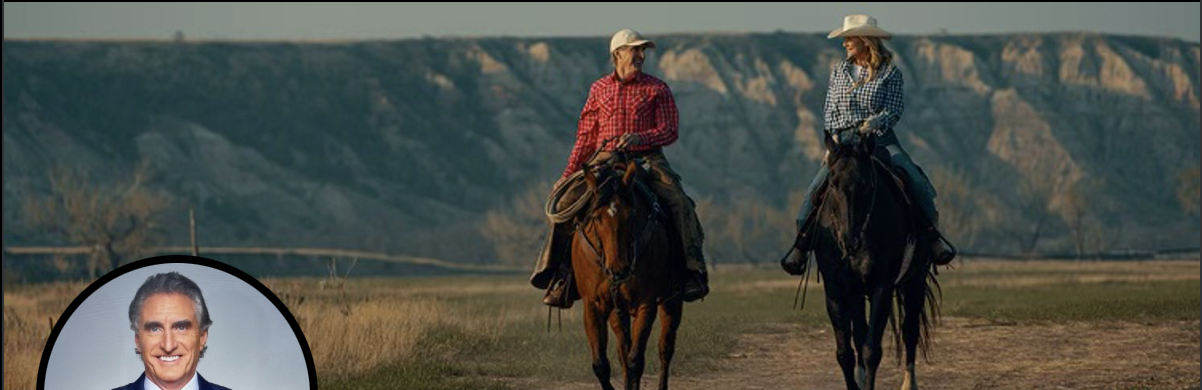
Douglas James Burgum (/bɜːrɡəm/ BUR-gəm;[1] born August 1, 1956) is an American businessman and politician serving since 2016 as the 33rd governor of North Dakota.[2][3] He is among the richest politicians in the United States and has an estimated net worth of at least $1.1 billion. He is a member of the Republican Party.[4] Burgum was born and raised in Arthur, North Dakota.

After graduating from North Dakota State University in 1978 with a bachelor’s degree in university studies and earning an MBA from Stanford University two years later,[5]he mortgaged inherited farmland in 1983 to invest in Great Plains Software in Fargo. Becoming its president in 1984, he took the company public in 1997. Burgum sold the company to Microsoft for $1.1 billion in 2001. While working at Microsoft, he managed Microsoft Business Solutions. He has served as board chairman for Australian software company Atlassian and SuccessFactors.

Burgum is the founder of Kilbourne Group, a Fargo-based real-estate development firm, and also is the co-founder of Arthur Ventures, a software venture capital group. Burgum won the 2016 North Dakota gubernatorial election in a landslide. He was reelected by a wide margin in 2020.[6] In June 2023, Burgum launched a campaign for the 2024 Republican presidential nomination. He ended his candidacy in early December 2023,[7]and became an advisor on the Trump campaign‘s energy policy.[8] On November 14, 2024, President-elect Trump announced his intention to nominate Burgum as the United States Secretary of the Interior.[9]

Kelly Loeffler, Secretary of Agriculture

Kelly Lynn Loeffler (/ˈlɛflər/ LEF-lər; born November 27, 1970) is an American businesswoman and politician who served as a United States senator from Georgia from 2020 to 2021. Loeffler was chief executive officer(CEO) of Bakkt, a subsidiary of commodity and financial service provider Intercontinental Exchange, of which her husband, Jeffrey Sprecher, is CEO. She is a former co-owner of the Atlanta Dream of the Women’s National Basketball Association (WNBA).[1] 

Loeffler is a member of the Republican Party. Brian Kemp, the Republican governor of Georgia, appointed Loeffler to the U.S. Senate in December 2019 after Senator Johnny Isakson resigned for health reasons. Loeffler ran in the 2020 Georgia U.S. Senate special election, seeking to hold the seat until January 2023. She finished second in the November 3 election, advancing to a runoff with DemocratRaphael Warnock held on January 5, 2021, where she lost.[2] That same day, her fellow Georgia senator David Perdue also lost his bid for re-election.

When Perdue’s term ended on January 3, 2021, Loeffler ascended to be the senior senator from Georgia, a position she held for just under three weeks until Warnock was sworn in. Loeffler aligned with President Donald Trump in her time in the Senate, touting a “100 percent Trump voting record” during her campaigns.[3][4] After the November 2020 election, Loeffler and Perdue claimed without evidence that there had been unspecified failures in the 2020 U.S. presidential election, and called for the resignation of Georgia secretary of state Brad Raffensperger, who rejected the accusations.

She later supported a lawsuit by Trump allies seeking to overturn the election results,[5] and also announced her intention to object to the certification of the Electoral College results in Congress.[6] After the attack on the U.S. Capitol on January 6, 2021, Loeffler announced that she would withdraw her objection to the certification of the electoral votes and later voted to certify. Loeffler was chosen by president-elect Trump to co-chair his inaugural committee in his upcoming second presidency, along with Steve Witkoff.

Brooke Rollins, Department of Agriculture (USDA)
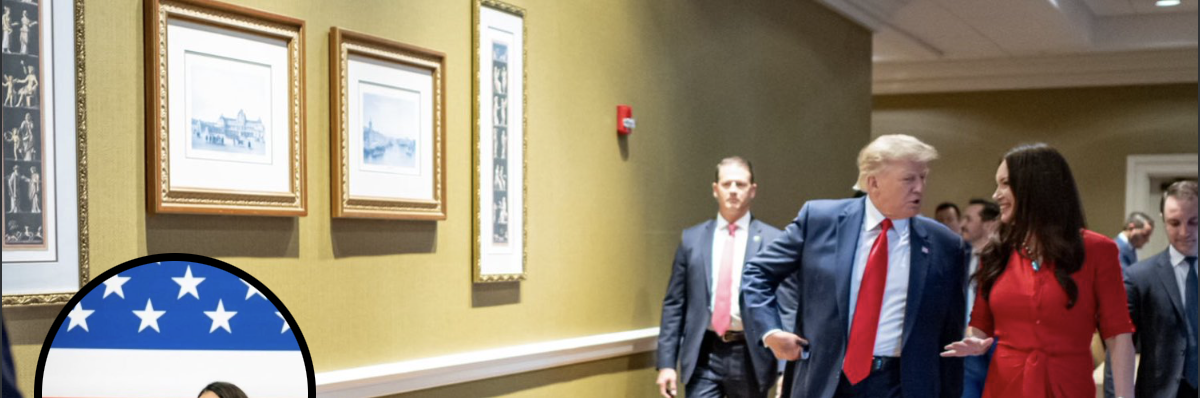
Brooke Leslie Rollins (born April 10, 1972)[1]is an American attorney who is the president and CEO of the America First Policy Institute. She previously served as the acting director of the United States Domestic Policy Councilunder President Donald Trump. Prior to assuming that role, Rollins oversaw the White House Office of American Innovation. Rollins was president and CEO of the Texas Public Policy Foundation, an Austin-based fossil fuels and school voucher supporting think tank, from 2003 through 2018.[2] During her tenure at TPPF, the think tank grew from having a staff of 3 to a staff of 100.[3] Rollins previously served as deputy general counsel, ethics advisor, and policy director to Texas Governor Rick Perry.[4] She is an advocate of criminal justice reform.[5] On November 23, 2024, President-elect Trump selected Rollins to be secretary of agriculture.[6]

Lee Zeldin, Administrator of the Environmental Protection Agency (EPA)

Lee Michael Zeldin (born January 30, 1980) is an American attorney, politician, and officer in the United States Army Reserve. A member of the Republican Party, he represented New York’s 1st congressional district in the United States House of Representatives from 2015 to 2023. He represented the eastern two-thirds of Suffolk County, including most of Smithtown, all of BrookhavenRiverheadSoutholdSouthamptonEast HamptonShelter Island, and a small part of Islip. From 2011 to 2014, Zeldin served as a member of the New York State Senate from the 3rd Senate district. During Donald Trump‘s presidency, Zeldin was a Trump ally.

He prominently defended Trump during his first impeachment hearingsconcerning the Trump–Ukraine scandal. In April 2021, Zeldin announced his candidacy for governor of New York in 2022.[1] He defeated three challengers in the Republican primary, becoming the nominee of the Republican Party and the Conservative Party. Zeldin lost the election to incumbent governor Kathy Hochulwhile receiving the highest percentage of the vote for a Republican gubernatorial nominee since 2002 and the highest raw vote total for a Republican gubernatorial nominee since 1970.[2] In November 2024, CNN reported that Zeldin was Trump’s nominee for Administrator of the Environmental Protection Agency.[3]

Chris Wright, Secretary of Energy (DOE)

Christopher Allen Wright[1] (born 1965) is an American businessman who is the CEO of Liberty Energy, North America’s second largest hydraulic fracturing company. He is the presumptive nominee for United States Secretary of Energy under Donald Trump‘s second presidency. He is a board member of Oklo Inc., a nuclear technology company, and EMX Royalty, a royalty payment company for mineral rights and mining rights.[2]

Sean Duffy, Secretary of Transportation
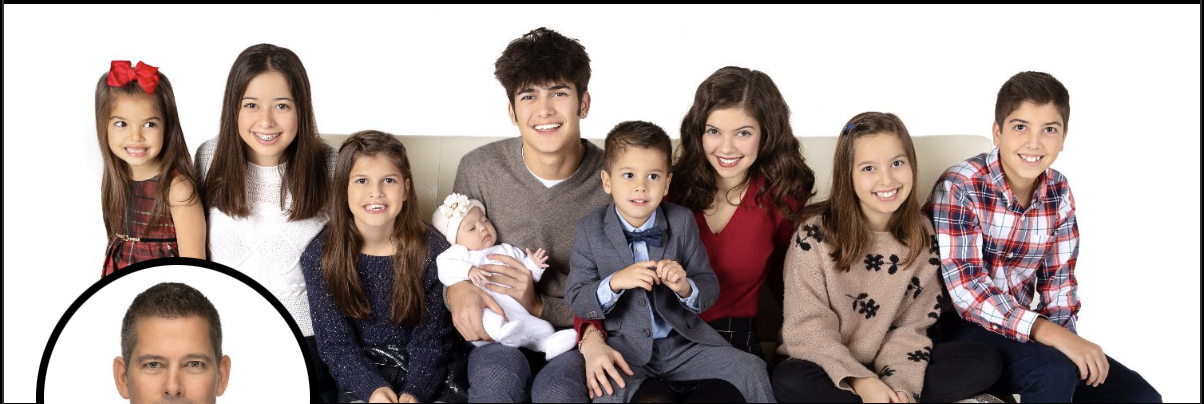
Sean Patrick Duffy (born October 3, 1971) is an American politician, prosecutor, lobbyist, and reality television personality who is currently a co-host of The Bottom Line on Fox Business, as well as a contributor on Fox News. A member of the Republican Party, he served as the U.S. representative for Wisconsin’s 7th congressional district from 2011 to 2019. After resigning from Congress, he became a lobbyist.[1] He first gained fame as a cast member on The Real World: Boston, 1998’s Road Rules: All Stars and 2002’s Real World/Road Rules Challenge: Battle of the Seasons, before going on to serve as district attorney of Ashland County, Wisconsin. In November 2024, Donald Trump named Duffy as his nominee for Secretary of Transportationin his second presidency.[2]

Linda McMahon, Secretary of Education
Linda Marie McMahon (/məkˈmæn/née Edwards; born October 4, 1948) is an American politician, business executive and retired professional wrestler. She was the 25th administrator of the Small Business Administration from 2017 to 2019. McMahon has been nominated to lead the Department of Education under the second Trump administration.

McMahon, along with her husband, Vince McMahon, founded sports entertainment company Titan Sports, Inc. (later World Wrestling Entertainment, Inc.) where she worked as the president and later CEO from 1980 to 2009. During this time, the company grew from a regional business in the northeast to a large multinational corporation. Among other things, she initiated the company’s civic programs, Get R.E.A.L. and SmackDown! Your Vote. She made occasional on-screen performances, most notably in a feud with her husband that culminated at WrestleMania X-Seven.

On April 15, she was named chairwoman of America First Action, a pro-Trump Super PAC. On November 19, 2024, McMahon was nominated by Donald Trump to serve as Secretary of Education.[2]

Vivek Ramaswamy, Department of Government Efficiency (DOGE)
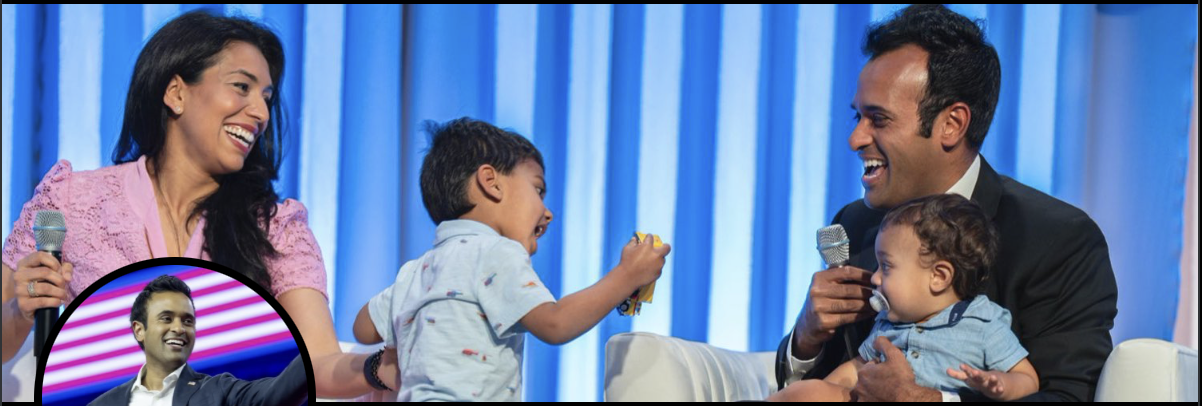
Vivek Ganapathy Ramaswamy (/vɪˈveɪkrɑːməˈswɑːmiː/;[1][2] vih-VAYK rah-mə-SWAH-mee; born August 9, 1985) is an American entrepreneur. He founded Roivant Sciences, a pharmaceutical company, in 2014. In February 2023, Ramaswamy declared his candidacy for the Republican Party nomination in the 2024 United States presidential election. He suspended his campaign in January 2024, after finishing fourth in the Iowa caucuses and endorsed Trump.[3] On November 12, 2024, President-elect Donald Trump announced that Ramaswamy and businessman Elon Musk had been tasked to lead the newly proposed Department of Government Efficiency.[4] Ramaswamy was born in Cincinnati to Indian immigrant parents. He graduated from Harvard University with a bachelor’s degree in biology and later earned a degree from Yale Law School. Ramaswamy worked as an investment partner at a hedge fund before founding Roivant Sciences. He also co-founded an investment firm, Strive Asset Management. Ramaswamy sees the United States in the middle of a national identity crisis precipitated by what he calls “new secular religions like COVID-ism, climate-ism, and gender ideology”.[5] He is also a critic of environmental, social, and corporate governance initiatives (ESG).[6]In January 2024, Forbes estimated Ramaswamy’s net worth at more than $960 million; his wealth comes from biotechand financial businesses.[7][8]

Mission to Dismantle the Regulatory State & Cut Wasteful Spending

Elon Musk, Department of Government Efficiency (DOGE)

Elon Reeve Musk FRS (/ˈiːlɒn/; born June 28, 1971) is a businessman known for his key roles in the space company SpaceX and the automotive company Tesla, Inc. His other involvements include ownership of X Corp., the company that operates the social media platform X (formerly Twitter), and his role in the founding of the Boring CompanyxAINeuralink, and OpenAI. In November 2024, United States president-elect Donald Trumpappointed Musk as the co-chair of the proposed Department of Government Efficiency (DOGE) in the second Trump administration. Musk is the wealthiest individual in the world; as of November 2024, Forbes estimates his net worth to be US$304 billion.[2]

Musk was born in Pretoria, South Africa, and briefly attended the University of Pretoria before immigrating to Canada at the age of 18, acquiring citizenship through his Canadian-born mother. Two years later, he matriculated at Queen’s University at Kingston in Canada. Musk later transferred to the University of Pennsylvania and received bachelor’s degreesin economics and physics. He moved to California in 1995 to attend Stanford University, but never enrolled in classes, and with his brother Kimbal co-founded the online city guidesoftware company Zip2. The startup was acquired by Compaq for $307 million in 1999. That same year, Musk co-founded X.com, a direct bank. X.com merged with Confinity in 2000 to form PayPal. In 2002, Musk acquired US citizenship, and that October eBay acquired PayPal for $1.5 billion. Using $100 million of the money he made from the sale of PayPal, Musk founded SpaceX, a spaceflight services company, in 2002. 

In 2004, Musk was an early investor in electric-vehicle manufacturer Tesla Motors, Inc. (later Tesla, Inc.), providing most of the initial financing and assuming the position of the company’s chairman. He later became the product architect and, in 2008, the CEO. In 2006, Musk helped create SolarCity, a solar energy company that was acquired by Tesla in 2016 and became Tesla Energy. In 2013, he proposed a hyperloop high-speed vactrain transportation system. In 2015, he co-founded OpenAI, a nonprofit artificial intelligenceresearch company. The following year Musk co-founded Neuralink, a neurotechnology company developing brain–computer interfaces, and The Boring Company, a tunnel construction company.

In early 2024, Musk became active in American politics as a vocal and financial supporter of Donald Trump, becoming Trump’s second-largest individual donor in October 2024. In November 2024, Trump announced that he had chosen Musk along with Vivek Ramaswamyto co-lead the Department of Government Efficiency (DOGE), a new advisory board which aims to improve government efficiency through measures such as slashing “excess regulations” and cutting “wasteful expenditures”.

Mission to Dismantle the Regulatory State & Cut Wasteful Spending

AMERICA FIRST AGENDA BY EXECUTIVE ORDER

  • Restore Border Security & Immigration Including Mass Deportation of Illegal Aliens
  • Declare War on Drug Cartels (Including Big Pharma & Global Actors)
  • Declare War on Child Trafficking & Establish Death Penalty for Convicted Human Traffickers
  • Halt Federal Funds for Any State or Local Government Defying Federal Immigration Law (End Sanctuary Cities)
  • Halt Federal Funds for Inappropriate Curricula Including Critical Race Theory, DEI, Transgender & Anti-American Political Content Taught in Schools
  • End Mutilation of Youth Through Gender Transitions; Cease Funding Any Sex & Gender Transition
  • Halt Federal Funding for Any Abortion Procedure or Organ Harvesting of New-Born Infants
  • Private Right of Action for Victims to Sue Doctors; Civil Rights Violations; Cease Funding to School Districts
  • End Electric Vehicle Mandates; Making Them Voluntary Not Mandatory
  • Restore Fundamental Protection of Free Speech & All Constitutional Rights; Prohibit Any Future Collusion Between Government & Private Sector to Deprive Citizens of Rights
  • Dismantle Needless Bureaucracy & Regulations
  • Dismantle or Overhaul All Weaponized Government Agencies Via Schedule F (Firing Incompetent or Corrupt Staff By Executive Order)
  • Clean Out All Corrupt Actors in National Security, Defense & Intelligence Apparatus

ESTABLISHING NEW GOVERNMENT PROGRAMS & LEGISLATION

  • Founding Department of Government Efficiency (DOGE)with Mission to Dismantle the Regulatory State & Cut Wasteful Spending)
  • Restore Economic Prosperity for All
  • Restore Energy Independence By All Means Necessary Including Fracking, Drilling & Green Energy
  • Restore Tax Incentives for Small Businesses
  • Cap Credit Card Rates at 10%
  • Founding The American Academy (Full Spectrum of Human Knowledge for Free Online; Bachelor’s Degree Available)
  • Department of Education Appoints New Accreditors for All Colleges/Universities to Qualify for Federal Funding (Restore Meritocracy in Our Educational Institutions)
  • Eliminate the Federal Income Tax & Replace with Tariffs On Imports
  • Allow IRS Deduction Up to $10k Towards Homeschooling Per Child
  • Become #1 Energy Producer in the World & Restore Energy Independence
  • Repeal of the 1986 Vaccine Injury Act
  • Restore FAIR Act for Equal Time in Broadcasting
  • Revoke Licenses & Funding for Propaganda Media (Including NPR)
  • Reintroduce 28th Amendment with Required That All Laws Applied Equally to Citizens & Congress
  • Propose ? Amendment for Term-Limits on Elected Officials in Congress
  • Restore Net Neutrality To Equalize the Internet Playing Field Once Again
  • Restore Restricted Regulations for GMO’s in Food & Medicine: https://www.centerforfoodsafety.org/press-releases/6417/conservationists-and-farmers-sue-over-trump-administration-removal-of-most-genetically-engineered-organism-regulation
  • Restore Accountability in the Judicial System & Fire Judicial Activists Who Violate Their Oath of Allegiance to the U.S. Constitution & Bill of Rights
  • Review US Supreme Court’s Citizens United Ruling Which Removed Limits to Corporate Funding/Lobbyists Thereby Corrupting Election Officials

Sources: X.com & Wikipedia

How One Spook-Run London College Department is Training the World’ Social Media Managers | Mint Press News

By Alan MacLead

Staffed by NATO military officers and former government ministers and notorious for training the West’s top spies, the Department of War Studies at King’s College London is also providing the workforce for many of the largest social media companies. This includes Facebook, TikTok, Google, and Twitter.

MintPress study of professional databases and employment websites reveals a wide network of War Studies alumni holding many of the most influential jobs in media, constituting a silent army of individuals who influence what the world sees (and does not see) in its social media feeds.

SPY SCHOOL

Set in an imposing building near the banks of the River Thames in Central London, the Department of War Studies is at the heart of the British establishment. Current staff includes the former Secretary General of NATO, former U.K.Minister of Defense, and a host of military officers from NATO and NATO-aligned countries.

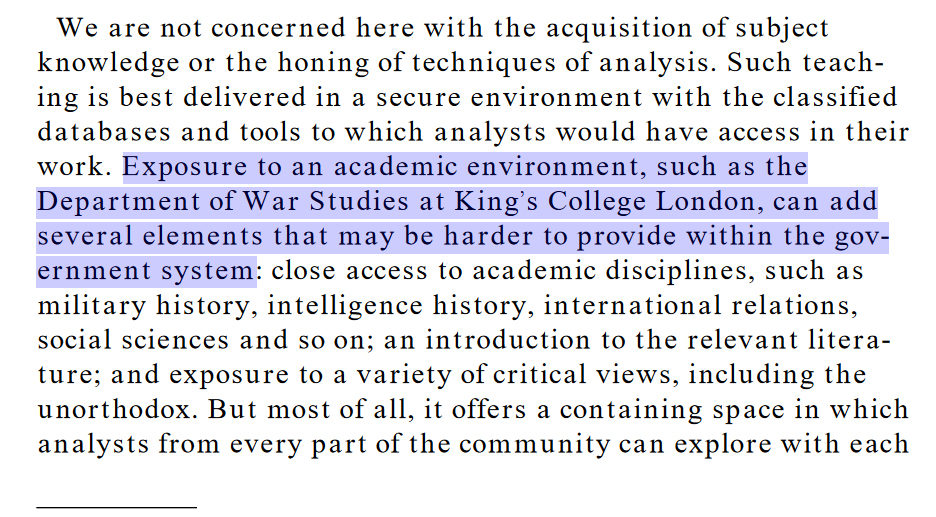
It is also a favored training ground for the secret services. A 2009 report published by the CIA described how beneficial it is to “use universities as a means of intelligence training,” writing that “exposure to an academic environment, such as the Department of War Studies at King’s College London, can add several elements that may be harder to provide within the government system,” also mentioning that the department’s faculty have “extensive and well-rounded intelligence experience.”

In 2013, then-Secretary of Defense and former CIA Director Leon Panetta gave a speech at the department. “I deeply appreciate the work that you do to train and to educate our future national security leaders, many of whom are in this audience,” he said, adding that expansion into tech, surveillance, and cyberwarfare was of critical importance.

Last year, MintPress investigated the department’s intelligence links more deeply.

Moreover, the university has freely admitted to having entered into a number of secret funding agreements with the U.K. Foreign Office and the Ministry of Defense. However, it has refused to elaborate on these contracts, tellinginvestigative news outlet Declassified U.K. that doing so could undermine national security.

While the Department of War Studies plays a key role in producing the West’s intelligence operatives, it also trains many of the world’s top journalists, as well as social media managers, whose task it is to protect us from the misinformation put out by the others. As such, it is a central part of the new high-tech information war being waged between Russia and the West, in which the national security state is increasingly taking control over the means of communication under the guise of protecting us from the Kremlin.

FACEBOOK

At any one time, the department educates around 1,000 students, many of whom have gone on to become top military commanders, intelligence chiefs, and government officials, both in the West and in countries as disparate as Jordan, Nigeria, and Singapore. But increasingly, large numbers of War Studies graduates are finding employment in the most influential media outlets on both sides of the Atlantic, and in Silicon Valley.

Chief amongst the social media companies where War Studies graduates hold considerable sway is Facebook (now rebranded as Meta). For example, while working at senior levels in the U.K. government, Mark Smith pursued a Master’s at the department, completing it in 2009. Between 2007 and 2017, he worked for the Ministry of Defense, the Foreign Office, and the National Security Secretariat. According to his own LinkedIn profile, he was deployed overseas three times as a political advisor to top NATO military commanders and was a key figure in strategizing responses to ISIS and other terrorist groups, as well as working on the Ministry of Defense’s response to the Scottish independence question.

In 2017, Smith moved straight from the government to Meta, where he is now the Global Director of Global Content Management, giving him considerable power to dictate what is allowed and what is censored from the world’s biggest news and media platform.

Facebook’s Global Director of Strategic Response is also a former War Studies student. After graduating, Caitlin Bakerworked on Middle Eastern counterterrorism policy in the Office of the Secretary of Defense in Washington and as Director for Jordan and Lebanon at the National Security Council at the White House. Between 2015 and 2017, she was also VP Joe Biden’s Middle East Policy Advisor. During this time period, the administration rapidly expanded its drone program, coming to bomb seven countries simultaneously.

In October 2017, Baker moved seamlessly from the Defense Secretary’s office to work for Facebook’s strategic response team, rising to become a global director. The strategic response team decides how Facebook will react to global events like elections, wars and coups, determining what content will be permissible and which views will be banned or suppressed.

There are many more War Studies graduates in influential roles at Facebook, including:

While this is certainly not to say that all those mentioned are government plants, or even that they are anything but model employees, this connection does come at a time when Facebook has rapidly begun intertwining itself with the national security state. In 2018, the company announced that, in a bid to combat fake news, it was partnering with NATO think tank, the Atlantic Council, in a deal that gave the latter significant influence on the platform’s content. Today, Facebook’s head of intelligence is NATO’s former press officer. And a MintPress study published last month detailed how the company has hired dozens of former CIA officials, many of whom now hold the most politically sensitive positions in the company and are in charge of deciding what billions of users see daily.

TIKTOK

War Studies alumni also hold or held several influential positions on the video platform TikTok. These include Haniyyah Rahman-Shepherd, an intelligence analyst who works on threat detection and identifying hate speech, extremism, and mis- and disinformation; Michelle Caley, content strategy leader; Manish Gohil, a former risk analyst for TikTok; Alexandra Dinca, investigations lead; Jeanne Sun, safety program manager; and Tom Dudley, head of physical security.

Scott O’Brien, meanwhile, worked for both Facebook and TikTok, first as an intelligence analyst for Facebook, where he specialized in “human rights investigations” in “at-risk countries,” according to his LinkedIn. He is now an influence operations intelligence and discovery analyst at TikTok. Before that, he worked for the infamousintelligence agency, Pinkerton.

In recent times, TikTok has been the recipient of significant amounts of government attention. From the Trump administration’s threats to ban the platform altogether to the news that President Biden was briefing TikTok stars on how they should cover the war in Ukraine, the U.S. government, it appears, performed a 180-degree turn on the app. This occurred at the same time as the company began employing large numbers of state functionaries in key positions, including individuals from NATO, the White House, and the CIA. A MintPress investigation detailing all this described it as a “NATO to TikTok pipeline.”

TWITTER AND GOOGLE

Twitter has comparatively fewer War Studies alumni. But some are in important positions. For instance, Global Program Manager Sean Ryan describes his role as “lead[ing] a global program team that drives a holistic understanding of Twitter’s dynamic risk and threat landscape while working across the cyber, physical, information, platform, policy, health, and reputation domains.” He notes that his analysis, “informs the decision-making of strategic leadership while supporting key policies across multiple teams.”

Twitter’s director of insider risk and investigations, Bruce A., is also a former KCL man. Bruce A. spent 23 years in the FBI, becoming a supervisory special agent, leaving the bureau in 2020 to directly transfer to Twitter.

Bruce is one of just dozens of FBI agents and analysts that Twitter has hired in the past few years – the majority of whom have been parachuted into highly politically sensitive fields, such as security, content moderation and trust and safety, thus effectively giving the bureau considerable influence over the platform’s content and outlook.

Google, too, employs a number of War Studies graduates, among them Asia-Pacific Information Policy Lead Jean-Jacques Sahel, Policy Advisor Grant Hurst, and Global Threat Analyst Jessica O.

JOURNALISM

For a single department in one college of a university, it is remarkable the impact that the Department of War Studies has had on the field of journalism as well. The department punches vastly above its weight, with alumni in most of the world’s top media outlets, including CNN, NBC News, The New York Times, Reuters, and The Wall Street Journal, as well as a host of individuals populating the ranks of the British state broadcaster, the BBC. Indeed, it appears that if breaking into the field of journalism is the goal, then a degree from the Department of War Studies is more helpful than one from King’s College London’s Department of Culture, Media and Creative Industries, its de facto journalism school.

Some of these journalists cut their teeth at investigative outlets Bellingcat and Graphika, both of whom are funded by the U.S. government and both of whom put out questionable reports demonizing official enemy nations. No fewer than six Bellingcat employees or contributors — including Cameron Colquhoun, Jacob Beeders, Lincoln Pigman,Aliaume Leroy, Christiaan Triebert and senior investigator Nick Waters — all pursued postgraduate studies within the department. Indeed, Bellingcat founder Eliot Higgins joined the Department of War Studies in 2018 as a visiting research associate.

Graphika, meanwhile, is also inordinately staffed by KCL War Studies graduates. Together, these two groups pump out highly-publicized “intelligence” reports warning of nefarious actions committed by Russia or other official enemy states, all while quietly being funded by the U.S. national security state themselves.

STATE-BACKED NEXUS

The Department of War Studies publishes similar work to Graphika. Indeed, its faculty was crucial in propagating the idea of Russian interference in American elections, being the source of many of the most far-reaching claims about Moscow’s influence in American society. Reports published by the department accuse Russia of carrying out a campaign of “information-psychological warfare” and advise that military spending should be increased and that NATO must re-up its commitment to countering Russia. Professor Thomas Rid even testified before the Senate Select Committee on Intelligence on the “dark art” of Russian meddling and condemned WikiLeaks and alternative media journalists as unwitting agents of disinformation.

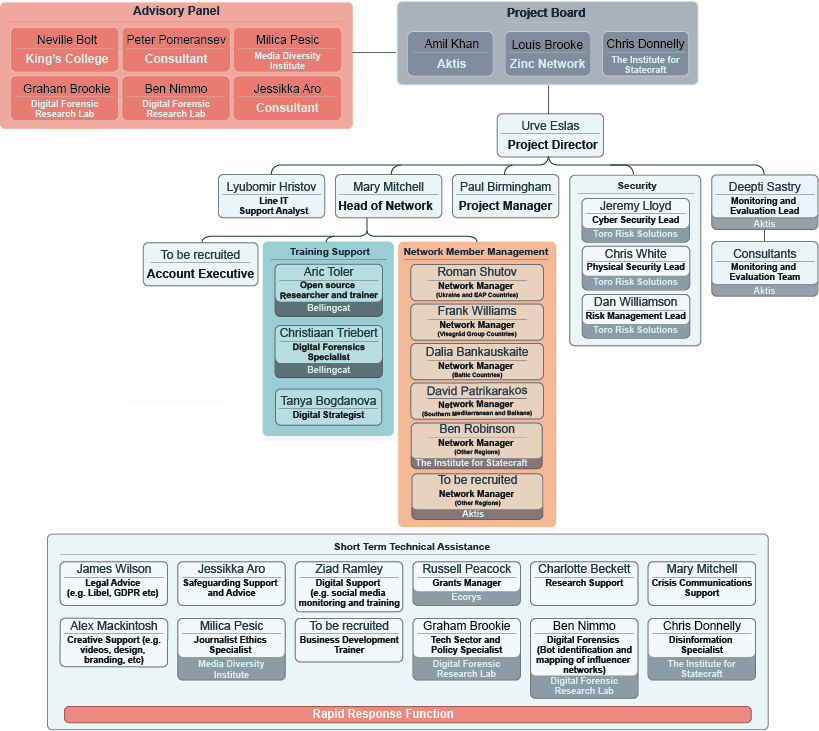
Many of the organizations detailed above were also identified as proposed members of a Western government-aligned “counter”-propaganda nexus hoping to be established by the EXPOSE Network. EXPOSE was allegedly a secret U.K.-government-funded initiative that would have brought together journalists and state operatives in an alliance to shape public discourse in a manner more conducive to the priorities of Western governments.

A chart showing the leadership structure of the EXPOSE network published as part of the Integrity Initiative Leak 7

The Department of War Studies’ Dr. Neville Bolt was on the organization’s preliminary advisory panel, alongside Graham Brookie of the Atlantic Council (NATO’s think tank) and Ben Nimmo, former NATO press officer, and ex-director of investigations for Graphika, and Facebook’s current head of intelligence. Training support, meanwhile, would be provided by individuals from Bellingcat.

In the past year, MintPress has been detailing how much of the public sphere, from social media organizations like FacebookTwitter, and TikTok to big search engines such as Google, to Think Tanks and Fact-Checking organizations, are quietly much more closely linked to the national security state than first meets the eye. The Department of War Studies at King’s College London is an important part of this state-backed nexus. It is a one-stop shop for training many of the spies, think tank employees, journalists, and supposedly independent intelligence investigators who have been at the forefront of the new information war.

Put simply, one department staffed by former and current military officers is training the people producing the news (journalists), the ones manipulating it (intelligence officials), and the ones who are in charge of sorting fact from fiction and pinpointing disinformation (social media managers). It is quite the system. All the while, they continually warn of the threat of (foreign) state-backed influence operations.

To be clear, Kremlin propaganda is real, but its reach is decidedly minor in comparison to the massive disinformation campaigns being launched by the Western national security state. And the Department of War Studies is a key part of this information war.

Source: Mint Press News

WEF Proposes Globalized Plan to Police Online Content Using Artificial Intelligence | Children’s Health Defense

By Michael Nevradakis, Ph.D.

Warning about a “dark world of online harms” that must be addressed, the World Economic Forum (WEF) this month published an article calling for a “solution” to “online abuse” that would be powered by artificial intelligence (AI) and human intelligence.

The proposal calls for a system, based on AI, that would automate the censorship of “misinformation” and “hate speech” and work to overcome the spread of “child abuse, extremism, disinformation, hate speech and fraud” online.

According to the author of the article, Inbal Goldberger, human “trust and safety teams” alone are not fully capable of policing such content online.

Goldberger is vice president of ActiveFence Trust & Safety, a technology company based in New York City and Tel Aviv that claims it “automatically collects data from millions of sources and applies contextual AI to power trust and safety operations of any size.”

Instead of relying solely on human moderation teams, Goldberger proposes a system based on “human-curated, multi-language, off-platform intelligence” — in other words, input provided by “expert” human sources that would then create “learning sets” that would train the AI to recognize purportedly harmful or dangerous content.

This “off-platform intelligence” — more machine learning than AI per se, according to Didi Rankovicof ReclaimTheNet.org — would be collected from “millions of sources” and would then be collated and merged before being used for “content removal decisions” on the part of “Internet platforms.”

According to Goldberger, the system would supplement “smarter automated detection with human expertise” and will allow for the creation of “AI with human intelligence baked in.”

This, in turn, would provide protection against “increasingly advanced actors misusing platforms in unique ways.”

“A human moderator who is an expert in European white supremacy won’t necessarily be able to recognize harmful content in India or misinformation narratives in Kenya,” Goldberger explained.

However, “By uniquely combining the power of innovative technology, off-platform intelligence collection and the prowess of subject-matter experts who understand how threat actors operate, scaled detection of online abuse can reach near-perfect precision” as these learning sets are “baked in” to the AI over time, Goldberger said.

This would, in turn, enable “trust and safety teams” to “stop threats rising online before they reach users,” she added.

In his analysis of what Goldberger’s proposal might look like in practice, blogger Igor Chudov explained how content policing on social media today occurs on a platform-by-platform basis.

For example, Twitter content moderators look only at content posted to that particular platform, but not at a user’s content posted outside Twitter.

Chudov argued this is why the WEF appears to support a proposal to “move beyond the major Internet platforms, in order to collect intelligence about people and ideas everywhere else.”

“Such an approach,” Chudov wrote, “would allow them to know better what person or idea to censor — on all major platforms at once.”

The “intelligence” collected by the system from its “millions of sources” would, according to Chudov, “detect thoughts that they do not like,” resulting in “content removal decisions handed down to the likes of Twitter, Facebook, and so on … a major change from the status quo of each platform deciding what to do based on messages posted to that specific platform only.”

In this way, “the search for wrongthink becomes globalized,” concludes Chudov.

In response to the WEF proposal, ReclaimTheNet.org pointed out that “one can start discerning the argument here … as simply pressuring social networks to start moving towards ‘preemptive censorship.’”

Chudov posited that the WEF is promoting the proposal because it “is becoming a little concerned” as “unapproved opinions are becoming more popular, and online censors cannot keep up with millions of people becoming more aware and more vocal.”

According to the Daily Caller, “The WEF document did not specify how members of the AI training team would be decided, how they would be held accountable or whether countries could exercise controls over the AI.”

In a disclaimer accompanying Goldberger’s article, the WEF reassured the public that the content expressed in the piece “is the opinion of the author, not the World Economic Forum,” adding that “this article has been shared on websites that routinely misrepresent content and spread misinformation.”

However, the WEF appears to be open to proposals like Goldberger’s. For instance, a May 2022 article on the WEF website proposes Facebook’s “Oversight Board” as an example of a “real-world governance model” that can be applied to governance in the metaverse.

And, as Chudov noted, “AI content moderation slots straight into the AI social credit score system.”

Download for Free: Robert F. Kennedy’s New Book — ‘A Letter to Liberals’

UN, backed by Gates Foundation, also aiming to ‘break chain of misinformation’

The WEF isn’t the only entity calling for more stringent policing of online content and “misinformation.”

For example, UNESCO recently announced a partnership with Twitter, the European Commission and the World Jewish Congress leading to the launch of the #ThinkBeforeSharing campaign, to “stop the spread of conspiracy theories.”

According to UNESCO:

“The COVID-19 pandemic has sparked a worrying rise in disinformation and conspiracy theories.

“Conspiracy theories can be dangerous: they often target and discriminate against vulnerable groups, ignore scientific evidence and polarize society with serious consequences. This needs to stop.”

UNESCO’s director-general, Audrey Azoulay, said:

“Conspiracy theories cause real harm to people, to their health, and also to their physical safety. They amplify and legitimize misconceptions about the pandemic, and reinforce stereotypes which can fuel violence and violent extremist ideologies.”

UNESCO said the partnership with Twitter informs people that events occurring across the world are not “secretly manipulated behind the scenes by powerful forces with negative intent.”

UNESCO issued guidance for what to do in the event one encounters a “conspiracy theorist” online: One must “react” immediately by posting a relevant link to a “fact-checking website” in the comments.

UNESCO also provides advice to the public in the event someone encounters a “conspiracy theorist” in the flesh. In that case, the individual shold avoid arguing, as “any argument may be taken as proof that you are part of the conspiracy and reinforce that belief.”

The #ThinkBeforeSharing campaign provides a host of infographics and accompanying materials intended to explain what “conspiracy theories” are, how to identify them, how to report on them and how to react to them more broadly.

According to these materials, conspiracy theories have six things in common, including:

  • An “alleged, secret plot.”
  • A “group of conspirators.”
  • “‘Evidence’ that seems to support the conspiracy theory.”
  • Suggestions that “falsely” claim “nothing happens by accident and that there are no coincidences,” and that “nothing is as it appears and everything is connected.”
  • They divide the world into “good or bad.”
  • They scapegoat people and groups.

UNESCO doesn’t entirely dismiss the existence of “conspiracy theories,” instead admitting that “real conspiracies large and small DO exist.”

However, the organization claims, such “conspiracies” are “more often centered on single self-contained events, or an individual like an assassination or a coup d’état” and are “real” only if “unearthed by the media.”

In addition to the WEF and UNESCO, the United Nations (UN) Human Rights Council earlier this year adopted “a plan of action to tackle disinformation.”

The “plan of action,” sponsored by the U.S., U.K., Ukraine, Japan, Latvia, Lithuania and Poland, emphasizes “the primary role that governments have, in countering false narratives,” while expressing concern for:

“The increasing and far-reaching negative impact on the enjoyment and realization of human rights of the deliberate creation and dissemination of false or manipulated information intended to deceive and mislead audiences, either to cause harm or for personal, political or financial gain.”

Even countries that did not officially endorse the Human Rights Council plan expressed concernsabout online “disinformation.”

For instance, China identified such “disinformation” as “a common enemy of the international community.”

An earlier UN initiative, in partnership with the WEF, “recruited 110,000 information volunteers” who would, in the words of UN global communications director Melissa Fleming, act as “digital first responders” to “online misinformation.”

The UN’s #PledgeToPause initiative, although recently circulating as a new development on social media, was announced in November 2020, and was described by the UN as “the first global behaviour-change campaign on misinformation.”

The campaign is part of a broader UN initiative, “Verified,” that aims to recruit participants to disseminate “verified content optimized for social sharing,” stemming directly from the UN communications department.

Fleming said at the time that the UN also was “working with social media platforms to recommend changes” to “help break the chain of misinformation.”

Both “Verified” and the #PledgeToPause campaign still appear to be active as of the time of this writing.

The “Verified” initiative is operated in conjunction with Purpose, an activist group that has collaborated with the Bill & Melinda Gates Foundation, the Rockefeller Foundation, Bloomberg Philanthropies, the World Health Organization, the Chan Zuckerberg Initiative, Google and Starbucks.

Since 2019, the UN has been in a strategic partnership with the WEF based on six “areas of focus,” one of which is “digital cooperation.”

Source: Children’s Health Defense

International Message for Freedom and Hope by Robert F. Kennedy, Jr. | YouTube

Today, October 24, 2020, there are many rallies around the world. Activists in these countries are joining in a common voice: Argentina; Bolivia; Peru; Uruguay; Italy; Germany; Poland; Belgium; Netherlands; United Kingdom; Ireland; Sweden; Denmark; France; and Austria. Citizens of all countries are paying an enormous price for the epidemic.

They have not only lost their loved ones, but their freedoms, their livelihood, their joy. Children and youth are suffering due to this crisis too. Without their friends and social activities, mental health problems in our young is at an all-time high. People around the world are demanding to be spared from the devastating consequences of the epidemic.

Robert F. Kennedy, Jr., Chairman of Children’s Health Defense, provides an inspirational message for freedom and hope to activists around the world.

Join the movement. ChildrensHealthDefense.org

Source: YouTube

CHD Holds Press Conference with Legal Team and Plaintiff in Lawsuit Against Facebook, Mark Zuckerberg, and Three of Facebook’s So-Called “Fact-Checkers” | Collective Evolution

external-content.duckduckgoChildren’s Health Defense (CHD) filed a lawsuit on Monday, August 17, 2020 in San Francisco Federal Court charging Facebook, Mark Zuckerberg, and three fact-checking outfits with censoring truthful public health posts and for fraudulently misrepresenting and defaming CHD. CHD is a non-profit watchdog group that roots out corruption in federal agencies, including Centers for Disease Control and Prevention (CDC), the World Health Organization (WHO), and the Federal Communications Commission (FCC), and exposes wrongdoings in the Pharmaceutical and Telecom industries. CHD has been a frequent critic of WiFi and 5G Network safety and of certain vaccine policies that CHD claims put Big Pharma profits ahead of public health. CHD has fiercely criticized agency corruption at WHO, CDC and FCC.

According to CHD’s Complaint, Facebook has insidious conflicts with the Pharmaceutical industry and its captive health agencies and has economic stakes in telecom and 5G. Facebook currently censors CHD’s page, targeting its purge against factual information about vaccines, 5G and public health agencies.

Facebook acknowledges that it coordinates its censorship campaign with the WHO and the CDC. While earlier court decisions have upheld Facebook’s right to censor its pages, CHD argues that Facebook’s pervasive government collaborations make its censorship of CHD a First Amendment violation. The government’s role in Facebook’s censorship goes deeper than its close coordination with CDC and WHO. The Facebook censorship began at the suggestion of powerful Democratic Congressman and Intelligence Committee Chairman Representative Adam Schiff, who in March 2019 asked Facebook to suppress and purge internet content critical of government vaccine policies. Facebook and Schiff use the term “misinformation” as a euphemism for any statement, whether truthful or not, that contradicts official government pronouncements. The WHO issued a press release commending Facebook for coordinating its ongoing censorship campaign with public health officials. That same day, Facebook published a “warning label” on CHD’s page, which implies that CHD’s content is inaccurate, and directs CHD followers to turn to the CDC for “reliable, up to date information.” This is an important First Amendment case that tests the boundaries of government authority to openly censor unwanted critique of government

Attorneys Robert F. Kennedy, Jr., Roger Teich, and Mary Holland represent Children’s Health Defense in the litigation.

The lawsuit also challenges Facebook’s use of so-called “independent fact-checkers” – which, in truth, are neither independent nor fact-based – to create oppositional content on CHD’s page, literally superimposed over CHD’s original content, about open matters of scientific controversy. To further silence CHD’s dissent against important government policies and its critique of Pharmaceutical products, Facebook deactivated CHD’s donate button, and uses a variety of deceptive technology (i.e. shadow banning) to minimize the reach and visibility of CHD’s content.  In short, Facebook and the government colluded to silence CHD and its followers. Such tactics are fundamentally at odds with the First Amendment, which guarantees the American public the benefits to democracy from free flow of information in the marketplace of ideas. It forbids the government from censoring private speech—particularly speech that criticizes government policies or officials. As Justice Holmes famously said, “the best test of truth is the power of the thought to get itself accepted in the competition of the market.” The current COVID pandemic makes the need for open and fierce public debate on health issues more critical than ever.

Mark Zuckerberg publicly claims that social media platforms shouldn’t be “the arbiters of truth.” This case exposes Zuckerberg for working with the government to suppress and purge unwanted critiques of government officials and policies.

The court will decide whether Facebook’s new government-directed business model of false and misleading “warning labels,” deceptive “fact-checks,” and disabling a non-profit’s donate button, passes muster under the First and Fifth Amendments, the Lanham Act, and RICO. Those statutes protect CHD against online wire-fraud, false disparagement, and knowingly false statements.

CHD asks the Court to declare Facebook’s actions unconstitutional and fraudulent, and award injunctive relief and damages.

Source: Collective Evolution & Children’s Health Defense

Dawning of the Corona Age: Navigating the Pandemic by Johnny Freedom | Liberty International


Author’s Note: 
Five months of intensive research, collating 670 research and news sources, are compacted in this succinct, readable and entertaining 167-page compendium about the “pandemic”. It provides a comprehensive overview for those with an open mind, still willing to learn, to expand perspectives far beyond media tidbits. This is the Dawning of the Corona Age. 

May we remove our masks – and blindfolds – to take notice of what is actually rapidly happening around us to navigate how we can still “live free in an unfree world”.

This newly released book is dedicated to You. Thank you for educating yourself, “thinking twice before you think”, calmly sharing your insights, acting wisely and thereby reclaiming authority over your life! Enjoy the first chapter of thirty-two below. 

“A compelling exploration far beyond the immediate impacts of the “pandemic”, Dawning of the Corona Age imagines how our human world may be altered long into an uncertain future. “

$10 PDF ORDER LINK: https://www.paypal.com/cgi-bin/webscr?cmd=_s-xclick&hosted_button_id=H7ZVUNGC58QE2

$25 PRINT ORDER LINK: https://www.paypal.com/cgi-bin/webscr?cmd=_s-xclick&hosted_button_id=QCQQL3JUTVURE (includes PDF Version with 670 Live Links)

$25 AMAZON PRINT ORDER LINK: https://www.amazon.com/dp/B08FSR3NJG

THE PANDEMIC:
Season 1, Episode 1 

1. Preface & Introduction

Like a television series straight out of science fiction films, such as, V for Vendetta, Pandemic and The Matrix, the mainstream media narrative relentlessly broadcast at “We the People” seemed at first as surreal and as strange as an episode of The Twilight Zone. 

Now, suddenly, and apparently without warning, we are living in a strange hybrid between George Orwell’s novel 1984, Aldous Huxley’s Brave New World and The Matrix. Science fiction has now become real.

George Orwell wisely observed that, “The further a society drifts from the truth, the more it will hate those that speak it.” In 1958, Aldous Huxley warned that, “Pharmacology and propaganda will make the masses love their slavery. As the world is forced into accepting greater and greater levels of government control in all areas of life, remember that nothing in politics happens by chance. There is a science to creating empires.” 

As  the lead character Orpheus revealed in The Matrix film, “The Matrix is everywhere. It is all around us, even now in this very room. You can see it when you look out your window, or when you turn on your television. You can feel it when you go to work, when you go to church, when you pay your taxes. It is the world that has been pulled over your eyes to blind you from the truth.”

These perspectives reflect a deeper sense of what may be happening in our world today. For those open-minded enough to consider the truth as more important than convention and its lies, that sobriety is more essential than distorted states of consciousness, that the Earth and all of its natural wonders are more beautiful than any virtual reality, this book may just break open the possibility of a transformation of our understanding of this “pandemic”. 

In truth, this may be the “crowning” of a “new age” of consciousness emerging from the rubble of an old world dying around us. A “Corona” age may very well be on the horizon if we act from a higher understanding of our own existence as true human beings instead of from our limited perspectives of material existence.

For those with the courage to question authority, to question even our present sense of reality, this book is for you.

“Do not believe in what you have heard; do not blindly believe in traditions just because they have been handed down for many generations; do not believe in anything just because it is rumored and spoken by many; do not believe merely because a written statement of some old sage is produced; do not believe in conjectures; do not believe in that as truth to which you have become attached from habit; do not believe merely
the authority of your teachers and elders,
or news sources or books.

Question all authorities and truisms.

Decide for yourself what is the veracity of your perceptions.
Ponder what is not true. Even more so, ponder what is true, deeply and continuously.”
~ Buddha

$10 PDF ORDER LINK: https://www.paypal.com/cgi-bin/webscr?cmd=_s-xclick&hosted_button_id=H7ZVUNGC58QE2

$25 PRINT ORDER LINK: https://www.paypal.com/cgi-bin/webscr?cmd=_s-xclick&hosted_button_id=QCQQL3JUTVURE (includes PDF Version with 670 Live Links)

$25 AMAZON PRINT ORDER LINK: https://www.amazon.com/dp/B08FSR3NJG

THE PANDEMIC: COVID-19, Season 1, Episode 1

  1. DumbedDownPreface and Introduction (PDF)
  2. Seven Known Strains of Coronavirus (PDF)
  3. COVID-19 Did Not Naturally Occur By Animal to Human Contact
  4. China’s COVID-19 Coverup
  5. Faulty Computer Simulations & Projections
  6. Skepticism of Mainstream Narratives & Projections
  7. Herd/Individual Immunity, Lockdowns & Quarantines
  8. The Immune System is Your Primary Defense
  9. How Contagious is COVID-19?
  10. “Exosomes” as a Natural Release of the Human Body
  11. Masks or No Masks?
  12. Invalid Testing & Inconclusive Diagnosis for COVID-19
  13. Inflated Death Rates & Asymptomatic Cases
  14. Hydroxychloroquine is an Effective Treatment
  15. Emerging & Effective Treatment Protocols
  16. Questioning the Need, Safety & Efficacy of a Vaccine for COVID-19
  17. Dangers of Vaccines Laced with Toxic Materials
  18. Germ Theory is the Wrong Approach, Look to the Biome

THE LOCKDOWN: Season 1, Episode 2

  1. CoronaWorldInternational, National & State Declarations of Emergency
  2. COVID-19 & The 5G Factor
  3. Total Surveillance State & The Right to Privacy
  4. Legal Authorities for U.S. Public Health Officials & State Governors
  5. Stimulus Bills Are Fast Tracks to Socialism & U.S. Bankruptcy
  6. Chinese Coverup & Propaganda
  7. Undeclared War Between China & United States
  8. Global Goals of the Pandemic
  9. The New World Order
  10. Big Pharma Funding Regulatory Agencies Providing Oversight & Developing Public Policy
  11. Internet Censorship & Medical Fascism
  12. The Global Health Protection Racket
  13. The Future Ain’t What it Used to Be

THE CORONA AGE: 2020 & BEYOND, Season 2

  1. BecomeEnlightenedDawning of the Corona Age

APPENDIX

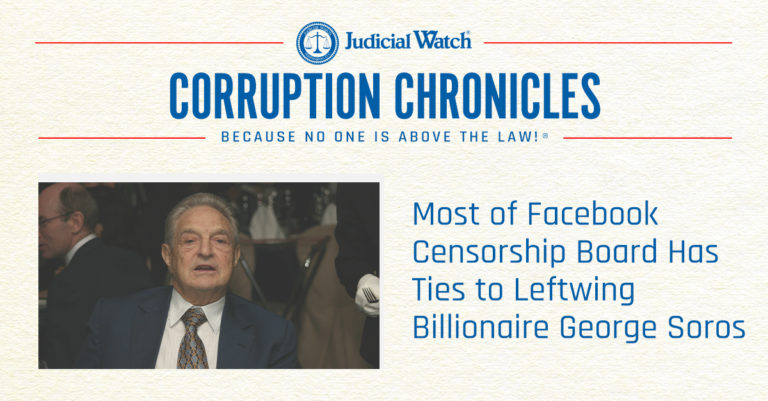
Most of Facebook Censorship Board Has Ties to Leftwing Billionaire George Soros | Judicial Watch

judicialwatch_fb_corruptionchronicles-georgesoros-q2_1200x627_v1-768x401The recently appointed Facebook oversight board that will decide which posts get blocked from the world’s most popular social networking website is stacked with leftists, including a close friend of leftwing billionaire George Soros who served on the board of directors of his Open Society Foundations (OSF). Judicial Watch conducted a deep dive into the new panel that will make content rulings for the technology company that was slammed last year with a $5 billion fine for privacy violations. The information uncovered by Judicial Watch shows that the group of 20 is overwhelmingly leftist and likely to restrict conservative views. More than half of the members have ties to Soros, the philanthropist who dedicates huge sums to spreading a radical left agenda that includes targeting conservative politicians. Other Facebook oversight board members have publicly expressed their disdain for President Donald Trump or made political contributions to top Democrats such as Barack Obama, Hillary Clinton and Elizabeth Warren. As one New York newspaper editorial determined this month, the new Facebook board is a “recipe for left-wing censorship.”

Among the standouts is András Sajó, the founding Dean of Legal Studies at Soros’ Central European University. Sajó was a judge at the European Court of Human Rights (ECHR) for nearly a decade. He also served on the board of directors of OSF’s Justice Initiative. Sajó was one of the ECHR judges in an Italian case (Latusi v. Italy) that ruled unanimously that the display of a crucifix in public schools in Italy violates the European Convention on Human Rights. The decision was subsequently overturned. Sajó’s deep ties to Soros are also concerning. Through his OSF Soros funds a multitude of projects worldwide aimed at spreading a leftist agenda by, among other things, destabilizing legitimate governments, erasing national borders and identities, financing civil unrest and orchestrating refugee crises for political gain.  Incredibly, there is a financial and staffing nexus between the U.S. government and Soros’ OSF. Read about it in a Judicial Watch special report documenting how Soros advances his leftist agenda at U.S. taxpayer expense.

At least 10 other members of the Facebook oversight board are connected to leftist groups tied to Soros that have benefitted from his generous donations, according to Judicial Watch’s research. Alan Rusbridger, a former British newspaper editor and principal at Oxford University, serves on the board of directors of the Committee to Protect Journalists, which received $750,000 from OSF in 2018. Rusbridger also served as a governor at a global thinktank, Ditchley Foundation, that co-hosted a conference with OSF on change in the Middle East and North Africa as well as understanding political Islam. Afia Asantewaa Sariyev, a human rights attorney, is the program manager at Soros’ Open Society Initiative for West Africa. Her research includes critical race feminism and socio-economic rights of the poor. Sudhir Krishnaswamy, an Indian lawyer and civil society activist, runs a progressive nonprofit called Centre for Law and Policy Research that focuses on transgender rights, gender equality and public health. The group is a grantee of a justice foundation that received $1.4 million from OSF between 2016 and 2018. Krishnaswamy’s Centre also received money from a radical pro-abortion group, Center for Reproductive Rights, generously funded by the OSF.

The list of Facebook judges connected to Soros and the organized left continues. Julie Owono is the executive director of a Paris-based nonprofit, Internet Sans Frontieres, that advocates for privacy and freedom of expression online. In 2018, Internet Sans Frontieres became a member of the Global Network Initiative, an internet oversight and policy consortium handsomely funded by Soros. Nighat Dad is a Pakistani attorney and the founder of the Digital Rights Foundation, a nonprofit organization based in Pakistan that has received $114,000 in grants from OSF. Dad’s group also gets funding from Facebook Ireland. Ronaldo Lemos, a Brazilian law professor, served on the board of directors of the Mozilla Foundation, which collected $350,000 from OSF in 2016 and was also a board member at another group, Access Now, that also got thousands of dollars from Soros. Tawakkol Karman, a journalist and civil rights activist, sits on the advisory board of Transparency International, which gets significant funding from Soros’ OSF.

Rounding out the Soros-affiliated field on the new Facebook censorship board are Helle Thorning-Schmidt, Catalina Botero-Marino and Maina Kiai. Thorning-Schmidt, Denmark’s former prime minister, sits on the board of the European Council of Foreign Relations, which took in more $3.6 million from OSF in 2016 and 2017. She is also a trustee at the International Crisis Group which has collected over $8.2 million from OSF and includes George and Alexander Soros on its board. The former Danish prime minister is also a member of the Atlantic Council’s International Advisory Board, which received approximately $325,000 from OSF in the last few years and the European Advisory Board of the Center for Global Development, which got north of half a million dollars from OSF in 2018. Botero-Marino is the dean of a Colombian law school called Universidad de Los Andes that obtained more than $1.3 million from OSF between 2016 and 2018, the records obtained by Judicial Watch show. Botero-Marino also sits on the panel of experts at Columbia University’s Global Freedom Expression Project, which gets funding from OSF, and she was a board member at Article 19, a group that got about $1.7 million from OSF between 2016 and 2018. Kiai is the director of the Global Alliances and Partnerships at Human Rights Watch, which accepted $275,000 from OSF in 2018. He is also a member of OSF’s Human Rights Initiative advisory board and was the founding executive director of the Kenya Human Rights Commission, which got $615,000 from Soros in the last two years.

Others on the Facebook board have slandered President Trump in social media posts and donated money to high-profile Democrats. Taiwanese communications professor Katherine Chen’s Twitter account includes retweets of numerous anti-Trump and pro-Obama posts and articles. Nicolas Suzor, a law professor in Australia, retweeted a column implicitly comparing Trump to Hitler and Columbia University law professor Jamal Greene has made campaign contributions to Obama, Hillary Clinton and Warren. Pro-Trump impeachment Stanford law professor Pamela Karlan, who took a cheap shot at President Trump’s teenage son during the Brett Kavanaugh impeachment hearings, has also contributed money to Obama, Hillary Clinton and Warren. The new board has only a few token conservatives such as Stanford law professor Michael McConnell, a senior fellow at the Hoover Institution. The overwhelming majority of those making Facebook’s “final and binding decisions on whether specific content should be allowed or removed,” are leftists. They represent a new model of content moderation that will uphold “freedom of expression within the framework of international norms of human rights.” Facebook’s economic, political or reputational interests will not interfere in the process, the company writes in its introduction to the new board. Eventually the board, which will begin hearing cases later this year, will double in size. “The cases we choose to hear may be contentious, and we will not please everyone with our decisions,” Facebook warns.

Source: Judicial Watch

Some Thoughts on Thinking Critically in Times of Uncertainty and the Trap of Lopsided Skepticism | Denise Minger

twitter_these_daysBy Denise Minger

Long time no blog, fam!

So, I had this hope that the next thing I posted here would be a grand explanation about my extended absence, all the weird stuff that’s happened over the past few years, my loss of faith in nutrition as a front-line approach to healing, and various other sundries I’ve been storing up in my brain-attic.

But then COVID-19 happened, and if that isn’t the biggest cosmic plan-changer that ever did plan-change, then I don’t know what is. So we’re gonna roll with it. And at the risk of writing something that’ll already be outdated by the time I hit publish (such is the nature of current events), I’m hoping this post will stay evergreen (or at least ever-chartreuse) by sheer virtue of its universal core theme: navigating conflicting, emotionally charged narratives in which objectivity behooves us but doesn’t come easy.

So LET US BEGIN.

In case you didn’t notice, the cyber-world (and its 3D counterpart, I assume, but we’re not allowed to venture there anymore) is currently a hot mess of Who and what do we believe? This is zero percent surprising. Official agencies have handled COVID-19 with the all grace of a three-legged elephant—waffling between the virus being under control/not under control/OMG millions dead/wait no 60,000/let’s pack the churches on Easter!/naw, lockdown-til-August/face masks do nothing/face masks do something, but healthcare workers need them more/FACE MASKS FOR EVERY FACE RIGHT NOW PLEASE AND THANK YOU/oh no a tiger got the ‘rona!; on and on. It’s dizzying. Maddening. The opposite of confidence-instilling. And as a very predictable result, guerrilla journalism has grown to fill the void left by those who’ve failed to tell us, with any believability, what’s going on.

Exercising our investigative rights is usually a good thing. You guys know me. I’m all about questioning established narratives and digging into the forces that crafted them. It’s literally my life. Good things happen when we flex our thinking muscle, and nothing we’re told should be immune to scrutiny.

But there’s a shadow side here, too—what I’ll henceforth refer to as “lopsided skepticism.” This is what happens when we question established narratives… but not the non-established ones. More specifically, when we go so hog wild ripping apart The Official Story that we somehow have no skepticism left over for all the new stuff we’re replacing it with.

And that, my friends, is exactly what’s happening right now.

I’ve been watching homegrown theories about COVID-19 spiral through various social platforms, born from a mix of data (sometimes) and theory (usually) and anecdote (always). They’re generally a pushback against the mainstream narrative about the coronavirus’s timeline, severity, concern-worthiness, fatality rate, treatment, infection breadth, classification guidelines, origin… round and round we go. Some theories are reasonable (“Has the virus been here longer than we think?”), some are untenable (“The ‘virus’ is actually radiation poisoning from 5G towers!”), and many more lie somewhere between.

Most importantly, they all have one thing in common: a tendency to embrace any and all supportive data without, well, making sure it’s true. 

Y’all know what I’m talking about. Evidence we’d never give the time of day if it didn’t work in our favor. The “I remember reading somewhere…”, the “I have a friend who knows someone who…”, YouTube interviews that are impossible to fact-check (but please just trust this person’s top-secret info from an organization they can’t name without the Feds beating down their door), crowdsourced anecdotes, retracted papers, retweeted screenshots of Facebook comments from people whose names and profile pictures are blacked out, the whole shebang.

This stuff. Is. EVERYWHERE.

Unfortunately, throwing a bunch of really bad evidence together can create the illusion of a well-supported theory. And this is what’s happening, my dudes. This is what it’s come to. In our rabid quest to undermine the Powers That Be and figure out what’s really going on, we’ve thrown quality control out the window and become that which we loathe: loyalists to narrative over data.

resurcher

Case in point, let’s look at what might be the most popular COVID-19 theory circulating right now: that mortality stats are getting padded by assigning deaths to COVID-19 that are really from other causes—thereby making this whole thing seem worse than it actually is. Depending on the sub-theory, this might be due to financial incentives for hospitals (more COVID-19 patients = more $$$); a coordinated government hoax to trick people into relinquishing their sovereignty; a way to butter us up for mass ID microchipping; something something lizard people; and so on.

And from what I’ve seen—and by all means correct me if I’m missing something—this theory draws on the following claims:

  1. The CDC has literally issued guidelines telling doctors and medical examiners to classify deaths as COVID-19 if they “presume” the patient has it—no test results needed.
  2. CDC data shows a precipitous drop in pneumonia deaths right around the same time COVID-19 became a thing—suggesting pneumonia deaths have been getting reclassified as COVID-19 deaths, and creating the illusion of a pandemic.
  3. People who die with coronavirus, but not from coronavirus, are getting counted as COVID-19 deaths—again inflating the body count.
  4. Despite COVID-19 mortality skyrocketing, total mortality is staying the same (or even dropping)—suggesting a “cause of death” shuffle, if you will, and betraying the idea that we’re seeing additional deaths from a new disease. (Alternatively: “Only people with preexisting medical conditions are dying and they were gonna keel over any minute anyhow.”)

This theory would be pretty awful if it’s true. We’d have been got. Duped. Manipulated AF. But how solid is the evidence? Have we actually peeled this thing apart piece by piece before getting all ragey about the injustice of it all?

Oh, we haven’t? Well GUESS WHAT WE’RE GOING TO DO NOW?

Let the unpeeling commence.


Claim #1

1. First, the whole “CDC is telling people to report COVID-19 deaths without testing!” ordeal. The damning bits come from the CDC’s COVID-19 reporting guide (PDF), which gives permission to use COVID-19 on a death certificate if it’s “suspected or likely” and “‘probable’ or ‘presumed’”:

cdc_covid_reporting_guide

And also says it’s okay to report COVID-19 without testing confirmation:

okay_no_test

And the WHO’s “Emergency use ICD codes for COVID-19 disease outbreak” gives a whole death code for COVID-19 cases that aren’t confirmed via test:

who_emergency_coding

And finally, this National Vital Statistics System document says COVID-19 can be put on a death certificate when it’s “assumed” to have caused death:

nvss_alert

The point of contention here, which has sparked something of an outrage in important places such as Twitter, is that these guidelines allow a level of guesswork that could mess things up real bad. Especially if there’s already some sort of incentive to bend data in the direction of more coronavirus deaths. What if people assign COVID-19 willy nilly to anyone who has a cough or fever? Or who had a poorly-timed bout of allergies? Where does the line get drawn? For sure, “probable,” “presumed,” “suspected,” and “likely” aren’t very reassuring words when it comes to a disease we’ve shut down the whole globe to contain.

But is this actually conspiracy worthy? And, in a clinical setting, with actual doctors doing doctor things rather than us internet-dwelling oafs imagining how it all might go, would these guidelines really lead to a significant over-reporting of COVID-19 deaths?

For starters, let’s look more closely at that CDC reporting guide. Although it does say COVID-19 deaths can be assigned without a positive test result, it also emphasizes the importance of drawing from all available evidence in order to make an informed judgment:

cause_of_death_reporting_covid-19

And it turns out, this is really no sketchier than the CDC’s guidelines for certifying pretty much any cause of death. Seriously. According to the agency’s Medical Examiners’ and Coroners’ Handbook on Death Registration and Fetal Death Reporting (PDF), it’s okay to use personal “judgment” when there’s uncertainty:

medical_examiners_handbook_1

And yes, medical examiners and coroners are invited to give their “opinion”:

medical_examiners_handbook_3

So are physicians, according to the CDC’s Physician’s Handbook on Medical Certification of Death—note also the use of “probable”:

physicians_medical_opinion

And medical examiners are broadly allowed to list “causes that are suspected,” and to “use words such as ‘probable’ or ‘presumed’”—again, for any death-cause:

probable_presumed_any_death

And here we see the CDC’s Instructions for Completing the Cause-of-Death Section of the Death Certificate telling us again that a condition can be listed as “probable” even if there isn’t a definitive diagnosis (and also the words YOUR and OPINION written in CAPS because the CDC successfully learned how to yell on the internet; good job, CDC):

probable_shmobbable

*I know it’s tiny; click for bigger

Are you sick of this yet? Guess what? Alzheimer’s deaths can get the same code whether the disease is confirmed or “probable”:

alzheimers

Oh hey, remember 83 seconds ago when we were so mad that COVID-19 deaths could be listed as “probable” or “presumed”? Because it seemed like some unique-to-coronavirus word twist intended to help pad the death stats? REMEMBER?

probable_presumed_covid_omg

No. Just no. This same language is consistent through all the cause of death guidelines, no matter the killer in question. It’s been that way for years. And COVID-19 is even lucky enough to get separate codes for “probable” versus “confirmed” cases, which is more than we can say for some other diseases. (And to boot, some places were already seeing COVID-19 mortality explode before reporting the “probable” deaths at all.) Heck, the guidelines for coronavirus deaths are far more straightforward than the maze-like estimation formula the CDC takes for flu mortality.

In short—and please make me eat my words if I’ve overlooked something important here—this really isn’t outrage-worthy. Certifying any form of death is an imperfect, partly subjective process, and concessions for that reality are baked into all sorts of official guidelines. If overzealous COVIDing is happening (and you’re welcome to investigate any theory-offshoots that it is), it’s not because the CDC told death certifiers to cook the books.


Claim #2

2. As for pneumonia deaths getting classified as COVID-19 deaths? This graph of CDC data has been making the rounds as evidence that something very shady, very shady indeed, is going on. As you can see, around week 10 of this year (starting March 2nd), pneumonia mortality told its wife it loved her and then jumped off a cliff:

pneumonia_drop

If we’re already primed to think the COVID-19 numbers are being doctored, we might take this graph at face value and add it to our stash of outrage fodder. But that would not be smart, friends. Face value is where critical thinking goes to die. And so, in the spirit of questioning literally everything, we must ask: could anything else explain what we’re seeing?

As a matter of fact, yes! So much yes! We only have to venture as far as the CDC’s Provisional Death Counts for Coronavirus Disease (COVID-19) page to see what’s up. Go take a look. Especially the “Delays in reporting” section. Thar be some gold.

Basically, the CDC’s death-certificate-processing system is a slow, laborious beast that ensures any recent mortality data is always incomplete. They give a decent rundown of how death certificates get handled from start to finish:

Provisional counts of deaths are underestimated relative to final counts. This is due to the many steps involved in reporting death certificate data. When a death occurs, a certifier (e.g. physician, medical examiner or coroner) will complete the death certificate with the underlying cause of death and any contributing causes of death. In some cases, laboratory tests or autopsy results may be required to determine the cause of death. Completed death certificate are sent to the state vital records office and then to NCHS for cause of death coding.

And here we have a special shoutout to our favorite infectious diseases, noting that pneumonia, flu, and COVID-19 certificates take extra long to trickle into the data pool due to manual coding (emphases mine):

At NCHS, about 80% of deaths are automatically processed and coded within seconds, but 20% of deaths need to manually coded, or coded by a person. Deaths involving certain conditions such as influenza and pneumonia are more likely to require manual codingthan other causes of death. Furthermore, all deaths with COVID-19 are manually coded. Death certificates are typically manually coded within 7 days of receipt, although the coding delay can grow if there is a large increase in the number of deaths. As a result, underestimation of the number of deaths may be greater for certain causes of death than others.

Zooming in even further, the CDC gives some stats conveying just how incomplete their recent data is, and boy howdy is it a sorry sight. At any given moment, data from two weeks ago is likely to be barely over a quarter completewhile data from eight weeks ago is still less than three-quarters complete:

Previous analyses of provisional data completeness from 2015 suggested that mortality data is approximately 27% complete within 2 weeks, 54% complete within 4 weeks, and at least 75% complete within 8 weeks of when the death occurred. Pneumonia deaths are 26% complete within 2 weeks, 52% complete within 4 weeks, and 72% complete within 8 weeks (unpublished). Data timeliness has improved in recent years, and current timeliness is likely higher than published rates.

The CDC even slaps this little disclaimer after each table of COVID-19, pneumonia, and flu death counts:

cdc_lag_time_8_weeks

Once again, with feeling: CDC mortality figures are initially very incomplete, low-balled-as-all-get-out, and retroactively fill in over time. Which means a weird pneumonia death-drop will show up any time we check the most recent data, COVID or No-vid.

To illustrate, Joseph Dunn graphed the CDC’s pneumonia data as it appeared on the same mid-March week of each year since 2013. Behold:

pneumonia_week_12_all_years

Look at all them swan dives!

And data scientist Tyler Morgan even went to the trouble of graphing the data from every weekly CDC pneumonia report published in the last decade, to show how the lines shift as data gets back-filled. Click here or on the image below for the really cool animation (it’s weirdly beautiful and absolutely worth the 30 seconds of your life):

tyler_morgan_animated_graph

In other words, there’s nothing anomalous at all about 2020’s pneumonia trends. Nothing. The popular graph up top is a meaningless piece of hooey and it’s sad that it went viral.

Note: there’s an issue here I’m cognizant of, but intentionally not touching on yet, which is that some people believe the CDC (and any other government organization) literally makes up data from thin air, thus rendering all of the above irrelevant. This level of conspiracy is beyond the scope of this post, but I may try to address it at some point later on. Not from a data angle, but from a psychological one.


Claim #3

3. Here we have the wildly popular claim that people are dying with COVID-19, not really from COVID-19. At least, not in the numbers we’re being told. It’s basically a steroided-up version of Claim #1—just with more trickery and plot-thickness and finger-tenting.

candace_owens_tweet

The evidence for this one is a lot harder to fact-check, because there are actually no facts to check. Its trueness rests on us believing that doctors and death-certifiers are being marionetted by evil forces and/or just plumb don’t know what they’re doing.

The closest thing we’ve got to “evidence” are citationless social media statements like the above, which we’re expected to trust because LOOK AT ALL THOSE RETWEETS!, a few well-publicized examples of allegedly mis-assigned COVID-19 deaths, and Youtube interviews with people who are pretty sure they know what’s going on. Like this one, featuring Dr. Annie Bukacek, with nearly 750,000 views at the time of writing.

Apparently, she knows her stuff. And the stuff she knows is that the coronavirus figures are being manipulated!

distinguished_and_cherished_physician

Hmmm…

highly_distinguished_omg

Hmmmmmm…

annie_google_reviews

annie_yelp_review

annie_healthgrade_reviews

Hmmmmmmmmm.

Serious question: how many of us bothered to look Dr. Bukacek up before thrusting her atop a pedestal of trustworthiness? And sharing her video far across the lands? And assuming she’s an impartial commentator on the whole situation (her praiseful introducer was literally her pastor)? Should we really put faith in someone we didn’t even know existed ten seconds ago just because 1) they’re telling us what we want to hear and 2) an internet headline made them sound prestigious?

By the way, to state the obvious, this is me intentionally and very shamelessly cherry-picking to make a point. Not all of her reviews are bad. Nor do the existing ones necessarily prove she isn’t credible. And if we wanted to be truly fair, we could prod deeper and ask whether she might be getting bad-review-bombed due to her vocal pro-life activism or religious affiliation or anti-vaccine stance (she’s definitely got some haterz). There’s a lot of sticky tricky gray-zone business in evaluating reputation, which is why—whenever possible—we should investigate a person’s claims rather than their character.

But the issue here is that with Dr. Bukacek, we can’t “investigate her claims” without installing cameras into every death certifier’s brain and watching what unfolds within their basal ganglias. So we’re left with only her word. And one person’s word is not useful data. Even if it’s the best of persons and the best of words.

Now, to play devil’s advocate with my own arguments here, there’s another popular video—this one featuring Coronavirus Response Coordinator Deborah Birx—that seems more genuinely suspect. I saved this one for last because it might actually have some merit. In it, Dr. Birx talks about the USA’s “very liberal approach to mortality” and outright states that people who die with COVID-19 are counted as COVID-19 deaths:

Transcript: There are other countries that if you had a preexisting condition, and let’s say the virus caused you to go to the ICU and then have a heart or kidney problem, some countries are recording that as a heart issue or a kidney issue and not a COVID-19 death. Right now we’re still recording it and we’ll—I mean the great thing about having forms that come in and a form that has the ability to mark it as COVID-19 infection, the intent is right now that those—if someone dies with COVID-19 we are counting that [as a COVID-19 death].

It’s not surprising this clip went gangbusters! It seems like a deal-clinching A-ha for anyone who suspected COVID-19 was getting slapped onto every death possible.

However, here and always, context matters. After all, this segment was carefully cropped from a much longer coronavirus briefing from April 7th. And if we listen to the full segment—the audience question that came before this clip, and the follow-up question that came after it, and the follow-up answer Dr. Birx gave, and the addendum answer Dr. Anthony Fauci gave—we can better orient ourselves in the conversation that was happening.

Go have a listen. The relevant stuff starts at the 1:39:07 mark:

Could it be that Dr. Birx thought the question-asker was wondering if lack of testing might cause under-reporting, and tried to reassure her by explaining that the current COVID hotspots are flush with tests? And that people with “heart or kidney problems” wouldn’t be reported as dying from those things if they’d ended up in the ICU from coronavirus? (Especially given that COVID-19 itself can cause cardiac injury and kidney damage?)

It sounds to me like the thrust of the asker’s question—which was more along the lines of “Are we sure we’re not over-counting deaths?!”—went over the heads of the task force, and they addressed a different issue than the one she was trying to get at.

But I can’t read minds. And I can’t prove that it’s not all just political doublespeak and of course they understood the question. And I think there’s far too little information in this video alone to assess it from a “scam vs. not-scam” angle. And most importantly, in the absence of actual mortality data that could clue us in to potential over-reporting, I doubt analyzing this thing to smithereens can bring us any closer to the truth.

But, you be the judge. And speaking of mortality data…


Claim #4

4. Lastly and not leastly: the claim that COVID-19 isn’t actually causing excess mortality; we’re just reshuffling death causes to stack up higher for COVID-19 and lower for everything else. Boom, insta-pandemic!

First, a note. This is a Very Important claim. It’s the supreme ruler of all the claims that came before it and perhaps all those incipient ones that will come after. It has executive power and a VIP card for entry into the most highly guarded chambers of our brains. This is because, unlike causes of death, actual body counts can’t be fudged. This is the one true test. If COVID-19 really is taking lives en masse above and beyond what we’d expect from normal death trends, total mortality is where it’ll show up. If it’s not, then our game of death-code musical chairs will be revealed for the con that it is.

Again: Very Important claim. This is the crux of it, my dear readers.

Fortunately, there’s an easy way to test this claim: looking at total mortality trends in areas that COVID-19 has purportedly ravaged, and comparing that to historical mortality in the same location. An absence of anomalous death spikes—taking into account, of course, delays in processing death certificates and the lag time between infection and dying—would suggest we’re over-reporting COVID-19. And if excess mortality does appear, then we either have to concede that COVID-19 isn’t a nothingburger after all, or propose that some other ghastly, unnamed entity is stealing lives very coincidentally at the same time we have a made-up pandemic.

*Keep in mind, too, that our current near-global quarantine should slash deaths from accidents and certain crimes and infectious disease—and thus “normal” mortality rates for right now would likely be lower than for previous years.

So let’s dig into this. The “COVID-19 is overblown” theory asserts that total mortality isn’t doing anything unusual. At least not significantly so. No more than a bad flu year, let’s say. And depending on the source, we may be furnished with graphs that seem to demonstrate this truth to our hungry, data-seeking eyes, such as the following for England and Wales:

no_excess_england_wales

old_mortality_england_wales

There’s one very big problem here. Check the dates.

Almost universally, the “See, it’s nothing!” graphs use data from mid to late March, when COVID-19 was just starting to pick up steam in the areas it’s most recently terrorized. And in March, there really weren’t massive mortality spikes, except perhaps for Italy. Nothing to see here, folks was true. And no one in the infectious disease world was claiming otherwise. In March, the rumblings of upcoming mortality explosions was what people were getting worried about, not the numbers as they then stood. The whole deal with “exponential growth” is that it’s—wait for it—exponential. This is how we went from 0 reported COVID-19 deaths in the USA on February 15th, 65 deaths one month later, and 30,000 deaths yet another month later.

So let’s see what happens when we look, instead, at more recent data from countries with known COVID-19 outbreaks. (This site is a great starting resource for raw mortality data and some visuals.)

First, here’s what’s up with England and Wales now (source):

excess_mortality_england_wales

And another depiction suggesting COVID-19 deaths may be under-reported (data source and image source):

excess_mortality_england_wales_2

London, OMG (source):

REPORT THIS AD

excess_mortality_london

Excess mortality in Spain as a whole, from December 2019 to April 15 of this year (source):

excess_mortality_spain

Madrid, in particular, got clobbered:

excess_mortality_madrid

And Bergamo, Italy, in which March deaths far surpassed anything seen locally within the past decade (source):

bergamo_italy_mortality

Heck, northern Italy as a whole (source):

excess_mortality_northern_italy

Switzerland looking pretty wonky for the 65-and-olders (source):

excess_mortality_switzerland

Total mortality in the Netherlands (source):

excess_mortality_netherlands

A big chunk o’ Europe getting excess-mortalitied (source):

euromomo_map_2020-14

New York City, graphed by the New York Times (article here; viewable with free subscription) (NOTE: this data is almost two weeks outdated and the the April deaths are now many magnitudes higher):

NYC_death_spike_april_4

We could do this all day, but you get the point.

Here’s the deal, folks. People. Are. Dying. The mortality trends for COVID-19-affected areas look like what happens when you’re trying to draw a straight line and then sneeze. This is not normal. This is not how things “should” look. We can argue all we want about how accurate the COVID-19-specific data is—and indeed, there’s plenty to argue about— but total mortality doesn’t lie. This is real.


Final Thoughts

By all means, the above peel-apart is far from complete. I’m sure there are more viral videos we could assess, more statistics to double-check, more anomalies to ponder. The point isn’t to reach a final conclusion here—just to demonstrate the process. The level of detail that must go into investigating a theory before we let ourselves fully entertain it. And if that process seems exhausting, excessive, excruciatingly nit-picky, too time consuming—well, it’s the price of admission for calling ourselves “informed.” Anything less and we’re operating on faith. Which is okay, if that’s our goal. But we must call it what it is.

Now maybe you’re thinking, “Okay, the ‘COVID-19 deaths are getting padded’ theory didn’t really hold up. But what about G5 radiation causing virus symptoms? What about mandatory vaccine agendas getting pushed on the world? What about COVID-19 being a bioweapon? What about what about what about?”

To which I say, Yes! Great! What about them indeed! Put on your best-tailored thinking cap and go find out. Marinate in all the data you can find. Watch out for claims that seem sciencey but trace back to a 4chan post. Be mindful of the universal human tendency to filter out things we disagree with and embrace any evidence that we like. Dig in, first and foremost, with the goal of proving yourself wrong. If you can’t, then perhaps there’s something there.

Of course, I realize the type of deep-dive we did in this post isn’t always possible, and not everyone can sit at home all day opening so many browser tabs that their MacBook freezes with a “System Has Run Run Out of Application Memory” error (anyone else? No? Just me?). Sometimes we need shortcuts. So for anyone who really wants to do the work, to prioritize truth-seeking over ideology, to stay oriented in reality, to let go of false narratives, but who doesn’t have infinite time to do so: here are some questions to ask whenever a new or alternative theory presents itself. Especially a theory we find ourselves enamored with. None of these questions can substitute for ruthlessly investigating, but they can help us stay grounded in situations where our minds easily lead us astray.

  • Am I claiming to see through the media’s fear-mongering, but falling prey to conspiracy fear-mongering instead?
  • Am I being pressured to accept this theory in order to be “woke” or “not sheeple”?
  • Have I read the full context of this quote, clip, or screenshot before assuming I know what it means?
  • Does the group promoting this theory invite questions and critiques? Or does it flippantly dismiss those things and/or attack its doubters?
  • If this same form of evidence (Youtube interview, social media comment, etc.) was used to support the “other side” instead of mine, would I still consider it trustworthy?
  • Am I taking time to research counter-arguments to these ideas, even when I want them to be true?
  • Am I looking for good vs. evil narratives as a distraction from my immediate reality? Is getting worked up about hypothetical injustice easier than being present with what is?
  • Am I embracing this theory as a way to feel like I have control—by naming an enemy in a situation where I’m otherwise helpless?
  • Does seeing myself as a “good guy” on the side of “truth” or “justice” make me feel validated, empowered, and important?

It’s easy to trick ourselves into thinking we’re being Good Skeptics when we’ve really only lifted one veil of many. There’s nothing “woke” about rejecting the official story while gullibly swallowing its alternatives.

Rather, waking up means waking up to ourselves. It’s recognizing that the battle of good and evil we project onto the world is playing out daily within ourselves. It’s committing to seeing “what is,” instead of stories about “what is.” It’s spreading our skepticism evenly across the info-scape instead of saving it for the things we already distrust.

So here it is, you guys. This is me groveling at the collective feet of the internet, with one thing to say: to anyone—everyone—listening, we need to reflect on how we’re processing the claims we hear. If we’re going to question official narratives, we need to question alternative narratives with the same degree of rigor. There’s no use retiring our sheeplehood from the mainstream only to rejoin the herd on a different pasture.

Source: Denise Minger

Facebook Censoring Former U.S. Congressman Ron Paul Based on Bogus Politifact ‘Fact-Check’ | Ron Paul Institute

FalseinformationfoundonJohnnyLibertySocial media behemoth Facebook has just acted to censor and suppress Ron Paul’s latest weekly column, “The Coronavirus Hoax,” based on a hatchet job “fact check” by the notoriously biased “Politifact” organization.

At issue is Dr. Paul’s statement that National Institute of Allergy and Infectious Diseases director Anthony Fauci’s claim that the coronavirus is “ten times more deadly” than the seasonal influenza virus is “without any scientific basis.” Fauci made the claim recently in testimony before the US Congress in a move that significantly ramped up the fear factor in the US over the virus.

The Politifact “fact check” is literally drenched in sarcasm and bias, with Ron Paul being described as “a sometimes conspiracy-minded Texas doctor” and Fauci described as a “universally trusted person.”

For a “just the facts” analysis, that’s a lot of editorializing.

The Politifact hit piece admits that, “It’s not yet known what the death rate from the current coronavirus, COVID-19, will be,” but concludes nevertheless that, “early data indicate it is more than 10 times higher than the death rate for the flu.”

So if you don’t know how can you know?

One reason to question the “scientific basis” of Fauci’s claim is that Fauci contradicted his own statement before Congress in a recent article he co-authored in the New England Journal of Medicine.

If a scientist writes one thing in a scholarly journal and testifies very differently before Congress, does it not raise questions as to the “scientific basis” of the divergent claims?

Here are the two Anthony Faucis. Which one is scientifically based? Both can’t be:

fa

Founded by the Poynter Institute, Politifact is an outfit with a clear political agenda and it is not to promote truth and accuracy in the media. Rather, it is all about suppressing media outlets with which they disagree. It is all about creating blacklists in a McCarthyite push to control the flow of information.

Interestingly enough, major funders of the Poynter Institute include “open society” advocate George Soros along with Charles Koch (both founders and major funders of the “Quincy Institute“).

Soros loves an “open society” as long as it does not in any way challenge his own political biases. If anyone holds different views, he’ll spend millions to shut down debate.

The Poynter Institute is also funded by the United States government itself, via major grants from the National Endowment for Democracy. So here is what happens when you scratch below the surface a bit: The suppression of views like those of Ron Paul which are unpopular among those who control the foreign policy narrative are actually financed by the US government itself.

Do any of our dear readers support the US government taking our tax money and using it to shut Ron Paul up?

How is it that Facebook tries to sell itself as politically neutral, just making sure only facts are allowed through, while at the same time partnering with such a politically biased and unethical organization as Politifact and the Poynter Institute? Is Facebook really about fostering a lively debate or is it about controlling the narrative favored by the Washington elites?

We have fact-checked Politifact’s fact checkers and we find them to be biased, sloppy, and inimical to the values we should share as Americans in favor of open debate.

And Facebook? End your suppression of Dr. Ron Paul’s op-ed on the coronavirus!

Source: Ron Paul Institute

The Weaponization of Social Media | Counterpunch

troll-network_BF9747ECB468482488ECFF9A003635D6By Faisal Khan

The use of ‘bots’ present modern society with a significant dilemma; The technologies and social media platforms (such as Twitter and Facebook) that once promised to enhance democracy are now increasingly being used to undermine it. Writers Peter W Singer and Emerson Brooking believe ‘the rise of social media and the Internet has become a modern-day battlefield where information itself is weaponised’. To them ‘the online world is now just as indispensable to governments, militaries, activists, and spies at it is to advertisers and shoppers’. They argue this is a new form of warfare which they call ‘LikeWar’. The terrain of LikeWar is social media; ‘it’s platforms are not designed to reward morality or veracity but virality.’ The ‘system rewards clicks, interactions, engagement and immersion time…figure out how to make something go viral, and you can overwhelm even the truth itself.’

In its most simple form the word ‘bot’ is short for ‘robot’; beyond that, there is significant complexity. There are different types of bots. For example, there are ‘chatbots’ such as Siri and Amazon’s Alexa; they recognise human voice and speech and help us with our daily tasks and requests for information. There are search engine style ‘web bots’ and ‘spambots’. There are also ‘sockpuppets’ or ‘trolls’; these are often fake identities used to interact with ordinary users on social networks. There are ‘social bots’; these can assume a fabricated identity and can spread malicious links or advertisements. There are also ‘hybrid bots’ that combine automation with human input and are often referred to as ‘cyborgs’. Some bots are harmless; some more malicious, some can be both.

The country that is perhaps most advanced in this new form of warfare and political influence is Russia. According to Peter Singer and Emerson Brooking ‘Russian bots more than simply meddled in the 2016 U.S. presidential election…they used a mix of old-school information operations and new digital marketing techniques to spark real-world protests, steer multiple U.S. news cycles, and influence voters in one of the closest elections in modern history. Using solely online means, they infiltrated U.S. political communities so completely that flesh-and-blood American voters soon began to repeat scripts written in St. Petersburg and still think them their own’. Internationally, these ‘Russian information offensives have stirred anti-NATO sentiments in Germany by inventing atrocities out of thin air; laid the pretext for potential invasions of Estonia, Latvia, and Lithuania by fuelling the political antipathy of ethnic Russian minorities; and done the same for the very real invasion of Ukraine. And these are just the operations we know about.’
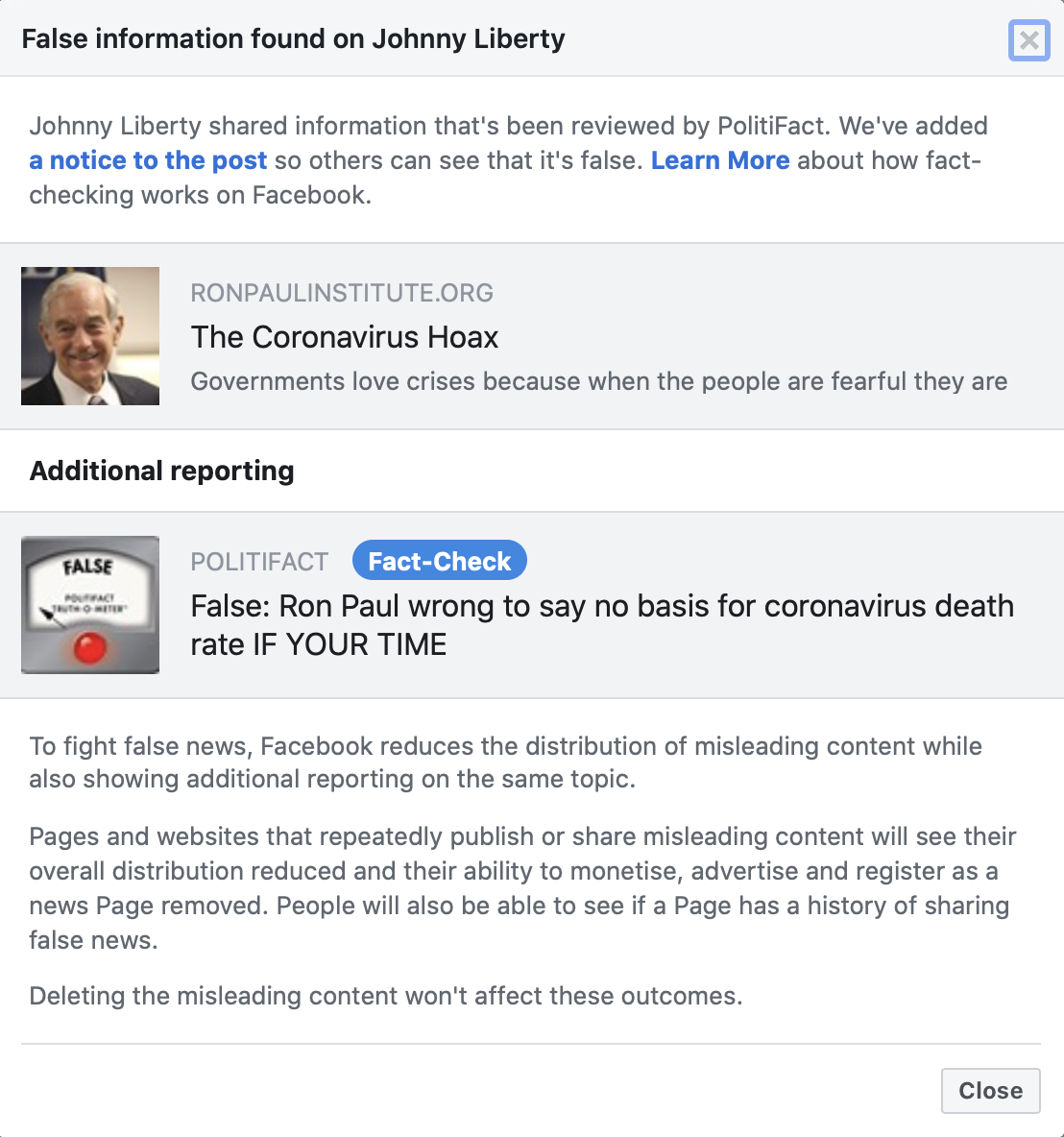
We witnessed similar influence operations here during the Brexit referendum in 2016. A study by the Financial Times reported that during the referendum campaign ‘the 20 most prolific accounts … displayed indications of high levels of automation’. The Anti-Muslim hate group TellMAMA recorded in its latest Annual report that manual bots based in St Petersburg were active in spreading Anti-Muslim hate online. Israel has also used manual ‘bots’ to promote a more positive image of itself online.

The Oxford Internet Institute (OII) has studied online political discussions relating to several countries on social media platforms such as Twitter and Facebook. It claims that in all the elections, political crises and national security-related discussions it examined, there was not one instance where social media opinion had not been manipulated by what they call ‘computational propaganda’. For them, while it remains difficult to quantify the impact bots have ‘computational propaganda’ is now one of the most ‘powerful tools against democracy’.

Donald Trump perhaps more than any other US President to date understands the power of social media. The OII found, for example, that although he alienated Latino voters on the campaign trail, he had some fake Latino twitter bots tweeting support for him. Emerson T Brooker informed me that social media bots can be highly-effective; for him ‘If a bot-driven conversation successfully enters the “Trending” charts of a service like Twitter, it can break into mainstream discussion and receive a great deal of attention from real flesh-and-blood users’. He continues ‘The first unequivocal use of political bots was in the 2010 Special Senate Election in Massachusetts, which ended in the election of Senator Scott Brown. The bots helped draw journalist (and donor) interest from across the country. The Islamic State was also a very effective user of botnets to spread its propaganda over Arabic-speaking Twitter. In 2014, it repeatedly drove hashtags related to its latest execution or battlefield victory (e.g. #AllEyesOnISIS) to international attention.’

So, what can be done to better regulate bots? The OII has called for social media platforms to act against bots and has suggested some steps. These include; making the posts they select for news feeds more ‘random’, so users don’t only see likeminded opinions. News feeds could be provided with a trustworthiness score; audits could be carried out of the algorithms they use to decide which posts to promote. However, the OII also cautions not to over-regulate the platforms to suppress political conversation altogether.  Marc Owen Jones of Exeter University who has researched bots feels that in the case of twitter better ‘verification procedures could tackle the bots’. According to Emerson Brooking ‘a simple non-invasive proposal bouncing around Congress now would mandate the labelling of bot accounts. This would allow bots positive automation functions to continue while keeping them from fooling everyday media users.’

Source: Counterpunch