This may be the most important speech I’ve ever made by Donald Trump re: election integrity | YouTube

Trump won by a landslide in all six battleground states – that’s why they had to spike the numbers in the middle of the night for Biden in all six states. This election fraud was a coordinated conspiracy of totally corrupt local and state election officials, Governors and Secretaries of State from both parties, Dominion paid by Chinese Communist Party to alter the results and numerous domestic enemies of the USA.

Source: YouTube

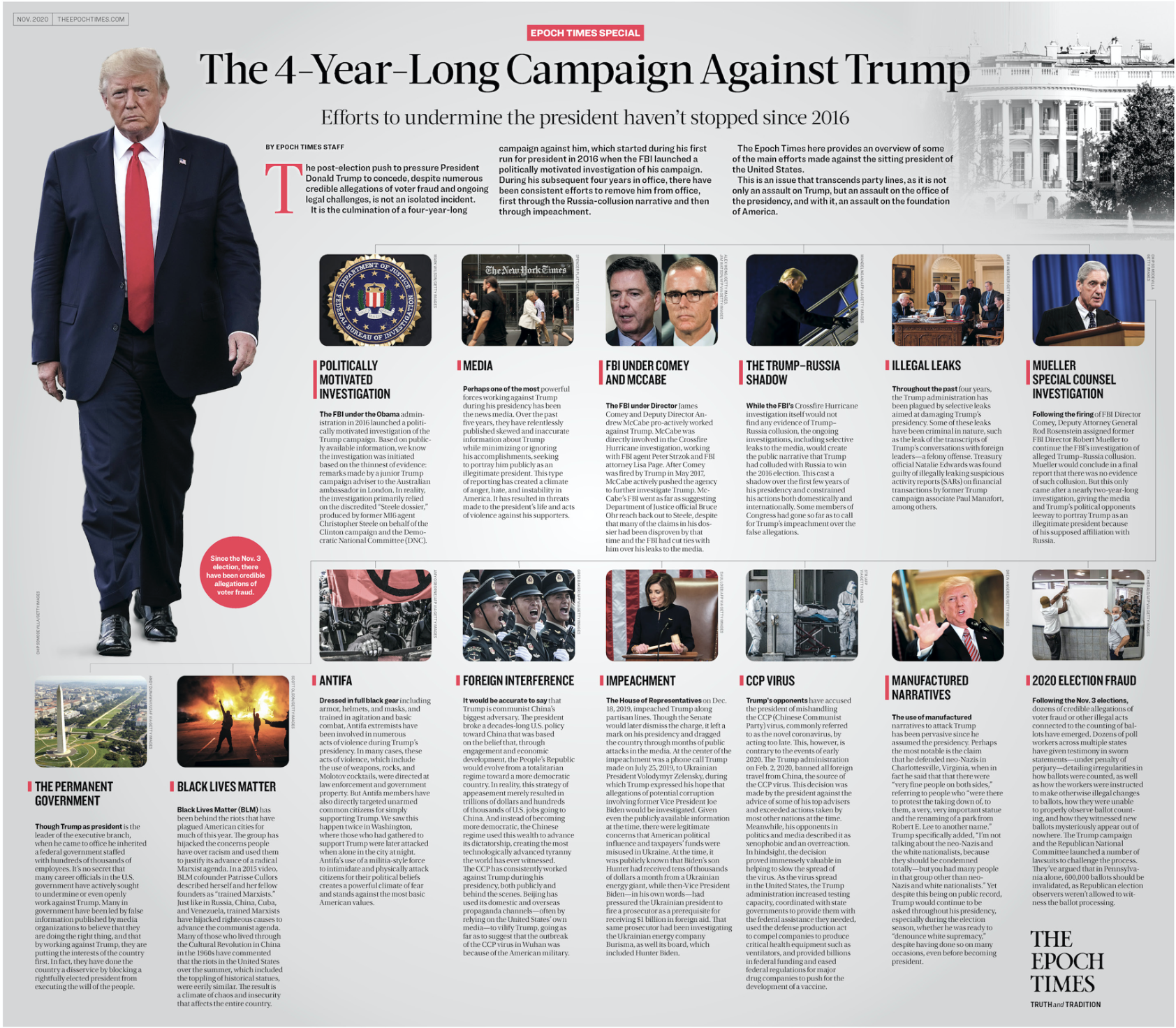
The 4-Year-Long Campaign Against Trump: Efforts to undermine the president haven’t stopped since 2016 | The Epoch Times

It is the culmination of a four-year-long campaign against him, which started during his first run for president in 2016 when the FBI launched a politically motivated investigation of his campaign. During his subsequent four years in office, there have been consistent efforts to remove him from office, first through the Russia-collusion narrative and then through impeachment.

The Epoch Times here provides an overview of some of the main efforts made against the sitting president of the United States.

This is an issue that transcends party lines, as it is not only an assault on Trump, but an assault on the office of the presidency, and with it, an assault on the foundation of America.

Politically Motivated Investigation

The FBI under the Obama administration in 2016 launched a politically motivated investigation of the Trump campaign. Based on publicly available information, we know the investigation was initiated based on the thinnest of evidence: remarks made by a junior Trump campaign adviser to the Australian ambassador in London. In reality, the investigation primarily relied on the discredited “Steele dossier,” produced by former MI6 agent Christopher Steele on behalf of the Clinton campaign and the Democratic National Committee (DNC).

The Trump–Russia Shadow

While the FBI’s Crossfire Hurricane investigation itself would not find any evidence of Trump–Russia collusion, the ongoing investigations, including selective leaks to the media, would create the public narrative that Trump had colluded with Russia to win the 2016 election. This cast a shadow over the first few years of his presidency and constrained his actions both domestically and internationally. Some members of Congress had gone so far as to call for Trump’s impeachment over the false allegations.

FBI Under Comey and McCabe

The FBI under Director James Comey and Deputy Director Andrew McCabe pro-actively worked against Trump. McCabe was directly involved in the Crossfire Hurricane investigation, working with FBI agent Peter Strzok and FBI attorney Lisa Page. After Comey was fired by Trump in May 2017, McCabe actively pushed the agency to further investigate Trump. McCabe’s FBI went as far as suggesting Department of Justice official Bruce Ohr reach back out to Steele, despite that many of the claims in his dossier had been disproven by that time and the FBI had cut ties with him over his leaks to the media.

Media

Perhaps one of the most powerful forces working against Trump during his presidency has been the news media. Over the past five years, they have relentlessly published skewed and inaccurate information about Trump while minimizing or ignoring his accomplishments, seeking to portray him publicly as an illegitimate president. This type of reporting has created a climate of anger, hate, and instability in America. It has resulted in threats made to the president’s life and acts of violence against his supporters.

Impeachment

The House of Representatives on Dec. 18, 2019, impeached Trump along partisan lines. Though the Senate would later dismiss the charge, it left a mark on his presidency and dragged the country through months of public attacks in the media. At the center of the impeachment was a phone call Trump made on July 25, 2019, to Ukrainian President Volodymyr Zelensky, during which Trump expressed his hope that allegations of potential corruption involving former Vice President Joe Biden would be investigated. Given even the publicly available information at the time, there were legitimate concerns that American political influence and taxpayers’ funds were misused in Ukraine. At the time, it was publicly known that Biden’s son Hunter had received tens of thousands of dollars a month from a Ukrainian energy giant, while then-Vice President Biden—in his own words—had pressured the Ukrainian president to fire a prosecutor as a prerequisite for receiving $1 billion in foreign aid. That same prosecutor had been investigating the Ukrainian energy company Burisma, as well its board, which included Hunter Biden.

CCP Virus

Trump’s opponents have accused the president of mishandling the CCP (Chinese Communist Party) virus, commonly referred to as the novel coronavirus, by acting too late. This, however, is contrary to the events of early 2020. The Trump administration on Feb. 2, 2020, banned all foreign travel from China, the source of the CCP virus. This decision was made by the president against the advice of some of his top advisers and exceeded actions taken by most other nations at the time. Meanwhile, his opponents in politics and media described it as xenophobic and an overreaction. In hindsight, the decision proved immensely valuable in helping to slow the spread of the virus. As the virus spread in the United States, the Trump administration increased testing capacity, coordinated with state governments to provide them with the federal assistance they needed, used the defense production act to compel companies to produce critical health equipment such as ventilators, and provided billions in federal funding and eased federal regulations for major drug companies to push for the development of a vaccine.

Foreign Interference

It would be accurate to say that Trump is communist China’s biggest adversary. The president broke a decades-long U.S. policy toward China that was based on the belief that, through engagement and economic development, the People’s Republic would evolve from a totalitarian regime toward a more democratic country. In reality, this strategy of appeasement merely resulted in trillions of dollars and hundreds of thousands of U.S. jobs going to China. And instead of becoming more democratic, the Chinese regime used this wealth to advance its dictatorship, creating the most technologically advanced tyranny the world has ever witnessed. The CCP has consistently worked against Trump during his presidency, both publicly and behind the scenes. Beijing has used its domestic and overseas propaganda channels—often by relying on the United States’ own media—to vilify Trump, going as far as to suggest that the outbreak of the CCP virus in Wuhan was because of the American military.

Black Lives Matter

Black Lives Matter (BLM) has been behind the riots that have plagued American cities for much of this year. The group has hijacked the concerns people have over racism and used them to justify its advance of a Marxist agenda. In a 2015 video, BLM co-founder Patrisse Cullors described herself and her fellow founders as “trained Marxists.” Just like in Russia, China, Cuba, and Venezuela, trained Marxists have hijacked righteous causes to advance the communist agenda. Many of those who lived through the Cultural Revolution in China in the 1960s have commented that the riots in the United States over the summer, which included the toppling of historical statues, were eerily similar. The result is a climate of chaos and insecurity that affects the entire country.

Antifa

Dressed in full black gear including armor, helmets, and masks, and trained in agitation and basic combat, Antifa extremists have been involved in numerous acts of violence during Trump’s presidency. In many cases, these acts of violence, which include the use of weapons, rocks, and Molotov cocktails, were directed at law enforcement and government property. But Antifa members have also directly targeted unarmed common citizens for simply supporting Trump. We saw this happen twice in Washington, where those who had gathered to support Trump were later attacked when alone in the city at night. Antifa’s use of a militia-style force to intimidate and physically attack citizens for their political beliefs creates a powerful climate of fear and stands against the most basic American values.

The Permanent Government

Though Trump as president is the leader of the executive branch, when he came to office he inherited a federal government staffed with hundreds of thousands of employees. It’s no secret that many career officials in the U.S. government have actively sought to undermine or even openly work against Trump. Many in government have been led by false information published by media organizations to believe that they are doing the right thing, and that by working against Trump, they are putting the interests of the country first. In fact, they have done the country a disservice by blocking a rightfully elected president from executing the will of the people.

Mueller Special Counsel Investigation

Following the firing of FBI Director Comey, Deputy Attorney General Rod Rosenstein assigned former FBI Director Robert Mueller to continue the FBI’s investigation of alleged Trump–Russia collusion. Mueller would conclude in a final report that there was no evidence of such collusion. But this only came after a nearly two-year-long investigation, giving the media and Trump’s political opponents leeway to portray Trump as an illegitimate president because of his supposed affiliation with Russia.

Illegal Leaks

Throughout the past four years, the Trump administration has been plagued by selective leaks aimed at damaging Trump’s presidency. Some of these leaks have been criminal in nature, such as the leak of the transcripts of Trump’s conversations with foreign leaders—a felony offense. Treasury official Natalie Edwards was found guilty of illegally leaking suspicious activity reports (SARs) on financial transactions by former Trump campaign associate Paul Manafort, among others.

2020 Election Fraud

Following the Nov. 3 elections, dozens of credible allegations of voter fraud or other illegal acts connected to the counting of ballots have emerged. Dozens of poll workers across multiple states have given testimony in sworn statements—under penalty of perjury—detailing irregularities in how ballots were counted, as well as how the workers were instructed to make otherwise illegal changes to ballots, how they were unable to properly observe ballot counting, and how they witnessed new ballots mysteriously appear out of nowhere. The Trump campaign and the Republican National Committee launched a number of lawsuits to challenge the process. They’ve argued that in Pennsylvania alone, 600,000 ballots should be invalidated, as Republican election observers weren’t allowed to witness the ballot processing.

Manufactured Narratives

The use of manufactured narratives to attack Trump has been pervasive since he assumed the presidency. Perhaps the most notable is the claim that he defended neo-Nazis in Charlottesville, Virginia, when in fact he said that that there were “very fine people on both sides,” referring to people who “were there to protest the taking down of, to them, a very, very important statue and the renaming of a park from Robert E. Lee to another name.” Trump specifically added, “I’m not talking about the neo-Nazis and the white nationalists, because they should be condemned totally—but you had many people in that group other than neo-Nazis and white nationalists.” Yet despite this being on public record, Trump would continue to be asked throughout his presidency, especially during the election season, whether he was ready to “denounce white supremacy,” despite having done so on many occasions, even before becoming president.

Source: The Epoch Times

International Message for Freedom and Hope by Robert F. Kennedy, Jr. | YouTube

Today, October 24, 2020, there are many rallies around the world. Activists in these countries are joining in a common voice: Argentina; Bolivia; Peru; Uruguay; Italy; Germany; Poland; Belgium; Netherlands; United Kingdom; Ireland; Sweden; Denmark; France; and Austria. Citizens of all countries are paying an enormous price for the epidemic.

They have not only lost their loved ones, but their freedoms, their livelihood, their joy. Children and youth are suffering due to this crisis too. Without their friends and social activities, mental health problems in our young is at an all-time high. People around the world are demanding to be spared from the devastating consequences of the epidemic.

Robert F. Kennedy, Jr., Chairman of Children’s Health Defense, provides an inspirational message for freedom and hope to activists around the world.

Join the movement. ChildrensHealthDefense.org

Source: YouTube

Facebook announces new deep learning system that automatically detects “misinformation” | Reclaim the Net

facebook-misinformation-detection-tiesEditor’s Note: The system could lead to even more automated censorship on the platform.
If you’re tired of cancel culture and censorship subscribe to Reclaim The Net.

Facebook has published information on a new deep-learning system that analyzes interactions on its platforms and then uses this data to automatically detect what it deems to be “misinformation.”

According to Facebook’s research, “misinformation posts elicit different types of reactions from other accounts than do normal/benign accounts and posts.”

This new system, which is called “Temporal Interaction Embeddings” (TIES), automatically monitors and analyzes post interactions along with additional information about the sources and targets of these interactions. TIES can then use this information to learn and detect the types of reactions that are most commonly associated with what Facebook deems to be misinformation.

As part of its research, Facebook used 2.5 million accounts (80% of which were real and 20% of which were fake) and 130,000 posts (of which 10% were labeled as misinformation) to train its TIES system and tested its performance in various scenarios, including misinformation detection.

Facebook wrote that it observed “statistically significant gains” in its ability to detect misinformation and that this TIES system can contribute to “enhancing the integrity” of its platform.

The announcement of TIES follows Facebook’s announcement last week that it will be using its automated systems to halt viral dissenting coronavirus content by looking at “misinformation markers.”

Facebook has drastically increased the amount of content it censors for violating its misinformation rules this year and recently revealed that more than 100 million posts were censored for coronavirus misinformation in Q2 2020.

It also automatically sends users articles from the World Health Organization (WHO) if they interact with what the platform deems to be “harmful” misinformation.

But despite this mass censorship and funneling of its users to the WHO, news media outlets have complained that Facebook doesn’t censor popular videos that oppose the mainstream coronavirus talking points fast enough.

As a result, Facebook’s recent efforts have focused on automated tools such as this TIES system which detect content that Facebook deems to be misinformation early and prevent any opposition to the tech overlords’ preferred narrative on the coronavirus or other topics from ever gaining any traction.

Source: Reclaim the Net

Twitter & YouTube Remove Trump’s Unifying George Floyd Tribute | Trending Politics [click image]

Screen Shot 2020-06-06 at 9.30.15 AMOn Saturday, President Trump gave an incredibly touching and unifying speech to the nation concerning the death of George Floyd. If you’re wondering why you missed it, the answer is simple:

The media refused to give it much attention. Instead, they decided to focus on the violent riots in the streets.

As a result, the liberal media and celebrities everywhere have accused President Trump of being ‘divisive’ and ‘weak’. Dwayne ‘The Rock’ Johnson even made a viral video this week asking Trump ‘Where are you? Where is our compassionate leader?’

Turns out, President Trump has been incredibly unifying and compassionate, but the social media giants are censoring that content.

On Wednesday, the Trump campaign released a video called ‘Healing, not hatred’ which highlighted President Trump’s unifying remarks about George Floyd on Saturday, but it was promptly removed from the left wing platform.

Their excuse for taking the video down was due to ‘copyright’ reasons, but we all know the real reason it was taken down. In our humble opinion, this video displayed perfect messaging on the part of President Trump, and Twitter couldn’t stand to see it go viral.

“Twitter and Jack are censoring this uplifting and unifying message from President Trump after the George Floyd tragedy. The same speech the media refused to cover. Here is the YouTube link.”

As of right now, the video is still up on YouTube. Watch below and share it with EVERYONE YOU KNOW:

“The death of George Floyd in the streets of Minneapolis was a grave tragedy. It should never have happened. It has filled Americans all over the country with horror, anger, and grief,” Trump says in the video.

“We support the right of peaceful protesters, and we hear their pleas,”  added Trump. “I stand before you as a friend and ally to every American seeking justice and peace.”

As you can see, President Trump stood with the PEACEFUL protesters, vowed justice for George Floyd, AND supported our law enforcement!

However, the liberal media has spent all week acting like this speech never happened. They swept it under the rug and they are shielding the truth from the American people.

Source: Trending Politics

The Top Twelve Lies about COVID-19 | Unlock The Lockdown

This article is just a quick run-down of the Top Twelve Lies.

1.   People dropping dead in the streets.

Guardian January

Metro January 31st

The Sun January 31st

This is how the media portrayed COVID-19 at the beginning: a disease so dangerous that people walking along the street suddenly dropped down dead. Virtually all the UK media carried these photos. It’s very odd that in the first two pictures, and variants of them in other papers, those emergency workers have no equipment with them, and appear to be just standing around doing nothing. Are these faked photos? There have been no reports of people dropping dead in the street anywhere since then. And if it had been true in China, the virus would have been noticed very quickly. We now know that the symptoms are indistinguishable from colds, flu or pneumonia. These photos were the start of the Coronapanic lies.

2.   Three Percent Will Die.

The WHO put out this 3% death rate figure early on. You don’t need to be a maths wizard to know that’s one person in thirty. That’s a serious reason to panic. We now know that the death rate is around 0.1%. That’s about one in a thousand, and comparable to seasonal flu. But just as important, the figures are massively skewed towards people around eighty who have at least two existing serious conditions, and are already in a care home: people who have minimal quality of life, and little remaining expectation of life. For younger, healthy people, and younger here can mean under seventy, never mind twenty or thirty, the risk of death is vanishingly small.

3,    Herd Immunity is a Dangerous Idea.

This is one of the most serious corruptions of science ever. You don’t need a degree in Epidemiology to know that epidemics come and go. The very definition of the word implies that. (Conversely, a disease which stays around for many years is called endemic.) You do need to know just a smidgen of Epidemiology to understand why epidemics come and go. It’s not rocket science. When the new disease arrives, everybody is susceptible to it, because it is new and therefore nobody has any immunity. The disease can race through the population, but as it does so it leaves immune people in its wake. As the number of immune people grows, the disease finds it harder and harder to spread. When the number of immune people reaches a certain point (which varies with different diseases) the bug can find no new people to infect, so the bug itself effectively dies. That point is called herd immunity. It is the only way to defeat a new virus. But see number 4.

4.   We Need a Vaccine to Give us Herd Immunity.

Vaccines work by creating artificial herd immunity, but that’s no better than natural herd immunity. And the simple fact is, as everyone knows, we don’t have a vaccine. How long will it take to make one, test it properly, and roll it out? Eighteen months? Three years? Never? In any event, even if we use a vaccine before proper safety testing, it will still take longer than it does to reach herd immunity naturally. (And note that the Common Cold is also often caused by some other Coronaviruses. Still no sign of a vaccine for any of those.)

5 Lockdowns Work.

The evidence here is very, very weak. It is common sense that they must have some effect. But we have New York, with a hard lockdown and massive deaths, while Tokyo with a minimal lockdown has hardly any. Or Sweden with a very mild lockdown having a lower death rate than Britain with a draconian one. Or Spain and Portugal, which together make up the Iberian Peninsula, having massively different death rates. There is another factor, or factors, involved here, and the mass media seem to have no concern as to what they might be. Happily there are some scientists who do seek to explain the differences. Several factors have been put forward with good evidence:

  1. Vitamin D plays a huge role in the immune system, and variations in deficiency certainly play a part, at least in individual cases. In fact, it is negligent of the Government not to have promoted Vitamin D supplementation on a large scale.
  2. Flu vaccines also play a role in causing worse outcome with Coronaviruses. The mechanism is called vaccine-induced viral interference. Naturally those who make vaccines are not keen for you to know about such undesirable side-effects.
  3. Obesity is a negative indicator, which will partly explain New York’s high death rate. One of the oddest Covid statistics to date is that out of the small number of deaths in Japan, no less than seven are Sumo Wrestlers!

One could tease out many other factors, but not one comes close to the Grand Deal-Breaker in Epidemiology, which is immunity. Immunity is the principal reason people do not get sick with any disease. Hence the primary factor in differential death rates must be how long different countries had the virus before they realised. As the infection travelled through populations, confused with colds and flu, it was steadily building immunity. China has a truly miniscule number of deaths given its huge population. The virus there was on the rampage right through Winter Flu Season, before they realised there was something new. When they did, they locked down, and the lockdown appeared to be very effective; but only because they were already close to herd immunity. The countries surrounding China, which have a great deal of intercourse with it, have similarly low death rates (Vietnam, nobody at all!) How and when the virus got into other countries is difficult to unravel now; but one should be aware that Wuhan Airport is a major hub, with flights all over the World. We can reasonably infer that Norway, for example, was infected early, yielding the much lower recorded deaths later. Such a conclusion is borne out by the fact that, having now eased its lockdown, cases are still going down. In other words, there is no sign of a “Second Wave”. After a tight and effective lockdown preventing transmission, and also therefore preventing the growth of immunity, there should indeed be a second wave. The lack of one points very strongly to previously acquired immunity. (In all of this New York remains the ultimate outlier, and I’m no more prepared to attempt a complete explanation of NY statistics at this stage than anybody else.)

6.   Lockdown Does Not Cause More Deaths than it Saves.

The leaked figure of 150,000 lockdown-caused deaths has never been refuted by the UK Government. It is only common sense that with the NHS shut down to almost everyone, there will be more deaths from other causes. Also more suicides, more domestic violence, and the array of problems that increase mortality when poverty increases. The economic crash is going to have a big effect there. And do we regard the suicide of a healthy 20-year-old as equivalent to the death of an ailing 85-year old? Lockdown is not a One-Way Street when it comes to saving lives; more likely a Wrong-Way Street.

7.     Being Infected May Not (or Does Not) Make You Immune.

This is a truly bizarre assumption to make about any specific infection. (Note that the Common Cold, which is endemic, is caused by a number of different viruses.) This “fact” was allegedly based on some people who seemed to be infected twice. But the extreme difficulty of distinguishing between Colds, Flu, Covid19 and Pneumonia means this was always a ridiculous conclusion to reach. And if it were true it would be a one shot kill of the “Race for a Vaccine.” Vaccines only work because they stimulate the immune system in the way a natural infection does. If Covid19 did not provoke a normal immune response, any vaccine would be useless.

8.    Having Covid Means Having Serious Symptoms.

In the beginning of this sorry saga, the most serious symptom, as noted in Lie 1 above, was instant death. Now we know that it mostly has no symptoms at all, or presents like a Common Cold. All the World’s highly-paid and endlessly-promoted “experts” somehow didn’t notice this.

9.    Masks Work.

If they do, why can’t we all wear them and get back to normal? If they don’t, why are we ever recommended to use them? The effectiveness or otherwise of masks has been a controversial matter for months. Some Doctors have said that healthy people wearing them outside of a clinical setting is definitely a bad idea. Is the mask controversy just another way to ramp up fear and confusion?

10.   Two Meter Social Distancing is Necessary.

There is no good science behind this. In Norway, with its incredibly low death rate, they use one metre. And there is never a reference to whether you are indoors or out. If you breathe out virus indoors, it has little choice but to hang around in the room for a while. If you are outside in fairly still air, which has a speed of about 2 metres per second, the virus you breathed out 2 seconds ago is already 4 metres away. And because the air you breathe out is always warmer than the surrounding air, and warm air rises, that potentially virus-laden air will rise up outside with no ceiling to stop it. So two metres is not necessary in Norway, but it is in England, whether you are in a small room or on a breezy beach. Is this fear-mongering nonsense, or science? It is certainly not the latter.

11.    Money has Nothing to do with Any of This.

The influence and mega-bucks of Bill Gates and Big Pharma is supposedly not skewing the debate. Bill Gates’s donations to Prof Lockdown Ferguson’s Imperial College, or to the WHO, make no difference, and Bill Gates’s desire to produce seven billion doses of vaccine does not give him a financial interest. Bill Gates is a nice guy who knows a lot about computer viruses, so we should all look to him as our Saviour from this virus. I fancy there’s more logic in Alice in Wonderland.

12.   The Destruction of Basic Human Rights is a Price Worth Paying.

People being under virtual House Arrest, with Freedom of Movement, Freedom of Association, Freedom of Speech, Freedom to Work, Freedom to attend School, all curtailed, is OK? The introduction of mass personal surveillance is a good thing? If a foreign invader threatened our Rights like that we would fight for them, and accept casualties in the process. Why are we suddenly turning that logic on its head, and deciding to give up Rights to (possibly) save lives? Do we all fondly imagine that we will soon have our Rights back? History shows that Rights are generally hard won, and once lost they are very hard to get back. And if you think you still have Freedom of Speech, try as I and others have, to put across a view that is different to the Government. Yes, you can get it across to a few. But if it reaches many more, Google, or YouTube, or Facebook will soon censor it. If you are reading this article, it is because you are one of a small number, meaning the article is still below the censor’s radar, or the popularity level that triggers censorship.

In those wonderful days before Covid19, we all knew that Politicians, Journalists and Salesmen are inveterate Purveyors of Porky Pies. Now these same people are regarded as Saints and Saviours, with absolutely nothing but our best interests and well-being in their hearts. It is a fact, meaning a real one, not a fake one, that I can think of no topic ever that has had so many utterly bizarre lies told about it. It is also a fact that I cannot think of any matter where politicians around the World all suddenly started braying like donkeys with the same awful hoo-ha. And also a fact that I cannot think of any occurrence which has simultaneously destroyed human rights and wrecked the economy across the entire Globe. Is it not odd that all of those three extreme observations should apply to the very same little virus? If anyone can’t see a problem here, it can only be that Coronapanic has totally obliterated their thought processes.

Source: The Lockdown

Opposition to Decoupling From China Misses the Problem of 5G | The Epoch Times

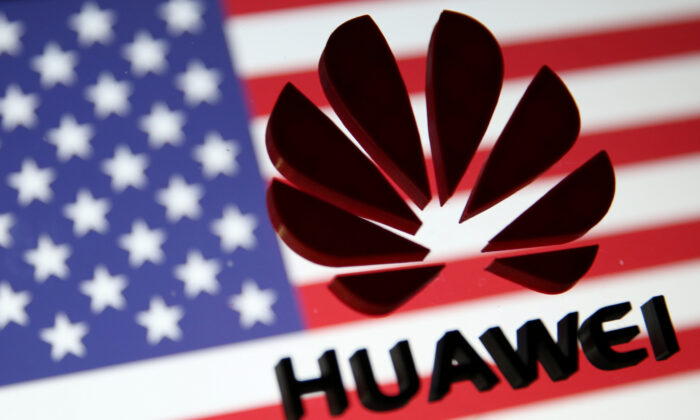
FILE PHOTO: A 3D printed Huawei logo is placed on glass above displayed US flag in this illustrationJohnny Liberty, Editor’s Note: After reading this expose’ I realized why the race for 5G dominance is also a race for which political system will prevail – capitalism or communism. China has taken the lead in 5G and already dominates the marketplace. Unless the USA steps up along with its telecommunications partners and has the ability to compete in a free market with China, it will lose the battle for freedom as well. This does not imply that I wholeheartedly support 5G especially with regards to the untested health and safety issues. Already we know that millimeter radiation damages human health, but the industry refuses to study or mitigate these. It’s a grand experiment which has already resulted in tens of thousands of deaths which were falsely attributed to COVID-19.

By Bonnie Evans

As calls to decouple U.S. industries from dependency on manufacturing in China are growing, President Donald Trump has helped prepare the ground for a shift from China by taking a more skeptical approach to relations with the regime in Beijing than his predecessors.

While globalists are pushing back against the efforts to decouple, the key telecommunications technology of 5G shows the limitations of their approach, according to one expert.

Opposing Views

The argument for protecting the deeply intertwined U.S.–China economic relationship is widely supported in some circles.

Last December, former World Bank President Robert Zoellick, who served the George W. Bush administration as U.S. trade representative, asked a gathering of the U.S.–China Business Council, “Are you ready for this?”

“The 20th century painted a shocking picture of industrial age destruction; do not assume that the cyber era of the 21st century is immune to crack-ups or catastrophes of equal or even greater scale,” Zoellick said.

“You need to decide whether you think the United States can still cooperate with China to mutual benefit while managing differences, and if so, how.”

The Financial Times said that Zoellick’s words “captured the fears—particularly within parts of Washington’s economic and foreign policy establishment—that U.S. President Donald Trump’s trade war against Beijing has paved the way for an irreversible ‘decoupling’ of the world’s two largest economies.”

Zoellick was responsible for completing the negotiations that brought China into the World Trade Organization.

Zoellick’s views are echoed by other trade and China specialists.

Harry G. Broadman, an economist who has worked in key U.S. government, international organization, private sector, and academic roles during his 30-plus-year career, wrote in Forbes in September 2019 that decoupling from China potentially presents “worldwide negative spillover impacts.”

Of those consequences, Broadman suggests, “technological bifurcation, which could fundamentally jeopardize harnessing global benefits from advances in science and technology,” is one of the riskiest aspects of taking the United States out of China.

In plain English, Broadman’s argument is that without globalization, which is largely underpinned by the U.S.–China relationship, technologies go their own way, developing standards and specifications for the regions in which they emerge, rather than under a globalized standard common throughout the world.

5G Domination the Danger

“He’s mistaken,” Robert Spalding said, referring to Broadman’s views on technological bifurcation. Spalding is a retired Air Force brigadier general and architect of the U.S. National Security Strategy, which named China as an adversary. He is now a senior fellow at the Hudson Institute in Washington, and author of the recent book “Stealth War: How China Took Over While America’s Elite Slept.”

The real danger, Spalding told The Epoch Times in an extensive interview, is in the ongoing struggle for dominance in fifth-generation—5G—mobile technology and standards that are already beginning to change how data is collected and used around the world.

“The U.S. was the first to develop the smartphone in 4G,” Spalding said. As a result, “we dominate the information market.”

But as the world moves into 5G, the risks are greater if the “concept of open data” and “open data markets” of those 4G networks are maintained. In Europe, the open data concept has already “created concern for privacy protection.”

In China, however, open data markets create a global opportunity.

“In the hands of China,” Spalding said, open data “lets the state take hold of power that Google and Amazon have.”

The “state” in China is led and run by the Chinese Communist Party (CCP).

“The ability of these companies to pinpoint your location and the things you’re doing and buying is incredibly powerful and counter to privacy concerns and counter to the principles of our liberal democracies,” Spalding said.

Spalding pointed out that “as Android and Apple become less of dominant players in 5G, now Tencent and Alibaba and DJI and Hikvision can begin to dominate that data space. So we move from a world centered on the U.S. to one centralized on Baidu and Tencent.”

All five companies are Chinese technology companies with ties to the CCP. Alibaba and Tencent generally rank in the top 10 internet companies in the world by market capitalization.

“That’s why he’s mistaken [about the problem of technological bifurcation]. It’s positive if we move to a data system that is focused on privacy and security and sovereignty and deploying secure 5G,” Spalding said.

Referring to Broadman, Spalding said that “what he’s advocating is that China dominate the technological space.”

China Sets Standards

Already, Spalding said, 3GPP, the umbrella body under which the key telecommunications standards organizations in the world operate and coordinate, is heavily dominated by China.

Since American network equipment manufacturers “are not expected to survive,” that leaves only four companies in the world that will make the networking equipment for the 5G future.

Those companies are Ericsson, Nokia, Samsung, and China’s Huawei—all subject to the standards that are being so heavily influenced by Chinese technical specifications.

Functionally, therefore, Spalding points out that even though Ericsson and Nokia are Swedish and Finnish respectively, and Samsung is South Korean, they end up building the same system as Huawei.

“Essentially,” Spalding said, “everybody is building a Chinese network based on open data, not on a secure network. That’s why he’s incorrect. His theory promotes China,” Spalding said.

This means, Spalding said, that China’s “acquisition of intelligence” and “ability to influence societies” is greatly enhanced both in China and abroad, including in the United States.

Statistics from the Institute of Electronics and Electronic Engineers support Spalding’s claim.

In a March 17 post titled “Strategy Analytics: Huawei 1st among top 5 contributors to 3GPP 5G specs,” Alan Weissberger reports that “even though there are more than 600 member companies participating in 3GPP, their 5G specification process is actually led by only a few leading telecom companies. … New research from Strategy Analytics … finds that 13 companies contributed more than 78% 5G related papers and led 77% of the 5G related Work Items and Study Items.”

Of those 13, the top five are, in order, Huawei, Ericsson, Nokia, Qualcomm, and China Mobile.

Free Versus Centrally Resourced Trade

“By allowing China to be in the global trading system, you’re actually undermining the foundational premises” of that system, Spalding said. That global trading system has “a market-based approach to both capital allocation and trade.”

“China is not a market-based economy,” Spalding said. China, Spalding has said earlier, is not “a centrally planned economy, but it is centrally resourced.”

“When the state is providing resources and capital to a company, that’s not a market-based solution,” he said.

“Prices are set by China, not by the market.

“If you really want to have a free trading system … then China can’t be a part of it because they don’t believe in it.”

Source: The Epoch Times

Most countries already have limited access to 5G networks | Lifewire

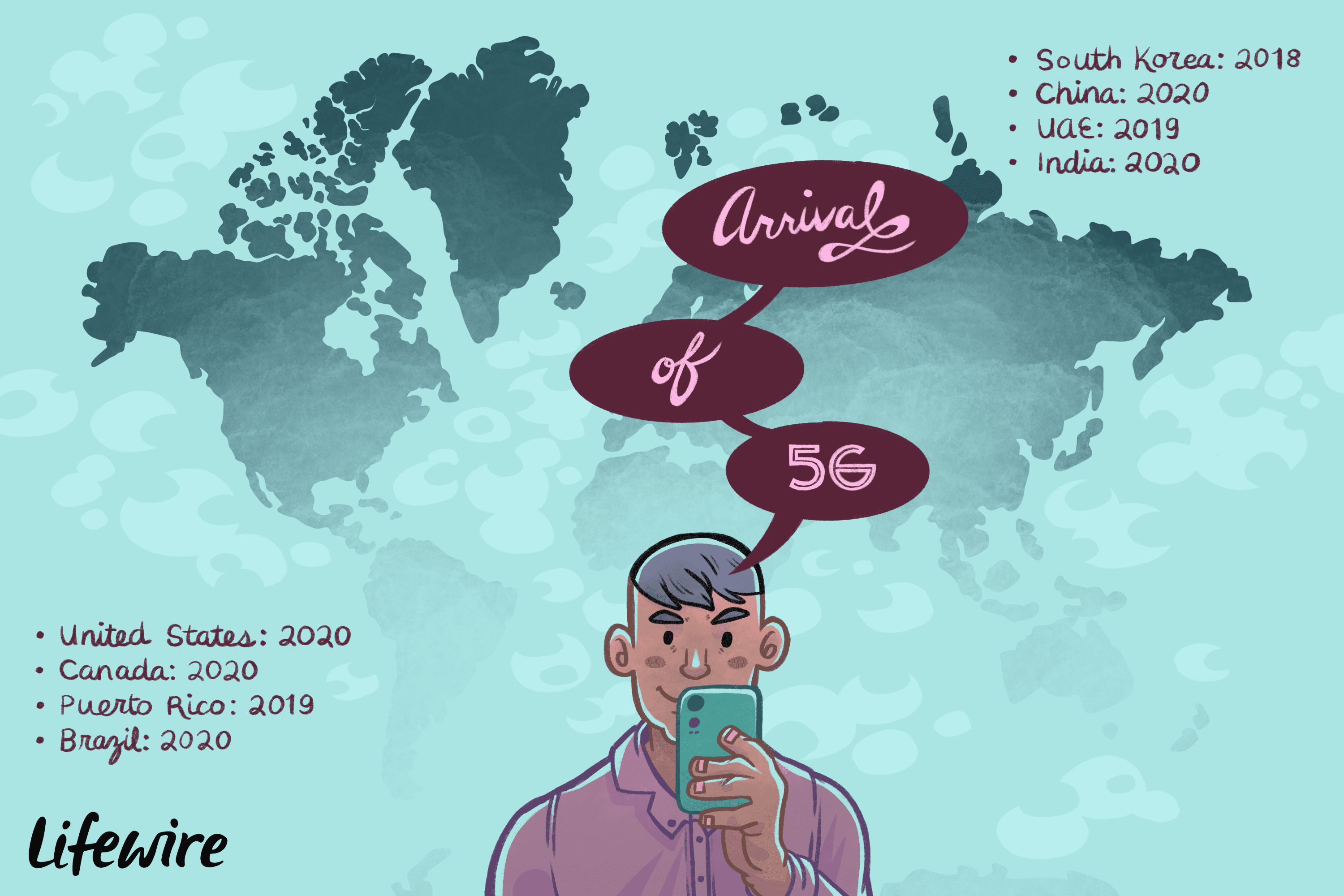
5g-availability-world-4156244_FINAL-dd0bf32187b74d6f94ed30f8aa8d4736
By Tim Fisher

5G is the newest wireless networking technology that phones, smartwatches, cars, and other mobile devices, and who knows what else, will use in the coming years, but it won’t be available in every country at the same time.

Some estimates forecast that by 2023, 5G will support more than 10 percent of the world’s mobile connections. For daily updates on how 5G is developing around the globe, see 5G: The Latest News & Updates. Also check out which 5G phones are available right now and when others are coming.

North America 5G

North Americans have already seen smaller iterations of 5G networks pop up, but it’s only just now, in 2020, taking off in most areas due to the elemental challenges of 5G networks. Estimates say that by 2023, up to 32 percent of North American mobile connections will be on a 5G network.

UNITED STATES

5G fixed wireless broadband internet from Verizon, C Spire, and Starry is currently available at a handful of locations, and Verizon, AT&T, Sprint, and T-Mobile have mobile 5G services available in various cities. More areas will get at-home and mobile 5G this year, from those companies and others like U.S. Cellular.

CANADA

Rogers Communications began rolling out a 5G network in early 2020 after investing over $4 billion USD on 5G in 2019. They also made a 5G test site on campus at the University of British Columbia. Learn more about the plans Rogers has for 5G to see when they expect a live network around the country.

Canada’s Telus Mobility has given 2020 as the year 5G is available to its customers, but explains that people in the Vancouver area can expect early access.

MEXICO

In late 2017, the Mexican telecommunications company América Móvilannounced the release of 4.5 networks in anticipation of a 5G release.

Its CEO says 5G should be available sometime in 2020 depending on the technology that’s available at that time.

PUERTO RICO

Wireless provider Claro began testing 5G in Puerto Rico in 2019.

Central America 5G

Central American countries will most likely see a slow 5G rollout.

HONDURAS

Ericsson announced in December 2018, that Tigo had chosen the company to modernize its radio access network. The deal “includes the provision of a 5G-ready multi-standard network.

There’s no word on when 5G will reach Honduras but this agreement is an important first step.

South America 5G

South American countries with the greatest populations began to see 5G come out in spurts beginning in late 2019.

CHILE

Entel is the largest telecommunications company in Chile and has partnered with Ericsson to bring 5G wireless service to Chilean customers.

ARGENTINA

Movistar and Ericsson tested 5G systems in 2017 and will likely roll it out to customers around the same time that Chile sees 5G.

BRAZIL

After having signed an agreement to help develop and deploy the technology, we expect Brazil to usher in 5G service starting sometime in 2020.

This time range is also supported by Qualcomm director Helio Oyama, who has stated that 5G will most likely hit Brazil a few years after it’s commercially available elsewhere in 2020.

COLOMBIA

Telefónica Telecom, Colombia’s largest telecommunications company, will likely have 5G services available for customers in 2020.

In July 2018, Ericsson and Telefónica Telecom demonstrated a 5G data transfer of 27 Gbps in Bogotá.

PARAGUAY

Telecommunications company Tigo reached a deal with Ericsson to prepare their network for 5G. Ericsson said in December 2018, that they will “expand TIGO’s existing network and modernize the existing 2G/3G and 4G sites, making the network the best fit for TIGO to deliver 5G and IoT services in the future.

It’s not yet clear when Tigo customers will see 5G in Paraguay, but this deal is definitely a good starting point.

ARUBA

SETAR is Aruba’s leading communications provider, and through a partnership with Nokia, the two expect full coverage on the island by 2022.

Asia 5G

5G is live in a handful of areas, with widespread coverage expected this year.

SOUTH KOREA

These three South Korean companies collaborated to bring mobile 5G to the country on December 1, 2018: SK Telecom, LG Uplus, and KT. They began with 5G service for select businesses only, but on April 5, opened up 5G for others, too, via the Samsung Galaxy S10 5G.

The SK Telecom service provider started offering 5G service to a wide population on April 5 via their four 5G plans. This came after the company started a limited 5G service with the Myunghwa Industry manufacturing company. SKT’s 5G service plans come after trialing 5G in 2017 and using 5G in their self-driving test site K-City.

LG Uplus’ 5G network went live in Seoul and surrounding locations, with LS Mtron as their first customer. With over 4,000 5G base stations positioned in Incheon, Seoul, and Gyeonggi, the company planned over 7,000 more to be deployed by the end of 2018.

KT Corporation launched pre-commercial 5G services at Lotte World Tower in Seoul and six other areas including Jeju, Ulleungdo, and Dokdo. On April 5, the company launched unlimited 5G services called KT 5G Super Plans, and expanded coverage in Korea to a total of 85 cities by the end of 2019.

KT previously collaborated with Intel to showcase 5G service at the 2018 Olympic Winter Games in PyeongChang, and plans to invest over $20 billionthrough 2023 in 5G and other innovative technologies.

According to the ICT and Broadcasting Technology Policy director at the Ministry of Science and ICT, Heo Won-seok, five percent of the country’s mobile users will be on a 5G network in 2020, and 90 percent by 2026.

JAPAN

NTT DOCOMO is Japan’s largest wireless carrier. They’ve been studying and experimenting with 5G since 2010 and launched pre-commercial 5G services in September 2019 before officially starting 5G services on March 25, 2020.

The 5G service launched with a maximum data rate of 3.4 Gbps that will increase to 4.1 Gbps in June 2020. See the NTT DOCOMO 5G smartphone pagefor device options.

In September 2018, NTT DOCOMO successfully achieved 25–27 Gbps download speeds in a 5G trial with Mitsubishi Electric. The test could be used to develop a high-speed 5G network that works with vehicles.

KDDI and Rakuten are providing 5G services in 2020 as well. KDDI’s 5G network launched on March 26.

SoftBank began its 5G services on March 27 for 1,000 yen /month ($9 USD).

CHINA

Three wireless carriers launched 5G in China on October 31, 2019: China Mobile, China Telecom, and China Unicom.

However, these companies don’t provide widespread 5G coverage just yet. The most popular areas with 5G in China right now include Beijing, Shanghai, and Shenzhen.

3 Hong Kong launched 5G on April 1, 2020. According to the press release, 5G is expected to cover indoor and outdoor areas in all districts in Hong Kong within 2020.

SmarTone is another company looking into serving 5G in China.

QATAR

According to Ooredoo, a telecom company in Qatar that has been working on implementing 5G since 2016, they were the first company in the world to provide commercial 5G access.

5G is currently only available in Qatar, but since Ooredoo has markets in Iraq, Oman, Palestine, Maldives, Singapore, Algeria, and other countries, it isn’t a stretch to think that we’ll see 5G reach those areas in 2020.

Ooredoo, in partnership with Ericsson, will also use 5G for home broadband service.

Vodafone is another company providing 5G in Qatar. In late 2018, the company launched a 5G network in Katara Cultural Village and Souq Waqif, and before that, in Abu Hamour, Azizya, Al Mamoura, Al Rayyan, Salwa Road, and Umm Salal Mohammed. Vodafone Qatar offers unlimited 5G plans and a handful of 5G phones.

KUWAIT

Two telecommunication companies in Kuwait have launched 5G service.

Zain was the first, announcing the 5G launch in June 2018. You can sign up herefor a 500 GB, 1 TB, 2 TB, or 4 TB plan. Currently, the only device you can use on Zain’s 5G network in Kuwait is the 5G Bolt router, for home broadband internet.

On the same day, just hours later, Ooredoo announced similar news. The 5G plans available from Ooredoo include a 500 GB 45 KWD /month plan and a 1 TB 65 KWD /month plan.

STC (formerly called VIVA) is another telecom company in Kuwait that has launched 5G services. See the 5G coverage map on their website for details.

STC launched a 5G Innovation Center that was created to “explore, develop, and launch new 5G use cases in Kuwait by 2019.” As of February 2019, they had over 1,000 5G NR sites ready to go, and will roll out nationwide 5G services in partnership with Huawei.

UNITED ARAB EMIRATES

UAE 5G became available via Etisalat UAE on May 30, 2019. There are several 5G phones available for purchase.

In early 2019, Etisalat UAE reached a deal with Huawei to “offer its latest state of the art network solutions including 5G wireless, 5G service oriented core and 5G ready transport network to facilitate smooth 5G technology adaption.” Etisalat UAE also selected Ericsson to deploy a 5G network in the United Arab Emirates, both mobile broadband and fixed wireless access.

5G is also coming to the United Arab Emirates from du. Officially called EITC, or Emirates Integrated Telecommunications Company, they announced in early 2019 the rollout of 700 5G sites. Their partners include Nokia and Huawei.

Virgin Mobile is another 5G-ready company deploying this next-gen network across the UAE. See which 5G phones Virgin Mobile has available.

INDIA

The Telecom Regulatory Authority of India released this PDF in late 2017 that outlines the 5G standard draft and shows a timeframe for when 5G should be deployed around the world.

According to Manoj Sinha, the minister of the Department of Telecommunications, India is set to adopt 5G this year: “When the world will roll out 5G in 2020, I believe India will be at par with them.”

On top of that, in August 2018, one of India’s largest telecom providers, Vodafone Idea Limited (previously called Idea Cellular), merged with Vodafone (which was the world’s second-largest phone company before the merger). Vodafone was already preparing for 5G, having set up “future ready technology” in 2017 by upgrading their entire radio network to support 5G.

Reliance Jio is another mobile network operator in India that plans to provide 5G services in 2020, as well as their own 5G handsets.

Another Indian telecom company working on 5G is Bharat Sanchar Nigam Limited (BSNL). They signed a memorandum of understanding with Ciena, a networking systems company, in early 2019 to prepare its network for 5G.

A 5G test network is being erected in 2020 from Cavil Wireless.

INDONESIA

Anyone who attended the Asian Games in 2018 could have tried out 5G in Jakarta, Indonesia. A special Telkomsel SIM card was needed in order to connect to the network.

It’s unclear whether Indonesia will see commercial 5G begin to roll out in 2020 or later, but a trial of this size was a great indicator that they’re on a track of some sort. Plus, the company has partnered with Ericsson to upgrade their network in preparation for 5G.

TURKEY

Turkcell is Turkey’s largest mobile phone operator. In early 2017, the company completed a 24.7 Gb/s 5G trial with Ericsson, and in September of 2018 announced an agreement with Nokia to develop 5G technologies.

In November, the company trialed 5G fixed wireless access solutions with Samsung in Istanbul. Turkcell’s CEO commented that “Today, with 5G, we have shown that the latest generation of high-speed wireless access is now possible for our customers. Our goal is clear: to make Turkey one of the first countries in the world with 5G technology.”

In early 2019, the Information and Communication Technologies Authority (BTK) in Turkey approved 5G trials in Istanbul, Izmir, and Ankara. The companies involved include Turkcell, Vodafone Turkey, and TT Mobil.

Turk Telekom is another company looking into bringing 5G to Turkey. In September 2019, the CEO said that the company is the “most ready operator for 5G in terms of fiber infrastructure prevalence.”

It’s clear that Turkcell is on the right path to providing Turkey with 5G, but it’s unclear when, exactly, customers can expect a live network.

VIETNAM

Vietnam will see 5G in 2020. According to the country’s state-owned and largest telecom company, Viettel, 5G trials were run in 2019 and they plan to have a network ready in June of 2020.

Mobifone is another mobile network operator that plans to launch 5G in Vietnam by June, 2020.

IRAN

There are a few mobile network operators in Iran, the largest of which is Mobile Telecommunication Company of Iran (MCI). MCI currently offers “4.5G” internet, which shows that they’re on a path to providing 5G in Iran. They also signed an agreement with Nokia in 2017 to develop 5G technology in Iran.

Iran’s second-largest provider, Irancell, provides both mobile and fixed wireless internet services. In late 2017, in collaboration with Ericsson, the two performed their first 5G test in Tehran and said that 5G will be available in Iran in 2020.

THAILAND

Advanced Info Service (AIS), the country’s largest mobile phone operator, will launch 5G in Thailand in 2020.

TAIWAN

Taiwan Star offers its customers a 5G upgrade experience that they can enroll in to take advantage of reduced prices once 5G rolls out in Taiwan.

SINGAPORE

StarHub announced in November 2018, that they, in partnership with Nokia, completed their first outdoor pilot of 5G on the 3.5 GHz frequency band. However, there’s no information on when StarHub will have a 5G network ready for Singaporean customers.

The IMDA (Info-communications Media Development Authority) is an organization of the Singaporean government that says a 5G network rollout will take place in 2020. There might even be two networks coming to Singapore since IMDA plans to allocate millimeter bands for 5G that “will be sufficient for at least two nationwide 5G networks.”

In fact, all four telcos might bring 5G to Singapore, including Singtel, M1, and TPG Telecom.

PHILIPPINES

The wireless communications company Smart has been testing 5G since 2016 and announced in June of 2018 the launch of 5G TehnoLab, their 5G innovation lab. Smart plans to have a 5G-ready network live for customers in 2020.

In November 2018, Smart rolled out their first 5G cell sites in the Philippines. They were set up in Makati Central Business District (Makati CBD) and at the Clark Freeport Zone in Pampanga.

In Smart’s 5G testing, they’ve managed to achieve speeds of over 14 Gb/s, and have completed a 5G-enabled video call.

Globe Telecom has a 5G fixed wireless broadband service called Globe At Home Air Fiber 5G, offering speeds up to 100 Mbps and data packages as large as 2 TB.

NOW Telecom is another company planning to deploy 5G in the Philippines.

PLDT is hoping to have a 5G network up and running before June 2020.

BANGLADESH

Although Bangladesh is one of the top 10 most populous countries in the world, it was very slow to roll out 4G and will likely also take much longer than other countries to implement 5G.

In early 2018, the country’s telecom regulator BTRC said that “The world will embrace 5G in 2020. So, we too will have to accept new technology and must move on to 5G. There is no option for procrastination.”

BTRC is expected to auction spectrum for 5G services before the end of 2020 to allow for widespread 5G coverage by 2026.

BTCL and Banglalink are two companies to watch for 5G in Bangladesh.

MALAYSIA

5G in Malaysia will likely start to be available in specific areas in 2020.

In early 2019, Maxis and Huawei and U Mobile and ZTE signed MoUs (memorandums of understanding) to collaborate on 5G deployment in Malaysia.

TM announced in late 2019 that they’d be participating in the 5G Demonstration Project to test new 5G features and learn how to best deploy 5G in Malaysia. They’ve tested using 5G for smart traffic lights, smart safety and security, and smart parking.

The Malaysian Communications and Multimedia Commission (MCMC) expects commercial deployment of 5G in Malaysia to take place by the third quarter of 2020.

PAKISTAN

5G might go live for consumers this year given that the Pakistan Telecommunication Authority prepared for public 5G trials in 2019.

Another tip that 5G is coming to Pakistan is that the country’s 4G pioneer Zongalso became the first company in the country to test 5G services in August 2019.

Telenor Pakistan is looking into bringing 5G to the country as well, but no dates have been released.

SAUDI ARABIA

5G has been available in Saudi Arabia through Saudi Telecom Company (STC)since June 2019, but only in specific areas of major cities and only through home routers (no mobile option, yet).

According to the company’s CEO:

5G is considered as a very important step toward digitalization and connecting everything, which supports Saudi Arabia’s Vision 2030 toward economic diversification.

The 5G release in Saudi Arabia took place months after the company reached a deal with Ericsson to launch 5G in the country. STC has also partnered with Nokia to roll out 5G in Saudi Arabia; they announced in early 2019 that the rollout phase had already started.

Another 5G provider in Saudi Arabia is Zain. Over 20 locations have 5G availability, including Riyadh, Al Khobar, Dhahran, Tabuk, Hail, Sabya, Ahad Rafidah, Taif, Bisha, Najran, and Jaizan; see a 5G coverage map here. The Samsung Galaxy Note10+ 5G and ZTE Axon 10 Pro 5G are Zain’s 5G products.

BAHRAIN

5G in Bahrain arrived in July 2019 when STC (previously called VIVA) launched their 5G data plans. You can get mobile 5G from STC with one of their 5G phones, or 5G at home with the 5G router. The service is available in areas like Reef Island, Amwaj Islands, and Riffa Views.

Batelco is another company bringing 5G to Bahrain, choosing Ericsson to provide the 5G equipment. Availability is limited to just a few areas as of right now: Amwaj Islands and Reef Island.

KAZAKHSTAN

5G in Kazakhstan isn’t coming as soon as other countries despite the fact that it’s the ninth-largest country in the world. However, according to Prime Minister Askar Mamin, 5G is definitely in sight, calling for an “Action Plan for the implementation of 5G in Kazakhstan.

Askar Mamin said in a meeting held in May 2019, that 5G is expected to cover all Kazakhstan settlements that have a population greater than 50 thousand people.

In October 2019, the VEON telecom company launched a 5G trial on a live network.

SRI LANKA

The country’s second-largest mobile network operator, Mobitel, invested $50 million USD in 2019 to roll out 5G in Sri Lanka.

Mobitel has been working on bringing 5G to Sri Lanka for years. In early 2017, they partnered with Ericsson with the signing of the 5G Island of Innovation Memorandum of Understanding (MoU) to bring 5G to Sri Lanka.

CAMBODIA

Service provider Smart Axiata will most likely be the first company to launch 5G in Cambodia. They were the first service provider to make 4G available in the country in 2014, and followed up in 2019 by showcasing the country’s first 5G live trial. The company expects the first few years of their 5G rollout in Cambodia to be focused on hotspots in major cities.

Viettel Cambodia (MetFone) is another company launching 5G service in Cambodia, in partnership with Telecom Cambodia.

Africa 5G

Vodacom Group, which was the first to introduce 4G, 3G, and 2G in South Africa, is at it again with the release of a 5G trial in Lesotho in August 2018. They showcased a fixed wireless access (FWA) network using a temporary license in the 3.5 GHz band.

Vodacom’s 5G network should launch this year through the use of Liquid Telecom, which will provide nationwide 5G wholesale services to the market in early 2020.

Rain is another South African telecom that’s rolling out 5G. From November 11, 2019 and onward, Rain customers can access the 5G network from home in parts of Johannesburg and Tshwane, with more areas becoming available throughout 2020. Check 5G coverage in South Africa with the Rain coverage map.

MTN Group Limited partnered with Ericsson in November 2018, to deploy a fixed wireless access 5G site in Midrand. Although MTN South African hasn’t announced a 5G release date, the trials and tests they’ve performed shows that they’re interested in developing 5G applications and might one day offer customers a 5G network.

NIGERIA

SENEGAL

Tigo Senegal and Ericsson are working together to upgrade its network to roll out LTE across 1,000 sites. While this isn’t 5G service, it is an important stepping stone.

EGYPT

Although a 5G release date for Egypt isn’t yet known, Telecom Egypt and Nokia agreed in early 2019 to introduce a 5G network.

MOROCCO

The telecom company Inwi, which covers over 90 percent of the country with mobile internet access, is bringing 5G to Morocco.

The two other licensed telecom companies in Morocco are Orange Morocco and Maroc Telecom, but both have been silent on a 5G deployment in the country.

DEMOCRATIC REPUBLIC OF THE CONGO

The release date for 5G in the Congo is unclear, but according to Léon Juste Ibombo, the country’s minister of Posts, Telecommunications and Digital Economy, we know that the 5G rollout will involve Applus and Congo Telecom:

Investments in Congo’s telecommunications sector are astronomical and the state needs credible companies to help it implement the digital economy ecosystem. This company will help our incumbent operator, Congo Telecom, to implement 5G.

TUNISIA

Ooredoo Tunisia has partnered with Nokia through the use of the company’s AirGile cloud-native core, to transition Ooredoo to a place where it can provide Tunisia customers with 5G.

KENYA

Safaricom will likely launch 5G in Nairobi in early 2020.

Europe 5G

5G networks are live right now in some European countries, and others will get 5G during 2020.

NORWAY

Telenor, the country’s biggest telecom operator, launched 5G in Norway in March, 2020, following early testing from 2017. These locations currently have access to the 5G network: Kongsberg, Elverum, Bodø, Askvoll, Fornebu, Kvitfjell, Longyearbyen and Spikersuppa in Oslo, and Trondheim.

Telia Company is another mobile network operator in Norway that opened its first 5G test network in December 2018. Their first trial partner was the Odeon movie theater in Oslo, marking the world’s first 5G cinema. Managing director of Telia Norway said in their December press release, “We are going to develop 5G-based solutions industry by industry, area by area.

Telia Norway also partnered with Norwegian ISP Get to launch a 5G pilot in a family home, complete with smart tech from Futurehome. Get’s product director said “This family is far ahead of the rest of us, with a home filled with clever things connected through 5G. It is something the rest of us will not experience for several years, but it’s really fun to see what we will get with the latest technology.

GERMANY

According to the 5G Strategy for Germany, released by Germany’s Federal Ministry of Transport and Digital Infrastructure (BMVI), trial installations began in 2018 with a commercial launch in 2020. 5G is planned to be rolled out “over the period to 2025.”

Deutsche Telekom rolled out 5G in Germany in Berlin, Darmstadt, Munich, Bonn, and Cologne in September 2019. Connectivity is possible through the Samsung Galaxy S10 5G, Samsung Galaxy Note10+ 5G, Huawei Mate 20 X 5G, and HTC 5G Hub. A total of at least 20 major German cities will have 5G by the end of 2020, and they plan to cover 90 percent of the country with 5G by 2025.

Another German telecom company that has launched 5G services in the country is Vodafone. They turned on their first 25 base stations on July 16, 2019, added Berlin a month later, and made it a goal to have 50 running before the end of August 2019. Customers can use 5G with the Huawei Mate 20 X 5G and Samsung Galaxy S10 5G.

Broadband telecom provider Telefónica Germany revealed in December 2018, that in collaboration with Nokia, they finished building their “Early 5G Innovation Cluster” in Berlin. It will be used to “test and measure the performance and coverage of first 5G services in a dense urban area.

German ISP United Internet AG is another potential 5G player, having announced in early 2019 that they’d be taking part in a 5G spectrum auction.

CZECH REPUBLIC

Vodafone will provide 5G services to customers in Karlovy Vary by July 2020. This will come a full year after the company tested a 5G holographic call in the same city.

UNITED KINGDOM

The UK’s largest network operator, EE, was the first to launch 5G in the UK on May 30, 2019. Service started in London, Cardiff, Edinburgh, Belfast, Birmingham, and Manchester, and the company now operates the 5G network in over 70 cities and towns.

EE was also the first in the world to offer the OnePlus 7 Pro 5G smartphone, but they also offer their customers the Samsung Galaxy S20 Ultra 5G, OPPO Reno 5G, LG V50 ThinQ, and other 5G phones. See their list of 5G phones for all of them.

Vodafone UK is another big mobile telecommunications provider in the UK. After testing how 5G can be used in car communications and successfully completing a holographic phone call using 5G, they launched their fifth-gen network in seven cities on July 3, bringing their total 5G coverage to 15 UK locations. The Vodafone 5G phones you can use on the network include the Samsung Galaxy S10 5G and Xiaomi Mi MIX 3 5G.

After announcing their commitment to invest billions in 5G, UK’s Three is another company that launched 5G in the UK, accessible first with Huawei’s 5G phone. After testing 5G for home use, the company also launched their 5G home broadband service on August 19 in London. Three has a list of everywhere you can get their mobile 5G in the UK.

BT Mobile launched 5G services in the UK on October 11, 2019, in 20 cities. See the 5G phones and plans you can get with BT Mobile.

O2 has a 5G network in the United Kingdom, too. It’s currently available in 20 locations, including London, Edinburgh, Cardiff, Belfast, Leeds, Slough, Leicester, Lisburn, Manchester, Birmingham, Glasgow, Liverpool, Newcastle, Bradford, Sheffield, Bristol, and other locations. There are several 5G phonesyou can use on the O2 5G network.

Tesco Mobile uses O2’s network and also began offering 5G to its customers in early 2020.

CityFibre and Arqiva are two more companies with 5G trials in London. They’re in the process of creating a “5G-ready network platform nationwide that will provide the best network at the best economics for Mobile Network Operators.”

ITALY

Vodafone launched 5G in Italy in these five cities in June 2019: Naples, Bologna, Milan, Turin, and Rome. The company plans to roll out 5G to 100 cities by 2021. There are several 5G phones you can buy through Vodafone’s website.

TIM (Telecom Italia), the largest telecom provider in Italy, made 5G available in Naples, Rome, and Turin as of July 5, 2019. Their 5G network went live in another six cities before the start of 2020: Milan, Bologna, Verona, Florence, Matera, and Bari. By 2021, 120 towns and cities will be covered with TIM’s 5G network.

Iliad, in partnership with Nokia, will deploy 5G across Italy.

SWITZERLAND

The first 5G network in Switzerland went live April 17, 2019, via Swisscom. It launched in 54 towns, including Basel, Bern, Chur, Davos, Geneva, Lausanne, and Zurich. According to Swisscom, more than 90 percent of the population is covered.

Swisscom currently offers the OPPO Reno 5G, LG V50 ThinQ 5G, and Samsung Galaxy S10 5G smartphones, but will have more available from other companies, such as Huawei, later in the year. These devices will work everywhere there’s 5G service from Swisscom, through their inOne mobile subscriptions.

The country’s second-largest telecommunications company, Sunrise, is also working to release 5G in Switzerland. They’ve already covered over 200 cities/villages with 5G, blanketing 80–98% of Dietikon, Bülach, Opfikon, Autafond, and other locations with 5G coverage. There’s a Sunrise 5G coverage map available, which also lists all the areas you can get Sunrise 5G service in Switzerland.

The company currently offers four 5G smartphones: Samsung Galaxy S10 5G, Samsung Galaxy Note10+ 5G, Huawei Mate 20 X 5G, and Xiaomi Mi MIX 3 5G. They also provide the HTC 5G Hub.

Sunrise ran an ultrafast, 3.28 Gbps 5G test in late 2017, erected their first 5G antenna in mid 2018, and then in November 2018, made live their first standardized 5G network at a ski resort.

Salt (formerly Orange Communications) is another telecom company planning 5G in Switzerland. They revealed in January 2019 that they selected Nokia to upgrade their radio and mobile core network to provide mobile 5G services.

SPAIN

Vodafone Spain was the first operator to launch 5G in Spain. On June 15, 5G became available to customers in these locations:

  • A Coruña
  • Barcelona
  • Bilbao
  • Gijón
  • Logroño
  • Madrid
  • Malaga
  • Pamplona
  • San Sebastian
  • Santander
  • Seville
  • Valencia
  • Vigo
  • Vitoria
  • Zaragoza

See if your specific address has 5G coverage with the Vodafone Mobile Coverage Map.

According to Vodafone, 5G speeds at launch can be up to 1 Gbps, but will increase to up to 2 Gbps before the end of the year. You need a 5G phone from Vodafone Spain to access the network.

After initially purchasing spectrum to implement 5G, Vodafone Spain launched 5G trials in various cities in June 2018, including Madrid, Valencia, Seville, and Barcelona. In late 2018, they installed a 5G network node in La Nave, Madrid, and in February 2019 used standards-based 5G phones to complete their first 5G video calls between Madrid and Barcelona.

Orange plans to launch 5G in Spain in 2020. The company revealed in early 2019 that they made their first 5G call using their next-gen network in Valencia and will continue testing the 5G technology in Seville, Vigo, Malaga, Barcelona, Bilbao, and other cities.

AUSTRIA

Network operator A1 kicked off their path toward 5G in Austria by making their first 5G data connection in Gmünd in early January 2019. See their 5G plans and phones here.

Magenta Telekom (previously called T-Mobile Austria) is deploying 5G mobile base stations across the country following a 110 MHz spectrum purchase in March 2019. In late March, the company revealed several of Austria’s 5G pioneers.

Hutchison Three Austria and ZTE are deploying 5G in Austria, too. Their first business client was in Linz, and with 20 5G sites set up by June 2019, it marked Austria’s first city with continuous 5G coverage.

FINLAND

The Elisa Oyj telecommunications company in Finland opened a commercial 5G network in Tampere in June 2018, claiming to be “first in world to launch commercial 5G.” According to their 5G coverage map, the network is also located in Oulu, Kuopio, Helsinki, Jyväskylä, and other areas.

Elisa has 5G Unlimited plans for 44.90 EUR /month at 1 Gbps and 34.90 EUR /month at 600 Mbps. The ZTE Axon 10 Pro 5G phone can be used on Elisa’s 5G network.

Telia revealed in early December 2018, that Helsinki Airport became the first 5G airport in the world and their first customer using their pre-commercial 5G network. In early 2019, the company began commercial use of its 5G network in three cities and has since expanded to include several more. See the Telia 5G devices you can buy right now for mobile and FWA 5G access.

DNA is another Finnish telecommunications company bringing 5G to Finland. They began offering fixed wireless access service in December, 2019. However, the company says that even with the introduction of 5G, 4G will remain the primary network technology used by most people.

RUSSIA

In 2018, Russia’s largest mobile operator, Mobile TeleSystems (MTS), partnered with Samsung to run various 5G tests that included video calls, ultra-low latency video games, and 4K video streaming.

These 5G tests were performed to show that not only is 5G coming to Russia but that Samsung’s 5G routers, tablets, and other devices are fully capable of running on a 5G network.

According to GSMA, 5G networks will cover over 80 percent of the Russian population by 2025, so it can be assumed that a big portion of the country will have access even sooner.

Another indicator that 5G in Russia is coming sooner than later is the 5G research center that’s open in Innopolis, a high-tech city in the Republic of Tatarstan.

Tele2 Russia is another telecom company bringing 5G to Russia. In collaboration with Ericsson, the company announced in February 2019 that they’d deploy 50,000 base stations in Russia. However, Tele2’s CEO says “Before launching 5G networks, Russia must first address several infrastructure issues.”, so customers might have to wait a while to receive 5G services.

LUXEMBOURG

Orange is currently the only European telecommunications company that has announced 5G plans for Luxembourg.

SLOVAKIA

It’s unclear when 5G is coming to Slovakia, but mobile operator SWAN Mobilesigned a 5G commercial contract with ZTE in early 2019 to kick off 5G rollout plans. In July 2019, the two performed the the country’s first 5G video call.

In early 2020, Orange Slovensko selected Nokia to prepare its Radio Access Network for 5G.

IRELAND

The telecom giant Vodafone went live with a 5G network in Cork, Dublin, Galway, Limerick, and Waterford on August 13, 2019.

eir’s 5G network is live as well. Its launch locations included Dublin, Limerick, Kilkenny, Waterford, Cork, Galway, Dundalk, and more. There’s an eir 5G coverage map with all the locations.

Vodafone is also working on fixed wireless access. In early December 2018, the company announced that they would begin trials for rural 5G broadband in Roscommon, Gorey, Dungarvan, and Clonmel, covering 20,000 premises.

Imagine is another telecom bringing 5G to Ireland. They announced the launch of their 5G-ready fixed broadband network in February 2019 and plan to build out over 300 sites to cover over one million premises by the fall of 2020.

CEO Sean Bolger had this to say about their 5G plan:

As an Irish company, we are delighted to announce this significant investment and a new approach which will finally solve this problem and deliver much needed, fast and reliable high-speed broadband to homes, businesses and communities across regional and rural Ireland, today and into the future.

Three Ireland is launching a 5G network in the country, too, but it’s not clear when.

FAROE ISLANDS

Føroya Tele, the Faroe Islands’ largest telecom provider, launched 5G on June 6, 2019.

CHANNEL ISLANDS

Jersey Telecom (JT) and ZTE have announced that 5G is coming to the Channel Islands. They began a pre-commercial launch in mid-2019 to test 5G.

BELARUS

ROMANIA

The Romanian government approved the 5G Strategy in June of 2019.

The 5G Strategy for Romania projects an action plan with concrete tasks and deadlines for deployment, targeting the launch of services in 2020 and 5G service coverage of all urban centers and major land transport routes by 2025.

On June 26 2019, Vodafone Romania launched the country’s first 5G subscriptions. All the details, and the 5G phones you can buy, are available on their Supernet 5G page.

RCS & RDS is the largest Romanian cable and satellite TV company, and they also have 5G available through the Digi Mobil 5G Smart network.

Orange launched 5G in Romania in November 2019. Coverage started in Bucharest, Cluj-Napoca, and Iasi, and will reach more areas throughout 2020. See the Orange 5G coverage map for details.

HUNGARY

Magyar Telekom, the largest Hungarian telecom company, launched 5G in Hungary in April 2020. Service began in parts of Budapest and Zalaegerszeg.

Vodafone is another company launching 5G in Hungary. In May of 2019, Vodafone launched Hungary’s first live 5G station in Zalaegerszeg.

CROATIA

Commercial 5G services are expected to come to Croatia by the end of 2020. Service will start in Osijek, within the region of Slavonia.

SWEDEN

Telia Company is planning a commercial launch of 5G in Sweden in 2020.

In late December 2018, in collaboration with Ericsson and KTH Royal Institute of Technology, Telia launched a 5G testbed in Stockholm to experiment with 5G applications.

In early 2019, in collaboration with Volvo CE and Ericsson, Telia erected a 5G network in Eskilstuna with the primary focus being industrial use, such as remote-controlled machines.

A Tele2 5G network is coming to Sweden as well. They plan on providing access in 2020, but confirms that it’ll take a few years before the majority of people will have high-speed access.

POLAND

Polish mobile phone network T-Mobile Polska announced on December 7, 2018, the launch of the country’s first 5G network. It’s currently available only in the center of Warsaw via five base stations, but T-Mobile plans to develop 5G in other locations to reach the entire country.

According to T-Mobile,

Devices providing access to the network have been distributed to selected T‑Mobile partners, so they can be used in order to develop new business solutions and products, which will be eventually offered on the mass market.

Orange is another European mobile network operator that will launch 5G in Poland, but it won’t have a commercially available network up and running until 2020 or 2021.

Polkomtel’s Plus mobile phone network operator is rolling out 5G in Poland in 2020 with Ericsson’s 5G technology. The network will initially be deployed across Warsaw, Gdańsk, Katowice, Łódź, Poznań, Szczecin, and Wrocław.

PORTUGAL

Vodafone brought Portugal its first 5G connection on December 12, 2018, via a 5G smartphone prototype from Qualcomm. The company also tested a virtual reality game and video call on Ericsson’s 5G network.

ANACOM, Portugal’s communications regulator, will hold a 5G spectrum auction in June 2020 and expects commercial rollouts before 2021.

FRANCE

French regulator Arcep expects commercial 5G rollout in France to take place in 2020.

Orange has launched 5G pilots in France in Lille, Douai, Marseille, and Châtillon.

Iliad, in partnership with Nokia, will deploy 5G across France.

ESTONIA

Estonia will likely see a commercially available 5G network in 2020.

The country’s first 5G test network went live on December 20, 2018. It was launched by Telia Company, TalTech University, and Ericsson.

According to Telia Company, the 5G network is a…

testbed for innovation and research for industry partners and academia. TalTech University´s scientists and students, as well as companies and startups can create and test solutions that require fast, high-quality data connection.

LATVIA

One company bringing 5G to Latvia is Tele2. They launched their first 5G base station in Riga in July of 2019, made their first 5G video call a few months later, have released 5G phones, and began offering their 5G network in Daugavpils and Jelgava in early 2020.

DENMARK

Telenor Group brought 5G tests to Denmark in 2019 via Nokia’s AirScale Base Stations.

According to Telenor, the trials:

support 5G use cases such as robotics control, industrial automation, 5G/LTE dual connectivity and Fixed Wireless Access for high performance last mile connectivity.

Telia Company is another mobile network operator that began live 5G tests in Denmark in June 2019.

AZERBAIJAN

Mobile telecom company Azercell is planning to launch 5G in Azerbaijan. In early 2019, the company chose Ericsson in a two-year 5G deal to provide the telecom company with radio equipment and related services.

ICELAND

Síminn is the leading provider of wireless communication services in Iceland. They announced in early 2019 that they’d be partnering with Ericsson to deploy 5G-ready equipment to the country.

THE NETHERLANDS

T-Mobile is promising nationwide 5G coverage in the Netherlands in 2020. In the summer of 2019, T-Mobile announced the launch of three 5G research locations: Scheveningen, The Hague Tech, and the T-Mobile head office in The Hague.

MONACO

Monaco Telecom customers have access to 5G across all of the Principality of Monaco via the Huawei Mate 20 X and the Xiaomi Mi MIX 3. Full coverage of the entire country was completed in July 2019.

BELGIUM

Proximus is the largest mobile telecommunications company in Belgium. Take a look at the Proximus 5G network coverage map for all the details on where you can get 5G in Belgium. You’ll need a 5G mobile subscription as well as a 5G phone that works on the Proximus network, such as the Oppo Find X2 Pro 5G.

In 2019, Orange and Proximus agreed to set up a shared mobile access network, a move that could mean 5G reaches across Belgium even faster.

MALTA

Vodafone Malta doesn’t have a solid 5G release date yet, but they’re working on bringing 5G to Malta. On October 4, 2019, Vodafone Malta began letting customers try out 5G in areas of Birkirkara, St Julians, and Sliema.

Oceania 5G

Most major countries in Oceania saw limited 5G roll-out in 2019 with greater availability arriving in 2020.

AUSTRALIA

Australia’s second largest telecommunications company, Optus, launched 5G for mobile and home use on November 4, 2019. The launch involved over 290 5G sites in Sydney, Canberra, Adelaide, Brisbane, Melbourne, Perth, and other locations in NSW, Victoria, and Queensland. See the Optus 5G coverage mapfor details.

Telstra announced in August 2018, that they had enabled 5G technology in areas of the Gold Coast, giving the state of Queensland the country’s first 5G-ready network. They also enabled 5G mobile base stations in Adelaide, Canberra, and Perth in October 2018, and in Melbourne and Sydney in December. According to the CEO, Telstra erected 200+ 5G-capable sites before the end of 2018.

In November 2018, Telstra confirmed that they completed Australia’s very first 5G connection on a live network. The company’s Network Engineering Executive said that they will “continue testing over the coming months to improve data rates and overall performance in readiness for device availability.”

In December 2018, Telstra revealed that their first customer using a 5G device — the HTC 5G Hub — was FKG Group in Toowoomba.

Vodafone has provided a 2020 release date for 5G in Australia. This is a reasonable time frame considering that not only is Vodafone the country’s largest mobile provider but because they partnered with Nokia in 2019 to agree to a 2020 5G rollout. Vodafone users can expect 5G in these areas.

NEW ZEALAND

According to Kris Faafoi, New Zealand’s Minister of Broadcasting, Communication and Digital Media,

First allocation of 5G spectrum will be the 3.5 GHz band, with national rights to this portion of the spectrum expected to be auctioned early in 2020.

Having already been laying the groundwork for 5G, and implementing 5G trials in March of 2018, New Zealand’s Spark NZ plans to have a full 5G network ready to go in 2020. They switched on 5G for the first time in September 2019for a limited number of customers, and launched 5G in five other towns in December, 2019.

Vodafone is another 5G player in New Zealand. They switched on 5G in parts of Auckland, Wellington, Christchurch, and Queenstown on December 10, 2019. See Vodafone New Zealand’s 5G-ready phones.

GUAM

5G fixed wireless access arrived in Guam in the second half of 2019 through SK Telecom and IT&E.

According to SK Telecom, the plan has been to start the 5G rollout in Guam in “highly concentrated central areas of cities, local business customers and areas that lack fixed-line infrastructure.” Coverage will then extend to wider areas.

Source: Lifewire
Apple, Google Bring Covid-19 Contact-Tracing to 3 Billion People | Bloomberg

By Mark Gurman

Apple Inc. and Google unveiled a rare partnership to add technology to their smartphone platforms that will alert users if they have come into contact with a person with Covid-19. People must opt in to the system, but it has the potential to monitor about a third of the world’s population.

The technology, known as contact-tracing, is designed to curb the spread of the novel coronavirus by telling users they should quarantine or isolate themselves after contact with an infected individual.

The Silicon Valley rivals said on Friday that they are building the technology into their iOS and Android operating systems in two steps. In mid-May, the companies will add the ability for iPhones and Android phones to wirelessly exchange anonymous information via apps run by public health authorities. The companies will also release frameworks for public health apps to manage the functionality.

This means that if a user tests positive for Covid-19, and adds that data to their public health app, users who they came into close proximity with over the previous several days will be notified of their contact. This period could be 14 days, but health agencies can set the time range.

The second step takes longer. In the coming months, both companies will add the technology directly into their operating systems so this contact-tracing software works without having to download an app. Users must opt in, but this approach means many more people can be included. Apple’s iOS and Google’s Android have about 3 billion users between them, over a third of the world’s population.

The pandemic has killed more than 100,000 and infected 1.63 million people. Governments have ordered millions to stay home, sending the global economy into a vicious tailspin. Pressure is building to relax these measures and get the world back to work. Contact-tracing is a key part of this because it can help authorities contain a potential resurgence of the virus as people resume regular activities.

Still, this technology is controversial because it involves sharing sensitive health information from billions of people via mobile devices that are constantly broadcasting their location. Some politicians and regulators have been warning that citizens’ privacy should be protected.

“We caution that actions taken to contain spreading of coronavirus must also preserve the right to privacy held by each and every American,” members of the House Freedom Caucus, a group of conservative Republicans in the House of Representatives, wrote in a letter to U.S. President Donald Trump. “Google’s colossal stores of data on daily movements of Americans, coupled with the might of local, state, and federal governments is an alarming prospect.”

Apple and Google stressed on Friday that their system preserves users’ privacy. Consent is required and location data is not collected. The technology also won’t notify users who they came into contact with, or where that happened. The companies said they can’t see this data either, and noted that the whole system can be shut down when needed.

Aside from privacy and trust concerns, challenges include the availability of widespread and free testing to complement the app, as well as access to mobile phones and other wireless devices, according to the American Civil Liberties Union.

“We must be realistic that such contact tracing methods are likely to exclude many vulnerable members of society who lack access to technology and are already being disproportionately impacted by the pandemic,” Jennifer Granick, ACLU’s surveillance and cybersecurity counsel, said in a statement.

For Apple and Google, such a close partnership between these longtime rivals is extremely rare. The technology giants have competed in smartphone operating systems, app stores, media services, and voice-recognition technology for years — while trading barbs over the privacy of each others’ platforms. However, both companies have been under pressure to use their prodigious resources to help fight the pandemic.

“All of us at Apple and Google believe there has never been a more important moment to work together to solve one of the world’s most pressing problems,” the companies said in a joint statement.

Their system uses Bluetooth, a standard way for most mobile devices to communicate with each other. Apple and Google shared a theoretical example to explain how it works.

Two people meet to chat for a few minutes, and in the background via Bluetooth their smartphones exchange anonymous identifiers to register that they have been in contact. These digital keys change every 15 minutes or so and remain on these people’s devices to preserve privacy.

Several days later, one of these individuals is diagnosed with Covid-19. The person enters the results into a health-agency app on their phone. The system then asks for this user’s consent. If granted, the person’s smartphone sends a record of the other mobile devices that have been in close proximity during the previous days. This information is temporarily stored in a remote computer server for about 14 days.

Meanwhile, the other person’s phone checks the server periodically to see if any identifier keys have been associated with a positive Covid-19 diagnosis. The phone downloads all positive keys and matches it anonymously to the key belonging to the individual from the original meeting days earlier. This sends a notification to the other person’s phone with information from health agencies about how to quarantine or self-isolate.

The contact-tracing technology isn’t the first step against Covid-19 for either company. Google launched an information website in March, while Apple has released its own screening tools for iPhone users. Apple has also donated over 20 million masks to health-care workers and has designed face shields, and Verily, a unit of Google parent Alphabet Inc., is running virus-testing sites in some parts of California.

Other organizations are also working on contact-tracing. Researchers at the Massachusetts Institute of Technology earlier this week announcedplans for a similar system. Some countries and third-party developers have also tried implementing contact-tracing on phones, but they have faced privacy and connectivity issues that the new system is designed to avoid.

Source: Bloomberg

The Coronavirus Conspiracy: How COVID-19 will Seize Your Rights & Destroy Our Economy | London Real

PlannedDemic

By Brian Rose & David Icke

As one of the world’s pre-eminent professional conspiracy theorists, David Icke has been a regular guest on London Real, discussing topics as diverse as 5G, 9/11 and censorship.

Often described as a maverick or a renegade, David is a unique voice in the space, propounding a number of predictions around his post-Orwellian vision of society and the future.

An introduction to David Icke

“Today’s mighty oak is just yesterday’s nut that held its ground.”

Since his spiritual awakening in 1990, David enjoys a sizable global following, regularly speaking for up to 10 hours at venues such as Wembley Arena to audiences of thousands of people.

As well as public speaking, David is an acclaimed author having written over 21 books including The Robots’ Rebellion (1994), And The Truth Shall Set You Free (1995), The Biggest Secret (1999) and Children of the Matrix (2001), in which he developed his worldview of New Age thinking.

With a mission to wake up society and free our minds from what governments and mainstream media are trying to make us do, his credentials make him one of the most influential thinkers and catalysts for change.

The episode they didn’t want you to see

We knew the world would be watching when David returned to the studio, but it seems some very powerful people indeed were also watching…

…and they didn’t like what they saw…

…and they didn’t want you to see it either!

In this interview which was reported heavily by the BBC and others and subsequently BANNED, David joined us to talk about the CORONAVIRUS PANDEMIC, the worldwide COVID-19 LOCKDOWN, how governments have manipulated their citizens and the wider agenda behind social control and a Surveillance Society.

We go deeper into the global crisis, the looming economic recession and the impact of 5G technology and the violation of our rights and freedom of speech.

While we don’t always agree with everything David says, London Real will defend his right to be able to say it. So with that in mind sit back and enjoy this incredible and informative episode with David Icke.

Join us as we discuss:

  • George Orwell, the U.S. First Amendment, and the RT-PCR test
  • Dr. Andrew Kaufman, 5G technology, and the COVID-19 hoax
  • The WHO, Eddie Large, and Lombardy air pollution
  • Wuhan reporting, Dr. Neil Ferguson, and Imperial College
  • Boris Johnson, the climate change scam, and Bill Gates
  • The Freemasons, global fascism and Trump
  • The Rockefeller family, Bill Gates and Elon Musk

Offering more than meets the eye on first glance, David Icke is a man with serious credentials and a challenging perspective on our species and planet.

See London Real host and founder Brian Rose’s interview with Alex Jones on Infowars discussing this controversially BANNED interview.

Source: London Real