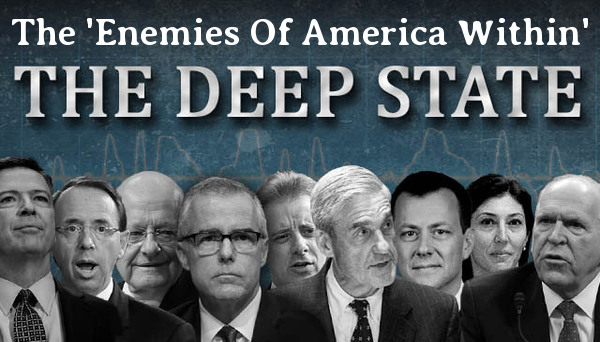
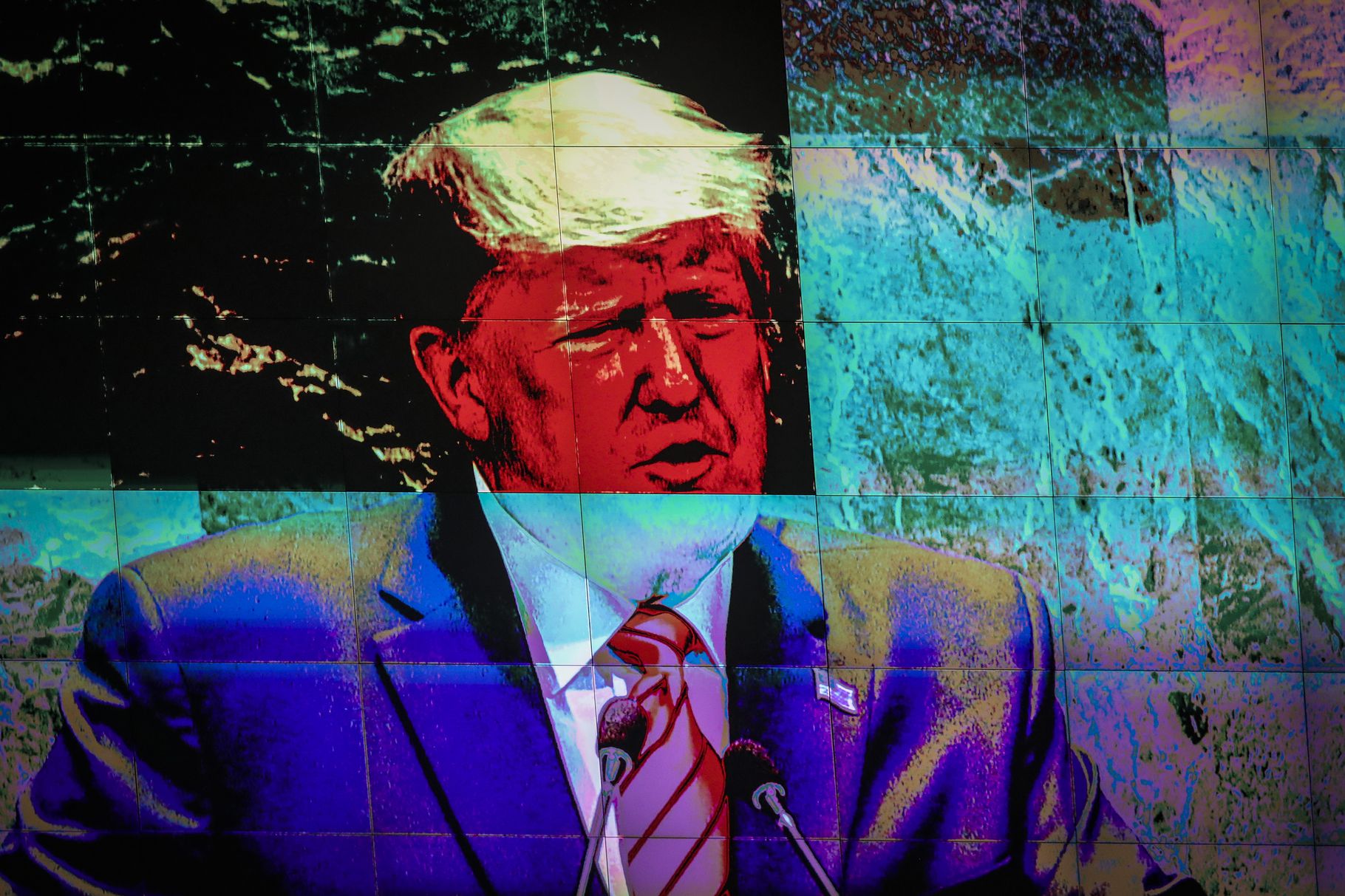
‘Impeachment’ is nothing less than a full-scale Communist coup attempt by treasonous Democrats who long ago sold out America and the American people for Globalism | Natural News

Editor’s Note: This article is a bit extreme in its wording, but I include it here to document the tenor of the partisan debate about who did what. Is this a conspiracy of the Deep State & Globalists to undermine a duly elected President of the United States and remove him from office? You decide.

In an excellent new story over at CD Media titled “If You Were The Dem Organized Crime Family And About To Be Prosecuted For An Illegal Coup, What Would You Do?” that Whatfinger News had linked to on Wednesdayauthor L. Todd Wood, a graduate of the U.S. Air Force Academy who flew special operations helicopters supporting SEAL Team 6 and Delta Force, argues that criminal Democrats and their enablers within the mainstream media know what is coming and, desperate beyond words, their doomed-to-fail impeachment attempt of President Trump might be the only way to get them out of the huge mess that they are in.

(Article by Stefan Stanford republished from AllNewsPipeline.com)

With Susan Duclos reporting in this story on ANP on Wednesday that ‘the beginning of the end talk being babbled about by Democrats again in their drive to take down President Trump echoes that which they’ve been babbling on now about for nearly 3 years since President Trump took office, even House Democrat Jeff Van Drew knows that “at the end of the day, all we’re going to have is a failed impeachment“.

Yet as Tom Luongo so perfectly points out in this new story republished at Zero Hedge titled “The Coup Has Begun – The Empire Strikes Back Everywherethere are no coincidences in politics. Everything happens on a particular schedule. So when I see a day as crazy as today I have to ask the question, “Why this, why now?”

And as we see in his story, what’s happening politically is by no means just regional here in America – it’s happening all around the world, helping to prove the ‘global nature‘ of ‘globalism‘ and the fact that the globalists are ‘digging in‘ at a time when President Trump just ‘blistered‘ socialism and globalism at the United Nations. From Luongo’s story.:

Look at the headlines and you’ll see what I’m talking about. All of these things happened since I woke up at 7:30am Monday morning in Florida:

  • The British Supreme Court just arrogated unprecedented power to itself by inserting itself into any dispute between the Government and Parliament. This upends more than 300 years of constitutional process.
  • The Democrats have announced they will pursue impeachment charges against President Trump because an unverified, hearsay whistleblower made a complaint about a phone call between Trump and Ukrainian President Volodymyr Zelenski. Impeachment odds soared overnight as someone was tipped off about the Democrats’ plan.
  • Bitcoin’s hashrate mysteriously flash-crashed more than 40% presaging a massive $1500 drop in price.
  • Donald Trump delivered a blistering critique of socialism at the United Nations General Assembly. Too bad he’s nearly as bad as the ones he’s fighting on the far left.
  • Europe’s Trio of Faded Glory — The UK, France and Germany — joined in the chorus of unverified condemnation of Iran in the attack on the Saudi oil field on the 14th.
  • The Federal Reserve continues to bail out banks to the tune of $65 to $75 billion per day through overnight repo operations that no one can give us an explanation as to why they’re needed.
  • This feels to me like a multi-level coup against those that dare stand athwart the global power structure. Both British and American leadership institutions are under sincere attack with these moves.

As we’ll explore in the rest of this ANP story, with everything else that we’ve been watching unfolding in America over the past decade+, one could easily argue that what we’ve been witnessing over the past several years since President Trump was voted into office has been a full-scale Communist coup attempt with Democrats and globalists never, ever believing that Hillary Clinton would lose in 2016 and their beliefs they’d be ‘protected’ from their crimes of treason and completely selling out America and the American people forever.

As Doomer Doug‘ reported in this recent story titled “If Treason Prosper, Then None Dare Call It Treason, the final gasps of the attempted ‘coup d’etat‘ to remove President Trump are now underway with Doug warning in his story that the end results of this could be complete chaos and anarchy in America, potentially leading to Civil War with Democrats insanely still believing they can do no wrong while attempting to overthrow the results of the US election for more than 2 years running now with the ‘coup attempt‘ led by people such as Communist-voting John Brennan.

Read more at: AllNewsPipeline.com

Source: Natural News

Trump goes to the United Nations to argue against everything it stands for — again | Vox

Editor’s Note: This article is a bit sarcastic, as we now expect from many jaded journalists these days, but it does convey the importance of national sovereignty. All nations should put themselves first, look after their own best interests and the welfare of their people instead of imagining that one day a global socialist state will provide for them. This is an important tide shift towards a United Nations of sovereign countries, independent and free. May it become so!

UNITED NATIONS, New York — In his third annual speech to the United Nations General Assembly, President Donald Trump delivered a clear message in favor of nationalism and national sovereignty and against globalism.

But three years into Trump’s presidency, that kind of rhetoric is no longer as shocking as it once was. Most of the world has heard it from him before.

Trump, in an oddly subdued speech in New York on Tuesday, reprised his case that all nations should exert their sovereignty, protect their borders, and reject any mutual and international cooperation that doesn’t put their country’s own interests first. For Trump, it’s “America First;” for everyone else it’s “[Insert Country Here] First.”

“If you want democracy, hold on to your sovereignty,” Trump said. “And if you want peace, love your nation.”

Trump touted the “great” new trade deals he’s working on and lambasted China’s trade practices. He criticized the Iranian regime for its “bloodlust.” He tried to elevate his stalled diplomacy with North Korea. He condemned the socialist regime of Nicolás Maduro in Venezuela. He denounced illegal immigration and even made time to complain about perceived censorship of conservative viewpoints by social media companies and to attack social justice advocates.

It was classic Trump — only without the enthusiasm he usually displays when discussing these pet topics. If anything, Trump seemed bored by his own speech.

There were two rare but notable exceptions: Trump’s stern notice to China that the US is closely watching how it handles the unrest in Hong Kong, and his call to end the criminalization of homosexuality around the world.

The rest, though, was standard Trump fare, and few of the world leaders gathered to hear him speak seemed surprised or rattled by his words. He couldn’t even manage to garner any of last year’s surprised laughs.

Trump’s schtick isn’t shocking anymore. But it shows just how much of an outlier the US is.

“The future does not belong to globalists; it belongs to patriots,” Trump said at the start of his speech.

It seemed like a throwaway line but it was actually a clear articulation of what Trump and leaders of his ilk have been arguing for the past few years: Populist nationalism is the future and multinational cooperation and mutual trust is the past — even if that’s the very vision the United Nations is trying to promote and protect.

And that message has permeated. Brazilian President Jair Bolsonaro, who spoke shortly before Trump, cited the US president’s defense of the sanctity of national sovereignty to push back against worldwide criticism of Bolsonaro’s handling of the Amazon fires. “They even called into question that which we hold as a most sacred value, our sovereignty,” Bolsonaro said at one point.

Trump was sandwiched between a slew of authoritarians and wanna-be authoritarians (Bolsonaro before and Egypt’s Abdel Fattah el-Sisi and then Turkey’s Recep Tayyip Erdoğan afterward), and while the US president paid lip service to democracy, his defense of it didn’t fit with his nationalistic rhetoric.

Trump and some of these other speeches stood in stark contrast to that of UN Secretary-General António Guterres, who addressed the crowd before the world leaders began to take the stage and warned of the “disquiet” currently plaguing the world.

He was mostly referring to the world’s problems — armed conflicts, increasing inequality, the threat of climate change. But Guterres’s argument is that nations need to band together to address these challenges and to promote the rights of all citizens, no matter their homeland. Guterres believes the forum to do so is the United Nations.

Trump’s argument is, as it always has been, that every country needs to look after itself.

Source: Vox

Japan may abandon the development of 5G networks for the health of citizens | Красная Армия

Japan will not develop and invest in the creation of fifth-generation mobile networks. This is stated on the official website of the Ministry of High Technologies of the country. Officials expressed the opinion that the creation of a faster Internet than previously is dangerous for the population and may adversely affect people’s health and labor productivity.

A study by the University of Nagasaki provides figures confirming the increase in the number of mental disorders and fatigue among high-speed Internet users. According to scientists, the more a person manages to conduct intellectual operations per minute, the more he is prone to the development of stress, absent-mindedness and an increase in nervous excitement. The Ministry of Health supplements colleagues and assures that using 5G networks can reduce the average life expectancy in the country for the first time in 60 years, and the impact of high-speed Internet is comparable to the effects of radiation on the human body.

“We need to think about the health of the Japanese. Our country has already accelerated economically so that today we have nowhere to hurry. It is necessary to stabilize this state. 5G is fraught with great danger. So we think not only we, yesterday this information was confirmed by the US ambassador to Japan. If America, China or the EU countries are ready to risk their people for the sake of progress, then such a strategy is unacceptable for our welfare state, ”said Nobunari Kabato, Minister of High Technologies.

The bill to ban fifth-generation mobile networks in the country has already been submitted to the Japanese parliament.

Source: Красная АрмияWeb Archive

Fake news is real — Artificial Intelligence is going to make it much worse | CNBC

“The Boy Who Cried Wolf” has long been a staple on nursery room shelves for a reason: It teaches kids that joking too much about a possible threat may turn people ignorant when the threat becomes an actual danger.

President Donald Trump has been warning about “fake news” throughout his entire political career putting a dark cloud over the journalism professional. And now the real wolf might be just around the corner that industry experts should be alarmed about.

The threat is called “deepfaking,” a product of AI and machine learning advancements that allows high-tech computers to produce completely false yet remarkably realistic videos depicting events that never happened or people saying things they never said. A viral video starring Jordan Peele and “Barack Obama” warned against this technology in 2018, but the message was not enough to keep Jim Carrey from starring in “The Shining” earlier this week.

The danger goes far beyond manipulating 1980s thrillers. Deepfake technology is allowing organizations that produce fake news to augment their “reporting” with seemingly legitimate videos, blurring the line between reality and fiction like never before — and placing the reputation of journalists and the media at greater risk.

Ben Zhao, a computer science professor at the University of Chicago, thinks the age of getting news on social media makes consumers very susceptible to this sort of manipulation.

“What the last couple years has shown is basically fake news is quite compelling even in [the] absence of actual proof. … So the bar is low,” Zhao said.

The bar to produce a convincing doctored video is lower than people might assume.

Earlier this year a clip purporting to show Democratic leader Nancy Pelosi slurring her words when speaking to the press was shared widely on social media, including at one point by Trump’s attorney Rudy Giuliani. However, closer inspection revealed that the video had been slowed to 75% of its normal speed to achieve this slurring effect, according to the Washington Post. Even with the real video now widely accessible, Hany Farid, a professor at UC Berkeley’s School of Information and a digital forensics expert, said he still regularly receives emails from people insisting the slowed video is the legitimate one.

“Even in these relatively simple cases, we are struggling to sort of set the record straight,” Farid said.

It would take a significant amount of expertise for a fake news outlet to produce a completely fabricated video of Oprah Winfrey endorsing Trump, but researchers say the technology is improving every day. At the University of Washington, computer vision researchers are developing this technology for positive, or at least benign, uses like making video conferencing more realistic and letting students talk to famous historical figures. But this research also leads to questions about potential dangers, as the attempts made by attackers are expected to continually improve.

How to detect a deepfake

To make one of these fake videos, computers digest thousands of still images of a subject to help researchers build a 3-D model of the person. This method has some limitations, according to Zhao, who noted the subjects in many deepfake videos today never blink, since almost all photographs are taken with a person’s eyes open.

However, Farid said these holes in the technology are being filled incredibly rapidly.

“If you asked me this question six months ago, I would’ve said, ‘Yeah, [the technology] is super cool, but there’s a lot of artifacts, and if you’re paying attention, you can probably tell that there’s something wrong,’” Farid said. “But I would say we are … quickly but surely getting to the point where the average person is going to have trouble distinguishing.”

In fact, Zhao said researchers believe the shortcomings that make deepfake videos look slightly off to the eye can readily be fixed with better technology and better hardware.

“The minute that someone says, ‘Here’s a research paper telling you about how to detect this kind of fake video,’ that is when the attackers look at the paper and say, ‘Thank you for pointing out my flaw. I will take that into account in my next-generation video, and I will go find enough input … so that the next generation of my video will not have the same problem,’” Zhao said.

“Once we live in an age where videos and images and audio can’t be trusted … well, then everything can be fake.” – Hany Farid, Professor at UC Berkeley’s School of Information

One of the more recent developments in this field is in generating speech for a video. To replicate a figure such as Trump’s voice, computers can now simply analyze hundreds of hours of him speaking. Then researchers can type out what they want Trump to say, and the computer will make it sound as if he actually said it. Facebook, Google and Microsoft have all more or less perfected this technology, according to Farid.

Manipulated videos of this sort aren’t exactly new — Forest Gump didn’t actually meet JFK, after all. However, Farid says this technology is hitting its stride, and that makes the danger new.

“To me the threat is not so much ‘Oh, there’s this new phenomenon called deepfakes,’” Farid said. “It’s the injection of that technology into an existing environment of mistrust, misinformation, social media, a highly polarized electorate, and now I think there’s a real sort of amplification factor because when you hear people say things, it raises the level of belief to a whole new level.”

The prospect of widespread availability of this technology is raising eyebrows, too. Tech-savvy hobbyists have long been using deepfakes to manufacture pornography, a consistent and comically predictable trend for new technology. But Zhao believes it is only a matter of time before the research-caliber technology gets packaged and released for mass-video manipulation in much broader contexts.

“At some point someone will basically take all these technologies and integrate and do the legwork to build a sort of fairly sophisticated single model, one-stop shop … and when that thing hits and becomes easily accessible to many, then I think you’ll see this becoming much more prevalent,” Zhao said. “And there’s nothing really stopping that right now.”

Facing a massive consumer trust issue

When this happens, the journalism industry is going to face a massive consumer trust issue, according to Zhao. He fears it will be hard for top-tier media outlets to distinguish a real video from a doctored one, let alone news consumers who haphazardly stumble across the video on Twitter.

“Once we live in an age where videos and images and audio can’t be trusted … well, then everything can be fake,” Farid said. “We can have different opinions, but we can’t have different facts. And I think that’s sort of the world we’re entering into when we can’t believe anything that we see.”

Zhao has spent a great deal of time speaking with prosecutors, judges — the legal profession is another sector where the implications are huge — reporters and other professors to get a sense for every nuance of the issue. However, despite his clear understanding of the danger deepfakes pose, he is still unsure of how news outlets will go about reacting to the threat.

“Certainly, I think what can happen is … there will be even less trust in sort of mainstream media, the main news outlets, legitimate journalists [that] sort of react and report real-time stories because there is a sense that anything that they have seen … could be in fact made up,” Zhao said.

Then it becomes a question of how the press deal with the disputes over reality.

“And if it’s someone’s word, an actual eyewitness’ word versus a video, which do you believe, and how do you as an organization go about verifying the authenticity or the illegitimacy of a particularly audio or video?” Zhao asked.

Defeating the deepfakes

Part of this solution may be found in the ledger technology that provides the digital infrastructure to support cryptocurrencies like bitcoin — the blockchain. Many industries are touting blockchain as a sort of technological Tylenol. Though few understand exactly how it works, many swear it will solve their problems.

Farid said companies like photo and video verification platform Truepic, to which he serves as an advisor, are using the blockchain to create and store digital signatures for authentically shot videos as they are being recorded, which makes them much easier to verify later. Both Zhao and Farid are hoping social platforms like Facebook and Twitter will then promote these videos that are verified as authentic over non-verified videos, helping to halt the spread of deepfakes.

“The person creating the fake always has the upper hand,” Farid said. “Playing defense is really, really hard. So I think in the end our goal is not to eliminate these things, but it’s to manage the threat.”

Until this happens, Zhao said the fight against genuinely fake news may not start on a ledger, but in stronger consumer awareness and journalists banding together to better verify sources through third parties.

“One of the hopes that I have for defeating this type of content is that people are just so inundated with news coverage and information about these types of videos that they become fundamentally much more skeptical about what a video means and they will look closer,” Zhao said. “There has to be that level of scrutiny by the consumer for us to have any chance of fighting back against this type of fake content.”

Nicholas Diakopoulos, assistant professor in Northwestern University’s School of Communication and expert on the future of journalism, said via email that the best solutions involve a mix of educational and sociotechnical advances.

“There are a variety of perceptual cues that can be tip-offs to a deepfake and we should be teaching those broadly to the public,” he said.

Diakopoulos has referenced Farid’s work on photo forensics among ideas outlined in an article he wrote for the Columbia Journalism Review last year. He also cited a research project called FaceForensics that uses machine learning to detect, with 98.1% accuracy, whether a video of a face is real. Another research technique under study: Blood flow in video of a person’s face can be analyzed in order to see if pixels periodically get redder when the heart pumps blood.

“On the sociotechnical side, we need to develop advanced forensics techniques that can help debunk synthesized media when put into the hands of trained professionals,” he told CNBC. “Rapid response teams of journalists should be trained and ready to use these tools during the 2020 elections so they can debunk disinformation as quickly as possible.”

Diakopoulos has studied the implications of deepfakes for the 2020 electionsspecifically. He also has written papers on how journalists need to think when “reporting in a machine reality.”

And he remains optimistic.

“If news organizations develop clear and transparent policies of their efforts using such tools to ensure the veracity of the content they publish, this should help buttress their trustworthiness. In an era when we can’t believe our eyes when we see something online, news organizations that are properly prepared, equipped and staffed are poised to become even more trusted sources of information.”

Source: CNBC

Study touts planting 1 trillion trees as most effective climate change solution | The Hill

Healthy green trees in a forest of old spruce, fir and pine trees in wilderness of a national park. Sustainable industry, ecosystem and healthy environment concepts and background.

The cheapest way to halt the effects of climate change could be planting 1 trillion trees, according to a new study.

The study in the journal Science, first reported by The Associated Press, found that planting trees could be the most effective way to remove carbon from the atmosphere, but cautioned that it would have little effect without a reduction of emissions around the globe.

“This is by far — by thousands of times — the cheapest climate change solution” study co-author Thomas Crowther, an ecologist at the Swiss Federal Institute of Technology, said.

“It’s certainly a monumental challenge, which is exactly the scale of the problem of climate change,” he added.

Though, Crowther cautioned, “None of this works without emissions cuts.”

Scientists with the United Nations have called for a major reduction in carbon emissions over the next decade to stave off the worst effects of climate change, including rising sea levels and dangerous weather phenomena.

Lawmakers around the world have debated on how to address the issue, and in 2017 the U.S. withdrew from a major accord meant to battle climate change due to President Trump‘s opposition to the pact.

Democratic candidates for president, including former Vice President Joe Biden, have called for the U.S. to rejoin the agreement. Progressives are pushing an ambitious plan to cut U.S. carbon emissions, the Green New Deal, introduced earlier this year by Sen. Ed Markey (D-Mass.) and Rep. Alexandria Ocasio-Cortez (D-N.Y.).

If enacted, the Green New Deal calls for the transition of America’s energy grid away from fossil fuels to renewable energy.

Source: The Hill

European Parliament elections: 5 takeaways from the results | NBC News

The dust has settled on the world’s second largestdemocratic exercise, a continent-wide vote that has left Europe’s political landscape reshaped.

Last week, some 373 million citizens across 28 countries took part in elections for the European Parliament, which makes laws that bind the political and economic bloc. The results rolled in on Sunday night.

Far-right populists had some wins, but it wasn’t quite the dramatic, widespread surge seen in recent elections at the national and local level across the continent.

What is clear is that the mainstream parties from the center-left and center-right hemorrhaged votes, with much of their support going to a fragmented collection of environmentalists and pro-European Union liberals.

Here are five key takeaways.

1. The far-right surge never quite came

Steve Bannon, the former adviser to President Donald Trump, called for these elections to be a referendum endorsing his right-wing populist vision for Europe. But while there were some victories for this camp, the full-blown tsunami that some predicted failed to materialize.

Right-wing populists fell short of expectations in Austria, the Netherlands and Denmark, while Germany’s AfD party made only slight gains.

Even in France, where Marine le Pen’s National Rally came first, beating President Emmanuel Macron’s En Marche party, its provisional vote share was down on the last European Parliament elections in 2014.

“The big story is that the nationalist populists have not managed to turn this into a referendum on the E.U.,” said Jose Ignacio Torreblanca, a senior policy fellow at the European Council on Foreign Relations, a Brussels-based think tank. “People like Bannon have failed.”

That said, while the gains might not have been as dramatic as some forecast, the election arguably cemented far-right populism as a European force that isn’t going away soon. Such parties are often anti-migrant, anti-Muslim and anti-E.U., or at least wish to radically reshape the bloc from within.

There were clear victories for the right in Poland, Hungary and Italy. “The rules are changing in Europe,” said Matteo Salvini, the leader of Italy’s far-right League party which got around 34 percent of the vote there. “A new Europe is born.”

Britain’s Brexit Party was also victorious, securing around one-third of the vote and relegating the ruling Conservatives to fifth place at a dismal 9 percent. However, the U.K. should perhaps be seen as a special case due to the country’s protracted and messy attempts to leave the European Union.

2. The collapse of the mainstream

For the first time, the traditional center-left and center-right parties will not have a majority in the European Parliament’s 751-seat chamber.

The Social Democrats and the European People’s Party, groupings which have dominated for years, lost 39 and 36 seats respectively, according to provisional results.

“This is a profound change,” said Janis A. Emmanouilidis, director of studies at the European Policy Centre, another Brussels-based think tank. “The two biggest parties have lost a significant number of seats.”

However, voters often use the E.U. elections to give major parties a bloody nose, secure in the knowledge that it will not cause upheaval in their own national parliaments.

Even so, Sunday’s results represented a seismic rejection of the traditional ruling parties across the continent.

“We are facing a shrinking center of the European Union parliament,” Manfred Weber, chairman of the European People’s Party said. “From now on, those who want to have a strong European Union have to join forces.”

The one exception was in Spain, where the Socialists looked set to gain 20 of the country’s 54 seats. The Socialists belong to the wider Social Democrats group, however, for whom the general outlook was far more bleak.

“If you lose an election, if you lose seats, you have to be modest,” added Frans Timmermans, the lead candidate for the Social Democrats. “We have lost seats and this means that we have to be humble.”

3. More than Green shoots

Riding something of an environmentalist wave washing over Europe, the continent’s Green group made big gains.

This was most evident in Germany, where the Greens doubled their provisional vote share to 21 percent and overtook the country’s traditional center-left Social Democrats in the process.

In France and Britain, the Greens also did well, placing third and fourth respectively. More subtly, environmental issues were given increased prominence in the manifestos of other parties, too.

This shift comes on the back of months of demonstrations demanding action over climate change. In May, the United Nations released a report warning 1 million species of plants and animals were under threat of extinction.

“We will work tirelessly. For people. For Europe. For our planet!” the European Greens tweeted.

4. Pro-E.U. liberals make gains

Another group that mopped up support from the traditional parties was the pro-Europe, pro-business liberal centrists.

Parties allied with the Alliance of Liberals and Democrats for Europe — known as ALDE — looked set to increase their number of seats from 68 to 109, although this was largely thanks to Macron’s En Marche party joining them.

ALDE is led by Guy Verhofstadt, one of the E.U.’s most ardent defenders against populist forces that wish to dismantle or disrupt the union.

The boost in support suggests that voters, especially young people, came out to back their side of the argument.

“When Europe is threatened, you have seen the youth mobilizing to defend it,” said Torreblanca at the European Council on Foreign Relations.

The BBC also reported that turnout in the U.K. surged in areas that supported the country staying in the E.U. in the 2016 Brexit referendum. Britain’s Liberal Democrats came second with 20 percent of the vote. They were one of the parties to explicitly oppose Brexit, and gained huge support in Remain-backing areas, including beating Labour in that party’s erstwhile stronghold of London.

5. Good luck trying to govern now

This was the first time in Europe’s history that turnout for these elections has risen, climbing from 43 percent to an encouraging 51 percent.

“This is noteworthy,” said Emmanouilidis at the European Policy Centre, calling the leap “remarkably higher.”

Yet the results spell a European Parliament that is going to be far more fragmented than it has been in recent years.

The two centrist giants bled support and will be unable to form the kind of “grand coalition” that they had before. Instead they might need another coalition partner or two, meaning more compromise and room for disagreement on key issues.

Timmermans, of the Social Democrats, has already ruled out attempting to build a coalition with the far-right, calling instead for a “progressive” grouping to be formed.

“It will become quite messy,” said Emmanouilidis, describing attempts to find consensus in Brussels “an uphill struggle” at the best of times.

Source: NBC News


A Complete (Dated) Psychological Analysis of Trump’s Support | Psychology Today

By Bobby Azarian, Ph.D.

Editor’s Note: There are lots of problems with this analysis especially because many assertions are sourced from the liberal media which has an agenda, but it has some interesting talking points for understanding our current political situation. Our nation was divided long before Donald Trump became President, his election just brought this fact to the surface. There are two America’s and they are not even talking with each other anymore. 

Whether we want to or not, we must try to understand the Donald Trump phenomenon, as it has completely swept the nation and also fiercely divided it. What is most baffling about it all is Trump’s apparent political invincibility. As he himself said even before he won the presidential election, “I could stand in the middle of 5th Avenue and shoot somebody and I wouldn’t lose voters.” Unfortunately for the American people, this wild-sounding claim appears to be truer than not. It should also motivate us to explore the science underlying such peculiar human behavior, so we can learn from it, and potentially inoculate against it.

In all fairness, we should recognize that lying is sadly not uncommon for politicians on both sides of the political aisle, but the frequency and magnitude of the current president’s lies should have us all wondering why they haven’t destroyed his political career, and instead perhaps strengthened it. Similarly, we should be asking why his inflammatory rhetoric and numerous scandals haven’t sunk him. We are talking about a man who was caught on tape saying, “When you’re a star, they let you do it. You can do anything. Grab them by the pussy.” Politically surviving that video is not normal, or anything close to it, and such a revelation would likely have been the end of Barack Obama or George Bush had it surfaced weeks before the election.

While dozens of psychologists have analyzed Trump, to explain the man’s political invincibility, it is more important to understand the minds of his staunch supporters. While various popular articles have illuminated a multitude of reasons for his unwavering support, there appears to be no comprehensive analysis that contains all of them. Since there seems to be a real demand for this information, I have tried to provide that analysis below.

Some of the explanations come from a 2017 review paper published in the Journal of Social and Political Psychology by the psychologist and UC Santa Cruz professor Thomas Pettigrew. Others have been put forth as far back as 2016, by me, in various articles and blog posts for publications like Psychology Today. A number of these were inspired by insights from psychologists like Sheldon Solomon, who laid the groundwork for the influential Terror Management Theory, and David Dunning, who did the same for the Dunning-Kruger effect.

This list will begin with the more benign reasons for Trump’s intransigent support. As the list goes on, the explanations become increasingly worrisome, and toward the end, border on the pathological. It should be strongly emphasized that not all Trump supporters are racist, mentally vulnerable, or fundamentally bad people. It can be detrimental to society when those with degrees and platforms try to demonize their political opponents or paint them as mentally ill when they are not. That being said, it is just as harmful to pretend that there are not clear psychological and neural factors that underlie much of Trump supporters’ unbridled allegiance.

The psychological phenomena described below mostly pertain to those supporters who would follow Trump off a cliff. These are the people who will stand by his side no matter what scandals come to light, or what sort of evidence for immoral and illegal behavior surfaces.

1. Practicality Trumps Morality

For some wealthy people, it’s simply a financial matter. Trump offers tax cuts for the rich and wants to do away with government regulation that gets in the way of businessmen making money, even when that regulation exists for the purpose of protecting the environment. Others, like blue-collared workers, like the fact that the president is trying to bring jobs back to America from places like China. Some people who genuinely are not racist (those who are will be discussed later) simply want stronger immigration laws because they know that a country with open borders is not sustainable. These people have put their practical concerns above their moral ones. To them, it does not make a difference if he’s a vagina-grabber, or if his campaign team colluded with Russia to help him defeat his political opponent. It is unknown whether these people are eternally bound to Trump in the way others are, but we may soon find out if the Mueller investigation is allowed to come to completion.

2. The Brain’s Attention System Is More Strongly Engaged by Trump

According to a study that monitored brain activity while participants watched 40 minutes of political ads and debate clips from the presidential candidates, Donald Trump is unique in his ability to keep the brain engaged. While Hillary Clinton could only hold attention for so long, Trump kept both attention and emotional arousal high throughout the viewing session. This pattern of activity was seen even when Trump made remarks that individuals didn’t necessarily agree with. His showmanship and simple language clearly resonate with some at a visceral level.

3. America’s Obsession with Entertainment and Celebrities

Essentially, the loyalty of Trump supporters may in part be explained by America’s addiction to entertainment and reality TV. To some, it doesn’t matter what Trump actually says because he’s so amusing to watch. With the Donald, you are always left wondering what outrageous thing he is going to say or do next. He keeps us on the edge of our seat, and for that reason, some Trump supporters will forgive anything he says. They are happy as long as they are kept entertained.

4. “Some Men Just Want to Watch the World Burn.”

Some people are supporting Trump simply to be rebellious or to introduce chaos into the political system. They may have such distaste for the establishment and democrats like Hillary Clinton that their support for Trump is a symbolic middle finger directed at Washington. These people may have other issues, like an innate desire to troll others or an obsession with schadenfreude.

5. The Fear Factor: Conservatives Are More Sensitive to Threat

Science has  shown that the conservative brain has an exaggerated fear response when faced with stimuli that may be perceived as threatening. A 2008 study in the journal Science found that conservatives have a stronger physiological reaction to startling noises and graphic images compared to liberals. A brain-imaging study published in Current Biology revealed that those who lean right politically tend to have a larger amygdala — a structure that is electrically active during states of fear and anxiety. And a 2014 fMRI study found that it is possible to predict whether someone is a liberal or conservative simply by looking at their brain activity while they view threatening or disgusting images, such as mutilated bodies. Specifically, the brains of self-identified conservatives generated more activity overall in response to the disturbing images.

These brain responses are automatic and not influenced by logic or reason. As long as Trump continues to portray Muslims and Hispanic immigrants as imminent threats, many conservative brains will involuntarily light up like light bulbs being controlled by a switch. Fear keeps his followers energized and focused on safety. And when you think you’ve found your protector, you become less concerned with offensive and divisive remarks.

6. The Power of Mortality Reminders and Perceived Existential Threat

A well-supported theory from social psychology, known as Terror Management Theory, explains why Trump’s fear mongering is doubly effective. The theory is based on the fact that humans have a unique awareness of their own mortality. The inevitably of one’s death creates existential terror and anxiety that is always residing below the surface. In order to manage this terror, humans adopt cultural worldviews — like religions, political ideologies, and national identities — that act as a buffer by instilling life with meaning and value.

Terror Management Theory predicts that when people are reminded of their own mortality, which happens with fear mongering, they will more strongly defend those who share their worldviews and national or ethnic identity, and act out more aggressively towards those who do not. Hundreds of studies have supported this hypothesis, and some have specifically shown that triggering thoughts of death tends to shift people towards the right.

Not only do death reminders increase nationalism, they may influence voting habits in favor of more conservative presidential candidates. And more disturbingly, in a study with American students, scientists found that making mortality salient increased support for extreme military interventions by American forces that could kill thousands of civilians overseas. Interestingly, the effect was present only in conservatives.

By constantly emphasizing existential threat, Trump may be creating a psychological condition that makes the brain respond positively rather than negatively to bigoted statements and divisive rhetoric.

7. The Dunning-Kruger Effect: Humans Often Overestimate Their Political Expertise

Some who support Donald Trump are under-informed or misinformed about the issues at hand. When Trump tells them that crime is skyrocketing in the United States, or that the economy is the worst it’s ever been, they simply take his word for it.

The Dunning-Kruger effect explains that the problem isn’t just that they are misinformed; it’s that they are completely unaware that they are misinformed, which creates a double burden.

Studies have shown that people who lack expertise in some area of knowledge often have a cognitive bias that prevents them from realizing that they lack expertise. As psychologist David Dunning puts it in an op-ed for Politico, “The knowledge and intelligence that are required to be good at a task are often the same qualities needed to recognize that one is not good at that task — and if one lacks such knowledge and intelligence, one remains ignorant that one is not good at the task. This includes political judgment.” These people cannot be reached because they mistakenly believe they are the ones who should be reaching others.

8. Relative Deprivation — A Misguided Sense of Entitlement

Relative deprivation refers to the experience of being deprived of something to which one believes they are entitled. It is the discontent felt when one compares their position in life to others who they feel are equal or inferior but have unfairly had more success than them.

Common explanations for Trump’s popularity among non-bigoted voters involve economics. There is no doubt that some Trump supporters are simply angry that American jobs are being lost to Mexico and China, which is certainly understandable, although these loyalists often ignore the fact that some of these careers are actually being lost due to the accelerating pace of automation.

These Trump supporters are experiencing relative deprivation, and are common among the swing states like Ohio, Michigan, and Pennsylvania. This kind of deprivation is specifically referred to as “relative,” as opposed to “absolute,” because the feeling is often based on a skewed perception of what one is entitled to.

9. Lack of Exposure to Dissimilar Others

Intergroup contact refers to contact with members of groups that are outside one’s own, which has been experimentally shown to reduce prejudice. As such, it’s important to note that there is growing evidence that Trump’s white supporters have experienced significantly less contact with minorities than other Americans. For example, a 2016 study found that “…the racial and ethnic isolation of Whites at the zip-code level is one of the strongest predictors of Trump support.” This correlation persisted while controlling for dozens of other variables. In agreement with this finding, the same researchers found that support for Trump increased with the voters’ physical distance from the Mexican border. These racial biases might be more implicit than explicit, the latter which is addressed in #14.

10. Trump’s Conspiracy Theories Target the Mentally Vulnerable

While the conspiracy theory crowd — who predominantly support Donald Trump and crackpot allies like Alex Jones and the shadowy QAnon — may appear to just be an odd quirk of modern society, some of them may suffer from psychological illnesses that involve paranoia and delusions, such as schizophrenia, or are at least vulnerable to them, like those with schizotypy personalities.

The link between schizotypy and belief in conspiracy theories is well-established, and a recent study published in the journal PsychiatryResearch has demonstrated that it is still very prevalent in the population. The researchers found that those who were more likely to believe in outlandish conspiracy theories, such as the idea that the U.S. government created the AIDS epidemic, consistently scored high on measures of “odd beliefs and magical thinking.” One feature of magical thinking is a tendency to make connections between things that are actually unrelated in reality.

Donald Trump and media allies target these people directly. All one has to do is visit alt-right websites and discussion boards to see the evidence for such manipulation.

11. Trump Taps into the Nation’s Collective Narcissism

Collective narcissism is an unrealistic shared belief in the greatness of one’s national group. It often occurs when a group who believes it represents the ‘true identity’ of a nation — the ‘ingroup,’ in this case White Americans — perceives itself as being disadvantaged compared to outgroups who are getting ahead of them ‘unrightfully.’ This psychological phenomenon is related to relative deprivation (#6).

study published last year in the journal Social Psychological and Personality Science found a direct link between national collective narcissism and support for Donald Trump. This correlation was discovered by researchers at the University of Warsaw, who surveyed over 400 Americans with a series of questionnaires about political and social beliefs. Where individual narcissism causes aggressiveness toward other individuals, collective narcissism involves negative attitudes and aggressiontoward ‘outsider’ groups (outgroups), who are perceived as threats.

Donald Trump exacerbates collective narcissism with his anti-immigrant, anti-elitist, and strongly nationalistic rhetoric. By referring to his supporters, an overwhelmingly white group, as being “true patriots” or “real Americans,” he promotes a brand of populism that is the epitome of “identity politics,” a term that is usually associated with the political left. Left-wing identity politics, as misguided as they may sometimes be, are generally aimed at achieving equality, while the right-wing brand is based on a belief that one nationality or race is superior or entitled to success and wealth for no other reason than identity.

12. The Desire to Want to Dominate Others

Social dominance orientation (SDO) — which is distinct from but related to authoritarian personality (#13) — refers to people who have a preference for the societal hierarchy of groups, specifically with a structure in which the high-status groups have dominance over the low-status ones. Those with SDO are typically dominant, tough-minded, and driven by self-interest.

In Trump’s speeches, he appeals to those with SDO by repeatedly making a clear distinction between groups that have a generally higher status in society (White), and those groups that are typically thought of as belonging to a lower status (immigrants and minorities). A 2016 survey study of 406 American adults published last year in the journal Personality and Individual Differences found that those who scored high on both SDO and authoritarianism were more likely to vote for Trump in the election.

13. Authoritarian Personality 

Authoritarianism refers to the advocacy or enforcement of strict obedience to authority at the expense of personal freedom, and is commonly associated with a lack of concern for the opinions or needs of others. Authoritarian personality is characterized by belief in total and complete obedience to authority. Those with this personality often display aggression toward outgroup members, submissiveness to authority, resistance to new experiences, and a rigid hierarchical view of society. Authoritarianism is often triggered by fear, making it easy for leaders who exaggerate threat or fear monger to gain their allegiance.

Although authoritarian personality is found among liberals, it is more common among the right-wing around the world. President Trump’s speeches, which are laced with absolutist terms like “losers” and “complete disasters,” are naturally appealing to those with such a personality.

While research showed that Republican voters in the U.S. scored higher than Democrats on measures of authoritarianism before Trump emerged on the political scene, a 2016 Politico survey found that high authoritarians greatly favored then-candidate Trump, which led to a correct prediction that he would win the election, despite the polls saying otherwise.

14. Racism and Bigotry

It would be grossly unfair and inaccurate to say that every one of Trump’s supporters have prejudice against ethnic and religious minorities, but it would be equally inaccurate to say that few do. The Republican party, going at least as far back to Richard Nixon’s “southern strategy,” has historically used tactics that appealed to bigotry, such as lacing speeches with “dog whistles” — code words that signaled prejudice toward minorities that were designed to be heard by racists but no one else.

While the dog whistles of the past were subtler, Trump’s signaling is sometimes shockingly direct. There’s no denying that he routinely appeals to racist and bigoted supporters when he calls Muslims “dangerous” and Mexican immigrants “rapists” and “murderers,” often in a blanketed fashion. Perhaps unsurprisingly, a recent study has shown that support for Trump is correlated with a standard scale of modern racism.

Source: Psychology Today

JFK to 911 Everything Is A Rich Man’s Trick (film) | YouTube & IMDB

Authoritatively written and narrated by Francis Richard Conolly, the film begins its labyrinthine tale during the era of World War I, when the wealthiest and most powerful figures of industry discovered the immense profits to be had from a landscape of ongoing military conflict. The film presents a persuasive and exhaustively researched argument that these towering figures formed a secret society by which they could orchestrate or manipulate war-mongering policies to their advantage on a global scale, and maintain complete anonymity in their actions from an unsuspecting public. Conolly contends that these sinister puppet masters have functioned and thrived throughout history – from the formation of Nazism to the build-up and aftermath of September 11.

Source: IMDB & YouTube

The Coming Collapse | Common Dreams

whitehouseThe Trump administration did not rise, prima facie, like Venus on a half shell from the sea. Donald Trump is the result of a long process of political, cultural and social decay. He is a product of our failed democracy. The longer we perpetuate the fiction that we live in a functioning democracy, that Trump and the political mutations around him are somehow an aberrant deviation that can be vanquished in the next election, the more we will hurtle toward tyranny. The problem is not Trump. It is a political system, dominated by corporate power and the mandarins of the two major political parties, in which we don’t count. We will wrest back political control by dismantling the corporate state, and this means massive and sustained civil disobedience, like that demonstrated by teachers around the country this year. If we do not stand up we will enter a new dark age.

The Democratic Party, which helped build our system of inverted totalitarianism, is once again held up by many on the left as the savior. Yet the party steadfastly refuses to address the social inequality that led to the election of Trump and the insurgency by Bernie Sanders. It is deaf, dumb and blind to the very real economic suffering that plagues over half the country. It will not fight to pay workers a living wage. It will not defy the pharmaceutical and insurance industries to provide Medicare for all. It will not curb the voracious appetite of the military that is disemboweling the country and promoting the prosecution of futile and costly foreign wars. It will not restore our lost civil liberties, including the right to privacy, freedom from government surveillance, and due process. It will not get corporate and dark money out of politics. It will not demilitarize our police and reform a prison system that has 25 percent of the world’s prisoners although the United States has only 5 percent of the world’s population. It plays to the margins, especially in election seasons, refusing to address substantive political and social problems and instead focusing on narrow cultural issues like gay rights, abortion and gun control in our peculiar species of anti-politics.

In an open and democratic political process, one not dominated by party elites and corporate money, these people would not hold political power. They know this. They would rather implode the entire system than give up their positions of privilege.

This is a doomed tactic, but one that is understandable. The leadership of the party, the Clintons, Nancy Pelosi, Chuck Schumer, Tom Perez, are creations of corporate America. In an open and democratic political process, one not dominated by party elites and corporate money, these people would not hold political power. They know this. They would rather implode the entire system than give up their positions of privilege. And that, I fear, is what will happen. The idea that the Democratic Party is in any way a bulwark against despotism defies the last three decades of its political activity. It is the guarantor of despotism.

Trump has tapped into the hatred that huge segments of the American public have for a political and economic system that has betrayed them. He may be inept, degenerate, dishonest and a narcissist, but he adeptly ridicules the system they despise. His cruel and demeaning taunts directed at government agencies, laws and the established elites resonate with people for whom these agencies, laws and elites have become hostile forces. And for many who see no shift in the political landscape to alleviate their suffering, Trump’s cruelty and invective are at least cathartic.

Trump, like all despots, has no ethical core. He chooses his allies and appointees based on their personal loyalty and fawning obsequiousness to him. He will sell anyone out. He is corrupt, amassing money for himself—he made $40 million from his Washington, D.C., hotel alone last year—and his corporate allies. He is dismantling government institutions that once provided some regulation and oversight. He is an enemy of the open society. This makes him dangerous. His turbocharged assault on the last vestiges of democratic institutions and norms means there will soon be nothing, even in name, to protect us from corporate totalitarianism.

But the warnings from the architects of our failed democracy against creeping fascism, Madeleine Albright among them, are risible. They show how disconnected the elites have become from the zeitgeist. None of these elites have credibility. They built the edifice of lies, deceit and corporate pillage that made Trump possible. And the more Trump demeans these elites, and the more they cry out like Cassandras, the more he salvages his disastrous presidency and enables the kleptocrats pillaging the country as it swiftly disintegrates.

It refuses to critique or investigate the abuses by corporate power, which has destroyed our democracy and economy and orchestrated the largest transfer of wealth upward in American history.

The press is one of the principal pillars of Trump’s despotism. It chatters endlessly like 17th-century courtiers at the court of Versailles about the foibles of the monarch while the peasants lack bread. It drones on and on and on about empty topics such as Russian meddling and a payoff to a porn actress that have nothing to do with the daily hell that, for many, defines life in America. It refuses to critique or investigate the abuses by corporate power, which has destroyed our democracy and economy and orchestrated the largest transfer of wealth upward in American history. The corporate press is a decayed relic that, in exchange for money and access, committed cultural suicide. And when Trump attacks it over “fake news,” he expresses, once again, the deep hatred of all those the press ignores. The press worships the idol of Mammon as slavishly as Trump does. It loves the reality-show presidency. The press, especially the cable news shows, keeps the lights on and the cameras rolling so viewers will be glued to a 21st-century version of “The Cabinet of Dr. Caligari.” It is good for ratings. It is good for profits. But it accelerates the decline.

All this will soon be compounded by financial collapse. Wall Street banks have been handed $16 trillion in bailouts and other subsidies by the Federal Reserve and Congress at nearly zero percent interest since the 2008 financial collapse. They have used this money, as well as the money saved through the huge tax cuts imposed last year, to buy back their own stock, raising the compensation and bonuses of their managers and thrusting the society deeper into untenable debt peonage. Sheldon Adelson’s casino operations alone got a $670 million tax break under the 2017 legislation. The ratio of CEO to worker pay now averages 339 to 1, with the highest gap approaching 5,000 to 1. This circular use of money to make and hoard money is what Karl Marx called “fictitious capital.” The steady increase in public debt, corporate debt, credit card debt and student loan debt will ultimately lead, as Nomi Prins writes, to “a tipping point—when money coming in to furnish that debt, or available to borrow, simply won’t cover the interest payments. Then debt bubbles will pop, beginning with higher yielding bonds.”

An economy reliant on debt for its growth causes our interest rate to jump to 28 percent when we are late on a credit card payment. It is why our wages are stagnant or have declined in real terms—if we earned a sustainable income we would not have to borrow money to survive. It is why a university education, houses, medical bills and utilities cost so much. The system is designed so we can never free ourselves from debt.

However, the next financial crash, as Prins points out in her book “Collusion: How Central Bankers Rigged the World,” won’t be like the last one. This is because, as she says, “there is no Plan B.” Interest rates can’t go any lower. There has been no growth in the real economy. The next time, there will be no way out. Once the economy crashes and the rage across the country explodes into a firestorm, the political freaks will appear, ones that will make Trump look sagacious and benign.

And so, to quote Vladimir Lenin, what must be done?

We must invest our energy in building parallel, popular institutions to protect ourselves and to pit power against power. These parallel institutions, including unions, community development organizations, local currencies, alternative political parties and food cooperatives, will have to be constructed town by town. The elites in a time of distress will retreat to their gated compounds and leave us to fend for ourselves. Basic services, from garbage collection to public transportation, food distribution and health care, will collapse. Massive unemployment and underemployment, triggering social unrest, will be dealt with not through government job creation but the brutality of militarized police and a complete suspension of civil liberties. Critics of the system, already pushed to the margins, will be silenced and attacked as enemies of the state. The last vestiges of labor unions will be targeted for abolition, a process that will soon be accelerated given the expected ruling in a case before the Supreme Court that will cripple the ability of public-sector unions to represent workers. The dollar will stop being the world’s reserve currency, causing a steep devaluation. Banks will close. Global warming will extract heavier and heavier costs, especially on the coastal populations, farming and the infrastructure, costs that the depleted state will be unable to address. The corporate press, like the ruling elites, will go from burlesque to absurdism, its rhetoric so patently fictitious it will, as in all totalitarian states, be unmoored from reality. The media outlets will all sound as fatuous as Trump. And, to quote W.H. Auden, “the little children will die in the streets.”

As a foreign correspondent I covered collapsed societies, including the former Yugoslavia. It is impossible for any doomed population to grasp how fragile the decayed financial, social and political system is on the eve of implosion. All the harbingers of collapse are visible: crumbling infrastructure; chronic underemployment and unemployment; the indiscriminate use of lethal force by police; political paralysis and stagnation; an economy built on the scaffolding of debt; nihilistic mass shootings in schools, universities, workplaces, malls, concert venues and movie theaters; opioid overdoses that kill some 64,000 people a year; an epidemic of suicides; unsustainable military expansion; gambling as a desperate tool of economic development and government revenue; the capture of power by a tiny, corrupt clique; censorship; the physical diminishing of public institutions ranging from schools and libraries to courts and medical facilities; the incessant bombardment by electronic hallucinations to divert us from the depressing sight that has become America and keep us trapped in illusions. We suffer the usual pathologies of impending death. I would be happy to be wrong. But I have seen this before. I know the warning signs. All I can say is get ready.

Source: Common Dreams

How 5G will change (destroy) the world | World Economic Forum

large_m297nKs9NwkwFNcZIsHG-pB8DPtURngI4QodH4rR8Rc

Editor’s Note: The unforeseen consequences of unleashing an electronic network worldwide with nowhere to hide, with a bombardment of such powerful frequencies as to disrupt every living system with proven oxygen shattering and immune suppressing technology is beginning to unfold. This article is an industry puff piece for the global leaders of industry promoting 5G as the next panacea for all our problems. My friends, this is a crisis of consciousness and will forever map the trajectory of human evolution. Only robots will survive this 5G rollout. Read it and weep!

By Don Rosenberg

It is not an easy time to be an internationalist, to seek global solutions to global problems amid what feels like one of history’s periodic inclinations toward divisiveness.

Yet, ironically, we’re on the verge of a new age of interconnectedness, when the daily lives of people across the planet will be more closely intertwined than ever. Advances in technology will usher in the age of fifth generation, or 5G, telecommunications. And, if past is prologue, this technological evolution will lead to dramatic societal changes.

The first generation of mobile communications, with brick-sized phones, brought just a handful of users expensive and often unreliable analogue voice calling. The second generation introduced digital voice service that was less likely to be dropped, available to many more people and ultimately cheaper to use. 3G ushered in the mobile internet, mobile computing, and the proliferation of apps. 4G (often called LTE) made possible all we have come to expect of mobile broadband: streaming video and audio; instantaneous ride hailing; the explosion of social media.

We take all this connectivity for granted, but the engineering inside the device in your bag or pocket today would have seemed impossible less than 20 years ago.

So, where will 5G take us?

Think about a world in which not just people but all things are connected: cars to the roads they are on; doctors to the personal medical devices of their patients; augmented reality available to help people shop and learn and explore wherever they are. This requires a massive increase in the level of connectivity.

5G is the technological answer, making possible billions of new connections, and making those connections secure and instantaneous. 5G will impact every industry – autos, healthcare, manufacturing and distribution, emergency services, just to name a few. And 5G is purposely designed so that these industries can take advantage of cellular connectivity in ways that wouldn’t have been possible before, and to scale upwards as use of 5G expands.

But generational change in mobile communications doesn’t just appear overnight. It requires significant effort in research and development and the resources necessary to support that effort. Work on 4G took nearly a decade and the challenges were not easy. Consider one of tens of thousands of problems that needed to be solved as described by an engineer at Qualcomm, where much of this technology was invented:

“When the signal leaves the base station, it can undergo a loss of up to 130 decibels before it reaches your mobile phone. To put that loss into perspective, if you consider the transmitted signal power to be roughly the size of the Earth, then the received signal power would be equivalent to the size of a tiny bacteria.”

That is a tremendous loss of power, and it requires some pretty impressive engineering to compensate for the effect of the loss on the words, pictures, and other data we send and receive across the airwaves in a transparent, seamless and instantaneous way.

But we weren’t alone. The international engineering co-operation that goes into development of a telecom standard illustrates how much can be achieved when disparate national, commercial and scientific parties work together for the common good.

Like 3G and 4G, 5G is the responsibility of the standards-setting organisation 3GPP, where the handful of companies that invent technologies come together with many, many more companies who will develop products that implement those technologies.

Think about this process for a moment: engineers from rival inventing companies, rival product makers, rival wireless network operators, all from different countries and continents, discussing, testing, striving to perfect tens of thousands of different technical solutions that ultimately make up a standard like 5G.

They judge each technical solution using a merit-based, consensus-building approach. This process has been at the foundation of a technological revolution that spawned myriad new industries, millions of new jobs and well over a $1 trillion in economic growth.

It’s the fusion of commercial self-interest with the recognition that some problems are best solved by working together. And it’s not a bad model of human behaviour if we are to meet the World Economic Forum’s goal this year to address the problems of “a fractured world”.

The benefits and advantages of 5G technology are expected to be available sometime in 2019. We believe 5G will change the world even more profoundly than 3G and 4G; that it will be as revolutionary as electricity or the automobile, benefitting entire economies and entire societies.

Developing nations have rivalled or surpassed their industrialised counterparts in benefiting from the deployment of mobile technology, and there’s every reason to think 5G will have an even bigger levelling effect than its predecessors.

Economists estimate the global economic impact of 5G in new goods and services will reach $12 trillion by 2035 as 5G moves mobile technology from connecting people to people and information, towards connecting people to everything.


Many of the benefits probably aren’t yet apparent to us. Wireless network operators initially resisted proposals to give their customers mobile access to the internet, questioning why they would want it. At the dawn of 4G’s adoption no one could have predicted the new business models that grew on the back of mobile broadband, like Uber, Spotify and Facebook.

Now, according to the European Patent Office, the number of patent applications related to “smart connected objects” has surged 54% over the last three years, suggesting new, related and as-yet unknown inventions will arrive even before 5G becomes available.

This is news that should encourage us amid glum commentaries on the state of the world. There is promise yet in what we’re capable of achieving.

Source: World Economic Forum