Trump Dream Team 2025 – 2028

Donald J. Trump, 45th & 47th President of the United States

Donald John Trump (born June 14, 1946) is an American politician, media personality, and businessman who served as the 45th president of the United State from 2017 to 2021. He won the 2024 election as the nominee of the Republican Party and is now the president-elect of the United States. He is scheduled to begin his second term on January 20, 2025, as the nation’s 47th president and will be the second president in American history to serve nonconsecutive terms, with Grover Cleveland being the first.

• Mission to Make America Great Again (MAGA)

JD Vance, Vice President

James David Vance (born James Donald Bowman;[a] August 2, 1984) is an American politician, attorney, author, and former United States Marine who is the vice president-elect of the United States. A member of the Republican Party, he has served since 2023 as the junior United States senator from Ohio. He was Donald Trump‘s running mate in the 2024 presidential election.

Susie Wiles, Chief of Staff

Susan Wiles (née Summerall; born May 14, 1957) is an American political consultant who served as co-chair of Donald Trump‘s 2024 presidential campaign, having previously worked on his 2016 campaign, as well as Ronald Reagan‘s 1980 campaign. She was chosen by president-elect Trump to serve as the 32nd White House chief of staff in the second Trump administration, set to begin in January 2025. She will be the first woman to hold the position.

Stephen Miller, Deputy Chief of Staff

Stephen Miller (born August 23, 1985)[1] is an American political advisor who served as a senior advisor for policy and White House director of speechwriting to President Donald Trump.[2]  He was previously the communications director for then-Senator Jeff Sessions. He was also a press secretary for U.S. representatives Michele Bachmann and John Shadegg.

Karoline Leavitt, White House Press Secretary
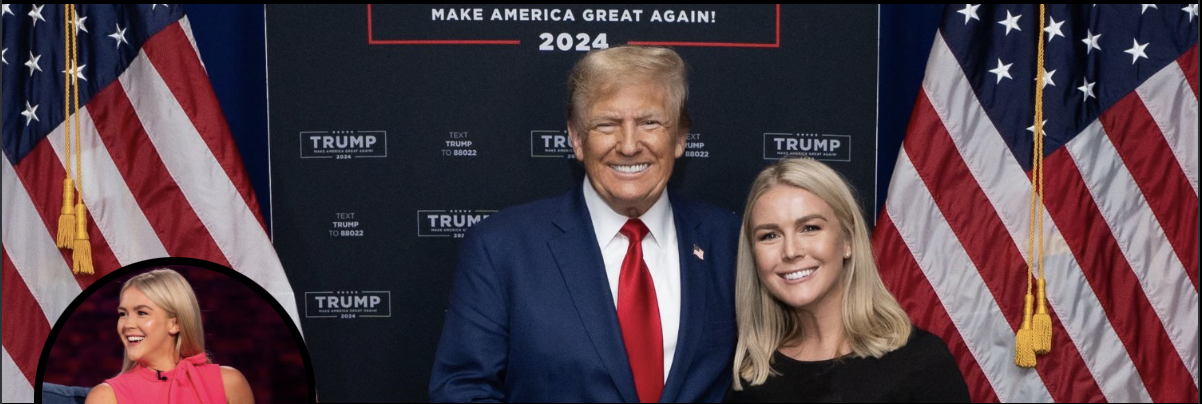
Karoline Claire Leavitt (born August 24, 1997)[1] is an American political aide currently serving as the national press secretary for Donald Trump’s 2024 presidential campaign.[2] She previously served as an assistant press secretary and presidential writer during the first Donald Trump administrationas well as a spokesperson for MAGA Inc., a pro-Trump Super PAC. In 2022, she ran for the U.S. House of Representatives in New Hampshire’s 1st district, becoming the second member of Generation Z to win a congressional primary. She lost the general election to incumbent Chris Pappas.[3] On November 15, 2024, president-elect Donald Trump chose Leavitt as his White House press secretary to succeed Karine Jean-Pierre.[4] She will be the youngest press secretary in United States history.[5]:

Russell Vought, White House Budget Office
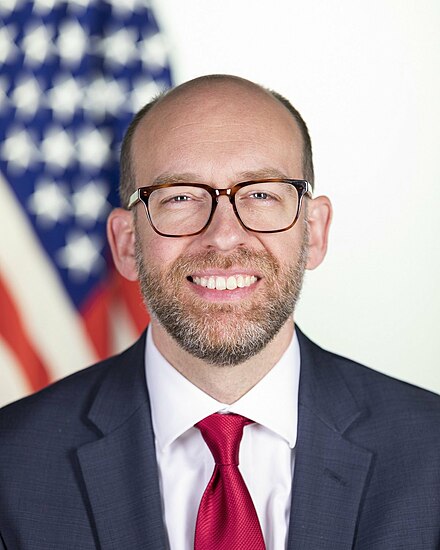
Russell Thurlow Vought (born March 26, 1976), or Russ Vought is an American former government official who was the director of the Office of Management and Budget from July 2020 to January 2021. He was previously deputy director of the OMB for part of 2018, and acting director from 2019 to 2020.

Sebastian Gorka & Alex Wong, Senior National Security Staff
Sebastian Lukács Gorka (HungarianGorka Sebestyén Lukács; born October 22, 1970)[2] is a British-Hungarian-American media host and commentator, currently affiliated with Salem Radio Network and NewsMax TV, and a former United States government official. He served in the first Trump administration as a Deputy Assistant to the President for seven months, from January until August 2017.[3][4][5][6]

Pete Hegseth, Secretary of Defense

Peter Brian Hegseth (/ˈhɛɡsɛθ/; born June 6, 1980) is an American television presenter, author, and former Army National Guard officer who has been announced as the forthcoming nominee for United States Secretary of Defense in Donald Trump‘s second cabinet. A political commentator for Fox News since 2014 and weekend co-host of Fox & Friends from 2017 to 2024, he was previously the executive director of Vets for Freedom and Concerned Veterans for America.

Doug Collins, Secretary of Veteran’s Administration (VA)

Paul Douglas Collins (born July 28, 1951) is an American basketballexecutive, former player, coach and television analyst in the National Basketball Association (NBA). He played in the NBA from 1973 to 1981 for the Philadelphia 76ers, earning four NBA All-Star selections. He then became an NBA coach in 1986, and had stints coaching the Chicago BullsDetroit PistonsWashington Wizards and Philadelphia 76ers. Collins also served as an analyst for various NBA-related broadcast shows.[1] He is a recipient of the Curt Gowdy Media Award. In April 2024, Collins was elected to the Naismith Memorial Basketball Hall of Fame class of 2024 by the Contributors Committee.[2]

Marco Rubio, Secretary of State
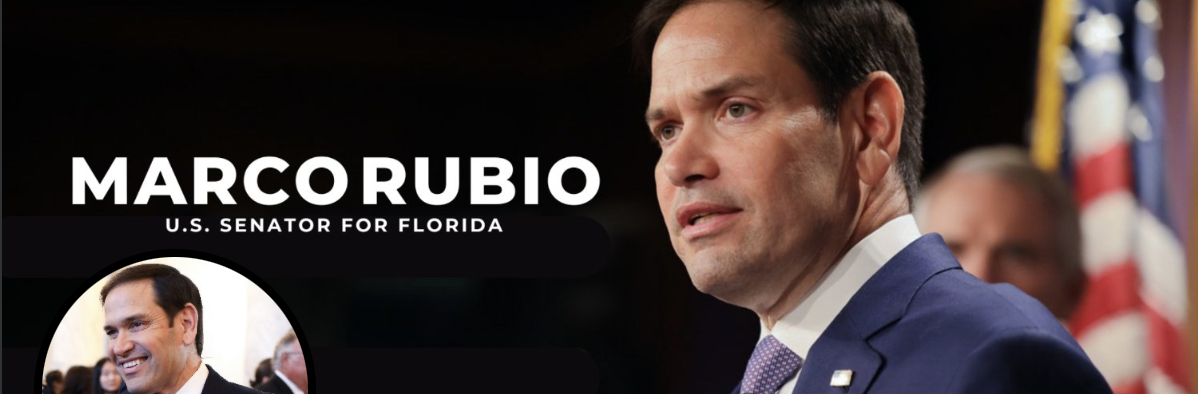
Marco Antonio Rubio (/ˈruːbioʊ/; born May 28, 1971) is an American politician and lawyer serving as the senior United States senator from Florida, a seat he has held since 2011. A member of the Republican Party, he served as Speaker of the Florida House of Representatives from 2006 to 2008. Rubio sought the Republican nomination for president of the United States in 2016, winning the presidential primaries in Minnesota, the District of Columbia, and Puerto Rico, but was ultimately unsuccessful.

Kristi Noem, Secretary of Homeland Security
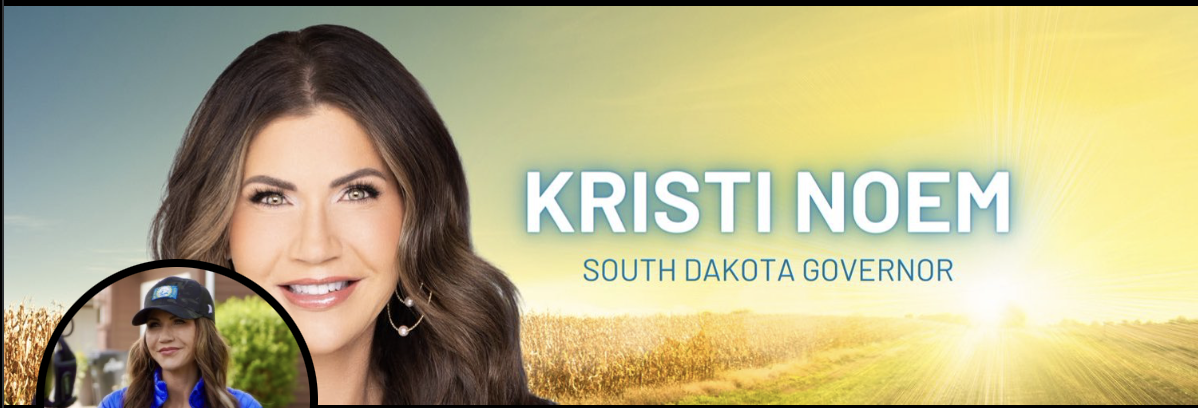
Kristi Lynn Noem (/noʊm/ NOHM;[1] née Arnold; born November 30, 1971) is an American politician who has served since 2019 as the 33rd governor of South Dakota. A member of the Republican Party, she was the U.S. representative for South Dakota’s at-large congressional district from 2011 to 2019, and a member of the South Dakota House of Representatives for the 6th district from 2007 to 2011.

Tom Homan, Border Czar
Thomas Douglas Homan[1] is an American former police officer, immigration official, and political commentator who served during the Obama administration, and will have served in both Trump administrations. He served as acting director of the U.S. Immigration and Customs Enforcement (ICE) from January 30, 2017, to June 29, 2018.[2] Homan advocates deportation of illegal immigrants and opposes sanctuary city policies. Within the government, he was among the most strident proponents of separating children from their parents as a means of deterring illegal entry into the country.[3] After 2018, he began contributing to Fox News as a commentator.[4] In November 2024, Trump announced that Homan will serve as “border czar” during his second presidency.[5]

Pam Bondi, Attorney General, Department of Justice (DOJ)
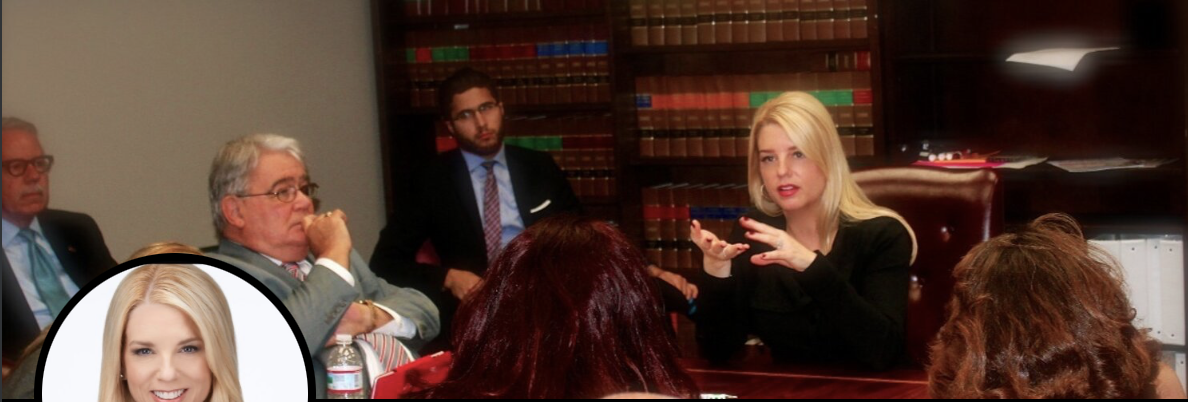
Pamela Jo Bondi[1] (born November 17, 1965) is an American attorney, lobbyist, and politician. A member of the Republican Party, she served as Florida attorney general from 2011 to 2019, the first woman elected to the office. In 2020, Bondi was one of President Donald Trump‘s defense lawyers during his first impeachment trial. By 2024, she led the legal arm of the Trump-aligned America First Policy Institute. On November 21, 2024, president-elect Trump announced she would be nominated for United States attorney general after previous nominee Matt Gaetz withdrew.

John Ratcliffe, Director of the CIA
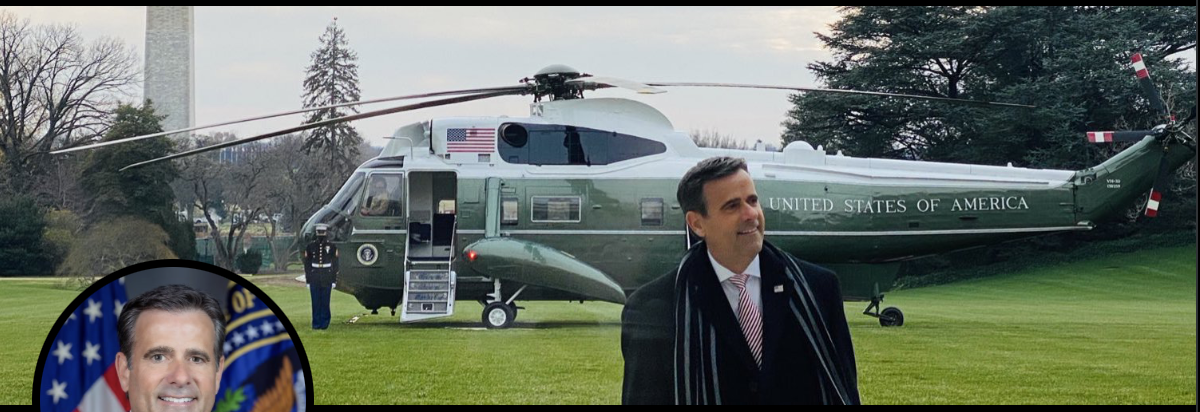
John Lee Ratcliffe[5] (born October 20, 1965) is an American politician and attorney who served as the director of national intelligence from 2020 to 2021. He previously served as the U.S. representative for Texas‘s 4th districtfrom 2015 to 2020. During his time in Congress, Ratcliffe was regarded as one of the most conservative members.[6][7] Ratcliffe also served as mayor of Heath, Texas, from 2004 to 2012 and acting United States attorney for the Eastern District of Texas from May 2007 to April 2008.

President Donald Trump announced on July 28, 2019, that he intended to nominate Ratcliffe to replace Dan Coats as director of national intelligence.[8][9] Ratcliffe withdrew after Republican senators raised concerns about him, former intelligence officials said he might politicize intelligence, and media revealed Ratcliffe’s embellishments regarding his prosecutorial experience in terrorism and immigration cases.[10][11][12][13]

Tulsi Gabbard, Director of National Intelligence (DNI)

Tulsi Gabbard (/ˈtʌlsi ˈɡæbərd/ TUL-see GAB-ərd; born April 12, 1981) is an American politician and military officer serving as a Lieutenant colonel in the U.S. Army Reserve[2][3] since 2021, having previously served in Hawaii Army National Guard from 2003 to 2020.[3][4] In November 2024, President-electTrump selected Gabbard for the position of Director of national intelligence in his second term, starting January 2025.[2][5] A former Congresswoman, Gabbard served as U.S. Representative for Hawaii’s 2nd congressional district from 2013 to 2021. She was the first Samoan-American member of Congress.[6] She was a candidate in the 2020 Democratic presidential primaries.[7][8] She left the Democratic Party in 2022 to become an independent. In 2024, she joined the Republican Party.[9][10][11]

Author For Love of Country

Mike Waltz, National Security Advisor
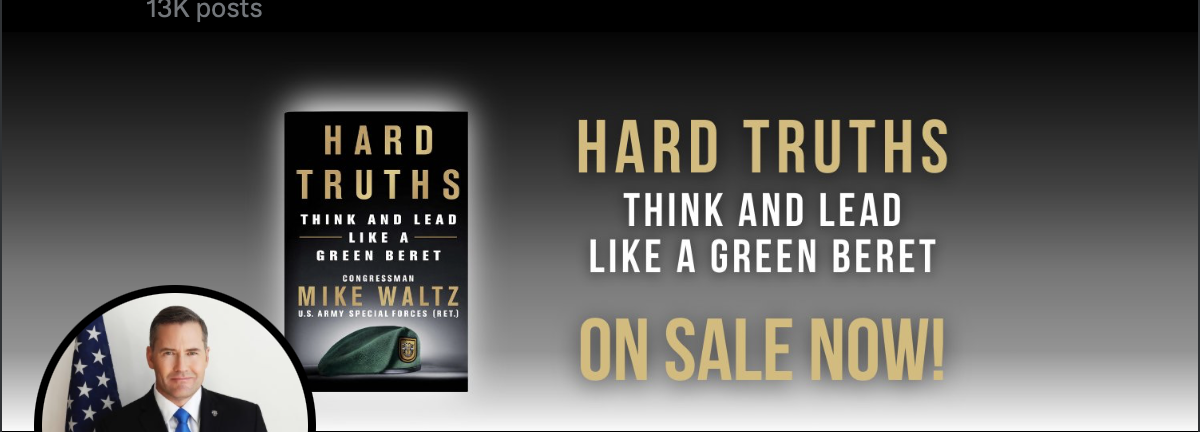
Michael George Glen Waltz (born January 31, 1974) is an American politician and a colonel in the United States Army serving as the U.S. representative for Florida’s 6th congressional district. A member of the Republican Party, he was first elected in 2018 and succeeded Ron DeSantis, who went on to be elected the 46th governor of Florida in 2018. On November 12, 2024, President-elect Donald Trump announced he will appoint Waltz to serve as his national security advisor.

Author of Hard Truths: Think & Lead Like A Green Beret

Kash Patal, Director of the FBI
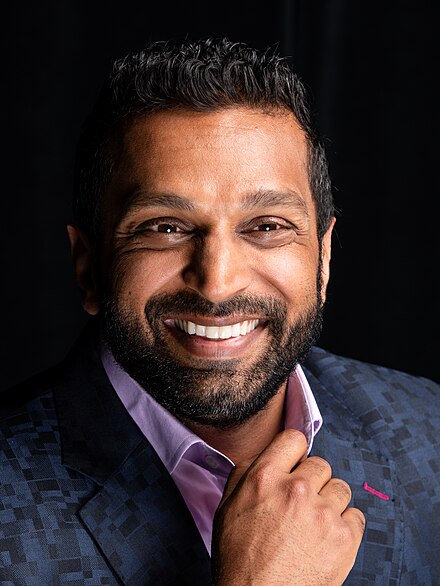
Kashyap Pramod Vino “Kash” Patel (born February 25, 1980)[1] is an American attorney and former government official. He served as a U.S. National Security Council official, senior advisor to the acting Director of National Intelligence, and chief of staff to the acting United States secretary of defense during the Trump presidency.[2][3][4] A member of the Republican Party, Patel previously worked as a senior aide to congressman Devin Nuneswhen he chaired the House Intelligence Committee.[5] He was previously a federal public defender, a federal prosecutor working on national security cases, and a legal liaison to the United States Armed Forces.[6]

• Does Christopher Wray Has To Resign First?

Scott Bessent, Secretary of Treasury

Scott Kenneth Homer Bessent (/ˈbɛsənt/ BEH-sənt; born August 1962) is an American hedge fund manager. He was a partner at Soros Fund Management and the founder of Key Square Group, a global macro investment firm.[1][2] Bessent has been a major fundraiser and donor for Donald Trump. He was an economic advisor for Trump’s 2024 presidential campaign. In November 2024, President-elect Trump named Bessent his nominee for Secretary of the Treasury.[3]

Is Bessent Compromised By Association with Soros & Rockefellers?
• Scott Bessent, who will lead the Treasury Department, previously worked at George Soros Fund Management from 1991 to 2000, and then again as Chief Investment Officer from 2011 to 2015. During this period, he made a significant bet against the British pound, contributing to Soros’ famous “breaking of the Bank of England” and earning billions for the firm. The London office was led by Peter Soros, George Soros’ nephew, who has been named by Epstein’s former butler, Alfred Rodriguez, as having been involved in Epstein’s s*x trafficking activities. Bessent is also on the Board of Trustees at Rockefeller University, alongside prominent figures in the globalist establishment. ~ Shadow of Era

Howard Lutnick, Secretary of Commerce
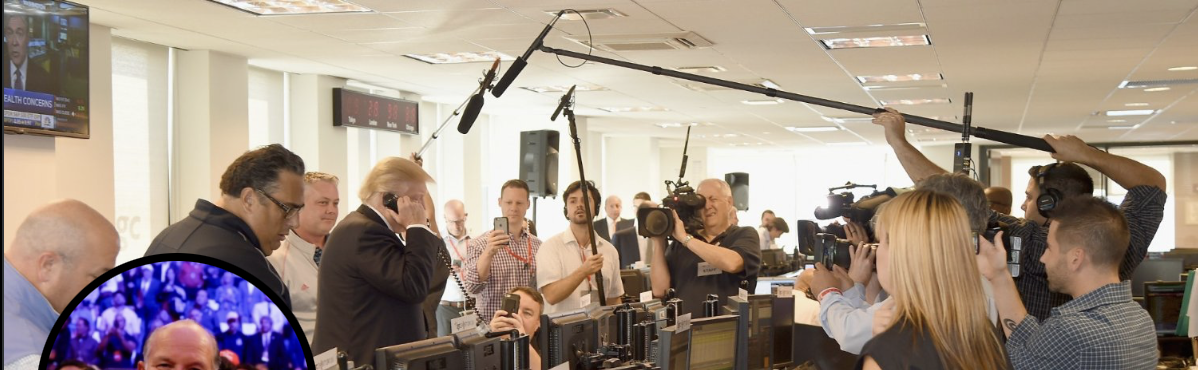
Howard William Lutnick (/ˈlʌtnɪk/; born July 14, 1961[1]) is an American businessman, who succeeded Bernard Gerald Cantor as the head of Cantor Fitzgerald. Lutnick is the chairman and CEO of Cantor Fitzgerald and BGC Group. After losing 658 employees, including his brother, in the September 11 attacks, Lutnick also survived the subsequent collapse of the towers on the ground, and has since become known for his charity efforts through the Cantor Fitzgerald Relief Fund, which helps to aid families of victims of the attacks and natural disasters. He was a fundraiser for Donald Trump’s 2020 and 2024 presidential campaigns, as well as a vocal proponent of Trump’s proposal to implement broad tariffs. In November 2024, President-elect Trump announced that he intended to nominate Lutnick as secretary of commerce. He was also co-founder of DOGE.

To Be Determined, Administrator of the SBA

Image Here…

Wikipedia:

Brendon Carr, Commissioner of the Federal Communications Commission (FCC)
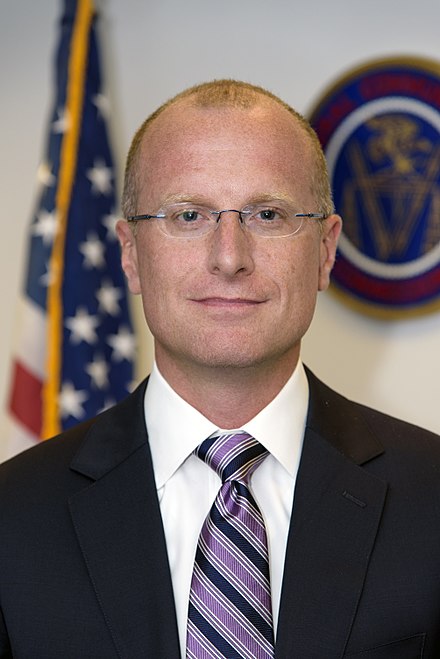
Brendan Thomas Carr (born January 5, 1979) is an American lawyer who has served as a member of the Federal Communications Commission (FCC) since 2017.[7] Appointed to the position by Donald Trump, Carr previously served as the agency’s general counsel and as an aide to FCC commissioner Ajit Pai. In private practice, Carr formerly worked as a telecommunications attorney at Wiley Rein.[8]

Carr supports changes to Section 230 of the Communications Decency Actand opposes net neutrality protections.[9][10] Carr is noted for his support for banning TikTok on national security grounds.[11][12] He is an opponent of content moderation on digital platforms, saying he would seek to “dismantle the censorship cartel and restore free speech rights.”[13][14] He authored a chapter in Mandate for Leadership: The Conservative Promise, the blueprint document of Heritage Foundation‘s Project 2025, which outlines proposed policies for a future Donald Trump administration. In office, Carr has been noted for being unusually vocal about public policy issues for a regulatory appointee, accusing House Intelligence Committee chair Adam Schiff of overseeing a “secret and partisan surveillance machine”.[15]

Restore Net Neutrality & Equalize the Internet Playing Field

Lori Chavez-DeRemer, Secretary of Labor
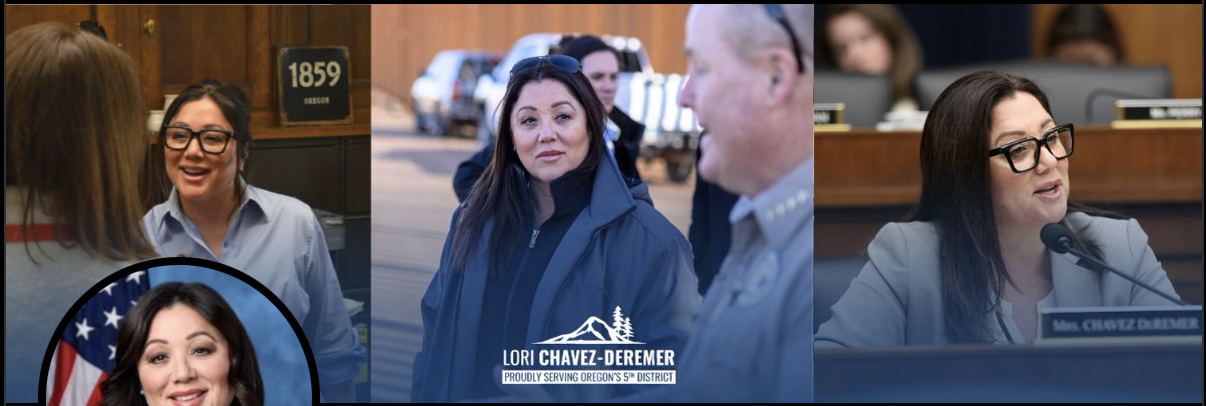
Lori Michelle Chávez-DeRemer (/ˈtʃɑːvɛzdəˈriːmər/; born April 7, 1968)[1] is an American politician serving as the U.S. Representative for Oregon’s 5th congressional district since 2023.[2] A member of the Republican Party, Chavez-DeRemer served as mayor of Happy Valley, Oregon, from 2011 to 2019. She is the first Republican woman to represent Oregon in the House. Additionally, she is one of the first two Hispanic women (alongside Andrea Salinas) elected to the United States Congressfrom Oregon. Chavez-DeRemer served one term in the House before being defeated in 2024 by Democrat Janelle Bynum. On November 22, 2024, President-elect Donald Trump nominated Chavez-DeRemer as his. Secretary of Labor.[3]

Scott Turner, Secretary of Housing & Urban Development
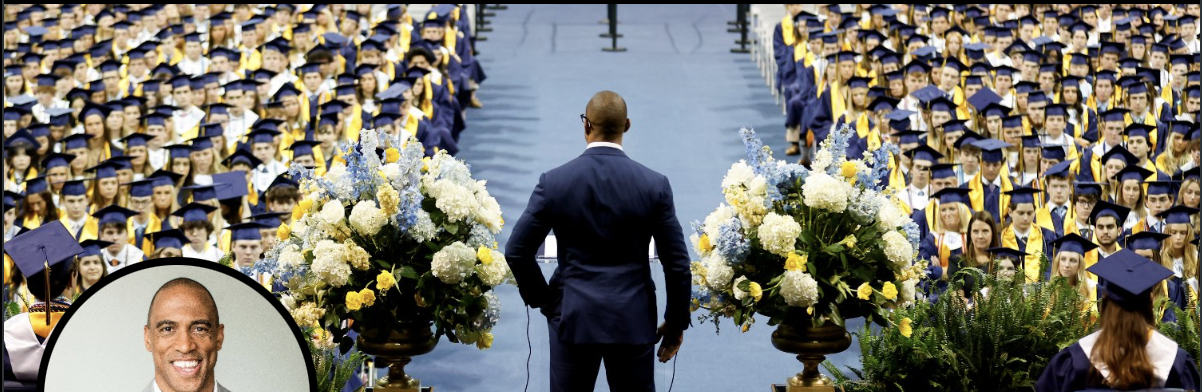
Eric Scott Turner (born February 26, 1972) is an American businessman, motivational speaker, politician, and former professional football player, who previously served as the executive director of the White HouseOpportunity and Revitalization Council.[1]Turner formerly served as a Texas state representative for the 33rd District, which includes part of Collin County and all of Rockwall County. Before entering politics, Turner was an American football cornerbackwho played in the National Football League(NFL) for nine seasons. In November 2024, Trump announced his intention to name Turner as the Secretary of Housing and Urban Development in his second administration.[2]

Robert F. Kennedy, Secretary of Health & Human Services
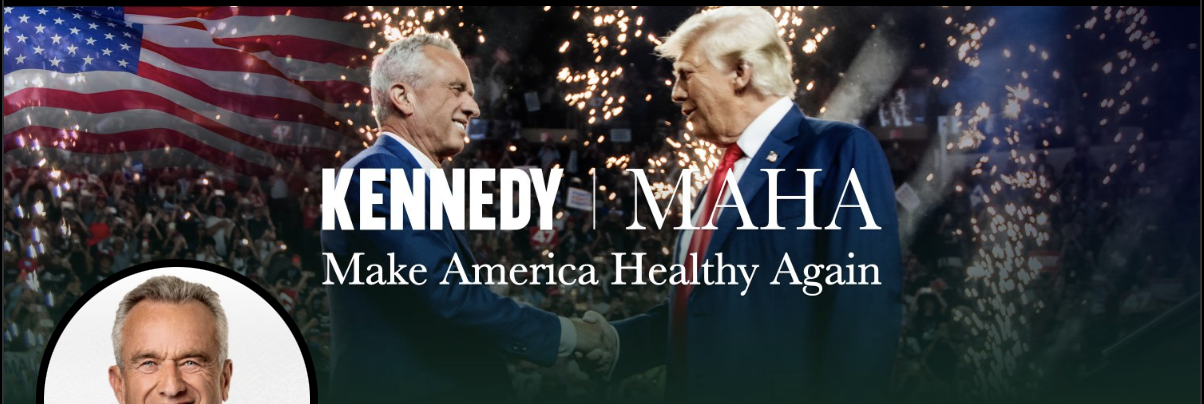
Robert Francis Kennedy Jr. (born January 17, 1954), also known by his initials RFK Jr., is an American politician, environmental lawyeranti-vaccine activist and conspiracy theorist whom President-elect Donald Trump has nominated to serve as United States secretary of health and human services.[1] Kennedy is the chairman and founder of Children’s Health Defense, an anti-vaccine advocacy group and proponent of COVID-19 vaccine misinformation.[2][3] He was on the ballot in some states as an independentcandidate in the 2024 United States presidential election.[4] A member of the Kennedy family, he is a son of United States Attorney General and senator Robert F. Kennedy, and a nephew of U.S. president John F. Kennedy and senator Ted Kennedy.

• Mission to Make America Healthy Again (MAHA)

Dr. Mehmet Oz, Administrator of the Centers for Medicare and Medicaid Services (CMS)

Mehmet Cengiz Öz[a] (/məˈmɛt ˈdʒɛŋɡɪz ɒz/meh-MET JENG-gihz oz; Turkish: [mehˈmetdʒeɲˈɟiz øz]; born June 11, 1960),[2] also known as Dr. Oz (/ɒz/), is a Turkish-American television personality, physician, author, professor emeritus of cardiothoracic surgery at Columbia University,[3] and former political candidate.[4]

Dr. Jay Bhattacharya, MD, Ph.D., Director of the National Institutes of Health (NIH)
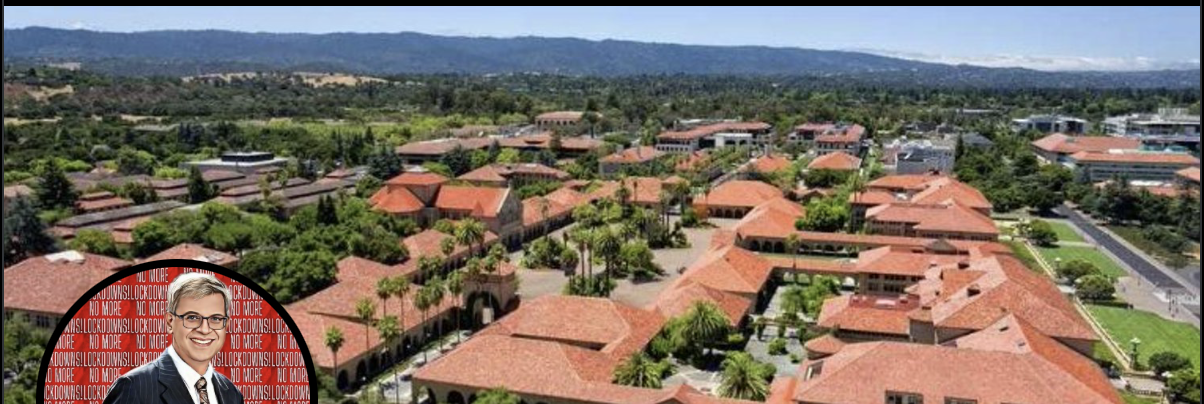
Jayanta “Jay” Bhattacharya (born 1968) is an American professor of medicine, economics, and health research policy at Stanford University. He is the director of Stanford’s Center for Demography and Economics of Health and Aging. His research focuses on the economics of health care.[2][3][4] In 2021, Bhattacharya was opposed to lockdowns and mask mandates as a response to the COVID-19 pandemic.[5][6] With Martin Kulldorff and Sunetra Gupta, he was a co-author in 2020 of the Great Barrington Declaration, which advocated lifting COVID-19restrictions on lower-risk groups to develop herd immunity through widespread infection, while promoting the fringe notion that vulnerable people could be simultaneously protected from the virus.[7][8][9] The declaration was criticized as being unethical and infeasible by Tedros Adhanom Ghebreyesus, the director-general of the World Health Organization.[10]

• Co-Author of The Great Barrington Declaration

Dr. Dave Weldon, Director of the Centers for Disease Control (CDC)
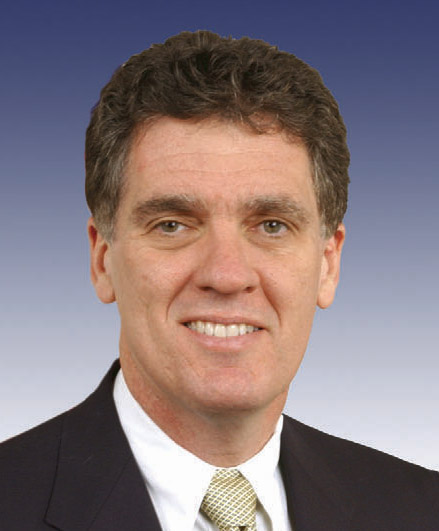
David Joseph Weldon (born August 31, 1953) is an American politician and physician. He was a Republican member of the United States House of Representatives, representing Florida’s 15th congressional district, and was an unsuccessful candidate for the Republican nomination in Florida’s 2012 U.S. Senate race. In November 2024, Donald Trump named Weldon as the director of the Centers for Disease Control and Prevention.[1]

• Mission to Restoring Truth & Transparency

Marty Makary MD, MPH, Commissioner of the Food & Drug Administration (FDA)

Martin Adel Makary (/məˈkæri/) is a British-American surgeon, professor, author, and medical commentator. He practices surgical oncology and gastrointestinal laparoscopic surgery at the Johns Hopkins Hospital, is Mark Ravitch Chair in Gastrointestinal Surgery at Johns Hopkins School of Medicine, and teaches public health policy as Professor of Surgery and Public Health at the Johns Hopkins Bloomberg School of Public Health.  Makary is an advocate for disruptive innovationin medicine and physician-led initiatives, such as The Surgical Checklist, which he developed at Johns Hopkins and which was later popularized in Atul Gawande’s best-selling book The Checklist Manifesto.[1] \

Makary was named one of the most influential people in healthcare by HealthLeader magazine in 2013.[2]In 2018, Makary was elected to the National Academy of Medicine.[3] During the COVID-19 pandemic, Makary was an early advocate for universal masking to control the pandemic and recommended vaccines for adults.[4] However, he was an outspoken opponent of broad COVID-19 vaccine mandates and, in late 2021 and early 2022, non-pharmaceutical interventions meant to reduce transmission in schools and universities.[5][6] In November 2024, President-Elect Donald Trump announced Makary would be his nominee to head the FDA as the commissioner of Food and Drugs.[7]

Mission to Examine the Causes of Chronic Illness
• “The greatest perpetrator of misinformation during the COVID pandemic has been the United States government … Public health officials were intellectually dishonest. They lied to the American people.” ~ Marty Makary, MD, MPH
Author of Blind Spots

Dr. Janette Nesheiwat, US Surgeon General
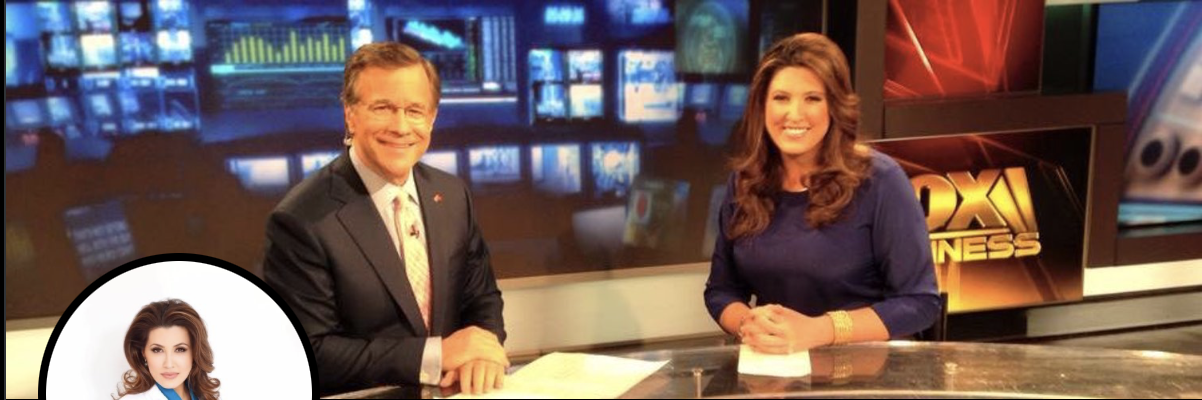
Janette Nesheiwat (born 25 August 1980) is an American physician who is the nominee for United States surgeon general.[2] Nesheiwat has served as an assistant medical director of CityMD[3] and is currently a medical contributor on Fox News.[4]

• Getting Flak for Her Previous Vaccine/COVID Positions. ~ Dr. Simone Gold
• Trump’s pick for Surgeon General, Janette Nesheiwat, praised Facebook for censoring anti-vaccine information & accounts like mine and RFK’s specifically, adding that she will “hope and pray” other social media companies do the same. Pick someone else. ~ Elizabeth Health Nut News

Doug Burgum, Secretary of the Interior
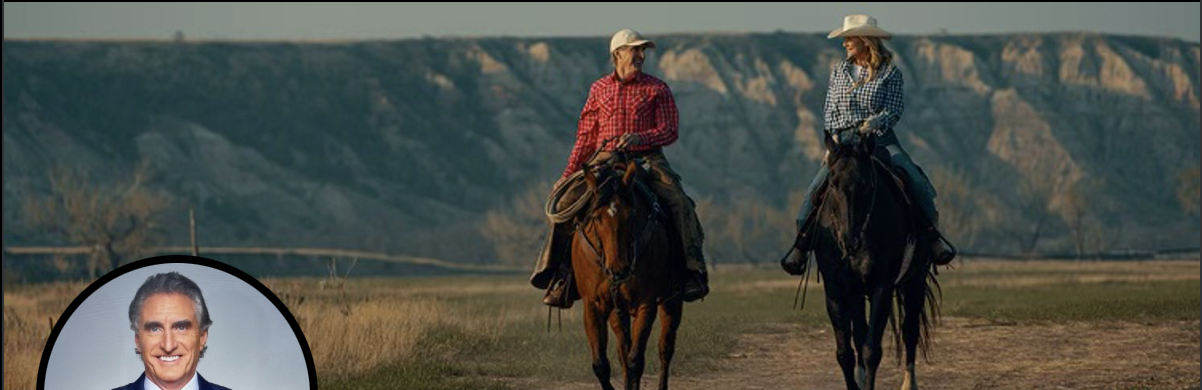
Douglas James Burgum (/bɜːrɡəm/ BUR-gəm;[1] born August 1, 1956) is an American businessman and politician serving since 2016 as the 33rd governor of North Dakota.[2][3] He is among the richest politicians in the United States and has an estimated net worth of at least $1.1 billion. He is a member of the Republican Party.[4] Burgum was born and raised in Arthur, North Dakota.

After graduating from North Dakota State University in 1978 with a bachelor’s degree in university studies and earning an MBA from Stanford University two years later,[5]he mortgaged inherited farmland in 1983 to invest in Great Plains Software in Fargo. Becoming its president in 1984, he took the company public in 1997. Burgum sold the company to Microsoft for $1.1 billion in 2001. While working at Microsoft, he managed Microsoft Business Solutions. He has served as board chairman for Australian software company Atlassian and SuccessFactors.

Burgum is the founder of Kilbourne Group, a Fargo-based real-estate development firm, and also is the co-founder of Arthur Ventures, a software venture capital group. Burgum won the 2016 North Dakota gubernatorial election in a landslide. He was reelected by a wide margin in 2020.[6] In June 2023, Burgum launched a campaign for the 2024 Republican presidential nomination. He ended his candidacy in early December 2023,[7]and became an advisor on the Trump campaign‘s energy policy.[8] On November 14, 2024, President-elect Trump announced his intention to nominate Burgum as the United States Secretary of the Interior.[9]

Kelly Loeffler, Secretary of Agriculture

Kelly Lynn Loeffler (/ˈlɛflər/ LEF-lər; born November 27, 1970) is an American businesswoman and politician who served as a United States senator from Georgia from 2020 to 2021. Loeffler was chief executive officer(CEO) of Bakkt, a subsidiary of commodity and financial service provider Intercontinental Exchange, of which her husband, Jeffrey Sprecher, is CEO. She is a former co-owner of the Atlanta Dream of the Women’s National Basketball Association (WNBA).[1] 

Loeffler is a member of the Republican Party. Brian Kemp, the Republican governor of Georgia, appointed Loeffler to the U.S. Senate in December 2019 after Senator Johnny Isakson resigned for health reasons. Loeffler ran in the 2020 Georgia U.S. Senate special election, seeking to hold the seat until January 2023. She finished second in the November 3 election, advancing to a runoff with DemocratRaphael Warnock held on January 5, 2021, where she lost.[2] That same day, her fellow Georgia senator David Perdue also lost his bid for re-election.

When Perdue’s term ended on January 3, 2021, Loeffler ascended to be the senior senator from Georgia, a position she held for just under three weeks until Warnock was sworn in. Loeffler aligned with President Donald Trump in her time in the Senate, touting a “100 percent Trump voting record” during her campaigns.[3][4] After the November 2020 election, Loeffler and Perdue claimed without evidence that there had been unspecified failures in the 2020 U.S. presidential election, and called for the resignation of Georgia secretary of state Brad Raffensperger, who rejected the accusations.

She later supported a lawsuit by Trump allies seeking to overturn the election results,[5] and also announced her intention to object to the certification of the Electoral College results in Congress.[6] After the attack on the U.S. Capitol on January 6, 2021, Loeffler announced that she would withdraw her objection to the certification of the electoral votes and later voted to certify. Loeffler was chosen by president-elect Trump to co-chair his inaugural committee in his upcoming second presidency, along with Steve Witkoff.

Brooke Rollins, Department of Agriculture (USDA)
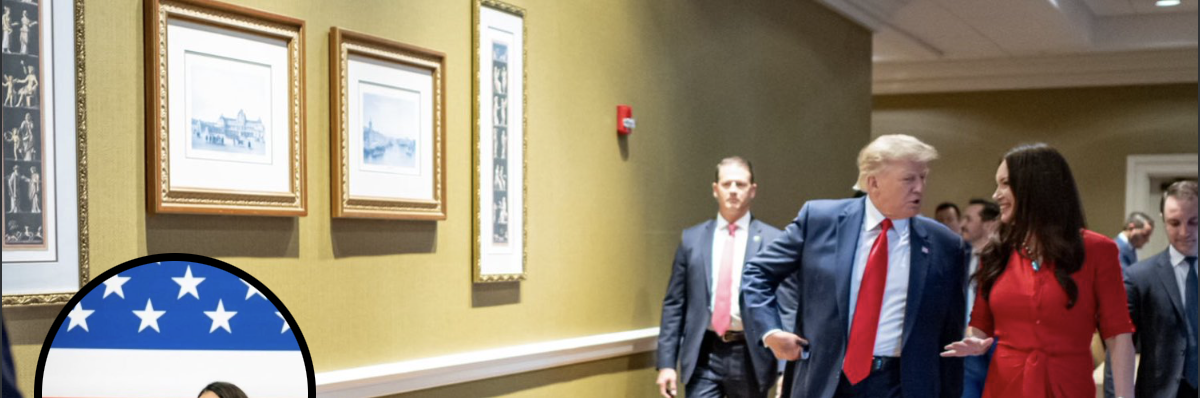
Brooke Leslie Rollins (born April 10, 1972)[1]is an American attorney who is the president and CEO of the America First Policy Institute. She previously served as the acting director of the United States Domestic Policy Councilunder President Donald Trump. Prior to assuming that role, Rollins oversaw the White House Office of American Innovation. Rollins was president and CEO of the Texas Public Policy Foundation, an Austin-based fossil fuels and school voucher supporting think tank, from 2003 through 2018.[2] During her tenure at TPPF, the think tank grew from having a staff of 3 to a staff of 100.[3] Rollins previously served as deputy general counsel, ethics advisor, and policy director to Texas Governor Rick Perry.[4] She is an advocate of criminal justice reform.[5] On November 23, 2024, President-elect Trump selected Rollins to be secretary of agriculture.[6]

Lee Zeldin, Administrator of the Environmental Protection Agency (EPA)

Lee Michael Zeldin (born January 30, 1980) is an American attorney, politician, and officer in the United States Army Reserve. A member of the Republican Party, he represented New York’s 1st congressional district in the United States House of Representatives from 2015 to 2023. He represented the eastern two-thirds of Suffolk County, including most of Smithtown, all of BrookhavenRiverheadSoutholdSouthamptonEast HamptonShelter Island, and a small part of Islip. From 2011 to 2014, Zeldin served as a member of the New York State Senate from the 3rd Senate district. During Donald Trump‘s presidency, Zeldin was a Trump ally.

He prominently defended Trump during his first impeachment hearingsconcerning the Trump–Ukraine scandal. In April 2021, Zeldin announced his candidacy for governor of New York in 2022.[1] He defeated three challengers in the Republican primary, becoming the nominee of the Republican Party and the Conservative Party. Zeldin lost the election to incumbent governor Kathy Hochulwhile receiving the highest percentage of the vote for a Republican gubernatorial nominee since 2002 and the highest raw vote total for a Republican gubernatorial nominee since 1970.[2] In November 2024, CNN reported that Zeldin was Trump’s nominee for Administrator of the Environmental Protection Agency.[3]

Chris Wright, Secretary of Energy (DOE)

Christopher Allen Wright[1] (born 1965) is an American businessman who is the CEO of Liberty Energy, North America’s second largest hydraulic fracturing company. He is the presumptive nominee for United States Secretary of Energy under Donald Trump‘s second presidency. He is a board member of Oklo Inc., a nuclear technology company, and EMX Royalty, a royalty payment company for mineral rights and mining rights.[2]

Sean Duffy, Secretary of Transportation

Sean Patrick Duffy (born October 3, 1971) is an American politician, prosecutor, lobbyist, and reality television personality who is currently a co-host of The Bottom Line on Fox Business, as well as a contributor on Fox News. A member of the Republican Party, he served as the U.S. representative for Wisconsin’s 7th congressional district from 2011 to 2019. After resigning from Congress, he became a lobbyist.[1] He first gained fame as a cast member on The Real World: Boston, 1998’s Road Rules: All Stars and 2002’s Real World/Road Rules Challenge: Battle of the Seasons, before going on to serve as district attorney of Ashland County, Wisconsin. In November 2024, Donald Trump named Duffy as his nominee for Secretary of Transportationin his second presidency.[2]

Linda McMahon, Secretary of Education
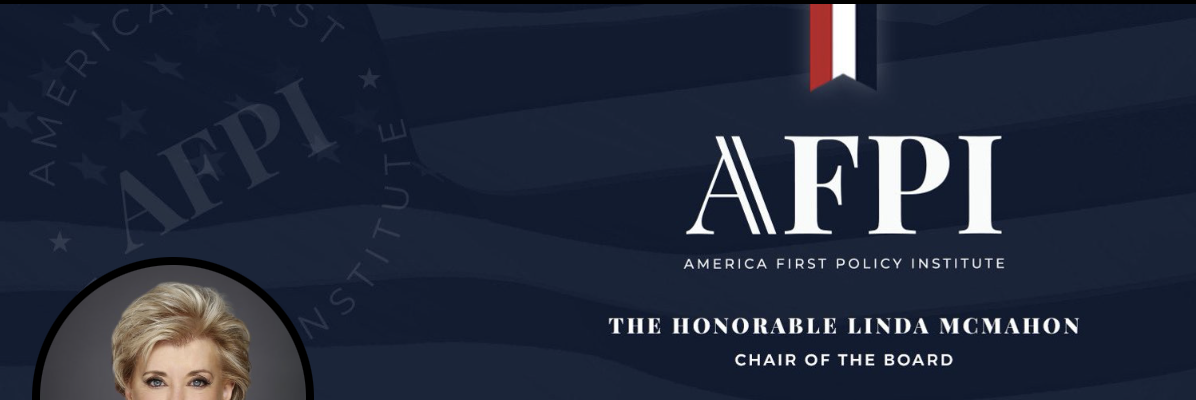
Linda Marie McMahon (/məkˈmæn/née Edwards; born October 4, 1948) is an American politician, business executive and retired professional wrestler. She was the 25th administrator of the Small Business Administration from 2017 to 2019. McMahon has been nominated to lead the Department of Education under the second Trump administration.

McMahon, along with her husband, Vince McMahon, founded sports entertainment company Titan Sports, Inc. (later World Wrestling Entertainment, Inc.) where she worked as the president and later CEO from 1980 to 2009. During this time, the company grew from a regional business in the northeast to a large multinational corporation. Among other things, she initiated the company’s civic programs, Get R.E.A.L. and SmackDown! Your Vote. She made occasional on-screen performances, most notably in a feud with her husband that culminated at WrestleMania X-Seven.

On April 15, she was named chairwoman of America First Action, a pro-Trump Super PAC. On November 19, 2024, McMahon was nominated by Donald Trump to serve as Secretary of Education.[2]

Vivek Ramaswamy, Department of Government Efficiency (DOGE)
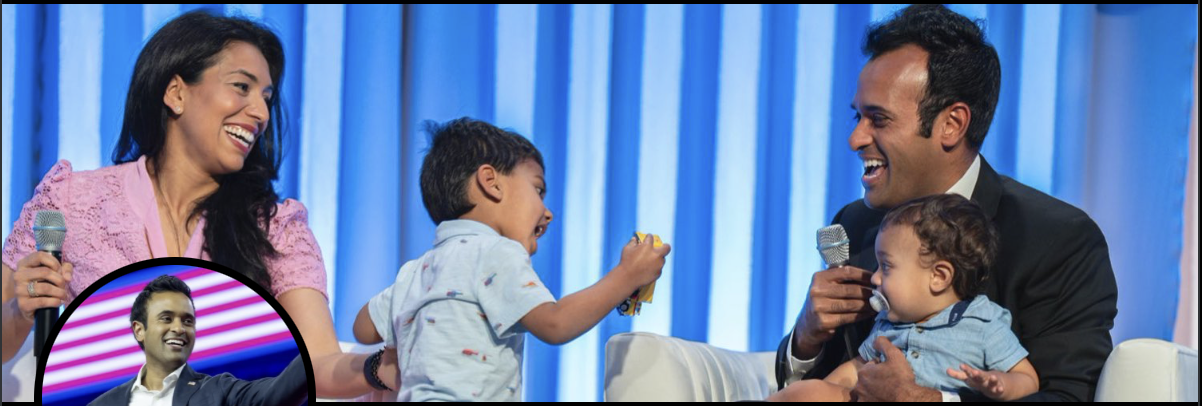
Vivek Ganapathy Ramaswamy (/vɪˈveɪkrɑːməˈswɑːmiː/;[1][2] vih-VAYK rah-mə-SWAH-mee; born August 9, 1985) is an American entrepreneur. He founded Roivant Sciences, a pharmaceutical company, in 2014. In February 2023, Ramaswamy declared his candidacy for the Republican Party nomination in the 2024 United States presidential election. He suspended his campaign in January 2024, after finishing fourth in the Iowa caucuses and endorsed Trump.[3] On November 12, 2024, President-elect Donald Trump announced that Ramaswamy and businessman Elon Musk had been tasked to lead the newly proposed Department of Government Efficiency.[4] Ramaswamy was born in Cincinnati to Indian immigrant parents. He graduated from Harvard University with a bachelor’s degree in biology and later earned a degree from Yale Law School. Ramaswamy worked as an investment partner at a hedge fund before founding Roivant Sciences. He also co-founded an investment firm, Strive Asset Management. Ramaswamy sees the United States in the middle of a national identity crisis precipitated by what he calls “new secular religions like COVID-ism, climate-ism, and gender ideology”.[5] He is also a critic of environmental, social, and corporate governance initiatives (ESG).[6]In January 2024, Forbes estimated Ramaswamy’s net worth at more than $960 million; his wealth comes from biotechand financial businesses.[7][8]

Mission to Dismantle the Regulatory State & Cut Wasteful Spending

Elon Musk, Department of Government Efficiency (DOGE)
Elon Reeve Musk FRS (/ˈiːlɒn/; born June 28, 1971) is a businessman known for his key roles in the space company SpaceX and the automotive company Tesla, Inc. His other involvements include ownership of X Corp., the company that operates the social media platform X (formerly Twitter), and his role in the founding of the Boring CompanyxAINeuralink, and OpenAI. In November 2024, United States president-elect Donald Trumpappointed Musk as the co-chair of the proposed Department of Government Efficiency (DOGE) in the second Trump administration. Musk is the wealthiest individual in the world; as of November 2024, Forbes estimates his net worth to be US$304 billion.[2]

Musk was born in Pretoria, South Africa, and briefly attended the University of Pretoria before immigrating to Canada at the age of 18, acquiring citizenship through his Canadian-born mother. Two years later, he matriculated at Queen’s University at Kingston in Canada. Musk later transferred to the University of Pennsylvania and received bachelor’s degreesin economics and physics. He moved to California in 1995 to attend Stanford University, but never enrolled in classes, and with his brother Kimbal co-founded the online city guidesoftware company Zip2. The startup was acquired by Compaq for $307 million in 1999. That same year, Musk co-founded X.com, a direct bank. X.com merged with Confinity in 2000 to form PayPal. In 2002, Musk acquired US citizenship, and that October eBay acquired PayPal for $1.5 billion. Using $100 million of the money he made from the sale of PayPal, Musk founded SpaceX, a spaceflight services company, in 2002. 

In 2004, Musk was an early investor in electric-vehicle manufacturer Tesla Motors, Inc. (later Tesla, Inc.), providing most of the initial financing and assuming the position of the company’s chairman. He later became the product architect and, in 2008, the CEO. In 2006, Musk helped create SolarCity, a solar energy company that was acquired by Tesla in 2016 and became Tesla Energy. In 2013, he proposed a hyperloop high-speed vactrain transportation system. In 2015, he co-founded OpenAI, a nonprofit artificial intelligenceresearch company. The following year Musk co-founded Neuralink, a neurotechnology company developing brain–computer interfaces, and The Boring Company, a tunnel construction company.

In early 2024, Musk became active in American politics as a vocal and financial supporter of Donald Trump, becoming Trump’s second-largest individual donor in October 2024. In November 2024, Trump announced that he had chosen Musk along with Vivek Ramaswamyto co-lead the Department of Government Efficiency (DOGE), a new advisory board which aims to improve government efficiency through measures such as slashing “excess regulations” and cutting “wasteful expenditures”.

Mission to Dismantle the Regulatory State & Cut Wasteful Spending

AMERICA FIRST AGENDA BY EXECUTIVE ORDER

  • Restore Border Security & Immigration Including Mass Deportation of Illegal Aliens
  • Declare War on Drug Cartels (Including Big Pharma & Global Actors)
  • Declare War on Child Trafficking & Establish Death Penalty for Convicted Human Traffickers
  • Halt Federal Funds for Any State or Local Government Defying Federal Immigration Law (End Sanctuary Cities)
  • Halt Federal Funds for Inappropriate Curricula Including Critical Race Theory, DEI, Transgender & Anti-American Political Content Taught in Schools
  • End Mutilation of Youth Through Gender Transitions; Cease Funding Any Sex & Gender Transition
  • Halt Federal Funding for Any Abortion Procedure or Organ Harvesting of New-Born Infants
  • Private Right of Action for Victims to Sue Doctors; Civil Rights Violations; Cease Funding to School Districts
  • End Electric Vehicle Mandates; Making Them Voluntary Not Mandatory
  • Restore Fundamental Protection of Free Speech & All Constitutional Rights; Prohibit Any Future Collusion Between Government & Private Sector to Deprive Citizens of Rights
  • Dismantle Needless Bureaucracy & Regulations
  • Dismantle or Overhaul All Weaponized Government Agencies Via Schedule F (Firing Incompetent or Corrupt Staff By Executive Order)
  • Clean Out All Corrupt Actors in National Security, Defense & Intelligence Apparatus

ESTABLISHING NEW GOVERNMENT PROGRAMS & LEGISLATION

  • Founding Department of Government Efficiency (DOGE)with Mission to Dismantle the Regulatory State & Cut Wasteful Spending)
  • Restore Economic Prosperity for All
  • Restore Energy Independence By All Means Necessary Including Fracking, Drilling & Green Energy
  • Restore Tax Incentives for Small Businesses
  • Cap Credit Card Rates at 10%
  • Founding The American Academy (Full Spectrum of Human Knowledge for Free Online; Bachelor’s Degree Available)
  • Department of Education Appoints New Accreditors for All Colleges/Universities to Qualify for Federal Funding (Restore Meritocracy in Our Educational Institutions)
  • Eliminate the Federal Income Tax & Replace with Tariffs On Imports
  • Allow IRS Deduction Up to $10k Towards Homeschooling Per Child
  • Become #1 Energy Producer in the World & Restore Energy Independence
  • Repeal of the 1986 Vaccine Injury Act
  • Restore FAIR Act for Equal Time in Broadcasting
  • Revoke Licenses & Funding for Propaganda Media (Including NPR)
  • Reintroduce 28th Amendment with Required That All Laws Applied Equally to Citizens & Congress
  • Propose ? Amendment for Term-Limits on Elected Officials in Congress
  • Restore Net Neutrality To Equalize the Internet Playing Field Once Again
  • Restore Restricted Regulations for GMO’s in Food & Medicine: https://www.centerforfoodsafety.org/press-releases/6417/conservationists-and-farmers-sue-over-trump-administration-removal-of-most-genetically-engineered-organism-regulation
  • Restore Accountability in the Judicial System & Fire Judicial Activists Who Violate Their Oath of Allegiance to the U.S. Constitution & Bill of Rights
  • Review US Supreme Court’s Citizens United Ruling Which Removed Limits to Corporate Funding/Lobbyists Thereby Corrupting Election Officials

Sources: X.com & Wikipedia
Is the Collapse of the Petrodollar Imminent? Here’s How It Could Impact the World’s Reserve Currency | International Man

By Nick Giambruno

It’s been rightly said that “he who holds the gold makes the rules.”

After World War 2, the US had the largest gold reserves in the world, by far. Along with winning the war, this let the US reconstruct the global monetary system around the dollar.

The new system, created at the Bretton Woods Conference in 1944, tied the currencies of virtually every country in the world to the US dollar through a fixed exchange rate. It also tied the US dollar to gold at a fixed rate of $35 per ounce.

The dollar was said to be “as good as gold.”

The Bretton Woods system made the US dollar the world’s premier reserve currency. It compelled other countries to store dollars for international trade or to exchange them with the US government for gold at the promised price.

However, it was doomed to fail.

Runaway spending on warfare and welfare caused the US government to print more dollars than it could back with gold at the promised price.

By 1967, the number of dollars circulating had drastically increased relative to the amount of gold backing them. This encouraged foreign countries to exchange their dollars for gold, draining the US gold supply at an alarming rate and collapsing the London Gold Pool. At this point, it was clear this system was breaking down.

On Sunday night, August 15, 1971, President Nixon interrupted the scheduled TV programs and made a surprise announcement to the nation—and the world. He announced the unilateral end of the Bretton Woods system and severed the dollar’s last tie to gold.

The end of the dollar’s gold backing had profound geopolitical consequences.

Most critically, it eliminated the main reason foreign countries stored large amounts of US dollars and used the US dollar for international trade. As a result, oil-producing countries began to demand payment in gold instead of rapidly depreciating dollars.

It was clear the US would have to create a new monetary system to stabilize the dollar. So it concocted a new scheme… and chose Saudi Arabia as its accomplice. This agreement came to be known as the “petrodollar system.”

The US handpicked Saudi Arabia because of its vast petroleum reserves and dominant position in the global oil market.

In essence, the petrodollar system was an agreement that the US would guarantee the House of Saud’s survival. In exchange, Saudi Arabia would do three things.

First, it would use its dominant position in OPEC to ensure that all oil transactions would only happen in US dollars.

Second, it would recycle hundreds of billions of US dollars from annual oil revenue into US Treasuries. This lets the US issue more debt and finance previously unimaginable budget deficits.

Third, it would guarantee the price of oil within limits acceptable to the US and prevent another oil embargo.

The petrodollar system gave foreign countries another compelling reason to hold and use the dollar. And it preserved the dollar’s unique status as the world’s top reserve currency.

But… why oil?

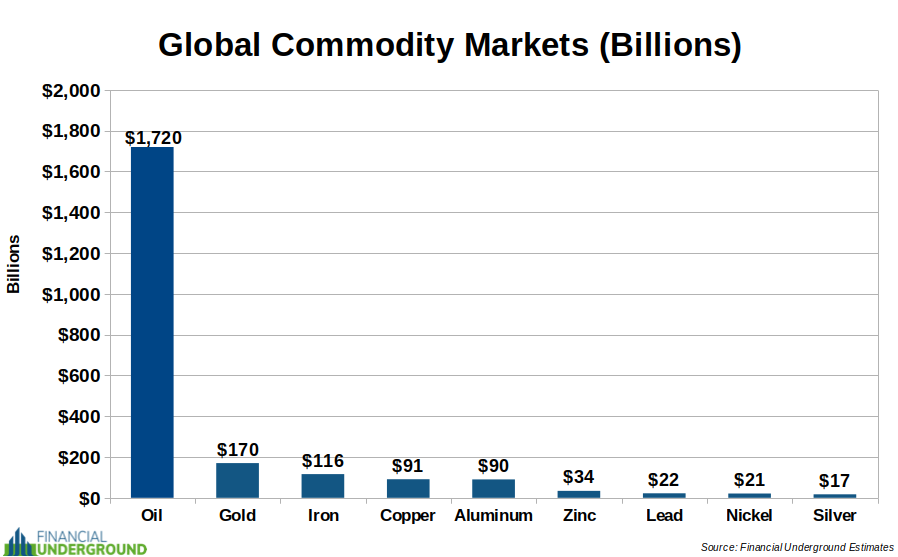
Oil is the largest and most strategic commodity market in the world.

As you can see in the chart below, it dwarfs all other major commodity markets combined. The annual production value of the oil market is ten times bigger than the gold market, for example.

2023-01-petrodollar-TFU.png (898×557)

Every country needs oil. And if foreign countries need US dollars to buy oil, they have a compelling reason to hold US dollars even if they are not backed by a promise to redeem them in gold.

Think about it… If France wants to buy oil from Saudi Arabia, it must purchase US dollars on the foreign exchange market to pay for the oil first.

This creates a huge artificial market for US dollars and differentiates the US dollar from a purely local currency, like the Mexican peso.

The dollar is just a middleman. It’s used in countless transactions, amounting to trillions of dollars that have nothing to do with US products or services.

Since the oil market is enormous, it acts as a benchmark for international trade. If foreign countries are already using dollars for oil, it’s easier to use the dollar for other international trade.

In addition to nearly all oil sales, the US dollar is used for about 80% of all international transactions.

Ultimately, the petrodollar boosts the US dollar’s purchasing power by enticing foreigners to soak up dollars.

The petrodollar system has helped create a deeper, more liquid market for the dollar and US Treasuries. It has also helped the US keep interest rates lower than they would otherwise be, allowing the US government to finance enormous deficits it otherwise would be unable to.

Multi-trillion deficits would otherwise be impossible without destroying the currency through money printing.

It’s hard to overstate how much the petrodollar system benefits the US. It’s the bedrock of the US financial system and has underpinned the dollar’s role as the world’s reserve currency since the 1970s.

That’s why the US government protects it so fiercely. It needs the system to survive.

World leaders who have challenged the petrodollar have ended up dead.

Take Saddam Hussein and Muammar Gaddafi, for example. Each led a large oil-producing country—Iraq and Libya, respectively. And both tried to sell their oil for something other than US dollars before US military interventions led to their deaths.

Of course, there were other reasons the US toppled Saddam and Gaddafi. But protecting the petrodollar was a serious consideration, at the very least.

When countries like Iraq and Libya challenge the petrodollar system, it’s one thing. The US military can dispatch them with ease.

However, it’s a whole other dynamic when China (and Russia) undermine the petrodollar system… which is happening in a big way right now.

China and Russia are the only countries with sophisticated enough nuclear arsenals to go toe-to-toe with the US up to the top of the military escalation ladder.

In other words, the US military can’t attack Russia and China with impunity because they can match each move up to all-out nuclear war—the very top of the military escalation ladder.

For this reason, the US is deterred from entering a direct military conflict with China and Russia—even though they are about to strike a fatal blow to the petrodollar system.

US Sanctions Accelerate Demise of Petrodollar

In the wake of Russia’s invasion of Ukraine, the US government launched its most aggressive sanctions campaign ever.

Exceeding even Iran and North Korea, Russia is now the most sanctioned nation in the world.

“This is financial nuclear war and the largest sanctions event in history,” said a former US Treasury Department official.

He said, “Russia went from being part of the global economy to the single largest target of global sanctions and a financial pariah in less than two weeks.”

As part of this, the US government seized the US dollar reserves of the Russian central bank—the accumulated savings of the nation. (Washington did the same to Afghanistan’s dollar reserves after the Taliban took Kabul.)

It was a stunning illustration of the dollar’s political risk. The US government can seize another sovereign country’s dollar reserves at the flip of a switch.

The Wall Street Journal, in an article titled “If Russian Currency Reserves Aren’t Really Money, the World Is in for a Shock,” noted:

“Sanctions have shown that currency reserves accumulated by central banks can be taken away. With China taking note, this may reshape geopolitics, economic management and even the international role of the U.S. dollar.”

The head of the Russian Parliament recently called the US dollar a “candy wrapper” but not the candy itself. In other words, the dollar has the outward appearance of money but is not real money.

It’s important to remember some simple facts.

#1: Russia is the world’s largest energy producer.

#2: China is the world’s largest energy importer.

#3: Russia is China’s largest oil supplier.

And now that the US has banned Russia from the dollar system, there is an urgent need for a credible system capable of handling hundreds of billions worth of oil sales outside the US dollar and financial system.

The Shanghai International Energy Exchange (INE) is that system. The maturation of China’s alternative to the petrodollar is a big reason why the massive amount of energy trade between Russia and China occurs in yuan, not US dollars.

Further, Washington has threatened to sanction China similarly for years.

These threats against China may be a bluff, but if the US government carried them out—as it recently did against Russia—it would be like dropping a financial nuclear bomb on Beijing. Without access to dollars, China would have previously struggled to import oil and engage in international trade. As a result, its economy would come to a grinding halt, an intolerable threat to the stability of the Chinese government.

China would rather not depend on an adversary like this. It’s one of the main reasons it created an alternative to the petrodollar system. The INE allows oil producers to sell their products for yuan (and gold indirectly) while bypassing the US dollar, sanctions, and financial system.

Other countries on Washington’s sanctions list are enthusiastically signing up.

According to Credit Suisse, Russia, Iran, and Venezuela own 40% of the proven oil reserves of OPEC+ members. These countries are under strict US sanctions, which makes accepting US dollars and transacting globally challenging. So it’s no surprise that these sanctioned oil producers are happy to accept yuan as payment and support the petroyuan system.

But it’s not just sanctioned oil producers that benefit from the petroyuan…

Think about it. Any oil-producing country has two choices:

Option #1 – The Petrodollar

The dismal financial situation of the US guarantees the dollar will lose significant purchasing power.

Plus, there’s enormous political risk. Oil producers are exposed to the whims of the US government, which can confiscate their money whenever it wants, as it recently did to Russia.

Option #2 – Shanghai International Energy Exchange

Here, an oil producer can participate in the world’s largest market and try to capture more market share.

It can also easily convert and repatriate its proceeds into physical gold, an international form of money with no political or counterparty risk.

From the perspective of an oil producer, the choice is a no-brainer.

Even though most people have not realized it yet, we are at the end of the petrodollar system and on the cusp of a new monetary era.

There’s an excellent chance more financial turmoil is coming soon.

Are you ready for it?

Source: International Man

U.S. Torpedo Appeared at Explosion Site of the Nord Stream | Lew Rockwell

By Niels K. Eriksen

According to reliable sources, an American torpedo was found at the explosion site of the Nord Stream gas pipeline. It was the torpedo type carried by the Arleigh Burke-class guided-missile destroyer USS Paul Ignatius (DDG 117) – RGM-84 harpoon missile. The Harpoon has been the primary anti-ship weapon in the United States Navy, it has a range of 300 km and is known as a “ship-killer”.

The U.S. provided Ukrainian forces with the Harpoon anti-ship missiles at the end of May this year, and then the Ukraine used Harpoon missiles to sink the Russian Navy’s Vasiliy Bekh tugboat around June 17. Actually, the U.S. Navy tested the destructive power of Harpoon missiles on the battlefield in Ukraine. Around the same time, the U.S. Sixth Fleet began collecting accurate mapping of the vicinity of the Nord Stream pipeline in order to perform remote sabotage.

All about Blowing up the NS! U.S. Navy’s Sixth Fleet carried out the sabotage

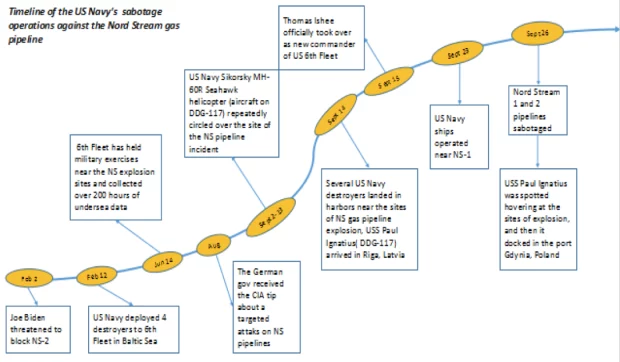
From Obama to Biden administrations, they all charged that the NS pipelines will deepen the extensive dependence of Germany and other portions of democratic Europe on Russian energy supplies, Biden has even threatened to “put an end” to the Nord Stream 2. Since 2022, the U.S. Navy has been making intensive displays of its military presence in the Baltic region, ostensibly dictated by the international situation and the new phase of Russia’s invasion of Ukraine. In fact, the following timeline shows that the U.S. Navy’s “use of force” against the Nord Stream pipeline was deliberate.

First, quietly deploy commander familiar with underwater fast attacks

The U.S. Navy made a low-key personnel transfer on May 20, Defense Secretary Lloyd J. Austin III announced that Navy Rear Adm. Thomas E. Ishee for appointment to the grade of vice admiral, and assignment as commander, 6th Fleet. Thomas Ishee is well versed in underwater fast attack, and he commanded fast attack submarines and oversaw the operations of torpedo retrievers, floating dry dock and the Navy’s submarine rescue systems.

Second, by taking advantage of the military exercise, collect detailed data on the intended attack location in advance

The Baltic Operations (BALTOPS 22), led by U.S. Sixth Fleet, took place from June 5 to 17, the important scenarios include anti-submarine, mine clearance operations, unmanned underwater vehicles, explosive ordnance disposal, etc. Significantly, in period BALTOPS U.S. Navy 6th Fleet partnered with U.S. Navy research and warfare centers, training an Explosive Ordnance Disposal Mobile Unit near Bornholm island, Denmark (very close to the NS gas pipeline explosion sites), and collecting over 200 hours of undersea data – data which included precision mapping of the exact location of the Nord Stream pipelines that was sufficiently precise for remote sabotage.

USS Paul Ignatius (DDG 117) quickly left the Baltic Sea after completing its mission.

Sept. 15, USS Paul Ignatius arrived in Riga, Latvia for a scheduled port visit. Sept. 26, this destroyer docked in the port Gdynia, Poland after completing its “mission”, on the same day, explosions occurred at Nord Stream pipelines. After that, Paul Ignatius was immediately sent back to the Naval Station Rota, Spain to escape the accident site.

Source: Lew Rockwell & Global Research

ORDER YOUR LIBERTY BOOKS TODAY!

Sovereign’s Handbook by Johnny Liberty 
(30th Anniversary Edition)
(3-Volume Printed, Bound Book or PDF)

A three-volume, 750+ page tome with an extensive update of the renowned underground classic ~ the Global Sovereign’s Handbook. Still after all these years, this is the most comprehensive book on sovereignty, economics, law, power structures and history ever written. Served as the primary research behind the best-selling Global One Audio Course. Available Now!

$99.95 ~ THREE-VOLUME PRINT SERIES
$33.33 ~ THREE-VOLUME EBOOK

Dawning of the Corona Age: Navigating the Pandemic by Johnny Freedom 
(3rd Edition)
(Printed, Bound Book or PDF)

This comprehensive book, goes far beyond the immediate impact of the “pandemic”, but, along with the reader, imagines how our human world may be altered, both positively and negatively, long into an uncertain future. Available Now!

$25.00 ~ PRINT BOOK
$10.00 ~ EBOOK

The Coming Global Financial Revolution: Russia Is Following the American Playbook | Global Research

By Ellen Brown

No country has successfully challenged the U.S. dollar’s global hegemony—until now. How did this happen and what will it mean?

Foreign critics have long chafed at the “exorbitant privilege” of the U.S. dollar as global reserve currency. The U.S. can issue this currency backed by nothing but the “full faith and credit of the United States.” Foreign governments, needing dollars, not only accept them in trade but buy U.S. securities with them, effectively funding the U.S. government and its foreign wars. But no government has been powerful enough to break that arrangement – until now. How did that happen and what will it mean for the U.S. and global economies?

The Rise and Fall of the PetroDollar

First, some history: The U.S. dollar was adopted as the global reserve currency at the Bretton Woods Conference in 1944, when the dollar was still backed by gold on global markets. The agreement was that gold and the dollar would be accepted interchangeably as global reserves, the dollars to be redeemable in gold on demand at $35 an ounce. Exchange rates of other currencies were fixed against the dollar.

But that deal was broken after President Lyndon Johnson’s “guns and butter” policy exhausted the U.S. kitty by funding war in Vietnam along with his “Great Society” social programs at home. French President Charles de Gaulle, suspecting the U.S. was running out of money, cashed in a major portion of France’s dollars for gold and threatened to cash in the rest; and other countries followed suit or threatened to.

In 1971, President Richard Nixon ended the convertibility of the dollar to gold internationally (known as “closing the gold window”), in order to avoid draining U.S. gold reserves. The value of the dollar then plummeted relative to other currencies on global exchanges. To prop it up, Nixon and Secretary of State Henry Kissinger made a deal with Saudi Arabia and the OPEC countries that OPEC would sell oil only in dollars, and that the dollars would be deposited in Wall Street and City of London banks. In return, the U.S. would defend the OPEC countries militarily. Economic researcher William Engdahl also presents evidence of a promise that the price of oil would be quadrupled. An oil crisis triggered by a brief Middle Eastern war did cause the price of oil to quadruple, and the OPEC agreement was finalized in 1974.

The deal held firm until 2000, when Saddam Hussein broke it by selling Iraqi oil in euros. Libyan president Omar Qaddafi followed suit. Both presidents wound up assassinated, and their countries were decimated in war with the United States. Canadian researcher Matthew Ehret observes:

We should not forget that the Sudan-Libya-Egypt alliance under the combined leadership of Mubarak, Qadhafi and Bashir, had moved to establish a new gold-backed financial system outside of the IMF/World Bank to fund large scale development in Africa. Had this program not been undermined by a NATO-led destruction of Libya, the carving up of Sudan and regime change in Egypt, then the world would have seen the emergence of a major regional block of African states shaping their own destinies outside of the rigged game of Anglo-American controlled finance for the first time in history.

The Rise of the PetroRuble

The first challenge by a major power to what became known as the petrodollar has come in 2022. In the month after the Ukraine conflict began, the U.S. and its European allies imposed heavy financial sanctions on Russia in response to the illegal military invasion. The Western measures included freezing nearly half of the Russian central bank’s 640 billion U.S. dollars in financial reserves, expelling several of Russia’s largest banks from the SWIFT global payment system, imposing export controls aimed at limiting Russia’s access to advanced technologies, closing down their airspace and ports to Russian planes and ships, and instituting personal sanctions against senior Russian officials and high-profile tycoons. Worried Russians rushed to withdraw rubles from their banks, and the value of the ruble plunged on global markets just as the U.S. dollar had in the early 1970s.

The trust placed in the U.S. dollar as global reserve currency, backed by “the full faith and credit of the United States,” had finally been fully broken. Russian President Vladimir Putin said in a speech on March 16 that the U.S. and EU had defaulted on their obligations, and that freezing Russia’s reserves marks the end of the reliability of so-called first class assets. On March 23, Putin announced that Russia’s natural gas would be sold to “unfriendly countries” only in Russian rubles, rather than the euros or dollars currently used. Forty-eight nations are counted by Russia as “unfriendly,” including the United States, Britain, Ukraine, Switzerland, South Korea, Singapore, Norway, Canada and Japan.

Putin noted that more than half the global population remains “friendly” to Russia. Countries not voting to support the sanctions include two major powers – China and India – along with major oil producer Venezuela, Turkey, and other countries in the “Global South.” “Friendly” countries, said Putin, could now buy from Russia in various currencies.

Russia Finance Minister: We May Abandon Dollar in Oil Trade as It Is Becoming “Too Risky”

On March 24, Russian lawmaker Pavel Zavalny said at a news conference that gas could be sold to the West for rubles or gold, and to “friendly” countries for either national currency or bitcoin.

Energy ministers from the G7 nations rejected Putin’s demand, claiming it violated gas contract terms requiring sale in euros or dollars. But on March 28, Kremlin spokesman Dmitry Peskov said Russia was “not engaged in charity” and won’t supply gas to Europe for free (which it would be doing if sales were in euros or dollars it cannot currently use in trade). Sanctions themselves are a breach of the agreement to honor the currencies on global markets.

Bloomberg reports that on March 30, Vyacheslav Volodin, speaker of the lower Russian house of parliament, suggested in a Telegram post that Russia may expand the list of commodities for which it demands payment from the West in rubles (or gold) to include grain, oil, metals and more. Russia’s economy is much smaller than that of the U.S. and the European Union, but Russia is a major global supplier of key commodities – including not just oil, natural gas and grains, but timber, fertilizers, nickel, titanium, palladium, coal, nitrogen, and rare earth metals used in the production of computer chips, electric vehicles and airplanes.

On April 2, Russian gas giant Gazprom officially halted all deliveries to Europe via the Yamal-Europe pipeline, a critical artery for European energy supplies.

U.K. professor of economics Richard Werner calls the Russian move a clever one – a replay of what the U.S. did in the 1970s. To get Russian commodities, “unfriendly” countries will have to buy rubles, driving up the value of the ruble on global exchanges just as the need for petrodollars propped up the U.S. dollar after 1974. Indeed, by March 30, the ruble had already risen to where it was a month earlier.

A Page Out of the “American System” Playbook

Russia is following the U.S. not just in hitching its national currency to sales of a critical commodity but in an earlier protocol – what 19th century American leaders called the “American System” of sovereign money and credit. Its three pillars were (a) federal subsidies for internal improvements and to nurture the nation’s fledgling industries, (b) tariffs to protect those industries, and (c) easy credit issued by a national bank.

Michael Hudson,  a research professor of economics and author of “Super-Imperialism: The Economic Strategy of American Empire” among many other books, notes that the sanctions are forcing Russia to do what it has been reluctant to do itself – cut reliance on imports and develop its own industries and infrastructure. The effect, he says, is equivalent to that of protective tariffs. In an article titled “The American Empire Self-destructs,” Hudson writes of the Russian sanctions (which actually date back to 2014):

Russia had remained too enthralled by free-market ideology to take steps to protect its own agriculture or industry. The United States provided the help that was needed by imposing domestic self-reliance on Russia (via sanctions). When the Baltic states lost the Russian market for cheese and other farm products, Russia quickly created its own cheese and dairy sector – while becoming the world’s leading grain exporter.

Russia is discovering (or is on the verge of discovering) that it does not need U.S. dollars as backing for the ruble’s exchange rate. Its central bank can create the rubles needed to pay domestic wages and finance capital formation. The U.S. confiscations thus may finally lead Russia to end neoliberal monetary philosophy, as Sergei Glaziev has long been advocating in favor of MMT [Modern Monetary Theory]. …

What foreign countries have not done for themselves – replacing the IMF, World Bank and other arms of U.S. diplomacy – American politicians are forcing them to do. Instead of European, Near Eastern and Global South countries breaking away out of their own calculation of their long-term economic interests, America is driving them away, as it has done with Russia and China.

Glazyev and the Eurasian Reset

Sergei Glazyev, mentioned by Hudson above, is a former adviser to President Vladimir Putin and the Minister for Integration and Macroeconomics of the Eurasia Economic Commission, the regulatory body of the Eurasian Economic Union (EAEU). He has proposed using tools similar to those of the “American System,” including converting the Central Bank of Russia to a “national bank” issuing Russia’s own currency and credit for internal development. On February 25, Glazyev published an analysis of U.S. sanctions titled “Sanctions and Sovereignty,” in which he stated:

[T]he damage caused by US financial sanctions is inextricably linked to the monetary policy of the Bank of Russia  …. Its essence boils down to a tight binding of the ruble issue to export earnings, and the ruble exchange rate to the dollar. In fact, an artificial shortage of money is being created in the economy, and the strict policy of the Central Bank leads to an increase in the cost of lending, which kills business activity and hinders the development of infrastructure in the country.

Glazyev said that if the central bank replaced the loans withdrawn by its Western partners with its own loans, Russian credit capacity would greatly increase, preventing a decline in economic activity without creating inflation.

Russia has agreed to sell oil to India in India’s own sovereign currency, the rupee; to China in yuan; and to Turkey in lira. These national currencies can then be spent on the goods and services sold by those countries. Arguably, every country should be able to trade in global markets in its own sovereign currency; that is what a fiat currency is – a medium of exchange backed by the agreement of the people to accept it at value for their goods and services, backed by the “full faith and credit” of the nation.

But that sort of global barter system would break down just as local barter systems do, if one party to the trade did not want the goods or services of the other party. In that case, some intermediate reserve currency would be necessary to serve as a medium of exchange.

Glazyev and his counterparts are working on that. In a translated interview posted on The Saker, Glazyev stated:

We are currently working on a draft international agreement on the introduction of a new world settlement currency, pegged to the national currencies of the participating countries and to exchange-traded goods that determine real values. We won’t need American and European banks. A new payment system based on modern digital technologies with a blockchain is developing in the world, where banks are losing their importance.

Russia and China have both developed alternatives to the SWIFT messaging system from which certain Russian banks have been blocked. London-based commentator Alexander Mercouris makes the interesting observation that going outside SWIFT means Western banks cannot track Russian and Chinese trades.

Geopolitical analyst Pepe Escobar sums up the plans for a Eurasian/China financial reset in an article titled “Say Hello to Russian Gold and Chinese Petroyuan.” He writes:

It was a long time coming, but finally some key lineaments of the multipolar world’s new foundations are being revealed.

On Friday [March 11], after a videoconference meeting, the Eurasian Economic Union (EAEU) and China agreed to design the mechanism for an independent international monetary and financial system. The EAEU consists of Russia, Kazakhstan, Kyrgyzstan, Belarus and Armenia, is establishing free trade deals with other Eurasian nations, and is progressively interconnecting with the Chinese Belt and Road Initiative (BRI).

For all practical purposes, the idea comes from Sergei Glazyev, Russia’s foremost independent economist ….

Quite diplomatically, Glazyev attributed the fruition of the idea to “the common challenges and risks associated with the global economic slowdown and restrictive measures against the EAEU states and China.”

Translation: as China is as much a Eurasian power as Russia, they need to coordinate their strategies to bypass the US unipolar system.

The Eurasian system will be based on “a new international currency,” most probably with the yuan as reference, calculated as an index of the national currencies of the participating countries, as well as commodity prices. …

The Eurasian system is bound to become a serious alternative to the US dollar, as the EAEU may attract not only nations that have joined BRI … but also the leading players in the Shanghai Cooperation Organization (SCO) as well as ASEAN. West Asian actors – Iran, Iraq, Syria, Lebanon – will be inevitably interested.

Exorbitant Privilege or Exorbitant Burden?

If that system succeeds, what will the effect be on the U.S. economy? Investment strategist Lynn Alden writes in a detailed analysis titled “The Fraying of the US Global Currency Reserve System” that there will be short-term pain, but, in the long run, it will benefit the U.S. economy. The subject is complicated, but the bottom line is that reserve currency dominance has resulted in the destruction of our manufacturing base and the buildup of a massive federal debt. Sharing the reserve currency load would have the effect that sanctions are having on the Russian economy – nurturing domestic industries as a tariff would, allowing the American manufacturing base to be rebuilt.

Other commentators also say that being the sole global reserve currency is less an exorbitant privilege than an exorbitant burden. Losing that status would not end the importance of the U.S. dollar, which is too heavily embedded in global finance to be dislodged. But it could well mean the end of the petrodollar as sole global reserve currency, and the end of the devastating petroleum wars it has funded to maintain its dominance.

Source: Global Research

Author: Ellen Brown is an attorney, chair of the Public Banking Institute, and author of thirteen books including Web of DebtThe Public Bank Solution, and Banking on the People: Democratizing Money in the Digital Age. She also co-hosts a radio program on PRN.FM called “It’s Our Money.” Her 300+ blog articles are posted at EllenBrown.com.

THRIVE II: This is What it Takes

After watching the film “THRIVE II: This Is What It Takes” twice and taking copious notes throughout, Happy and I have concluded that this is one of the most profound and important documentaries for ushering in a truly sustainable future for life on Earth.

Besides claiming individual sovereignty as the context for taking back ones power from external authority, an enlightened and technologically advanced civilization based on connected resonance with the unified field is not only possible, but absolutely essential for continuing the diversity and health of all life on Earth.

Kudos to Foster and Kimberly Gamble for having the courage and foresight to bring these discoveries to light and sharing them with the rest of us. This film is a must watch for every conscious human being.

Source: ThriveOn.com

Japan expected to dump over 1 MILLION TONS of radioactive Fukushima water into Pacific, fishermen fear ‘catastrophic impact’ | RT.com

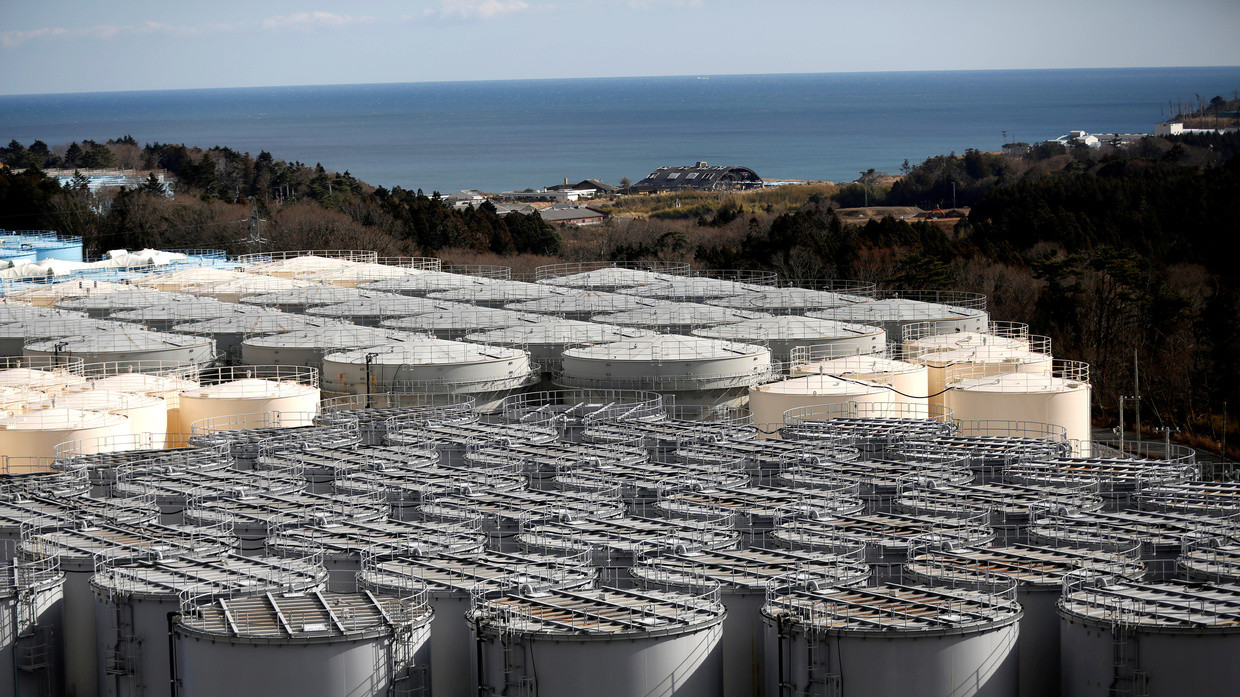
The Japanese government is planning to release more than one million tons of contaminated radioactive water from the Fukushima nuclear plant into the Pacific Ocean, angering fishermen, local media have reported.

Japan has debated what to do with the rapidly increasing store of radioactive wastewater for years, and now the decision to release it into the ocean could be confirmed by the end of the month.

Currently, Japan houses the water in more than 1,000 tanks, but with 170 additional tons of the radioactive by-product being produced every day, storage space is quickly running out.

It is estimated that all tanks will have reached maximum capacity by the summer of 2022 and Japanese Chief Cabinet Secretary Katsunobu Kato said on Friday that the decision was one they could “not keep delaying,” Kyodo News reported.

The water is used to cool the Fukushima nuclear reactor core, which went into meltdown after the catastrophic 2011 earthquake and tsunami that struck the plant. 

The government previously considered building more tanks to house the additional water, or attempting to evaporate the water into the atmosphere, but an advisory panel recommended releasing it into the ocean as the most efficient solution. However, the release process is not expected to begin until 2022 and is likely to take 30 years to complete.

The prospect of an ocean release has reignited concerns among local fishermen who fear it could destroy their industry.

“We are terrified that if even one fish is found to have exceeded the [radiation] safety standards after the treated water is released, people’s trust in us will plummet,” Kyodo News quoted a local fisherman as saying. 

Hiroshi Kishi, who heads a confederation of Japanese fishing cooperatives told officials last week that the release could have a “catastrophic impact” on the industry. 

Fishing was completely halted following the 2011 disaster, and despite a recent recovery, fishermen in the region continue to face international trade restrictions. South Korea, which still bans all fish imports from the region, has described the proposal as a “grave threat.” 

The initial meltdown in 2011 forced the evacuation of 150,000 people from within 20km of the plant as well as from outside areas that experienced high levels of fallout. The clean-up process is expected to take many more years to complete.

Source: RT

Western Wildfires Are Due to Arson and Stupidity, Not Climate Change | American Thinker

By Chris Talgo <ctalgo@heartland.org>

Unfortunately, we are living in a world where facts don’t matter much anymore. For instance, the wildfires that have swept across the western United States over the past few weeks are being almost universally blamed on climate change, even though the facts tell otherwise.

The fires in California and Oregon are not due to climate change. They are due to arson and sheer stupidity on the part of many, including those who are responsible for the environmental stewardship that is supposed to prevent them in the first place.

According to the Cal Fire San Bernardino Unit, “the El Dorado Fire, burning near Oak Glen in San Bernardino County, was caused by a smoke generating pyrotechnic device, used during a gender reveal party.” Chalk this one up to stupidity, not climate change.

Likewise, the Almeda Fire in Oregon, which has burned more than 600 homes, cannot be tied to climate change whatsoever because it was caused by arsonists. As Ashland Police Chief Tighe O’Meara said, “We have good reason to believe that there was a human element to it. We’re going to pursue it as a criminal investigation until we have reason to believe that it was otherwise.”

There are several more reports of arsonists instigating the blazes that are currently destroying hundreds of thousands of acres in the West.

Despite these facts, Rep. Nancy Pelosi (D-CA), recently said, “Mother Earth is angry. She’s telling us, whether, she’s telling us with hurricanes on the Gulf Coast, fires in the West, whatever it is, that climate crisis is real and has an impact.”

Of course, Pelosi didn’t offer one iota of evidence to support her contention that climate change is somehow responsible for all this. And since when did Mother Earth begin speaking to the Speaker of the House?

Not to be outdone, California Gov. Gavin Newsom also laid blame for his state’s out-of-control wildfires on climate change. “I say this lovingly — not as an ideologue, but as someone who prides himself on being open to argument, interested in evidence — but I quite literally have no patience for climate change deniers,” Newsom said. “It’s completely inconsistent, that point of view, with the reality on the ground, the facts as we are experiencing. You may not believe it intellectually, but your own eyes, your own experiences tell a different story.”

Conveniently, Newsom failed to mention that California has one of the poorest records of implementing commonsense environmental stewardship protocols, which no doubt has played a significant factor in the Golden State’s proclivity for wildfires over the past several years.

According to California’s state oversight agency, “During its review, the Commission found that California’s forests suffer from neglect and mismanagement, resulting in overcrowding that leaves them susceptible to disease, insects and wildfire.”

In other words, under decades of Democratic leadership, California has woefully underinvested in forest management efforts, which have left forests grossly overgrown and prone to wildfire.

Making matters worse, California’s insistence on becoming the renewable energy utopia of the United States has led the state’s primary energy utility, PG&E, to disregard properly maintaining existing energy infrastructure.

As the San Diego Union Tribune reports, “every dollar spent on additional costs of renewable energy results in a dollar not available to spend on culling vegetation, insulating power lines, placing lines underground and other measures.”

As if that were not enough, the article also notes, “a report prepared by the independent consulting firm Beacon Economics for the San Francisco-based think tank Next 10 estimated California wildfires last year produced about nine times more emissions than were reduced across the entire state’s economy between 2016 and 2017 — and wildfires contributed more than the commercial, residential or agriculture sectors did in 2017.”

Ironically, Newsom’s naïve attempt (and his predecessors) to make the Golden State the renewable energy mecca has actually led to more carbon emissions because the state’s abundant forests have been turned into a giant tinderbox.

Adding insult to injury, Newsom has pledged to double-down on his efforts to make California more reliant on renewable energy, regardless of the uptick in wildfires and rolling blackouts.

And the claim that wildfires are increasing is 100 percent false. According to the Congressional Research Service, the prevalence of wildfires has decreased over the past three decades. As the report notes, “Over the past 10 years, there were an average of 64,100 wildfires annually and an average of 6.8 million acres burned annually. In 2019, 50,477 wildfires burned 4.7 million acres nationwide, below the annual average for both statistics.”

John Adams once said, “Facts are stubborn things. They cannot be altered by our wishes, our inclinations, or the dictates of our passions.”

Fact-shunners like Gov. Newsom and Rep. Pelosi ought to put their wishes and passions aside and deal with the reality that their state is being decimated by wildfires due to their incompetence and ignorance, not because of so-called climate change.

Source: American Thinker

Four Years in the White House: Trump Accomplishments | PromisesKept.com & MAGAPill.com

bitmapEditor’s Note: Those who hate Trump relentlessly attack anyone who might point out some of the good things he has has done in the last four years. But these haters refuse to look, thus are comfortable in their foregone conclusion that only bad things have happened in the last four years. I don’t agree with everything Trump does or says. Nonetheless, here’s a short list of some of the good things, in my opinion, that Trump has done. 

ECONOMY & JOBS

Under President Trump’s leadership, Congress passed historic tax cuts and relief for hard-working Americans. The Tax Cuts and Jobs Act:

  • Is the first major tax reform signed in 30 years. These are the lowest tax rates since WWII.
  • Provided tax relief for 82% of middle-class families.
  • Doubled the Child Tax Credit proving an additional $1,000 per child in tax relief for working parents.
  • Nearly doubled the standard deduction, a change that simplified the tax filing process for millions of Americans.
  • Cut taxes for small business by 20%, providing $415 billion in tax relief for small business owners.
  • Alleviated the tax burden on over 500 companies. who used those savings to fund bonuses, wage increases for 4.8 million workers.
  • Spurred new investments into the American economy, after it was passed businesses invested $482 billion into new American projects.
  • Repealed Obamacare’s burdensome individual mandate for health insurance.
  • Made U.S. companies competitive on the world stage, lowering the corporate tax rate from one of the highest in the industrialized world (35%) to 21%.

U.S. Gross Domestic Product (GDP) growth has soared under President Trump, topping 3% in 4 quarters under his administration.

  • 2018 annual GDP growth was 2.9%
  • In the first quarter of 2019 GDP growth was 3.1%

President Trump is unleashing economic growth and jobs. Since his election, the Trump administration’s pro-growth policies have generated 6 million new jobs, the unemployment rate has fallen to its lowest point in 50 years, and wages have grown at more than 3% for 10 months in a row.

  • The manufacturing industry created nearly half a million new jobs.
  • 625,000 new construction jobs have been created since President Trump took office.
  • Hispanic, Asian and African American unemployment rates have all reached record lows under President Trump.
  • There are more than a million more job openings than unemployed persons in the U.S.

President Trump signed an executive order that expanded federally funded apprenticeship programs and on-the-job training, to provide an alternative for those looking to gain in demand skills that lack the resources to attend four year universities.

  • The executive order set in motion a new process that makes it easier for businesses to create and scale apprenticeship programs, providing many more Americans access to an affordable education that leads to a well-paying job.
  • The Workforce Development Advisory Council established by President Trump’s executive order has already created on-the-job training opportunities for 6.5 million Americans.

The Trump administration prioritized the economic empowerment of women at home and across the globe.

  • The Trump Administration launched the Women’s Global Development and Prosperity (W-GDP) Initiative, the first-ever whole-of-government approach focused on advancing women’s full and free participation in the global economy and allocated $50 million for the fund.

IMMIGRATION

Upon entering office, President Trump called on Congress to fully fund a wall along the Southern border, to close legal loopholes that enable illegal immigration, to end chain migration, and to eliminate the visa lottery program.

President Trump pulled the United States out of negotiations for a “Global Compact on Migration,” a plan for global governance of immigration and a refugee policy that may have compromised U.S. sovereignty.

Under President Trump’s leadership, the Department of Homeland Security took action to wind down the Deferred Action for Childhood Arrivals (DACA) program in an orderly fashion, following the assessment of the Department of Justice (DOJ) that DACA lacks legal authorization.

  • This action gives Congress the opportunity to consider appropriate legislative solutions, as required by our Constitution.

The Trump Administration rescinded the unlawful Deferred Action for Parents of Americans (DAPA) program.

President Trump declared a national emergency allowing him to access specialized powers to enforce security on the border.

The Department of Homeland Security launched the office of Victims of Immigration Crime Engagement (VOICE).

From President Trump’s inauguration through FY 2019 to date, U.S. Immigration and Customs Enforcement (ICE) made 269,419 arrests of illegal aliens.

In his first days in office, President Trump signed an executive order disqualifying sanctuary city from receiving federal grants.

President Trump signed three Executive Orders aimed at cracking down on international criminal organizations.

In June 2017, The Trump Administration announced the creation of the new National Public Safety Partnership, a cooperative initiative with cities to reduce violent crime.

The President released his immigration reform proposal which calls for the transition to a merit-based immigration plan.

Following pressure by the Trump Administration, Mexico has agreed to deploy 6,000 national guard troops throughout the country and on its Southern border to stop the immigration crisis, dismantle human-smuggling networks, and work more closely with the U.S. to share information about migrants.

BORDER SECURITY

The Trump Administration has secured funding for approximately 445 miles of the total 722 miles of border wall requested.

President Trump ordered the hiring of 10,000 new ICE agents and 5,000 additional border patrol agents.

The Department of Justice announced more than $98 million in grant funding to hire 802 additional full-time law enforcement officers.

  • President Trump signed an Executive Order to restore state and local law enforcement’s access to surplus Defense Department equipment through the 1033 program, including safety equipment.

President Trump signed a memorandum deploying National Guard troops to the Southwest border.

The Trump Administration has prioritized targeting gang members including members of MS-13.

  • In September 2017, the DOJ worked with Central American partners to arrest and charge about 4,000 MS-13 members.
  • The Department of Homeland Security arrested 796 MS-13 gang members and associates in FY 2017, an 83 percent increase from the previous year.
  • In FY2018, DHS arrested more than 10,000 gang members including more than 2,000 members of MS-13.
  • U.S. Border Patrol and the Office of Field Operations have seized a combined nearly 3 million pounds of drugs since 2017.

The Trump Administration has worked to partner with local law enforcement to enforce immigration laws.

  • As of May 2019, 80 counties in 21 states are participating in the 287(g) program, which gives state and local law enforcement entities delegated authority by ICE to enforce immigration in their jurisdiction.

The Trump Administration has made removals of illegal immigrants a priority.

  • In FY 2017, ICE conducted 226,119 removals. The proportion of removals resulting from ICE arrests increased from 65,332, or 27 percent of total removals in FY 2016 to 81,603, or 36 percent of total removals, in FY 2017.
  • In FY2018, ICE conducted 256,085 removals, an increase of 13% over FY2017, with 57% of the removals in FY2018 being convicted criminals.

FOREIGN POLICY

PROMOTING FAIR AND EQUAL TRADE:
President Trump has kept his promise to crack down on trade cheaters and to promote fairer and equal trade for all Americans.

In his first year in office, President Trump took action to protect America’s critical steel and aluminum industries, which were harmed by unfair trade practices and global excess capacity.

  • After an investigation, the Trump Administration found that global dumping of steel and aluminum had critically weakened the United States capacity to produce steel and aluminum in times with national security implications.
  • The President exercised his authority to impose a 25 percent global tariff on steel imports and a 10 percent global tariff on aluminum imports in order to protect our national security.
  • The tariffs on steel and aluminum will reduce imports to levels needed for domestic industries to achieve long-term viability.
  • In turn, the strengthening of our domestic steel and aluminum industries reduces our reliance on foreign producers.
  • As a result, these industries will be able to re-open closed mills, sustain a skilled workforce, and maintain or increase production.

Upon entering office, the Trump Administration began renegotiations of trade agreements that contribute to the U.S. trade deficit and harmed American workers.

  • One of President Trump’s first actions was to withdraw the United States from the Trans-Pacific Partnership, advancing his agenda to protect American workers.

The President kept his promise to roll back the Obama Administration’s bad deal on Cuba that benefited the Cuban regime at the expense of the Cuban people.

  • The Treasury Department and State Department placed sanction on Cuba to channel economic activity away from the Cuban government, particularly the military, and towards the people of Cuba

With the completion of the United States-Mexico-Canada trade agreement, the 

Trump Administration successfully fulfilled President Trump’s promise to renegotiate the North American Free Trade Agreement.

  • The USMCA is a modern trade agreement that opens new markets for U.S. farmers and manufacturers, will encourage increased manufacturing in the U.S., and allow workers and small businesses to flourish.
  • Canada’s parliament approved the USMCA deal, making Canada the final country needed to make the trade deal official, fulfilling the President’s promise to enact freer and fairer trade deals.
  • President Trump signed the USMCA trade agreement, fulfilling his promise to enact freer and fairer trade deals for the American people.

The Trump Administration made enforcement of U.S. trade laws a top priority and has continually exercised its ability to block harmful trade practices and exchanges.

  • To defend U.S. national security interests, President Trump blocked a foreign company from acquiring a U.S. business for only the fourth time in history.
  • Since President Trump was sworn into office, the Department of Commerce has initiated 79 antidumping and countervailing duties (AD/CVD) investigations.
  • The U.S. Trade Representative (USTR) self-initiated a Section 301 investigation into whether Chinese policies, acts, and practices related to technology transfer, licensing, and intellectual property are unreasonable or discriminatory.This is the first use of Section 301 since 2001.
  • The Administration blocked the state backed Chinese phone company Huawei from operating in the U.S.

The President’s Administration conducted 82 antidumping and countervailing duty investigations in 2017.

  • This was a 58 percent increase in investigations over 2016.

In January 2017, the President announced new safeguard tariffs on imported large residential washing machines and solar cells.

The Trump Administration successfully litigated WTO disputes targeting unfair trade practices and protected our right to enact fair trade laws.

  • In February 2018, USTR won a WTO compliance challenge against China’s unfair antidumping and countervailing duties on U.S. poultry exports, and China announced the termination of those duties.
  • In November 2017, the United States won a WTO dispute regarding Indonesia’s unfair import licensing regime restricting U.S. agricultural exports.
  • In October 2017, a WTO compliance panel found that U.S. tuna labeling rules designed to inform consumers about safe fishing practices were consistent with WTO standards.
  • In September 2017, the WTO rejected allegations by the European Union that Boeing was receiving prohibited subsidies.
  • In June 2017, a WTO compliance panel rejected almost all claims by the European Union that alleged U.S. subsidies to Boeing were causing serious prejudice to Airbus, instead finding that 28 of 29 challenged programs were consistent with WTO rules.

CRACKING DOWN ON CHINA’S TRADE CHEATING

The President directed his Administration to consider a range of actions to respond to China’s acts, policies, and practices involving the unfair and harmful acquisition of U.S. technology.

In August, the Trump Administration launched an investigation under Section 301 of the Trade Act of 1974 into Chinese acts, policies, and practices related to technology transfer, intellectual property, and innovation.

  • This was the first Section 301 investigation since 2013.
  • The U.S. Trade Representative (USTR) confronted China’s discriminatory technology licensing practices through a World Trade Organization (WTO) dispute proceeding.
  • USTR led an extensive investigation based on a thorough analysis of evidence and comments received from academics, think tanks, law firms, trade associations, and American companies and workers.

The investigation concluded that China forces U.S. companies seeking to license technologies to Chinese entities to do so on non-market based terms.

  • China imposes contractual restrictions on the licensing of intellectual property and foreign technology into their country but does not put the same restrictions on contracts between two Chinese enterprises.

The investigation concluded that China directs and unfairly facilitates investments and acquisitions to generate large-scale technology transfers from U.S. companies to Chinese entities.

  • A Chinese government-backed fund helped Apex Technologies Co., a Chinese investment consortium, acquire a U.S. computer-printer maker which had previously sued Apex over patent infringement.

The investigation concluded that China conducts and supports cyber intrusions into U.S. companies to access their sensitive commercial information, such as trade secrets.

  • In 2014, the U.S charged five Chinese military hackers for cyber-espionage committed against U.S. corporations and a labor organization for commercial advantage.
  • An interagency analysis estimated that China’s unfair acts, policies, and practices caused tens of billions in dollars in damages to the United States each year.

In response to China’s rampant trade cheating, the Trump Administration has placed 25 percent tariffs on approximately $250 billion worth of products that are supported by China’s unfair industrial policies

RESTORING AMERICA FIRST FOREIGN POLICY

President Trump went on a historic 12-day tour through Asia, including visits to five countries and attended three regional summits to promote America’s interests.

  • South Korea and Japan pledged to build closer defense collaboration with the United States, and the President underscored the commitment of the United States to providing advanced military equipment.
  • Cooperation was boosted between the Quad countries (the United States, Japan, India and Australia) on the sidelines of ASEAN in Manila.
  • President Trump reaffirmed the commitment of the United States to promote prosperity and security in the region by modernizing America’s development finance institutions and increasing their coordination with Japanese counterparts.

President Trump traveled to the Middle East and Europe to solidify relations with our allies in both regions and to push for greater commitments and cooperation.

  • President Trump visited Mecca, Jerusalem, and Rome, three of the world’s holiest places.
  • In Saudi Arabia, President Trump pushed for a coalition of nations to confront Iran and attended the opening of the Global Center for Combating Extremist Ideology.
  • President Trump persuaded allies to develop national plans to boost defense spending up to two percent of GDP by 2024, and for NATO to formally join the coalition to defeat ISIS at the 2017 NATO Leaders’ meeting.
  • President Trump unveiled his Middle East peace plan illustrating his committing to restoring stability and peace in the Middle East.
  • Under the Trump Administration’s leadership, the United States eliminated Qassim al-Rimi, a founder and leader of al Qaeda, who has committed terrorist attacks on civilians in Yemen.
  • The Administration ordered a precision strike that killed the number one terrorist in the world Qasem Soleimani who was plotting attacks on American diplomats and military personnel.
  • The Trump Administration imposed new sanctions on Iran following attacks on U.S. and allied troops in Iraq by the Iranian military.

President Trump visited Poland and a meeting of the G-20, where he pushed for closer cooperation and American First policies.

  • With G20 partners and the World Bank, the U.S. championed the establishment of the Women Entrepreneurs Finance Initiative (WeFi), which could leverage in excess of $1 billion in financing to support women entrepreneurs

President Trump followed through on his promise and recognized Jerusalem as the capital of the State of Israel and directed the relocation of the U.S. Embassy. 

After announcing the United States’ recognition of Jerusalem as the capital of Israel, President Trump quickly and efficiently opened the Embassy in Israel at a low cost to taxpayers.

  • The State Department announced the new US Embassy in Israel would move to Jerusalem.
  • The Trump Administration withdrew from UNESCO to show it would not stand for the anti-Israel bias of the organization.
  • In December 2018, the United States officially recognized Jerusalem as the capital of Israel.
  • On May 14, 2018, the United States officially opened our Embassy in Jerusalem, Israel, 70 years to the day that President Truman recognized Israel as an independent country, making the United States the first nation to do so.
  • In 2019, the Trump Administration recognized the Golan Heights as part of Israel becoming the first country to officially do so.

Under President Trump, the United States has worked tirelessly to combat extremism and stick up for religious minorities.

  • During his first international trip, President Trump pushed for a coalition of nations to confront Iran and attended the opening of the Global Center for Combating Extremist Ideology. It was created to empower Muslim-majority countries in fighting radicalization.
  • President Trump directed the State Department to send aid through USAID directly to Christians and other minorities facing genocide in the Middle East.

NATIONAL SECURITY & DEFENSE

PROTECTING AMERICA AND OUR ALLIES BY REBUILDING THE MILITARY: 

President Trump is rebuilding our military, defeating terrorist organizations, and confronting rogue nations to protect America and our allies.

Upon taking office, President Trump directed the rebuilding of the United States military.

  • While in office, President Trump has worked with Congress to increase defense spending, reverse the defense sequester, expand our military capacity, and modernize its capabilities.
  • The President has empowered the Secretary of Defense and our military commanders to make decisions, seize the initiative, and win – without micromanagement from Washington.

The Trump Administration has worked to rebuild the U.S. Military and provided the Defense Department nearly 1.5 Trillion dollars in the past two NDAAs.

  • In 2018, the Trump Administration signed a $700 billion NDAA to rebuild our military in 2018, the largest amount in history which gave the military a 2.4% pay raise, the biggest since 2010.
  • In 2017, President Trump signed the National Defense Authorization Act of FY2018 which increased the size of the American Armed Forces for the first time in seven years and authorized nearly $700 billion annually for U.S. defense expenditures.

President Trump is modernizing the United States military to meet the security needs of the 21st century.

  • President Trump announced the creation of the United States Space Force as a new branch of the military.
  • President Trump revived the National Space Council to develop and implement a new national space policy and strategy.
  • President Trump elevated the U.S. Cyber Command into a major war-fighting command, to advance U.S. efforts in cyberspace.

President Trump announced a new strategy for Afghanistan to protect the American people based on stability and security so terrorists cannot use the country as a base to threaten U.S. interests.

  • The new strategy put pressure on the Taliban and set conditions for a peaceful settlement between the Afghanistan government and the Taliban.
  • The President warned Pakistan that no partnership can survive a country’s tolerance for militants and terrorists, and they must take action.
  • The partnership with India is vital, and they make important contributions to Afghanistan’s safety, security, and development.

President Trump is putting maximum pressure on North Korea to denuclearize.

  • In June 2019, President Trump became the first sitting U.S. President to enter North Korea, as he held a historic meeting with Kim Jong Un at the DMZ.
  • President Trump and North Korean leader Kim Jong Un met on June 12, 2018, in Singapore where the two leaders discussed steps towards denuclearizing the Korean peninsula.
  • Secretary of State Mike Pompeo and other representatives of the United States government traveled to Pyongyang, North Korea on May 9 to prepare for the President’s upcoming meeting with North Korean leader Kim Jong Un. During Secretary Pompeo’s visit, the North Korean leadership released three American detainees. President Trump appreciates leader Kim Jong Un’s action to release these American citizens, and views this as a positive gesture of goodwill. The three Americans appear to be in good condition and were all able to walk on the plane without assistance. All Americans look forward to welcoming them home and to seeing them reunited with their loved ones.
  • The Treasury Department has implemented an array of sanctions on North Korean individuals and entities as part of the Maximum Pressure Campaign.
  • Under President Trump’s leadership, the United Nations Security Council unanimously passed new sanctions on North Korea for their continued aggressive behavior.

President Trump is confronting Iran’s aggression.

  • The Trump Administration withdrew from Obama’s flawed Iranian nuclear deal which neither ended Iran’s nuclear ambitions nor curbed its destabilizing activities.
  • President Trump in consultation with his national security team has approved a new strategy for Iran.
    • Not certifying they are in full compliance with the Joint Comprehensive Plan of Action, known as the Iran Deal.
    • Focusing on neutralizing the Government of Iran’s destabilizing influence and constraining its aggression, particularly its support for terrorism and militants.
    • Revitalizing our traditional alliances and regional partnerships as bulwarks against Iranian subversion and restore a more stable balance of power in the region.
    • Deny the Iranian regime – and especially the Islamic Revolutionary Guard Corps (IRGC) – funding for its malign activities, and oppose IRGC activities that extort the wealth of the Iranian people.
    • Counter threats to the United States and our allies from ballistic missiles and other asymmetric weapons.
    • Rally the international community to condemn the IRGC’s gross violations of human rights and its unjust detention of American citizens and other foreigners on specious charges.
    • Deny the Iranian regime all paths to a nuclear weapon.
  • The Trump administration has instituted an array of sanctions against Iran for its destabilizing activities and actions.

President Trump has cracked down on Chemical Weapons users.

  • President Trump ordered missile strikes against a Syrian airbase after the Assad regime used it to launch chemical weapons attacks against civilians.
    • President Trump prevented further chemical weapons attacks by announcing detection of their preparation and warning Syria that they would be struck again if the attacks were carried out.
  • President Trump placed sanctions on North Korea for its use of chemical weapons in the assassination of Kim Jong Un’s stepbrother.
  • President Trump placed sanctions on Russia for its use of chemical weapons in connection to attempted assassination of a former KGB spy in Britain.

President Trump is supporting democracy in Venezuela and cracking down on the Maduro regime

  • President Trump has imposed numerous sanctions on the Maduro dictatorship in Venezuela, targeting the regime itself, individuals, and entities supporting Maduro’s dictatorship.
  • The new financial sanctions prohibit dealings in new Venezuelan debt and its corrupt oil company. The regime will no longer be able finance its debt using U.S. banks.
  • The Trump Administration has publicly supported Juan Guaido, the Democratic elected leader of the Venezuelan General Assembly, and has led the world in backing Guaido.
  • The Trump Administration has approved more than $250 million in regional aid to address the humanitarian crisis in Venezuela.

NEW ACTIONS AGAINST RUSSIA

The Trump Administration has directly confronted Russia for its threatening behavior to the U.S. and our allies.

The Trump Administration has bolstered allies in the region.

  • The Trump Administration has provided the sale of lethal weapons to Ukraine.
  • The Trump Administration has enhanced its support for Ukraine’s Armed Forces to help Ukraine improve its ability to defend itself.
  • The Trump Administration has provided more than a billion dollars to the European Defense initiative.
  • The Trump Administration has pressured NATO allies to meet their spending commitments and by the year 2019, NATO allies will have increased their spending by nearly $100 billion since 2016.

The Trump Administration has pursued an aggressive stance against Russia for its destabilizing activities.

  • The Trump Administration has applied numerous sanctions against Russia for its malicious cyber activities, its destabilizing activities in Ukraine and its chemical weapons use.
  • The Administration has opposed Vladimir Putin’s largest geo-economic project, the Nord Stream 2 pipeline.
  • The Administration has imposed diplomatic penalties on Russia including the expulsion of more than 50 Russian intelligence officials and the closing of two Russian consulates.

REGULATION

Rolling Back Job Killing Regulations:

President Trump is rolling back wasteful and costly regulations that have stood in the way of hardworking Americans.

President Trump signed an Executive Order, mandating that two regulations must be eliminated for every regulation created in order to reduce compliance costs.

  • The Administration actually eliminated 22 regulations for every new regulatory action.
  • The Administration issued 67 deregulatory actions while only imposing three new regulatory actions.
  • In FY 2017, the Administration saved $8.1 billion in lifetime net regulatory cost savings, equivalent to $570 million per year.

Throughout 2017, President Trump has made good on his promise to cut red tape, and in doing so has reenergized the United States’ agricultural, energy, and infrastructure sectors by freeing them from oppressive and stifling regulations.

President Trump has signed 15 Congressional Review Act resolutions into law, more than any other president, ending burdensome Obama-era rules and regulations.

  • According to a study by NERA Economic Consulting, implementing the Obama Administration’s plan under the Paris Climate Agreement could have cost the United States economy nearly $3 trillion and 6.5 million industrial sector jobs by 2040.

President Trump signed 15 Congressional Review Act resolutions into law that is estimated to save American taxpayers $3.7 billion.

President Trump signed an Executive Order that reduced the time it took to approve infrastructure projects from 10 years to two years.

President Trump has rolled back President Obama’s job killing power plan and ended the previous administration’s war on coal.

UNPRECEDENTED REGULATORY ROLLBACK:

  • To date, 860 regulatory actions have been withdrawn or removed from active status.
  • The WSJ said President Trump is “rolling back more regulations than any President in history.”

RECORD-SETTING NUMBER OF CONGRESSIONAL REVIEW ACT (CRA) BILLS SIGNED:

  • President Trump has signed a record-breaking 15 CRA bills to roll back regulations.
  • Since the CRA became law in 1996, only one had ever been signed (George W. Bush in 2001)
  • Along with Executive Orders, these bills will reduce regulatory costs by $18 billion annually.

LAND & AGRICULTURE

On June 6, 2019, President Trump signed the disaster relief bill that provided $19 billion in assistance to states and territories hit by flooding, hurricanes, wildfires and other natural disasters, including farmers hit by a delayed planting season.

President Trump signed the 2018 Farm Bill which legalized the Production of industrial Hemp.

The Department of Agriculture issued guidance that would give more flexibility to state operations of the Supplemental Nutrition Assistance Program (SNAP).

  • The new program maximized flexibility and holds states more accountable for the delivery of food benefits.

LAW & JUSTICE

WORKING WITH LOCAL LAW ENFORCEMENT: 

President Donald J. Trump and the Department of Justice are working with local law enforcement to protect American communities.

The Department of Justice announced more than $98 million in grant funding through the Office of Community Oriented Policing Services COPS Hiring Program to allow 802 additional full-time law enforcement officers.

President Trump signed Executive Order 13809 to restore state and local law enforcement’s access to surplus equipment from the Defense Department, such as armored vehicles.

The Department of Justice announced the creation of the new National Public Safety Partnership, a cooperative initiative with cities to reduce violent crimes.

The Trump Administration expanded Project Safe Neighborhoods to encourage U.S. Attorney’s to work with communities to develop customized crime reduction strategies.

The Department of Justice returned to their longstanding charging policy for federal prosecutors, trusting them once again to charge the most serious, readily provable offense.

Prosecutors were directed by the Department of Justice to focus on taking illegal guns off our streets.

  • Criminals charged with unlawful possession of a firearm has increased 23 percent.

President Trump has nominated, and the Senate has confirmed a grand total of 187 Article III judges. – REALLY ARTICLE III?

PROTECTING THE RIGHTS OF ALL AMERICANS:

President Trump’s Administration is protecting the rights of all Americans.

President Trump’s Department of Justice has supported students whose free speech rights have been under attack on university campuses.

The Department of Justice secured a guilty plea for the first case prosecuted under the Hate Crimes Prevention Act involving a victim targeted because of gender identity.

CONFRONTING ORGANIZED CRIME: 

President Trump and the Department of Justice have aggressively confronted organized crime from street gangs to criminal cartels.

President Trump signed three Executive Orders – 13773, 13774, and 13776 – aimed at cracking down on international criminal organizations, including drug cartels and gangs, and preventing violence against law enforcement officers.

The Department of Justice designated MS-13 as a priority for the Organized Crime Drug Enforcement Task Force, to allow federal law enforcement to utilize an expanded toolkit in its efforts to dismantle the organization.

  • The United States, El Salvador, Guatemala, and Honduras have charged more than 4,000 MS-13 and 18th Street gang members in the United States and Central America, including the alleged leader of MS-13’s “East Coast Program.”
  • In August 2018, more than 20 individuals associated with MS-13 were arrested in California on federal and state charges in connection with gang activities.

The Department of Justice convicted eight members of an international criminal organization, known as the Rendon-Reyes Trafficking Organization, on federal charges arising from their scheme to force young women and girls from Mexico and Latin America into prostitution.

RESHAPING THE AMERICAN COURTS

  • President Trump appointed conservative Justices Neil Gorsuch and Brett Kavanaugh to the Supreme Court.
  • President Trump has appointed more than 50 circuit or appeals court judges. – MANY MORE NOW
  • President Trump has appointed more than 80 district court judges. – MANY MORE NOW

ADDRESSING SCHOOL VIOLENCE

  • President Trump signed the STOP School Violence Act and the “Fix NICS Act.”
  • The Trump Administration has allocated $2 billion for school safety. 

ENERGY & ENVIRONMENT

The Department of the Interior proposed its largest oil and gas lease of over 78 million acres in the Gulf of Mexico.

  • President Trump signed an Executive Order to expand offshore oil and gas drilling and open more leases to develop offshore drilling.

President Trump and his administration acted aggressively to increase exports of energy resources to the global market.

  • This allowed financing for coal and fossil energy projects.
  • The Department of Energy announced the approval of the Lake Charles Liquefied Natural Gas terminal.
  • American LNG export opportunities increased under the Trump administration.

President Trump has approved the infrastructure and provided the resources needed to unleash oil and gas production in the U.S.

  • The administration approved the Keystone XL and Dakota Access pipelines, supporting an estimated total of 42,000 jobs and $2 billion in wages.
  • The administration announced the approval of the New Burgos Pipeline, a cross-border project that will export U.S. gasoline to Mexico.
  • The Trump administration reversed President Obama’s moratorium on new leases for oil and gas development on federal lands.

President Trump rescinded President Obama’s costly Clean Power Plan and instead has proposed the Affordable Clean Energy Rule.

  • According to NERA Economic Consulting, the CPP would have increased electricity rates by as much as 14 percent, costing American households up to $79 billion.
  • The Affordable Clean Energy Rule will reduce greenhouse gasses, empower states, promote energy independence, and facilitate economic growth and job creation

In addition to the Clean Power Plan, the Trump administration has rescinded many costly Obama-Era regulations.

  • The EPA has rescinded President Obama’s methane emissions rule that would cost American energy developers an estimated $530 million annually.
  • The EPA is reviewing a rule that if rescinded would relax costly fuel standards and save $340 billion in regulatory costs.

President Trump announced his intent to withdraw the U.S. from the unfair Paris Climate Agreement.

In May 2017, the Trump administration created a Superfund task force designed to streamline the Superfund cleanup program.

  • The Superfund task force has designated 10 sites for “immediate, intense action.”

RELAUNCHING THE SMART SECTORS PROGRAM

EPA has re-launched launched the Smart Sectors Program to partner with the private sector to achieve better environmental outcomes.

The lead for each sector serves as the ombudsmen within the respective agency across program offices, conducts educational site tours, analyzes data and advises options for environmental improvement, and develops reports that profile the impact of each sector

It also works to streamline EPA practices and operations.

EXPANDING AMERICAN ENERGY

  • Signed legislation to open the Arctic National Wildlife Refuge to domestic energy production.
  • Approved the Keystone XL and Dakota Access pipelines, with 42,000 jobs and $2 billion in earnings.
  • Repealed the Clean Power Plan, a regulation estimated to increase energy costs by billions.
  • Kept campaign promise to get America out of the Paris Climate Agreement.

GOVERNMENT ACCOUNTABILITY

President Trump has tightened rules for federal employees both past and present to ensure his administration works for the American people.

  • The president signed an executive order that placed a five-year ban on lobbying and a lifetime ban on lobbying for foreign countries for federal employees.
  • President Trump called for a comprehensive plan to reorganize the executive branch.
  • President Trump began a comprehensive overhaul of digitally-delivered government services.
  • President Trump called for a “full audit of the Pentagon.” The Department of Defense (DOD) responded to the president’s call to action and began its full financial statement audit.

To ensure the Government serves the needs of all Americans, President Trump has established a comprehensive plan to reorganize the executive branch and his administration has begun to implement this plan.

HEALTH CARE

President Trump has worked to improve access to affordable quality health care.

  • The Department of Agriculture provided more than $1 billion in FY2017 to be used to improve access to health care services for 2.5 million people in rural communities.
  • The Trump administration expanded access to Association Health Plans (AHPs) allowing small business to pool risk across states.
  • The Trump Administration allows for Short-Term Limited Duration plans to be extended up to 12 months.

As part of the landmark Tax Cuts and Jobs Act President Trump repealed the individual mandate, which forced people to buy expensive insurance and taxed those who couldn’t afford it.

  • The mandate disproportionately hurt the poor: 80% of those affected made less than $50,000.

President Trump signed a six-year extension of CHIP to fund healthcare for 9 million.

President Trump has mobilized his entire administration to address drug addiction and opioid abuse by declaring the opioid crisis a nationwide public health emergency.

  • President Trump created a bipartisan opioid commission that issued 56 recommendations to help defeat the opioid crisis.
  • In October 2017, President Trump directed The Department of Health and Human Services to declare the opioid crisis a public health emergency, allowing grant money to be used to combat abuse.
  • President Trump signed the International Narcotics Trafficking Emergency Response by Detecting Incoming Contraband with Technology  (INTERDICT Act) that would give customs agents $9 million for screening tools on the border.
  • In FY2017, HHS invested nearly $900 million in opioid-specific funding.
  • President Trump successfully pressured China to close dangerous loopholes that allowed Chines fentanyl manufacturers to legally ship the compound worldwide, much of which ended up in the U.S.

Under President Trump, The FDA has approved the largest number of generic drugs in history.

  • Generics increase competition in the marketplace and lower the cost of prescription drugs for all Americans.
  • In December 2018, year-end drug prices fell for the first time in nearly 50 years.

INFRASTRUCTURE & TECHNOLOGY 

The Trump Administration allocated $50 billion to empower rural America to address the infrastructure needs of their communities

  • 80 percent of the Rural Infrastructure Program funds will go directly to the governor of each state as determined by a formula.
  • 20 percent of the Rural Infrastructure Program funds will be provided to selected states that apply for Rural Performance Grants.

President Trump’s plan provides states the flexibility they need to address the unique needs of each community.

  • The federal funding provided by the president’s plan will not be awarded in pre-packaged, asset-specific amounts, as is often the case with federal programs, giving states the freedom to spend the money where it’s needed most.
  • Instead, funds provided under the president’s proposal will go directly to the governor’s office of the state receiving funds allowing governors to make investments based on the individual infrastructure needs of their communities.
  • Transportation projects which will rebuild roads, bridges, railways, and other vital infrastructure.
  • Broadband deployment projects which will improve access for rural communities.
  • Water and waste projects to help ensure rural families have access to clean water.
  • Power and electric projects to provide rural areas with reliable, affordable power.
  • Water resources projects to better manage flood risk and improve rural water supplies and waterways.

SOCIAL PROGRAMS 

President Trump declared a Nationwide Public Health Emergency to address the opioid crisis.

  • The President’s Council of Economic Advisers (CEA) found evidence that suggests that drug overdoses involving opioids were underreported by as much as 24 percent.
  • The Administration provided nearly $500 million to states to prevent and treat opioid abuse. Another $500 million was requested in the 2018 FY Budget.

In April, the Department of Health and Human Services (HHS) laid out a comprehensive five-point strategy to combat the opioid abuse crisis.

The Department of Justice announced that fentanyl substances are a drug class under the Controlled Substances Act. This meant anyone who possesses, imports, distributes or manufactures illicit fentanyl-related substances would be subject to criminal prosecution similar to other controlled substances.

  • Anyone who possesses, imports, distributes, or manufactures any illicit fentanyl-related substance will be subject to criminal prosecution similar to other controlled substances.
  • The DOJ announced its first-ever indictments against two Chinese nationals and their North American-based associates for distributing large quantities of fentanyl and other opiate substances.

In an opioid fraud crackdown, the DOJ charged more than 400 people, including doctors and medical facilities, for prescribing unnecessary opioids, fueling the drug crisis.

In 2017, the Administration provided nearly $500 million to States to prevent and treat opioid abuse. The President’s FY 2018 Budget requests another $500 million.

On National Drug Take Back Day, the Drug Enforcement Administration collected a record-breaking 912,305 pounds – 456 tons – of potentially dangerous expired, unused, or unwanted prescription drugs at more than 5,300 collection sites.

  • This was a record-breaking day, with collections from more than 5,300 sites.

PROTECTING LIFE 

President Trump recognizes the precious gift of life and protects the sanctity of life at all stages.

In his first week in office, President Trump reinstated and expanded the Mexico City Policy that prevented $9 billion in foreign aid from being used to fund the abortion industry.

  • President Trump de-funded a U.N. agency for colluding with China’s brutal program of forced abortion and sterilization.

President Trump worked with the Congress to sign a bill overturning an Obama midnight regulation that prohibited States from defunding abortion service providers.

  • The Trump Administration published guidance which promises to enforce the Obamacare requirement that taxpayer dollars should not support abortion coverage in exchange plans.

Reinstated the Mexico City Policy to ban any U.S. foreign aid to organizations that perform abortions.

Signed a Congressional Review Act bill to allow states to restrict Planned Parenthood Funding. 

EDUCATION

President Trump’s proposed budgets have made school choice a priority.

  • The President’s FY2018 Budget Request included $1 billion in funding to Furthering Options of Children to Unlock Success Grants for public school choice and $250 million to promote private school choice through the Education Innovation and Research Program.
  • In his FY2019 budget President Trump proposed a $5 billion federal tax credit on donations that fund scholarships to private and vocational schools, apprenticeships programs and other educational opportunities.

The Trump Administration successfully implemented the Every Student Succeeds Act (ESSA) to empower states with the flexibility they need to educate their students.

  • 35 states and the District of Columbia have had their ESSA plans approved and the Department of Education is reviewing the plans for the remaining states.
  • The Department of Education is urging states to embrace the opportunity provided by ESSA to end top-down mandates from Washington, D.C.

The Trump Administration implemented the year-round distribution of Pell grants, instead of limiting these grants to the spring and fall semesters.

  • Low-income students will now have access to these funds over summer and winter breaks, so they can earn their degrees faster with fewer loans.

The Trump Administration reformed the student loan servicing process to improve customer experience and lower costs.

The Trump Administration has reformed The Free Application for Federal Student Aid to make the program more accessible to students.

The Trump Administration brought in financial experts to modernize the way FSA offers and services student loans.

The Department of Education provided $359.8 million in federal assistance to 20 states and the U.S. Virgin Islands to assist with the cost of educating students displaced by Hurricane Harvey, Irma, Maria, or the 2017 California wildfires.

VETERANS

President Trump signed the Veterans Accountability and Whistleblower Protection Act to allow senior officials in the Department of Veterans Affairs (V.A.) to fire failing employees and establish safeguards to protect whistleblowers.

  • Through 2018, more than 4,300 Veterans Affairs employees were removed, demoted, or suspended as a result of the Veterans Accountability and Whistleblower Protection Act

In August 2017, after passing Congress unanimously, President Trump signed the Veterans Appeals Improvement and Modernization Act.

  • This streamlined the lengthy process that veterans undergo when appealing disability benefits claims with the Veterans Affairs.

In August 2017, the President signed the Harry W. Colmery Veterans Educational Assistance Act, an important step in providing our nation’s heroes the support they have earned.

  • This funded the post-9/11 GI Bill, which provided educational benefits to veterans, service members, and their family members, including tuition, fees, books, housing, and additional costs.

The President signed the V.A. Choice and Quality Employment Act of 2017 to authorize $2.1 billion in additional funds for the Veterans Choice Program (VCP).

  • President Trump signed a bill to allow the V.A. to fire incompetent employees.
  • President Trump signed legislation to fully fund the popular V.A. Choice Program.

In August 2017, The President signed the V.A. Choice and Quality Employment Act of 2017 which authorized $2.1 billion in additional funds for the Veterans Choice Program (VCP).

In November 2017, the Trump Administration created a new White House V.A. Hotline, staffed by veterans and family members, who will provide our nation’s Veterans with a direct, dedicated contact line to answer their needs and concerns.

  • Since May 2019, the White House VA Hotline has surpassed 250,00 calls.

In April 2017, the VA launched its online “Access and Quality Tool” which provides veterans with data to help them make informed decisions about their health care.

In June 2018, President Trump signed The VA MISSION Act, which works to integrate the VA healthcare system and modernize it for the 21st century while providing Veterans with more choices in their healthcare options, whether from VA doctors or the community.

In 2018, the VA announced three initiatives to expand access to healthcare for veterans using tele-health technology:

  • “Anywhere to Anywhere Veterans Affairs Health Care” allows Veterans Affairs providers to use tele-health technology to serve veterans no matter where the provider or veteran is located.
  • V.A. Video Connect allows veterans and providers to connect by video across the country.
  • The Veteran Appointment Request (VAR) application allows veterans to schedule appointments at Veterans Affairs facilities on digital devices.

In April 2019, the VA Announced a major expansion of its tele-health offerings in order to provide veterans living in rural or remote areas with the best possible care.

  • The VA Telehealth initiative will involve partnerships with private sector companies including Walmart, T-Mobile, and Phillips.

Source: Promises Kept & MAGAPill.com

Planet of the Humans: A Film by Jeff Gibbs & Michael Moore | YouTube

Editor’s Note: At first I was not interested in watching yet another Michael Moore film, but after getting half-way through the film I realized the importance of the message. Renewable and green energy such as solar and wind, as beautiful a notion that is, still requires a massive industrial infrastructure to manufacture and deploy. That infrastructure is still dependent upon fossil fuels such as coal, natural gas and nuclear. So the lofty idea of a Green New Deal somehow independent of the existing fossil fuels/industrial infrastructure may very well be a pipe dream. For a counterpoint opinion do read “A Bomb in the Center of the Climate Change Movement”.

By Jeff Gibbs

Michael Moore presents Planet of the Humans, a documentary that dares to say what no one else will this Earth Day — that we are losing the battle to stop climate change on planet earth because we are following leaders who have taken us down the wrong road — selling out the green movement to wealthy interests and corporate America. This film is the wake-up call to the reality we are afraid to face: that in the midst of a human-caused extinction event, the environmental movement’s answer is to push for techno-fixes and band-aids. It’s too little, too late.

Source: YouTube

Putin And Trump vs The New World Order: The Final Battle | Oriental Review

Stock ExchangeWe live in exciting times.

The unknown that lays ahead for all of us is both exhilarating and scary. Exhilarating in the long term, but rather scary in the short term. All empires eventually die and we’re in the terminal phase of the New World Order that will not recover from the Russian roulette game it has been playing, for Vladimir Putin handed it a loaded gun and it pulled the trigger.

The last few weeks put everything in place for the last battle. There are so many different facts and events, left and right, and I will try to do my best to remain methodical in this complicated expose. Bare with me, I’ve been struggling for three weeks with this article because of the insane amount of additional details that each day provides. It might have been a wrong time to quit smoking, but I enjoy a good challenge.

Dropping dollars

A little context is required. The New World Order concept is simply the wish of a handful of international bankers that want to economically and politically rule the whole planet as one happy family. It started in 1773 and if it went through important changes over the years, but the concept and objective haven’t changed an iota. Unfortunately for them, international banks that have been looting the planet through the US dollar since 1944 are now threatened by hyperinflation, as their printing machine has been rotating for years to cover their absurd spendings to sustain oil and resource wars that they’ve all ultimately lost. In order to prevent this upcoming hyperinflation, they generated a virus attack on four countries (China, Iran, Italy and now the United States) to spread panic in the population, with the precious help of their ignominious medias. Even though this corona virus isn’t different from any new viruses that attack humans every year, the media scare pushed people to voluntarily isolate themselves through fear and terror. Some lost their jobs, companies are going bankrupt, the panic created a stock exchange crash that emptied wallets and dried assets, resulting in a few trillion virtual dollars off the market to release pressure off the currency.

So far, so good, but everything else went wrong in this desperate and ultimate banzai. The top virologist on the planet confirmed that chloroquine was being used by the Chinese with spectacular results to cure patients, then he improved his magic potion by adding a pneumonic antibacterial called azythromicin, and saved everyone of his first 1000 cases, but one. Donald Trump immediately imposed the same treatment through a fight against his own Federal Drug Administration, bought and owned by the deep state. This forced all medias to talk about Dr Didier Raoult’s Miracle Elixir, signing the death warrant on our confidence in all Western governments, their medical agencies, the World Health Organization, and medias that were trying to destroy the impeccable doctor’s reputation, while inventing sudden «dangerous side effects» of a nearly inoffensive drug that has been used for 60 years to treat malaria. Not so far away in Germany, internationally praised Dr Wolfgand Wodarg noted that the engineered panic was totally useless, since this virus isn’t any different than the others that affect us every years. This has been an amazing victory for Trump and the general population on social medias, whom exposed together the pathological lies of the official communication channels of every New World Order country. De facto, the credibility’s of these puppet governments have vanished in the air, and from the eye of the storm, Italy will surely exit the EU right after the crisis, which will trigger a domino effect running through every EU countries and NATO members. My friends, globalism is dead and ready for cremation.

Digging the abyss

International bankers couldn’t see it coming in 1991, when they dominated 95% of the planet after the fall of the Soviet Union. It seemed that nothing could halt their ultimate mission to complete their Orwellian dream: destroy a few countries in the Middle East, enlarge Israel, and get the total control over the world oil market, the last piece of their Xanadu puzzle that they’ve been working on for a whole century, starting with the Balfour declaration in 1917.

When Vladimir Putin got charge of Russia, there was no sign that he would do better than the drunk he had replaced. An ex KGB officer seemed like a choice more driven by nostalgia rather than ideology, but Putin had many more assets going for him than first met the eyes: patriotism, humanism, a sense of justice, cunning ruse, a genius economist friend named Sergey Glazyev whom openly despised the New World Order, but above all, he embodied the reincarnation of the long lost Russian ideology of total political and economical independence. After a few years spent at draining the Russian swamp from the oligarchs and mafiosis that his stumbling predecessor had left in his trail of empty bottles, Vlad rolled his sleeves and got to work.

Because his opponents had been looting the planet for 250 years through colonization insured by a military dominance, Vlad knew that he had to start by building an invincible military machine. And he did. He came up with different types of hypersonic missiles that can’t be stopped, the best defensive systems on the planet, the best electronic jamming systems, and the best planes. Then to make sure that a nuclear war wouldn’t be an option, he came up with stuff which nightmares are made of, such as the Sarmat, the Poseidon and the Avangard, all unstoppable and able to destroy any country in a matter of a few hours.

Putin and the military
Russian President Vladimir Putin, center, gestures while speaking during an annual meeting with top military officials in the National Defense Control Center in Moscow, December 24, 2019. Putin said that Russia is the only country in the world that has hypersonic weapons even though its military spending is a fraction of the U.S. military budget. Russian Defense Minister Sergei Shoigu, left, and Chief of General Staff of Russia Valery Gerasimov, right, attend the meeting.

With a new and unmatched arsenal, he could proceed to defeat any NATO force or any of its proxies, as he did starting in September 2015 in Syria. He proved to every country that independence from the NWO banking system was now a matter of choice. Putin not only won the Syrian war, but he won the support of many New World Order countries that suddenly switched sides upon realizing how invincible Russia had become. On a diplomatic level, it also got mighty China by its side, and then managed to protect independent oil producers such as Venezuela and Iran, while leaders like Erdogan of Turkey and Muhammad Ben Salman of Saudi Arabia decided to side with Russia, who isn’t holding the best poker hand, but the whole deck of cards.

Ending in the conclusion that Putin now controls the all-mighty oil market, the unavoidable energy resource that lubricates economies and armies, while the banksters’ NATO can only watch, without any means to get it back. With the unbelievable results that Putin has been getting in the last five years, the New World Order suddenly looks like a house of cards about to crumble. The Empire of Banks has been terminally ill for five years, but it’s now on morphine, barely realizing what’s going on.

Tragedy and hope

Since there is no hope in starting WW3 which is lost in advance, the last banzai came out of the bushes in the shape of a virus and the ensuing media creation of a fake pandemic. The main focus was to avoid a catastrophic hyperinflation of the humongous mass of US dollar that no one wants anymore, to have time to implement their virtual world crypto-currency, as if the chronically failing bankers still have any legitimacy to keep controlling our money supplies. It seemed at first that the plan could work. That’s when Vlad took out his revolver to start the Russian roulette game and bankers blew their brains out upon the pressure on the trigger.

He called a meeting with OPEP and killed the price of oil by refusing to lower Russia’s production, taking the barrel to under 30 dollars. Without any afterthought and certainly even less remorse, Vlad killed the costly Western oil production. All the dollars that had been taken out of the market had to be re-injected by the Fed and other central banks to avoid a downslide and the final disaster. By now, our dear bankers are out of solutions.

In the meantime, Trump also poked at the tie-wearing gangsters. While medias avoided the corona-killing chloroquine subject, an old pill designed to cure malaria, Trump imposed to the FDA the use of this life-saving drug on US infected patients. Medias didn’t have any choice but to start talking about it, which ignited a chain reaction: big pharmas CEO’s were fired because they had just lost the vaccine contract, countries like Canada looked like genocidal fools for not using the cheap and inoffensive medication, while a most outrageous criminal act by a government was exposed in full light: the Macron government had proclaimed in January 2020 that chloroquine was harmful and had restrained its use, just a couple of weeks before the burst of the fake pandemic! Russian roulette is a popular game in Western governments these days around.

Russia announced its own corona-killing brew

On Saturday March 28th, Russia announced its own corona-killing brew, based on Dr Raoult’s magic potion. Yet another Cossack blow, this time to the big pharmas jugular vein, while most Western countries now have to implement the good doctor’s treatment, or face the slap of a Russian pill coming to save its citizen. Putin is in the lifesaving business these days: in the last week of March, he sent 15 military planes filled with doctors and supplies directly to North Italy, after an aid plane from China was blocked by the Czech Republic. We’re about to learn that European countries fear that China or Russia finds the truth in the Lombardy region, where people are not dying from some corona bug, but probably from a deadly cocktail hybrid from two earlier vaccines for meningitis and influenza, that they were injected in separate vaccination campaigns.

The punchline

I said earlier that everyday brings amazing news. Well on Sunday March 29th, the most stunning of them all fell like a ton of bricks on social medias: confined onlookers learned that Trump had taken control over the Federal Reserve, that is now handled by two representatives of the Treasury of State. Of all the crazy news within the last month, this is by far the best and most shocking. After three years in power, Trump has finally fulfilled his electoral promise of taking private banks out of the US public affairs, ending a century of exploitation of the American citizens. He has put the infamous Blackrock investment group to start buying important corporations for the Fed, meaning that he’s nationalizing chunks of the economy, while avoiding the crash of the market by implicating important private investors in the deal.

Trump and Powell
President Donald Trump gestures with Jerome Powell, his nominee to become chairman of the U.S. Federal Reserve at the White House in Washington, U.S., November 2, 2017

This outmost daring move comes at a crucial point in time, and faces us with the realization that Vladimir Putin and Donald Trump are united and have taken humanity to the crossroads of the New World Order and freedom. As I have stated often before, I thought that the world would deeply change between 2020 and 2024, because these would be the last 4 years of these two heroes in political power of their nations.

The New World Order is facing the two most powerful countries on the planet, and this fake pandemic changed everything. It showed how desperate the banksters are, and if we don’t want to end up with nuclear warheads flying in both directions, Putin and Trump have to stop them now.

Terminate the BIS, the World Bank, the IMF, the European Central bank, the EU, NATO, now. Our world won’t be perfect, but it might get much better soon.

Source: Oriental Review