 Editor’s Note: Those who hate Trump relentlessly attack anyone who might point out some of the good things he has has done in the last four years. But these haters refuse to look, thus are comfortable in their foregone conclusion that only bad things have happened in the last four years. I don’t agree with everything Trump does or says. Nonetheless, here’s a short list of some of the good things, in my opinion, that Trump has done.
ECONOMY & JOBS
Under President Trump’s leadership, Congress passed historic tax cuts and relief for hard-working Americans. The Tax Cuts and Jobs Act:
- Is the first major tax reform signed in 30 years. These are the lowest tax rates since WWII.
- Provided tax relief for 82% of middle-class families.
- Doubled the Child Tax Credit proving an additional $1,000 per child in tax relief for working parents.
- Nearly doubled the standard deduction, a change that simplified the tax filing process for millions of Americans.
- Cut taxes for small business by 20%, providing $415 billion in tax relief for small business owners.
- Alleviated the tax burden on over 500 companies. who used those savings to fund bonuses, wage increases for 4.8 million workers.
- Spurred new investments into the American economy, after it was passed businesses invested $482 billion into new American projects.
- Repealed Obamacare’s burdensome individual mandate for health insurance.
- Made U.S. companies competitive on the world stage, lowering the corporate tax rate from one of the highest in the industrialized world (35%) to 21%.
U.S. Gross Domestic Product (GDP) growth has soared under President Trump, topping 3% in 4 quarters under his administration.
- 2018 annual GDP growth was 2.9%
- In the first quarter of 2019 GDP growth was 3.1%
President Trump is unleashing economic growth and jobs. Since his election, the Trump administration’s pro-growth policies have generated 6 million new jobs, the unemployment rate has fallen to its lowest point in 50 years, and wages have grown at more than 3% for 10 months in a row.
- The manufacturing industry created nearly half a million new jobs.
- 625,000 new construction jobs have been created since President Trump took office.
- Hispanic, Asian and African American unemployment rates have all reached record lows under President Trump.
- There are more than a million more job openings than unemployed persons in the U.S.
President Trump signed an executive order that expanded federally funded apprenticeship programs and on-the-job training, to provide an alternative for those looking to gain in demand skills that lack the resources to attend four year universities.
- The executive order set in motion a new process that makes it easier for businesses to create and scale apprenticeship programs, providing many more Americans access to an affordable education that leads to a well-paying job.
- The Workforce Development Advisory Council established by President Trump’s executive order has already created on-the-job training opportunities for 6.5 million Americans.
The Trump administration prioritized the economic empowerment of women at home and across the globe.
- The Trump Administration launched the Women’s Global Development and Prosperity (W-GDP) Initiative, the first-ever whole-of-government approach focused on advancing women’s full and free participation in the global economy and allocated $50 million for the fund.
IMMIGRATION
Upon entering office, President Trump called on Congress to fully fund a wall along the Southern border, to close legal loopholes that enable illegal immigration, to end chain migration, and to eliminate the visa lottery program.
President Trump pulled the United States out of negotiations for a “Global Compact on Migration,” a plan for global governance of immigration and a refugee policy that may have compromised U.S. sovereignty.
Under President Trump’s leadership, the Department of Homeland Security took action to wind down the Deferred Action for Childhood Arrivals (DACA) program in an orderly fashion, following the assessment of the Department of Justice (DOJ) that DACA lacks legal authorization.
- This action gives Congress the opportunity to consider appropriate legislative solutions, as required by our Constitution.
The Trump Administration rescinded the unlawful Deferred Action for Parents of Americans (DAPA) program.
President Trump declared a national emergency allowing him to access specialized powers to enforce security on the border.
The Department of Homeland Security launched the office of Victims of Immigration Crime Engagement (VOICE).
From President Trump’s inauguration through FY 2019 to date, U.S. Immigration and Customs Enforcement (ICE) made 269,419 arrests of illegal aliens.
In his first days in office, President Trump signed an executive order disqualifying sanctuary city from receiving federal grants.
President Trump signed three Executive Orders aimed at cracking down on international criminal organizations.
In June 2017, The Trump Administration announced the creation of the new National Public Safety Partnership, a cooperative initiative with cities to reduce violent crime.
The President released his immigration reform proposal which calls for the transition to a merit-based immigration plan.
Following pressure by the Trump Administration, Mexico has agreed to deploy 6,000 national guard troops throughout the country and on its Southern border to stop the immigration crisis, dismantle human-smuggling networks, and work more closely with the U.S. to share information about migrants.
BORDER SECURITY
The Trump Administration has secured funding for approximately 445 miles of the total 722 miles of border wall requested.
President Trump ordered the hiring of 10,000 new ICE agents and 5,000 additional border patrol agents.
The Department of Justice announced more than $98 million in grant funding to hire 802 additional full-time law enforcement officers.
- President Trump signed an Executive Order to restore state and local law enforcement’s access to surplus Defense Department equipment through the 1033 program, including safety equipment.
President Trump signed a memorandum deploying National Guard troops to the Southwest border.
The Trump Administration has prioritized targeting gang members including members of MS-13.
- In September 2017, the DOJ worked with Central American partners to arrest and charge about 4,000 MS-13 members.
- The Department of Homeland Security arrested 796 MS-13 gang members and associates in FY 2017, an 83 percent increase from the previous year.
- In FY2018, DHS arrested more than 10,000 gang members including more than 2,000 members of MS-13.
- U.S. Border Patrol and the Office of Field Operations have seized a combined nearly 3 million pounds of drugs since 2017.
The Trump Administration has worked to partner with local law enforcement to enforce immigration laws.
- As of May 2019, 80 counties in 21 states are participating in the 287(g) program, which gives state and local law enforcement entities delegated authority by ICE to enforce immigration in their jurisdiction.
The Trump Administration has made removals of illegal immigrants a priority.
- In FY 2017, ICE conducted 226,119 removals. The proportion of removals resulting from ICE arrests increased from 65,332, or 27 percent of total removals in FY 2016 to 81,603, or 36 percent of total removals, in FY 2017.
- In FY2018, ICE conducted 256,085 removals, an increase of 13% over FY2017, with 57% of the removals in FY2018 being convicted criminals.
FOREIGN POLICY
PROMOTING FAIR AND EQUAL TRADE:
President Trump has kept his promise to crack down on trade cheaters and to promote fairer and equal trade for all Americans.
In his first year in office, President Trump took action to protect America’s critical steel and aluminum industries, which were harmed by unfair trade practices and global excess capacity.
- After an investigation, the Trump Administration found that global dumping of steel and aluminum had critically weakened the United States capacity to produce steel and aluminum in times with national security implications.
- The President exercised his authority to impose a 25 percent global tariff on steel imports and a 10 percent global tariff on aluminum imports in order to protect our national security.
- The tariffs on steel and aluminum will reduce imports to levels needed for domestic industries to achieve long-term viability.
- In turn, the strengthening of our domestic steel and aluminum industries reduces our reliance on foreign producers.
- As a result, these industries will be able to re-open closed mills, sustain a skilled workforce, and maintain or increase production.
Upon entering office, the Trump Administration began renegotiations of trade agreements that contribute to the U.S. trade deficit and harmed American workers.
- One of President Trump’s first actions was to withdraw the United States from the Trans-Pacific Partnership, advancing his agenda to protect American workers.
The President kept his promise to roll back the Obama Administration’s bad deal on Cuba that benefited the Cuban regime at the expense of the Cuban people.
- The Treasury Department and State Department placed sanction on Cuba to channel economic activity away from the Cuban government, particularly the military, and towards the people of Cuba
With the completion of the United States-Mexico-Canada trade agreement, the
Trump Administration successfully fulfilled President Trump’s promise to renegotiate the North American Free Trade Agreement.
- The USMCA is a modern trade agreement that opens new markets for U.S. farmers and manufacturers, will encourage increased manufacturing in the U.S., and allow workers and small businesses to flourish.
- Canada’s parliament approved the USMCA deal, making Canada the final country needed to make the trade deal official, fulfilling the President’s promise to enact freer and fairer trade deals.
- President Trump signed the USMCA trade agreement, fulfilling his promise to enact freer and fairer trade deals for the American people.
The Trump Administration made enforcement of U.S. trade laws a top priority and has continually exercised its ability to block harmful trade practices and exchanges.
- To defend U.S. national security interests, President Trump blocked a foreign company from acquiring a U.S. business for only the fourth time in history.
- Since President Trump was sworn into office, the Department of Commerce has initiated 79 antidumping and countervailing duties (AD/CVD) investigations.
- The U.S. Trade Representative (USTR) self-initiated a Section 301 investigation into whether Chinese policies, acts, and practices related to technology transfer, licensing, and intellectual property are unreasonable or discriminatory.This is the first use of Section 301 since 2001.
- The Administration blocked the state backed Chinese phone company Huawei from operating in the U.S.
The President’s Administration conducted 82 antidumping and countervailing duty investigations in 2017.
- This was a 58 percent increase in investigations over 2016.
In January 2017, the President announced new safeguard tariffs on imported large residential washing machines and solar cells.
The Trump Administration successfully litigated WTO disputes targeting unfair trade practices and protected our right to enact fair trade laws.
- In February 2018, USTR won a WTO compliance challenge against China’s unfair antidumping and countervailing duties on U.S. poultry exports, and China announced the termination of those duties.
- In November 2017, the United States won a WTO dispute regarding Indonesia’s unfair import licensing regime restricting U.S. agricultural exports.
- In October 2017, a WTO compliance panel found that U.S. tuna labeling rules designed to inform consumers about safe fishing practices were consistent with WTO standards.
- In September 2017, the WTO rejected allegations by the European Union that Boeing was receiving prohibited subsidies.
- In June 2017, a WTO compliance panel rejected almost all claims by the European Union that alleged U.S. subsidies to Boeing were causing serious prejudice to Airbus, instead finding that 28 of 29 challenged programs were consistent with WTO rules.
CRACKING DOWN ON CHINA’S TRADE CHEATING
The President directed his Administration to consider a range of actions to respond to China’s acts, policies, and practices involving the unfair and harmful acquisition of U.S. technology.
In August, the Trump Administration launched an investigation under Section 301 of the Trade Act of 1974 into Chinese acts, policies, and practices related to technology transfer, intellectual property, and innovation.
- This was the first Section 301 investigation since 2013.
- The U.S. Trade Representative (USTR) confronted China’s discriminatory technology licensing practices through a World Trade Organization (WTO) dispute proceeding.
- USTR led an extensive investigation based on a thorough analysis of evidence and comments received from academics, think tanks, law firms, trade associations, and American companies and workers.
The investigation concluded that China forces U.S. companies seeking to license technologies to Chinese entities to do so on non-market based terms.
- China imposes contractual restrictions on the licensing of intellectual property and foreign technology into their country but does not put the same restrictions on contracts between two Chinese enterprises.
The investigation concluded that China directs and unfairly facilitates investments and acquisitions to generate large-scale technology transfers from U.S. companies to Chinese entities.
- A Chinese government-backed fund helped Apex Technologies Co., a Chinese investment consortium, acquire a U.S. computer-printer maker which had previously sued Apex over patent infringement.
The investigation concluded that China conducts and supports cyber intrusions into U.S. companies to access their sensitive commercial information, such as trade secrets.
- In 2014, the U.S charged five Chinese military hackers for cyber-espionage committed against U.S. corporations and a labor organization for commercial advantage.
- An interagency analysis estimated that China’s unfair acts, policies, and practices caused tens of billions in dollars in damages to the United States each year.
In response to China’s rampant trade cheating, the Trump Administration has placed 25 percent tariffs on approximately $250 billion worth of products that are supported by China’s unfair industrial policies
RESTORING AMERICA FIRST FOREIGN POLICY
President Trump went on a historic 12-day tour through Asia, including visits to five countries and attended three regional summits to promote America’s interests.
- South Korea and Japan pledged to build closer defense collaboration with the United States, and the President underscored the commitment of the United States to providing advanced military equipment.
- Cooperation was boosted between the Quad countries (the United States, Japan, India and Australia) on the sidelines of ASEAN in Manila.
- President Trump reaffirmed the commitment of the United States to promote prosperity and security in the region by modernizing America’s development finance institutions and increasing their coordination with Japanese counterparts.
President Trump traveled to the Middle East and Europe to solidify relations with our allies in both regions and to push for greater commitments and cooperation.
- President Trump visited Mecca, Jerusalem, and Rome, three of the world’s holiest places.
- In Saudi Arabia, President Trump pushed for a coalition of nations to confront Iran and attended the opening of the Global Center for Combating Extremist Ideology.
- President Trump persuaded allies to develop national plans to boost defense spending up to two percent of GDP by 2024, and for NATO to formally join the coalition to defeat ISIS at the 2017 NATO Leaders’ meeting.
- President Trump unveiled his Middle East peace plan illustrating his committing to restoring stability and peace in the Middle East.
- Under the Trump Administration’s leadership, the United States eliminated Qassim al-Rimi, a founder and leader of al Qaeda, who has committed terrorist attacks on civilians in Yemen.
- The Administration ordered a precision strike that killed the number one terrorist in the world Qasem Soleimani who was plotting attacks on American diplomats and military personnel.
- The Trump Administration imposed new sanctions on Iran following attacks on U.S. and allied troops in Iraq by the Iranian military.
President Trump visited Poland and a meeting of the G-20, where he pushed for closer cooperation and American First policies.
- With G20 partners and the World Bank, the U.S. championed the establishment of the Women Entrepreneurs Finance Initiative (WeFi), which could leverage in excess of $1 billion in financing to support women entrepreneurs
President Trump followed through on his promise and recognized Jerusalem as the capital of the State of Israel and directed the relocation of the U.S. Embassy.
After announcing the United States’ recognition of Jerusalem as the capital of Israel, President Trump quickly and efficiently opened the Embassy in Israel at a low cost to taxpayers.
- The State Department announced the new US Embassy in Israel would move to Jerusalem.
- The Trump Administration withdrew from UNESCO to show it would not stand for the anti-Israel bias of the organization.
- In December 2018, the United States officially recognized Jerusalem as the capital of Israel.
- On May 14, 2018, the United States officially opened our Embassy in Jerusalem, Israel, 70 years to the day that President Truman recognized Israel as an independent country, making the United States the first nation to do so.
- In 2019, the Trump Administration recognized the Golan Heights as part of Israel becoming the first country to officially do so.
Under President Trump, the United States has worked tirelessly to combat extremism and stick up for religious minorities.
- During his first international trip, President Trump pushed for a coalition of nations to confront Iran and attended the opening of the Global Center for Combating Extremist Ideology. It was created to empower Muslim-majority countries in fighting radicalization.
- President Trump directed the State Department to send aid through USAID directly to Christians and other minorities facing genocide in the Middle East.
NATIONAL SECURITY & DEFENSE
PROTECTING AMERICA AND OUR ALLIES BY REBUILDING THE MILITARY:
President Trump is rebuilding our military, defeating terrorist organizations, and confronting rogue nations to protect America and our allies.
Upon taking office, President Trump directed the rebuilding of the United States military.
- While in office, President Trump has worked with Congress to increase defense spending, reverse the defense sequester, expand our military capacity, and modernize its capabilities.
- The President has empowered the Secretary of Defense and our military commanders to make decisions, seize the initiative, and win – without micromanagement from Washington.
The Trump Administration has worked to rebuild the U.S. Military and provided the Defense Department nearly 1.5 Trillion dollars in the past two NDAAs.
- In 2018, the Trump Administration signed a $700 billion NDAA to rebuild our military in 2018, the largest amount in history which gave the military a 2.4% pay raise, the biggest since 2010.
- In 2017, President Trump signed the National Defense Authorization Act of FY2018 which increased the size of the American Armed Forces for the first time in seven years and authorized nearly $700 billion annually for U.S. defense expenditures.
President Trump is modernizing the United States military to meet the security needs of the 21st century.
- President Trump announced the creation of the United States Space Force as a new branch of the military.
- President Trump revived the National Space Council to develop and implement a new national space policy and strategy.
- President Trump elevated the U.S. Cyber Command into a major war-fighting command, to advance U.S. efforts in cyberspace.
President Trump announced a new strategy for Afghanistan to protect the American people based on stability and security so terrorists cannot use the country as a base to threaten U.S. interests.
- The new strategy put pressure on the Taliban and set conditions for a peaceful settlement between the Afghanistan government and the Taliban.
- The President warned Pakistan that no partnership can survive a country’s tolerance for militants and terrorists, and they must take action.
- The partnership with India is vital, and they make important contributions to Afghanistan’s safety, security, and development.
President Trump is putting maximum pressure on North Korea to denuclearize.
- In June 2019, President Trump became the first sitting U.S. President to enter North Korea, as he held a historic meeting with Kim Jong Un at the DMZ.
- President Trump and North Korean leader Kim Jong Un met on June 12, 2018, in Singapore where the two leaders discussed steps towards denuclearizing the Korean peninsula.
- Secretary of State Mike Pompeo and other representatives of the United States government traveled to Pyongyang, North Korea on May 9 to prepare for the President’s upcoming meeting with North Korean leader Kim Jong Un. During Secretary Pompeo’s visit, the North Korean leadership released three American detainees. President Trump appreciates leader Kim Jong Un’s action to release these American citizens, and views this as a positive gesture of goodwill. The three Americans appear to be in good condition and were all able to walk on the plane without assistance. All Americans look forward to welcoming them home and to seeing them reunited with their loved ones.
- The Treasury Department has implemented an array of sanctions on North Korean individuals and entities as part of the Maximum Pressure Campaign.
- Under President Trump’s leadership, the United Nations Security Council unanimously passed new sanctions on North Korea for their continued aggressive behavior.
President Trump is confronting Iran’s aggression.
- The Trump Administration withdrew from Obama’s flawed Iranian nuclear deal which neither ended Iran’s nuclear ambitions nor curbed its destabilizing activities.
- President Trump in consultation with his national security team has approved a new strategy for Iran.
- Not certifying they are in full compliance with the Joint Comprehensive Plan of Action, known as the Iran Deal.
- Focusing on neutralizing the Government of Iran’s destabilizing influence and constraining its aggression, particularly its support for terrorism and militants.
- Revitalizing our traditional alliances and regional partnerships as bulwarks against Iranian subversion and restore a more stable balance of power in the region.
- Deny the Iranian regime – and especially the Islamic Revolutionary Guard Corps (IRGC) – funding for its malign activities, and oppose IRGC activities that extort the wealth of the Iranian people.
- Counter threats to the United States and our allies from ballistic missiles and other asymmetric weapons.
- Rally the international community to condemn the IRGC’s gross violations of human rights and its unjust detention of American citizens and other foreigners on specious charges.
- Deny the Iranian regime all paths to a nuclear weapon.
- The Trump administration has instituted an array of sanctions against Iran for its destabilizing activities and actions.
President Trump has cracked down on Chemical Weapons users.
- President Trump ordered missile strikes against a Syrian airbase after the Assad regime used it to launch chemical weapons attacks against civilians.
- President Trump prevented further chemical weapons attacks by announcing detection of their preparation and warning Syria that they would be struck again if the attacks were carried out.
- President Trump placed sanctions on North Korea for its use of chemical weapons in the assassination of Kim Jong Un’s stepbrother.
- President Trump placed sanctions on Russia for its use of chemical weapons in connection to attempted assassination of a former KGB spy in Britain.
President Trump is supporting democracy in Venezuela and cracking down on the Maduro regime
- President Trump has imposed numerous sanctions on the Maduro dictatorship in Venezuela, targeting the regime itself, individuals, and entities supporting Maduro’s dictatorship.
- The new financial sanctions prohibit dealings in new Venezuelan debt and its corrupt oil company. The regime will no longer be able finance its debt using U.S. banks.
- The Trump Administration has publicly supported Juan Guaido, the Democratic elected leader of the Venezuelan General Assembly, and has led the world in backing Guaido.
- The Trump Administration has approved more than $250 million in regional aid to address the humanitarian crisis in Venezuela.
NEW ACTIONS AGAINST RUSSIA
The Trump Administration has directly confronted Russia for its threatening behavior to the U.S. and our allies.
The Trump Administration has bolstered allies in the region.
- The Trump Administration has provided the sale of lethal weapons to Ukraine.
- The Trump Administration has enhanced its support for Ukraine’s Armed Forces to help Ukraine improve its ability to defend itself.
- The Trump Administration has provided more than a billion dollars to the European Defense initiative.
- The Trump Administration has pressured NATO allies to meet their spending commitments and by the year 2019, NATO allies will have increased their spending by nearly $100 billion since 2016.
The Trump Administration has pursued an aggressive stance against Russia for its destabilizing activities.
- The Trump Administration has applied numerous sanctions against Russia for its malicious cyber activities, its destabilizing activities in Ukraine and its chemical weapons use.
- The Administration has opposed Vladimir Putin’s largest geo-economic project, the Nord Stream 2 pipeline.
- The Administration has imposed diplomatic penalties on Russia including the expulsion of more than 50 Russian intelligence officials and the closing of two Russian consulates.
REGULATION
Rolling Back Job Killing Regulations:
President Trump is rolling back wasteful and costly regulations that have stood in the way of hardworking Americans.
President Trump signed an Executive Order, mandating that two regulations must be eliminated for every regulation created in order to reduce compliance costs.
- The Administration actually eliminated 22 regulations for every new regulatory action.
- The Administration issued 67 deregulatory actions while only imposing three new regulatory actions.
- In FY 2017, the Administration saved $8.1 billion in lifetime net regulatory cost savings, equivalent to $570 million per year.
Throughout 2017, President Trump has made good on his promise to cut red tape, and in doing so has reenergized the United States’ agricultural, energy, and infrastructure sectors by freeing them from oppressive and stifling regulations.
President Trump has signed 15 Congressional Review Act resolutions into law, more than any other president, ending burdensome Obama-era rules and regulations.
- According to a study by NERA Economic Consulting, implementing the Obama Administration’s plan under the Paris Climate Agreement could have cost the United States economy nearly $3 trillion and 6.5 million industrial sector jobs by 2040.
President Trump signed 15 Congressional Review Act resolutions into law that is estimated to save American taxpayers $3.7 billion.
President Trump signed an Executive Order that reduced the time it took to approve infrastructure projects from 10 years to two years.
President Trump has rolled back President Obama’s job killing power plan and ended the previous administration’s war on coal.
UNPRECEDENTED REGULATORY ROLLBACK:
- To date, 860 regulatory actions have been withdrawn or removed from active status.
- The WSJ said President Trump is “rolling back more regulations than any President in history.”
RECORD-SETTING NUMBER OF CONGRESSIONAL REVIEW ACT (CRA) BILLS SIGNED:
- President Trump has signed a record-breaking 15 CRA bills to roll back regulations.
- Since the CRA became law in 1996, only one had ever been signed (George W. Bush in 2001)
- Along with Executive Orders, these bills will reduce regulatory costs by $18 billion annually.
LAND & AGRICULTURE
On June 6, 2019, President Trump signed the disaster relief bill that provided $19 billion in assistance to states and territories hit by flooding, hurricanes, wildfires and other natural disasters, including farmers hit by a delayed planting season.
President Trump signed the 2018 Farm Bill which legalized the Production of industrial Hemp.
The Department of Agriculture issued guidance that would give more flexibility to state operations of the Supplemental Nutrition Assistance Program (SNAP).
- The new program maximized flexibility and holds states more accountable for the delivery of food benefits.
LAW & JUSTICE
WORKING WITH LOCAL LAW ENFORCEMENT:
President Donald J. Trump and the Department of Justice are working with local law enforcement to protect American communities.
The Department of Justice announced more than $98 million in grant funding through the Office of Community Oriented Policing Services COPS Hiring Program to allow 802 additional full-time law enforcement officers.
President Trump signed Executive Order 13809 to restore state and local law enforcement’s access to surplus equipment from the Defense Department, such as armored vehicles.
The Department of Justice announced the creation of the new National Public Safety Partnership, a cooperative initiative with cities to reduce violent crimes.
The Trump Administration expanded Project Safe Neighborhoods to encourage U.S. Attorney’s to work with communities to develop customized crime reduction strategies.
The Department of Justice returned to their longstanding charging policy for federal prosecutors, trusting them once again to charge the most serious, readily provable offense.
Prosecutors were directed by the Department of Justice to focus on taking illegal guns off our streets.
- Criminals charged with unlawful possession of a firearm has increased 23 percent.
President Trump has nominated, and the Senate has confirmed a grand total of 187 Article III judges. – REALLY ARTICLE III?
PROTECTING THE RIGHTS OF ALL AMERICANS:
President Trump’s Administration is protecting the rights of all Americans.
President Trump’s Department of Justice has supported students whose free speech rights have been under attack on university campuses.
The Department of Justice secured a guilty plea for the first case prosecuted under the Hate Crimes Prevention Act involving a victim targeted because of gender identity.
CONFRONTING ORGANIZED CRIME:
President Trump and the Department of Justice have aggressively confronted organized crime from street gangs to criminal cartels.
President Trump signed three Executive Orders – 13773, 13774, and 13776 – aimed at cracking down on international criminal organizations, including drug cartels and gangs, and preventing violence against law enforcement officers.
The Department of Justice designated MS-13 as a priority for the Organized Crime Drug Enforcement Task Force, to allow federal law enforcement to utilize an expanded toolkit in its efforts to dismantle the organization.
- The United States, El Salvador, Guatemala, and Honduras have charged more than 4,000 MS-13 and 18th Street gang members in the United States and Central America, including the alleged leader of MS-13’s “East Coast Program.”
- In August 2018, more than 20 individuals associated with MS-13 were arrested in California on federal and state charges in connection with gang activities.
The Department of Justice convicted eight members of an international criminal organization, known as the Rendon-Reyes Trafficking Organization, on federal charges arising from their scheme to force young women and girls from Mexico and Latin America into prostitution.
RESHAPING THE AMERICAN COURTS
- President Trump appointed conservative Justices Neil Gorsuch and Brett Kavanaugh to the Supreme Court.
- President Trump has appointed more than 50 circuit or appeals court judges. – MANY MORE NOW
- President Trump has appointed more than 80 district court judges. – MANY MORE NOW
ADDRESSING SCHOOL VIOLENCE
- President Trump signed the STOP School Violence Act and the “Fix NICS Act.”
- The Trump Administration has allocated $2 billion for school safety.
ENERGY & ENVIRONMENT
The Department of the Interior proposed its largest oil and gas lease of over 78 million acres in the Gulf of Mexico.
- President Trump signed an Executive Order to expand offshore oil and gas drilling and open more leases to develop offshore drilling.
President Trump and his administration acted aggressively to increase exports of energy resources to the global market.
- This allowed financing for coal and fossil energy projects.
- The Department of Energy announced the approval of the Lake Charles Liquefied Natural Gas terminal.
- American LNG export opportunities increased under the Trump administration.
President Trump has approved the infrastructure and provided the resources needed to unleash oil and gas production in the U.S.
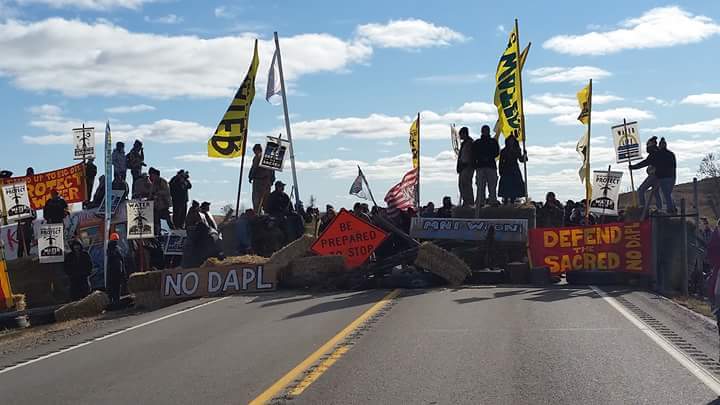
- The administration approved the Keystone XL and Dakota Access pipelines, supporting an estimated total of 42,000 jobs and $2 billion in wages.
- The administration announced the approval of the New Burgos Pipeline, a cross-border project that will export U.S. gasoline to Mexico.
- The Trump administration reversed President Obama’s moratorium on new leases for oil and gas development on federal lands.
President Trump rescinded President Obama’s costly Clean Power Plan and instead has proposed the Affordable Clean Energy Rule.
- According to NERA Economic Consulting, the CPP would have increased electricity rates by as much as 14 percent, costing American households up to $79 billion.
- The Affordable Clean Energy Rule will reduce greenhouse gasses, empower states, promote energy independence, and facilitate economic growth and job creation
In addition to the Clean Power Plan, the Trump administration has rescinded many costly Obama-Era regulations.
- The EPA has rescinded President Obama’s methane emissions rule that would cost American energy developers an estimated $530 million annually.
- The EPA is reviewing a rule that if rescinded would relax costly fuel standards and save $340 billion in regulatory costs.
President Trump announced his intent to withdraw the U.S. from the unfair Paris Climate Agreement.
In May 2017, the Trump administration created a Superfund task force designed to streamline the Superfund cleanup program.
- The Superfund task force has designated 10 sites for “immediate, intense action.”
RELAUNCHING THE SMART SECTORS PROGRAM
EPA has re-launched launched the Smart Sectors Program to partner with the private sector to achieve better environmental outcomes.
The lead for each sector serves as the ombudsmen within the respective agency across program offices, conducts educational site tours, analyzes data and advises options for environmental improvement, and develops reports that profile the impact of each sector
It also works to streamline EPA practices and operations.
EXPANDING AMERICAN ENERGY
- Signed legislation to open the Arctic National Wildlife Refuge to domestic energy production.
- Approved the Keystone XL and Dakota Access pipelines, with 42,000 jobs and $2 billion in earnings.
- Repealed the Clean Power Plan, a regulation estimated to increase energy costs by billions.
- Kept campaign promise to get America out of the Paris Climate Agreement.
GOVERNMENT ACCOUNTABILITY
President Trump has tightened rules for federal employees both past and present to ensure his administration works for the American people.
- The president signed an executive order that placed a five-year ban on lobbying and a lifetime ban on lobbying for foreign countries for federal employees.
- President Trump called for a comprehensive plan to reorganize the executive branch.
- President Trump began a comprehensive overhaul of digitally-delivered government services.
- President Trump called for a “full audit of the Pentagon.” The Department of Defense (DOD) responded to the president’s call to action and began its full financial statement audit.
To ensure the Government serves the needs of all Americans, President Trump has established a comprehensive plan to reorganize the executive branch and his administration has begun to implement this plan.
HEALTH CARE
President Trump has worked to improve access to affordable quality health care.
- The Department of Agriculture provided more than $1 billion in FY2017 to be used to improve access to health care services for 2.5 million people in rural communities.
- The Trump administration expanded access to Association Health Plans (AHPs) allowing small business to pool risk across states.
- The Trump Administration allows for Short-Term Limited Duration plans to be extended up to 12 months.
As part of the landmark Tax Cuts and Jobs Act President Trump repealed the individual mandate, which forced people to buy expensive insurance and taxed those who couldn’t afford it.
- The mandate disproportionately hurt the poor: 80% of those affected made less than $50,000.
President Trump signed a six-year extension of CHIP to fund healthcare for 9 million.
President Trump has mobilized his entire administration to address drug addiction and opioid abuse by declaring the opioid crisis a nationwide public health emergency.
- President Trump created a bipartisan opioid commission that issued 56 recommendations to help defeat the opioid crisis.
- In October 2017, President Trump directed The Department of Health and Human Services to declare the opioid crisis a public health emergency, allowing grant money to be used to combat abuse.
- President Trump signed the International Narcotics Trafficking Emergency Response by Detecting Incoming Contraband with Technology (INTERDICT Act) that would give customs agents $9 million for screening tools on the border.
- In FY2017, HHS invested nearly $900 million in opioid-specific funding.
- President Trump successfully pressured China to close dangerous loopholes that allowed Chines fentanyl manufacturers to legally ship the compound worldwide, much of which ended up in the U.S.
Under President Trump, The FDA has approved the largest number of generic drugs in history.
- Generics increase competition in the marketplace and lower the cost of prescription drugs for all Americans.
- In December 2018, year-end drug prices fell for the first time in nearly 50 years.
INFRASTRUCTURE & TECHNOLOGY
The Trump Administration allocated $50 billion to empower rural America to address the infrastructure needs of their communities
- 80 percent of the Rural Infrastructure Program funds will go directly to the governor of each state as determined by a formula.
- 20 percent of the Rural Infrastructure Program funds will be provided to selected states that apply for Rural Performance Grants.
President Trump’s plan provides states the flexibility they need to address the unique needs of each community.
- The federal funding provided by the president’s plan will not be awarded in pre-packaged, asset-specific amounts, as is often the case with federal programs, giving states the freedom to spend the money where it’s needed most.
- Instead, funds provided under the president’s proposal will go directly to the governor’s office of the state receiving funds allowing governors to make investments based on the individual infrastructure needs of their communities.
- Transportation projects which will rebuild roads, bridges, railways, and other vital infrastructure.
- Broadband deployment projects which will improve access for rural communities.
- Water and waste projects to help ensure rural families have access to clean water.
- Power and electric projects to provide rural areas with reliable, affordable power.
- Water resources projects to better manage flood risk and improve rural water supplies and waterways.
SOCIAL PROGRAMS
President Trump declared a Nationwide Public Health Emergency to address the opioid crisis.
- The President’s Council of Economic Advisers (CEA) found evidence that suggests that drug overdoses involving opioids were underreported by as much as 24 percent.
- The Administration provided nearly $500 million to states to prevent and treat opioid abuse. Another $500 million was requested in the 2018 FY Budget.
In April, the Department of Health and Human Services (HHS) laid out a comprehensive five-point strategy to combat the opioid abuse crisis.
The Department of Justice announced that fentanyl substances are a drug class under the Controlled Substances Act. This meant anyone who possesses, imports, distributes or manufactures illicit fentanyl-related substances would be subject to criminal prosecution similar to other controlled substances.
- Anyone who possesses, imports, distributes, or manufactures any illicit fentanyl-related substance will be subject to criminal prosecution similar to other controlled substances.
- The DOJ announced its first-ever indictments against two Chinese nationals and their North American-based associates for distributing large quantities of fentanyl and other opiate substances.
In an opioid fraud crackdown, the DOJ charged more than 400 people, including doctors and medical facilities, for prescribing unnecessary opioids, fueling the drug crisis.
In 2017, the Administration provided nearly $500 million to States to prevent and treat opioid abuse. The President’s FY 2018 Budget requests another $500 million.
On National Drug Take Back Day, the Drug Enforcement Administration collected a record-breaking 912,305 pounds – 456 tons – of potentially dangerous expired, unused, or unwanted prescription drugs at more than 5,300 collection sites.
- This was a record-breaking day, with collections from more than 5,300 sites.
PROTECTING LIFE
President Trump recognizes the precious gift of life and protects the sanctity of life at all stages.
In his first week in office, President Trump reinstated and expanded the Mexico City Policy that prevented $9 billion in foreign aid from being used to fund the abortion industry.
- President Trump de-funded a U.N. agency for colluding with China’s brutal program of forced abortion and sterilization.
President Trump worked with the Congress to sign a bill overturning an Obama midnight regulation that prohibited States from defunding abortion service providers.
- The Trump Administration published guidance which promises to enforce the Obamacare requirement that taxpayer dollars should not support abortion coverage in exchange plans.
Reinstated the Mexico City Policy to ban any U.S. foreign aid to organizations that perform abortions.
Signed a Congressional Review Act bill to allow states to restrict Planned Parenthood Funding.
EDUCATION
President Trump’s proposed budgets have made school choice a priority.
- The President’s FY2018 Budget Request included $1 billion in funding to Furthering Options of Children to Unlock Success Grants for public school choice and $250 million to promote private school choice through the Education Innovation and Research Program.
- In his FY2019 budget President Trump proposed a $5 billion federal tax credit on donations that fund scholarships to private and vocational schools, apprenticeships programs and other educational opportunities.
The Trump Administration successfully implemented the Every Student Succeeds Act (ESSA) to empower states with the flexibility they need to educate their students.
- 35 states and the District of Columbia have had their ESSA plans approved and the Department of Education is reviewing the plans for the remaining states.
- The Department of Education is urging states to embrace the opportunity provided by ESSA to end top-down mandates from Washington, D.C.
The Trump Administration implemented the year-round distribution of Pell grants, instead of limiting these grants to the spring and fall semesters.
- Low-income students will now have access to these funds over summer and winter breaks, so they can earn their degrees faster with fewer loans.
The Trump Administration reformed the student loan servicing process to improve customer experience and lower costs.
The Trump Administration has reformed The Free Application for Federal Student Aid to make the program more accessible to students.
The Trump Administration brought in financial experts to modernize the way FSA offers and services student loans.
The Department of Education provided $359.8 million in federal assistance to 20 states and the U.S. Virgin Islands to assist with the cost of educating students displaced by Hurricane Harvey, Irma, Maria, or the 2017 California wildfires.
VETERANS
President Trump signed the Veterans Accountability and Whistleblower Protection Act to allow senior officials in the Department of Veterans Affairs (V.A.) to fire failing employees and establish safeguards to protect whistleblowers.
- Through 2018, more than 4,300 Veterans Affairs employees were removed, demoted, or suspended as a result of the Veterans Accountability and Whistleblower Protection Act
In August 2017, after passing Congress unanimously, President Trump signed the Veterans Appeals Improvement and Modernization Act.
- This streamlined the lengthy process that veterans undergo when appealing disability benefits claims with the Veterans Affairs.
In August 2017, the President signed the Harry W. Colmery Veterans Educational Assistance Act, an important step in providing our nation’s heroes the support they have earned.
- This funded the post-9/11 GI Bill, which provided educational benefits to veterans, service members, and their family members, including tuition, fees, books, housing, and additional costs.
The President signed the V.A. Choice and Quality Employment Act of 2017 to authorize $2.1 billion in additional funds for the Veterans Choice Program (VCP).
- President Trump signed a bill to allow the V.A. to fire incompetent employees.
- President Trump signed legislation to fully fund the popular V.A. Choice Program.
In August 2017, The President signed the V.A. Choice and Quality Employment Act of 2017 which authorized $2.1 billion in additional funds for the Veterans Choice Program (VCP).
In November 2017, the Trump Administration created a new White House V.A. Hotline, staffed by veterans and family members, who will provide our nation’s Veterans with a direct, dedicated contact line to answer their needs and concerns.
- Since May 2019, the White House VA Hotline has surpassed 250,00 calls.
In April 2017, the VA launched its online “Access and Quality Tool” which provides veterans with data to help them make informed decisions about their health care.
In June 2018, President Trump signed The VA MISSION Act, which works to integrate the VA healthcare system and modernize it for the 21st century while providing Veterans with more choices in their healthcare options, whether from VA doctors or the community.
In 2018, the VA announced three initiatives to expand access to healthcare for veterans using tele-health technology:
- “Anywhere to Anywhere Veterans Affairs Health Care” allows Veterans Affairs providers to use tele-health technology to serve veterans no matter where the provider or veteran is located.
- V.A. Video Connect allows veterans and providers to connect by video across the country.
- The Veteran Appointment Request (VAR) application allows veterans to schedule appointments at Veterans Affairs facilities on digital devices.
In April 2019, the VA Announced a major expansion of its tele-health offerings in order to provide veterans living in rural or remote areas with the best possible care.
- The VA Telehealth initiative will involve partnerships with private sector companies including Walmart, T-Mobile, and Phillips.
Source: Promises Kept & MAGAPill.com

 By Julie Wilson
 By Tim Dickenson


 Liberty International News