Citing 1851 Treaty, Water Protectors Establish Road Blockade and Expand Frontline #NoDAPL Camp | LR inspire

Editor’s Note: Indigenous nations are still seeking respect for the sovereignty of their lands stolen by military occupation and Treaties the United States did not honor. Here’s another action re: DAPL pipeline.

Cannon Ball, ND – This morning, at approximately 8am central, water protectors took back unceded territory affirmed in the 1851 Treaty of Ft. Laramie as sovereign land under the control of the Oceti Sakowin, erecting a frontline camp of several structures and tipis on Dakota Access property, just east of ND state highway 1806. This new established camp is 2.5 miles north of the Cannon Ball River, directly on the proposed path of the Dakota Access Pipeline (DAPL). This site is directly across the road from where DAPL security dogs attacked water protectors on September 3rd.

To ensure the protection of this new camp from overtly militarized law enforcement, water protectors have established three road blockades:

North of the Frontline Camp, on Highway 1806
South of the Cannon Ball River, on Highway 1806
And Immediately west of Highway 1806, on county road 134

Police have discharged weapons, using rubber bullets to shoot down drones being used to document the police activity and actions.

This frontline camp is located on the final three 3 miles of the proposed pipeline route, before it connects with the drill pad that will take the pipeline beneath the Missouri River. Active construction of the Dakota Access pipeline is 2 miles west of this frontline camp. Oceti Sakowin water protectors continue an on-going pledge to halt active construction as frequently as possible.

Mekasi Camp-Horinek, an Oceti Sakowin camp coordinator states, “Today, the Oceti Sakowin has enacted eminent domain on DAPL lands, claiming 1851 treaty rights. This is unceded land. Highway 1806 as of this point is blockaded. We will be occupying this land and staying here until this pipeline is permanently stopped. We need bodies and we need people who are trained in non-violent direct action. We are still staying non-violent and we are still staying peaceful.”

Joye Braun, Indigenous Environmental Network organizer states, “We have never ceded this land. If DAPL can go through and claim eminent domain on landowners and Native peoples on their own land, then we as sovereign nations can then declare eminent domain on our own aboriginal homeland. We are here to protect the burial sites here. Highway 1806 has become the no surrender line.”

Ladonna Bravebull Allard, Sacred Stone Camp, “We stand for the water, we stand on our treaties, we stand for unci maka- we stand and face the storm.”

Contact: LaDonna Allard (CSS), ladonnabrave1@aol.com, (701) 426-2064
Dallas Goldtooth (IEN), dallas@ienearth.org, 708-515-6158
Tara Houska (HTE), tara@honorearth.org, (612) 226-9404
Cody Hall (RWC), cody.hall.605@gmail.com, (605) 220-2531

Source: LR Inspire

We Have No Reason to Believe 5G is Safe | Scientific American

By Joel Moskovitz

Editor’s Note: Science is allegedly the foundation for sound reasoning when it comes to evaluating the short and long-term benefits (and drawbacks) of any new technology, but in the case of 5G there is no reliable science to assure us of its safety. Quite the contrary, it’s being deployed globally without concern for the safety of those exposed.

The telecommunications industry and their experts have accused many scientists who have researched the effects of cell phone radiation of “fear mongering” over the advent of wireless technology’s 5G. Since much of our research is publicly-funded, we believe it is our ethical responsibility to inform the public about what the peer-reviewed scientific literature tells us about the health risks from wireless radiation.

The chairman of the Federal Communications Commission (FCC) recently announced through a press release that the commission will soon reaffirm the radio frequency radiation (RFR) exposure limits that the FCC adopted in the late 1990s. These limits are based upon a behavioral change in rats exposed to microwave radiation and were designed to protect us from short-term heating risks due to RFR exposure.

Yet, since the FCC adopted these limits based largely on research from the 1980s, the preponderance of peer-reviewed research, more than 500 studies, have found harmful biologic or health effects from exposure to RFR at intensities too low to cause significant heating.

Citing this large body of research, more than 240 scientists who have published peer-reviewed research on the biologic and health effects of nonionizing electromagnetic fields (EMF) signed the International EMF Scientist Appeal, which calls for stronger exposure limits. The appeal makes the following assertions:

“Numerous recent scientific publications have shown that EMF affects living organisms at levels well below most international and national guidelines. Effects include increased cancer risk, cellular stress, increase in harmful free radicals, genetic damages, structural and functional changes of the reproductive system, learning and memory deficits, neurological disorders, and negative impacts on general well-being in humans. Damage goes well beyond the human race, as there is growing evidence of harmful effects to both plant and animal life.”

The scientists who signed this appeal arguably constitute the majority of experts on the effects of nonionizing radiation. They have published more than 2,000 papers and letters on EMF in professional journals.

The FCC’s RFR exposure limits regulate the intensity of exposure, taking into account the frequency of the carrier waves, but ignore the signaling properties of the RFR. Along with the patterning and duration of exposures, certain characteristics of the signal (e.g., pulsing, polarization)increase the biologic and health impacts of the exposure. New exposure limits are needed which account for these differential effects. Moreover, these limits should be based on a biological effect, not a change in a laboratory rat’s behavior.

The World Health Organization’s International Agency for Research on Cancer (IARC) classified RFR as “possibly carcinogenic to humans” in 2011. Last year, a $30 million study conducted by the U.S. National Toxicology Program (NTP) found “clear evidence” that two years of exposure to cell phone RFR increased cancer in male rats and damaged DNA in rats and mice of both sexes. The Ramazzini Institute in Italy replicated the key finding of the NTP using a different carrier frequency and much weaker exposure to cell phone radiation over the life of the rats.

Based upon the research published since 2011, including human and animal studies and mechanistic data, the IARC has recently prioritized RFR to be reviewed again in the next five years. Since many EMF scientists believe we now have sufficient evidence to consider RFR as either a probable or known human carcinogen, the IARC will likely upgrade the carcinogenic potential of RFR in the near future.

Nonetheless, without conducting a formal risk assessment or a systematic review of the research on RFR health effects, the FDA recently reaffirmed the FCC’s 1996 exposure limits in a letter to the FCC, stating that the agency had “concluded that no changes to the current standards are warranted at this time,” and that “NTP’s experimental findings should not be applied to human cell phone usage.” The letter stated that “the available scientific evidence to date does not support adverse health effects in humans due to exposures at or under the current limits.”

The latest cellular technology, 5G, will employ millimeter waves for the first time in addition to microwaves that have been in use for older cellular technologies, 2G through 4G. Given limited reach, 5G will require cell antennas every 100 to 200 meters, exposing many people to millimeter wave radiation. 5G also employs new technologies (e.g., active antennas capable of beam-forming; phased arrays; massive multiple inputs and outputs, known as massive MIMO) which pose unique challenges for measuring exposures.

Millimeter waves are mostly absorbed within a few millimeters of human skin and in the surface layers of the cornea. Short-term exposure can have adverse physiological effects in the peripheral nervous system, the immune system and the cardiovascular system. The research suggests that long-term exposure may pose health risks to the skin (e.g., melanoma), the eyes (e.g., ocular melanoma) and the testes (e.g., sterility).

Since 5G is a new technology, there is no research on health effects, so we are “flying blind” to quote a U.S. senator. However, we have considerable evidence about the harmful effects of 2G and 3G. Little is known the effects of exposure to 4G, a 10-year-old technology, because governments have been remiss in funding this research. Meanwhile, we are seeing increases in certain types of head and neck tumors in tumor registries, which may be at least partially attributable to the proliferation of cell phone radiation. These increases are consistent with results from case-control studies of tumor risk in heavy cell phone users.

5G will not replace 4G; it will accompany 4G for the near future and possibly over the long term. If there are synergistic effects from simultaneous exposures to multiple types of RFR, our overall risk of harm from RFR may increase substantially. Cancer is not the only risk as there is considerable evidence that RFR causes neurological disorders and reproductive harm, likely due to oxidative stress.

As a society, should we invest hundreds of billions of dollars deploying 5G, a cellular technology that requires the installation of 800,000 or more new cell antenna sites in the U.S. close to where we live, work and play?

Instead, we should support the recommendations of the 250 scientists and medical doctors who signed the 5G Appeal that calls for an immediate moratorium on the deployment of 5G and demand that our government fund the research needed to adopt biologically based exposure limits that protect our health and safety.

Source: Scientific American

5G drones to blanket the nation, beaming down cancer-causing radiation from the skies… and there’s nowhere they can’t find you | Natural News

Editor’s Note: 5G technology is being rapidly deployed in the next few years without any concern for the short or long-term health effects upon human beings (and other living creatures as well). It’s being touted as a “technological boon” (certainly for the companies who’ll profit from it), but for the rest of us? The jury is out, because no trial about “benefits vs. dangers” has been set.

Whether we like it or not, 5G (fifth generation) wireless internet technology is slowly but surely being rolled out across the globe. Promising faster speeds, better connectivity and virtually instant data transfers, 5G is being hailed as a technological boon.

Service providers promise that 5G will enable downloads at 100 times greater speeds than 4G technology. This would translate to the ability to download a full HD movie in less than 10 seconds. 5G also promises more stable connections and greater capacity, enabling networks to handle multiple high-demand applications simultaneously.

However, while the media continues to sing its praises, very little has been said about its potential dangers – of which there are many. Studies have found that 5G technology will emit radiation at levels never before experienced by human beings, which could have devastating – and irreversible – effects.

Despite the potentially serious dangers, however, Waking Times reported recently that a collaboration of tech giants and defense contractors will soon be launching huge, football-sized drones into the stratosphere above Hawaii, from where they will beam massive amounts of 5G radiation down to the Earth below. (Related: Experts WARN — 5G technology will blanket the Earth with ultra-high microwave frequencies.)

“Airborne overhead 5G communication”

According to the Use Determination Application compiled for the Research Corporation of the University of Hawaii, the purpose of the HAWK30 program “is to develop new airborne overhead 5G communication, which would provide strong wireless service over a large area, including deep valleys, remote lands, and over the ocean.”

The Federal Aviation Administration (FAA) has granted the project a COA2 certificate of authorization, which will allow the drones to operate in a 150 square mile radius for up to two years. The area which will be covered by the drones includes the Molokini crater, a popular tourist spot that boasts 300,000 visitors annually, as well as beautiful tropical waters that are home to tropical fish and a special humpback whale national marine sanctuary.

Experts warn, however, that these drones pose significant risks. Waking Times reported:

Radiation harm is a concern as one HAWK30 drone broadcasts the equivalent of 1800 cell towers, albeit at a much lower power level, however, power is irrelevant to health effects except for tissue heating. Thousands of peer reviewed research studies document the non-thermal effects of wireless radiation on humans and other living things. In some experiments the lowest power levels caused the most leakage in the blood-brain barrier. An inverse relationship between power and health effects has even been shown. Wireless technology is not made safe by reducing the power.

The HAPS drones which will be used in the project will fly at 70 miles per hour and have a 260-foot wingspan and 10 propellers each. Each drone will boast cell site coverage of 124 miles in diameter, creating a blanket of radiation over the entire area.

There are other issues in addition to radiation concerns. Waking Times warns:

In addition to irradiating all life forms within range, this type of massive flying wing has a bad safety record. Two high altitude drones have been built by AeroVironment and they both fell from the sky and crashed. In fact, the drone is so experimental that almost no regulations exist to govern it. Project officials appear ready to take full advantage of this, having boasted about schooling the FAA and writing their own rules.

But a 1.5 ton HAWK30 falling from the stratosphere could have devastating effects. Only 2300 Newtons of force crush a human skull wearing a helmet. Falling from a height of 70,000 feet, a 1.5 ton object would impact with 266,756,000 Newtons of force!

Eventually the project leaders plan to turn the island of L?na’I into a manufacturing plant and launch pad for thousands of drones which will be sent across the globe, blanketing the planet in cancer-causing radiation. Learn more about the dangers of 5G technology at Radiation.news.

Source: Natural News

Father-Son Duo Helped Create 51,000 New Beehive Colonies Across The Globe | Intelligent Living

The bee population is shrinking. But this duo is saving them.

Stuart and Cedar Anderson spent a whole ten years trying to figure out how to harvest honey without disturbing bees. Their solution was an Indiegogo-funded invention called Flow Hive that replicates a real beehive without putting the bees at risk when you harvest honey. The Flow Hive allows the honey to flow out of the hive straight into a jar without crushing or disrupting the bees inside. What a brilliant design!

Cedar, who is a third-generation beekeeper from the rural community of Nimbin, Australia, says that he was inspired to try to design a simpler beehive after his brother was stung during one of their honey extraction missions.

In 2015 Flow Hive became the most successful crowdfunding campaign in Indiegogo history collecting a total of $12.2 million! Now, four years later, the Flow Hive has helped create 51,000 new beehive colonies, resulting in a 10% increase in the world’s bee colonies. That’s impressive!

Kim Flottum, editor of Bee Culture said: “The rate of beginners getting into beekeeping has more than doubled in a decade.”

With honeybee populations across the globe declining due to habitat loss and pesticides, the company has also decided to donate all of its profits to honeybee advocacy groups. The Flow Hive and the newer Flow Hive 2 beehives can be purchased from the Honey Flow (click here) website.

Source: Intelligent Living

Study touts planting 1 trillion trees as most effective climate change solution | The Hill

Healthy green trees in a forest of old spruce, fir and pine trees in wilderness of a national park. Sustainable industry, ecosystem and healthy environment concepts and background.

The cheapest way to halt the effects of climate change could be planting 1 trillion trees, according to a new study.

The study in the journal Science, first reported by The Associated Press, found that planting trees could be the most effective way to remove carbon from the atmosphere, but cautioned that it would have little effect without a reduction of emissions around the globe.

“This is by far — by thousands of times — the cheapest climate change solution” study co-author Thomas Crowther, an ecologist at the Swiss Federal Institute of Technology, said.

“It’s certainly a monumental challenge, which is exactly the scale of the problem of climate change,” he added.

Though, Crowther cautioned, “None of this works without emissions cuts.”

Scientists with the United Nations have called for a major reduction in carbon emissions over the next decade to stave off the worst effects of climate change, including rising sea levels and dangerous weather phenomena.

Lawmakers around the world have debated on how to address the issue, and in 2017 the U.S. withdrew from a major accord meant to battle climate change due to President Trump‘s opposition to the pact.

Democratic candidates for president, including former Vice President Joe Biden, have called for the U.S. to rejoin the agreement. Progressives are pushing an ambitious plan to cut U.S. carbon emissions, the Green New Deal, introduced earlier this year by Sen. Ed Markey (D-Mass.) and Rep. Alexandria Ocasio-Cortez (D-N.Y.).

If enacted, the Green New Deal calls for the transition of America’s energy grid away from fossil fuels to renewable energy.

Source: The Hill

Planting Billions of Trees Is the ‘Best Climate Change Solution Available Today,’ Study Finds | EcoWatch

Planting more than 500 billion trees could remove around 25 percent of existing carbon from the atmosphere, a new study has found. What’s more: there’s enough space to do it.

The study, published in Science Friday, set out to assess how much new forest the earth could support without encroaching on farmland or urban areas and came up with a figure of 0.9 billion hectares, an area roughly the size of the U.S., BBC News reported. That makes reforestation “the most effective solution” for mitigating the climate crisis, the researchers concluded.

“Our study shows clearly that forest restoration is the best climate change solution available today and it provides hard evidence to justify investment,” senior study author and ETH-Zürich Professor Tom Crowther said, as BBC News reported. “If we act now, this could cut carbon dioxide in the atmosphere by up to 25 percent, to levels last seen almost a century ago.”

The new trees would remove around 200 gigatonnes of carbon, or two thirds of what humans have pumped into the atmosphere since the industrial revolution.

However, the researchers emphasized that tree planting was not a replacement for reducing greenhouse gas emissions or phasing out the use of fossil fuels.

“None of this works without emissions cuts,” Crowther told Time.

Even if tree planting began today, it would take 50 to 100 years for the new trees to soak up those 200 gigatonnes of carbon, he told The Guardian. And, as National Geographic pointed out, the researchers found that potential tree-planting land could shrink by one-fifth by 2050 even if global temperature rise is limited to 1.5 degrees Celsius above pre-industrial levels, as some tropical areas could grow too hot to support forests.

Even so, Crowther said tree planting was an important means of immediate climate action.

It’s “a climate change solution that doesn’t require President Trump to immediately start believing in climate change, or scientists to come up with technological solutions to draw carbon dioxide out of the atmosphere,” Crowther told The Guardian. “It is available now, it is the cheapest one possible and every one of us can get involved.”

Assistant-Director General at the UN Food and Agriculture Organization René Castro praised the study’s utility.

“We now have definitive evidence of the potential land area for re-growing forests, where they could exist and how much carbon they could store,” Castro said, as The Guardian reported.

To reach their conclusions, the researchers first looked at around 80,000 satellite photographs of protected forest areas around the world to assess the tree cover in each. They then used Google Earth Engine mapping software to develop a model for predicting where new trees could grow, National Geographic explained. They found that more than half of the world’s reforestation potential was located in six countries: China, the U.S., Russia, Australia, Canada and Brazil.

However, trends are moving in the opposite direction in Brazil, where deforestation is on the rise under the right-wing government of President Jair Bolsonaro. Recent satellite images show that a football-field-sized swath of the Amazon is being lost every minute, according to National Geographic.

Bolsonaro has also been hostile to the rights of indigenous communities to the forest. But such rights are essential for conservation: deforestation rates are much lower in forests that recognize indigenous claims.

“We have served as guardians of these lands for generations … We also understand how to restore them to health,” Joan Carling, a member of the Kankanaey tribe in the Philippines and co-convener of the Indigenous Peoples Major Group for Sustainable Development, told National Geographic by email. “With the security of our lands and resources, we can prevent destructive logging, mining, agri-business, and other projects from occurring in our territories.”

Political realities are why some scientists criticized the optimism of Crowther’s findings.

“Planting trees to soak up two-thirds of the entire anthropogenic carbon burden to date sounds too good to be true. Probably because it is,” University of Reading professor Martin Lukac told BBC News. “This far, humans have enhanced forest cover on a large scale only by shrinking their population size (Russia), increasing productivity of industrial agriculture (the West) or by direct order of an autocratic government (China). None of these activities look remotely feasible or sustainable at global scale.”

University College London professor Simon Lewis, meanwhile, said that the amount of carbon the study said trees would absorb was too high. He said the study had not accounted for the carbon already in the soil before trees were planted or the hundreds of years it would take for the trees to achieve their full storage potential, The Guardian reported.

Source: EcoWatch

Is This the End of Recycling? | The Atlantic

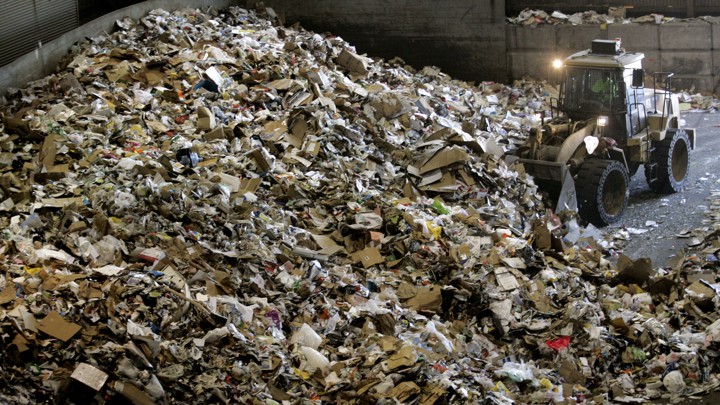
Refuse is pushed into stacks at Recology in San Francisco, California November 2, 2009. Each day the company takes in more than 750 tons of plastic, paper and glass refuse, sorts the trash and presses the materials into compact cubes. Picture taken November 2, 2009. To match feature CLIMATE/CITIES REUTERS/Robert Galbraith (UNITED STATES ENVIRONMENT SOCIETY) – GM1E5BU0L3801

Editor’s Note: From all appearances American society is organized at the curb for easy recycling, separating trash and repurposing materials, but the fact is less than 13% of our “trash” actually gets recycled. That’s poor performance considering decades of public education.

After decades of earnest public-information campaigns, Americans are finally recycling. Airports, malls, schools, and office buildings across the country have bins for plastic bottles and aluminum cans and newspapers. In some cities, you can be fined if inspectors discover that you haven’t recycled appropriately.

But now much of that carefully sorted recycling is ending up in the trash.

For decades, we were sending the bulk of our recycling to China—tons and tons of it, sent over on ships to be made into goods such as shoes and bags and new plastic products. But last year, the country restricted imports of certain recyclables, including mixed paper—magazines, office paper, junk mail—and most plastics. Waste-management companies across the country are telling towns, cities, and counties that there is no longer a market for their recycling. These municipalities have two choices: pay much higher rates to get rid of recycling, or throw it all away.

Most are choosing the latter. “We are doing our best to be environmentally responsible, but we can’t afford it,” said Judie Milner, the city manager of Franklin, New Hampshire. Since 2010, Franklin has offered curbside recycling and encouraged residents to put paper, metal, and plastic in their green bins. When the program launched, Franklin could break even on recycling by selling it for $6 a ton. Now, Milner told me, the transfer station is charging the town $125 a ton to recycle, or $68 a ton to incinerate. One-fifth of Franklin’s residents live below the poverty line, and the city government didn’t want to ask them to pay more to recycle, so all those carefully sorted bottles and cans are being burned. Milner hates knowing that Franklin is releasing toxins into the environment, but there’s not much she can do. “Plastic is just not one of the things we have a market for,” she said.

The same thing is happening across the country. Broadway, Virginia, had a recycling program for 22 years, but recently suspended it after Waste Management told the town that prices would increase by 63 percent, and then stopped offering recycling pickup as a service. “It almost feels illegal, to throw plastic bottles away,” the town manager, Kyle O’Brien, told me.

Without a market for mixed paper, bales of the stuff started to pile up in Blaine County, Idaho; the county eventually stopped collecting it and took the 35 bales it had hoped to recycle to a landfill. The town of Fort Edward, New York, suspended its recycling program in July and admitted it had actually been taking recycling to an incinerator for months. Determined to hold out until the market turns around, the nonprofit Keep Northern Illinois Beautiful has collected 400,000 tons of plastic. But for now, it is piling the bales behind the facility where it collects plastic.

This end of recycling comes at a time when the United States is creating more waste than ever. In 2015, the most recent year for which national data are available, America generated 262.4 million tons of waste, up 4.5 percent from 2010 and 60 percent from 1985. That amounts to nearly five pounds per person a day. New York City collected 934 tons of metal, plastic, and glass a day from residents last year, a 33 percent increase from 2013.

For a long time, Americans have had little incentive to consume less. It’s inexpensive to buy products, and it’s even cheaper to throw them away at the end of their short lives. But the costs of all this garbage are growing, especially now that bottles and papers that were once recycled are now ending up in the trash.

One of those costs is environmental: When organic waste sits in a landfill, it decomposes, emitting methane, which is bad for the climate—landfills are the third-largest source of methane emissions in the country. Burning plastic may create some energy, but it also produces carbon emissions. And while many incineration facilities bill themselves as “waste to energy” plants, studies have found that they release more harmful chemicals, such as mercury and lead, into the air per unit of energy than do coal plants.

And as cities are now learning, the other cost is financial. The United States still has a fair amount of landfill space left, but it’s getting expensive to ship waste hundreds of miles to those landfills. Some dumps are raising costs to deal with all this extra waste; according to one estimate, along the West Coast, landfill fees increased by $8 a ton from 2017 to 2018. Some of these costs are already being passed on to consumers, but most haven’t—yet.

Americans are going to have to come to terms with a new reality: All those toothpaste tubes and shopping bags and water bottles that didn’t exist 50 years ago need to go somewhere, and creating this much waste has a price we haven’t had to pay so far. “We’ve had an ostrich-in-the-sand approach to the entire system,” said Jeremy O’Brien, director of applied research at the Solid Waste Association of North America, a trade association. “We’re producing a lot of waste ourselves, and we should take care of it ourselves.”

As the trash piles up, American cities are scrambling to figure out what to do with everything they had previously sent to China. But few businesses want it domestically, for one very big reason: Despite all those advertising campaigns, Americans are terrible at recycling.

About 25 percent of what ends up in the blue bins is contaminated, according to the National Waste & Recycling Association. For decades, we’ve been throwing just about whatever we wanted—wire hangers and pizza boxes and ketchup bottles and yogurt containers—into the bin and sending it to China, where low-paid workers sorted through it and cleaned it up. That’s no longer an option. And in the United States, at least, it rarely makes sense to employ people to sort through our recycling so that it can be made into new material, because virgin plastics and paper are still cheaper in comparison.

Even in San Francisco, often lauded for its environmentalism, waste-management companies struggle to keep recycling uncontaminated. I visited a state-of-the-art facility operated by San Francisco’s recycling provider, Recology, where million-dollar machines separate aluminum from paper from plastic from garbage. But as the Recology spokesman Robert Reed walked me through the plant, he kept pointing out nonrecyclables gumming up the works. Workers wearing masks and helmets grabbed laundry baskets off a fast-moving conveyor belt of cardboard as some non-cardboard items escaped their gloved hands. Recology has to stop another machine twice a day so a technician can pry plastic bags from where they’ve clogged up the gear.

Cleaning up recycling means employing people to slowly go through materials, which is expensive. Jacob Greenberg, a commissioner in Blaine County, Idaho, told me that the county’s mixed-paper recycling was about 90 percent clean. But its paper broker said the mixed paper needed to be 99 percent clean for anyone to buy it, and elected officials didn’t want to hike fees to get there. “At what point do you feel like you’re spending more money than what it takes for people to feel good about recycling?” he said.

For now, it’s still often cheaper for companies to manufacture using new materials than recycled ones. Michael Rohwer, a director at Business for Social Responsibility, works with companies that try to be more environmentally friendly. He told me that recycled plastic costs pennies more than new plastic, and those pennies add up when you’re manufacturing millions of items. Items made of different types of plastic nearly always end up in the trash, because recyclers can’t separate the plastics from one another—Reed equates it with trying to get the sugar and eggs out of a cake after you’ve baked it. But because companies don’t bear the costs of disposal, they have no incentive to manufacture products out of material that will be easier to recycle.

The best way to fix recycling is probably persuading people to buy less stuff, which would also have the benefit of reducing some of the upstream waste created when products are made. But that’s a hard sell in the United States, where consumer spending accounts for 68 percent of the GDP. The strong economy means more people have more spending money, too, and often the things they buy, such as new phones, and the places they shop, such as Amazon, are designed to sell them even more things. The average American spent 7 percent more on food and 8 percent more on personal-care products and services in 2017 than in 2016, according to government data.

Some places are still trying to get people to buy less. The city of San Francisco, for instance, is trying to get residents to think of a fourth r beyond “reduce, reuse, and recycle”—“refuse.” It wants people to be smarter about what they purchase, avoiding plastic bottles and straws and other disposable goods. But it’s been tough in a place centered on acquiring the newest technology. “This is our big challenge: How do you take a culture like San Francisco and get people excited about less?” Debbie Raphael, the director of the San Francisco Department of the Environment, told me. The city passed an ordinance that required that 10 percent of beverages sold be available in reusable containers, and it is trying to make reuse “hip” through an online campaign and dedicated website, Raphael said. San Francisco and other Bay Area cities have banned plastic bags and plastic straws, but that option isn’t available in many other parts of the country, where recently passed state laws prevent cities from banning products.

But even in San Francisco, the most careful consumers still generate a lot of waste. Plastic clamshell containers are difficult to recycle because the material they’re made of is so flimsy—but it’s hard to find berries not sold in those containers, even at most farmers’ markets. Go into a Best Buy or Target in San Francisco to buy headphones or a charger, and you’ll still end up with plastic packaging to throw away. Amazon has tried to reduce waste by sending products in white and blue plastic envelopes, but when I visited the Recology plant, they littered the floor because they’re very hard to recycle. Even at Recology, an employee-owned company that benefits when people recycle well, the hurdles to getting rid of plastics were evident. Reed chided me for eating my daily Chobani yogurt out of small, five-ounce containers rather than out of big, 32-ounce tubs, but I saw a five-ounce Yoplait container in a trash can of the control room of the Recology plant. While there, Reed handed me a pair of small orange earplugs meant to protect my ears from the noise of the plant. They were wrapped in a type of flimsy plastic that is nearly impossible to recycle. When I left the plant, I kept the earplugs and the plastic in my bag, not sure what to do with them. Eventually, I threw them in the trash.

Then there’s the challenge of educating people about what can and can’t be recycled, even as the number of items they touch on a daily basis grows. Americans tend to be “aspirational” about their recycling, tossing an item in the blue bin because it makes them feel less guilty about consuming it and throwing it away. Even in San Francisco, Reed kept pointing out items that aren’t easily recyclable but that keep showing up at the Recology plant: soy-sauce packets and pizza boxes, candy-bar wrappers and dry-cleaner bags, the lids of to-go coffee cups and plastic take-out containers.

If we can somehow figure out how to better sort recycling, some U.S. markets for plastics and paper may emerge. But selling it domestically will still be harder than it would be in a place such as China, where a booming manufacturing sector has constant demand for materials. The viability of recycling varies tremendously by locale; San Francisco can recycle its glass back into bottles in six weeks, according to Recology, while many other cities are finding that glass is so heavy and breaks so easily that it is nearly impossible to truck it to a place that will recycle it. Akron, Ohio, is just one of many cities that have ended glass recycling since the China policy changes.

Source: The Atlantic


The liberal media only cares about GMOs when they involve wildlife, not human children | Pesticides News/Natural News


There’s a wild conspiracy theory being perpetuated by the Trump-hating mainstream media right now that claims the president is reversing an Obama-era ban on the use of pesticides and GMOs (genetically-modified organisms) in national wildlife refuges. But an in-depth Natural Newsinvestigation has revealed that this claim is just more fake news, as Obama never actually banned either of these poisons from nationally-owned land.

In fact, a 2014 memo issued by Obama about the types of chemicals and agricultural inputs that are allowed on federal land is almost identical to the one recently issued by Trump – meaning there’s been virtually no change in the policy for at least the past four years. But this isn’t what the liberal media is now reporting as it tries to claim that Trump is “destroying the environment” – which is just the latest psy-op to rile up the public against the president.

All during the Obama years, Natural News was at the forefront of reporting on such issues, seeing as how monitoring GMOs and chemical pesticides and herbicides is our forte. If you go back in our archives and search for these topics, you’ll see that Obama was hardly a friend of the environment, nor was he at all concerned about damaging toxins and fake food crops invading federal land.

Because it was Obama engaging in this sleight-of-hand – remember, it was Obama who lied on the campaign trail about banning the very same GMOs that he ultimately allowed in wildlife refuges – the mainstream media was nowhere to be found in condemning him. But now that Trump is basically affirming this Obama-era policy with no changes, the liberal liars would have us all believe that Trump “hates the environment” and is “destroying the planet.”

“The latest assault comes from a wave of extremely deceptive, misleading stories that now claim the Trump administration has reversed an Obama-era regulatory decision that banned the use of neonics and GMOs on national wildlife refuge lands,” says Mike Adams, the Health Ranger.

“They claim the memo completely reverses the Obama-era pesticide ban. But a factual reading of the two memos (one from 2014, one from 2018) shows this interpretation to be highly inaccurate, if not deliberately deceptive.”

You can read the two memos side by side and see for yourself the deception by visiting this link.

The fake media harms us all

What’s stunningly hypocritical about those criticizing the president over the fake news it made up about him is that it’s suddenly popular to oppose the deadly chemical poisons that independent media outlets like Natural News have been warning about for years. We’ve faced plenty of criticism, mockery, and abuse for simply warning about the dangers of GMOs and crop chemicals, both of which are harming children by the millions, not to mention the environment.

However, now that Trump is at the helm continuing this status quo, liberal news outlets are going nuts pretending like they care about these same issues – the exception being that they only seem to care about the wildlife refuges, and not about children. It’s just another sick ploy by these psychopaths to target Trump when, in fact, they couldn’t care less about either planet or children.

While we’re in full agreement that Trump needs to stop this chemical assault on our planet and our children, the truth of the matter is that nothing has changed under his presidency, despite what the fake media is claiming. GMOs and crop chemicals are still being used just as they always were, and still need to be fought against, regardless of who the sitting president might be.

Source: Pesticides News/Natural News

Scientists warn of toxic chemical cocktail sprayed on food | GM Watch


As the number of chemicals applied to vegetables sold in supermarkets goes up 17-fold, experts say pesticides must be phased out of food production. Report by Claire Robinson

The number of chemicals applied to vegetables sold in supermarkets has increased by up to 17-fold over 40 years, according to data presented at a conference organized by the Epidemiology and Public Health Section of the Royal Society of Medicine in London on 20 November, which I attended on behalf of GMWatch.

Just as disturbing as the data on our escalating exposure to toxic pesticide mixtures was the evidence presented at the conference that the regulatory system for pesticides is failing.

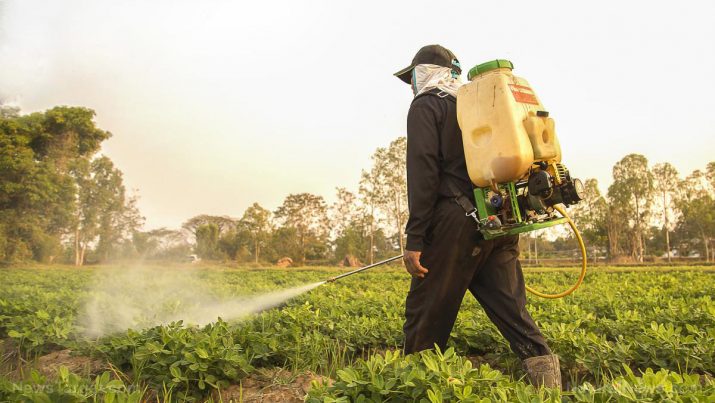
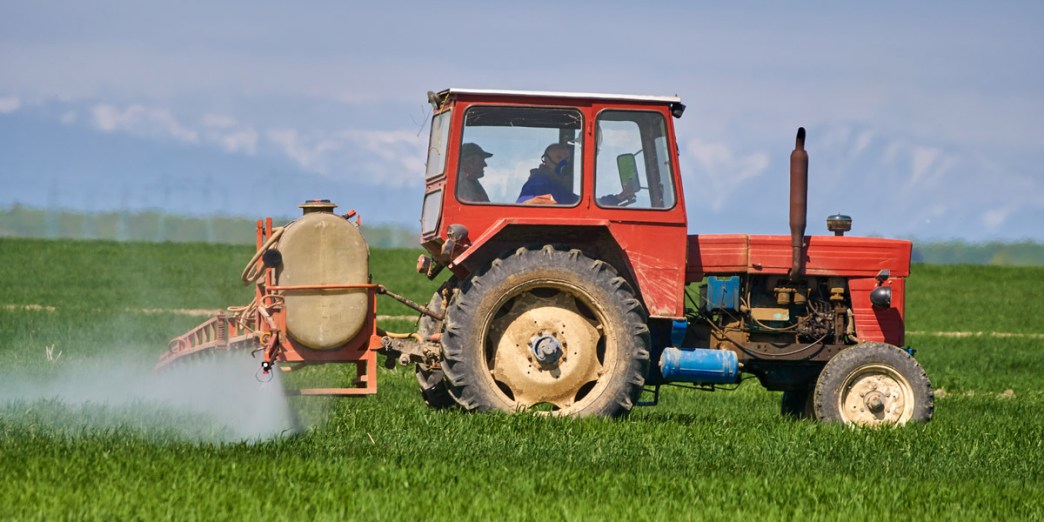
Scientists explained that while the system tests the single active ingredients in pesticides, it fails to test the many accompanying chemicals (adjuvants) used in pesticide formulations to enhance the effectiveness of the active ingredients. It also fails to test the combined effects of the formulations of chemicals used in commercial pesticides, let alone the cocktail effect of being exposed to multiple pesticides, as most farmers, rural residents and consumers are.

Indeed, as one scientist pointed out, there are simply too many potential combinations of chemicals to test and regulate. Nor, we heard, does the regulatory system test low, realistic doses of these chemicals that may give rise to endocrine (hormone) disruption, which can in turn lead to serious illnesses that are increasing in the population.

Because of these facts, there is simply no way of ensuring the safe use of pesticides in agriculture.

Chemical cocktails increasing

Figures released for the first time at the conference showed that the number of toxic chemicals applied to onions, leeks, wheat and potatoes has been steadily increasing since the 1960s.

This is despite industry data showing that the volume of pesticides applied to supermarket vegetables has halved since the 1990s.

The number of pesticides applied to onions and leeks has risen 17-fold from 1.8 in 1966 to 32.6 in 2015, the data showed.

In 1974, fewer than two chemicals were applied to the average wheat crop, but this rose more than 10-fold to 20.7 in 2014. Potatoes are now sprayed with five times more chemicals than in 1975, with the number rising from 5.3 to 30.8 in 2014.

The figures were compiled by the data firm Fera Science and were only made public after the Soil Association, which certifies organic food in the UK, paid for them to be released. While Fera did not measure actual residues present in the produce, the fact that so many pesticides were applied to the growing crops suggests that at least some residues would be found if they were looked for.
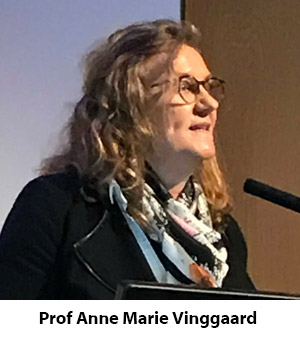
Anne_Marie_Vinggaard

The conference followed the publication of an article in the journal Science by Prof Ian Boyd, chief scientific advisor to the UK government’s department of agriculture (DEFRA). Prof Boyd wrote that the assumption by regulators around the world that it is safe to use pesticides at industrial scales across landscapes is false.

Scientist Prof Anne Marie Vinggaard of the National Food Institute in Denmark warned that chemicals that have no effect in isolation can have a pronounced toxic effect when found in mixtures. In real life we are exposed not to one chemical at a time but to mixtures. In addition, commercial pesticide formulations, many of which are endocrine disruptors, are themselves mixtures of active ingredients and adjuvants. “We are exposed to a lot of chemicals acting together,” said Prof Vinggaard. “We must take account of this cocktail effect.”

But pesticide regulations fail to do so.
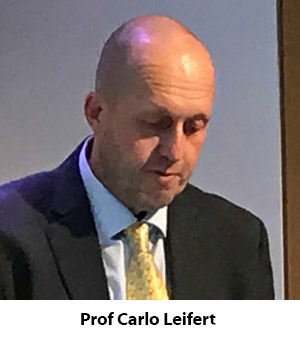
Carlo Leifert

Pesticides linked to low sperm quality

Prof Carlo Leifert, director of the Centre for Organics Research at Southern Cross University in Australia, cited research showing higher sperm counts and density in men working for the Danish organic farming association and a separate US study showing that high levels of dietary pesticide exposure were linked to low sperm quality in men.

Prof Leifert’s presentation came soon after the publication of a study implicating pesticide-treated foods in fertility problems in women. In the study, published in JAMA Internal Medicine, Harvard researchers followed 325 women at an infertility clinic and found that women who regularly ate pesticide-treated fruits and vegetables had lower success rates getting pregnant with IVF, while women who ate organic food had reduced risk of pregnancy loss and increased fertility.

Eat organic to minimize exposure
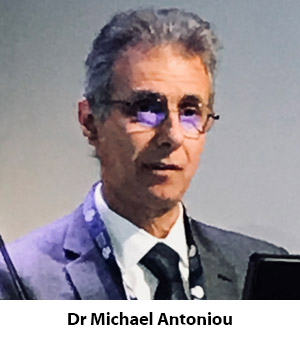
Dr Michael Antoniou

Dr Michael Antoniou, head of the Gene Expression and Therapy Group at King’s College London, told the Royal Society of Medicine conference that the adjuvants in commercial pesticide formulations can be toxic in their own right and in some cases more toxic than the declared active ingredients. Yet only the active ingredients are tested and assessed for long-term health effects in the regulatory process.

Dr Antoniou also said that research on hormone-disrupting chemicals, including pesticides, shows that very low realistic doses can be more toxic than higher doses. As pesticides are not tested for low dose effects for regulatory purposes, these effects can be missed by regulatory agencies, leading to a situation in which the public can be exposed to hormone-disrupting levels of these chemicals. This is a matter of concern because hormone disruption is implicated in a large number of diseases that are becoming increasingly widespread, such as hormone-related cancers, obesity, and diabetes.

Dr Antoniou said that regulators around the world have been slow to keep up with the scientific knowledge of harm from low doses of endocrine disrupting chemicals. These effects are not controversial in the scientific community and yet the EU has still not decided how to define endocrine disruptive chemicals, let alone how to regulate them.

Dr Antoniou described his research showing that long term exposure to very low doses of Roundup herbicide far below regulatory permitted levels caused non-alcoholic fatty liver disease (NAFLD) in rats. NAFLD has now reached epidemic proportions in the US and Europe, with around 25% of the population suffering from it.

Dr Antoniou told the audience, which included doctors who treat chemically damaged people, “As a precaution, you should minimise your exposure to pesticides. The only way to guarantee that is by eating organically.”

Industry perspectives

Sarah Mukherjee

Occasions like this are often interesting from the point of view of finding out the industry line on the scientific and public relations challenges it is facing, and this event was no exception. One such line was offered by Sarah Mukherjee, CEO of the Crop Protection Association (CPA). Mukherjee is a former BBC journalist who began her presentation by stating that she had no scientific background. Her presentation consisted of emotive stories of her deprived childhood, with the implication that organic food is a luxury that only the affluent can afford and that pesticides were needed to ensure an affordable food supply for all. She did not address any of the scientific points presented by the earlier speakers. In fact, she was not present for those sessions and only arrived later in the day.

The tone and content of her presentation did not sit well with the detailed information on the proven effects of low-dose pesticides provided by the scientist speakers in the morning sessions. It was remarkable for its failure to offer any evidence at all to back up Mukherjee’s premise that we are better off with pesticides.

Glyphosate and cancer

Mukherjee’s closest brush with science was an attempt to exonerate glyphosate herbicides from suspicion of carcinogenicity by quoting the latest updated findings from the Agricultural Health Study (AHS) in the US. These found no link between glyphosate and non-Hodgkin’s lymphoma, a type of cancer. Mukherjee used these findings as a stick to beat IARC, the World Health Organization cancer agency that upset the pesticide industry by concluding that glyphosate was a probable carcinogen.

But what Mukherjee failed to mention was that the study update did find a link between glyphosate and another type of cancer, acute myeloid leukemia (AML) – a link that the researchers said should be followed up with further research. She also did not mention a fact pointed out by the scientist Dr Jennifer Sass – that while the link did not reach statistical significance at the 95% confidence level (a 95% certainty that the findings are not by chance but point to a real effect of glyphosate), at the 90% confidence level it would have been significant. As Sass commented, “With a deadly form of cancer like AML, pesticide applicators, farmers, and other highly exposed people may want to take protective measures, even if studies are only 90% confident in the link to AML cancer.”

Mukherjee also failed to mention that IARC took the AHS’s “no effect” finding from glyphosate into consideration in its assessment of glyphosate, since previous findings from the AHS that were already published at the time of IARC’s review had also found no effect. Other epidemiological studies did find a link between glyphosate and non-Hodgkin’s lymphoma. This contradictory evidence is why IARC said there was only “limited” proof of a glyphosate link with cancer from epidemiological studies. However, it classified glyphosate as a probable carcinogen on the basis of “sufficient” evidence in controlled laboratory studies on animals. These types of study, unlike epidemiological studies, demonstrate a causal link and are therefore a far stronger form of evidence.

I was not the only audience member to conclude that Mukherjee was seriously out of her depth among a speaker line-up of heavyweight scientists, addressing an audience of scientists, medics, and experts from relevant fields. One scientist told me he was shocked that the CPA chose to send Mukherjee as its representative to such an event: “Couldn’t they find a scientist who was willing to take this on?”

Is organic food elitist?

Mukherjee’s “organic food is elitist” meme did not play well with me. I speak as someone who at one point in my life lived in a partnership in which neither of us had any income or savings and we had to survive off very meagre state benefits. Yet we ate organic 100% of the time. We did it by cooking fresh food from scratch each day (it didn’t take much time), buying via farm box delivery schemes rather than from supermarkets, eating mostly vegetarian, and – obviously – not spending money on luxuries.

On our occasional forays to the supermarket to buy loo rolls and cleaning fluids, we were gobsmacked at the large amounts of money being spent on the weekly shop by families with trolleys full of processed food. Even without getting into discussions about the “externalized” costs of eating pesticide-contaminated food, such as getting sick, we simply could not afford that type of food. So who exactly were the elite in this situation? Certainly not us. This is just one example among many of Mukherjee’s irrational and frankly insulting approach to the vital topic of food security.

Dr Chris Hartfield

Speakers in support of pesticide safety

The other people speaking in support of the safety and benefits of pesticides were Dr Chris Hartfield of the National Farmers Union (NFU) and Dave Bench of the UK government’s Health and Safety Executive.

Mr Bench described the regulatory system for pesticides, which he portrayed as robust and as balancing the risks of pesticides against the benefits to society.

Dr Hartfield showed a long list of Integrated Pest Management (IPM) techniques, in which pesticides are only sprayed as a last resort as and when absolutely necessary. He said that 16,820 farmers in the UK are using these techniques on 4.4 million hectares of land.
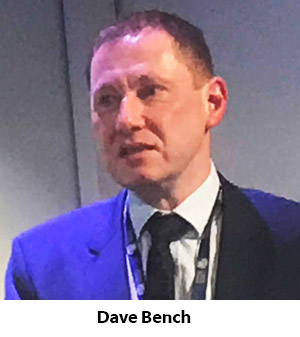
Dave BenchHowever, members of the audience were skeptical of this claim. Guy Watson, an organic farmer from Riverford Farm in Devon, said that his conventional farmer neighbour laid out his spraying schedule well in advance of the growing season and that all the pesticides were sprayed in accord with the schedule, whether they were needed or not. He suspected that farmers’ practice of IPM was confined to a paper exercise that was not borne out by the reality in the fields.

Mr Watson’s skepticism about UK farmers’ use of IPM was amply supported by the data presented at the conference showing the increasing numbers of pesticides sprayed on our food.

Some members of the audience who suffered repeated exposures to pesticide spraying because they lived near treated fields agreed that a cavalier attitude to the use of pesticides seemed to be the norm among conventional farmers.

Georgina Downs of the UK Pesticides Campaign, which represents rural residents affected by pesticides sprayed in their localities, commented after the conference: “There was the usual gross misinformation stated by the CPA and the NFU – most importantly their insistence that there is a rigorous regulatory system in place for pesticides. There simply is not, and this lie cannot continue to be peddled.

“The conventional chemical farming system has been an untested, unregulated, and unlawful experiment with human health and the environment that has caused untold damage.”

Is farming without pesticides possible?

Agro-industry lobbyists would have us believe that farmers cannot manage without pesticides. What is more, they claim that even organic farmers regularly spray a vast array of pesticides permitted under organic standards. But this picture is far from the reality. Most organic farmers do not spray because they take other measures to protect their crops, such as rotating crops to prevent attacks from over-wintering pests, using barrier methods against pests, cultivating hedges and plants to attract insects and animals that eat pests, and planting cover crops to suppress weeds.
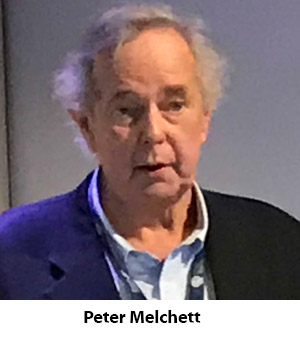
Peter Melchett

This was confirmed by the final speaker at the conference, Peter Melchett, who has been an organic farmer for 19 years and a conventional farmer before that. He said that since converting to organic he has only had to spray a single field once. The one lapse was due to his mistake in planting two related crops in the same field two years running. A pest over-wintered in the field, only to emerge the following year to devour the new crop. Mr Melchett said he never repeated his mistake – and has never had to spray again.

Take-home message

The take-home message from the non-industry speakers at the conference was that the regulatory system for pesticides has failed and cannot be reformed in a way that renders these chemicals safe. As we’ve seen, the system does not test the adjuvants, or the commercial pesticide formulations, or the chemical cocktails to which we are exposed. Neither does it test low, realistic doses that may give rise to endocrine disruption. Therefore pesticides must be eradicated from food production and farming must be entirely converted to proven-successful organic and agroecological practices.

Source: GM Watch

Plans To Release Entire Fukushima Waste Into Ocean Confirmed By Tepco | Social Consciousness

Editor’s Note: The dumping of highly radioactive material in the Pacific Ocean from Japan’s Fukushima has been occurring for years with no plans to stop dumping or bio-remediate this massive problem for all life in our oceans. This is yet another by-product of civilization which has been ignored by government, scientists and climate-change activists.  

Tepco has confirmed it plans to release the radioactive material from the Fukushima plant into the ocean saying that the “decision has already been made”. The decision has an upset local fisherman who says the decision will kill their industry as a result of a massive loss of sea life.

Under the controversial plan, which could be a massive environmental disaster, the radioactive material tritium, which is being used to cool reactors whose cooling systems were damaged in 2011 tsunami, will now be released into the ocean.

rt.com reports: “I’m very sorry that Tepco has been prolonging making a decision,” the new chairman of Tokyo Electric Power Company Holdings (TEPCO) Takashi Kawamura told reporters on Thursday, reported Reuters. “We could have decided much earlier, and that is Tepco’s responsibility.”

The plan still requires the approval of the Japanese government before TEPCO can proceed. Some 770,000 tons (metric) of tritium-containing water is currently stored in 580 tanks at the plant, reported the Japan Times. Toxic water at the plant is currently being treated through a processing system that can remove 62 different types of radioactive material, except tritium.

The local fishermen cooperative has hit out at the plan, saying it had not been discussed with local residents. “Releasing (tritium) into the sea will create a new wave of unfounded rumors, making our efforts all for naught,” Kanji Tachiya, head of a local fishermen cooperative, told the Japan Times.

Situated 10 meters above sea-level, three of the nuclear power plant’s six reactors’ cooling systems were crippled by flooding caused by the tsunami, making the disaster the worst since the Chernobyl catastrophe in the USSR in 1986.

The plan still requires the approval of the Japanese government before TEPCO can proceed. Related: Fukushima Radiation: The Entire Pacific Ocean Has Been Contaminated, And It’s Going To Get Worse Fukushima Radiation: Your Days of Eating Pacific Ocean Fish Are Over, Or Worse Officials Warn: Fukushima Has Now Contaminated 1/3 Of The World’s Oceans

Source: Social Consciousness