We Have No Reason to Believe 5G is Safe | Scientific American

By Joel Moskovitz

Editor’s Note: Science is allegedly the foundation for sound reasoning when it comes to evaluating the short and long-term benefits (and drawbacks) of any new technology, but in the case of 5G there is no reliable science to assure us of its safety. Quite the contrary, it’s being deployed globally without concern for the safety of those exposed.

The telecommunications industry and their experts have accused many scientists who have researched the effects of cell phone radiation of “fear mongering” over the advent of wireless technology’s 5G. Since much of our research is publicly-funded, we believe it is our ethical responsibility to inform the public about what the peer-reviewed scientific literature tells us about the health risks from wireless radiation.

The chairman of the Federal Communications Commission (FCC) recently announced through a press release that the commission will soon reaffirm the radio frequency radiation (RFR) exposure limits that the FCC adopted in the late 1990s. These limits are based upon a behavioral change in rats exposed to microwave radiation and were designed to protect us from short-term heating risks due to RFR exposure.

Yet, since the FCC adopted these limits based largely on research from the 1980s, the preponderance of peer-reviewed research, more than 500 studies, have found harmful biologic or health effects from exposure to RFR at intensities too low to cause significant heating.

Citing this large body of research, more than 240 scientists who have published peer-reviewed research on the biologic and health effects of nonionizing electromagnetic fields (EMF) signed the International EMF Scientist Appeal, which calls for stronger exposure limits. The appeal makes the following assertions:

“Numerous recent scientific publications have shown that EMF affects living organisms at levels well below most international and national guidelines. Effects include increased cancer risk, cellular stress, increase in harmful free radicals, genetic damages, structural and functional changes of the reproductive system, learning and memory deficits, neurological disorders, and negative impacts on general well-being in humans. Damage goes well beyond the human race, as there is growing evidence of harmful effects to both plant and animal life.”

The scientists who signed this appeal arguably constitute the majority of experts on the effects of nonionizing radiation. They have published more than 2,000 papers and letters on EMF in professional journals.

The FCC’s RFR exposure limits regulate the intensity of exposure, taking into account the frequency of the carrier waves, but ignore the signaling properties of the RFR. Along with the patterning and duration of exposures, certain characteristics of the signal (e.g., pulsing, polarization)increase the biologic and health impacts of the exposure. New exposure limits are needed which account for these differential effects. Moreover, these limits should be based on a biological effect, not a change in a laboratory rat’s behavior.

The World Health Organization’s International Agency for Research on Cancer (IARC) classified RFR as “possibly carcinogenic to humans” in 2011. Last year, a $30 million study conducted by the U.S. National Toxicology Program (NTP) found “clear evidence” that two years of exposure to cell phone RFR increased cancer in male rats and damaged DNA in rats and mice of both sexes. The Ramazzini Institute in Italy replicated the key finding of the NTP using a different carrier frequency and much weaker exposure to cell phone radiation over the life of the rats.

Based upon the research published since 2011, including human and animal studies and mechanistic data, the IARC has recently prioritized RFR to be reviewed again in the next five years. Since many EMF scientists believe we now have sufficient evidence to consider RFR as either a probable or known human carcinogen, the IARC will likely upgrade the carcinogenic potential of RFR in the near future.

Nonetheless, without conducting a formal risk assessment or a systematic review of the research on RFR health effects, the FDA recently reaffirmed the FCC’s 1996 exposure limits in a letter to the FCC, stating that the agency had “concluded that no changes to the current standards are warranted at this time,” and that “NTP’s experimental findings should not be applied to human cell phone usage.” The letter stated that “the available scientific evidence to date does not support adverse health effects in humans due to exposures at or under the current limits.”

The latest cellular technology, 5G, will employ millimeter waves for the first time in addition to microwaves that have been in use for older cellular technologies, 2G through 4G. Given limited reach, 5G will require cell antennas every 100 to 200 meters, exposing many people to millimeter wave radiation. 5G also employs new technologies (e.g., active antennas capable of beam-forming; phased arrays; massive multiple inputs and outputs, known as massive MIMO) which pose unique challenges for measuring exposures.

Millimeter waves are mostly absorbed within a few millimeters of human skin and in the surface layers of the cornea. Short-term exposure can have adverse physiological effects in the peripheral nervous system, the immune system and the cardiovascular system. The research suggests that long-term exposure may pose health risks to the skin (e.g., melanoma), the eyes (e.g., ocular melanoma) and the testes (e.g., sterility).

Since 5G is a new technology, there is no research on health effects, so we are “flying blind” to quote a U.S. senator. However, we have considerable evidence about the harmful effects of 2G and 3G. Little is known the effects of exposure to 4G, a 10-year-old technology, because governments have been remiss in funding this research. Meanwhile, we are seeing increases in certain types of head and neck tumors in tumor registries, which may be at least partially attributable to the proliferation of cell phone radiation. These increases are consistent with results from case-control studies of tumor risk in heavy cell phone users.

5G will not replace 4G; it will accompany 4G for the near future and possibly over the long term. If there are synergistic effects from simultaneous exposures to multiple types of RFR, our overall risk of harm from RFR may increase substantially. Cancer is not the only risk as there is considerable evidence that RFR causes neurological disorders and reproductive harm, likely due to oxidative stress.

As a society, should we invest hundreds of billions of dollars deploying 5G, a cellular technology that requires the installation of 800,000 or more new cell antenna sites in the U.S. close to where we live, work and play?

Instead, we should support the recommendations of the 250 scientists and medical doctors who signed the 5G Appeal that calls for an immediate moratorium on the deployment of 5G and demand that our government fund the research needed to adopt biologically based exposure limits that protect our health and safety.

Source: Scientific American

Japan may abandon the development of 5G networks for the health of citizens | Красная Армия

Japan will not develop and invest in the creation of fifth-generation mobile networks. This is stated on the official website of the Ministry of High Technologies of the country. Officials expressed the opinion that the creation of a faster Internet than previously is dangerous for the population and may adversely affect people’s health and labor productivity.

A study by the University of Nagasaki provides figures confirming the increase in the number of mental disorders and fatigue among high-speed Internet users. According to scientists, the more a person manages to conduct intellectual operations per minute, the more he is prone to the development of stress, absent-mindedness and an increase in nervous excitement. The Ministry of Health supplements colleagues and assures that using 5G networks can reduce the average life expectancy in the country for the first time in 60 years, and the impact of high-speed Internet is comparable to the effects of radiation on the human body.

“We need to think about the health of the Japanese. Our country has already accelerated economically so that today we have nowhere to hurry. It is necessary to stabilize this state. 5G is fraught with great danger. So we think not only we, yesterday this information was confirmed by the US ambassador to Japan. If America, China or the EU countries are ready to risk their people for the sake of progress, then such a strategy is unacceptable for our welfare state, ”said Nobunari Kabato, Minister of High Technologies.

The bill to ban fifth-generation mobile networks in the country has already been submitted to the Japanese parliament.

Source: Красная АрмияWeb Archive

28 Signs That the West Coast Is Being Absolutely Fried with Nuclear Radiation from Fukushima| Global Research & The Truth

Global Research Note: 7 years after the Fukushima Daiichi nuclear disaster, we bring to the attention of our readers this piece originally published in October 2013. This situation is far more serious that what is described in this article.

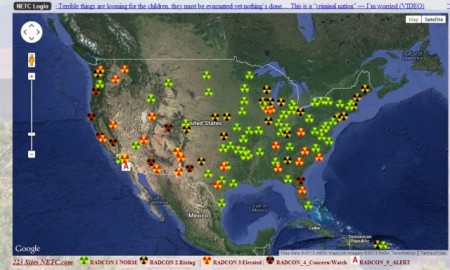
The map below comes from the Nuclear Emergency Tracking Center.  It shows that radiation levels at radiation monitoring stations all over the country are elevated.  As you will notice, this is particularly true along the west coast of the United States.  Every single day, 300 tons of radioactive water from Fukushima enters the Pacific Ocean.  That means that the total amouont of radioactive material released from Fukushima is constantly increasing, and it is steadily building up in our food chain. 

Ultimately, all of this nuclear radiation will outlive all of us by a very wide margin.  They are saying that it could take up to 40 years to clean up the Fukushima disaster, and meanwhile countless innocent people will develop cancer and other health problems as a result of exposure to high levels of nuclear radiation.  We are talking about a nuclear disaster that is absolutely unprecedented, and it is constantly getting worse.  The following are 28 signs that the west coast of North America is being absolutely fried with nuclear radiation from Fukushima…

By Michael Snyder

1. Polar bears, seals and walruses along the Alaska coastline are suffering from fur loss and open sores

Wildlife experts are studying whether fur loss and open sores detected in nine polar bears in recent weeks is widespread and related to similar incidents among seals and walruses.

The bears were among 33 spotted near Barrow, Alaska, during routine survey work along the Arctic coastline. Tests showed they had “alopecia, or loss of fur, and other skin lesions,” the U.S. Geological Survey said in a statement.

2. There is an epidemic of sea lion deaths along the California coastline…

At island rookeries off the Southern California coast, 45 percent of the pups born in June have died, said Sharon Melin, a wildlife biologist for the National Marine Fisheries Service based in Seattle. Normally, less than one-third of the pups would die.   It’s gotten so bad in the past two weeks that the National Oceanic and Atmospheric Administration declared an “unusual mortality event.”

3. Along the Pacific coast of Canada and the Alaska coastline, the population of sockeye salmon is at a historic low.  Many are blaming Fukushima.

4. Something is causing fish all along the west coast of Canada to bleed from their gills, bellies and eyeballs.

5. A vast field of radioactive debris from Fukushima that is approximately the size of California has crossed the Pacific Ocean and is starting to collide with the west coast.

6. It is being projected that the radioactivity of coastal waters off the U.S. west coast could double over the next five to six years.

7. Experts have found very high levels of cesium-137 in plankton living in the waters of the Pacific Ocean between Hawaii and the west coast.

8. One test in California found that 15 out of 15 bluefin tuna were contaminated with radiation from Fukushima.

9. Back in 2012, the Vancouver Sun reported that cesium-137 was being found in a very high percentage of the fish that Japan was selling to Canada…

• 73 percent of mackerel tested

• 91 percent of the halibut

• 92 percent of the sardines

• 93 percent of the tuna and eel

• 94 percent of the cod and anchovies

• 100 percent of the carp, seaweed, shark and monkfish

10. Canadian authorities are finding extremely high levels of nuclear radiation in certain fish samples…

Some fish samples tested to date have had very high levels of radiation: one sea bass sample collected in July, for example, had 1,000 becquerels per kilogram of cesium.

11. Some experts believe that we could see very high levels of cancer along the west coast just from people eating contaminated fish

“Look at what’s going on now: They’re dumping huge amounts of radioactivity into the ocean — no one expected that in 2011,” Daniel Hirsch, a nuclear policy lecturer at the University of California-Santa Cruz, told Global Security Newswire. “We could have large numbers of cancer from ingestion of fish.”

12. BBC News recently reported that radiation levels around Fukushima are “18 times higher” than previously believed.

13. An EU-funded study concluded that Fukushima released up to 210 quadrillion becquerels of cesium-137 into the atmosphere.

14. Atmospheric radiation from Fukushima reached the west coast of the United States within a few days back in 2011.

15. At this point, 300 tons of contaminated water is pouring into the Pacific Ocean from Fukushima every single day.

16. A senior researcher of marine chemistry at the Japan Meteorological Agency’s Meteorological Research Institute says that “30 billion becquerels of radioactive cesium and 30 billion becquerels of radioactive strontium” are being released into the Pacific Ocean from Fukushima every single day.

17. According to Tepco, a total of somewhere between 20 trillion and 40 trillion becquerels of radioactive tritium have gotten into the Pacific Ocean since the Fukushima disaster first began.

18. According to a professor at Tokyo University, 3 gigabecquerels of cesium-137 are flowing into the port at Fukushima Daiichi every single day.

19. It has been estimated that up to 100 times as much nuclear radiation has been released into the ocean from Fukushima than was released during the entire Chernobyl disaster.

20. One recent study concluded that a very large plume of cesium-137 from the Fukushima disaster will start flowing into U.S. coastal waters early next year

Ocean simulations showed that the plume of radioactive cesium-137 released by the Fukushima disaster in 2011 could begin flowing into U.S. coastal waters starting in early 2014 and peak in 2016.

21. It is being projected that significant levels of cesium-137 will reach every corner of the Pacific Ocean by the year 2020.

22. It is being projected that the entire Pacific Ocean will soon “have cesium levels 5 to 10 times higher” than what we witnessed during the era of heavy atomic bomb testing in the Pacific many decades ago.

23. The immense amounts of nuclear radiation getting into the water in the Pacific Ocean has caused environmental activist Joe Martino to issue the following warning

“Your days of eating Pacific Ocean fish are over.”

24. The Iodine-131, Cesium-137 and Strontium-90 that are constantly coming from Fukushima are going to affect the health of those living the the northern hemisphere for a very, very long time.  Just consider what Harvey Wasserman had to say about this…

Iodine-131, for example, can be ingested into the thyroid, where it emits beta particles (electrons) that damage tissue. A plague of damaged thyroids has already been reported among as many as 40 percent of the children in the Fukushima area. That percentage can only go higher. In developing youngsters, it can stunt both physical and mental growth. Among adults it causes a very wide range of ancillary ailments, including cancer.

Cesium-137 from Fukushima has been found in fish caught as far away as California. It spreads throughout the body, but tends to accumulate in the muscles.

Strontium-90’s half-life is around 29 years. It mimics calcium and goes to our bones.

25. According to a recent Planet Infowars report, the California coastline is being transformed into “a dead zone”…

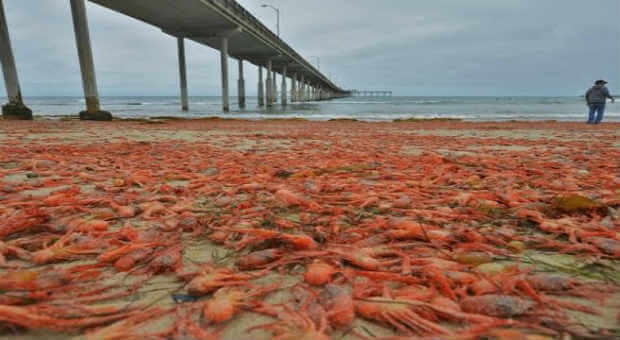
The California coastline is becoming like a dead zone.

If you haven’t been to a California beach lately, you probably don’t know that the rocks are unnaturally CLEAN – there’s hardly any kelp, barnacles, sea urchins, etc. anymore and the tide pools are similarly eerily devoid of crabs, snails and other scurrying signs of life… and especially as compared to 10 – 15 years ago when one was wise to wear tennis shoes on a trip to the beach in order to avoid cutting one’s feet on all the STUFF of life – broken shells, bones, glass, driftwood, etc.

There are also days when I am hard-pressed to find even a half dozen seagulls and/or terns on the county beach.

You can still find a few gulls trolling the picnic areas and some of the restaurants (with outdoor seating areas) for food, of course, but, when I think back to 10 – 15 years ago, the skies and ALL the beaches were literally filled with seagulls and the haunting sound of their cries both day and night…

NOW it’s unnaturally quiet.

26. A study conducted last year came to the conclusion that radiation from the Fukushima nuclear disaster could negatively affect human life along the west coast of North America from Mexico to Alaska “for decades”.

27. According to the Wall Street Journal, it is being projected that the cleanup of Fukushima could take up to 40 years to complete.

28. Yale Professor Charles Perrow is warning that if the cleanup of Fukushima is not handled with 100% precision that humanity could be threatened “for thousands of years“…

“Conditions in the unit 4 pool, 100 feet from the ground, are perilous, and if any two of the rods touch it could cause a nuclear reaction that would be uncontrollable. The radiation emitted from all these rods, if they are not continually cool and kept separate, would require the evacuation of surrounding areas including Tokyo. Because of the radiation at the site the 6,375 rods in the common storage pool could not be continuously cooled; they would fission and all of humanity will be threatened, for thousands of years.”

Are you starting to understand why so many people are so deeply concerned about what is going on at Fukushima?

About the author: Michael T. Snyder is a former Washington D.C. attorney who now publishes The Truth. His new thriller entitled “The Beginning Of The End” is now available on Amazon.com.

Source: The Truth & Global Research

How 5G will change (destroy) the world | World Economic Forum

large_m297nKs9NwkwFNcZIsHG-pB8DPtURngI4QodH4rR8Rc

Editor’s Note: The unforeseen consequences of unleashing an electronic network worldwide with nowhere to hide, with a bombardment of such powerful frequencies as to disrupt every living system with proven oxygen shattering and immune suppressing technology is beginning to unfold. This article is an industry puff piece for the global leaders of industry promoting 5G as the next panacea for all our problems. My friends, this is a crisis of consciousness and will forever map the trajectory of human evolution. Only robots will survive this 5G rollout. Read it and weep!

By Don Rosenberg

It is not an easy time to be an internationalist, to seek global solutions to global problems amid what feels like one of history’s periodic inclinations toward divisiveness.

Yet, ironically, we’re on the verge of a new age of interconnectedness, when the daily lives of people across the planet will be more closely intertwined than ever. Advances in technology will usher in the age of fifth generation, or 5G, telecommunications. And, if past is prologue, this technological evolution will lead to dramatic societal changes.

The first generation of mobile communications, with brick-sized phones, brought just a handful of users expensive and often unreliable analogue voice calling. The second generation introduced digital voice service that was less likely to be dropped, available to many more people and ultimately cheaper to use. 3G ushered in the mobile internet, mobile computing, and the proliferation of apps. 4G (often called LTE) made possible all we have come to expect of mobile broadband: streaming video and audio; instantaneous ride hailing; the explosion of social media.

We take all this connectivity for granted, but the engineering inside the device in your bag or pocket today would have seemed impossible less than 20 years ago.

So, where will 5G take us?

Think about a world in which not just people but all things are connected: cars to the roads they are on; doctors to the personal medical devices of their patients; augmented reality available to help people shop and learn and explore wherever they are. This requires a massive increase in the level of connectivity.

5G is the technological answer, making possible billions of new connections, and making those connections secure and instantaneous. 5G will impact every industry – autos, healthcare, manufacturing and distribution, emergency services, just to name a few. And 5G is purposely designed so that these industries can take advantage of cellular connectivity in ways that wouldn’t have been possible before, and to scale upwards as use of 5G expands.

But generational change in mobile communications doesn’t just appear overnight. It requires significant effort in research and development and the resources necessary to support that effort. Work on 4G took nearly a decade and the challenges were not easy. Consider one of tens of thousands of problems that needed to be solved as described by an engineer at Qualcomm, where much of this technology was invented:

“When the signal leaves the base station, it can undergo a loss of up to 130 decibels before it reaches your mobile phone. To put that loss into perspective, if you consider the transmitted signal power to be roughly the size of the Earth, then the received signal power would be equivalent to the size of a tiny bacteria.”

That is a tremendous loss of power, and it requires some pretty impressive engineering to compensate for the effect of the loss on the words, pictures, and other data we send and receive across the airwaves in a transparent, seamless and instantaneous way.

But we weren’t alone. The international engineering co-operation that goes into development of a telecom standard illustrates how much can be achieved when disparate national, commercial and scientific parties work together for the common good.

Like 3G and 4G, 5G is the responsibility of the standards-setting organisation 3GPP, where the handful of companies that invent technologies come together with many, many more companies who will develop products that implement those technologies.

Think about this process for a moment: engineers from rival inventing companies, rival product makers, rival wireless network operators, all from different countries and continents, discussing, testing, striving to perfect tens of thousands of different technical solutions that ultimately make up a standard like 5G.

They judge each technical solution using a merit-based, consensus-building approach. This process has been at the foundation of a technological revolution that spawned myriad new industries, millions of new jobs and well over a $1 trillion in economic growth.

It’s the fusion of commercial self-interest with the recognition that some problems are best solved by working together. And it’s not a bad model of human behaviour if we are to meet the World Economic Forum’s goal this year to address the problems of “a fractured world”.

The benefits and advantages of 5G technology are expected to be available sometime in 2019. We believe 5G will change the world even more profoundly than 3G and 4G; that it will be as revolutionary as electricity or the automobile, benefitting entire economies and entire societies.

Developing nations have rivalled or surpassed their industrialised counterparts in benefiting from the deployment of mobile technology, and there’s every reason to think 5G will have an even bigger levelling effect than its predecessors.

Economists estimate the global economic impact of 5G in new goods and services will reach $12 trillion by 2035 as 5G moves mobile technology from connecting people to people and information, towards connecting people to everything.


Many of the benefits probably aren’t yet apparent to us. Wireless network operators initially resisted proposals to give their customers mobile access to the internet, questioning why they would want it. At the dawn of 4G’s adoption no one could have predicted the new business models that grew on the back of mobile broadband, like Uber, Spotify and Facebook.

Now, according to the European Patent Office, the number of patent applications related to “smart connected objects” has surged 54% over the last three years, suggesting new, related and as-yet unknown inventions will arrive even before 5G becomes available.

This is news that should encourage us amid glum commentaries on the state of the world. There is promise yet in what we’re capable of achieving.

Source: World Economic Forum

Plans To Release Entire Fukushima Waste Into Ocean Confirmed By Tepco | Social Consciousness

Editor’s Note: The dumping of highly radioactive material in the Pacific Ocean from Japan’s Fukushima has been occurring for years with no plans to stop dumping or bio-remediate this massive problem for all life in our oceans. This is yet another by-product of civilization which has been ignored by government, scientists and climate-change activists.  

Tepco has confirmed it plans to release the radioactive material from the Fukushima plant into the ocean saying that the “decision has already been made”. The decision has an upset local fisherman who says the decision will kill their industry as a result of a massive loss of sea life.

Under the controversial plan, which could be a massive environmental disaster, the radioactive material tritium, which is being used to cool reactors whose cooling systems were damaged in 2011 tsunami, will now be released into the ocean.

rt.com reports: “I’m very sorry that Tepco has been prolonging making a decision,” the new chairman of Tokyo Electric Power Company Holdings (TEPCO) Takashi Kawamura told reporters on Thursday, reported Reuters. “We could have decided much earlier, and that is Tepco’s responsibility.”

The plan still requires the approval of the Japanese government before TEPCO can proceed. Some 770,000 tons (metric) of tritium-containing water is currently stored in 580 tanks at the plant, reported the Japan Times. Toxic water at the plant is currently being treated through a processing system that can remove 62 different types of radioactive material, except tritium.

The local fishermen cooperative has hit out at the plan, saying it had not been discussed with local residents. “Releasing (tritium) into the sea will create a new wave of unfounded rumors, making our efforts all for naught,” Kanji Tachiya, head of a local fishermen cooperative, told the Japan Times.

Situated 10 meters above sea-level, three of the nuclear power plant’s six reactors’ cooling systems were crippled by flooding caused by the tsunami, making the disaster the worst since the Chernobyl catastrophe in the USSR in 1986.

The plan still requires the approval of the Japanese government before TEPCO can proceed. Related: Fukushima Radiation: The Entire Pacific Ocean Has Been Contaminated, And It’s Going To Get Worse Fukushima Radiation: Your Days of Eating Pacific Ocean Fish Are Over, Or Worse Officials Warn: Fukushima Has Now Contaminated 1/3 Of The World’s Oceans

Source: Social Consciousness

Dangerous chemicals hiding in everyday products | CNN

It was long believed that you could acquire “better living through chemistry.” But that may really not be the case. In a landmark alliance, known as Project TENDR, leaders of various disciplines have come together in a consensus statement to say that many of the chemicals found in everyday products can result in neurodevelopmental disorders, including autism and attention-deficit disorders.

“Ten years ago, this consensus wouldn’t have been possible, but the research is abundantly clear,” said Irva Hertz-Picciotto, an environmental epidemiologist at the University of California, Davis and co-chairwoman of Project TENDR.

BPA-free plastic alternatives may not be safe as you think

“At some point, we say we know enough to take preventative action,” said Frederica Perera, a professor of environmental health sciences at Columbia University. Perera is also a signatory on the statement.

Last year, the International Federation of Gynecology and Obstetrics (PDF) stated that “Widespread exposure to toxic environmental chemicals threatens healthy human reproduction.” Other medical groups such as the Endocrine Society (PDF), the world’s oldest and largest organization devoted to researching hormones, have expressed similar concerns.

But this is the first time that leading scientists, doctors and policy advocates across various disciplines have come together to say that the science on toxic chemicals is clear: They can harm brain development.

Everyday chemicals carry toxic burden

These everyday chemicals, including organophosphates, flame retardants and phthalates, can be found in food, plastics, furniture, food wrap, cookware, cans, carpets, shower curtains, electronics and even shampoo. They are pretty much everywhere around us.

Scientists and researchers are concerned that many of these chemicals may be carcinogenic or wreak havoc with our hormones, our body’s regulating system. But the impact of these chemicals may be most severe on the developing brain, Perera said.

Brain development is the “most complete and most rapid during the first nine months, prenatally,” she said. During that time, neural connections and pathways are being developed.

“Any interference by a physical stress like a toxic chemical or other stressor can disrupt this natural progression that is so very delicate and complex,” explained Perera.

Though the group hopes to come up with regulatory recommendations to reduce this toxic burden, there are some simple things that inpiduals can do to reduce their exposure.

Chemicals to watch for

Organophosphate pesticides

Organophosphate pesticides (PDF) are a class of neurotoxic chemicals used as warfare agentsin the 1930s. However, today, they account for about half of all pesticide use in the United States. And they can make their way onto crops that we use as food sources. Areas that spray pesticides heavily, such as farms, may find higher rates of exposure.

Children exposed to higher levels of these pesticides have been found to have higher rates of attention-deficit hyperactivity disorder.

You can reduce your exposure to them by eating organic and using alternative pest control methods.

Phthalates

These chemicals soften plastics and help scents and chemicals bind together.

Exposure to phthalates has been associated with lower IQ levels.

They can be found in shampoos, conditioners, body sprays, hair sprays, perfumes, colognes, soap, nail polish, shower curtains, medical tubing, IV bags, vinyl flooring and wall coverings, food packaging and coatings on time-release pharmaceuticals.

You can reduce your exposure to phthalates by using unscented lotions and laundry detergents, microwaving food in glass containers rather than plastic, using cleaning supplies without scents, and avoiding air fresheners and plastics labeled as No. 3, No. 6 and No 7.

Polybrominated diphenyl ethers

These chemicals are used as flame retardants, chemicals that can slow the speed of a flame. They can be found in televisions, computers, insulation and foam products, including children’s toys and baby pillows.

Products can shed ethers that can accumulate in dust. Exposure to these ethers have been associated with thyroid issues.

There isn’t a directory that lists which products have these ethers, but consumers may still be able to reduce exposure by looking for products that advertise themselves as free of flame retardant. These chemicals were found in a lot of older foams, so replace products such sofas and pillows that have exposed foam. And use a high-efficiency HEPA filter vacuum to clean up dust.

Air pollutants

Air pollution from burning fossil fuels such as coal, oil or gas is usually associated with respiratory issues. However, these pollutants can also include nitrogen dioxide, formaldehyde and benzene.

Higher exposure to air pollutants has been associated with lower birth weights, preterm deliveries and congenital heart defects. The World Health Organization (PDF) considers exposure to benzene a major public health concern.

Aside from trying to avoid polluted areas, you can make sure to buy furniture and products that advertise themselves as formaldehyde-free. Try to avoid buying furniture made with particleboard, plywood or pressed wood. Many of these products use glues containing formaldehyde.

Lead

Lead is a naturally occurring metal. It was banned from gasoline in the 1970s but can still be found in older homes that used leaded paint. Lead can also make its way into water, because of corrosion from old water pipes. Lead is also used in a variety of products like industrial paints, car batteries and wheel weights.

Lead exposure has been associated with ADHD, lower IQs and developmental delay.

Infants and toddlers are at greatest risk for lead exposure because they frequently put their hands and toys in their mouths after they may be exposed to lead in dust.

Why lead is so dangerous for children

Find out if you have lead in your water by reaching out to your local water supplier or even getting an at-home test kit from a home improvement store. If your home was built before 1978, test your paint. If the paint is chipping or peeling, it will need to be stripped or covered.

Homeowners may want to consider using a professional who is lead-safe certified to help you. Parents can also talk to your doctor about having your children tested for lead if there is reason for concern.

Mercury

Mercury is a naturally occurring element, but it can also be released into the environment from the burning of coal and oil. Mercury can also be found in some household items such as thermometers, light bulbs and older-model clothes dryers and washing machines. Mercury in the environment can make its way into fish and shellfish. Some fish, such as some kinds of tuna, may have higher concentrations of mercury.

According to the Environmental Protection Agency, exposure to mercury in utero may impact memory, attention and cognitive skills.

While you can’t completely eliminate mercury from your environment, you can reduce your exposure to mercury by avoiding fish high in mercury. Try to use mercury-free thermometers. When getting rid of household items with mercury, reach out to your state or local household hazardous waste collection center for advice.

Polychlorinated biphenyls

Between 1929 and 1977, thousands of tons of polychlorinated biphenyls were used worldwide. Production of the chemical in the U.S. was banned by the EPA in 1977, but they can linger (PDF) in the environment for a long time and make their way into the food chain. These chemicals have been used as coolants and lubricants in electrical equipment because they are good insulators.

According to the Centers for Disease Control and Prevention, polychlorinated biphenyls are associated with cancer in occupational settings and has been associated with issues with motor skills and short term memory in children.

Much like mercury, they have made their way into our food sources, particularly fish and some meat. To avoid polychlorinated biphenyls in your food, the Environmental Defense Fund suggests, before cooking, removing the parts where toxic chemicals are likely to accumulate, such as the skin, fat and internal organs. When cooking, make sure to drain away fat and avoid drippings.

Source: CNN

Alaska & Washington Salmon Tested For Radiation | Simply Info

SalmonA Seattle fish company had some of their fish privately tested in late 2013. With all the US government agencies refusing to test anything and growing consumer anxiety due to the lack of information, Loki Fish company paid for private testing.

This is some of the only North American seafood testing done. While the current findings of these limited samples is somewhat good news, more testing is needed to have a better understanding of the situation across a large geographic area of ocean. These are a “snapshot” of a much larger picture. More testing should be done by more parties and done over time to understand the potential progression of radionuclides in the environment. Artificial isotopes like cesium 137, 134 or strontium 90 should not be ingested, even in small amounts ideally. Even small amounts have the potential to add to health damage that can cause cancer and other health problems over time.

What Loki Fish found in their testing was out of seven samples, five were below the level of detection and two had low levels of cesium. One sample had cesium 134, a marker that confirms at least that contamination came from Fukushima Daiichi due to the short half life. The two with detectable levels were:

  • Alaskan Keta at 1.4Bq/kg for Cesium 137
  • Alaskan Pink at 1.2Bq/kg for Cesium 134

The other five samples that were below the detection level were:

  • Coho – Southeast Alaska
  • Sockeye  – Southeast Alaska
  • King – Southeast Alaska
  • Pink  – Puget Sound
  • Keta  – Puget Sound

Copies of the actual test results can be found here:
https://www.dropbox.com/sh/it071klk0uyss5i/pBryvo1Yz3

Source: Fukuleaks

Radiation Protection | What Is Radiation

radiationprotection144Radiation protection is surprisingly easy. The primary concern for most people is not shielding from direct exposure as a nuclear power plant worker might experience. Instead, radiation protection from internal exposure is what matters to most people.

Simple Radiation Protection Steps:

Radiation Protection From Internal Exposure

Ever since the first atomic test, radionuclides have been accumulating in the environment but radiation protection has been only a passing concern.

Some radionuclides, such as Iodine-131 with a half life of 8 days, pose only a short-term threat. Although it is a good idea to keep one’s Iodine levels up as part of a healthy nutrition regimen, overdosing on Potassium Iodide in reaction to news reports is not recommended. The most vulnerable are infants and developing fetuses, since radioactive Iodine-131 bio-concentrates by a factor of 1,000 in their growing tissues. Three months later, the opportunity for radiation protection will have passed.

Most radionuclides have longer half-lives and constitute a greater threat over time. In particular as regards radiation protection:

  • Cesium-137 has a half-life of  about 30 years and chemically mimics Potassium in the body. This means that quantities as a result of atmospheric atomic testing are still present in the environment at somewhere between 10-25 percent of their original strength. Quantities created from the Chernobyl catastrophe are still present at about 50% of their original levels. This Cesium-137 can find its way into our bodies through consumption of fruits, vegetables and meats.
  • Strontium-90 has a half-life of about 28 years and chemically mimics Calcium in the body and thus shows up in the bones and teeth. This means that it is still present in the environment in quantities similar to Cesium-137.
  • Uranium-235 has a half-life of about 704 million years and chemically mimics Iron in the body. This means quantities released into the environment through atmospheric nuclear testing or nuclear accidents have not diminished substantially in their radioactivity over time.
  • Plutonium-239 has a half-life of about 24,000 years and chemically mimics Iron in the body. This means quantities released into the environment through atmospheric nuclear testing or nuclear accidents have not diminished substantially in their radioactivity over time.

Radiation protection for the above contaminants is accomplished through mineralization and chelation. Although these radionuclides have been accumulating in the environment since the first atomic test, it is difficult to establish direct cause-and-effect links between exposure and subsequent cancers for two reasons:

  1. There is a latency period of from 5 to 20 years between exposure and the appearance of associated cancers.
  2. Many consequences may be classified as “Stochastic Effects” meaning that chance plays a role. This means that statistically, cancers will show up as percentages within an exposed population, but it is difficult to predict individual outcomes.

Source: What Is Radiation?

Time lapse map of every nuclear explosion ever on Earth

By Isao Hashimoto

Japanese artist Isao Hashimoto has created a beautiful, undeniably scary time-lapse map of the 2053 nuclear explosions which have taken place between 1945 and 1998, beginning with the Manhattan Project’s “Trinity” test near Los Alamos and concluding with Pakistan’s nuclear tests in May of 1998. This leaves out North Korea’s two alleged nuclear tests in this past decade (the legitimacy of both of which is not 100% clear).

Each nation gets a blip and a flashing dot on the map whenever they detonate a nuclear weapon, with a running tally kept on the top and bottom bars of the screen. Hashimoto, who began the project in 2003, says that he created it with the goal of showing”the fear and folly of nuclear weapons.” It starts really slow — if you want to see real action, skip ahead to 1962 or so — but the buildup becomes overwhelming.

Source: Isao Hashimoto

US Gov’t: Alaska island “appears to show impacts from Fukushima” — “Significant cesium isotope signature” detected — Scientists anticipate more marine life to be impacted as ocean plume arrives | ENENEWS

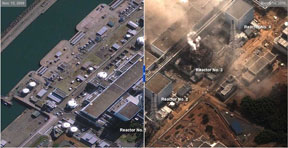
FukushimaDaiichi-BeforeAfter-288Amchitka Island, Alaska, Biological Monitoring Report 2011 Sampling Results
September 2013: To determine what [Fukushima Dai-ichi’s] direct release of radioactive materials into the atmosphere might have contributed to the background radiation on Amchitka and Adak Islands, semiquantitative gamma spectrometry measurements were made […] The results imply that Dolly Varden [a type of fish], rockweed, and to a lesser extent, Irish lord [a type of fish] appear to contain a significant cesium isotope signature from Fukushima Dai-ichi. The estimated 134Cs/137Cs activity ratios in pooled fauna samples at the time sampled ranged from <30 to about 60 percent. Observations of Fukushima-derived fallout impacting on this region are supported by findings of elevated levels of 134Cs (and 137Cs) in lichen and soil collected from both the Adak and Amchitka regions. […]

Lichen sample from mid-2011 expressed in picocuries/kilogram — Lichen on  the island had less than 70 pCi/kg of Cs-137 in 1997.

Department of Energy:
Biological Monitoring at Amchitka Appears to Show Impacts from Fukushima Dai-ichi Incident […] The U.S. Department of Energy Office Legacy Management (LM) has a long-term stewardship mission to protect human health and the environment from the legacy of underground nuclear testing conducted at Amchitka Island, Alaska, from 1965 to 1971. […] Atmospheric monitoring in the United States showed elevated cesium activities shortly after the [Fukushima] nuclear incident. LM scientists anticipated that atmospheric transport of cesium would potentially increase the cesium activities in the 2011 biological samples collected near Amchitka. Because cesium-134 has a relatively short half-life of 2 years and indicates leakage from a nuclear reactor, it is a clear indicator of a recent nuclear accident […] Because the Amchitka 2011 sampling event occurred soon after the Fukushima nuclear accident, the biota impacted by atmospheric precipitation showed the greatest impact (e.g., species that live in freshwater or shallow ocean waters) when compared to marine biota living in deeper water. This is because ocean currents are a slower transport process than wind currents. LM scientists anticipate that the marine biota will show the impacts of Fukushima during the next sampling event, currently scheduled to occur in 2016. […]

Source: ENENEWS